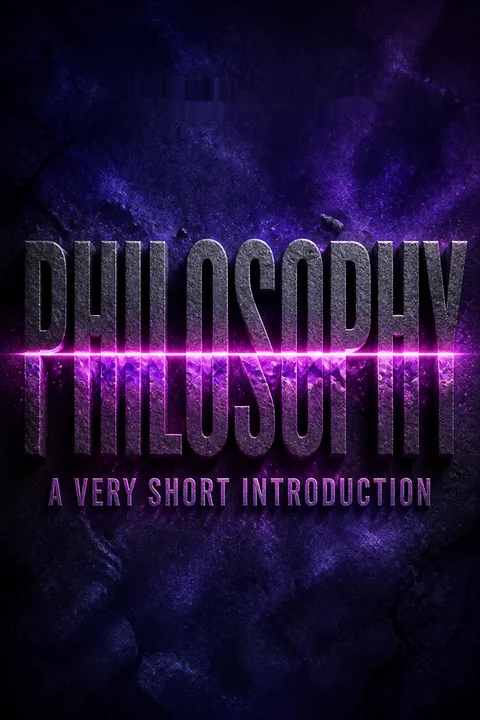


Key Takeaways
Treat philosophy as the work of examining assumptions already steering your life.
You are already in it. People carry working answers to three questions, whether or not they study philosophy: what should I do, what is real, and how can I know? Taking stock of those answers, and asking how they support one another, is philosophical work. Even calling philosophy useless relies on a judgment about what is useful and whether reflection can help us discover it.
Reflection changes the picture. Craig presents philosophy as humanity trying to make sense of the choices and mysteries that arise when we begin asking why things happen and whether our beliefs are justified. Its history includes practical attempts to ease suffering, guide conduct, and reshape political life, not merely abstract puzzles. Readers need no special license to think, but should treat their conclusions as provisional rather than automatically valid.
This account makes philosophy less like a sealed academic specialty and more like an audit of the assumptions behind ordinary decisions. That connects with cognitive science, where people often act on implicit models before they can state them clearly. Making those models explicit can reveal contradictions and open alternatives. Still, not every practical belief needs to become a full philosophical inquiry. Reflection has value when it clarifies a consequential choice, exposes an unearned certainty, or helps people understand why others see the world differently.
Read old arguments as answers to crises, not museum pieces.
Ideas have a setting. Plato’s Crito asks whether Socrates should escape prison before execution. The dialogue’s argument about obeying Athens makes more sense when read against the city’s political life and the threat of disorder. Hobbes, writing amid civil war and religious conflict, likewise defended a powerful sovereign because he feared what happens when public order collapses. Their conclusions can be challenged, but their urgency is part of what they mean.
Context is not an excuse. Craig argues that readers should ask both whether an argument is convincing and what problem made it compelling. Descartes’s attempt to rebuild knowledge, for example, responds to upheaval in science and inherited learning. Historical distance may reveal assumptions invisible to the original writer, but dismissing a thinker solely for being old can hide the real question they were trying to answer.
Historical context works like a lens: it can bring an argument into focus without making the argument true. This resembles intellectual history’s effort to distinguish a claim’s original function from its possible use today. The approach also guards against a present-day blind spot, the assumption that current institutions and concepts are simply natural. A useful reading keeps both tests in view: what did the argument mean under its original pressures, and does its reasoning still hold when those pressures change?
When duties collide, name the principle your decision would betray.
Socrates refuses an easy escape. In Plato’s Crito, his friend offers to bribe the prison guards and arrange flight from Athens. Socrates asks whether escape would wrong the city and its laws, break an agreement he made by remaining there, or violate his own commitment to act justly. He also weighs effects on friends and children, though he treats these concerns as secondary to doing what he believes is right.
The argument has weak spots. Socrates presents the state as a parent and claims that remaining in Athens amounted to consent to its authority. Craig questions whether that gives the state such sweeping power over a citizen. The dialogue shows why moral decisions involve consequences, duties, past commitments, and self-respect, and why a single principle can make a hard case look simpler than it is.
The dialogue anticipates a live problem in political philosophy: living under a law is not necessarily the same as freely agreeing to it. That distinction matters whenever institutions infer consent from residence, silence, or lack of practical alternatives. Socrates’s emphasis on integrity also captures a real cost of opportunism: a choice may preserve life or reputation while damaging a person’s trust in their own commitments. Yet integrity cannot settle every case, because commitments can be mistaken, coercive, or in conflict with urgent responsibilities to others.
Make extraordinary claims carry evidence stronger than ordinary testimony.
Hume weighs competing evidence. In Of Miracles, David Hume asks whether reports from other people can justify belief in an event that appears to violate a law of nature. Testimony can be mistaken or distorted by memory, self-interest, group loyalty, or the wish to tell an impressive story. A rational listener, Hume argues, compares the chance that the report is false with the chance that the extraordinary event really occurred.
The comparison has limits. Hume’s argument does not mean that evidence can never change scientific beliefs. Craig notes that repeated observations and independently confirmed results can make an unusual scientific claim credible, while a one-time report is harder to test. A miracle, understood as a violation of natural law, cannot simply be rerun in a laboratory. Hume’s challenge is therefore especially sharp when testimony is the only evidence offered for religious authority.
Hume’s method is a form of disciplined updating: confidence should move with the relative strength of the evidence, rather than with the emotional force of a story. Modern research on memory and eyewitness accounts reinforces the general caution that sincerity does not guarantee accuracy. But testimony is not automatically weak; much knowledge depends on trusting other people, institutions, and instruments. The key question is how claims are checked, whether witnesses are independent, and whether competing explanations are tested. Skepticism is strongest when it improves those checks, not when it rules out surprise in advance.
Treat the self as a process before assuming it is a permanent core.
Nagasena’s chariot changes the question. In the Buddhist Questions of King Milinda, the monk says that Nagasena is a name for a person, not the name of a separate, enduring essence. He compares a person to a chariot: no single wheel, axle, or pole is the chariot, yet the organized parts give people reason to use that name. In Buddhist thought, a person is composed of five aggregates: material form, feeling, perception, mental formations, and consciousness.
An analogy is not proof. The argument presents the no-self view, but does not establish that a human being is exactly like a chariot. Craig stresses its practical purpose: loosening attachment to a supposedly permanent self may help reduce suffering. The puzzle is not only what a person is made of, but how beliefs about personal identity shape fear, desire, and conduct.
The chariot example offers a useful distinction between a pattern and a hidden object that supposedly owns the pattern. Contemporary accounts of identity often examine continuity in memory, character, and relationships rather than assuming an unchanging inner core. That perspective can make personal change easier to understand, but it also raises ethical questions: responsibility and care depend on treating people as continuous enough to answer for actions and receive support. The Buddhist analogy invites less attachment to a fixed self; it does not by itself show that personal identity is irrelevant.
No moral formula escapes the need to choose what counts as good.
Consequences need a standard. Consequentialism judges actions by their results, but the label alone does not say which results matter. Epicurus treated pleasure, understood chiefly as freedom from pain and anxiety, as valuable in itself. John Stuart Mill instead made happiness for everyone the central aim. Their shared focus on well-being leads to different questions about whose welfare counts and how competing interests should be compared.
Integrity resists simple arithmetic. Socrates’s concern for consistency with his past commitments illustrates a value that may not reduce neatly to consequences. If a principle has become central to someone’s life, a purely outcome-based theory must explain why that commitment matters only when it predicts good results. Moral theories can clarify tradeoffs, but choosing one basic good often excludes or subordinates others.
The contrast resembles a challenge in public policy: a decision can improve an aggregate measure while imposing severe costs on a minority. Counting outcomes is valuable because it forces consequences into view, but the choice of metric is itself a moral judgment. Integrity, rights, and relationships can function as constraints on optimization rather than as rival quantities to add to a score. The strongest ethical reasoning makes those tensions explicit instead of pretending that one formula can remove every conflict.
Use philosophical labels as maps, never as substitutes for arguments.
An ism is a starting point. Dualism says reality includes mind and matter as distinct kinds; materialism gives priority to matter, while idealism gives priority to mind or spirit. In debates about knowledge, empiricism emphasizes perception and rationalism gives a stronger role to thought. These labels group positions, but thinkers who share a label can still disagree sharply about what it means and what follows from it.
Test the consequences. Empiricism faces the problem of explaining how reasoning goes beyond what has been perceived. Rationalism must explain how thought connects with the world instead of becoming speculation. Skepticism challenges claims to knowledge, while relativism makes truth or value dependent on a person, culture, or other context. Craig warns that broad labels can conceal the central question: what exactly is being claimed, and what supports it?
Conceptual labels are useful in the same way that maps are useful: they organize a territory while leaving out much of its detail. A label can help readers identify a family resemblance, but it cannot tell them whether a particular argument succeeds. This is especially important with relativism, where the object and reference point of the claim must be specified. Relativism about taste is not equivalent to relativism about moral duties or rational evidence. Clear definitions often do more intellectual work than another round of name-calling.
Expect progress in ideas to arrive through conflict, not clean consensus.
Hegel makes conflict historical. In his account, reality expresses an underlying rational Idea, and human consciousness gradually comes to understand it through history. The process moves through tension and resolution, which Hegel calls dialectic. He describes individuals, including influential leaders, as serving historical developments they may not understand. The vision is ambitious: history becomes more than a sequence of events and takes on a direction.
Marx changes the engine. He adapts Hegel’s emphasis on conflict and development, but locates the driving struggle in material conditions and competing economic classes. Craig finds insight in the idea that social orders contain tensions that can produce change, while warning that Hegel’s vast metaphysical system gives little importance to individual lives. The model can illuminate patterns, but its claim that history has a necessary purpose is much harder to establish.
Conflict-based models help explain why institutions can generate the pressures that eventually reshape them. They also caution against treating stability as proof that a social order is just or permanent. Modern social science often studies feedback loops and competing interests without assuming that history is moving toward a predetermined end. That distinction matters: conflict may drive change, but change is not automatically progress. A theory becomes more credible when it can explain reversals, contingency, and the human costs hidden by its large-scale story.
Let Darwin unsettle human exceptionalism without turning biology into morality.
Selection explains adaptation. Darwin uses familiar examples such as pigeon breeding to show how selection can gradually produce striking differences. In nature, individuals vary and some are more likely than others to survive and reproduce under particular conditions. Across long periods, this process can explain how species change and share ancestry. The implication is that humans belong within the natural history of life, not outside it.
Fitness is not virtue. Herbert Spencer’s phrase survival of the fittest was used to suggest that those who thrive are morally or intellectually superior. Craig rejects that inference: fitness means suited to specific conditions, and those conditions can change. Darwin’s theory also challenges the idea that human reason must be infallible simply because it is powerful. A capacity shaped for practical success does not automatically settle every abstract question.
Darwin’s significance extends beyond biology because an account of human origins changes the background assumptions used in ethics, religion, and theories of knowledge. Evolutionary explanations can ask how a capacity arose without deciding whether its products are true or morally good. That separation blocks a common mistake: deriving an ought from a description of what survives. At the same time, the possibility that reasoning evolved for practical purposes is a legitimate prompt to examine where it is reliable and where its confidence may exceed its evidence.
Ask whose power a belief system quietly protects.
Nietzsche investigates moral origins. In The Genealogy of Morals, he challenges the idea that familiar moral values simply arrived as timeless truths. He proposes that early rulers called their own strength and status good, while the subordinated later developed a contrasting moral system that praised humility and condemned domination. Nietzsche interprets this reversal as a response to resentment, not a neutral discovery of moral facts.
Origins matter, but do not decide everything. He also describes the ascetic priest as giving suffering a purpose and directing blame inward, which can make pain more bearable while strengthening the priest’s authority. Craig cautions against assuming that a value is false just because it has a troubling history. The historical story may expose interests behind a belief, but its truth and worth still require separate examination.
Genealogical questioning is useful wherever an institution presents its own authority as natural or inevitable. It asks who gains status, who bears costs, and which experiences are made visible or invisible. Similar questions appear in sociology and critical histories of institutions, where origins can reveal how power becomes embedded in ordinary categories. Yet an account of a belief’s function is not a complete refutation. A value may serve an interest and still be defensible; the next task is to assess its reasons and consequences.
Trace every philosophy to the people it empowers or protects.
Ideas have beneficiaries. Epicurus offers individuals a way to reduce fear and dependence on luxury. Hobbes gives the state broad authority in exchange for protection from violence. Marx focuses on workers whose labor, he argues, is controlled by owners and separated from their own purposes. These philosophies do not merely describe reality; they propose who should gain security, freedom, or influence.
The constituency can widen. Mill argues that protecting unconventional lives benefits society as well as individuals, and applies his defense of freedom and equality to women. Arguments for animal welfare ask whether human benefit justifies animal suffering, while religious texts can reinforce the status of priestly specialists. Craig’s closing lens is practical: examine who a philosophy speaks for, what problem it claims to solve, and who might be left outside its promise.
This perspective connects philosophy to political economy: ideas can distribute authority, shape access to resources, and define whose interests count. It also helps explain why arguments about freedom or welfare become sharper when applied to people excluded from the original audience. Still, identifying beneficiaries should not replace evaluating the argument. A theory can benefit a group and be sound, or claim to help while entrenching dependence. Asking who gains is the beginning of scrutiny, not the verdict.
Analysis
Craig’s central achievement is to present philosophy not as a parade of doctrines but as recurring human work: people confront uncertainty, argue over what matters, and build accounts of reality that answer urgent needs. The book’s route from Socrates’s decision to Hume’s evidence problem and Nagasena’s challenge to the self makes the reader experience how differently philosophical questions can be posed. Its later thematic tours then show ideas migrating across time, cultures, and political circumstances.
That structure also supplies a method for reading. First reconstruct the question and the pressure that produced it. Then identify the argument, its hidden assumptions, and the consequences of accepting it. Finally ask what the view does for the people who adopt or promote it. These stages prevent two errors: treating old texts as timeless slogans, and treating historical context as a reason to avoid judging their claims. The book is especially valuable where it resists tidy answers. Hume’s reasoning about testimony is powerful but leaves a problem about scientific revision. Socrates’s account of consent to law exposes an enduring political dispute without settling it. The chariot analogy gives the Buddhist no-self view vivid form, while Craig openly notes that an analogy cannot prove the doctrine. Such candor teaches readers that philosophical understanding and philosophical agreement are different achievements.
The approach has limits. A short survey must select a small set of voices, and its broad contrasts can make traditions appear more internally unified than they are. Some positions, especially Hegel’s account of history and Nietzsche’s genealogy of morality, receive compressed treatment because their full arguments require much more space. But the book’s purpose is orientation, not final adjudication. Its deepest lesson is that a philosophical claim should be read at once as reasoning, as a response to a human problem, and as a possible force in public life. That combination makes the history of philosophy useful without reducing it to either a list of answers or a museum of curiosities.
Review Summary
Philosophy receives mixed reviews as an introduction to the subject. Some praise its accessible writing and broad overview of key thinkers and concepts, while others find it disjointed or overly simplistic. Readers appreciate the author's engaging style and inclusion of both Western and Eastern philosophy. However, some criticize the lack of women philosophers mentioned and the book's Euro-centric focus. Overall, it's considered a decent starting point for beginners, though more experienced readers may find it lacking depth. The book seems to succeed in piquing interest in further philosophical exploration.
People Also Read

Glossary
Consequentialism
Judges actions by resultsA broad family of ethical theories that evaluates actions, rules, or institutions by their consequences. Consequentialism alone does not specify which outcomes count as good. A theory must identify its basic values, such as pleasure, happiness, or knowledge, and explain how to compare them when they conflict.
Integrity
Coherence across a lifeA quality of living in a way that holds together over time. It includes consistency with considered principles and commitments, unless new reasons or evidence justify changing them. Integrity also opposes self-deception and hypocrisy, though commitments can themselves be mistaken or conflict with obligations to others.
Contract theory
Authority through agreementA family of political theories that explains legitimate state authority through an agreement among individuals, or through consent attributed to them. Versions differ over who makes the agreement, what powers are granted, and what citizens receive in return. The theory must also explain whether consent is genuinely voluntary and when an agreement may lapse.
Epistemology
Study of knowledge and beliefThe branch of philosophy concerned with knowledge, belief, evidence, reasons, and justification. It asks what makes a belief well supported, how evidence can warrant confidence, and whether the search for reasons can be completed without relying on further beliefs that themselves need support.
Five aggregates
Components of a personA Buddhist analysis of a human being into material form, feeling, perception, mental formations, and consciousness. The account treats the person as a composite rather than a separate, enduring essence. In the Questions of King Milinda, this analysis supports the view that a personal name can refer conventionally to an organized collection of changing elements.
Bundle theory of the mind
Self as linked experiencesA theory that explains the mind or person as a collection of experiences and mental states connected to one another, rather than as a single enduring substance that owns them. Its defenders argue that relations among experiences may account for their unity without requiring a separate, unchanging self.
Pyrrhonism
Scepticism aimed at calmAn ancient Greek form of scepticism associated with Pyrrho and described by Sextus Empiricus. Pyrrhonists use arguments that reveal competing appearances and unresolved disputes, then suspend judgment about what reality is ultimately like. They regard this suspension as a route toward ataraxia, or freedom from mental disturbance.
Ataraxia
Freedom from mental disturbanceA state of tranquillity sought by ancient Pyrrhonist sceptics. They believed that suspending judgment when arguments remain evenly opposed could reduce the distress caused by insisting on certainty. The term also appears in discussions of ancient philosophies that aim to lessen fear and anxiety, though the paths to tranquillity differ.
Dialectic
Development through conflictIn Hegel’s philosophy, a pattern in which opposed ideas or conditions give rise to a resolution that contains tensions of its own. This process is used to understand development in thought and history. Marx adapts the emphasis on conflict and change while locating historical struggle in material and economic relations.
Geist
Historical spirit or consciousnessA Hegelian term commonly translated as spirit. Human minds serve as a vehicle through which the underlying Idea gradually becomes conscious of itself. In Hegel’s account, this development takes place through history, although individuals may pursue personal aims without understanding the larger process they are said to serve.
Harm Principle
Restricts coercion to preventing harmJohn Stuart Mill’s principle that political power may be used against an individual to prevent harm to others, not merely because authorities believe the person’s conduct is unwise. Mill argues that individual liberty benefits both the person and society, because unconventional views and ways of life can test received beliefs and provide opportunities for learning.
Genealogy
Inquiry into a belief’s originsNietzsche’s method of investigating how values arose, which people adopted them, and what purposes they served. Genealogy challenges the assumption that familiar moral values are timeless or self-evident. A history of a value may reveal the interests and conflicts behind it, but its origin alone does not prove the value true or false.
FAQ
What is "Philosophy: A Very Short Introduction" by Edward Craig about?
- Broad introduction to philosophy: The book provides a concise yet comprehensive overview of philosophy, its central questions, and its historical development.
- Accessible for beginners: Written for readers new to philosophy, it aims to demystify the subject and show its relevance to everyday life.
- Explores key philosophical questions: Craig focuses on three fundamental questions: What should I do? What is there? How do we know?
- Uses classic texts as examples: The book analyzes works by Plato, Hume, and Buddhist philosophy to illustrate philosophical thinking across cultures and eras.
Why should I read "Philosophy: A Very Short Introduction" by Edward Craig?
- Engaging and clear style: Craig writes in an accessible, lively manner, making complex ideas understandable without oversimplifying.
- Foundational understanding: The book equips readers with the tools to think philosophically and critically about fundamental issues.
- Historical and cultural breadth: It introduces philosophical ideas from both Western and Eastern traditions, showing their universality and diversity.
- Encourages active participation: Craig emphasizes that everyone is already a philosopher to some extent and encourages readers to join the philosophical conversation.
What are the key takeaways from "Philosophy: A Very Short Introduction"?
- Philosophy is unavoidable: Everyone holds philosophical beliefs, even if unconsciously, about values, reality, and knowledge.
- Philosophy’s practical impact: Philosophical ideas shape societies, politics, and personal lives, sometimes in profound ways.
- Critical examination is essential: The book stresses the importance of questioning assumptions and not accepting opinions uncritically.
- Philosophy’s diversity: There is no single definition or method in philosophy; it is a broad, evolving field with many approaches and traditions.
How does Edward Craig define philosophy in "Philosophy: A Very Short Introduction"?
- Reflective inquiry: Philosophy is described as being more reflective about fundamental questions and their interrelations.
- Historical and cultural context: Craig avoids a rigid definition, instead showing how philosophy’s scope has changed over time and across cultures.
- Universal human activity: He suggests philosophy is humanity’s attempt to recover from the “crisis” of self-awareness and questioning.
- Not just academic: Philosophy is not limited to universities or specialists; it is a part of everyday human thought and experience.
What are the three central philosophical questions explored in "Philosophy: A Very Short Introduction"?
- What should I do? This is the ethical question, explored through Plato’s "Crito" and the dilemmas of moral decision-making.
- What is there? The metaphysical question, considering what exists, including the self, the soul, and the nature of reality.
- How do we know? The epistemological question, focusing on the sources and limits of human knowledge, illustrated by Hume’s "Of Miracles."
- Interconnectedness: Craig shows how these questions are deeply interrelated and recur throughout philosophical history.
How does Edward Craig use classic texts to illustrate philosophical thinking?
- Plato’s "Crito": Examines moral obligation, justice, and the individual’s relationship to the state.
- Hume’s "Of Miracles": Investigates the nature of evidence, belief, and the rationality of religious claims.
- Buddhist "Questions of King Milinda": Explores the concept of the self and challenges Western assumptions about personal identity.
- Comparative approach: By analyzing texts from different cultures and eras, Craig demonstrates philosophy’s universality and adaptability.
What is ethical consequentialism, and how is it discussed in "Philosophy: A Very Short Introduction"?
- Definition: Consequentialism is the view that the morality of actions depends solely on their outcomes or consequences.
- Epicurus and Mill: The book discusses Epicurean hedonism (pleasure as the highest good) and Mill’s utilitarianism (happiness for all).
- Complexity of values: Craig notes that consequentialism must specify which consequences matter (pleasure, happiness, knowledge, etc.), and that conflicts between values complicate moral decisions.
- Critique: The book explores challenges to consequentialism, such as the value of integrity and the difficulty of reducing morality to a single principle.
How does "Philosophy: A Very Short Introduction" address the concept of the self?
- Buddhist no-self doctrine: The book presents the Buddhist view that the self is a composite of changing elements, not a permanent entity.
- Western bundle theory: Hume’s idea that the self is a bundle of perceptions, not a simple, enduring substance.
- Contrast with other traditions: Craig compares these views to Platonic and Hindu ideas of the soul, highlighting cultural differences.
- Practical implications: The discussion connects metaphysical beliefs about the self to ethical attitudes and the alleviation of suffering.
What are some of the major "isms" explained in "Philosophy: A Very Short Introduction"?
- Dualism: The belief in two kinds of substance—mind and matter—exemplified by Descartes.
- Materialism and Idealism: Materialism holds that only matter exists; idealism claims that reality is fundamentally mental or spiritual.
- Empiricism and Rationalism: Empiricism emphasizes knowledge through sensory experience; rationalism prioritizes reason and innate ideas.
- Scepticism and Relativism: Scepticism questions the possibility of knowledge; relativism holds that truth or value is relative to individuals or cultures.
How does Edward Craig discuss the relationship between philosophy and historical context?
- Philosophy as situated: Craig acknowledges that philosophical ideas arise from specific historical, social, and cultural circumstances.
- Timeless themes, changing contexts: While certain questions recur, their meaning and urgency shift with context.
- Value of historical understanding: Appreciating the background of philosophical works deepens understanding and prevents misinterpretation.
- Cumulative understanding: Despite differences, philosophical themes connect thinkers across centuries, allowing for cumulative insight.
What are some key philosophical figures and works highlighted in "Philosophy: A Very Short Introduction"?
- Plato: "Crito" and "Republic" for ethics and political philosophy.
- David Hume: "Of Miracles" for epistemology and scepticism.
- Epicurus and Mill: For consequentialist ethics.
- Descartes, Hegel, Darwin, Nietzsche, Marx, Beauvoir: Each is discussed for their contributions to metaphysics, epistemology, ethics, political philosophy, and feminism.
- Eastern philosophy: Buddhist and Hindu texts are included to broaden the philosophical landscape.
What are the best quotes from "Philosophy: A Very Short Introduction" by Edward Craig, and what do they mean?
- "Anyone reading this book is to some extent a philosopher already." — Emphasizes that philosophical thinking is a universal human activity, not just for specialists.
- "Good philosophy expands your imagination." — Suggests that philosophy challenges and broadens our ways of seeing the world.
- "Few men think, yet all will have opinions." (George Berkeley) — Highlights the importance of critical thinking over unexamined opinion.
- "A philosopher is a terrible explosive from which nothing is safe." (Nietzsche) — Underlines the disruptive, transformative power of philosophical inquiry.
- "Philosophy is as wide as life, and in its huge literature are exemplified most intellectual vices as well as most intellectual virtues." — Reminds readers of philosophy’s diversity and its reflection of the full range of human thought.
Very Short Introductions Series Series









Download PDF
Download EPUB
.epub digital book format is ideal for reading ebooks on phones, tablets, and e-readers.








