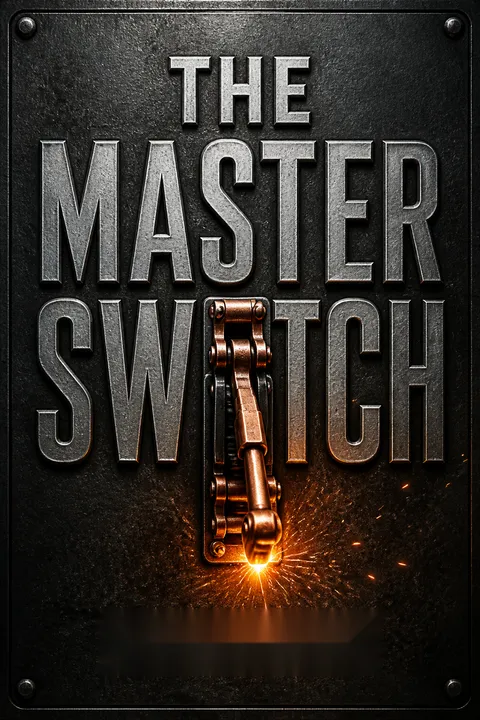


Key Takeaways
Expect every open medium to attract an empire, then a rebellion.
A repeating industrial rhythm. In 1916, AT&T chief Theodore Vail dazzled Washington's elite with a demonstration of the telephone network he hoped would span the country. The system represented the destination of a recurring pattern Tim Wu calls the Cycle: a new medium begins as an accessible experiment, then firms consolidate it into a reliable, profitable industry, often with government support. That order eventually becomes restrictive, inviting challengers to open the medium again.
The stakes reach beyond business. Telephone, radio, film, and television each passed through versions of this pattern. Their structure shaped what people could say, hear, and see, not merely what companies could sell. The Internet looks radically different from Vail's centralized network, but the book warns that novelty is no exemption from history.
The Cycle is most useful as a warning against technological fatalism. A new tool does not automatically produce a more democratic society, because ownership, standards, and access rules determine how people can use it. The pattern also clarifies why consolidation can feel beneficial at first: standardization and dependable service solve real problems. The challenge is to notice when those gains become a rationale for keeping control in fewer hands. The cycle is a powerful historical lens, though its recurrence is not proof of inevitability. Each turn depends on decisions by firms, regulators, and users.
Disruptive inventions need outsiders, allies, and protection from incumbents.
Invention is rarely solitary. Alexander Graham Bell and Elisha Gray pursued the telephone at nearly the same time, and earlier inventors had explored ways to transmit speech. Bell mattered not because history produced one magical genius, but because he was positioned to build an industry around a promising idea. His backer, Gardiner Hubbard, saw that telephony could challenge Western Union's telegraph business and helped defend Bell's patent.
A newcomer needs leverage. Western Union initially dismissed Bell, then deployed tens of thousands of its own telephones when it saw the threat. Bell survived partly because a takeover fight distracted Western Union and partly because its patent gave it legal leverage. Wu calls an incumbent's attempt to absorb or eliminate a possible successor the Kronos Effect. A disruptive idea needs more than technical merit: it needs allies and a route to market.
This account usefully separates invention from industrial change. A prototype can be brilliant and still have no consequence if its creator lacks capital, legal protection, distribution, or a partner who recognizes its threat to an established business. The concept also cautions against celebrating the lone inventor while ignoring the institutional work that turns an idea into a usable service. Patents can protect newcomers, but they can also become barriers in their own right. The relevant question is not whether an inventor deserves protection in the abstract, but whether the rules preserve room for competing uses and future improvement.
Scale can polish media while narrowing who gets heard.
Radio began as a public experiment. In the early 1920s, hobbyists, churches, universities, and businesses broadcast locally. Stations multiplied from five in 1921 to 525 by 1923. The shift toward advertising changed the incentives: broadcasters needed large audiences to sell, while networks could spread the cost of polished programs across many stations. AT&T's long-distance lines helped make national radio possible, and the Federal Radio Commission later reorganized the dial around powerful stations and networks.
Film followed another route. The Edison-led patent cartel limited imports, film length, and access to production. Independent producers broke its grip, but Adolph Zukor later combined production, distribution, and theaters, using bundled bookings to secure audiences. Both media gained scale and regular output. Both also concentrated decisions about programming and access, making commercial efficiency a force that could narrow cultural variety.
The tension here is not a simple choice between virtuous amateurs and villainous corporations. Networks can fund skilled performers, sustained reporting, and productions that scattered stations could not afford. Frequency interference also posed a genuine coordination problem for early radio. But a solution that favors a small number of powerful broadcasters makes the public's access to expression depend on commercial gatekeepers. A useful test is whether centralization solves a technical problem while preserving alternative routes for speakers and producers, or turns the solution into a permanent license to decide whose work counts.
A monopoly's quality control can become a veto on invention.
Control protected the system. In the 1940s, AT&T threatened to disconnect customers who attached Hush-A-Phone, a simple cup-shaped device that made calls harder to overhear. The company claimed outside equipment could damage service. After years of delay, a court ruled that customers could use a device that benefited them without harming the network.
Even brilliant research faced limits. Bell Labs engineer Clarence Hickman built an early answering machine using magnetic tape in the 1930s. AT&T stopped the work, fearing recorded conversations would discourage phone use. The idea remained buried for decades. Edwin Armstrong's higher-fidelity FM radio and early independent television efforts also faced industry resistance and restrictive rules. Bell Labs produced major scientific advances, but its parent company's interests constrained which discoveries could reach the public.
The examples expose a basic weakness in centralized planning: a company can coordinate research exceptionally well and still misjudge which experiments deserve to survive. Bell Labs demonstrates the genuine upside of long-term, well-funded research; the answering machine shows how easily that capacity can be subordinated to protecting an existing revenue model. Organizationally, this is a conflict between refining a successful product and exploring possibilities that might replace it. The claim should not be stretched to mean that every rejected invention was secretly world-changing. The stronger lesson is that no single institution can reliably predict which rejected idea users may find valuable.
Treat government as both a potential gatekeeper and a possible escape route.
Policy repeatedly chose the shape of media. The government accepted AT&T's regulated monopoly under the promise of broad telephone service. It helped commercial radio networks consolidate their reach, and the FCC restricted cable television when broadcasters saw it as a threat. In the 1970s, the Nixon administration helped loosen those limits, allowing cable to grow beyond its role as a rural signal booster.
Breakups changed the landscape. In 1948, a court ordered Hollywood studios to sell their theaters, weakening the studio system and the Production Code's control over what theaters showed. In 1984, AT&T was divided into regional companies. The transitions brought confusion and service problems, but also opened space for new devices, networks, and forms of film. Government was neither consistently pro-monopoly nor consistently pro-openness.
The historical record complicates the slogan that less government always means more freedom. Regulators sometimes protected established firms, but targeted rules and court action also created space for competitors. This is close to the idea of regulatory capture: agencies may come to serve the industries they oversee, particularly when those industries control expertise and access. Yet intervention carries its own risk. A government agency that picks a favored technology can freeze out alternatives in the name of orderly progress. The important distinction is between rules that preserve open entry and rules that prescribe a single winner.
Build networks where users, not carriers, choose what connects.
The Internet grew from practical limits. In the 1960s, J.C.R. Licklider imagined computers as tools for human thinking and communication. Paul Baran proposed dividing messages into packets that could travel by multiple routes, rather than reserving one fixed circuit controlled by a central switch. AT&T rejected the approach. Vint Cerf and Robert Kahn later developed TCP/IP, a shared protocol that let separate networks exchange information without surrendering their independence.
Keep intelligence at the edges. The Internet's end-to-end principle places many decisions with users and applications, while keeping the network's basic transport relatively general. This made it possible for new services to run across infrastructure owned by others. The architecture was not a complete utopian blueprint. It emerged partly because its designers lacked the power and money to build a single controlled network.
The Internet's architecture illustrates how constraints can produce institutional innovation. Because its designers could not own every wire or dictate every application, they created a system that tolerated different networks and uses. That design distributes experimentation: new services can reach users without first winning approval from a central operator. Yet a decentralized protocol does not eliminate physical chokepoints. Carriers still own much of the infrastructure, and popular intermediaries can gain considerable influence. The architecture creates room for openness; maintaining that room depends on rules and practices governing the points where control still accumulates.
Internet openness rewards useful connections, not ownership of everything.
Integration met a different kind of network. In 2000, AOL and Time Warner merged in a $350 billion deal meant to unite online distribution with a vast library of media. The strategy assumed AOL could steer its subscribers toward Time Warner content. But broadband made AOL's dial-up access redundant, and the open Internet let users go wherever they chose. The merger collapsed.
Specialization proved more compatible. Google built its business around search rather than owning the content it organized or the wires that carried it. Apple pursued a contrasting model: tightly controlled devices and partnerships that made media convenient and polished, but limited what users and developers could do. Neither model is pure. The Internet depends on physical carriers, while open platforms can still concentrate power in search, devices, or app stores.
The AOL-Time Warner failure shows that corporate assets do not automatically create control over users. On an open network, people can ignore the preferred destination and follow links elsewhere. That weakens the old logic of owning production, distribution, and exhibition in one company. Still, openness is not the same as equal influence. Search ranking, default settings, and device rules can shape choices without formally blocking them. The useful distinction is between integration that makes a service work better and integration that lets one firm decide which alternatives users can reach.
Separate content, networks, and access before one owner controls them all.
Wu's remedy is structural. The Separations Principle calls for keeping content creation, network infrastructure, and the tools or venues that give people access from falling under the control of one integrated power. It also cautions government against favoring a particular technology or protecting an incumbent. The aim is not to abolish large firms, but to limit conflicts of interest and keep alternate paths available.
Price is not the only measure. The Edison cartel kept films cheap while restricting what could be made. AT&T offered dependable service while delaying technologies that threatened its business. Wu argues that antitrust, which often focuses on prices and market behavior after the fact, may miss losses in expression and innovation. Common-carriage rules and net neutrality offer one way to prevent network owners from favoring some traffic over other traffic.
The proposal treats communications architecture as a safeguard for political freedom, not merely a question of corporate organization. Separating layers can reduce incentives to disadvantage rivals and gives each part of the system room to innovate. Its strength is preventive: society need not wait for a monopolist to abuse power before preserving alternatives. The difficulty is drawing boundaries in industries where integration can lower costs, improve security, or produce a coherent experience. A workable version would need to protect interoperability and nondiscriminatory access without assuming that every partnership or bundled product is inherently harmful.
Analysis
The book's strongest move is to treat communications history as institutional history. A telephone, radio station, film studio, or protocol is not socially neutral once the costs of access, ownership, and distribution are settled. Wu makes that point memorable by moving between inventors and moguls, from Bell's patent struggle to Sarnoff's broadcast empire, then from the breakup of AT&T to the architecture of the Internet. The repeating pattern gives the reader a usable question: who controls the route between a speaker and an audience?
The argument is persuasive when it shows that public policy and corporate strategy jointly shape markets. It is less conclusive when the Cycle risks sounding like a law of nature. Similar outcomes recur, but the causes vary: scarce spectrum, network effects, high capital costs, advertising incentives, legal privileges, and deliberate lobbying are not interchangeable. Nor does decentralization guarantee broad participation. Attention, search, and device interfaces can concentrate power even when the underlying protocol remains open. Conversely, central coordination can support expensive research and reliable service that fragmented markets may undersupply.
The Separations Principle is therefore best read as a design norm rather than a universal ban on integration. It identifies conflicts that deserve scrutiny, especially when one firm controls content, carriage, and access, or when public authority protects that arrangement. Its success depends on precise rules: interoperability, nondiscrimination, and credible remedies matter more than abstract hostility to size. The book's enduring contribution is to make industrial structure visible as a condition of speech. It asks readers to look beyond the novelty of a device and examine the rules that decide who can use it, who can reach others through it, and who can alter the system.
Review Summary
The Master Switch receives mostly positive reviews for its insightful analysis of information empires throughout history. Readers appreciate Wu's exploration of monopolies in telecommunications, radio, television, and the internet. The book's historical detail and examination of regulatory issues are praised. Some criticize Wu's bias towards Google and find the "Cycle" concept strained. Many consider it a must-read for understanding the evolution of information technologies and their impact on society, though a few find it overly US-centric or outdated in parts.
People Also Read







Glossary
The Cycle
Open-to-closed media patternWu's name for the recurring movement of information technologies from open experimentation to centralized industry, followed by challenges that reopen the medium. New systems attract users and investment, but demands for reliability, scale, and revenue encourage control by dominant firms, often with government support. Once control becomes restrictive, new technologies, competitors, or policy changes can disrupt it.
Kronos Effect
Incumbent absorbs challengersThe effort by a dominant company to neutralize a potential successor before it can threaten the incumbent's business. The term refers to the mythological Kronos, who tried to prevent his children from overthrowing him. In Wu's examples, incumbents may suppress a rival technology, buy it, or reshape it so that it supports rather than disrupts their existing business.
founder's myopia
Inventor misses wider usesThe tendency of an inventor or founding company to see only the uses initially intended for a technology. Other users may discover functions the original creator never anticipated. Wu illustrates the idea with rural telephone cooperatives, which used phone lines for community entertainment and local broadcasts, expanding the medium beyond the purposes its inventors had imagined.
common carriage
Nondiscriminatory public serviceA legal and institutional duty imposed on certain essential services to serve customers on fair, nondiscriminatory terms. A common carrier generally carries traffic for those willing to pay, without choosing favored users or content. Wu applies the idea to communications infrastructure, arguing that control over essential networks creates responsibilities beyond those of an ordinary private business.
end-to-end principle
Put decisions at network edgesA design principle that keeps the network's central infrastructure relatively general while allowing users and applications at its ends to supply many functions. In the Internet context, this makes it easier for new applications to operate without permission from the carrier. It reflects a distribution of decision-making power away from a central network owner.
Separations Principle
Keep information layers apartWu's proposed framework for limiting concentrated power in communications. It calls for distance between those who create information, those who own the infrastructure that carries it, and those who control tools or venues of access. It also cautions government against favoring particular technologies or protecting entrenched firms, preserving alternatives and reducing conflicts of interest.
parallel exclusion
Bundling crowds out alternativesA condition in which several powerful firms adopt similar selling practices, with the combined effect of denying rivals access to customers even without an explicit agreement among the firms. Wu applies the idea to block booking in film: theaters forced to take studios' unwanted titles had less room to exhibit films from independent distributors.
FAQ
What's The Master Switch about?
- Exploration of Information Empires: The Master Switch by Tim Wu examines the rise and fall of information industries, focusing on how new technologies often start as open systems but eventually become monopolized.
- The Cycle Concept: Wu introduces "The Cycle," describing the typical progression of information technologies from open to closed systems, highlighting historical patterns in telephony, radio, film, and the Internet.
- Historical Context: The book provides a historical narrative, detailing key figures like Theodore Vail of AT&T and Adolph Zukor of Paramount Pictures, and their roles in shaping the information landscape.
Why should I read The Master Switch?
- Understanding Modern Media: Reading this book helps readers understand the dynamics of modern media and the implications of monopolistic control over information.
- Lessons from History: Wu draws parallels between past information empires and current technologies, offering insights into how history may repeat itself with the Internet.
- Critical Thinking: The book encourages critical thinking about the future of information technologies and the importance of maintaining open systems for innovation and free expression.
What are the key takeaways of The Master Switch?
- Open to Closed Transition: Every major information technology has transitioned from an open, innovative phase to a closed, monopolistic one, often stifling creativity and diversity.
- Role of Monopolies: Wu argues that monopolies, while sometimes efficient, can lead to a lack of innovation and reduced public discourse, as seen with AT&T and Hollywood studios.
- Importance of Regulation: The author discusses the role of government regulation in shaping industries, suggesting that without oversight, monopolies can flourish at the expense of public interest.
What is "The Cycle" as defined in The Master Switch?
- Definition of The Cycle: Wu defines "The Cycle" as the historical pattern where new information technologies start as open systems, encouraging innovation, but eventually become monopolized and closed off.
- Historical Examples: The Cycle is illustrated through various technologies, including telephony, radio, and film, each of which began with open access but ended up dominated by a few powerful entities.
- Implications for the Internet: Wu warns that the Internet, despite its current openness, may also be subject to The Cycle, leading to potential monopolistic control in the future.
How does The Master Switch relate to the Internet?
- Current Context: Wu discusses the Internet as the latest information technology that began with open access and innovation but faces threats of monopolization from large corporations.
- Historical Parallels: The book draws parallels between the early days of the Internet and previous technologies, suggesting that the same patterns of control and closure may emerge.
- Call for Vigilance: Wu emphasizes the need for vigilance and advocacy for open systems to prevent the Internet from following the same path as earlier information empires.
What role does government play in the information industries according to The Master Switch?
- Regulatory Influence: Wu discusses how government regulation can either support or hinder the development of information industries, often favoring established monopolies over new entrants.
- Historical Examples: The book provides examples of how government actions, such as the Kingsbury Commitment with AT&T and the breakup of Hollywood studios, shaped the landscape of information industries.
- Need for Balance: Wu argues for a balanced approach to regulation that encourages competition and innovation while preventing monopolistic practices.
What is the Separations Principle mentioned in Master Switch?
- Definition of the Principle: The Separations Principle advocates for keeping different layers of the information economy—content creation, distribution, and access—distinct from one another.
- Historical Context: Wu argues that historical monopolies, like AT&T, demonstrate the dangers of vertical integration in information industries.
- Implementation: The principle suggests that regulatory bodies like the FCC should enforce rules that prevent monopolistic practices, ensuring a more equitable information landscape.
How does Tim Wu define the concept of net neutrality in Master Switch?
- Core Definition: Net neutrality is the principle that Internet service providers must treat all data on the Internet equally, without discriminating or charging differently by user, content, website, platform, or application.
- Historical Context: Wu connects net neutrality to the historical struggles for open communication channels, emphasizing its importance in preventing monopolistic control over information.
- Implications for the Future: The book warns that without net neutrality, the Internet could become a closed system dominated by a few powerful entities.
What are the best quotes from The Master Switch and what do they mean?
- “At stake is not the First Amendment or the right of free speech, but exclusive custody of the master switch.”: This quote underscores the central theme of the book, highlighting the importance of who controls information and communication technologies.
- “History shows a typical progression of information technologies: from somebody’s hobby to somebody’s industry.”: This reflects Wu's argument about the inevitable transition from open innovation to monopolistic control.
- “The brave new technologies of the twentieth century… eventually evolved into privately controlled industrial behemoths.”: This quote encapsulates the book's warning about the dangers of monopolization and the loss of public access to information.
How does The Master Switch address the concept of free speech?
- Connection to Information Control: Wu posits that free speech is closely tied to who controls information technologies, suggesting that monopolies can limit the diversity of voices and ideas.
- Censorship Mechanisms: The book explores how centralized control over media can lead to censorship, whether through formal regulations or informal pressures from powerful entities.
- Advocacy for Openness: Wu advocates for maintaining open systems in information industries to ensure a vibrant marketplace of ideas and protect free speech.
What are the historical examples used in Master Switch?
- AT&T and the Telephone Monopoly: Wu details the rise and fall of AT&T, illustrating how it became a monopoly and the subsequent breakup in the 1980s.
- The Film Industry: The book discusses the emergence of Hollywood and the establishment of the studio system, highlighting how vertical integration stifled competition and creativity.
- Cable Television: Wu explores the deregulation of cable television in the 1970s and 1980s, showing how it transformed the media landscape.
How does The Master Switch conclude regarding the future of information industries?
- Cyclical Nature: Wu concludes that the cyclical nature of information industries suggests that without intervention, monopolies will continue to emerge and stifle innovation.
- Call to Action: The author calls for active engagement from consumers, policymakers, and innovators to advocate for open systems and resist the encroachment of monopolistic control.
- Hope for Change: Despite the challenges, Wu expresses hope that history can inform future actions, allowing society to navigate the complexities of information technology and maintain a diverse and open media landscape.
About the Author
Other books by Tim Wu

Download PDF
Download EPUB
.epub digital book format is ideal for reading ebooks on phones, tablets, and e-readers.








