

Key Takeaways
Engineer surprise from the start; twists are tools, not lightning strikes.
Surprise has a craft. Cleland groups three ways to unsettle a reader as TRDs: a Twist changes the story’s direction unexpectedly, a Reversal delivers the opposite of what the reader expects, and heightened Danger adds a sense of risk. A jolt matters only if it changes what the reader fears, hopes, or understands. In the book’s opening anecdote, a child hears her mother scream and expects something terrible. The reveal is joyful: her mother’s novel has sold. The reversal works because it turns the reader’s first interpretation upside down.
Plant before payoff. Writers know more than readers do. They can seed clues, conceal relevant facts, then reveal them when the story is ready. TRDs are deliberate tools, not gifts from inspiration, and can work in fiction, memoir, and other forms when a central conflict gives them something to disrupt.
What's striking is that surprise depends less on sheer novelty than on the reader's model of what is likely. The scream matters because the scene has taught the reader how to interpret it, then revises that interpretation. This resembles a well-designed puzzle: information is withheld, but the solution still feels earned. The practical risk is confusing unpredictability with randomness. A shocking event can seize attention briefly, but without a meaningful change in the story or a clue that makes it credible, it weakens the reader's trust.
Build conflict from what a character needs, not from the event itself.
Events need a witness. An accident, threat, or lost opportunity becomes story material when someone cares about it and reacts. Cleland therefore begins with a character’s longing, then asks what opposes it and what the character will do. Her three questions for studying successful stories are: Who wants what? What are they willing to do to get it? Who or what stands in their way?
Make the stakes personal. A parent’s disappearance can be a plot fact, but a mother’s devotion makes it an urgent conflict. In another example, a widowed mother tries classes, travel, and volunteering to ease her sadness, yet remains lonely because what she wants is intimacy and to feel valued. Her outward busyness cannot solve the need beneath it. That mismatch gives a plot emotional direction.
This approach shifts plotting from a calendar of incidents to a model of motivated behavior. It also helps distinguish a dramatic event from a dramatic conflict: the event supplies pressure, while the character's values determine its meaning. That distinction is useful beyond fiction, since the same circumstance can produce different choices in different people. One caution is that a character's need should not become a tidy diagnosis that explains every action. Contradictory motives and mistaken self-understanding often make a person feel more alive.
Make motives specific enough to explain both loyalty and betrayal.
Name the pressure. Cleland uses “prime motivators” to connect a character’s choices with basic needs such as physical survival, security, belonging, esteem, and self-actualization. A character may claim to want money, for example, while actually wanting safety, freedom, or recognition. Understanding that deeper need makes behavior more credible and less stereotyped.
Use MICE as a prompt. In espionage, four broad motives for betraying a country are grouped as MICE: Money, Ideology, Coercion, and Ego. The categories can also inspire motives outside spy stories. Someone might sell a passport to fund a child’s treatment, act on a political conviction, submit to blackmail, or risk exposure to prove superiority. The act alone does not explain the character. The motive reveals what they value, what they fear, and what they may sacrifice.
A motive becomes dramatically useful when it explains a cost, not just a desire. The MICE categories help generate possibilities, while the needs beneath them add emotional specificity: money can mean security, and ego can mean a hunger for belonging or esteem. That layered view resists the flat villain whose only motive is greed. The categories are prompts, not a complete map of human behavior. People often act from several motives at once, and a character may misunderstand the reason for their own choices.
Use perception gaps to make truth contested, not merely hidden.
Different eyes, different stories. A perception gap is a difference in how two people interpret the same event. Cleland’s story of a stolen piano shows how easily appearances can mislead: three men in work clothes present a work order and wheel a baby grand out of a conservatory. An assistant and a student accept the scene as legitimate until the truth becomes clear. The theft is a Twist because it breaks their expectations without being the opposite of them.
Build from assumptions. A character’s beliefs, past experience, and emotional state shape what they notice and how they explain it. Two friends can look at the same rooftop view and one see beauty while the other sees neglect. Such differences can reveal insecurity, expose a secret, or create friction between characters. The writer’s task is to make each perspective feel sincere, even when perspectives conflict.
Perception gaps are powerful because they turn the reader into an interpreter. The question is not only what happened, but whose account deserves trust and what each person stands to gain from their version. The piano theft also demonstrates how social signals can substitute for verification: clothes, confidence, and paperwork appear to confirm authority. In a story, that can create suspense; in real life, it is a reason to check evidence. The technique works best when characters have distinct reasons for seeing events differently, rather than simply being wrong to delay a reveal.
Give the opening a question the ending is obligated to answer.
Make a promise early. Cleland calls the central question held out to readers the narrative question. It signals what the story is asking and creates a promise that the ending must address. The question should appear near the beginning, through action, dialogue, or description, rather than waiting behind a long stretch of background information.
Start with a live moment. An effective opening is unusual, evocative, emotional, and incident-based. Description can still establish a setting, but it should be connected to what a character is doing or feeling. In Hallie Ephron’s mystery, brief details of a Southern porch introduce the setting before the story raises the question of what happened to a child who disappeared decades earlier. The place creates atmosphere; the unresolved disappearance gives the reader a reason to continue.
A narrative question works like a reader-facing contract: it establishes which uncertainties deserve attention. That contract can be explicit or quietly embedded in a scene, but it helps prevent an opening from becoming a collection of attractive details without direction. The idea also clarifies why action need not mean spectacle. A small, emotionally charged event can be more compelling than a chase if it creates a consequential question. The promise should not be so narrow that it flattens the story, or so vague that readers cannot tell what kind of answer to expect.
Let the spacing of reversals determine your story's speed.
Pace is designed. Jane’s Plotting Road Map treats the main plot as a route punctuated by TRDs. In a traditional mystery, Cleland suggests that major turns might appear around pages 70, 140, 210, and 280, but stresses that these are flexible guideposts, not a universal formula. More frequent turns can create a faster pace; wider spacing can make room for a slower, more reflective story.
Choose a frame that fits. Subplots can run alongside the main route, with their own incidents and eventual points of connection. A novel can move chronologically, or use a nonlinear structure when a unifying theme gives the shifts coherence. The right pace and structure depend on genre, audience, and the story’s emotional material. Studying comparable books helps writers recognize expectations without copying another author’s plot.
The road map makes pacing visible as a pattern of changing expectations, rather than a vague feeling that a manuscript is slow. Its value is diagnostic: a long stretch without meaningful change may need a turn, while relentless escalation can leave no room for interpretation or emotional recovery. The page markers are most useful as a starting hypothesis. Genre conventions matter, but a story’s subject can justify a slower or faster rhythm than its category usually promises. Structure should clarify the reader’s experience, not display the writer’s cleverness.
Keep only twists that pass intrigue, credibility, and evidence.
Test the turning point. Cleland’s ICE assessment model checks whether a TRD creates intrigue, feels credible, and provides evidence through observable details. In other words, readers should want to know what happens, believe the event and the characters’ reactions, and experience the moment rather than receive a bare report of it.
Let the character earn it. In Owen Laukkanen’s thriller The Professionals, a young kidnapper unexpectedly displays a gun during an argument with his partners. Their reactions reveal a new fracture in the group, while the weapon makes the threat tangible. The moment surprises, fits the criminal situation, and changes how the characters understand one another. A twist that lacks this kind of preparation can feel inserted just because the writer wants excitement. If it does not fit, change the event or prepare the character more fully.
The ICE test usefully separates three questions that writers often collapse into one: Is the moment surprising, is it believable, and is it presented concretely? A scene can succeed on one dimension and fail on another. A plausible event may be dull, while a startling event may feel manipulative. The example also shows that evidence includes reactions, not just objects: the other characters’ alarm tells readers how the gun changes the room. The test is a craft aid, not a mechanical score. Emotional consequence still requires judgment.
Stretch anticipation; a surprise is a spark, suspense is fuel.
Do not spend the tension too soon. Surprise is a sudden change in what the reader expects. Suspense keeps the reader waiting to learn what that change will mean. Cleland advises using surprises to punctuate suspense, because the shock itself is brief while anticipation can hold attention across a scene or longer.
Keep consequences in view. After a character makes a dangerous choice, readers may wonder who will discover it, what it will cost, or whether the character can still turn back. In The Professionals, the group of kidnappers faces increasingly difficult obstacles, and a member’s display of a gun changes the risk within the group. The weapon is an event; uncertainty about how the partners will respond sustains tension. A story needs both turns and consequences, not a constant parade of shocks.
This distinction explains why a plot can contain many surprises yet feel strangely inert. If each reveal is resolved immediately, the reader has little time to anticipate consequences. Suspense depends on managing that interval between threat and outcome, when several futures remain imaginable. The idea also supports variation: a quiet scene can retain tension if a consequential question remains open. However, delay alone is not suspense. Repeating the same uncertainty without new information or changing stakes can feel like withholding for its own sake.
Give two subplots independent conflicts that converge at the climax.
Add lives beyond the main problem. Cleland recommends two subplots to create complexity without overwhelming the central story. Each needs its own conflict and should help develop character, reinforce the theme, or contribute to the ending. A subplot can grow from a minor character, an apparently unrelated part of the protagonist’s life, an emotion mirrored by another character, or a nonfiction element that showcases knowledge or skill.
Connect without forcing. In Cleland’s art-thief example, a colleague becomes a potential accomplice, while a journalist’s interest in the thief’s reformed life creates a second storyline. These threads give the protagonist relationships and pressures beyond planning the heist. Subplots may intersect with the main plot, but their resolutions should ultimately contribute to the larger story. They are not decorative detours. If a thread neither changes a character nor affects the story’s meaning or outcome, it may not belong.
Subplots help a story feel inhabited because people rarely face one problem in isolation. Their strongest function is not simply adding length, but revealing how a character behaves under different kinds of pressure. A colleague may expose the protagonist’s judgment, while a second storyline tests the identity the protagonist claims to have. The recommendation of two offers a useful planning limit, especially for writers prone to accumulating loose threads. Still, the right number depends on the work. A short story may need none, while an ensemble narrative may require more.
Make the ending feel startling in hindsight, not imported.
Close the promises. Cleland describes three broad ways to end: bring plotlines together in a seamless resolution, reveal that a narrator’s account has been unreliable, or widen the reader’s view of the story. Each approach should answer the central questions and resolve the conflicts the story has raised. A last-minute revelation cannot substitute for that work.
Plant the logic. Foreshadowing prepares readers to accept an ending without making it obvious in advance. In the book’s memoir example, a critical relative’s perspective is introduced early, then later shown to reflect the relative’s own limitations more than the subject’s character. The shift changes the meaning of earlier scenes while drawing on clues already present. A satisfying ending can surprise in the moment and still feel inevitable when the reader looks back.
The strongest ending changes the interpretation of what came before without making earlier scenes feel dishonest. This is why foreshadowing is more than planting a convenient clue: it establishes a pattern of values, perceptions, or behavior that the conclusion can reveal in a new light. The three ending approaches also serve different reader pleasures. Closure rewards coherence, an unreliable narrator invites reassessment, and a wider view gives the story thematic scale. The writer should choose according to the promise made at the opening, not simply select the most dramatic final trick.
Beat writer's block by deciding the next small action.
Shrink the assignment. Cleland argues that a writer overwhelmed by an entire book can focus instead on reaching the next TRD. She also describes writing in ten-minute intervals, using brief notes to mark unresolved wording, and leaving a clear reminder of what to tackle next. These methods reduce the effort required to restart and keep imperfect passages from stopping progress.
Separate drafting from judging. The book distinguishes a useful internal editor from a destructive internal critic. Revision improves the work; self-mockery and perfectionism can prevent the work from being written. A friend can also read a draft and mark where they stop, helping locate passages that may need more tension. The practical lesson is to build a repeatable process, then evaluate the writing when there is enough material to evaluate.
These techniques treat creative work as both imaginative and procedural. A small, defined task lowers the psychological cost of beginning, while leaving a note for the next session reduces the friction of returning. The distinction between editing and self-criticism is especially useful: one asks how to improve a passage, the other questions whether the writer should continue at all. Still, productivity tools cannot solve every obstacle. Sometimes the next useful action is not drafting, but reconsidering a plot choice that no longer feels meaningful.
Analysis
Cleland’s central contribution is to make surprise a consequence of story design rather than a lucky accident. Her method begins with the character’s longing, moves through conflict and perception, then uses a reader-facing question to establish what the story promises. Twists, reversals, and danger can then alter the reader’s expectations without detaching from the emotional logic already built. This sequence matters: a shocking event is not inherently a strong plot point. It becomes effective when it changes the character’s situation, reveals something meaningful, and deepens the uncertainty the reader cares about.
The book’s most useful practical move is its emphasis on preparation and diagnosis. The plotting road map turns pacing into a visible pattern, while the ICE model asks writers to inspect a turning point for interest, plausibility, and concrete presentation. These tools can help writers who rely on instinct but struggle to explain why a story feels slack or contrived. Studying successful books adds another layer, letting writers notice how genre expectations shape pacing and payoff.
The method also contains a productive tension. It encourages writers to learn patterns from genre examples, but insists that character behavior remain individual and emotionally credible. That balance is essential. Genre conventions create a shared language with readers, yet predictable formulas can make outcomes feel prepackaged. The frameworks work best as questions rather than rules: What is expected here? What would genuinely disrupt that expectation? What has the story already taught readers to believe?
The book is especially strong on the reader’s changing interpretation of events. Its examples show that suspense arises not only from danger, but from uncertainty about motives, relationships, and meaning. Its advice on endings follows the same principle: the conclusion should reframe or complete the story’s promises, not merely add a final shock. The result is a practical craft guide whose deepest lesson is that surprise feels magical when the preparation is invisible but present.
Review Summary
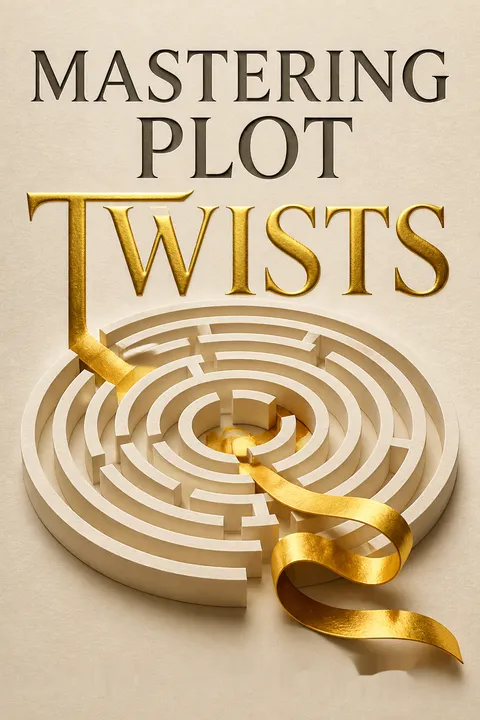
Mastering Plot Twists receives mostly positive reviews, with readers praising its informative content, practical examples, and useful exercises. Many find it helpful for understanding pacing, character motivation, and plot structure. Some criticize the overabundance of examples and dry analysis. The book is seen as valuable for both new and experienced writers, offering insights into creating engaging narratives across genres. However, a few reviewers note that it doesn't focus exclusively on plot twists as the title suggests.
People Also Read




Glossary
TRDs
Three kinds of plot turnsAn abbreviation for plot Twists, plot Reversals, and moments of heightened Danger. A Twist changes the story unexpectedly, a Reversal turns events opposite to the reader’s expectation, and heightened Danger introduces physical, emotional, mental, or spiritual risk. Cleland treats these as planning tools that can create tension, reveal character, and influence pacing.
perception gap
A difference in interpretationA divergence between how two or more people interpret the same event, person, or circumstance. The difference may come from distinct experiences, beliefs, emotions, or incomplete information. In storytelling, perception gaps can create conflict, invite readers to question competing accounts, and reveal motives that would remain hidden if every character understood events in the same way.
narrative question
The story’s central promiseThe underlying question a story raises for readers and promises to address by its conclusion. It should appear early enough to give the story direction and help readers understand what uncertainty matters. The question can be stated directly or suggested through action, dialogue, and description, but the ending should answer it in a way that fits the story.
MICE
Four motives for betrayalA mnemonic for Money, Ideology, Coercion, and Ego, four broad motives used to explain why someone might betray a country or organization. Cleland applies the categories more widely to character development. They are prompts for exploring a character’s needs and pressures, not a complete classification of human motivation; several motives may operate at once.
prime motivators
Underlying human needsThe fundamental needs that help explain why a character cares about a conflict and how that person may respond. Cleland draws on a hierarchy of needs, including physical survival, security, belonging, esteem, and self-actualization. Identifying the need beneath a stated goal can make behavior more emotionally specific and help connect a character’s conflict to broader themes.
Jane’s Plotting Road Map
A plot and pace plannerA planning tool that places the primary plot on a central route and tracks turning points across the story. It also allows writers to map two subplots alongside the main action. The spacing and frequency of plot developments can be adjusted to suit genre, voice, and reader expectations, making the map a flexible guide rather than a fixed formula.
ICE assessment model
A test for plot turnsA framework for assessing whether a Twist, Reversal, or danger moment is effective. Its three elements are Intrigue, meaning the event makes readers curious and engaged; Credibility, meaning it fits the story and its emotional logic; and Evidence, meaning the event is presented concretely enough for readers to experience and believe it.
Principle of FURY
A guide to word choiceA word-selection principle that prioritizes language familiar to readers unless a less common choice offers a specific advantage. FURY represents Familiar words, Unique words, Rich words, and a writer’s preferred words. The principle encourages clarity first, while leaving room for precise or expressive language when it adds meaning, texture, or voice.
About the Author
Other books by Jane K. Cleland
Download PDF
Download EPUB
.epub digital book format is ideal for reading ebooks on phones, tablets, and e-readers.








