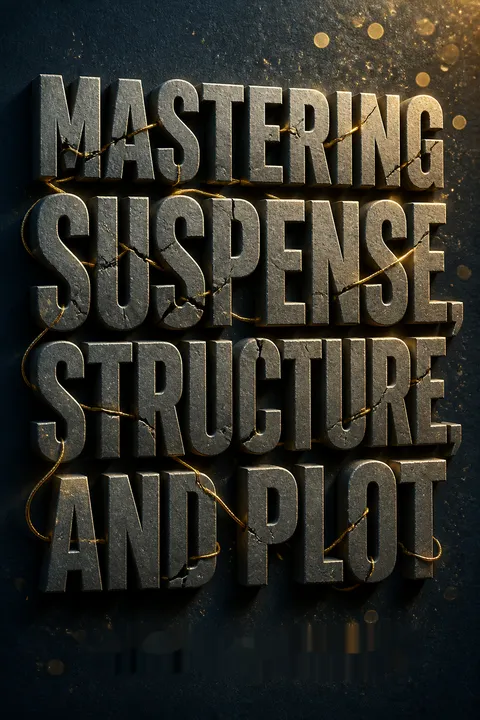


Key Takeaways
Make readers feel a promise, then keep it while surprising them.
Suspense begins with a gap. Readers care when something may happen to a character they care about, but they do not yet know what. Cleland opens with a daughter rushing to her mother after an urgent call. The scene suggests awful news; the letter reveals that her mother has been accepted to graduate school. The tension comes from the uncertainty, not from danger itself.
Genre supplies the promise. Readers of a cozy mystery expect a particular world and emotional experience; a thriller offers different stakes and pace. Cleland learned this when her editor pointed out that a dark, volatile draft no longer delivered the comforting atmosphere her cozy readers expected. Fresh plots work best when they surprise within recognizable expectations.
This is a useful distinction between predictability and reliability. Readers can welcome an unforeseen event while still trusting the story to honor its emotional contract. That resembles a well-designed game: rules make play possible, while uncertainty makes it interesting. Genre conventions can also be challenged, but readers need cues that the challenge is deliberate. Otherwise, novelty may feel less like invention than a broken promise. The practical question is not whether a writer should obey genre, but which expectations are essential to the intended experience and which can be productively disturbed.
Choose a structure that makes your story’s central question unavoidable.
Structure gives events shape. Cleland distinguishes the overall organization of a story from its point of view and from whose experiences it presents. A chronological structure offers clarity; a nonlinear one can connect different periods, characters, or storylines, but risks confusing readers if its complexity has no purpose. Bookends, categories, flashbacks, and flash-forwards can add another layer when they reinforce the story’s themes.
Start with the story’s compass. A narrative question is the central uncertainty raised by the situation and answered by the ending. For a domestic thriller, it might be whether a woman can escape a threat; for a memoir, whether a man can meet the demands of family without losing his life to them. Choose structure to serve that question, not to show off a technique.
The distinction between structure and chronology matters because organization controls what readers can infer, and when. Nonlinear storytelling can create comparison and reinterpretation, not merely conceal information. Yet complexity has a cognitive cost: readers must track time, perspective, and causal relationships while also caring about the characters. A structural choice earns its place when it adds meaning that a straightforward timeline could not provide. The central question is a strong design test, though not every valuable work needs a single mystery-like question. Some stories create momentum through accumulating tensions instead.
Plan suspense in milestones instead of facing the whole manuscript at once.
Give the plot a route. Jane’s Plotting Road Map is Cleland’s planning method: a primary plot moves along a main route, while two subplots develop alongside it. The map also schedules TRDs, meaning twists, reversals, or moments of heightened danger. A twist redirects expectations; a reversal turns events against their expected course; danger raises immediate stakes.
Treat the numbers as a starting point. For a roughly 300-page manuscript, Cleland suggests placing major TRDs about 70 to 90 pages apart and bringing in a subplot scene about every 40 pages. A fast thriller may need major turns every 30 to 50 pages; a leisurely story may space them 90 to 110 pages apart. The writer can draft from one milestone to the next rather than confronting the entire book at once.
The map turns a vague ambition, such as making a book gripping, into a sequence of manageable design decisions. Its deeper value is diagnostic: a long stretch without a change in danger, expectation, or character pressure may be where momentum fades. The page intervals are best understood as a craft heuristic, not a law. Page counts vary with format, and suspense can arise from emotional reversals as powerfully as physical threats. The writer’s test is whether each milestone changes what the reader expects or what the protagonist must do.
Make setting reveal character instead of pausing the story for scenery.
Place should affect action. A setting feels convincing when a character has a reason to be there and responds to its particular conditions. Cleland warns against sending a cautious person upstairs into a haunted attic merely because the plot needs it. Instead, establish traits and habits that make the character’s choices plausible. A danger scene becomes stronger when it grows from those established traits.
Describe what matters now. Rather than presenting a full account of an underground tunnel system, show what a character notices while fleeing through it or using it to outwit a pursuer. A familiar suburb can also become unsettling when it contrasts with grief, fear, or family conflict. Sensory details are most effective when they shape mood, expose a character’s perspective, or help the action unfold.
This approach treats setting as an active part of a story’s causal system, not a painted backdrop. Environmental psychology offers a useful parallel: people behave differently in spaces that feel exposed, crowded, familiar, or dangerous. That makes place an economical way to communicate pressure without explanatory narration. Still, description is not inherently a drag on pace. A sustained description can create immersion or establish a distinct imaginative world. The question is whether the detail changes the reader’s understanding or experience, rather than whether it is description at all.
Give every subplot a purpose, a full arc, and a clear connection to the main plot.
A side story must do work. Cleland recommends two subplots for many conventionally plotted books. They can complicate the main action, reveal a quality that will matter later, mirror the theme, or introduce useful knowledge. A character who spends time patiently whittling, for instance, may later be credible under pressure because the subplot has shown patience and steady hands.
Make the threads resolve. In Cleland’s domestic-thriller case study, the protagonist’s mother’s dementia and the ex-husband’s stalking develop as separate lines alongside the main threat. Each changes what the protagonist must manage, and each reaches a resolution. A secondary character or fascinating diversion is not automatically a subplot. If a thread receives attention but never affects plot, character, or theme, readers may feel that the story promised a payoff it never delivered.
Subplots can make a story feel like a social world rather than a single problem being mechanically solved. They also let a writer distribute information across action, which is often more engaging than stopping for explanation. The constraint is important: additional threads increase the reader’s tracking burden. A subplot should have enough independence to feel alive, but enough connection to make its presence worthwhile. In a deliberately sprawling family saga, several extra threads may be essential. In a tightly paced thriller, restraint is often the more difficult and more effective choice.
Use isolation to make a character’s vulnerabilities shape the action.
Aloneness has two forms. Physical isolation keeps a character away from other people; social isolation makes someone feel excluded or unable to belong. Either can serve as a plot event, a theme, or backstory that explains behavior. Cleland uses the image of Kayla hearing her stolen phone ring inside a supposedly empty house: she may be trapped with an intruder, the police have left, and she has few people to call. The danger gains force because the character is already vulnerable.
Make the pressure personal. Isolation can explain why a character freezes, lashes out, or takes a risk. It can also reveal contradictions, such as a loner who enjoys people when they approach. The writer’s task is not simply to announce loneliness, but to show its consequences through choices, relationships, and sensory experience.
Isolation is powerful because it is both a physical condition and an interpretation of one’s place among others. Social psychology links exclusion with distress and heightened attention to social cues, which gives writers a plausible source of vigilance, shame, or misread intentions. The concept should not become a shortcut for making characters violent or damaged. People respond to solitude in many ways, and chosen solitude can be restorative. Specific history and individual coping strategies make isolation believable; a generic label usually does not.
Make readers misjudge people through credible clues, not arbitrary concealment.
People mistake impressions for proof. Cleland uses red herrings, details that divert attention from an underlying truth, to exploit familiar habits of judgment. The halo effect makes one admirable quality spill over into assumptions that someone is good in every respect; the devil effect lets one disliked trait color everything else. A character’s expertise can create another kind of misdirection, since an informed observer notices details others miss, while readers may not know their significance.
Keep the trail fair. A detail can be planted casually, repeated, or left conspicuously absent. In Conan Doyle’s “Silver Blaze,” the dog’s failure to bark matters because the expected warning never comes. Red herrings should grow from character and circumstance, not from information the story could not honestly withhold. If an innocent person is made to look guilty, the eventual truth should restore the balance.
The technique is persuasive because it mirrors everyday cognition: people form quick impressions, then selectively interpret new evidence to fit them. In that sense, a good red herring does not trick readers with a cheap omission; it lets them participate in the same interpretive mistake as the characters. This also creates an ethical dimension. Readers may enjoy being misled, but they tend to resent feeling that the author changed the rules. A fair clue need not be obvious. It does need to become meaningful in retrospect without requiring information unavailable at the time.
Let surprise jolt the reader, then use anticipation to sustain suspense.
A shock is brief; anticipation lasts. Cleland recounts Alfred Hitchcock’s contrast between a bomb that explodes without warning and one the audience sees planted beneath a café table. The first produces a sudden jolt. The second makes every ordinary moment tense because viewers know the danger and wait to see whether anyone will notice or act. Surprise is an unexpected event; suspense is sustained uncertainty about what will happen.
Make surprises belong. A good surprise follows from the story’s circumstances and opens a deeper question. Cleland’s protagonist learns that a person she thought she knew had once been married to someone close to her, turning a casual conversation into a new source of suspicion. A reveal that introduces an unrelated alien, secret twin, or other unsupported development is not clever surprise; it is a breach of the story’s established logic.
Anticipation recruits the reader into prediction. Once someone knows a threat is approaching, attention shifts toward small changes in timing, behavior, and surroundings. That active forecasting helps explain why a quiet countdown can hold attention longer than a sudden explosion. Yet surprise still matters: it refreshes prediction and can redirect a stale scene. The strongest surprises revise the meaning of earlier information rather than erase it. This is a useful standard for endings, too: the conclusion can be unexpected, but it should feel coherent once the hidden relationships among clues become visible.
Reveal fear through sensory evidence, quiet sounds, and carefully rationed knowledge.
Let the reader experience the scene. Cleland encourages writers to replace labels such as “she heard” or “he realized” with the sound, action, or physical response itself. A faint scrape in a warehouse, a latch clicking, or familiar casino sounds can create tension and trigger character-specific memories. Silence can carry pressure, too, especially when an expected sound disappears or a small noise breaks a quiet scene.
Control who knows what. Fear intensifies when readers understand a threat that a character does not, or when a character’s reaction remains unexplained. A slow reveal can rely on an unreliable narrator whose memory, bias, innocence, or deception distorts events. Cleland notes that mistaken eyewitness testimony appears in nearly three-quarters of the wrongful-conviction cases successfully challenged by the Innocence Project, a reminder that confident recollection is not always accurate.
Sensory detail works best when it does more than decorate. A sound can locate a threat, expose a character’s history, or make a familiar place feel unsafe. The controlled release of knowledge creates a related effect: readers continually update their model of the situation as new evidence arrives. Research on memory supports the plausibility of imperfect recollection, but fictional unreliability still needs a clear motive or constraint. Otherwise, the narrator’s distortions can seem like a device for hiding facts rather than a human way of perceiving them.
Revise for momentum, then track every promise until the ending pays it off.
Sentence shape controls pace. Cleland suggests aiming for an average sentence length under 20 words, with variety: longer sentences can create mood, while short ones can sharpen moments of crisis. Precision matters more than a mechanical rule. Replace vague verbs and unnecessary explanations with action, dialogue, and details that carry both information and emotion. Drafting and critique are separate tasks; a writer’s own voice needs room to emerge before it can be assessed.
Keep a record of open threads. The Triple X Strategy uses a searchable marker, “xxx,” to flag unresolved story details or passages needing revision. A separate list tracks those threads without relying on memory. Before finishing, check that the central question has been answered and significant plotlines resolved. Coincidence should not substitute for setup: an ending earns its surprise when the groundwork makes it feel inevitable in retrospect.
This is a practical account of writing as both invention and project management. External notes free working memory for scene-level decisions, while revision lets the writer evaluate architecture and language at different scales. Sentence-length advice is most useful as a prompt to inspect rhythm, not as a universal threshold; a deliberate long sentence can be exactly right. The deeper discipline is to preserve causal continuity. Readers may forgive an unconventional structure, but they notice when an early detail disappears or a final solution arrives without preparation.
Analysis
Cleland’s central insight is that suspense is not a genre costume. It is an arrangement of attention: readers care about a character, perceive a possibility of change or harm, and continue because the story withholds some part of the answer. That idea lets her connect plot architecture to sentence craft. The same mechanism operates at different scales. A narrative question sustains curiosity across a book; a subplot complicates expectations over dozens of pages; a click in a quiet room can tighten a single paragraph.
The book’s strongest practical contribution is its insistence that craft begins before the prose. Genre analysis clarifies the experience a reader expects. Structure controls the release of information. The Plotting Road Map makes pacing visible, while character histories give twists and dangers believable causes. This sequence counters a common failure of writing advice, which treats suspense as a collection of dramatic effects. A chase cannot rescue a story whose characters have no credible reasons to act.
Its methods are intentionally usable, but their numeric guidance should remain flexible. A turn every fixed number of pages can help a developing writer notice a sagging stretch, yet tension is not measurable by event frequency alone. A quiet decision may matter more than a new threat, and a slower literary work may rely on accumulating recognition rather than escalating peril. Similarly, honoring genre expectations need not mean obeying them without question. The writer’s task is to understand the reader’s contract well enough to fulfill, complicate, or consciously revise it.
The book also makes a valuable ethical point about misdirection. Red herrings depend on the reader’s willingness to trust the storyteller, so fairness matters even when the truth is delayed. Sensory detail, unreliable narration, and withheld context should deepen perception, not merely conceal facts. Taken together, Cleland’s advice offers a coherent craft principle: design uncertainty, ground it in character, and revise until every detail either advances action or changes what the reader believes.
Review Summary
Mastering Suspense, Structure, and Plot receives mostly positive reviews, with an average rating of 4.04 out of 5. Readers appreciate the practical advice, examples, and exercises for improving plot structure and suspense in writing. Some find it particularly helpful for beginners, while others note its value for experienced writers. Critics argue that the approach can be formulaic and lacks depth in certain areas. Despite mixed opinions, many readers consider it a useful addition to their writing craft library.
People Also Read






Glossary
Narrative question
Story’s central uncertaintyThe central uncertainty established by a story’s situation and answered by its ending. It is often implied rather than written as a literal question. Examples include whether a threatened protagonist can escape, or whether a memoir’s central character can meet competing demands. It helps writers keep plot events connected to a clear reader-facing promise.
Jane’s Plotting Road Map
Plot and pacing plannerCleland’s planning method for coordinating a primary plot with two subplots and placing major developments at deliberate intervals. The main plot follows a central route, while the secondary lines develop alongside it. Its suggested spacing varies with pace, making it a flexible planning aid rather than a fixed formula.
TRDs
Twists, reversals, dangersAn abbreviation for twists, reversals, and moments of heightened danger. A twist takes the story in an unexpected direction; a reversal turns events against what seemed likely; heightened danger raises immediate physical or emotional stakes. Cleland uses TRDs as planned plot milestones that help maintain momentum.
Triple X Strategy
Track unresolved manuscript threadsA system for remembering details that need attention during drafting and revision. The writer inserts a searchable marker, such as “xxx,” beside an unresolved plot point or a passage to revisit, then records the issue on a separate list. This keeps open threads visible without interrupting the act of drafting.
Metaphor Machine
Sensory metaphor exerciseA five-step brainstorming technique for turning an abstract emotion or idea into concrete imagery. The writer names the abstraction, connects it to sensory prompts, generates possible images, looks for patterns among them, and drafts language from the strongest pattern. The method encourages specificity while separating idea generation from evaluation.
Red herrings
Clues that misdirectDetails, character impressions, or pieces of information that lead readers toward a mistaken interpretation of an underlying truth. They can be visual, structural, or based on what a character knows or does not know. In Cleland’s approach, they should arise naturally from the story and remain fair when the truth is revealed.
FAQ
What's "Mastering Suspense, Structure, and Plot" about?
- Overview: "Mastering Suspense, Structure, and Plot" by Jane K. Cleland is a guide for writers on how to craft engaging and suspenseful stories. It provides techniques and strategies to keep readers hooked from start to finish.
- Focus on Suspense: The book emphasizes the importance of suspense in storytelling, offering insights into how to build tension and maintain reader interest.
- Structure and Plot: Cleland discusses the significance of structure and plot in creating a cohesive and compelling narrative, providing practical advice on organizing and developing storylines.
- Target Audience: It is aimed at both new and experienced writers who want to improve their storytelling skills and create stories that captivate readers.
Why should I read "Mastering Suspense, Structure, and Plot"?
- Enhance Writing Skills: The book offers valuable insights and techniques to improve your writing, particularly in creating suspenseful and well-structured stories.
- Practical Advice: Cleland provides actionable tips and exercises that writers can apply directly to their work, making it a practical resource for improving storytelling.
- Expert Guidance: As an award-winning author, Cleland shares her expertise and experience, offering readers a chance to learn from a seasoned professional.
- Broad Applicability: The principles discussed in the book are applicable to various genres, making it a versatile resource for writers of all types of fiction.
What are the key takeaways of "Mastering Suspense, Structure, and Plot"?
- Structure is King: Cleland emphasizes the importance of having a solid structure to guide the narrative and keep the story cohesive.
- Suspense Techniques: The book provides strategies for building suspense, such as using red herrings, pacing, and character isolation.
- Character and Plot Integration: Cleland discusses the interplay between character development and plot progression, highlighting the need for them to work in harmony.
- Practical Tools: The book offers tools like Jane’s Plotting Road Map and the Triple X Strategy to help writers organize and refine their stories.
How does Jane K. Cleland define suspense in storytelling?
- Foundation of Suspense: Suspense is created when readers know something is happening or might happen to characters they care about, but they don’t know what it is.
- Anticipation and Tension: It involves building anticipation and tension, keeping readers on the edge of their seats as they await the resolution.
- Real Incidents: Cleland notes that suspense doesn’t have to involve dramatic events; it can be inherent in real incidents that happen to real people.
- Craft of Writing: The book explores how to set up, structure, develop, and reveal suspense in a story, making it a central element of storytelling.
What is Jane’s Plotting Road Map?
- Organizational Tool: Jane’s Plotting Road Map is a tool designed to help writers organize their stories, ensuring a logical and compelling progression.
- Highway and Service Roads: It includes a main highway representing the primary plot and service roads for subplots, with TRDs (twists, reversals, dangers) placed at strategic points.
- Pacing and Complexity: The road map helps maintain an appropriate pace and adds complexity to the narrative by integrating subplots and TRDs.
- Multilayered Storytelling: By following the road map, writers can create multilayered stories that are intricate yet not confusing, keeping readers engaged.
How does Cleland suggest using red herrings in a story?
- Creating False Trails: Red herrings are used to create false trails, misleading readers and adding layers of complexity to the plot.
- Types of Red Herrings: They can be structural, visual, or based on human nature, details, or expertise, each serving to distract and baffle readers.
- Human Nature: Cleland discusses using predictable human behaviors, like the halo and devil effects, to mislead readers about a character’s true nature.
- Subtle Integration: Red herrings should be subtly integrated into the story, ensuring they flow organically and don’t feel contrived or coincidental.
What is the Triple X Strategy mentioned in the book?
- Tracking Tool: The Triple X Strategy is a tool for tracking plot threads and unresolved issues in a manuscript.
- Marking Unresolved Points: Writers type "xxx" next to any issue that needs resolution or any sentence they’re unhappy with, allowing easy retrieval later.
- Organizational Aid: It helps writers manage the complexity of their stories, ensuring all plotlines and character questions are addressed by the end.
- Focus on Writing: By using this strategy, writers can focus on the current writing task without worrying about forgetting important details.
How does Cleland recommend building character depth?
- Character Analysis: Cleland suggests analyzing characters in depth, understanding their motivations, fears, and desires to create well-rounded characters.
- Confusion and Betrayal: Characters should face confusion and betrayal, driving the plot and engaging readers emotionally.
- Backstory Integration: Integrating backstory through dialogue and action, rather than exposition, helps reveal character depth without slowing the narrative.
- Complexity and Growth: Characters should be complex and capable of growth, with their actions and decisions reflecting their inner conflicts and development.
What are some of the best quotes from "Mastering Suspense, Structure, and Plot" and what do they mean?
- "Structure is king." This quote emphasizes the importance of having a solid structure to guide the narrative and keep the story cohesive.
- "Suspense is the heart and soul of storytelling." It highlights the central role of suspense in engaging readers and driving the narrative forward.
- "Write for your readers, not yourself." Cleland advises writers to focus on creating stories that meet readers’ needs and expectations, ensuring their work is engaging and marketable.
- "Think, write, revise (in that order)." This quote underscores the importance of planning and revising, encouraging writers to approach their work methodically.
How does Cleland suggest using sensory details in writing?
- Engaging the Senses: Cleland advises using sensory details to create vivid and immersive scenes, allowing readers to experience the story alongside the characters.
- Show, Don’t Tell: Sensory references help writers show rather than tell, making the narrative more engaging and dynamic.
- Heightening Suspense: By incorporating sensory details, writers can heighten suspense and tension, drawing readers deeper into the story.
- Creating Atmosphere: Sensory details contribute to the atmosphere and mood of a scene, enhancing the overall impact of the narrative.
What role do subplots play in a story according to Cleland?
- Adding Complexity: Subplots add complexity and depth to the main narrative, enriching the story and providing additional layers of intrigue.
- Character Development: They offer opportunities to reveal nuanced information about characters, showcasing different aspects of their personalities and motivations.
- Supporting the Main Plot: Subplots should support the primary plot, adding interest without distracting or confusing readers.
- Thematic Resonance: They can mirror or contradict the overarching themes, contributing to the story’s thematic richness and depth.
How does Cleland address the use of unreliable narrators?
- Creating Suspense: Unreliable narrators create suspense by presenting a version of events that may not be entirely accurate, keeping readers guessing.
- Types of Unreliability: Narrators can be unreliable due to innocence, guilt, bias, stress, or mental illness, each adding a unique layer to the narrative.
- Character Motivation: Understanding the narrator’s motivations for being unreliable is crucial, ensuring their actions and perspectives are credible.
- Slow Reveals: Unreliable narration allows for slow reveals, gradually uncovering the truth and maintaining suspense throughout the story.
About the Author
Other books by Jane K. Cleland
Download PDF
Download EPUB
.epub digital book format is ideal for reading ebooks on phones, tablets, and e-readers.








