

Key Takeaways
Use the mirror to make self-support a daily, visible practice
Make reflection relational. Hay’s central practice, mirror work, means looking into your own eyes while speaking supportive affirmations aloud. Instead of using the mirror only to inspect appearance, use it to notice whether self-kindness feels believable, uncomfortable, or emotionally charged. Begin with a willingness to learn self-acceptance, then repeat the practice during ordinary moments. Journaling after an exercise helps track reactions instead of relying on one passing impression.
Think in weeks, not miracles. The 21-day course moves from self-love and self-talk toward forgiveness, relationships, gratitude, and children. Hay describes the three weeks as a beginning, not a promise of total transformation. The mirror becomes both a cue to practice and a place to observe resistance. Discomfort can reveal a difficult relationship with self-kindness, but it does not prove that the method is working.
The mirror gives an abstract goal, self-acceptance, a repeatable setting and a specific action. That can make the practice easier to remember than a general instruction to think positively. It also creates a small pause in which a person can notice their own response rather than simply reciting a phrase. The distinction between practice and cure matters: a routine may help someone reflect, but the book’s 21-day structure is not evidence that a lasting change will occur on schedule. The useful measure is whether the practice supports kinder, more grounded choices.
Catch inherited self-talk before it becomes your inner narrator
Notice the old script. Hay argues that messages from parents, teachers, and other authority figures can become the phrases people repeat inwardly as adults. A child who hears criticism may come to treat it as a description of personal worth, rather than another person’s judgment. The adult task is to notice those repeated messages and choose a more supportive response. In one exercise, readers identify familiar “should” statements and try replacing them with “could,” shifting the language from obligation toward choice.
Listen before revising. The book also asks readers to notice how they speak about themselves and other people, and whether they habitually repeat negative stories. Journaling makes those patterns visible. The aim is not to pretend every problem is positive, but to stop reinforcing a limiting message simply because it has become familiar.
The practical strength here is the move from automatic speech to deliberate observation. A phrase such as “should” can hide a real preference, a social expectation, or a fear of disapproval; asking what could be chosen makes those motives easier to separate. This resembles cognitive reframing, where a person examines an interpretation rather than accepting it as fact. Still, changing vocabulary alone cannot remove every constraint. The point is not that people can choose anything, but that they can often choose how to describe a situation and what response to try.
Replace self-criticism with approval, not another demand for perfection
Approval is a practice. Hay links self-esteem to accepting and respecting oneself, including one’s body, mind, and history. She argues that constant criticism does not produce the improvement people hope for; it instead rehearses the belief that they are inadequate. Her exercise asks readers to list several things they criticize about themselves, consider when each judgment began, and rewrite each as a supportive affirmation. She also encourages repeating a phrase of self-approval throughout the day, especially when negative thoughts arise.
Do not wait to qualify. The book’s message is that self-respect need not be postponed until someone changes their appearance, job, health, or relationships. Approval is not a prize for flawless performance. It is a way of treating oneself while still learning, making mistakes, and deciding what to change.
This insight challenges a common bargain: “I will treat myself well after I become better.” Replacing that bargain with basic respect can reduce the shame that makes change feel like punishment. The distinction between approval and complacency is important. Self-acceptance does not require declaring every habit healthy or every decision wise; it can provide a less hostile starting point for change. Some affirmations may feel implausible, though. A modest statement that feels possible may be more supportive than insisting on a grand declaration that produces only inner argument.
Treat your younger self as someone you are responsible for protecting
Rebuild an inner relationship. Hay uses the inner child as a way to describe the younger self whose needs and memories remain part of adult experience. She suggests that fear or self-criticism can echo ways a person was treated as a child. Her exercises invite readers to look at a childhood photograph, speak kindly to that younger self, and use drawing or journaling to explore what the child might need. The adult’s role is to offer attention, safety, and comfort rather than repeating old scolding.
Make room for play. The book also recommends remembering activities that brought childhood joy and making time for them now. This is not a claim that every adult feeling comes from childhood. It is a practical invitation to approach vulnerable feelings with curiosity instead of contempt, and to include pleasure alongside responsibility.
The inner-child image turns self-compassion into a relationship: instead of asking whether a feeling is deserved, the person asks how to respond to someone vulnerable. That shift can make tenderness easier to access. The metaphor is most useful when held lightly. A remembered child is not a separate person whose wishes must dictate adult decisions, and difficult experiences do not always explain present behavior. Still, the exercise offers a gentle way to revisit old memories without making self-attack the only available response.
Listen to pain without assuming your thoughts caused illness
Treat symptoms as a reason to attend. Hay encourages readers to notice bodily discomfort and ask what is happening in their lives, what care they need, and whether stress or habits deserve attention. She illustrates her view with two children: one cries out before a playful slap makes contact, suggesting that expectation can shape the experience of pain. The book proposes affirmations, rest, nourishing food, and reflection as ways to support well-being.
Do not turn reflection into diagnosis. Hay also makes a much stronger claim: that people create their illnesses through thoughts and beliefs. That claim is not established by the anecdote, and the book itself says it does not replace medical advice. A symptom can prompt useful reflection, but it is not proof of a hidden belief or personal fault. Medical concerns belong with qualified care.
The valuable part is the invitation to notice the body rather than dismiss discomfort or treat care as separate from emotional life. Stress, habits, and feelings can matter to well-being, and self-reflection may help someone describe what they are experiencing. The dangerous leap is from “the body and mind interact” to “a person created their disease through thought.” That framing risks shame and may distract from necessary treatment. A responsible reading keeps the listening practice and rejects self-blame as a medical explanation.
Give anger and fear a voice without letting them run you
Name the emotion first. Hay treats anger and fear as feelings to acknowledge rather than deny. She suggests using mirror conversations to express anger that has been held back, and offers breathing and a written note as ways to face fear. In her account, fear often tries to protect the person, even when its warnings become limiting. Recognizing the feeling can create room to decide what to do instead of treating it as an order.
Expression is not the whole solution. Hay tells of a student who spoke angrily to her reflection about family members and afterward felt relief and affection. The example shows the value she places on giving suppressed feelings a voice. It does not mean that every outburst is helpful or that private expression resolves the underlying conflict. The aim is honest awareness followed by a considered response.
The framing of fear as an attempted protector can reduce the secondary shame of being afraid. Likewise, naming anger can clarify what boundary or hurt may need attention. Emotional expression, however, is not automatically emotional resolution. Rehearsing a grievance can sometimes keep attention fixed on it, while real-world communication may require timing, safety, and listening. The strongest version of this advice is therefore two-stage: let the feeling become legible, then decide whether it calls for rest, a boundary, a conversation, or outside support.
Forgive to loosen the past, not to excuse harm or stay
Make forgiveness your own work. Hay presents forgiveness as a way to stop carrying old resentment, not as a favor owed to the person who caused harm. Her mirror exercise asks readers to describe the hurt and, if a full declaration feels impossible, begin with willingness. She stresses that forgiveness may take repeated effort, like removing layers rather than completing a single task. The person being forgiven does not have to be contacted.
Keep present safety in view. Hay distinguishes understanding someone’s pain from approving their behavior. She also asks why a person remains in an ongoing harmful situation. That question can prompt useful reflection, but it should not become blame for someone facing danger or limited options. Forgiveness is not the same as reconciliation, restored trust, or permission for further harm.
This account is strongest when it separates an internal release from an interpersonal verdict. People can stop organizing their lives around resentment without declaring that the harm was acceptable or reopening contact. The book’s emphasis on taking time also avoids treating forgiveness as a moral performance. Its language about choosing whether to remain in a harmful situation needs care, since real choices may be constrained by safety, resources, or dependence. A compassionate approach respects both the wish to heal and the need for protection.
Build mornings that lower fear before the day starts
Give the day a gentler opening. Hay argues that morning habits influence how the day feels. Her own routine includes thanking her bed, stretching, drinking tea, and allowing time before facing the day. She recognizes that not everyone can spend two leisurely hours on morning care, and suggests starting with a smaller ritual, even 10 or 15 minutes. The point is to choose a beginning that supports rather than immediately criticizes or overwhelms.
Question the limits behind stress. Hay also connects stress to fear and to beliefs about what a person can handle. She uses “the totality of possibilities” to mean looking beyond assumptions that something cannot be done. A useful exercise is to identify the current worry and ask whether an old belief is shaping the sense of what is possible. This reframing can widen options, though it cannot erase external pressures.
A morning ritual works less like a spell than a deliberate transition. Stretching, breathing, or a few kind words can interrupt the habit of beginning the day in complaint and make priorities easier to notice. The suggested time commitment should remain flexible; a ritual that becomes another standard to fail can reproduce the very criticism the book wants to reduce. The “possibilities” idea is useful as a prompt to test assumptions, provided it does not imply that every obstacle is merely mental.
Make self-respect the baseline for every relationship
Start with the relationship you can influence. Hay argues that how a person treats themselves affects how they respond to others. She encourages readers to practice self-kindness, notice which relationships nourish them, and stop investing in connections that lack respect and care. The book also notes that people may express or recognize affection differently, through touch, spoken reassurance, or gestures. Paying attention to those differences can make care more intelligible.
Do not confuse attraction with a guarantee. Hay suggests that self-love draws healthy love into a person’s life. A grounded interpretation is that greater self-respect may help someone communicate needs and choose relationships more carefully. It cannot guarantee a partner, make another person behave well, or substitute for mutual effort. The practical standard is reciprocity: care should include respect on both sides.
The useful shift is from trying to control another person’s approval toward examining one’s own standards and responses. Self-respect can make it easier to identify one-sided or demeaning dynamics, while curiosity about different ways of expressing care can prevent needless misreading. The claim that inner love attracts a particular partner is less secure than the advice about boundaries. Relationships depend on another person’s choices too. A reader can adopt the self-respect principle without treating romantic outcomes as evidence of personal worth.
Teach children love through what they hear you say to yourself
Model the language you want repeated. Hay argues that children absorb how adults speak about them and about themselves. She encourages parents and caregivers to use affirming language, invite children to speak to their reflections, and make space for feelings rather than shutting conversation down with repeated commands. A brief shared mirror practice can turn self-kindness into an ordinary activity instead of a lesson delivered only after a child is distressed.
Keep the goal human-sized. Hay emphasizes that parents need not be perfect; warmth, openness, and repair matter more than getting every moment right. Her advice is to communicate that a child is lovable and can express what they feel. Affirmations should not become pressure to feel happy or confident on demand. Listening closely is part of the practice, especially when a child is upset or disagrees.
The strongest insight is that children learn emotional norms by watching adults, not only by receiving explicit instruction. A caregiver who can acknowledge a mistake or speak to themselves with respect offers a concrete model of repair. Shared affirmations may feel playful for some children and awkward for others, so the underlying principle matters more than the mirror ritual itself. Emotional openness also requires listening to unpleasant feelings, not just praising confidence. Encouragement is most credible when children can see that sadness and frustration are welcome too.
Practice gratitude and openness without mistaking mindset for a guarantee
Notice what is already given. Hay treats prosperity as more than money: it can include love, health, time, knowledge, comfort, and opportunity. She recommends a gratitude journal, acknowledging gifts and compliments, and beginning or ending the day by naming what went well. She describes listing many sources of gratitude before getting out of bed. She also invites readers to examine childhood beliefs about money and to practice being open to receiving good things.
Separate mindset from prediction. Hay argues that focusing on lack reinforces scarcity, while gratitude supports abundance. This is best understood as an attention practice, not a promise that positive thoughts produce wealth. Financial outcomes also depend on circumstances beyond attitude. Gratitude can coexist with practical planning, asking for fair compensation, and acknowledging real hardship.
Gratitude is most persuasive here as a way of directing attention, not as a transaction with the universe. Naming support, opportunities, or small comforts can make overlooked resources more visible and encourage gracious receiving. The book’s material claims about abundance go beyond what its exercises can establish. A reader in financial difficulty should not conclude that scarcity reflects insufficient gratitude or deservingness. The practice can support morale and agency, while concrete conditions still call for concrete responses.
Analysis
Mirror Work is best understood as a guided self-relationship course, not a clinical treatment manual. Its central device is simple and memorable: a mirror turns self-talk into an encounter. The 21-day sequence then broadens that encounter into a life review, moving from self-criticism and inherited beliefs to childhood memories, emotional expression, forgiveness, relationships, daily rituals, and gratitude. The book’s most durable contribution is less any single affirmation than the repeated instruction to pause, notice the inner voice, and answer it with care.
That repetition has a plausible practical logic. A fixed setting and daily prompt can make an abstract intention easier to enact, while journaling helps readers compare feelings across time. The book also recognizes that self-kindness may initially feel strange or provoke tears, which makes the exercises less dependent on immediate enthusiasm. Its strongest advice is humane and actionable: do not wait for perfection to offer yourself respect; notice patterns; make room for feelings; and let forgiveness be gradual.
The limits are equally important. Hay sometimes presents spiritual beliefs as causal explanations, especially when she links thoughts to illness, money, and events in the world. Those claims are not demonstrated by the examples in the text, and they can turn misfortune into a verdict on the person who suffers. The book’s own medical disclaimer should therefore guide its health exercises: reflection and affirmations may accompany care, but they cannot diagnose or replace it. Likewise, a positive mindset can shape attention and choices without guaranteeing prosperity or romance. Read with those boundaries, Mirror Work offers a structured vocabulary for self-compassion, while leaving readers free to test what helps and reject what blames.
Review Summary
Mirror Work receives high praise for its 21-day program to improve self-love and healing. Readers appreciate Louise Hay's practical exercises, affirmations, and meditations, finding them transformative and life-changing. Many report increased self-esteem, positivity, and inner peace after completing the program. While some find the language flowery or the claims overreaching, most reviewers recommend the book for its simple yet powerful approach to personal growth. Some readers note the commitment required but feel the results are worth the effort.
Glossary
Mirror work
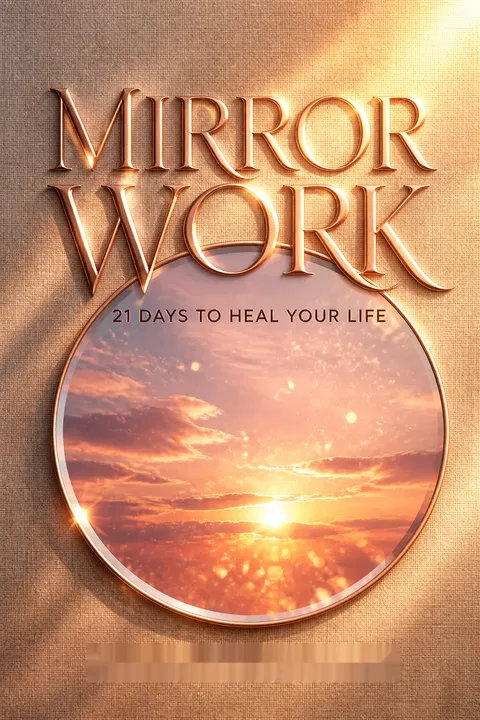
Affirmations practiced before a mirrorA practice of looking into one’s reflection, often directly into the eyes, while speaking supportive affirmations. Hay uses it to help readers notice self-talk and emotional resistance, and to rehearse self-acceptance in a consistent setting. The book extends the practice across ordinary moments and pairs it with journaling and reflection.
inner child
The younger self withinHay’s term for the remembered and emotionally present younger self, including childhood needs, fears, and beliefs. The practice involves addressing that younger self with attention and reassurance rather than repeating old criticism. It functions as a metaphor for approaching vulnerable feelings with care, not as a separate literal person.
the Big Four
Four recurring sources of distressHay’s label for criticism, fear, guilt, and resentment, which she presents as major patterns behind unhappiness and difficulty letting go. A journaling exercise asks readers to identify how these patterns appear in their lives and create supportive affirmations related to the ones that feel most prominent.
the totality of possibilities
Thinking beyond assumed limitsA phrase Hay uses for allowing the mind to consider options beyond familiar beliefs about what is possible. She connects limiting assumptions to messages absorbed in childhood and invites readers to question thoughts such as being incapable or lacking time. The idea is meant to widen perceived choices, not establish that every obstacle can be overcome by attitude.
affirmation
A repeated message to oneselfHay uses affirmation broadly for thoughts or words a person repeats, including ordinary self-talk as well as deliberate positive statements. She argues that repeated messages shape habitual ways of thinking and behaving, and recommends spoken affirmations, especially during mirror work, as a way to practice more supportive beliefs.
FAQ
1. What is "Mirror Work: 21 Days to Heal Your Life" by Louise Hay about?
- 21-Day Self-Love Program: The book is a practical, step-by-step guide to transforming your life through a 21-day program of mirror work, which involves looking into a mirror and repeating positive affirmations.
- Healing Through Self-Acceptance: Louise Hay teaches that by learning to love and accept yourself, you can heal emotional wounds, release negative beliefs, and create a more joyful, fulfilling life.
- Daily Exercises and Reflections: Each day features a specific theme, mirror work exercise, journaling prompts, affirmations, and a meditation to deepen self-awareness and healing.
- Foundation in Affirmations: The method is rooted in Hay’s philosophy that our thoughts and self-talk shape our reality, and that affirmations can reprogram the subconscious for positive change.
2. Why should I read "Mirror Work: 21 Days to Heal Your Life" by Louise Hay?
- Transformative Self-Help Tool: The book offers a simple yet powerful technique to improve self-esteem, heal past wounds, and foster self-love.
- Practical and Accessible: With daily exercises and clear instructions, it’s suitable for beginners and those familiar with personal development.
- Addresses Core Issues: It helps readers confront and release criticism, fear, guilt, resentment, and other emotional blocks that hinder happiness.
- Enduring Benefits: Practicing mirror work can lead to lasting changes in how you relate to yourself and others, improving relationships, health, and overall well-being.
3. What is the "mirror work" method as defined by Louise Hay in this book?
- Looking Into Your Eyes: Mirror work involves standing or sitting in front of a mirror, looking deeply into your own eyes, and speaking affirmations aloud.
- Direct Communication with Self: This practice helps you connect with your inner self, making you aware of resistance, self-criticism, and areas needing healing.
- Reprogramming Negative Beliefs: By consistently repeating positive affirmations, you replace old, limiting beliefs with empowering ones.
- Emotional Release and Healing: The mirror acts as a tool for self-acceptance, allowing you to process emotions, forgive yourself, and build a loving relationship with yourself.
4. What are the main themes and structure of the 21-day program in "Mirror Work: 21 Days to Heal Your Life"?
- Weekly Progression: The program is divided into three weeks, each focusing on different aspects of self-love and healing.
- Daily Focus: Each day introduces a new theme, such as loving yourself, letting go of the past, building self-esteem, healing your inner child, and more.
- Integrated Practices: Every day includes a mirror work exercise, journaling prompt, affirmation, and meditation to reinforce the lesson.
- Gradual Deepening: The structure allows for gradual progress, starting with basic self-acceptance and moving toward forgiveness, gratitude, and teaching mirror work to others.
5. How does Louise Hay explain the power of affirmations in "Mirror Work: 21 Days to Heal Your Life"?
- Affirmations Shape Reality: Hay teaches that every thought and word is an affirmation, influencing your subconscious and life experiences.
- Positive Self-Talk: Replacing negative self-talk with positive affirmations helps build self-confidence, self-esteem, and inner peace.
- Mirror Amplifies Impact: Saying affirmations in front of a mirror makes you more aware of your feelings and resistance, accelerating change.
- Consistency is Key: Regular practice of affirmations, especially with mirror work, plants healing thoughts that support lasting transformation.
6. What are some of the most important daily exercises or practices in "Mirror Work: 21 Days to Heal Your Life"?
- Morning Mirror Affirmations: Start each day by looking into your eyes in the mirror and saying loving affirmations, such as “I love you” or “I am willing to learn to love you.”
- Journaling for Self-Reflection: Daily journaling exercises help you process emotions, track progress, and uncover limiting beliefs.
- Themed Meditations: Each day includes a meditation to reinforce the lesson, promote relaxation, and deepen self-connection.
- Repetition and Integration: Practicing affirmations throughout the day, whenever you see your reflection, helps integrate new beliefs.
7. How does "Mirror Work: 21 Days to Heal Your Life" by Louise Hay address healing the inner child?
- Connecting with Your Inner Child: The book dedicates specific days to meeting and nurturing your inner child through mirror work and visualization.
- Healing Past Wounds: Exercises encourage you to comfort, forgive, and express love to the child within, addressing unresolved childhood pain.
- Creative Expression: Activities like drawing your inner child with your non-dominant hand help access and heal deep-seated emotions.
- Building a Supportive Relationship: By regularly communicating with your inner child, you foster self-acceptance and emotional security.
8. What advice does Louise Hay give for letting go of the past and practicing forgiveness in "Mirror Work: 21 Days to Heal Your Life"?
- Releasing Blame and Resentment: The book guides you to identify and let go of criticism, fear, guilt, and resentment that keep you stuck.
- Mirror Forgiveness Exercises: You are encouraged to speak directly to yourself and others in the mirror, expressing willingness to forgive and set yourself free.
- Understanding Others’ Limitations: Hay emphasizes that everyone is doing the best they can with their awareness, which helps cultivate compassion.
- Forgiveness as Self-Love: Letting go of the past is framed as a gift to yourself, freeing you to experience joy and create a better future.
9. How does "Mirror Work: 21 Days to Heal Your Life" help with building self-esteem and overcoming the inner critic?
- Affirming Self-Worth: Daily exercises focus on affirmations like “I love and approve of myself” to counteract self-criticism.
- Identifying Negative Patterns: Journaling prompts help you recognize when and why you criticize yourself, and how long these patterns have persisted.
- Replacing Criticism with Praise: The book encourages you to consciously praise yourself and celebrate progress, shifting your inner dialogue.
- Compassionate Self-Talk: Hay teaches that being gentle, kind, and patient with yourself is essential for lasting self-esteem.
10. What role do gratitude and prosperity play in "Mirror Work: 21 Days to Heal Your Life" by Louise Hay?
- Gratitude Attracts Abundance: Hay asserts that the more grateful you are, the more abundance and “goodies” you attract into your life.
- Daily Gratitude Practice: The program includes exercises to start and end your day with gratitude, listing things you appreciate about yourself and your life.
- Prosperity Affirmations: Specific affirmations like “I am open and receptive to all good” and “My income is constantly increasing” are used to shift your mindset from lack to abundance.
- Receiving with Joy: The book teaches that being open to receive, both materially and emotionally, is key to experiencing prosperity.
11. How does "Mirror Work: 21 Days to Heal Your Life" by Louise Hay suggest teaching mirror work to children or others?
- Modeling Positive Self-Talk: The book encourages adults to practice mirror work openly, setting an example for children.
- Simple, Fun Affirmations: Children are invited to say affirmations like “I am great!” or “I am beautiful!” in the mirror, making the practice playful and accessible.
- Creative Activities: Drawing and decorating a “Magic Mirror” helps children engage with the concept visually and emotionally.
- Open Communication: Hay emphasizes the importance of encouraging children to express their feelings and affirm their worth, fostering lifelong self-love.
12. What are the key takeaways and best quotes from "Mirror Work: 21 Days to Heal Your Life" by Louise Hay?
- Self-Love Heals All: The central message is that loving yourself is the foundation for healing every problem and creating a joyful life.
- Practice, Not Perfection: “Mirror work doesn’t work in theory; it only works in practice. If you do it, it really will make a difference.”
- Forgiveness Frees You: “Forgiveness is seldom for others. It is for you.”
- Gratitude Multiplies Good: “The Universe loves gratitude. The more grateful you are, the more goodies you get.”
- 12 Ways to Love Yourself: The afterword summarizes key principles, such as stopping criticism, forgiving yourself, being gentle, praising yourself, and doing your mirror work regularly.
About the Author
Other books by Louise L. Hay







Download PDF
Download EPUB
.epub digital book format is ideal for reading ebooks on phones, tablets, and e-readers.








