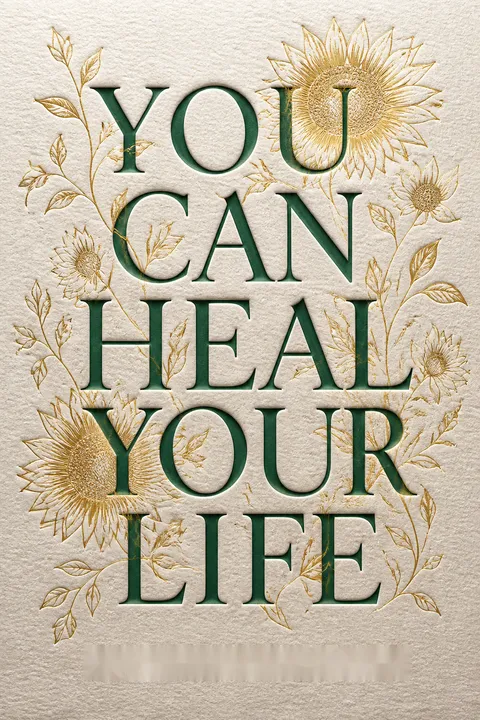


Key Takeaways
Start with self-acceptance, not another attempt to earn your worth.
The central repair. Hay argues that self-acceptance is not a reward for getting life right. It is the foundation from which change becomes possible. She treats self-love as respect and care, not vanity: stop treating yourself as a problem to be punished into improvement. In her view, approval of the self can affect health, work, relationships, and prosperity because people who feel worthy are more able to care for themselves and accept good things.
A practical test. Hay asks readers to face a mirror and offer themselves acceptance. Many people feel awkward, angry, or tearful, which she takes as a clue that self-criticism runs deep. The exercise is not meant to prove that every circumstance will change. It makes the inner voice audible, so a reader can begin responding to it differently.
The strength of this starting point is its refusal to make self-respect conditional on achievement. Contemporary self-compassion research likewise distinguishes kindness toward oneself from self-indulgence, and links it with a more constructive response to setbacks. The mirror exercise makes an abstract idea concrete by bringing discomfort into view. Its limits matter, too: self-acceptance cannot substitute for changing unsafe circumstances, treating illness, or repairing material hardship. It is best understood as a resource for meeting those realities, not as a guarantee that they will disappear.
Use this moment to question old beliefs, not to deny what happened.
Old lessons linger. Hay believes children absorb judgments and rules from parents, teachers, relatives, and peers, then carry those messages into adult life. A child repeatedly called incapable may grow into an adult who expects failure; someone taught that the world is dangerous may interpret uncertainty as proof of danger. Hay calls the examination and disposal of unhelpful beliefs mental housecleaning.
The present remains available. Her phrase the point of power refers to the present moment as the place where a person can choose a new thought or response. The past cannot be edited, but its meaning and influence can be examined. Hay frames this in spiritual terms, as a power that reflects beliefs. A grounded version is that expectations can shape attention and behavior, without making a person responsible for every event that happens.
This account resembles schema-based approaches in psychology, where early assumptions guide what people notice and how they respond. The useful move is not to declare every belief false, but to test whether it still helps. That preserves the book's invitation to agency while avoiding its more sweeping claim that people create all their experiences. Such a claim can turn trauma, discrimination, or illness into an accusation. Changing a response is possible; responsibility for another person's harm belongs to the person who caused it.
Turn inherited shoulds into choices before treating them as failures.
Find the borrowed rule. Hay gives clients paper and asks them to list several things they believe they should do, then explain why. Answers often reveal a parent's demand, fear of disapproval, or a standard of perfection. She asks them to rephrase each item as something they could do if they truly wanted to, then consider why they have not done it. The change in wording can expose whether the goal is genuinely theirs.
Choose what deserves effort. Someone who has spent years pursuing a career selected by a parent may discover that the supposed failure to persist is actually a mismatch of goals. Hay encourages readers to drop rules they never chose and to stop using self-criticism as motivation. The exercise does not mean every obligation is optional. It helps separate an authentic commitment from a life organized around pleasing others.
This exercise gives a simple language tool to a familiar problem: people often confuse social approval with personal values. In motivational psychology, autonomy matters because goals tend to be more sustainable when a person experiences them as chosen. The rewording also slows automatic self-judgment long enough to reveal its source. Still, not every should is an inherited burden. Care duties, promises, and shared responsibilities may remain important even when inconvenient. The question is not whether obligation is bad, but whether a rule has been examined and consciously accepted.
Notice resistance without using it as evidence that you are broken.
Resistance carries information. Hay says change can provoke avoidance, delay, anger, or sudden distraction. She treats these reactions as signs that an old belief or fear may be involved, not proof that the person is hopeless. Her method is to notice the resistance without scolding oneself, then keep moving in manageable steps.
Look beneath the symptom. Hay proposes that recurring habits meet some perceived need. For example, she suggests that procrastination may protect someone who believes they are unworthy from the risk of being judged. Rather than labeling that person lazy, she recommends exploring the fear and practicing a willingness to release the belief. This can be a useful prompt for inquiry, although habits can also be shaped by health, workload, resources, and circumstances beyond personal belief.
The humane element is the shift from moral failure to curiosity. That resembles functional analysis in behavioral therapy, which asks what a behavior accomplishes in its context before trying to remove it. Understanding the function can make change more precise than simply demanding willpower. Hay's language of needing a problem can overstate the role of hidden beliefs, however. Fatigue, depression, poverty, and inaccessible systems can all constrain behavior. Curiosity should widen the search for causes, not narrow it to the mind alone.
Forgive to loosen resentment, not to excuse harm or restore access.
Release without approval. Hay presents forgiveness as a way to stop carrying old anger and guilt, not as a declaration that an injury was acceptable. One exercise asks a person to imagine someone they resent on a stage and picture good things happening to that person, then imagine the same kindness directed toward themselves. Another asks readers to name what they forgive themselves for.
Understanding has a role. In her account, learning about a parent's own painful upbringing helped her feel compassion and loosen blame. Her personal history included childhood abuse, so forgiveness is not an abstract instruction in this book. It is part of the emotional work she describes. The reader need not reconcile, excuse, or remain in contact with someone harmful in order to explore letting go.
The distinction between forgiveness and reconciliation is essential. Research on trauma and relationships supports the value of safety, choice, and boundaries, not compulsory absolution. Hay's exercises may help some readers imagine a less consuming relationship to anger, particularly when practiced voluntarily and at their own pace. For others, anger is an accurate signal that harm occurred and protection is needed. Forgiveness should never be treated as a test of virtue, or as a condition for healing that places another burden on the injured person.
Give attention a positive target, then reinforce it with daily practice.
Name what you want. Hay argues that repeatedly rehearsing what is unwanted keeps attention fixed there. She recommends turning a complaint into a present-tense affirmation that describes a desired direction, rather than a future wish. Her garden analogy compares a new thought to a seed: it needs repetition and attention, and early signs of progress should be noticed rather than dismissed as too small.
Practice consistently. The book suggests speaking affirmations aloud, writing them repeatedly, using a mirror, meditating, visualizing, and ending the day with gratitude. Hay also describes a daily routine built around meditation, exercise, food, and positive self-talk. These practices give readers regular opportunities to notice negative self-statements and rehearse a different response. In Hay's spiritual framework, repetition reshapes consciousness; more cautiously, it can help make chosen intentions easier to recall.
The memorable insight is that attention is not neutral: what receives repeated notice becomes more available to thought and action. Rehearsing a constructive statement can support focus, especially when it is paired with behavior that makes the statement credible. The book sometimes implies that affirmations directly produce external outcomes, which goes beyond what repetition alone can establish. A useful affirmation is not a substitute for a plan. It works best as a cue for actions such as applying for work, asking for help, or keeping a medical appointment.
Read relationships as mirrors for self-reflection, never as proof of blame.
Look inward first. Hay sees relationships as reflecting qualities people possess or beliefs they hold about love, authority, and support. She asks readers to identify what bothers them about another person, then examine whether they behave similarly or expect the same pattern elsewhere. This is intended to replace blame with a chance to change one's own conduct.
Apply the idea carefully. Hay extends the method to work. She advises readers to appreciate their current workplace, do their best, and imagine a better relationship with a difficult boss. She recounts a client whose boss, known for being harsh, began treating him warmly after the client practiced this outlook. That is her anecdote, not evidence that another person's behavior is under one's control. Self-reflection can clarify choices, but it does not make someone responsible for mistreatment.
The mirror idea is most useful as a question, not a law: what part of this pattern can be changed from one's side? That question can reveal habits, expectations, and communication failures. Interpersonal psychology also shows that relationships are reciprocal, shaped by both participants and by power. The same frame becomes dangerous if it tells someone that abuse or discrimination was attracted by their beliefs. Reflection should increase options, including boundaries, reporting, or leaving, rather than persuade a person to tolerate harm.
Practice receiving prosperity while tending to real-world finances.
Make room to receive. Hay defines prosperity as a state of mind as well as material comfort. She asks readers to inspect inherited beliefs about money, notice whether they reject compliments or gifts, and accept what is offered with gratitude. Cleaning unused belongings becomes a symbolic way to make space for the new. She also reframes bills as evidence that a service or product has already been received, encouraging readers to pay without resentment.
Keep the flow practical. Hay describes prosperity as a supply that can arrive through many channels, rather than only a salary. Her advice is to notice opportunities and avoid envy when others succeed. The approach can challenge shame about wanting financial security. It should sit alongside budgeting, fair pay, debt advice, and attention to unequal access to wealth; a generous mindset alone cannot change a person's income or economic conditions.
Hay's strongest contribution here is emotional: money can carry family rules, shame, and fear that make it difficult to discuss clearly. Reframing a bill or accepting a compliment can interrupt those reactions and make room for deliberate choices. But abundance language can blur the line between confidence and a promise of material results. Financial hardship is not reliable evidence of deficient self-worth. The section is most useful when paired with practical financial literacy and a recognition that wages, opportunity, and security are also shaped by institutions.
Use body metaphors to prompt reflection, never to explain disease.
A map of meanings. Hay assigns emotional themes to body parts and conditions: for example, she links the back with support and the throat with self-expression. Her reference list pairs these probable mental patterns with affirmations, inviting readers to ask whether an emotional issue resonates. She says the list is a starting point, not a universal fit, and the book's opening disclaimer says it does not replace medical advice.
A personal account, not proof. Hay recounts childhood sexual and physical abuse, a later cancer diagnosis, and work that included therapy, emotional expression, dietary changes, and reflexology. She reports that after six months she was told there was no trace of cancer and that she had not undergone surgery. This is a personal account involving several interventions. It cannot establish that resentment caused the cancer or that mental work cured it.
The body can be a useful prompt for asking how stress, fear, or grief affect daily experience. Modern medicine recognizes interactions among psychological, social, and biological processes, but that does not validate Hay's specific organ-by-organ explanations. Cancer and other illnesses have complex causes, and assigning them to a patient's emotions can create shame or delay effective care. The safest reading preserves emotional reflection while rejecting diagnosis by metaphor. Affirmations may support coping, but they must not replace evidence-based treatment or advice from qualified clinicians.
Let adult beginners move through old fear one lesson at a time.
Fear can outlast its setting. In the book's later account of her life, Hay describes taking up ballroom dancing at 76, despite having wanted to dance as a child. The first lessons brought embarrassment and dread. Reflecting afterward, she recognized that she feared being struck for doing a step incorrectly, a childhood fear that had resurfaced in a new situation.
Practice can create new experience. Hay continued attending lessons, gradually became more comfortable, and came to enjoy dancing. The story adds a human dimension to her method: insight does not instantly erase a learned response, and progress may begin with showing up while fear is still present. The lesson is not that age or trauma is irrelevant, but that learning can remain possible when a person takes manageable steps and has enough support to continue.
This story illustrates how an old threat expectation can become attached to a harmless adult task. Exposure-based therapies use a related principle: safe, repeated contact with a feared situation can help update predictions, though effective exposure is paced and not forced. The memorable detail is that recognition came after the initial distress, not before it. The account also avoids presenting transformation as a single dramatic breakthrough. People differ in what support they need, and persistence should not be confused with enduring an unsafe or overwhelming situation.
Analysis
You Can Heal Your Life is a spiritual self-help book structured as both a guided counseling session and a memoir. Its organizing idea is that habitual beliefs shape how people treat themselves and respond to life, and that deliberate self-acceptance can loosen those patterns. The practical sequence is unusually clear: identify the complaint, trace the learned rule beneath it, notice resistance, practice a new thought, and repeat the work across ordinary routines and relationships. Hay's personal history gives that sequence emotional force. Her account of childhood abuse, later study, work with clients, cancer diagnosis, and eventual dance lessons shows a person applying her own ideas rather than merely prescribing them.
The book's lasting value is strongest where it addresses self-criticism, learned expectations, and the possibility of changing one's response in the present. Mirror exercises, the conversion of inherited shoulds into choices, and repeated affirmations make introspection concrete. The book also repeatedly argues that individuals create their circumstances and that emotional patterns cause particular diseases. Those claims are not supported by the evidence presented. They can turn a language of agency into blame, especially for people facing abuse, poverty, disability, or serious illness. Hay's own account of cancer recovery cannot demonstrate that resentment caused the disease or that her practices cured it, particularly because she describes several concurrent forms of care.
A responsible reading separates useful practice from metaphysical certainty. Self-compassion, reflection, and attention to emotion can help people cope and make choices, but thoughts do not command every external outcome or explain every diagnosis. The book is most valuable when its central invitation is understood as permission to stop attacking oneself and begin responding more consciously. It is least reliable when a metaphor is presented as a medical cause. That distinction lets readers keep the humane exercises while seeking evidence-based treatment, practical resources, and protection from circumstances they did not create.
Review Summary
You Can Heal Your Life receives mixed reviews. Some praise its empowering message of self-love and positive thinking, finding it life-changing. Others criticize it for oversimplifying health issues and blaming victims. The book's core idea that thoughts influence health resonates with many, but its claims about curing serious illnesses through mindset alone are controversial. Critics argue it can be dangerous if taken literally, while supporters appreciate its emphasis on self-reflection and affirmations. Overall, readers tend to either strongly embrace or reject Hay's philosophy.
People Also Read





Glossary
Affirmations
Repeated positive statementsIn Hay's method, affirmations are deliberately chosen statements intended to replace habitual, discouraging beliefs with more supportive ones. She recommends phrasing them in the present tense and repeating them aloud, in writing, or before a mirror. The book presents them as a way to reshape consciousness; they are not evidence that thoughts alone guarantee external results.
Mirror Work
Self-acceptance practiceMirror Work is Hay's exercise of looking into one's own eyes while saying a compassionate statement, often one expressing love or acceptance. The exercise is meant to reveal discomfort and self-criticism that may be hard to notice otherwise. Hay encourages repeating it as a way to practice a kinder relationship with oneself.
Mental Housecleaning
Reviewing outdated beliefsMental Housecleaning is Hay's metaphor for examining learned beliefs, keeping those that remain useful, and releasing those that restrict or punish the self. The process begins by identifying where a belief may have come from and asking whether it still serves. The metaphor emphasizes change without treating past beliefs as moral failures.
The Point of Power
Present-moment choiceHay uses this phrase for the present moment as the place where a person can choose what to think, say, or do next. Past experiences may shape current habits, but she argues they do not remove the possibility of beginning a change now. Her spiritual claim that present thoughts shape future circumstances should be distinguished from the practical value of choosing a response.
inner child
Younger self needing careHay uses the image of a child within the adult to represent early emotional learning and unmet needs. She invites readers to imagine comforting their younger selves rather than repeating the criticism they may have heard as children. It is a self-help metaphor in this book, not a claim that a separate childlike entity exists within the mind.
mental diet
Choosing supportive thoughtsHay uses mental diet for reducing repeated negative self-talk and deliberately giving attention to more constructive thoughts. The comparison with food emphasizes daily practice rather than a single decision. In the book, this idea is also connected to physical health and weight, though thought patterns alone do not determine medical conditions or body weight.
Probable Mental Patterns
Emotional themes linked to conditionsThis is the name Hay gives to her reference list pairing physical conditions with proposed emotional causes and suggested affirmations. She presents the associations as probable starting points for personal reflection, not as universally true explanations. They are not medical diagnoses and should not replace clinical assessment or treatment.
prosperity consciousness
Openness to receiving abundanceHay uses this term for a mindset of deserving good things, recognizing available opportunities, and being willing to receive money, gifts, and praise. She treats income as one possible channel of a broader universal supply. The concept can help readers inspect shame or scarcity beliefs, but it does not establish that mindset alone produces financial security.
FAQ
What's "You Can Heal Your Life" about?
- Self-Healing Focus: "You Can Heal Your Life" by Louise L. Hay is centered on the idea that our thoughts and beliefs shape our physical health and life experiences. By changing negative thought patterns, we can heal ourselves.
- Mind-Body Connection: The book emphasizes the connection between the mind and body, suggesting that mental patterns and beliefs can manifest as physical ailments.
- Practical Exercises: It includes practical exercises, affirmations, and visualizations to help readers change their thought patterns and improve their lives.
- Holistic Approach: Hay advocates for a holistic approach to healing, incorporating mental, physical, and spiritual practices.
Why should I read "You Can Heal Your Life"?
- Empowerment: The book empowers readers to take control of their health and life by changing their thoughts and beliefs.
- Practical Tools: It provides practical tools and exercises that can be easily incorporated into daily life to promote healing and personal growth.
- Positive Change: Readers can learn to replace negative thought patterns with positive affirmations, leading to improved mental and physical well-being.
- Universal Appeal: The concepts in the book are applicable to anyone seeking personal development and a deeper understanding of the mind-body connection.
What are the key takeaways of "You Can Heal Your Life"?
- Thoughts Create Reality: Our thoughts and beliefs are powerful and can shape our experiences and health.
- Self-Love is Crucial: Loving and accepting oneself is fundamental to healing and personal growth.
- Forgiveness is Healing: Letting go of past resentments and forgiving oneself and others is essential for healing.
- Affirmations Work: Regular use of positive affirmations can change thought patterns and improve life circumstances.
How does Louise L. Hay suggest we change our thought patterns?
- Affirmations: Hay emphasizes the use of positive affirmations to replace negative thoughts and beliefs.
- Mirror Work: She suggests looking into a mirror and affirming self-love and acceptance to reinforce positive self-image.
- Visualization: Visualizing desired outcomes can help manifest them in reality by aligning thoughts with goals.
- Awareness and Willingness: Becoming aware of negative patterns and being willing to change them is the first step toward transformation.
What is the significance of self-love in "You Can Heal Your Life"?
- Foundation for Healing: Self-love is presented as the foundation for healing and personal transformation.
- Acceptance and Approval: Accepting and approving of oneself as they are is crucial for developing self-love.
- Releasing Criticism: Letting go of self-criticism and judgment is necessary to cultivate a loving relationship with oneself.
- Positive Ripple Effect: Loving oneself leads to positive changes in all areas of life, including relationships and health.
How does "You Can Heal Your Life" address physical ailments?
- Mind-Body Connection: The book suggests that physical ailments are often manifestations of mental and emotional patterns.
- Probable Causes: Hay provides a list of probable mental causes for various physical conditions and corresponding affirmations for healing.
- Holistic Healing: It encourages a holistic approach, combining mental, physical, and spiritual practices to address ailments.
- Empowerment Through Awareness: By understanding the mental patterns behind physical issues, readers can take steps to heal themselves.
What are some of the best quotes from "You Can Heal Your Life" and what do they mean?
- "Every thought we think is creating our future." This quote emphasizes the power of thoughts in shaping our reality and future experiences.
- "The point of power is always in the present moment." It highlights the importance of focusing on the present to make positive changes.
- "When we really love ourselves, everything in our life works." This underscores the transformative power of self-love in improving all aspects of life.
- "I am willing to change." This simple affirmation encourages openness to change and personal growth.
How does Louise L. Hay suggest we deal with past traumas?
- Forgiveness: Hay stresses the importance of forgiving oneself and others to release the hold of past traumas.
- Understanding and Compassion: Developing an understanding of the circumstances and showing compassion towards oneself can aid in healing.
- Releasing Resentment: Letting go of resentment and anger is crucial for moving forward and healing.
- Affirmations and Visualization: Using affirmations and visualization techniques can help reframe past experiences and promote healing.
What role do affirmations play in "You Can Heal Your Life"?
- Positive Reprogramming: Affirmations are used to replace negative thought patterns with positive ones, reprogramming the mind.
- Daily Practice: Regular practice of affirmations is encouraged to reinforce new beliefs and create lasting change.
- Specific and Personal: Affirmations should be specific to the individual's needs and phrased in the present tense to be effective.
- Empowerment Tool: They serve as a tool for empowerment, helping individuals take control of their thoughts and lives.
How does "You Can Heal Your Life" suggest we approach relationships?
- Self-Reflection: Relationships are seen as mirrors reflecting our own beliefs and patterns, encouraging self-reflection.
- Self-Love First: Cultivating self-love is essential for attracting and maintaining healthy relationships.
- Forgiveness and Release: Letting go of past grievances and forgiving others is crucial for harmonious relationships.
- Positive Affirmations: Using affirmations to attract the kind of relationships one desires is recommended.
What is the "mirror work" technique in "You Can Heal Your Life"?
- Self-Reflection: Mirror work involves looking into a mirror and affirming positive statements to oneself.
- Building Self-Love: It is a tool for building self-love and acceptance by reinforcing positive self-talk.
- Facing Resistance: The technique helps individuals face and overcome resistance to self-love and acceptance.
- Daily Practice: Regular practice of mirror work can lead to profound changes in self-perception and confidence.
How does "You Can Heal Your Life" address resistance to change?
- Awareness of Resistance: Recognizing resistance as a natural part of the change process is the first step.
- Willingness to Change: Cultivating a willingness to change is essential for overcoming resistance.
- Gentle Persistence: Persisting gently and patiently with new practices and affirmations can help dissolve resistance.
- Understanding Fear: Understanding that resistance often stems from fear can help in addressing and overcoming it.
About the Author
Other books by Louise L. Hay





Download PDF
Download EPUB
.epub digital book format is ideal for reading ebooks on phones, tablets, and e-readers.








