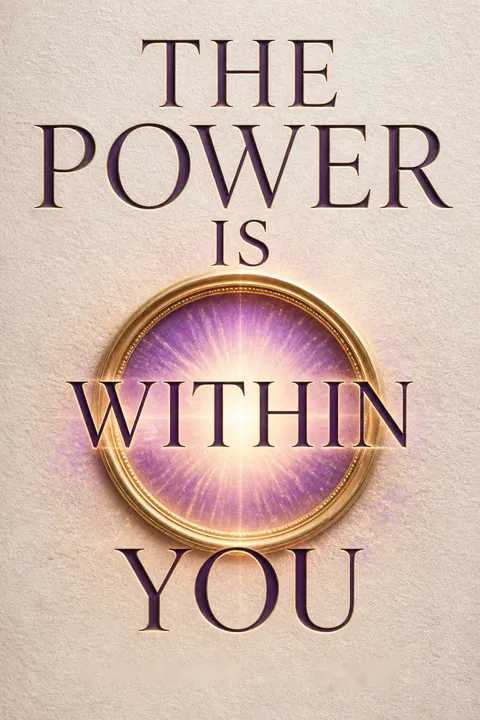


Key Takeaways
Make self-love a starting condition, not a prize for getting life right.
Love the whole person. Hay’s central argument is that people often postpone self-acceptance until they lose weight, find a partner, or succeed at work. She argues for appreciating the entire self now, including awkwardness, mistakes, and strengths. Love, in this sense, means deep acceptance, not believing every choice is wise or refusing to change. It is the foundation from which change becomes less punishing.
Begin before life improves. Hay connects self-acceptance with greater confidence in relationships, work, and everyday decisions. Her invitation is practical: notice the conditions placed on your own worth, then stop treating achievement as the entry fee for kindness toward yourself. The book’s spiritual language frames this as an inner power available to everyone.
What's compelling is the reversal of a familiar bargain: people need not become flawless before treating themselves with care. Contemporary self-compassion work similarly distinguishes kindness toward oneself from self-indulgence; a person can acknowledge a mistake and still respond constructively. That distinction makes Hay’s premise useful beyond its spiritual framing. The claim becomes less persuasive when self-love is presented as a universal fix for jobs, money, health, or relationships. Self-regard can support better choices, but it cannot remove discrimination, illness, or material hardship on its own.
Use responsibility to regain choice, not to explain every misfortune.
Agency is not blame. Hay defines responsibility as the ability to respond, not an admission that a person caused every hardship. She recounts surviving abuse as a child and later recognizing how learned patterns shaped her self-talk and relationships. After a cancer diagnosis, she pursued a sustained program involving emotional work, psychotherapy, nutrition, affirmations, and other practices. She says she could not identify one method as the reason for her improvement.
Keep the distinction clear. Hay’s broader spiritual theory holds that thought and feeling patterns contribute to life conditions. That can encourage readers to ask what choices remain available. Taken literally, however, it can imply that people create their illness, poverty, or abuse. Her own distinction between responsibility and guilt is essential: external harm is not proof of personal failure.
The strongest reading separates two questions: what caused a painful event, and what response is possible now? The first may involve biology, other people, institutions, or chance. The second can still be a source of agency. This distinction resembles therapeutic approaches that help people identify workable choices without assigning blame for trauma. Hay’s personal story also shows why causal certainty matters: she describes several simultaneous interventions, so her recovery cannot establish that resentment caused cancer or affirmations cured it. Self-help should accompany, not replace, appropriate medical care.
Listen for repeated words; they reveal the beliefs steering your day.
Speech makes patterns audible. Hay treats self-talk, the running commentary a person directs inward, as a guide to underlying beliefs. Repeated complaints, harsh labels, and rigid words can expose assumptions that otherwise remain unnoticed. She especially questions habitual language of obligation and self-judgment, suggesting that a person listen for how often such phrases appear.
Turn noticing into practice. Hay suggests recording conversations and reviewing them for repeated expressions. She also recommends replacing language that emphasizes compulsion with language that acknowledges choice. The point is not that a single word controls fate. It is that familiar phrases can rehearse a limited view of what is possible, while more deliberate speech can make alternatives easier to see and act on.
This practice has a useful overlap with cognitive behavioral therapy, which asks people to notice automatic thoughts and examine how those thoughts shape emotion and behavior. Listening for recurring language can make a vague sense of being stuck more concrete. Still, language is a clue, not a diagnosis. Someone who says they have no choice may face genuine financial or caregiving constraints, not merely a limiting belief. The most productive question is therefore not simply how to rephrase the situation, but what options, however small, are realistically available.
Use affirmations to rehearse change, not to command reality.
Make the desired message clear. Hay calls a deliberately chosen, supportive statement an affirmation. She recommends phrasing it positively and in the present tense, so it describes what a person wants to cultivate rather than repeating the unwanted condition. An affirmation can also reveal resistance: if a statement of self-worth immediately brings up disbelief, that reaction may point toward an old belief worth examining.
Pair words with practice. Hay recommends repeating affirmations over time, using meditation or a mirror, and noticing what actions follow. She warns against using them to control another person’s choices. In her spiritual view, repetition helps reprogram the subconscious mind. A grounded reading treats affirmations as prompts for attention and behavior, not guarantees that the universe will deliver a particular result.
A repeated statement can function like a small rehearsal, directing attention toward a goal and reminding someone to act in line with it. That is different from treating repetition as a force that determines external events. Affirmations are most credible when they feel possible enough to engage with. If a person cannot believe a sweeping statement, a more modest one may be more useful, such as being willing to consider a new response. Hay’s own emphasis on consistent effort helps keep the practice connected to action rather than wishful thinking.
Give difficult feelings a safe outlet instead of burying them.
Feelings carry information. Hay argues that denying anger, grief, or fear can leave people cut off from what they need. She suggests speaking privately to a person’s reflection, writing, exercising, or seeking a therapist or support group. In her view, grief deserves room rather than a rigid deadline. She also links buried anger with depression and physical illness, a stronger medical claim than her personal experiences can establish.
Choose a safe channel. Some of Hay’s examples involve screaming or hitting pillows; she urges readers not to endanger themselves or others. The broader lesson is to acknowledge a feeling without letting it dictate harmful behavior. Expression can help name a boundary, loss, or unmet need, but repeatedly replaying an injury is not the same as processing it.
Emotional awareness can help people identify needs and communicate more clearly, while supportive therapy can offer a safer setting for intense experiences. The distinction between feeling anger and acting aggressively is particularly valuable. Hay’s suggested cathartic exercises deserve caution, however. Research on anger management does not support the idea that hitting objects reliably drains anger, and some forms of venting may intensify it. Nor is there a sound basis for assigning a specific disease to a particular emotion. Feelings matter, but they should not be turned into medical diagnoses.
Parent the younger self with the patience you once needed.
The Inner Child is a model. Hay uses this term for the younger parts of a person’s memory and emotional life, especially parts shaped by childhood fear, rejection, or unmet needs. She suggests that adults offer those younger selves the reassurance and protection they may have lacked. The aim is not to remain trapped in the past, but to respond to old reactions with care rather than fresh self-criticism.
Make care concrete. Hay proposes looking at childhood photographs, speaking kindly to the younger self in a mirror, writing questions and answers with different hands, or making time for play. In her account, these exercises help people notice what still feels frightening or neglected. Readers can adapt them gently, stopping if the exercises feel overwhelming and seeking professional support when needed.
The Inner Child can be understood as an accessible image for connecting present reactions with earlier learning. Imagery and compassionate self-talk may help some people approach painful memories with more curiosity and less shame. The metaphor should not be mistaken for a clinical diagnosis or used to recover memories as if imagination were proof. Childhood accounts can be complex, and intense trauma may need skilled support. Hay’s most durable insight is simpler: an adult can learn to respond to vulnerability with steadiness instead of repeating the old criticism.
Forgive to loosen the past, while keeping boundaries in the present.
Release is not approval. Hay presents forgiveness as a way to stop carrying an old injury into every new moment. She describes revisiting hurts, acknowledging the feelings, and gradually letting go of the demand to keep reliving them. She stresses that forgiveness does not mean approving harmful behavior. In her framework, the main benefit belongs to the person releasing resentment, rather than to the person who caused harm.
Protect the present self. Hay encourages empathy for parents by learning about the conditions in which they grew up. Understanding can make a history more legible, but it does not erase its effects. Forgiveness need not mean renewed contact, reconciliation, or permission for further harm. Boundaries and accountability can coexist with an internal decision to stop organizing one’s life around an old grievance.
Forgiveness can be a meaningful choice when it reduces rumination or helps someone reclaim attention. Its value depends on timing and consent, not on a moral deadline. Pressure to forgive can silence victims, especially when the person who caused harm has not acknowledged it or remains unsafe. Hay’s distinction between forgiveness and condoning is therefore crucial, and boundaries make that distinction practical. Empathy for a parent’s history may widen understanding, but it should not turn explanation into excuse or transfer responsibility away from the person who caused harm.
Let support be part of strength, not proof of weakness.
Healing need not be solitary. Hay describes starting the Hayride support group in Los Angeles in 1985 with six men living with AIDS. In the book, she says the weekly gathering had grown to about 200 people. Members meditated, shared information, offered practical and emotional support, and made room for fellowship. She emphasizes that the group’s strength came from its members supporting one another, not from one leader rescuing them.
Ask for useful help. Hay encourages readers to reach out to friends, support groups, and professionals rather than trying to manage every difficulty alone. Mutual aid can reduce isolation and help people exchange knowledge and encouragement. It does not require pretending that every problem has a simple spiritual solution. For illness or crisis, community support can sit alongside qualified medical and mental health care.
The Hayride story makes an important shift from self-help as private discipline to healing as a social practice. Groups can offer belonging, practical knowledge, and the reassurance of being understood by peers. Those benefits are especially relevant when stigma isolates people. The model is strongest when mutual support complements competent professional care rather than competing with it. A group cannot guarantee recovery, but it can make a difficult situation more bearable and help members navigate decisions with less isolation.
Choose work by its fit with your values, not inherited approval.
Hear whose plan it is. Hay recounts a young woman who wanted to act but entered law school under pressure from her parents. The woman’s doubts echoed her father’s view that a conventional career would keep her safe. Hay encouraged her to distinguish his hopes from her own. The story illustrates the book’s broader call to question inherited assumptions about success and capability.
Translate desire into direction. Hay recommends identifying what kind of work feels meaningful, then examining beliefs that make it seem unattainable. She argues that changing jobs without changing those beliefs can reproduce the same dissatisfaction. Her advice is not to ignore practical needs, but to clarify what matters and take steps toward work that allows for creativity and contribution. A person can respect family without living out a family member’s ambitions.
The story captures a real tension between belonging and autonomy. Career choices are rarely made in a vacuum: family expectations, finances, education, and opportunity all shape the available paths. Values-based reflection can clarify which compromises feel worthwhile, but it cannot make every desired career viable immediately. Hay’s emphasis on listening inwardly is most useful when paired with experimentation, planning, and honest assessment of constraints. The goal need not be a dramatic break from family; it can be a more deliberate choice about whose definition of success guides the next step.
Count prosperity in time, health, connection, and your ability to receive.
Abundance is broader than cash. Hay includes love, time, health, comfort, relationships, knowledge, and money in her idea of prosperity. She asks readers to notice whether they can accept help and gifts without immediately feeling obliged to repay them. Gratitude, in this account, is a way of receiving rather than treating every kindness as a debt.
Treat spiritual claims carefully. Hay presents honesty and generosity as principles that invite abundance, and she recommends giving a portion of income, commonly ten percent, to a valued spiritual or charitable cause. She also links dishonest taking with later loss. These are moral and spiritual beliefs, not demonstrated laws of finance. Giving should remain voluntary and suited to a person’s circumstances, and economic hardship is not evidence of deficient self-worth.
The broader definition of prosperity usefully resists reducing a good life to income alone. The focus on receiving also points to a social skill: accepting care can strengthen relationships as much as offering it. The more questionable move is treating wealth and loss as a direct moral feedback system. Such a view can imply that poverty reflects bad choices or that generosity reliably produces money. Material outcomes also depend on wages, health, social policy, and luck. Gratitude can enrich a person’s experience without explaining away those conditions.
Turn inner care into concrete compassion for people and the planet.
Love has public consequences. Hay argues that self-acceptance should widen into compassion for other people, including those excluded or stigmatized. Her work with people living with AIDS informs her call to challenge prejudice and offer practical support. She also gives ordinary environmental examples: reuse shopping bags, recycle paper, and compost food scraps. Small actions matter in her view because their effects accumulate when many people take part.
Join vision to action. Hay also recommends visualizing a more peaceful and healthy world. Such practice expresses hope, but the book’s strongest examples involve doing something observable: caring for people, changing habits, volunteering, or conserving resources. Her claim that individual thought directly changes planetary conditions is spiritual. The practical implication is more grounded: private values gain force when they shape behavior and collective effort.
The book’s movement from personal care to social responsibility is one of its most generous ideas. Its environmental examples translate concern into repeatable behavior, while the AIDS material connects love with resisting stigma. Visualization may help people sustain hope, but it cannot substitute for policy, healthcare, or organized advocacy. The strongest version of Hay’s vision joins inward work to outward action: compassion can alter how people treat one another, and collective habits can change institutions and shared environments.
Analysis
The Power Is Within You combines spiritual self-help, autobiographical testimony, and practical exercises. Its structure moves from noticing thoughts and language, through emotional repair and self-acceptance, toward work, relationships, prosperity, and care for the wider world. The recurring narrative is Hay’s own effort to move from a painful childhood and habitual self-criticism toward a life organized around self-support. Her cancer diagnosis becomes a turning point in that story, but the account describes several interventions at once. It cannot establish that resentment caused the illness or that any single practice produced recovery.
The book’s most useful distinction is between self-responsibility and self-blame. Readers can ask what response remains possible without assuming that they caused abuse, illness, poverty, or another person’s conduct. Its exercises also have a practical psychological reading: affirmations can cue attention, mirror work can expose self-criticism, and inner-child imagery can help people approach old feelings with compassion. These interpretations preserve potential value without requiring belief in a cosmic mechanism that converts thoughts directly into external events.
That distinction matters because Hay sometimes makes universal claims about disease, money, and life circumstances that risk turning hardship into evidence of defective thinking. Modern medicine recognizes complex causes of illness, and economic outcomes depend on conditions beyond any one person’s beliefs. A responsible adaptation therefore keeps the practices while rejecting the idea that mental patterns explain every misfortune. It also gives forgiveness, emotional expression, and spiritual exercises room to be chosen rather than imposed.
The book’s social dimension helps counter its more individualistic claims. The Hayride account describes mutual support among people living with AIDS, while the environmental examples connect personal values with shared action. Together, these point to a humane synthesis: self-compassion can strengthen agency, relationships can provide support, and collective action can address problems that private thought alone cannot solve. The title is most convincing when inner power means capacity to respond, not power to control every outcome.
Review Summary
The Power Is Within You receives mostly positive reviews, with readers praising its simplicity and powerful message of self-love and positive thinking. Many find it inspirational and life-changing, appreciating Hay's warmth and empathy. Some critics note its repetitive nature and disagree with certain concepts, particularly regarding illness causation. The book is seen as particularly beneficial for those new to self-help literature or going through difficult times. Readers often recommend revisiting the book at different life stages for renewed perspective and motivation.
People Also Read







Glossary
Higher Self
Inner spiritual guidanceHay’s term for the inward spiritual source of wisdom and direction that she believes is connected to a universal power. She encourages readers to consult it when making decisions or facing difficulty. It is a spiritual concept in the book, not a clinical term or a scientifically established mechanism.
affirmation
Chosen supportive statementA consciously selected positive sentence or phrase intended to challenge a limiting belief or support a desired change. Hay recommends wording affirmations clearly, in the present tense, and repeating them consistently. She presents them as a way to reshape subconscious beliefs, though repetition alone does not guarantee a particular external outcome.
mirror work
Supportive mirror self-dialogueA practice of looking at oneself in a mirror while speaking with kindness, asking what is needed, or repeating supportive statements. Hay also uses it to identify resistance to self-acceptance and to rehearse difficult conversations. In her approach, the mirror makes habitual self-judgment visible and offers a setting for practicing a more caring response.
Inner Child
Younger self in memoryHay’s name for the younger emotional parts of a person that remain present in adult memory and experience. She suggests that childhood fear or unmet needs can influence present reactions. Her exercises invite adults to offer these younger selves reassurance, attention, and play. The term functions as a therapeutic metaphor in the book, not a separate literal identity.
The Big Four
Four recurring emotional blocksHay groups criticism, fear, guilt, and resentment under this name. She treats them as common patterns that can restrict self-acceptance and personal change. The categories serve as a reflective checklist: noticing which feelings recur may help a reader identify beliefs or learned responses to examine.
totality of possibilities
Openness beyond inherited limitsHay’s phrase for imagining options beyond assumptions learned from family, culture, or past experience. She encourages readers to question habitual conclusions such as being unable to change or succeed. The concept is a spiritual invitation to remain open to alternatives, not evidence that every desired outcome is attainable.
FAQ
What's "The Power Is Within You" about?
- Self-empowerment focus: "The Power Is Within You" by Louise L. Hay is about discovering and harnessing the inner power each person possesses to create a fulfilling and prosperous life.
- Healing and transformation: The book emphasizes emotional and spiritual healing as pathways to personal transformation and well-being.
- Practical guidance: It provides practical advice and exercises to help readers overcome barriers such as fear, guilt, and resentment, and to cultivate self-love and acceptance.
Why should I read "The Power Is Within You"?
- Personal growth: The book offers insights and tools for personal development, helping readers to improve their self-esteem and overall quality of life.
- Emotional healing: It addresses common emotional challenges and provides strategies for healing past traumas and negative beliefs.
- Empowerment: Readers are encouraged to take control of their lives by recognizing their own power and potential for change.
What are the key takeaways of "The Power Is Within You"?
- Self-love is crucial: Loving oneself is the foundation for healing and creating positive change in life.
- Thoughts shape reality: The book emphasizes the power of thoughts and affirmations in shaping one's experiences and attracting desired outcomes.
- Forgiveness and letting go: Letting go of past grievances and forgiving oneself and others is essential for personal freedom and growth.
How does Louise L. Hay suggest overcoming barriers like fear and guilt?
- Acknowledge and release: Hay suggests acknowledging feelings of fear and guilt and then consciously choosing to release them through affirmations and positive thinking.
- Self-compassion: Practicing self-compassion and understanding that everyone makes mistakes can help dissolve feelings of guilt.
- Trust in the process: Building trust in oneself and the process of life can reduce fear and open up new possibilities.
What is the significance of affirmations in "The Power Is Within You"?
- Positive reinforcement: Affirmations are used to reinforce positive beliefs and counteract negative self-talk.
- Creating change: By consistently repeating affirmations, individuals can reprogram their subconscious mind and create lasting change.
- Empowerment tool: Affirmations empower individuals to take control of their thoughts and, consequently, their lives.
How does "The Power Is Within You" address the concept of self-acceptance?
- Embrace imperfections: The book encourages readers to accept all parts of themselves, including perceived flaws and past mistakes.
- Unconditional love: Self-acceptance is linked to the practice of unconditional self-love, which is seen as a key to personal happiness.
- Growth mindset: Accepting oneself as they are now allows for growth and transformation without the burden of self-criticism.
What role does forgiveness play in "The Power Is Within You"?
- Healing tool: Forgiveness is presented as a powerful tool for healing emotional wounds and freeing oneself from the past.
- Self-liberation: By forgiving others and oneself, individuals can release negative emotions and move forward with their lives.
- Essential for peace: Forgiveness is essential for achieving inner peace and creating harmonious relationships.
How does Louise L. Hay suggest dealing with negative emotions?
- Expression and release: Hay advises expressing negative emotions in a safe and constructive manner, such as through writing or speaking to a mirror.
- Understanding triggers: Identifying and understanding the triggers of negative emotions can help in managing them effectively.
- Replacing with positivity: Once negative emotions are acknowledged, they can be replaced with positive affirmations and thoughts.
What are some of the best quotes from "The Power Is Within You" and what do they mean?
- "Love is the most powerful healing force there is." This quote emphasizes the transformative power of love in healing oneself and others.
- "The point of power is always in the present moment." It highlights the importance of focusing on the present to create change and not dwelling on the past.
- "I am willing to change." This simple affirmation underscores the necessity of openness and willingness to embrace change for personal growth.
How does "The Power Is Within You" suggest improving relationships?
- Self-love first: Improving relationships starts with loving and accepting oneself, which sets the foundation for healthy interactions with others.
- Open communication: The book encourages honest and open communication as a means to resolve conflicts and strengthen bonds.
- Positive visualization: Visualizing positive outcomes in relationships can help manifest them in reality.
What is the "inner child" concept in "The Power Is Within You"?
- Childhood influence: The inner child represents the part of oneself that holds childhood memories and experiences, which can influence adult behavior.
- Healing past wounds: Connecting with and nurturing the inner child can help heal past traumas and foster self-acceptance.
- Playfulness and joy: Embracing the inner child allows for more playfulness and joy in life, contributing to overall well-being.
How does "The Power Is Within You" address prosperity and abundance?
- Mindset shift: The book suggests shifting one's mindset from scarcity to abundance by focusing on gratitude and positive affirmations.
- Openness to receive: Being open to receiving and believing in one's worthiness of abundance is crucial for attracting prosperity.
- Holistic view: Prosperity is not just about money but includes time, love, success, and health, all of which can be cultivated through positive thinking.
About the Author
Other books by Louise L. Hay





Download PDF
Download EPUB
.epub digital book format is ideal for reading ebooks on phones, tablets, and e-readers.








