

Key Takeaways
Treat self-love as the starting point, not a reward for getting better
The central practice. Louise Hay’s daily teachings return to one claim: a kinder relationship with yourself can change how you meet life. Her own path was difficult. After childhood abuse, a painful marriage breakup, and years of feeling adrift, she encountered the idea that changing her thinking could change her experience. She studied New Thought spirituality, began teaching, and built a publishing company from modest beginnings. Her story gives the book its emotional frame: self-love is not a prize for a perfect life, but a way to begin again inside an imperfect one.
Love made practical. The book is arranged as a year of daily reflections, each pairing an affirmation with a small practice. Its recurring invitation is to treat yourself with respect now, while making room for growth, forgiveness, and care for others.
What's compelling is the shift from self-improvement as self-rejection to change grounded in self-respect. Contemporary self-compassion research similarly distinguishes kindness toward oneself from indulgence: people can acknowledge mistakes without turning them into proof of personal failure. That distinction can make change more sustainable. The book's spiritual language offers comfort to readers who find meaning in a loving universe, though that belief is not necessary to practice its core ethic. Self-love is best understood as a stance that supports honest choices, not as a guarantee that problems will resolve simply because a person thinks positively.
Use affirmations to interrupt self-talk, then support them with action
Words shape attention. Hay treats an affirmation as a deliberate statement about how a person wants to think and live. Because ordinary inner speech can repeat old judgments, she suggests choosing words that point toward a preferred direction. Her first affirmation about being beautiful and loved felt unbelievable to her at first, but repetition made it easier to say and helped her approach the day differently.
Make it a practice. Mirror work means looking at yourself in a mirror and speaking a kind, direct message, often using your own name. The book recommends repeating affirmations, writing them down, singing them, or placing them where they will be seen. The purpose is not merely recitation. A statement about health, for instance, can accompany choices to eat nourishing food, move, rest, or seek support.
The useful mechanism is less magical than attentional: a repeated phrase can make a neglected possibility easier to notice and rehearse. Cognitive behavioral approaches also examine habitual self-talk and test more balanced alternatives. A phrase need not feel completely true on day one, but it should be credible enough to engage with. Pairing it with behavior matters because an affirmation about confidence cannot substitute for preparation, practice, or asking for help. Hay’s playful approach to the mirror may lower the stakes for some readers, while others may prefer writing or private reflection.
Give your younger self the care your adult self can provide
A compassionate image. Hay uses the term inner child for the younger, vulnerable part of a person that may still carry fear, loneliness, or unmet needs from childhood. She encourages readers to imagine speaking to that child with protection and affection, rather than repeating the criticism they may have learned early in life. A practical exercise is to look at a childhood photograph, ask what the child needs, and offer a reassuring response.
Make room for play. Hay connects this practice with curiosity and enjoyment, not only with revisiting pain. Though she began art lessons as an older adult, she returned to drawing and painting and held a public exhibition at 87. Her example makes a memorable point: care for the younger self can include permission to explore, create, and have fun, not just an attempt to repair old wounds.
The inner-child image can make abstract self-compassion concrete: instead of asking someone to feel kindly toward an entire self, it invites a protective response toward a younger version who needed care. This resembles reparenting practices used in some therapeutic settings, though the metaphor is not a diagnosis or a literal separate person. Childhood memories can also be complex, and guided reflection may bring up distress rather than relief. A gentle pace, trusted support, and the option to stop are important. The art story adds a valuable dimension: healing can mean recovering capacities and pleasures, not only interpreting the past.
Forgive to loosen the past, while keeping necessary boundaries
Release without approval. Hay presents forgiveness as a way to stop organizing the present around an old injury. In her account, letting go does not mean declaring another person’s behavior acceptable. It means working toward freedom from the injury’s continuing grip. She suggests beginning with willingness rather than forcing a feeling of forgiveness, and uses visualization, journaling, and spoken reflection as ways to explore unresolved hurt.
Protect the present. The book also says that forgiveness does not require allowing harmful behavior to continue. Setting boundaries or leaving a damaging situation can be an act of self-respect. Hay’s own history of abuse gives this distinction particular weight: the work is not to excuse harm, but to reclaim choice in the life being lived now. Forgiving oneself matters too, especially when shame about past decisions keeps a person stuck.
This is strongest when forgiveness is framed as an option for personal release, not a moral obligation imposed on people who have been harmed. Psychological research on forgiveness distinguishes internal shifts in resentment from reconciliation, which requires safety and changed behavior. That distinction helps preserve the book’s useful insight without confusing compassion with access or trust. Some people need anger to recognize a violation and act on it; the goal need not be to erase anger quickly. Boundaries, accountability, and support can coexist with a gradual decision to loosen the past’s hold.
Treat thoughts as mental events, not commands, and return to today
Notice before believing. Hay repeatedly asks readers to observe what they are thinking and decide whether that thought deserves continued attention. Her basic distinction is that a thought may feel powerful without being an unquestionable fact. She encourages people to replace sweeping self-judgments with more supportive language and to use the present moment as a place to choose a next response.
A small daily check. One exercise is to pause and ask whether a current thought is helping create the experience a person wants. Another is to replace rigid self-directed “shoulds” with “coulds,” which restores a sense of choice. Hay’s claim that thoughts create outer events is much broader than this practical advice. The more grounded takeaway is that thoughts influence attention, emotion, and behavior, and those can be worked with now.
This resembles cognitive defusion, a term used in acceptance and commitment therapy for noticing thoughts without treating them as literal instructions. The approach can create a gap between an automatic judgment and a considered response. That gap is useful even when the thought cannot be changed immediately. Hay’s metaphysical claim that people create all their circumstances goes further than evidence supports and can unfairly blame people for illness, abuse, or poverty. Separating influence from total control preserves agency without denying external conditions. Attention is a lever, not an explanation for everything that happens.
Care for your body with respect, and seek sound medical support
Listen and respond. Hay asks readers to treat the body as a partner rather than an object to criticize. She recommends noticing how food and activity affect energy, choosing enjoyable movement, resting, and paying attention to bodily signals. Her daily reflections encourage a gentler way of speaking about appearance and health, without waiting for a particular weight or fitness level to deserve care.
Keep the claim in proportion. Hay also argues that mental patterns can create or sustain illness, and describes her own cancer recovery as involving a team of therapists, nutritionists, bodyworkers, and a medical doctor. That account is her interpretation, not proof that thoughts cause disease or that affirmations cure it. The practical value is in self-care and attention, alongside qualified medical evaluation and treatment.
Respectful attention to the body can help people notice symptoms, communicate needs, and follow supportive routines. Those benefits do not establish that a person’s beliefs caused a condition. Modern medicine understands illness through interacting biological, environmental, and social factors, many beyond individual control. The book’s language about disease as a reflection of thought risks adding guilt to suffering if read literally. Its own account of Hay working with a medical doctor and several practitioners points toward a safer synthesis: use reflection to support care, never as a replacement for diagnosis or evidence-based treatment.
Practice gratitude as attention, not as denial of hardship
Notice what supports you. Gratitude is a daily discipline in Hay’s book, not just a holiday ritual. She describes thanking her bed for rest and appreciating ordinary tools such as her computer, car, and kettle. She also reviews the day before sleep, naming what went well and forgiving herself for mistakes. A journal or brief spoken list can make this habit concrete.
Let appreciation widen the view. Hay believes gratitude invites more good into life. A measured version of that idea is that regularly noticing support can prevent problems from becoming the only things a person sees. Gratitude need not pretend that losses, injustice, or hardship are acceptable. The practice is most useful when it allows a person to recognize genuine sources of help while remaining honest about what still needs to change.
Gratitude practices have been studied as ways of redirecting attention toward valued people and experiences, and some research finds benefits for well-being. Their effect is not uniform, and they do not remove material hardship. Hay’s habit of thanking everyday objects is memorable because it turns appreciation into a repeated encounter with the ordinary, rather than an abstract mood. The caution is equally important: gratitude should not become a demand to feel fortunate or a reason to tolerate poor conditions. It can coexist with grief, anger, and practical efforts to improve a situation.
Listen inward, then take the next practical step
Guidance as a practice. Hay’s playful term inner ding refers to her sense of spiritual guidance, which she connects to a larger intelligence. She recommends quiet reflection and questions such as what needs attention today. Readers who do not share her spiritual beliefs can use the exercise as a pause for clarifying values, weighing options, and listening to their own judgment.
Say yes by doing. Hay describes her career as a sequence of responses to opportunities: she compiled notes into a small book after friends encouraged her, accepted invitations to speak, and agreed to host support meetings. She did not begin with a grand blueprint. Her example combines openness with action. Trust, in this telling, is not simply waiting for rescue; it includes noticing what is in front of you and taking a manageable next step.
The inner ding can be translated into reflective decision-making without requiring a supernatural interpretation. Quiet time may reduce distraction and help a person notice preferences that are otherwise drowned out by urgency. Still, intuition is fallible, especially where decisions involve health, money, or other people’s safety. A useful test is to pair the inward signal with information, consequences, and advice from trustworthy sources. Hay’s career story illustrates the value of responsiveness, but it does not imply that every invitation is wise or that success follows from saying yes alone.
Challenge scarcity beliefs, while making concrete plans for prosperity
Worthiness and receiving. Hay connects money worries with learned beliefs about deserving, security, and what a person is allowed to earn. She encourages readers to notice those assumptions, appreciate current resources, accept help or compliments gracefully, and remain open to income from more than one channel. In one exercise, readers keep a receiving journal, listing ways life is supporting them each day.
More than positive thinking. The book treats prosperity broadly, including time, health, love, comfort, and money. That wider definition can help readers see resources they overlook. Yet affirming abundance does not itself increase wages or erase debt. The most actionable reading is to combine a less shame-driven view of money with concrete steps such as learning, seeking opportunities, budgeting, and asking for fair compensation.
Beliefs about deserving can shape negotiation, risk-taking, and willingness to accept support, so examining them may expand a person’s choices. But prosperity is also structured by wages, access, discrimination, caregiving demands, and economic conditions. The book’s suggestion that lack mainly reflects inner consciousness can obscure those realities and turn hardship into personal fault. A more robust version keeps its invitation to imagine new possibilities while adding financial literacy and collective attention to structural barriers. Gratitude can steady a person; it should not be mistaken for a financial plan.
Turn self-acceptance outward through care, community, and service
Love becomes visible. Hay argues that self-acceptance can make it easier to treat other people with patience and respect. The foreword shows this principle in action through the Hayrides, a support group she began for people with HIV or AIDS during an era marked by fear and stigma. Six men attended the first meeting in her living room. The group eventually moved to a larger venue and drew hundreds, with nearly 800 people at some meetings.
Practice together. The gatherings included conversation, tears, songs, meditation, and hugs. Their significance was not that positive thinking cured an epidemic, but that people who were isolated found support and community. Hay also founded a charitable foundation and described service as part of healing. The book’s vision of love is therefore most convincing when it becomes something people do for one another.
The Hayrides provide a necessary counterweight to the book’s inward focus. In a public health crisis, affirmation could not replace medical care, yet a welcoming group could reduce isolation and offer emotional support at a time of intense stigma. Social connection is not merely a pleasant consequence of personal wellness; it is one of the conditions that helps people endure hardship. The broader lesson is that self-love should not end in private reassurance. Its value becomes clearer when it supports solidarity, practical help, and respect for people whose circumstances cannot be changed by mindset alone.
Analysis
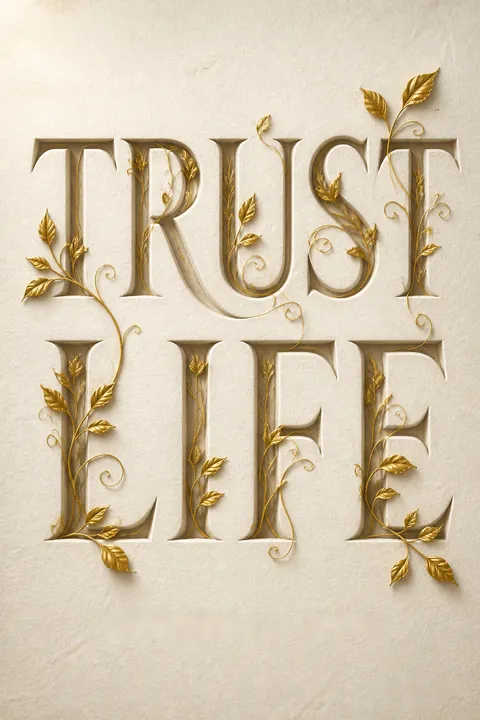
Trust Life is best read as a yearlong practice book rather than a conventional argument. Its 365 short entries revisit a compact set of themes: self-acceptance, affirmations, forgiveness, inner-child care, gratitude, bodily attention, spiritual trust, and generosity. Repetition is a feature of the format. A reader is not expected to master a theory once, but to encounter familiar ideas in different settings, from a strained friendship to a difficult workday or a health worry.
The book’s most durable contribution is its insistence that how people speak to themselves matters. Mirror work gives that claim a concrete ritual, while the inner-child image makes compassion easier to picture. Hay’s biography gives the practices emotional credibility: after abuse and personal upheaval, she developed a life organized around teaching, publishing, and service. The account of the Hayrides is especially important because it shows care becoming communal action rather than remaining a private affirmation.
The book also sits within New Thought spirituality, where mind, health, prosperity, and the universe are linked by a strong metaphysical logic. That worldview can offer hope and a feeling of agency. Its broadest claims, especially that illness or hardship reflects a person’s thoughts, should not be treated as established fact. Such claims risk blaming people for conditions shaped by biology, history, and social circumstance. The text itself includes a medical doctor in Hay’s cancer care, which supports a more grounded reading: reflection and self-kindness may accompany professional treatment, not replace it.
The most useful synthesis preserves the practices while loosening the certainty. An affirmation can prompt a new behavior; forgiveness can reduce the past’s hold without excusing harm; gratitude can widen attention without denying injustice; and intuition can be checked against evidence. In that form, Trust Life offers less a promise that life will comply than a disciplined way to meet uncertainty with tenderness, choice, and connection.
Review Summary
Trust Life receives mostly positive reviews, with readers praising its daily affirmations and uplifting messages. Many find it helpful for personal growth, stress reduction, and maintaining a positive mindset. Some readers incorporate it into their daily routines, reading a page each day. Critics note repetitiveness and question the effectiveness of constant affirmations. Overall, the book is well-received as a source of inspiration and self-improvement, with fans appreciating Louise Hay's wisdom and approach to personal development.
People Also Read






Glossary
Mirror work
Self-acceptance practiced in a mirrorA practice of looking at oneself in a mirror while speaking a kind or supportive message, often using one’s own name. Hay presents it as a way to notice self-criticism and rehearse self-acceptance. It can be adapted through brief daily sessions, written reflections, or other formats if direct mirror practice feels uncomfortable.
Affirmation
A consciously chosen statementIn Hay’s approach, an affirmation is a thought or phrase deliberately chosen to reinforce a desired way of seeing oneself or life. She also uses the term broadly, arguing that ordinary self-talk and spoken words affirm beliefs whether or not a person notices them. Her practical advice is to choose supportive statements and connect them with daily behavior.
Inner child
A younger, vulnerable aspect of selfHay’s term for the younger part of a person associated with childhood feelings, memories, and needs. She encourages adults to imagine offering this part safety, acceptance, and attention, especially when fear or self-criticism arises. The concept functions as a self-compassion exercise, not as a clinical diagnosis or proof that a separate person exists within the adult.
Inner ding
Personal sense of spiritual guidanceHay’s playful name for an inner sense of guidance that she believed connected people to universal wisdom. She described listening to it through quiet reflection and asking what needed attention. Readers can interpret the practice spiritually or as a way to pause, clarify values, and consider choices, while still checking important decisions against evidence and practical consequences.
One Infinite Intelligence
Universal spiritual source of wisdomA central spiritual idea in Hay’s writing: a single, benevolent intelligence that underlies life and can guide or support each person. She uses it to describe a source of insight beyond the individual mind. It is a metaphysical belief rather than an empirically established force, and readers may engage with its language without adopting the belief literally.
dis-ease
Disharmony, in Hay’s spiritual vocabularyHay sometimes writes disease as dis-ease to emphasize what she sees as a relationship between illness and a lack of harmony in a person’s thoughts or life. This framing is part of her spiritual interpretation, not a medical definition. It should not be taken to mean that a person’s thinking caused an illness or that changing thoughts can replace medical care.
totality of possibilities
Openness beyond limiting beliefsA phrase Hay uses for the range of possibilities she believes becomes available when a person releases judgments, fears, and self-imposed limits. In practice, she invites readers to question restrictive beliefs and imagine alternatives. The concept can be used as a prompt for flexible thinking, though it does not mean every desired outcome is possible or under individual control.
FAQ
1. What is "Trust Life: Love Yourself Every Day with Wisdom from Louise Hay" by Louise Hay about?
- Daily Affirmations and Wisdom: The book is a year-long collection of daily affirmations and inspirational passages drawn from Louise Hay’s most influential works.
- Core Teachings of Self-Love: It centers on Hay’s philosophy that self-love, positive thinking, and affirmations can transform one’s life, health, relationships, and prosperity.
- Practical Spiritual Guidance: Each entry offers practical exercises, meditations, or reflections to help readers apply spiritual principles in everyday life.
- Compilation and Legacy: Curated by Robert Holden, the book serves as both a tribute to Louise Hay’s legacy and a practical guide for personal growth and healing.
2. Why should I read "Trust Life" by Louise Hay?
- Daily Inspiration: The book provides a daily dose of encouragement, positivity, and practical wisdom to start or end your day.
- Transformative Practices: It offers actionable exercises and affirmations that can help shift negative thought patterns and foster self-acceptance.
- Accessible Spirituality: Louise Hay’s teachings are presented in a simple, approachable way, making spiritual growth and healing accessible to everyone.
- Comprehensive Overview: The book distills the essence of Hay’s decades of work, making it a great introduction for new readers and a valuable resource for longtime fans.
3. What are the key takeaways from "Trust Life" by Louise Hay?
- The Power of Affirmations: Repeating positive statements can change your beliefs, emotions, and life experiences.
- Self-Love is Foundational: Loving and accepting yourself is the root of healing, happiness, and healthy relationships.
- Forgiveness Frees You: Letting go of past hurts and forgiving yourself and others is essential for personal freedom and growth.
- You Create Your Reality: Your thoughts and beliefs shape your experiences; changing them can change your life.
- Life Loves You: Trusting in the benevolence of life and being open to receiving love and abundance is a central theme.
4. How is "Trust Life" by Louise Hay structured and how should I use it?
- Daily Entries: The book is organized into 365 (plus one for leap years) daily readings, each with an affirmation and a short passage.
- Thematic Flow: Entries are balanced throughout the year to cover core themes like self-love, forgiveness, gratitude, prosperity, and inner guidance.
- Practical Exercises: Many entries include mirror work, journaling prompts, or meditative practices to deepen the impact.
- Flexible Use: Readers can follow the calendar, open to a random page for inspiration, or focus on specific topics as needed.
5. What are Louise Hay’s core teachings as presented in "Trust Life"?
- Mirror Work: Looking into your own eyes in a mirror and affirming self-love is a foundational practice.
- Heart Thoughts and Affirmations: Choosing loving, positive thoughts and repeating them to reprogram your mind.
- Listening to Inner Guidance: Trusting your “inner ding” or intuition as a source of wisdom and direction.
- Forgiveness: Releasing the past and forgiving everyone, including yourself, to achieve freedom and healing.
- Gratitude: Practicing daily gratitude to attract more good into your life.
- Caring for the Body: Treating your body with love, respect, and healthy habits as an act of self-love.
- Creating Your Future: Recognizing that the present moment is the point of power for creating change.
- Saying Yes to Life: Embracing opportunities and trusting that life supports your highest good.
- Having Fun and Inner Child Work: Nurturing your inner child and making joy a priority.
- Letting Life Love You: Trusting that life is fundamentally loving and supportive.
6. What is the role of affirmations in "Trust Life" by Louise Hay, and how do they work?
- Thought Patterns Shape Reality: Affirmations are positive statements that help change negative beliefs and create new, empowering thought patterns.
- Daily Practice: The book encourages consistent, daily use of affirmations to gradually shift your mindset and experiences.
- Mirror Work Integration: Saying affirmations while looking in the mirror is emphasized as a powerful way to dissolve self-criticism and build self-acceptance.
- Practical Examples: Affirmations cover all areas of life—health, relationships, prosperity, self-worth, and more—making them adaptable to individual needs.
7. How does "Trust Life" by Louise Hay address self-love and self-acceptance?
- Central Theme: Self-love is presented as the foundation for all healing and positive change.
- Unconditional Acceptance: The book teaches accepting all parts of yourself—strengths, flaws, and past experiences—without judgment.
- Mirror Work Exercises: Specific practices are provided to help readers look at themselves with compassion and say, “I love you, I really love you.”
- Overcoming Negative Self-Talk: Readers are guided to replace self-criticism with loving, supportive inner dialogue.
8. What is "mirror work" in "Trust Life" by Louise Hay, and how do I practice it?
- Definition: Mirror work involves looking into your own eyes in a mirror and repeating positive affirmations to yourself.
- Purpose: It helps dissolve resistance, self-judgment, and negative beliefs, fostering deeper self-acceptance and love.
- Step-by-Step Guidance: The book provides detailed instructions and sample affirmations for mirror work, encouraging daily practice.
- Emotional Impact: While it may feel uncomfortable at first, persistence leads to profound shifts in self-perception and emotional healing.
9. How does "Trust Life" by Louise Hay approach forgiveness and healing the past?
- Forgiveness as Freedom: The book teaches that forgiveness is about letting go of the past, not condoning harmful behavior.
- Self-Forgiveness: Emphasis is placed on forgiving yourself for past mistakes and self-judgment.
- Practical Exercises: Visualization, affirmations, and mirror work are used to facilitate the process of forgiveness.
- Healing Relationships: By forgiving others, you release emotional burdens and open yourself to new, positive experiences.
10. What advice does "Trust Life" by Louise Hay give for dealing with health, illness, and the body?
- Mind-Body Connection: The book asserts that physical health is influenced by thoughts, beliefs, and emotions.
- Listening to the Body: Readers are encouraged to pay attention to their body’s messages and respond with love and care.
- Affirmations for Health: Specific affirmations are provided to support healing, vitality, and self-care.
- Releasing Guilt and Fear: Letting go of negative emotions is presented as essential for physical and emotional well-being.
11. How does "Trust Life" by Louise Hay help with abundance, prosperity, and career?
- Prosperity Consciousness: The book teaches that abundance begins with your beliefs about deserving and receiving.
- Affirmations for Wealth: Daily statements are provided to help shift from scarcity thinking to prosperity thinking.
- Blessing Your Work: Readers are encouraged to bless their jobs, income, and business relationships with love to attract success.
- Openness to Receiving: Practicing gratitude and being open to new avenues of income are emphasized as keys to financial well-being.
12. What are the most powerful quotes from "Trust Life" by Louise Hay, and what do they mean?
- “Life loves you.” – This signature affirmation encapsulates Hay’s core message: the universe is fundamentally loving and supportive.
- “The point of power is always in the present moment.” – Change and healing are always possible, starting right now.
- “Every thought we think is creating our future.” – Your beliefs and thoughts shape your experiences; choose them wisely.
- “I love and approve of myself.” – Self-acceptance is the foundation for all positive change.
- “Forgiveness is for yourself because it frees you.” – Letting go of resentment liberates you from the past and opens the door to healing.
About the Author
Other books by Louise L. Hay



Download PDF
Download EPUB
.epub digital book format is ideal for reading ebooks on phones, tablets, and e-readers.








