

Plot Summary
Jeff Returns Online
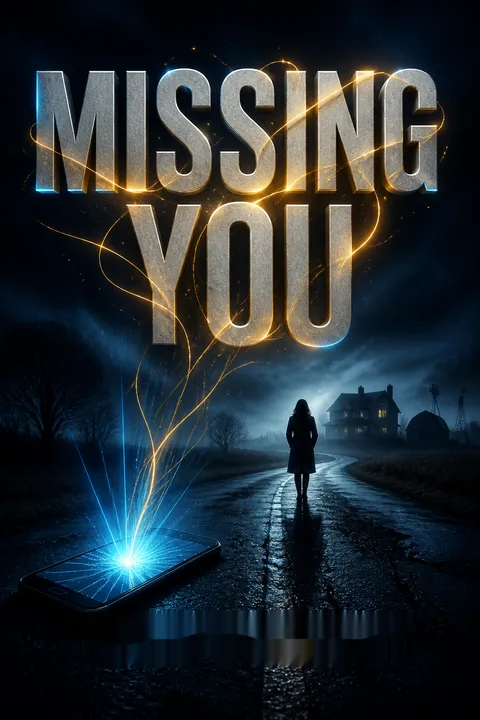
NYPD detective Kat Donovan is sitting with her friend Stacy in O'Malley's Pub, still grieving her murdered father and wary of the life she has built alone, when Stacy signs her up for an online dating service. Among the profiles, Kat finds Jeff Raynes, the fiancé who left her eighteen years earlier, now a widower with a child.
She sends him a video tied to an old private joke between them. Jeff replies warmly but as though they have never met. When Kat identifies herself, he admits he recognized her, then ends the exchange, saying he needs a fresh start. His rejection reopens the heartbreak she has kept sealed away, while the profile leaves her wondering what happened to him.
The dating site turns private longing into a searchable public surface: Kat encounters Jeff not through memory alone, but through a profile that presents him as available and newly legible. His refusal exposes the asymmetry between remembering a relationship and being willing to resume it. Kat has treated the old engagement as unfinished, while Jeff frames the past as a danger to his future. That gap matters beyond romance. Her instinct to investigate what she cannot understand is already active, and the story makes emotional uncertainty resemble an open case.
The Buried Proposal
Gerard Remington, a meticulous pharmaceutical chemist, is preparing to propose to Vanessa Moreau, the beautiful woman he believes he has met online. Before their planned trip, attackers knock him unconscious and bury him in a root cellar on an isolated farm. His captors release him only to march him to a farmhouse, where a calm man named Titus questions him while an accomplice watches.
Gerard clings to the promise that cooperation will reunite him with Vanessa. Later, he is led past a heap of abandoned clothes and recognizes Vanessa's yellow sundress among them. The sight destroys his hope. His disappearance, initially separate from Kat's search for Jeff, establishes that an online romance can lead not to a new life, but to a trap.
Gerard's precise habits cannot protect him once the people around him control the conditions of his life. He tries to make sense of captivity by observing details, measuring distance, and constructing explanations, but the sundress supplies an answer too terrible for rational order to soften. The proposal he planned so carefully becomes a measure of how little he knew about the person he loved. His story also enlarges the novel's central question: how can anyone distinguish genuine intimacy from a performance designed to exploit the need for it?
Leburne's Last Account
Captain Thomas Stagger tells Kat that Monte Leburne, the convicted killer of her father, is dying of cancer at Fishkill prison. Kat visits him, hoping for a final explanation. When Leburne refuses to speak, Nurse Sylvia Steiner uses medication to draw him into a confused, dreamlike state. He then claims he never killed Henry Donovan and says he accepted blame after others approached him in prison.
He dies before identifying them. Kat returns to the case and asks corrections officer Chris Harrop for Leburne's visitor log from the day after his arrest. The list includes two federal agents, Leburne's lawyer, and Stagger. The discovery changes Kat's old certainty into suspicion: her father's case may have been closed around a lie.
Leburne's statement is both a possible revelation and compromised evidence. Nurse Steiner warns Kat that the drugs can produce convincing falsehoods, yet the claim fits anomalies she has noticed in the case. The visitor log gives her a firmer fact, but not an explanation. Coben makes uncertainty consequential here: Kat is not simply chasing closure, she is deciding whether loyalty to the official record matters more than the discrepancies inside it. Stagger's name turns a trusted mentor into a question, and that emotional cost makes the investigation personal in a new way.
Brandon's Missing Mother
Nineteen-year-old Brandon Phelps comes to Kat's precinct claiming that his mother, Dana, has disappeared during a Caribbean trip with her boyfriend. He gives a false Manhattan address and a prepaid phone number, prompting Kat to investigate rather than accept his story.
Brandon eventually explains that he chose Kat because he found her online exchange with Jeff while hacking the dating service. He shows her a photograph of Dana's boyfriend, and Kat recognizes Jeff.
Brandon says his mother has not kept in touch as promised and that Jeff used another name online. Kat tells him she cannot intervene in his mother's private life, but the connection makes his plea impossible to dismiss. Her old fiancé is now at the center of a possible missing-person case.
Brandon's deception initially makes him look unreliable, but his hacking also gives him access to evidence ordinary channels have not supplied. Kat has to separate the method from the warning: he has invaded privacy, yet he may be the only person noticing a dangerous pattern. His attachment to Dana is shaped by their shared grief over his father's death, while Kat's connection to Jeff distorts her judgment in another direction. Their uneasy partnership begins with mutual suspicion, not trust, which makes each new fact harder to interpret cleanly.
The Yellow Sundress
Greenwich detective Joe Schwartz shows Kat an ATM recording of Dana withdrawing cash in a yellow sundress. Dana appears alone, and a limousine dispatcher confirms she had canceled her usual airport car because her boyfriend was sending another.
A distant figure in a dark suit shadows her movements. Chaz Faircloth traces the car's plate to a Lincoln Town Car whose owner is away, then discovers the plate was stolen. Meanwhile, Brandon finds a large transfer from Dana's account to a numbered Swiss account.
Her financial adviser, Martin Bork, says she plans to marry her new partner and buy a home in Costa Rica, but the transfer predates the current case and connects to an earlier suspicious report. Each reassuring explanation leaves another inconsistency.
The surveillance footage offers the seductive clarity of an image, but it does not tell Kat whether Dana is free or coerced. The dress links Dana's journey to Gerard's disappearance, while the stolen plate turns an ordinary limo ride into deliberate concealment. Bork's explanation is plausible enough to slow the investigation, yet the earlier transfer prevents it from settling the question. The section shows how criminal manipulation can hide inside normal adult choices: travel, money, romance, and silence all have innocent explanations until their timing begins to align.
The Family's Hidden Life
Kat presses retired detective Bobby Suggs about the unidentified fingerprint found at her father's murder scene. Suggs reveals that it produced a name months after Leburne confessed, but Stagger dismissed it as belonging to a homeless man.
Kat's mother, Hazel, rejects questions about Henry's frequent absences, then admits she cannot explain them. Family friend Tessie gives Kat a more damaging possibility: Henry had a long-running relationship with someone known as Sugar, and neighborhood rumor described that person as a Black sex worker.
Kat realizes her mother may have known more than she ever said. Instead of resolving the murder, these conversations undermine the simple story Kat inherited about her father, his marriage, and the reason he was killed.
Kat's investigation moves from a police file into the family stories that made her childhood bearable. Hazel protects herself by choosing memories she can live with; Tessie risks that protection because she believes uncertainty is becoming its own injury. The revelation is painful not because it proves Henry was a villain, but because it forces Kat to hold affection and deception together. The old fingerprint provides a concrete investigative lead, while the hidden relationship shows how a community's expectations can make secrecy feel safer than honesty.
A Swiss Account
Kat follows the Swiss account to Asghar Chuback, a financial adviser who operates his investment business from his mother's basement. Chuback explains that the first suspicious transfer came from his cousin Gerard Remington, who had said he was starting a new life with a woman named Vanessa. Kat finds Gerard's dating-service charge among his bills, tying him to the same site used by Jeff and Dana.
At the same time, Titus's operation comes into focus: his crew builds convincing profiles from abandoned online accounts, selects people with money and few close ties, and persuades them to travel. Martha Paquet, lonely after years of caring for family, accepts a meeting with a man she knows as Michael Craig. Titus's crew takes her to the farm.
The financial record supplies the bridge between an apparently private romance and a repeatable criminal method. Chuback's professional caution delays him, but his concern for Gerard finally turns a suspicious transaction into a human lead. Titus's system depends less on elaborate technical deception than on accurate emotional reading: he studies who is lonely, who is isolated, and what kind of future they want. Martha's decision is understandable, not foolish. That distinction prevents the victims from becoming caricatures and clarifies why the scheme works.
The Man Called Ron
Brandon uses an image search to trace Jeff's dating-site photographs to an inactive Facebook page under the name Ron Kochman. Stacy's investigation shows that Ron is a freelance journalist with a daughter, Melinda, and a home in Montauk. Kat drives there and first meets Melinda and the girl's protective grandfather, Sam, before Jeff appears.
He admits the online profile was built from his old pictures but says he knows nothing about Dana or Martha. Kat asks why he left her years ago; Jeff says only that he needed a different life. Meanwhile, Brandon notices Jeff still communicating with other women, including Martha Paquet. The discovery convinces Kat that more than one woman may have been drawn into the same romance.
The image search turns a face into a trail, but it cannot answer the question Kat most wants answered: why Jeff vanished from her life. His daughter and Sam make clear that his present identity is not merely a disguise; it is a life with attachments of its own. Kat's arrival in Montauk therefore carries two kinds of risk, investigative and emotional. Jeff's refusal to explain keeps her from turning nostalgia into proof, even as the overlap with other women gives her a concrete reason to keep looking.
Sugar's True Name
After a man connected to crime boss Willy Cozone brings Kat to his Long Island estate, Cozone denies ordering Henry's death. He admits he had an arrangement with Leburne, who agreed to confess to the murder in exchange for money and favors, including help for a nephew entering the police academy. Cozone directs Kat to Sugar, whom she locates in Brooklyn as Anthony Parker.
Parker reveals that he and Henry had been lovers for fourteen years, and that Cozone discovered the relationship and used it to pressure Henry. On the night Henry died, he had come to see Parker with flowers after trying to end their affair. Parker cannot name his killer. Kat leaves with the family secret exposed, but the central crime still unresolved.
The revelation of Henry's relationship changes the meaning of his absences without reducing him to them. Parker describes a man constrained by the period's homophobia and by the domestic life he could not openly leave. Cozone's account, meanwhile, is self-serving but corroborates that Leburne's confession was purchased. Kat must now resist the easy comfort of replacing one complete story with another. The truth arrives in pieces: private love, public coercion, and a fabricated conviction coexist, but none yet identifies the person who fired the fatal shot.
The Farm Closes In
Stagger finally admits he arranged Leburne's confession to protect Henry's reputation and family, though he still claims Cozone ordered the killing. Before Kat can settle the contradiction, Titus's crew abducts Brandon from outside her apartment and drives him toward the Pennsylvania farm. Dana, held underground, escapes into the woods and returns to the farmhouse when she learns the captors plan to seize her son.
She kills Dmitry with an axe and calls Brandon to warn him, but Titus has already lured him to the SUV. Kat follows the vehicle across New Jersey and into Pennsylvania while the FBI tries to organize a response. At the farm, Dana opens several root-cellar doors, freeing other prisoners as Titus prepares to burn the evidence.
Several forms of concealment collapse at once. Stagger admits that official justice was engineered, Titus abandons the careful appearance of consent, and Dana stops surviving through compliance when her son's life is threatened. Her escape is not a sudden transformation into an action hero; it grows from a mother's knowledge that obedience no longer protects anyone. Kat's pursuit likewise shifts from private obsession to urgent responsibility. The root-cellar doors, once instruments of isolation, become openings through which the victims can act together.
The Root Cellar Revolt
Titus reaches the burning farm with Brandon, who has been shot in the knee to draw Dana out. Kat leaves the road, enters the property, and runs toward the gunfire despite the FBI's warning to wait. Dana and Martha keep Dana from walking into Titus's trap, while other prisoners gather after being freed from the buried cells. Kat shoots Titus as he threatens Brandon.
In the clearing, the freed captives overwhelm Reynaldo before he can kill Dana; she finishes the fight with the axe. The farm yields thirty-one bodies and seven living captives, including Dana. Brandon survives but suffers a shattered kneecap. Titus survives in a medically induced coma, while the FBI takes over the investigation.
The climax reverses the farm's architecture of power. Titus has used darkness, confinement, and carefully rationed hope to keep each captive isolated; once the doors open, the people he treated as separate liabilities become a group capable of resisting Reynaldo. Dana's decisive act completes a shift from a woman expected to wait for rescue to a parent who fights for her child and others. Kat's choice to enter before the FBI arrives is dangerous, but the novel grounds it in immediate stakes rather than abstract heroism.
The Fingerprint's Owner
After the rescue, Kat visits Dana and Brandon, then returns to New York, where Jeff waits outside her building. They reconnect, and Kat takes leave to spend time near him in Montauk. A month later, Suggs calls with the result of the old fingerprint test: the print belongs to Jeff. Jeff admits Henry came to his apartment and attacked Aqua, who was Jeff's roommate.
Jeff intervened, and when Henry reached for a gun hidden in his boot, Jeff used it and accidentally shot him. Stagger helped conceal the killing and arranged Leburne's false confession; he later helped Jeff disappear under a new identity. Kat understands that Jeff's flight was not a simple rejection, but his silence has brought the old crime into their renewed relationship.
The fingerprint does what testimony and suspicion could not: it attaches the murder to a person Kat loves, turning an abstract case into an intimate betrayal. Jeff's account reframes his disappearance as flight from guilt, not indifference, but it does not erase the harm caused by his silence. Kat's childhood faith in her father, her anger at Stagger, and her longing for Jeff all converge on the same fact: love can preserve a person in memory while making it difficult to see what they have done. The revelation refuses a clean emotional verdict.
Love After the Lie
Kat and Jeff sit together after his confession, neither able to repair eighteen years of silence with a single explanation. Jeff says he could not face a life built on the lie, even after Stagger gave him a new identity. Kat takes his hand, not because the past has become harmless, but because she still loves him and the truth is finally spoken.
Earlier, she had promised herself to pursue Cozone for Henry's sake; now that motive has changed, though the case's full consequences remain unresolved. In the weeks after the farm raid, Dana and Brandon recover at home with Bo, the old Labrador who once belonged to Reynaldo. Kat's future with Jeff remains uncertain, but she is no longer mistaking uncertainty for an answer.
The ending refuses both the fairy-tale restoration Kat once imagined and a punitive severing that would make the moral landscape simpler than it is. She does not absolve Jeff, and the narrative does not claim that confession repairs the consequences of his choices. Her hand reaching for his is instead a decision made with knowledge of the damage. Dana's adoption of Bo offers a quieter counterimage to the farm: care can outlast the person who first offered it, even when that person was dangerous.
Analysis
Missing You treats the desire for connection as neither a weakness nor a guarantee of goodness. The dating site makes intimacy searchable, but its profiles cannot tell users whether the person behind a photograph is honest, lonely, predatory, or simply frightened. Titus understands that the most effective deception is not a perfect lie. It is a plausible future offered to someone ready to hope. Gerard, Dana, Martha, and Kat respond differently, yet each is drawn by the possibility that life might still open toward another person.
Kat's investigation repeatedly tests the boundary between intuition and projection. Her suspicion of Jeff is complicated by heartbreak; her suspicion of Stagger by loyalty; her inherited image of Henry by childhood love. The novel does not treat emotion as evidence, but it also refuses the opposite mistake of dismissing emotion as irrelevant. Kat notices the anomalies because she cares, then has to verify them through records, witnesses, and physical traces. Her work becomes most reliable when feeling prompts a question rather than dictates its answer.
The family plot deepens that problem. Henry's concealed relationship with Anthony Parker reveals the pressures that made secrecy seem survivable, while Stagger's efforts to protect Henry's reputation create a second injury in the name of loyalty. Jeff's guilt shows how silence can begin as an emergency response and become a life structure. The final fingerprint does not merely solve a murder; it exposes how love, shame, and protection can distort justice. Kat's choice to remain beside Jeff after learning the truth is not absolution. It is an uneasy act of intimacy in which affection and accountability must occupy the same room.
Review Summary
Missing You by Harlan Coben follows NYPD Detective Kat Donovan, who discovers her ex-fiancé on a dating website while investigating both her father's murder and a missing person case. Reviews are mixed but generally positive (4.01/5), praising Coben's suspenseful, fast-paced storytelling and clever plot twists. Fans appreciate the multiple converging storylines and intense pacing, though some critics found the romance elements clichéd, the ending abrupt, and certain plot points implausible. Several reviewers noted excessive subplots and underdeveloped characters. Most agree it's an entertaining thriller, though not Coben's strongest work.
People Also Read









Characters
Kat Donovan
Detective with old woundsAn NYPD detective shaped by her father's murder and by the engagement that ended soon afterward. Kat is perceptive, independent, and stubbornly loyal, but grief has hardened into habits of drinking, isolation, and mistrust. She approaches emotional problems as if they were cases that can be solved by finding the missing fact. Her work gives her discipline and purpose, while her personal history makes her vulnerable to interpreting hope as evidence. Kat's central tension is not between strength and weakness, but between her need to know the truth and her wish that the truth leave the people she loves unchanged.
Jeff Raynes
The vanished fiancéKat's former fiancé, a talented journalist whose warmth and humor once made her feel safe enough to trust him completely. Jeff is attentive and emotionally perceptive, yet also capable of retreating into silence when shame or fear overwhelms him. The distance between his public identity and private history shapes how other people understand him. His role in Kat's life is complicated by the fact that their love belonged to a younger version of each of them, while the person she encounters now has lived through years she cannot see.
Brandon Phelps
A watchful, grieving sonDana Phelps's college-age son, still grieving his father and intensely protective of his mother. Brandon is bright and technically adept, with a tendency to conceal information when he fears adults will dismiss him. His loyalty can become controlling, especially when he imagines that a new relationship might erase his father. Yet he is capable of revising his assumptions and asking whether his fear is hurting the person he wants to protect. His search for Dana draws Kat into a case neither of them fully understands.
Dana Phelps
A resilient new widowBrandon's mother, a wealthy widow who has devoted years to raising her son after her husband's death. Dana is warm, capable, and accustomed to putting other people's needs before her own. Her desire for companionship is not a rejection of her former life, but an effort to begin living beyond grief. She is also a protective parent whose tenderness does not preclude force when someone threatens her child.
Stacy
Kat's candid confidanteKat's closest friend, a private investigator whose work often involves exposing infidelity. Stacy is glamorous and openly playful, but her apparent frivolity masks practical intelligence and a serious understanding of how relationships fracture. She pushes Kat toward the dating site, then helps investigate Jeff when the consequences become dangerous. Her candor can sting, but she offers Kat the combination of humor, loyalty, and outside perspective that the detective rarely gives herself.
Thomas Stagger
A captain with divided loyaltiesKat's captain and a former partner of her father. Stagger is a veteran officer who values procedure, loyalty, and the reputation of the people he serves beside. His connection to Henry makes him protective of Kat, but it also complicates his judgment about what she deserves to know. He is not an easy man to read: his reserve can look like steadiness, while his silences carry the weight of old decisions.
Aqua, Dean Vanech
A brilliant, fragile teacherKat's longtime friend from Columbia, known as Aqua, who teaches yoga in Central Park. Exceptionally intelligent and deeply sensitive, he lives with chronic mental illness and depends on routine to remain grounded. His friendship with Kat reaches back to her life before grief reshaped it. Aqua's perception can be startling, but his fragile state means that insight and confusion often arrive together, requiring others to approach him with patience rather than certainty.
Willy Cozone
A guarded crime bossA powerful criminal figure from Kat's old neighborhood, accustomed to using fear and influence to protect his interests. Cozone understands that reputation can be as useful as violence, and he is careful about what he admits. His history intersects with Henry Donovan's police work, making him a source of information whose motives can never be taken for granted.
Monte Leburne
A condemned triggermanA former boxer and criminal enforcer serving a life sentence. Leburne is physically imposing but not especially clever, and he has built his survival around loyalty to people who can threaten his family. His approaching death gives Kat a narrow chance to ask questions, but his history of violence and silence makes his answers difficult to assess.
Titus Monroe
A patient online predatorA calculating operator with a talent for reading what lonely people want to hear. Titus favors patience and control over open displays of anger, and he treats other people's hopes as weaknesses to be managed. His calm manner makes him more unnerving, not less: he can make coercion sound like a reasonable bargain and knows how to hide danger inside the promise of a fresh start.
Reynaldo
Titus's loyal muscleA heavily muscled enforcer who owes Titus his survival and has come to regard him as family. Reynaldo's devotion extends most plainly to Bo, the Labrador he rescued and cares for. He follows orders without much reflection, relying on strength and routine rather than moral judgment. His tenderness toward the dog reveals a capacity for attachment that contrasts with the work Titus expects him to do.
Anthony Parker
A guarded witnessA quiet Brooklyn resident connected to the Donovan family's past. Parker is careful about what he tells Kat and understands how neighborhood judgment can shape a person's choices. He carries private knowledge that complicates the public stories told about Henry, Hazel, and their community.
Chaz Faircloth
Kat's difficult partnerKat's partner in the precinct, a wealthy, polished detective whose crude flirtation often makes him seem unserious. Chaz is more observant and resourceful than Kat initially credits him for. He follows leads, requests surveillance footage, and uses his access to help her even when their working relationship is strained. His self-confidence is sometimes comic, but it does not prevent him from doing useful work.
Bobby Suggs
A retired case detectiveA retired investigator who worked Henry Donovan's murder with his partner. Suggs is kind-faced and deeply experienced, but he knows that a case can look solid while still containing details no one has explained. His memories and old files help Kat reopen questions others have learned to live with.
Sylvia Steiner
A prison nurseA nurse in Fishkill's infirmary who tends to dying prisoners. Steiner is compassionate in manner but unorthodox in her methods, and she believes that altered states can loosen what a patient will not consciously disclose. Her intervention gives Kat access to Leburne's uncertain final account.
Martin Bork
The Phelps family adviserA financial adviser trusted by Dana and her late husband. Bork is protective of client confidentiality and initially treats Brandon's fears as a private family matter. His knowledge of Dana's finances gives Kat a crucial lead, though his explanations do not immediately settle what has happened.
Asghar Chuback
Gerard's wary adviserGerard's cousin and financial adviser, operating a small investment business from his mother's home. Chuback is eccentric and protective of client privacy, yet concerned enough about Gerard's unusual instructions to file a suspicious activity report. His decision to cooperate gives Kat a bridge from a missing chemist to a wider pattern.
Melinda Kochman
Jeff's watchful daughterJeff's teenage daughter, who has grown up with the name and life he uses now. Melinda is alert to her father's loneliness and has tried to encourage him to reconnect with other people. Her protectiveness reflects the close but complicated family life that Kat encounters in Montauk.
Plot Devices
YouAreJustMyType.com
Romance as an entry pointThe dating service begins as Stacy's attempt to help Kat meet someone, then becomes the point where several storylines converge. Kat finds Jeff's profile there, Brandon uses the site's records to trace his mother's boyfriend, and Gerard's account reveals how online courtship can precede disappearance. The platform also keeps logs of profile views and messages, allowing Brandon to uncover connections, while its public-facing simplicity helps conceal who is actually behind a profile.
Borrowed Online Identities
Faces detached from their ownersTitus's crew uses photographs and information from inactive or abandoned online accounts to create convincing romantic profiles. The borrowed identities are not wholly invented, which makes them harder to disprove with ordinary searches. Jeff's old pictures, Vanessa's modeling images, and aliases such as Jack or Ron allow a predator to pose as a real person with a plausible past. The device turns familiar digital habits, including searching a prospective partner, into part of the trap.
The Farm's Root Cellars
Captivity without witnessesThe former Amish farm contains concealed underground storage rooms that Titus's crew uses to confine people. Darkness, isolation, and limited food weaken the captives while making it difficult for anyone outside to know where they are. The cellars also conceal the scale of the operation from investigators. Once Dana escapes and opens the locks, however, the same hidden structure becomes the source of the captives' collective resistance.
The Swiss Account
Money routed beyond easy reachLarge transfers into a numbered Swiss account give Kat a financial link between people who appear to have left willingly. Gerard's adviser filed a suspicious activity report before Dana's transfer, allowing Kat to connect their cases. The account alone does not prove kidnapping: each transfer has a plausible explanation, and the funds move through systems that slow local police inquiries. Its value is as a pattern, not an immediate answer.
The Unidentified Fingerprint
A case detail concealedA print found at Henry Donovan's murder scene remains unresolved in the original investigation. Kat learns that it was later identified but dismissed, and the evidence file appears to have vanished from normal records. The fingerprint links the old homicide to the concealed history surrounding Henry, Stagger, and Jeff. It becomes the physical trace that outlasts false confessions, memory, and the explanations people have offered to protect one another.
About the Author
Other books by Harlan Coben








Download PDF
Download EPUB
.epub digital book format is ideal for reading ebooks on phones, tablets, and e-readers.








