

Key Takeaways
Practice receiving love, not only offering it
Receiving is the harder half. Barlow opens with a near-death ordeal: after a series of infections and medical complications, his heart stopped for eight minutes. He returned with no vision of an afterlife, but with a renewed urgency to write and make sense of his life. His deeper lesson is relational. Giving affection can feel generous and safe; accepting it means allowing other people to matter, help, and reach you.
A lesson tested in crisis. Barlow names Brazilian musician Gilberto Gil as a model of someone who accepts love with unusual ease. Barlow himself struggles with that capacity, especially through illness, bereavement, and dependence on friends and family. His story makes accepting care a practice, not a personality trait reserved for the naturally warm.
What's striking is the distinction between love as performance and love as receptivity. Helping others can preserve a sense of control, while accepting help exposes need and dependence. That distinction connects intimacy to the broader problem of autonomy: people can value independence so highly that they refuse the very relationships that sustain it. Barlow's claim is compelling as a personal compass, though it is not a universal rule. In unsafe relationships, refusing affection can be protection rather than failure.
Move between worlds without pretending they fit neatly
One life, many affiliations. Barlow moves from a Wyoming cattle ranch to Wesleyan, the Grateful Dead, Republican politics, and the early Internet. As a boy, he learned practical skills from ranch hands, while his parents occupied prominent positions in state politics. At school, he was often an outsider. At Wesleyan, he encountered psychedelic culture and met Bob Weir, his future friend and songwriting partner. None of these settings supplied a complete identity.
Crossing became his method. Barlow later campaigned for Dick Cheney, helped defend digital civil liberties, and wrote lyrics for the Dead. The memoir does not resolve these roles into a tidy personal brand. Instead, it shows how relationships and work across opposing cultures created opportunities to contribute in unexpected ways.
The memoir treats identity less as a fixed label than as a capacity to translate between communities. That is valuable in institutions where specialists often talk past one another: a person fluent in ranch life, politics, music, and technology can notice conflicts others miss. Yet boundary-crossing alone is not a virtue. Access to elite schools, famous friends, and political networks helped Barlow move freely. The useful lesson is not that anyone can drift anywhere, but that genuine translation requires listening to the people whose worlds one enters.
Use psychedelics to unsettle certainty, not replace judgment
A powerful experience is not a policy. Barlow's first LSD trip, during a performance of Indian classical music, seemed to dissolve the boundaries between his senses and gave him a lasting feeling of connection with the universe. It redirected him from physics toward comparative religion and mysticism. He describes more than a thousand psychedelic experiences, including frightening ones that made his sense of self feel fragile.
The risks were real. At Wesleyan, frequent high-dose trips unfolded amid social turmoil. Barlow became convinced that an extreme act could jolt people into recognizing a society in crisis. He assembled a bomb and planned to detonate it in Harvard Yard, but university officials intervened before he acted. His admiration for Timothy Leary coexists with recognition that promoting LSD as a cure-all could cause harm.
Barlow's account is strongest when it separates meaning from proof. A psychedelic experience can feel like revelation and still leave open what, exactly, it reveals. That distinction protects personal transformation from becoming a universal prescription. The memoir also shows how a changed sense of reality can be destabilizing, especially when combined with social stress and repeated drug use. Leary's charisma and Barlow's own experimentation are part of the story, not evidence that others should reproduce their risks.
When your choices affect others, trade rebellion for responsibility
Risk has other people in it. Barlow took over the Bar Cross Ranch when his parents' finances were failing. The ranch carried more than half a million dollars in debt, and keeping it running meant managing cattle, water, workers, and the family's future. A romantic plan to sell quickly became years of demanding work. The ranch made responsibility concrete: decisions affected livelihoods, animals, and a shared landscape.
Rebellion could injure friends. Before his wedding, Barlow fired a bullet into what he thought was a wooden floor to wake Bob Weir. The bunkhouse floor was concrete; shrapnel passed through Weir's nose. The incident exposes the danger behind Barlow's swagger. His adult code asks him to take responsibility for consequences, not excuse them as youthful eccentricity.
The ranch and the shooting place responsibility on two scales. One involves stewardship over land and a business; the other is immediate bodily risk to a friend. Together, they complicate the romance of the rule-breaker. A willingness to act outside convention can be creative, but it can also shift danger onto people who did not choose it. The relevant test is not whether an act feels bold, but whether the actor accepts its costs and takes others' safety seriously.
Choose a mission before chasing approval or happiness
A personal code needs witnesses. At thirty, Barlow wrote the Principles of Adult Behavior, a list of twenty-five standards for how he wanted to live. They include patience, humility, admitting mistakes, respecting others' needs, and caring more about what is right than who wins. One principle rejects the pursuit of happiness as the main aim, favoring a defined mission instead.
The code was aspirational. Barlow asks friends and colleagues to call him out when he falls short. That matters because his life includes addiction, infidelity, recklessness, and professional failures, not just public achievements. He had been admitted to Harvard Law School, sold a novel that was later rejected, and repeatedly changed direction. The principles offer a way to judge a life by conduct and purpose, rather than status alone.
The code works best as a tool for accountability, not as a claim of moral mastery. Its invitation to be corrected turns private ideals into social commitments, where other people can compare stated values with actual behavior. The distinction between mission and happiness is also useful: a meaningful undertaking can survive moods that pleasure cannot. But a mission can become an excuse for neglecting close relationships. Barlow's own story suggests that purpose needs limits, especially when its pursuit imposes costs on family and friends.
Defend open digital spaces before fear writes their rules
A computer raid became a civil-liberties test. In 1990, the Secret Service's Operation Sun Devil targeted young hackers and seized equipment and data. The investigation included raids on homes and Steve Jackson Games, where agents took material for a role-playing game they suspected could enable computer crime. Barlow saw a larger danger: authorities could suppress speech and punish association without first establishing that serious harm had occurred.
The response was institutional. Barlow joined computer entrepreneur Mitch Kapor and others in founding the Electronic Frontier Foundation. The group sought to extend constitutional protections into digital life and challenge disproportionate enforcement. The hackers were not simply innocent heroes, and some had accessed systems without permission. The central question was whether government power could respond with seizures and intimidation untethered from demonstrated damage.
This episode frames digital rights as a question of proportionality. Unauthorized access can create real vulnerabilities, but aggressive enforcement can also destroy evidence, livelihoods, and private data before a fair process begins. The hard work is to protect both system security and civil liberties rather than treating either as an absolute trump card. Barlow's intervention matters because he understood that rules for new media are often made during moments of panic, when the public has little visibility into what is being taken.
Treat copyright as a negotiated social contract
Sharing built a music community. The Grateful Dead allowed fans to record concerts, while prohibiting the commercial sale of those recordings. Barlow saw this openness as part of what made Deadhead culture flourish. It later shaped his belief that digital copying could support connection rather than simply represent theft.
The Internet changed the scale. Barlow argued that digital works could be copied and distributed at almost no cost, challenging business models based on controlling every copy. With Brazilian culture minister Gilberto Gil, he supported broader access to music and the use of Creative Commons licenses, which let creators specify how others may share or reuse their work. The issue is not whether creators deserve compensation, but how to protect that interest without locking away culture.
Copyright is both an economic rule and a design choice about who can participate in culture. The Dead's distinction between fan sharing and commercial resale offers a concrete middle ground between total control and total disregard for creators. Digital abundance strengthens the case for flexible permissions, but copying at low cost does not make creative labor costless. Any sharing system still needs ways for artists to earn income, grant consent, and change the terms on which their work circulates.
Let grief be visible instead of disguising it as strength
Loss made concealment impossible. Barlow's partner Cynthia died suddenly from a heart condition triggered by a virus, on a flight to New York. They had just begun discussing marriage and children. At her funeral, he spoke openly about their love, his shattered heart, and the fear that grief might make life seem meaningless.
Speaking gave others permission. His eulogy and later writing about Cynthia circulated online. He received messages from people who said they had felt allowed to mourn losses they had hidden for years. Barlow argues that American culture often treats death as failure and grief as weakness. His own grief was not a deliberate performance or a neat recovery; he describes being overwhelmed and needing help.
The episode shows how an honest account of grief can function as social permission. When someone speaks without rushing toward a lesson or tidy recovery, others may recognize their own unprocessed loss. That does not mean every mourner should disclose pain publicly; privacy can also be protective. The deeper point is that composure is not the only respectable response. Communities become more humane when they can make room for grief without demanding that it quickly become inspirational.
Build useful inheritances even when success remains unfinished
Service became a final mission. After a successful back surgery gave him a future beyond short intervals of pain, Barlow wanted work that could benefit descendants. With colleagues, he developed a system intended to turn sewage into clean water, fuel, and soil-enhancing material. Their Alabama plant processed about twenty thousand gallons of wastewater. The team demonstrated that the system could produce clean water and fuel, but its funder stopped supporting the company in 2015, forcing the plant to close.
An unfinished project still matters. Barlow continued hoping the technology would be revived, while admitting that he could not know whether it would succeed. His late medical crises also made him dependent on friends, his daughters, and strangers. The memoir closes its arc with service and receiving care: a legacy is not only what one completes, but what one attempts and passes on.
The project joins environmental ambition to a practical measure of value: can waste be converted into resources people need? Its closure is a useful counterweight to the memoir's larger-than-life adventures. A compelling prototype is not the same as a durable public service; financing, maintenance, and institutional continuity matter as much as invention. Barlow's idea of ancestry shifts the measure of achievement away from personal credit. Still, good intentions alone do not guarantee impact, so the unfinished work remains a hope rather than a proven solution.
Analysis
Mother American Night is a memoir of collisions: a Wyoming ranch and the counterculture, Republican politics and digital libertarianism, psychedelic revelation and psychiatric crisis, public fame and private grief. Its coherence comes less from chronology than from Barlow's recurring effort to reconcile freedom with obligation. He wants to escape inherited roles, yet repeatedly discovers that other people depend on his choices. The ranch, the Electronic Frontier Foundation, his daughters, and the water project each make responsibility concrete in a different way.
The book's storytelling is part of its argument. Barlow presents himself as an exuberant boundary-crosser, and the extravagant episodes make a life of constant reinvention feel plausible. But the same voice can turn danger into legend. The accidental shooting of Bob Weir, the bomb plan, heavy drug use, and unstable relationships complicate the heroic image. Those moments matter because they show that self-invention can produce casualties as well as possibility. His adult principles offer a corrective, though the memoir does not pretend that writing rules guarantees obedience.
His defense of digital openness also contains a productive tension. Protecting speech from overreach does not erase the obligations that accompany access, privacy, security, or creative labor. The memoir is most persuasive when it treats freedom not as immunity from consequences but as a space in which people can build new forms of community and accountability.
Finally, Barlow's spiritual claims about love and purpose are personal convictions, not propositions the narrative can prove. Their force comes from the life he uses to test them: the deaths he cannot control, the care he needs, and the work he hopes will outlast him. The book's deepest movement is from restless self-sufficiency toward an acceptance of dependence. That shift gives its many improbable episodes an emotional center without making them seem simple or resolved.
Review Summary
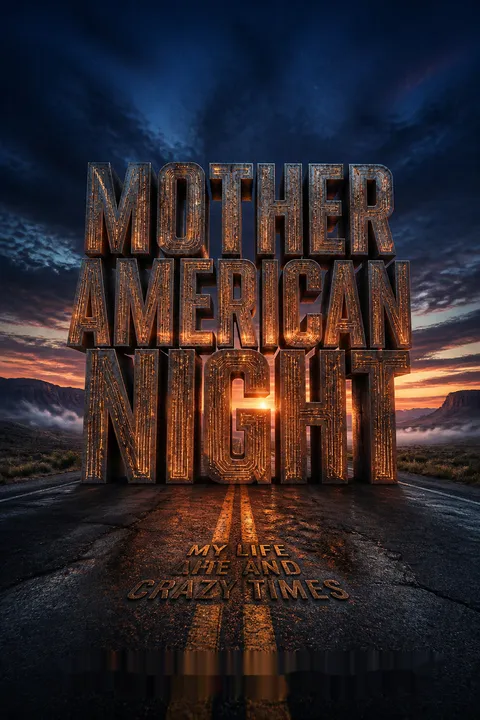
Mother American Night recounts John Perry Barlow's extraordinary life, from Wyoming rancher to Grateful Dead lyricist and internet pioneer. Reviewers praise his captivating storytelling and fascinating encounters with cultural icons, though some question the veracity of his tales. The memoir is lauded for its honesty about Barlow's flaws and addictions. While some found the writing style disjointed, most agreed it was an entertaining and insightful read. Critics noted the book's strengths in early chapters but felt it lost momentum towards the end.
People Also Read


Glossary
Principles of Adult Behavior
Personal conduct standardsA twenty-five-point code Barlow wrote on the eve of his thirtieth birthday to describe how he wanted to behave as an adult. It emphasizes patience, humility, accountability, respect for others, and pursuing a mission rather than treating happiness as the main objective. Barlow presents it as an aspirational standard and invites friends to challenge him when he falls short.
cyberspace
Networked digital spaceA term Barlow used for the shared environment people enter through networked computers and communications systems. He described it as a place where people meet, exchange information, and form communities, even though it lacks ordinary physical geography. His use emphasizes that digital life has social, political, and legal consequences, not merely technical ones.
noosphere
Collective sphere of mindA concept Barlow encountered in the work of Jesuit thinker and paleontologist Pierre Teilhard de Chardin. It describes a layer of collective consciousness and human relationships emerging through evolution. Barlow connected the idea to the Internet, which he saw as a developing communications system linking minds across distance, rather than as a mere collection of computers.
Operation Sun Devil
Secret Service hacker investigationA major U.S. Secret Service investigation into computer hacking that became publicly visible in 1990. It involved raids, equipment seizures, and the confiscation of large quantities of computer data. Barlow saw the operation as a civil-liberties issue because people and organizations faced severe disruption even when they were not ultimately charged with crimes.
OMEGA project
Algae-based wastewater systemAn acronym for Offshore Membrane Enclosures for Growing Algae, a NASA research project Barlow and his collaborators pursued through a license. The proposed system used floating enclosures to expose algae to wastewater, with the aim of cleaning water and producing biomass that could be converted into fuel. Barlow's company adapted the idea into a broader resource-recovery project.
SecureDrop
Anonymous journalistic tip systemAn open-source platform used by news organizations to receive information from sources who need to communicate anonymously. The Freedom of the Press Foundation supported its development and adoption. SecureDrop is designed to help journalists accept leaks while protecting the identity of the person submitting them, extending digital security to investigative reporting.
Download PDF
Download EPUB
.epub digital book format is ideal for reading ebooks on phones, tablets, and e-readers.








