

Plot Summary
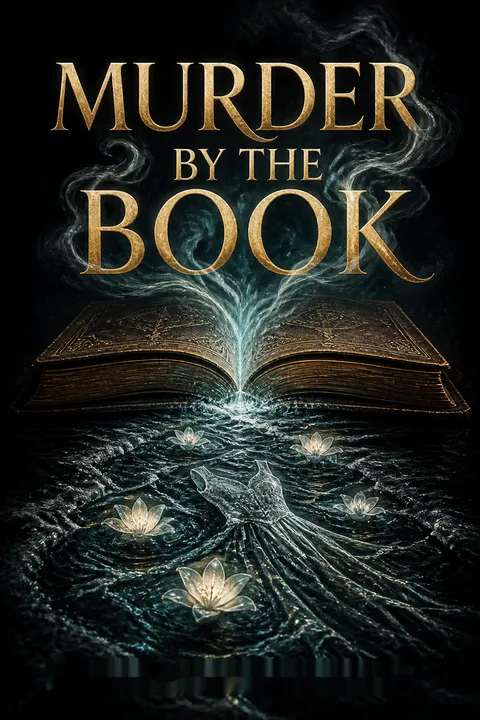
Ophelia in the Trough
After a night of rain, homicide detective Ian Carter finds a young woman posed in a water trough inside an abandoned barn. Purple and white flowers circle her neck, while a hand-painted landscape, spent candles, a blood-smeared book, and a torn page arrange the room like a grotesque exhibition. Ian's partner, Mike Kellogg, notes that the killer has made no serious effort to conceal the scene.
Medical examiner Ivy Wollard finds signs that the woman was strangled elsewhere, then carefully positioned in the trough before rigor set in. The page hidden in her mouth appears to have come from the book beside her. With no identification and no obvious witness, Ian must work out what the display means before the killer chooses another audience.
The murder is constructed as communication, not concealment. The flowers, water, painting, and book make the victim legible as an image while withholding her name and history. That contradiction gives Ian two investigations at once: identifying a person and interpreting an artwork. His excitement at the intellectual challenge sits uneasily beside his tenderness toward the dead woman, signaling how professional appetite can coexist with a genuine wish to restore dignity. The scene also establishes the killer's central imbalance: elaborate control over a victim's appearance, paired with deliberate exposure of his own crime.
A Gala Meets a Mugging
At Carlisle College, English professor Emma Reilly guides her students through unreliable narrators and finds comfort in the orderly world of literary interpretation. Department dean Rory Tamblyn persuades her to attend a museum exhibition, where she meets Ian beside paintings of Ophelia and the Lady of Shalott.
Their conversation draws Emma out of her usual reserve, but Ian breaks away after noticing a young woman who seems frightened by a man in the crowd. Later, walking alone through the rain, Emma trips and drops her things.
Someone shoves her down and steals her purse. Ian finds her shaken in a diner, helps her report the mugging, and drives her home. Their talk over pie turns awkward kindness into mutual interest, and Emma gives him her phone number.
Emma's first connection with Ian grows from shared attention to art, then from his practical care after she is attacked. The sequence links interpretation to bodily vulnerability: she can explain Ophelia's story, but she cannot control what happens in a dark street. Ian's attention to the uneasy woman at the gala reveals a protective reflex shaped by private regret, though he misreads what help is needed. Emma's composed classroom persona likewise conceals how much effort social contact costs her. Her decision to offer Ian her number is small, but it marks a deliberate step beyond the safe routines that have narrowed her life.
A First Date Unravels
The barn victim is identified as Sarah Weston, a Carlisle junior whose roommate, Lily Ellis, describes a gifted athlete recovering from a serious injury and prescription drug dependence. Sarah had recently been seeing an older, generous boyfriend whose identity remains unknown.
Ian brings Emma's recovered copy of Jane Eyre to her classroom and asks her to dinner. At his home, Emma notices photographs of Sarah's body among his case papers and recognizes the pose as Ophelia's death.
She also sees that the painted flowers and scene have been arranged with unusual care. Ian, alarmed by the danger and the breach of his professional boundaries, refuses to involve her. Emma leaves before dinner, convinced that he has dismissed the very expertise that could help explain the crime.
The first date collapses because both characters confuse care with control. Ian's fear of exposing Emma to violence is sincere, but he expresses it by denying her agency and expertise. Emma's insistence is not merely romantic disappointment; she has recognized a meaningful pattern and cannot set it aside. Sarah's recovery from injury and addiction complicates the image of a flawless victim that the killer is building around her. The gap between Sarah's actual life and her staged literary role becomes the case's ethical center: interpretation may reveal the killer's thinking, but it must not replace attention to the person he has erased.
The Fig Tree's Meaning
Emma re-creates the mural from memory and notices that its flowers match the details of Ophelia's death, but its tree does not. The scene should feature a willow; the killer painted a fig tree and shaped the flowers into a noose.
Emma interprets the changes as an accusation that Sarah was sinful or responsible for her fate. Ian rejects her offer to assist, yet his partner recognizes the usefulness of her reading. Emma instead turns to Rory, department administrator Carolyn Matthews, and psychology professor Niall Chadha.
They compare the newspaper's crime-scene images, debate the symbols, and break into the barn to examine the mural. Charlie Mason, a journalism intern with access to the paper, reveals that the killer has sent photographs of another Carlisle student, Phillipa Minor.
The tree's mismatch demonstrates that the killer's errors are purposeful, and Emma's training turns a visual inconsistency into a hypothesis about motive. Yet the group risks repeating his own reduction of women to symbols when it treats the crime scenes as puzzles. Carolyn's skepticism and Emma's concern for the victims push against that temptation, while Rory and Niall are energized by the interpretive contest. Ian's reluctant acceptance of Emma's insight also shifts their relationship: she is no longer simply a person he wants to protect, but a source of knowledge the investigation lacks. The second victim makes the stakes of that knowledge immediate.
Phillipa's Boat Arrives
Before Phillipa Minor's body is found, photographs show her dressed in red, bound with golden thread, and laid in a boat with a letter attached to her hand. The arrangement recalls Elaine of Astolat, the young woman who dies after Lancelot refuses her. Emma, Rory, Carolyn, Niall, and Charlie compare the images with the story and with Pre-Raphaelite paintings, concluding that the killer has blended versions to make Phillipa's desire look like a punishable offense.
The next morning, Ian and Mike find her boat at a campus pond. A page from the story is tied to her hand, but it gives Lancelot's defense rather than Elaine's account. Police learn that Phillipa worked at the museum gala, tightening the link between the crimes and Carlisle.
The second tableau sharpens the distinction between a woman's story and the story assigned to her. Elaine's written account should give her a voice; the killer substitutes the man's justification, turning the victim's final communication into an argument for his innocence. This is not neutral literary borrowing. It models a form of coercion in which a woman may be visible, even celebrated, while someone else controls what her visibility means. The investigators' reading is useful precisely because they notice the substitution. Their danger is assuming that identifying a pattern is equivalent to understanding the people caught inside it.
Grief Refuses the Puzzle
At Sarah's campus memorial, Emma sees students and faculty gather beneath a large photograph of the smiling young athlete. Ethan, a student in Emma's class and Phillipa's boyfriend, confronts her afterward for discussing the dead as literary figures rather than people.
His grief makes Emma recognize how readily her group has turned the murders into an intellectual game. Later, she finds a new envelope at home containing photographs of Olivia Ballard, one of her own students, and a warning about curiosity.
A second literary passage suggests Olivia has been cast as Desdemona. Emma calls Ian's partner, Mike, who sends an officer to secure her home. Charlie, meanwhile, is attacked on her way back from the newspaper, though the assailant takes only her work notes and research.
Ethan's rebuke interrupts the pleasure of interpretation at the moment it risks becoming ethically self-serving. Emma has pursued the case partly because her mind cannot release an unresolved pattern, but the memorial shows that real mourners do not experience a death as a clever arrangement. Olivia's photographs then collapse the distance between classroom and crime scene: Emma's student is no longer an abstract example but someone she has recently taught. The threatening delivery also transforms scholarship into risk. The story asks whether reading can be a form of care, and answers that it is only when analysis keeps returning to the lives that interpretation might otherwise overwrite.
A College Under Suspicion
Ian and Mike investigate the connections among Sarah, Phillipa, and Olivia, while Emma's friends compare the Desdemona image with paintings and discuss the killer's contempt for women. Charlie is assaulted but escapes with a bruised face, strengthening fears that someone is monitoring their work.
Police connect the case to earlier attacks on women in Northport, where distinctive shoe prints and a fingerprint match suggest the same offender learned from failed abductions before escalating.
College records reveal that graduate teaching assistant Malcolm Haynes worked around both Sarah and Phillipa, and students had previously complained about his intrusive behavior. Another Carlisle student, Dana Ackerman, is reported missing. Rory's travel records place him abroad during the first two abductions, giving him an apparently solid alibi.
The investigation gains traction through mundane overlaps rather than a single brilliant revelation: class assignments, conduct complaints, prints, and dates. The Northport attacks provide a behavioral history, suggesting that the killer learned to control his methods before building elaborate displays. Malcolm's proximity to the victims is troubling but not yet proof, while Rory's alibi encourages the detectives to bracket him out. This section also shows how institutions can fail in small, compounding ways. Earlier complaints about Malcolm did not produce meaningful intervention, and the college's fragmented records make the victims' shared environment difficult to reconstruct until violence forces separate offices to cooperate.
The False Text
After the police interview Emma about Olivia, Rory stays with her while friends keep watch. When Emma returns to campus, she drops her phone and leaves it briefly unattended. Someone changes Ian's number in her contacts, then sends a message claiming he is waiting at her house. Emma drives home expecting to meet him. The real Ian is elsewhere; Malcolm is waiting inside.
He knocks her unconscious and takes her to a root cellar, where she wakes bound in a gown. Rory is already there, injured and drugged, which makes him appear to be another captive. Malcolm explains that he wants to reverse the familiar stories by making a man, rather than a woman, the artwork. Emma realizes that no one knows where she has gone.
The false text weaponizes trust built through earlier scenes: Ian's care becomes the impersonated voice that draws Emma into danger. The phone is not merely stolen property but a record of intimacy that an attacker can counterfeit. Malcolm's artistic ambition also exposes the violence beneath his talk of reinterpretation. He imagines changing the story while preserving the same basic power to bind, costume, and display another person. Emma's awareness that she is unaccounted for creates the section's bleakest consequence. Knowledge has brought her close to the truth, but it has not yet given her control over what happens next.
Ian Follows the Sketch
Ian discovers Emma missing when he and Mike find her phone, purse, and keys scattered at home. A forged text on the phone shows that someone had already altered her contacts, and a receipt makes Ian suspect Rory. He breaks into Rory's house and attacks him, but the receipt is old and Rory has an alibi. The mistake gets Ian suspended and bars him from the case.
Still, he follows a lead from Alex Carmichael, the dealer who witnessed Emma's original mugging. Alex identifies Malcolm from photographs, linking him to the man who stole Emma's purse. Ian searches Malcolm's neglected apartment and finds crime-scene sketches, victim photographs, and a map to an abandoned homestead. One drawing places Emma in an apple orchard beside a hidden cellar.
Ian's guilt about Zoey has taught him to equate decisive action with protection, and here that reflex becomes a liability. He attacks Rory on circumstantial evidence, damaging his career and nearly destroying a useful lead. The crucial correction comes from Alex, whose earlier connection to Emma's mugging had seemed peripheral. Ian finally follows evidence rather than jealousy or instinct, though he does so while suspended and outside official procedure. The map's discovery converts the case's artistic language into geography. For once, an image does not merely represent a victim; it gives Ian a place where he may still reach one alive.
The Cellar Fight
Ian reaches the homestead and finds Emma and Rory trapped in a root cellar beneath the orchard. He cuts their restraints and gets Emma outside, then returns for Rory. As Ian carries Rory toward the farmhouse, Malcolm attacks him with a blow to the head. Emma ignores Ian's order to stay hidden, rushes Malcolm, and strikes him first with a knife, then with a heavy branch.
She ties Malcolm's wrists with a strip torn from her gown and helps Ian reach a ranger's vehicle for help. A gunshot sounds before police arrive. They find Malcolm wounded and Rory alive, so the immediate rescue appears to have ended the killings. Emma survives, but the staged scenes and the identity of the person behind them remain only partly explained.
Emma's survival depends on action rather than the interpretive role Malcolm assigned her. She does not wait for a knight to finish the rescue: she attacks, adapts when the knife is lost, and restrains her captor. Ian's return for Rory keeps the rescue from becoming a simple escape, but it also leaves him exposed to Malcolm's ambush. The apparent resolution is deliberately unstable. Malcolm has been caught at the scene, yet the gunshot and Rory's survival leave room for unanswered questions. The section grants Emma agency without pretending that agency erases terror, injury, or the uncertainty surrounding what the artwork was meant to conceal.
The Artist Behind Rory
Recovering at home, Emma studies a drawing from Malcolm's apartment and recognizes the next planned victim as Cressida. Then she finds an old annotation in her copy of Jane Eyre, written after her purse was stolen. Its literary reference matches a line in Malcolm's plans, showing that the theft was not random.
Emma remembers that Rory knew details she had not told him and that he had been present throughout her investigation. She visits his library and tests him with questions about the drawing. Rory admits he arranged the earlier murders, used Malcolm to carry out parts of the plan, and had intended to make Emma his final creation. When he attacks her, she taunts his vanity, grabs a fireplace poker, and drives it into his neck.
The revelation recasts the case's central contrast: Malcolm is the visible maker of the tableaux, but Rory has been directing the narrative and cultivating Emma's trust. The clue is not an obscure symbol but a mark in a beloved book, where private memory and forensic evidence meet. Rory's self-image as an artist depends on turning living women into material and Emma into a chosen audience. His confession confirms that his intellectual language is a cover for entitlement, not a defense of art. Emma defeats him by refusing the role he wrote for her and exploiting the vanity that made him believe she would keep listening.
Their Stories Return
Police and paramedics reach Rory's house after Emma's struggle. Rory is taken to the hospital with a fatal wound, while Ian finds Emma shaken but alive. She tells him that Rory directed the murders and that Malcolm helped carry them out.
Charlie refuses to center her reporting on the killer's spectacle; Emma asks her to write about Sarah, Phillipa, and Olivia instead. Ian's conduct during the case is reviewed, but the press casts his rescue as heroism, and his department returns him to duty with restrictions.
Emma spends the night with Carolyn, Charlie, and Niall, who bring her books chosen for their strong women. She later tells Ian she may be ready to see him again, though not immediately. He agrees to wait while she rebuilds trust and steadiness.
The ending does not pretend that exposure repairs what happened. Emma has survived, but her home, books, and sense of safety have all been touched by the crimes. Her request to Charlie redirects public attention from the killer's desired fame toward the names and lives he tried to turn into props. Ian's recovery is less complete: the department restores his position, but a heroic headline cannot erase his procedural failures or his need to distinguish protection from control. Emma's tentative openness to him offers a modest future rather than a cure. Their next step depends on patience, consent, and the possibility of reading one another without forcing a role.
Analysis
Murder by the Book makes interpretation both the investigators' best tool and their most dangerous temptation. The killer builds tableaux from stories in which women are often remembered through the men who desire, accuse, or mourn them. He treats those inherited narratives as permission to control living bodies, then mistakes his control for authorship. Emma can see where he has altered a willow into a fig tree or replaced a woman's words with a man's defense; that precision helps expose the ideology behind the staging. But Ethan's grief reveals the cost of treating each death as an elegant riddle. The dead are not symbols that become meaningful only when someone solves them.
Emma's arc is therefore not simply a triumph of academic intelligence. She begins by relying on books as safe, bounded worlds and on a social persona that lets her keep real life at a distance. The crimes force her to confront the limits of that refuge, but they also show that her habits of attention can serve others when joined to care and action. She survives not because she deciphers every text, but because she eventually resists the role imposed on her and acts under pressure.
Ian's development offers a parallel critique of heroic protection. His guilt over Zoey makes him eager to rescue people, yet that urgency helps produce bad judgment, including his attack on Rory. Emma's expertise does not absolve him of responsibility; it requires him to share authority. The novel's institutional setting matters too. Missed complaints, fragmented records, sensational reporting, and disciplinary failures all shape the danger. In the end, the most ethical act of interpretation is not naming the killer as an artist, but returning attention to Sarah, Phillipa, and Olivia as people whose stories belonged to them.
People Also Read

Characters
Emma Reilly
The literary pattern readerEmma is a literature professor at Carlisle College whose precise knowledge of texts and symbols contrasts with her discomfort in crowds and uncertainty in social situations. She has built a bright, practiced classroom persona around a private life of books and routines. Her mind fastens intensely on patterns, a habit that helps her notice what investigators overlook but can also make it difficult to disengage from danger. Emma wants to be taken seriously without being treated as fragile or as a spectacle. Her work with Shakespeare and Victorian art gives her a way to interpret the world, while her friendships and growing willingness to take risks challenge the isolation she has mistaken for safety.
Ian Carter
The guilt-driven detectiveIan is a homicide detective who prides himself on reading evidence and outthinking suspects. He is methodical, competitive, and protective, but his confidence in his own judgment is complicated by guilt over a former informant, Zoey Turner. That unresolved loss makes him quick to intervene when he sees a woman in danger and reluctant to let others share responsibility. Ian's relationship with Emma challenges his assumption that care means taking charge. He respects books and art more than his professional manner suggests, yet he initially fails to recognize how much knowledge she can bring to an investigation. His central struggle is learning to distinguish instinct from evidence and protection from control.
Rory Tamblyn
The charming department deanRory is Carlisle's interim dean of Arts and Media, a popular former art professor and Emma's longtime friend. He is witty, cultivated, and comfortable performing confidence, though the demands of administration frustrate his artistic ambitions. Rory knows Emma's habits well and often encourages her to leave her safe routines, mixing affection with a teasing familiarity that can make his attention feel both welcome and complicated. He values art and literature as living arguments about identity and power, and he enjoys drawing other people into intellectual conversation. Beneath his polished sociability lies a strong desire to be recognized, a tension that shapes how he relates to colleagues and students.
Mike Kellogg
Ian's grounded partnerMike is Ian's older homicide partner, a practical investigator with a dry sense of humor and a talent for putting witnesses at ease. His directness offsets Ian's intensity, and he often notices when his partner's private feelings are distorting the work. Mike is not beyond bending procedure when it speeds an investigation, but he understands the value of teamwork and accountability. His loyalty to Ian includes challenging him rather than simply covering for him. At home, his husband and daughter give him a perspective on what each victim's absence means to the people left behind.
Charlie Mason
The relentless student reporterCharlie is a Carlisle journalism student and newspaper intern who combines ambition with a sharp civic instinct. She wants her work to open doors in professional journalism, but she is also alert to the difference between reporting a shocking story and serving the people harmed by it. Her access to newspaper material gives Emma's group information the police do not yet have. Charlie's blunt humor can puncture Rory's grand theories, and her skepticism helps keep their amateur investigation from becoming self-congratulation. She works confidently with evidence, takes risks for her reporting, and ultimately understands that a victim's name matters more than a killer's preferred reputation.
Carolyn Matthews
The group's practical anchorCarolyn is Rory's capable administrative assistant and Charlie's roommate. Calm, socially fluent, and protective of her friends, she is often the first to question whether their investigation is wise. Her caution is not timidity; she understands that danger is real and refuses to treat violence as an entertaining puzzle. Carolyn also has a keen eye for interpersonal behavior and contributes useful links between students, staff, and campus routines. As the group's practical anchor, she balances Emma's fixation, Rory's enthusiasm, and Charlie's appetite for a story, while offering care through concrete gestures and steady companionship.
Niall Chadha
The psychological interpreterNiall is a psychology professor whose knowledge of behavior makes him a valuable, if sometimes overconfident, addition to Emma's circle. He is articulate and attentive, accustomed to explaining how self-image and grievance can shape conduct. His academic frame helps the group consider the killer's need for control and recognition, though he can drift toward theory before the evidence supports it. Niall treats Emma's distress with patience and tries to offer care without demanding disclosure. His role is to add a psychological vocabulary to the group's literary and journalistic approaches, while reminding them that no profile can substitute for proof.
Malcolm Haynes
The struggling graduate studentMalcolm is a graduate student in Rory's orbit, bright but insecure about his ability to produce independent work. He seeks reassurance from faculty and struggles to separate his own ideas from the art and criticism he finds online. His social awkwardness makes him easy to underestimate and easy for others to patronize. Malcolm is drawn to Emma's teaching and intellectual confidence, and he appears to want both guidance and approval from the people around him. His strained relationship with creative independence and recognition places him at the edge of several campus relationships, where ambition and insecurity can become difficult to distinguish.
Dr. Ivy Wollard
The blunt medical examinerIvy is the medical examiner assigned to the murders. She is exacting, impatient with interference, and unwilling to soften what forensic evidence can establish. Her observations about timing, positioning, and injury keep the investigation grounded when the detectives are tempted by theory. Ivy's blunt manner can make her seem hostile, but her professionalism is a form of respect for both the evidence and the dead. She communicates clearly, protects the boundaries of her work, and repeatedly presses Ian and Mike to recognize that a meticulous killer will not stop without being caught.
Sarah Weston
The injured campus athleteSarah is a Carlisle junior remembered as a gifted athlete whose injury disrupted the future she had planned. She has faced pain and dependence on medication, but her roommate describes her as thoughtful and committed to recovery. Sarah's private life includes an older boyfriend whose generosity and secrecy leave the investigators with unanswered questions. The difference between the lively student her friends knew and the literary image imposed on her becomes central to Emma's understanding of the case. Sarah's story reminds the people investigating her that a victim's history is more than the role a killer assigns.
Phillipa Minor
The adventurous museum studentPhillipa is a Carlisle student who takes part in museum work-study and enjoys the independence and new experiences of college. Friends describe her as lively, smart, and mischievous, while her relationships have not defined her ambitions. Her connection to the museum exhibition places her near the art that later becomes important to the investigation. Phillipa's presence in the story exposes how a literary image can be manipulated to make a woman's desire seem like wrongdoing. The people who knew her resist that reduction, insisting on her humor, curiosity, and individual character.
Olivia Ballard
Emma's perceptive studentOlivia is one of Emma's bright, outspoken students, quick to challenge sentimental readings of literature and attentive to what a text leaves unsaid. She works shifts at the Bean Bag cafe and balances school with practical responsibilities. Her sharp interpretations often reveal a more skeptical understanding of characters than her classmates expect. Olivia's connection to Emma makes the danger on campus immediate and personal, while her classroom contributions show that students are not merely an audience for their professor's ideas. She brings her own critical voice to the stories they study.
Ethan
Phillipa's grieving boyfriendEthan is a student in Emma's class who enjoys arguing about literature and carries himself with youthful confidence. He has a close, affectionate relationship with Phillipa, though he reveals little about it until grief overwhelms his usual composure. His anger at Emma comes from seeing classmates treat a real person's loss as material for interpretation. That confrontation forces Emma and her friends to reconsider the distance they have placed between analysis and human consequence. Ethan's outspoken nature can make him seem glib, but his loyalty to Phillipa is sincere.
Lily Ellis
Sarah's grieving roommateLily shared an apartment with Sarah and recognized that her disappearance was unlike her usual behavior. Grief makes the interview difficult, but she gives Ian and Mike important details about Sarah's injury, recovery, relationships, and personal belongings. Lily's insistence that Sarah was loved and known counters the anonymity imposed by the crime scene.
Blake
Ethan's quiet companionBlake is a reserved student who often follows Ethan and speaks sparingly in class. His contributions to literary discussions are thoughtful, and he notices how narrators shape the stories they tell. He offers a quiet contrast to Ethan's more performative confidence and provides support when grief leaves Ethan unable to manage alone.
Dana Ackerman
The missing Carlisle studentDana is a twenty-two-year-old Carlisle student whose disappearance briefly raises fears that the killer has taken another victim. Her roommate and family cannot initially reach her, prompting a police search. Her case broadens the investigation and demonstrates how quickly ordinary absences become alarming in a community living under threat.
Zoey Turner
Ian's former informantZoey was a young woman Ian once recruited as a confidential informant and tried to steer toward counseling. Her later choices and Ian's part in the decisions surrounding her remain a source of guilt for him. Though she is absent from the present investigation, his memory of her shapes his urgency around vulnerable women and his fear of repeating an earlier failure.
Officer Gonzales
The eager patrol officerGonzales is a young patrol officer who takes Emma's initial mugging report and later returns her recovered purse. His ambition to become a detective leads him to conceal how he learned where the purse had been left. When he recognizes the relevance of that omission, he admits it and gives Ian a lead that helps identify a suspect.
John Hastings
The Northport investigatorHastings is a detective with Northport police who shares reports of earlier attacks on women. His account of matching shoe prints and a partial fingerprint gives Ian's team a behavioral trail beyond Carlisle. He is candid about the limits of his investigation and helps establish how the offender's methods developed.
Lieutenant Fletcher
Ian's demanding supervisorFletcher leads Ian's unit and insists that he answer for his conduct as well as his results. She is blunt about departmental rules and the consequences of crossing them, even when public pressure complicates the decision. Her clashes with Ian make the professional costs of his impulsiveness explicit.
Plot Devices
Literary murder tableaux
Turn victims into coded imagesThe killer arranges victims in scenes modeled on literary and artistic portrayals of women, using costumes, flowers, water, thread, and painted settings. The tableaux are designed to be found and interpreted, so each crime simultaneously conceals a motive and advertises the offender's self-image. Emma's knowledge helps distinguish deliberate changes from mistakes, while the detectives must connect those readings to physical evidence. The device also exposes the violence of treating real people as characters whose meanings can be imposed by someone else.
Altered literary passages
Expose the killer's chosen perspectivePages and excerpts from Shakespeare, Malory, and other writers accompany the staged bodies. Their significance lies not only in the source but in who speaks, what has been removed, and whose version of events survives. Emma reads the passages against their larger works and notices when a man's defense replaces a woman's account. The texts help the group infer the killer's assumptions about rejection, innocence, and blame, although those interpretations remain leads rather than proof until connected to evidence.
Photographs to the press
Make the crimes publicThe killer sends carefully composed photographs to a local newspaper, ensuring that the police and community see the displays. The pictures also give Emma and her colleagues material to analyze, while the accompanying information suggests the offender wants recognition. Later photographs arrive at Emma's home with a personal warning, shifting the messages from public provocation to direct intimidation. The device links the killer's hunger for an audience to the investigators' need to limit what they publish and whose story the coverage serves.
The altered phone contact
Counterfeit Ian's invitationAfter Emma briefly loses access to her phone at Carlisle, someone changes the number stored under Ian's name. A later message makes Emma believe Ian is waiting at her home, leading her into the kidnapper's hands. When the police recover the phone, its call records and altered contact details reveal that the abductor had access to it before the attack. The device turns an ordinary tool of connection into a means of impersonation, and makes trust itself part of the investigation's evidence.
Images as forensic clues
Turn drawings into directionsSketches and photographs first appear to be artistic studies, but comparison reveals that they preserve plans for the murder scenes and Emma's abduction. One map hidden among Malcolm's work identifies a homestead and cellar, giving Ian a route to the captive. A separate handwritten mark in Emma's book connects the stolen purse to a detail in the killer's plans and helps her test what Rory knows. The device makes art both the offender's instrument of control and the evidence that allows the investigators to locate and challenge him.
Download PDF
Download EPUB
.epub digital book format is ideal for reading ebooks on phones, tablets, and e-readers.








