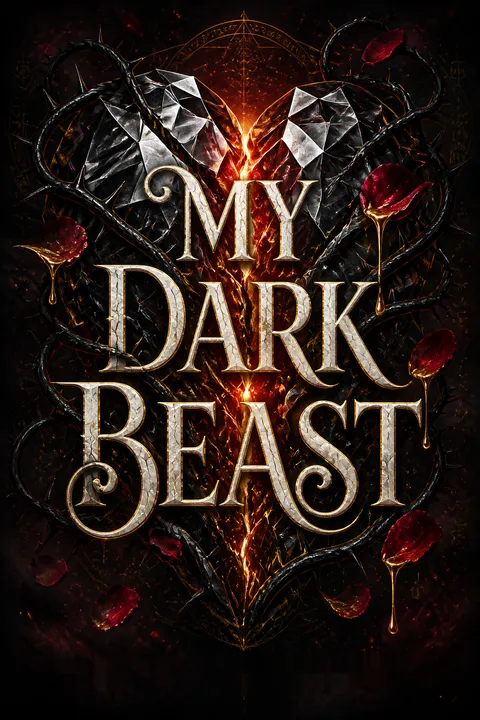


Plot Summary
A Rose Hits Hadez
Since her father Nick died, twenty-four-year-old Calanthe Bloom has kept her parents' flower shop open while caring for her mother, Lisa, whose Alzheimer's is stealing her memory. The shop is losing customers, and Calanthe cannot bring herself to abandon either it or her mother. One rainy evening, a spider on a rose sends her outside for help.
A black sports car nearly hits her; startled, she throws the flower, then recognizes the Hadez name on its plate. Tarian Hadez, the family's feared, reclusive heir, is already notorious in Boston for wealth, power, and rumors that he killed his father. Calanthe has no wish to meet him. Her first encounter with him is an accident born of an ordinary fear.
The opening binds Calanthe's practical burden to her emotional inheritance. The shop is not merely a workplace: it is the last shared creation of her parents, so keeping it open becomes a way to resist losing them twice. Her care for Lisa is loving but also exhausting, and Calanthe briefly imagines escape before rejecting it. The thrown rose is a small, unplanned act with outsized consequences, establishing the novel's recurring tension between agency and forces neither character can control. Tarian enters first as a public myth, while Calanthe's bluntness gives that myth its first human opponent.
Cacti at the Hadez Mansion
The next morning, Lisa briefly mistakes Calanthe for a stranger, then remembers a large floral order from Mackenzie Fielding, Bryn's demanding half-sister. Calanthe scrambles to fill it, only to discover at the Hadez mansion that Mackenzie wanted flowers, not the chartreuse-potted cacti Lisa specified.
Mackenzie insults Lisa, and Calanthe slaps her. Tarian arrives, identifies Calanthe as the woman who threw a rose at his car, and chooses to keep the cacti for his uncle Saul's engagement dinner.
Calanthe unloads them beside him, despite the hostility between the two women. When she tries to leave, she collides with Tarian, who catches her and cannot release her. Neither of them understands that the brief hold is about to change both their lives.
The delivery makes class and power visible through a concrete misunderstanding: Calanthe risks her shop's money on plants she cannot sell, while Mackenzie treats the loss as irrelevant. Calanthe's slap is not a calculated bid for attention but a defense of her mother's dignity, revealing how fiercely she protects the person Lisa can no longer reliably protect herself. Tarian's decision to accept the cacti is both a practical reprieve and a quiet rejection of Mackenzie's authority in his home. Their physical collision carries more consequence than either intends, turning the scene's comic social friction into the story's supernatural point of no return.
The Rune Burns Loose
Tarian's magic flares while he is holding Calanthe, and she feels a burning mark form on her back. He fears that one of his lethal runes has transferred to her, but cannot explain the danger before the Hadez family arrives. Then Bryn crashes her new car into an invisible barrier in Tarian's driveway. Tarian moves the wreck with his mind and alters Bryn's memory of the collision, exposing abilities no ordinary man could possess.
Calanthe resists the same mental compulsion, making her valuable and dangerous as a witness. Tarian refuses to let her leave until he can understand the mark. Learning that Lisa cannot be left alone, he takes Calanthe home, promises to treat her mother, and offers to buy the building that houses Bloom's Blooms.
The rune converts unwanted proximity into a bond that neither person has chosen, while Tarian's inability to release Calanthe suggests his power is not simply a tool under his command. Her immunity matters because it limits the usual asymmetry between Atlanteans and humans: Tarian cannot erase her knowledge just by willing it. Yet he still controls the terms of her safety, using Lisa's illness as leverage. His offer to buy the building begins as coercion dressed as generosity, but it also recognizes the material pressures Calanthe carries. The scene makes consent, power, and care difficult to separate.
The Bus Takes Tarian
As Tarian drives Calanthe home, he describes his abilities and confirms that his magic may kill her. He buys her shop building from Saul in a startlingly costly attempt to provide for Lisa if Calanthe dies. A speeding bus then slams head-on into Tarian's Bugatti. Tarian twists around Calanthe and shields her with his body; she survives the crash, but when she escapes the burning wreck, he is gone.
At the hospital, the Hadezes tell Calanthe that she was driving and that a drunk driver caused the collision. Malachi, Tarian's cousin and closest friend, later admits the bus was driven by a compelled human and that Tarian was abducted. Tarian used so much power protecting Calanthe that he could not save himself.
The collision reorders the relationship: the man who had restricted Calanthe's freedom spends his power to preserve her life, leaving himself vulnerable. His property purchase makes his care tangible, but it cannot cancel the coercion that preceded it. The family's cover story repeats that coercion at a larger scale, deciding what Calanthe is permitted to know while she lies injured. Her survival therefore comes with an immediate moral burden: she has been saved at a cost she did not consent to impose. Tarian's absence turns the supernatural romance into a rescue narrative and makes Calanthe's knowledge essential rather than incidental.
A Rune Means Sleep
At the Hadez wing of the hospital, Malachi keeps Calanthe under guard and refuses to give her Tarian's private number. He confirms that Atlanteans have magic, that Tarian's runes can transfer through touch, and that humans who learn the secret cannot simply be released. Calanthe shows him the mark on her back.
Malachi reads it as somek, meaning sleep, while Tarian had read the same letters as kemos, meaning mine. The difference unsettles her, especially when she learns Tarian's earlier transferred rune killed his father by draining his magic and, eventually, his blood. Malachi cannot cure Lisa, but he heals Calanthe's facial burns and arranges a trainee nurse, Electra Serran, to help care for Lisa at home.
The mark's two readings turn language into a problem of perspective and possession. To Malachi, Calanthe carries a warning about sleep; to Tarian, she bears a claim of ownership. Her refusal to accept either interpretation passively establishes the intellectual work she will do throughout the story. The hospital also shows the Hadezes' protective logic at its most contradictory: they offer medical help while locking doors and withholding information. Calanthe's care for Lisa is not a side issue to the romance. It defines the practical boundary around every choice she makes, forcing the powerful family to reckon with a human life they cannot simply relocate.
Dreams Become a Passage
Because Calanthe fears that the rune may kill her in sleep, she resists resting in the sealed hospital suite. When exhaustion wins, she dreams of a pageant and finds Tarian there, apparently dreaming of her at the same time. Their conversations feel too vivid to dismiss: Tarian examines the rune, explains that his magic has harmed his father, and admits that he believes himself a killer.
Calanthe argues that the rune may not prove he caused his father's death. Their dream encounters become intimate, but the images also injure her body: glass cuts her foot in one dream, and she wakes with the wound. Tarian's captivity seems to be shaping their shared landscape, while Calanthe becomes the only person who can reach him beyond it.
The dream link makes intimacy a form of evidence. Calanthe cannot assume that a vivid experience is harmless fantasy, because injuries cross back into waking life. That instability gives each encounter emotional and investigative stakes at once. Tarian's self-condemnation treats guilt as certainty: because his rune touched his father, he assumes he caused the death. Calanthe's resistance is not naïve absolution; she asks him to distinguish what he knows from what he fears. Their growing attraction develops inside that argument, so tenderness emerges through the difficult act of questioning a story someone has built about himself.
The Train to Atlantis
In later dreams, Tarian tells Calanthe that his unseen captors are transporting him in a large vehicle and that his powers are not returning. A nightmare gives her a rocking train, an aircraft-carrier code, and strange passengers including Bryn, her father Delta Lynch, and Yasmin Fablez. Calanthe carries these details to Malachi and Dorian, Tarian's bodyguard, who identify the code as a U.S. aircraft carrier and investigate it.
Tarian is not aboard, but the dream has redirected the search toward vehicles and the military. Other dream fragments connect Yasmin, Symeon, and a wedding cake, clues Calanthe cannot yet interpret. Her impossible connection to Tarian is no longer only a source of desire; it is the search party's best lead.
The dream imagery functions less like a riddle with a single neat answer than like a mind sorting danger into symbols. Calanthe must translate emotional fragments into testable leads, and the failed aircraft-carrier search demonstrates the cost of treating each image literally. Still, the dreams reveal relationships and destinations that waking observers have missed. The changing cast also implicates the people nearest the Hadezes, challenging the assumption that danger must come from an obvious outside enemy. Calanthe's usefulness depends on a combination of intimacy and skepticism: she listens to Tarian, then submits what she hears to other minds.
Hunters Enter the Flower Shop
When Calanthe returns to Bloom's Blooms, her neighbor Mrs. Fiona has noticed Atlantean speech on the shop's nanny camera and called the Holy Hunters, a human militia hostile to the Hadezes. Electra and Dorian kill three intruders; a fourth leaves with Ines, an Atlantean operative who had been posing as help.
Electra sets the bodies alight in Mrs. Fiona's bathtub, and the fire spreads until the shop's sprinklers drench Calanthe. Dorian gets Lisa and Mrs. Fiona out, then brings them to an apartment used by his family. Calanthe learns that Electra is Dorian's younger sister, not an ordinary nursing student. The attack destroys her last refuge and leaves her mother dependent on strangers and Atlantean protection.
The shop's invasion collapses the distinction between Calanthe's ordinary responsibilities and the Hadez conflict. Mrs. Fiona's vigilance saves her from passively accepting a suspicious situation, but the result is violence inside the very place Calanthe hoped to preserve. Electra's matter-of-fact handling of corpses contrasts with Calanthe's shock, exposing how normalized danger is in Atlantean life. The fire is not only property damage; it removes Calanthe's ability to care for Lisa on familiar ground. Her choice to stay involved becomes harder to separate from the practical fact that the conflict has already entered her home.
Blood Ties Surface
In the Serrans' high-rise safehouse, Calanthe explains that she meets Tarian in dreams and shares the vehicle clue with Malachi and Dorian. The search shifts to the Hadez family's rivals and to the Fablezes, whose medical products and influence make them plausible players. A DNA test reveals that Yasmin is the daughter of Delta Lynch and Nora Hadez.
That makes her Bryn's half-sister and Malachi's half-sister as well. The discovery recasts the apparent romance between Yasmin and Symeon, Tarian's younger brother, as a possible alliance built around family history and access to the Hadezes. Calanthe also learns that Nora once tried to give Delta Atlantean blood, an act that ended in her punishment and death.
The DNA result makes genealogy operational: family history is not background but a map of who can reach whom, and why. Yasmin's place between the Hadez and Lynch families helps explain the unusual coalition surrounding Tarian's disappearance. It also destabilizes Bryn's identity, since the sister she barely knows is bound to her through a father who has been mostly absent. Calanthe's investigation moves from suspicion of products and institutions to intimate kinship. The revelation does not prove every motive, but it changes the meaning of earlier scenes and makes inherited secrets, rather than wealth alone, the currency of power.
The Safehouse Falls
The Holy Hunters track the Serrans' apartment and attack during a hurricane. Dorian and Malachi escort Calanthe, Lisa, Mrs. Fiona, and Bryn to the roof, where Ines pilots a helicopter through the storm. The Hunters pursue them, but Dorian stabilizes the aircraft with magic. The group leaves Lisa and Mrs. Fiona at Diego's apartment, where Dorian's former partner can keep them safe and cook for them.
Calanthe joins the Hadezes on Martha's Vineyard, where Symeon's death and Tarian's continued absence have gathered the family and their allies. Bryn, already rattled by family revelations and repeated compulsions, remains close to her father despite the danger. The search moves from Boston to the island where Tarian may be held.
The escape is a literal and ethical evacuation. Calanthe has to leave Lisa in another person's care, the very responsibility that has governed her choices since the opening. The hurricane magnifies the instability of her new life, while the Hunters' pursuit demonstrates that the Hadezes' wealth cannot make them untouchable. Bryn's presence is emotionally ambiguous: she is Calanthe's closest friend, but her family connections now intersect with the threat. Leaving Lisa behind is not a rejection of duty. It is a temporary delegation made possible by trust, a skill Calanthe has been reluctant to exercise.
The Funeral Hides a Map
On the Vineyard, Saul and Joslyn's rushed engagement, Mackenzie's entitlement, and the family's grief over Symeon crowd the Hadez mansion. Calanthe notices that Tarian's dream images have echoed the island and its funeral preparations.
While the others manage the memorial, she secretly records Saul and Catalina Fablez speaking in Atlantean. Malachi translates the recording: years earlier, Barak brought baby Yasmin to Catalina and concealed her parentage; Symeon later discovered the truth and tested Delta Lynch's DNA.
Their conversation confirms that old family crimes have been kept from the wider community. Calanthe now suspects the funeral imagery in Tarian's dreams may point not to an ordinary burial but to the place where his captors have hidden him.
The memorial's public rituals sit on top of a private history that the powerful have carefully managed. Calanthe's recording is a modest act of surveillance, but it reverses the usual direction of scrutiny: the florist who has been monitored and deceived gathers evidence about the family that controls the island. The concealment of Yasmin's identity also clarifies why the truth has been so explosive. The scene links grief to political secrecy without reducing either to a symbol. People mourn a brother while others negotiate the consequences of a child whose existence was deliberately obscured.
The Coffin Calls Her
At a gatehouse near the mansion, Ines leaves Calanthe while she and Electra investigate the island funeral home. Yasmin calls on Ines's phone, orders Malachi to come to her, and threatens to hide Tarian's body if the family interferes. A bullet strikes Calanthe's shoulder when Malachi shields her.
As she loses consciousness, she dreams of a mall, a dying golden rose, and a door that leads to Tarian in a coffin. In the dream she opens the coffin and sees his pale, motionless body; she wakes believing the vision may be a warning. Dorian finds her injured and learns Malachi has been taken. Rather than stay safely behind, Calanthe insists she knows where to search.
The golden rose revisits the accident that began the story, but its meaning has changed: now it is a countdown and a tool for finding someone she loves. Calanthe's dream collapses investigation and grief into one image, making the coffin appear both a destination and a feared conclusion. Her injury and Malachi's capture sharply limit the help available to her, yet she chooses action over the shelter others offer. This is not a sudden transformation into a fearless heroine. She is frightened, wounded, and grieving, but she has learned that waiting for stronger people to decide what she can know may cost Tarian his life.
The Coffin in Aisle C
Dorian retrieves Electra, whom Ines had drugged to keep her safe, then follows Calanthe's dream-guided route to a lumber warehouse. He clears a path through landmines while Calanthe finds a coffin concealed behind window frames in aisle C. Yasmin and Delta appear before they can free Tarian. Yasmin boasts that Symeon helped trap his brother, then tries to shoot Calanthe.
Tarian's blue light forms a shield around her. Electra arrives, stakes Yasmin, and Tarian's magic strips away her runes; Calanthe shoots Delta after he threatens her and Bryn fires at him too. The group opens the coffin, but Tarian remains rigid and unresponsive. Bryn reveals that Symeon crystallized his blood in a diamond-making machine, stopping his heart.
The warehouse turns the novel's central metaphors into machinery: Tarian's blood, the source of magical life, has been made into a hard, valuable object. The industrial setting strips the captors' ambitions of mystique; they have treated a person as raw material. Calanthe's dream clue gets the rescue party to the right aisle, but finding Tarian does not solve the crisis. Violence is also morally complicated: Calanthe fires to stop Delta, while Bryn's actions reveal a divided loyalty rather than a clean conversion. The rescue succeeds in locating Tarian, yet the crystallized blood forces the characters to face how close recovery may be to impossible.
A Heart Made Stone
Malachi cannot restart Tarian's heart, and Calanthe fears the body in the coffin may be beyond any Atlantean cure. Their dream connection continues: Tarian tells her what he has learned, and she finally admits that Symeon and Saul killed Barak after an argument, then concealed the truth. Tarian absorbs the revelation and stops blaming his rune for his father's death.
At the mansion, Mackenzie offers Calanthe scallop-laced food, triggering her fatal allergy while Tarian remains unconscious. His magic cannot keep her alive. As Calanthe dies, she sees a life she longs for with Tarian, then returns to their first meeting in her final dream. Her last kiss reaches him; Tarian wakes as her body fails, and his magic brings her back.
The climax joins two forms of damaged inheritance. Tarian learns that the guilt he carried for years concealed a deliberate human choice, while Calanthe confronts the limits of the magic she had treated as a guarantee of safety. Her death is not a test she wins through strength; it is a consequence of another person's malice and her own vulnerability. The final kiss reverses the Sleeping Beauty pattern: Calanthe's love does not passively awaken a prince, but gives Tarian a reason to return and act. His recovery depends on reciprocity, not on a stranger claiming him.
Tarian Reclaims the Mine
Awake again, Tarian learns that Calanthe has been injured, that Yasmin and Delta are dead, and that the Hadez council supported the abduction to force his return to Atlantis. At Symeon's memorial, he plays the recording of Saul and Catalina discussing Yasmin's concealed birth, then publicly confronts the council.
He touches the conspirators and removes their runes, killing those whose hostile intent activates his magic. He also strips Saul of his power, leaving Saul's fate to Malachi. Tarian explains that he did not kill Barak: Saul caused the fatal fall, and Symeon drained Barak's blood afterward. Calanthe witnesses Tarian's vengeance and challenges him when his violence threatens to overwhelm judgment.
Tarian's return restores not only his body but the political power that made his captivity valuable. His punishment of the council is both justice and a dangerous continuation of the system that allowed one man to decide who deserves magic. The distinction he draws between hostile conspirators and a spared council member suggests that his power can discriminate by intent, but it does not make his verdicts neutral. Calanthe's presence matters because she refuses to become a decorative witness to his authority. She sees the people beneath the spectacle and presses him to remember that force can reproduce the secrecy and fear he is trying to end.
A Choice Beyond the Rune
After the memorial, Tarian tells Calanthe she is free of him and offers her the shop building, financial security, and a promise to heal Lisa. He admits that keeping her close has been selfish and offers protection even if she refuses magic.
Calanthe first believes he plans to reclaim the rune, then understands that it returned to him when she died. She is furious that their dream bond is gone, but she chooses Tarian without the enchantment that once connected them. The following day, Tarian restores Lisa's memory and mental clarity.
Calanthe introduces him as the man she loves, while Lisa recognizes the tenderness in his manner and sees an echo of Nick. Calanthe decides to travel with Tarian to Atlantis rather than return to her old life unchanged.
The rune's return is a crucial test of the romance. If Calanthe stays only because magic has bound her, then the bond has replaced one form of coercion with another. Tarian's offer of money, safety, and an independent future makes refusal materially possible; Calanthe's choice therefore has more weight than any declaration made inside a dream. Healing Lisa also resolves the opening's central caregiving crisis, though it cannot restore Nick. Lisa's recognition of Tarian through his care reframes him not as a substitute father but as someone capable of loving the people Calanthe already loves.
Epilogue
On the journey to Atlantis, Calanthe worries that losing Tarian's transferred rune means losing their dream connection. At the mine, she chooses to receive magic, and Gaea marks her with a full verse that gives her power and restores their link. Tarian discovers that his own skin also bears new words, binding their futures without the old accidental mark.
Lisa chooses to join them, and Mrs. Fiona is offered a home in Ireland as thanks for caring for the Blooms. Calanthe enters Atlantis not as a captive or a protected human, but as someone who has chosen both the man and the dangerous world that made him.
The ending resolves the central question of whether intimacy can survive after coercion is removed. Calanthe receives magic by choice, not through Tarian's uncontrolled touch, while the new runes affirm mutual belonging rather than unilateral possession. Lisa's recovery restores a relationship that had been disappearing, and her decision to travel keeps Calanthe's new life connected to her family instead of severing it. The mine remains dangerous, but its power is no longer merely a threat or resource controlled by the Hadezes. By choosing it with open eyes, Calanthe enters the story's supernatural world as an agent, not as an accidental consequence.
Analysis
My Dark Beast uses the Sleeping Beauty framework to ask what awakening means when the sleeping person is not merely waiting for rescue. Tarian is physically unreachable, but his own mind keeps producing the landscapes through which Calanthe can reach him. Her role is therefore not passive: she interprets, investigates, contradicts, and ultimately chooses what kind of bond she will accept. The dreams make desire consequential because what happens there can wound bodies in waking life, while their shifting settings expose the characters' buried fears and loyalties.
The novel also treats care as a material practice. Calanthe's devotion to Lisa costs time, money, and freedom; Tarian's gestures of protection matter most when they address those pressures, such as securing the flower shop and healing Lisa. Yet protection repeatedly risks becoming control. Tarian confines Calanthe, the Hadezes edit memories, and the council treats Tarian himself as a resource to be transported and harvested. The plot's strongest ethical distinction is not between humans and gods, but between relationships that preserve choice and systems that make people useful.
Family history supplies the thriller's machinery. Hidden parentage connects Bryn, Yasmin, Malachi, and Delta; secrets about Barak turn Tarian's private guilt into public leverage. The revelations do not erase the damage of betrayal, but they separate inherited stories from verified responsibility. Tarian's belief that he killed his father is emotionally true to his guilt yet factually wrong, and Calanthe's insistence on evidence helps him revise that identity.
The ending refuses to treat love as a cure that makes conflict disappear. Calanthe loses the accidental rune, nearly dies, and then chooses a new life in Atlantis through a deliberate act. The new runes answer the old mark's possessive ambiguity with mutual commitment. Love is not proven by a magical claim; it becomes meaningful when both people can leave and choose to stay.
Review Summary
My Dark Beast received mixed reviews, with many praising its unique blend of fantasy, romance, and mystery. Readers enjoyed the dream-world encounters between the main characters and the intriguing magical mafia plot. Some found the book engaging and impossible to put down, while others felt it was too long and convoluted. The character development and sexual tension were highlights for many, but some readers struggled with pacing and world-building. Overall, the book's creative concept and entertaining storyline garnered praise, despite some criticisms of its length and complexity.
Characters
Calanthe Bloom
Florist carrying her familyCalanthe is a practical, sharp-witted florist whose life is organized around two inheritances: her parents' struggling shop and her mother's worsening Alzheimer's. She protects Lisa without pretending the work is easy, and her guilt over wanting relief makes her compassion feel costly rather than saintly. True-crime curiosity gives her a habit of noticing inconsistencies, while her blunt humor lets her resist the wealthy Hadezes without mistaking defiance for safety. She is drawn to Tarian but does not surrender her judgment to attraction; she challenges his assumptions about guilt, asks for evidence, and insists that her mother remain part of every decision. Her central drive is to preserve connection without allowing care to become captivity.
Tarian Hadez
Guarded heir with dangerous runesTarian is the feared Hadez heir, a wealthy Atlantean whose authority rests on magic, political influence, and a reputation for violence. He is controlled in public but deeply distrustful of his own power, especially after his runes appear to harm those he loves. His isolation is partly self-protection and partly a way to avoid confronting dependence; he treats touch as dangerous because he believes closeness can become lethal. Calanthe's resistance unsettles his usual control and draws out a capacity for care that is more difficult for him than command. He wants to protect her, yet must learn that protection without choice can become another form of possession.
Bryn Fielding
Calanthe's fiercely loyal friendBryn is Calanthe's longtime best friend, a glamorous fashion influencer with a complicated attachment to her mother and half-sister. Her charm and appetite for excitement coexist with a deep hunger to belong to a family that has often made her feel secondary. She is attracted to the Hadez world partly because its wealth promises recognition, but her loyalty to Calanthe is genuine even when competing family bonds strain it. Bryn is impulsive, socially perceptive, and accustomed to hiding hurt beneath humor and style. Her relationship with Calanthe is one of the novel's emotional tests: friendship can survive disagreement only when affection is matched by accountability.
Malachi Hadez
Tarian's empathetic cousinMalachi is Tarian's cousin, closest friend, and a powerful Atlantean who often serves as the family's public reassurance. He is patient where Tarian is severe, and his impulse is to shelter people from distress, sometimes by withholding information or making choices for them. His bond with Electra is protective and complicated by their unequal positions in the Hadez household. Malachi's loyalty is not blind, but he must distinguish care from control, particularly when Calanthe demands the truth and refuses to be managed. His steadiness helps hold the group together, while his family loyalties make him vulnerable to the very secrets he is trying to uncover.
Dorian Serran
Tarian's watchful protectorDorian is Tarian's imposing bodyguard and a fiercely loyal Atlantean. He reads danger quickly and acts with force, but his protective instincts can become overbearing, especially when Calanthe's safety conflicts with her right to choose. His affection for his younger sister Electra is expressed through vigilance and practical care. Dorian's past relationship with Diego suggests a private tenderness beneath his disciplined exterior, though he rarely allows personal needs to compete with duty.
Electra Serran
Young healer with sharp edgesElectra is Dorian's younger sister, an Atlantean student of minerals and magic who is more capable than her age first suggests. Her childhood included exploitation for her blood, giving her a hard-won suspicion of people who claim benevolent motives. She is loyal to Malachi and protective of those she accepts, but she does not soften her judgments to make others comfortable. Her humor and interest in romance novels complicate the image of a purely tactical fighter.
Saul Hadez
Powerful uncle, unreliable patriarchSaul is Tarian and Malachi's wealthy uncle and a senior figure in Atlantean society. Charming when it serves him, he is also accustomed to treating family and political problems as matters to manage quietly. His desire for a larger family and his complicated history with Barak shape his choices, while his relationship with Joslyn brings new tensions into the Hadez household. Saul's polished public manner makes it difficult to know where affection ends and self-interest begins.
Symeon Hadez
Restless younger Hadez brotherSymeon is Tarian's younger brother, a brilliant inventor whose restless ambition sits beside a history of drug use and resentment. He grew up in the shadow of Tarian's favored status and their father's expectations, leaving him sensitive to control and eager to prove his own worth. His experiments with Atlantean blood and synthetic diamonds show both technical daring and poor moral judgment. His relationship with Tarian is shaped by genuine childhood closeness as well as adult rivalry.
Yasmin Fablez
Beautiful heir with hidden tiesYasmin is a glamorous member of the influential Fablez family and Symeon's girlfriend. Her poise and social ease conceal an ambitious streak and a complicated family history. She moves comfortably among the Hadezes, where affection, inheritance, and political advantage often overlap. Yasmin's loyalties are difficult for others to read, and her relationship with Symeon carries more weight than a conventional romance because both families have reason to guard their power.
Delta Lynch
Bryn's distant military fatherDelta is Bryn's largely absent father, a decorated U.S. Army sniper whose military skills and family history connect him to the Atlanteans. He has not built a consistent parental presence in Bryn's life, yet she still longs for his recognition. His professional discipline makes him a credible threat in a world where magic does not erase the danger of human weapons.
Lisa Bloom
Calanthe's fading motherLisa is Calanthe's mother, a former chef and co-creator of Bloom's Blooms. Alzheimer's increasingly disrupts her memory, but moments of lucidity reveal her humor, warmth, and enduring love for her family. Her illness forces Calanthe into a caregiver's role before she is ready, while her memories of Nick remain a powerful emotional anchor. Lisa's vulnerability is real, but she is not defined solely by what she forgets.
Mrs. Fiona Murphy
Nosy neighbor, dependable allyMrs. Fiona is Calanthe and Lisa's elderly upstairs neighbor, a recovering addict with a sharp tongue, a sweet tooth, and a fierce sense of responsibility. Her curiosity sometimes creates complications, but it also makes her attentive to details others miss. She helps watch Lisa when Calanthe must leave and offers the family a kind of everyday loyalty that contrasts with the Hadezes' grand, transactional power.
Mackenzie Fielding
Bryn's ambitious half-sisterMackenzie is Bryn's older half-sister, a former model and event planner who prizes status, appearance, and control. She can be charming in public, but her concern for other people is often subordinate to the image she wants to maintain. Her history with Calanthe includes casual cruelty and an assumption that money can repair any inconvenience. Mackenzie's need to be chosen and admired complicates her relationship with both Bryn and the Hadezes.
Ines
Saul's formidable operativeInes is an experienced Atlantean operative who has served the Hadez family for years. She is an accomplished fighter and interrogator, with a reputation that makes even other Atlanteans wary. Her history with Malachi and Electra is layered, combining old loyalties with unresolved hurts. She rarely offers comfort directly, but her actions show a strong, selective sense of responsibility.
Catalina Fablez
Yasmin's influential grandmotherCatalina heads the powerful Fablez family and presides over an empire built around medical and cosmetic technology. She is socially polished, politically influential, and accustomed to being treated as an authority. Her history with Barak and the Hadezes ties private grief to public power, while her affection for Yasmin complicates her judgment.
Barak Hadez
Tarian's revered fatherBarak is Tarian and Symeon's father, a powerful Atlantean patriarch remembered for deep devotion to his family and a forceful sense of responsibility. He favored Tarian, whether intentionally or not, and his decisions shaped both sons' ideas of love, authority, and inheritance. His relationship with Saul and Nora left consequences that continue to influence the Hadezes long after his absence.
Amapola Hadez
Tarian's lost motherAmapola was Tarian and Symeon's mother, remembered through family stories and the home she left behind. Tarian's few childhood memories of her are tender, and her loss shaped his father's devotion and his own guardedness.
Joslyn Fielding
Bryn's status-minded motherJoslyn is Bryn and Mackenzie's mother, a former model whose relationships are strongly influenced by security, status, and the attention she receives. She can be dismissive of Bryn's needs while remaining protective of Mackenzie. Her involvement with Saul joins the Fieldings to the Hadez family at a moment when both households are already carrying secrets.
Diego
Dorian's generous former partnerDiego is Dorian's former partner, a warm, handsome Atlantean who helps shelter Lisa and Mrs. Fiona. His cooking and easy manner quickly put them at ease, even while his history with Dorian remains unresolved.
Logan
Friendly neighborhood bartenderLogan runs the bar across from Bloom's Blooms and is one of Calanthe and Bryn's closest local friends. His humor and cocktails give the women a place to decompress, and he helps Lisa when she wanders from safety.
Plot Devices
Tarian's transferred rune
A dangerous accidental bondTarian's runes are magical sentences connected to the Atlantean mine. When his magic flares during contact, one rune transfers to Calanthe's back. Tarian reads it as kemos, meaning mine, while other Atlanteans read the same letters as somek, meaning sleep. The mark gives Calanthe immunity to compulsion and links her to Tarian's dreams. It also makes him fear that his magic will kill her, because an earlier transferred rune was involved in his father's death. The rune drives the romance, the investigation, and the question of whether a bond created without consent can become a freely chosen relationship.
The shared dreamscape
A channel between captive and allyThe rune allows Calanthe and Tarian to meet in sleep even when he is unconscious and physically imprisoned. The person whose mind shapes each dream controls its setting, so images shift from a pageant to a train, a circus, a beach, and Calanthe's own shop. Injuries can cross back into waking life, making the dreams consequential rather than safely imaginary. Fragments reveal Tarian's transportation, the aircraft-carrier code, and the funeral imagery that leads Calanthe toward his hiding place. The dreams also let the pair question one another, develop trust, and expose fears neither would readily disclose while awake.
Gaea's Atlantean mine
Source of power and consequenceThe enchanted mine is the origin of Atlantean magic and the means by which a human can receive runes. Tarian is the conduit through which that transfer occurs. Its minerals can temporarily neutralize Atlantean powers, while its blood and stone can be exploited by people seeking immortality, status, or military advantage. The mine's power also appears to act beyond Tarian's control, shaping his runes and guiding Calanthe during her search. It is both the supernatural engine of the plot and the place where Calanthe eventually chooses to enter Atlantean life on her own terms.
Compulsion and blood
Control with physical costsAtlantean compulsion can place or remove thoughts in human minds, allowing the Hadezes to conceal the crash, protect their secrets, or redirect witnesses. Calanthe's rune makes her resistant, while Atlantean blood can temporarily give humans resistance to compulsion and enhanced abilities. Blood is also valuable enough to attract traffickers and can become dangerous when used without consent. Pills containing it influence Bryn's memory and judgment, while mine-dust bullets suppress Atlantean powers. Together, these mechanisms make control physical, political, and psychological rather than a simple matter of supernatural commands.
The coffin and dream clues
A trail from image to rescueCalanthe's dreams translate her fear into recurring clues: a train, the number linked to a carrier, a memorial, and finally a coffin. She and the Hadezes first pursue the wrong vehicle, then recognize that the coffin imagery points to the island funeral home and, ultimately, a lumber warehouse. The coffin conceals Tarian's body after Symeon crystallizes his blood, so it is both the practical hiding place and the image that concentrates Calanthe's fear of losing him. The device rewards attention to detail while showing how emotional knowledge can produce actionable evidence.
About the Author
Other books by Olivia Wildenstein







Download PDF
Download EPUB
.epub digital book format is ideal for reading ebooks on phones, tablets, and e-readers.








