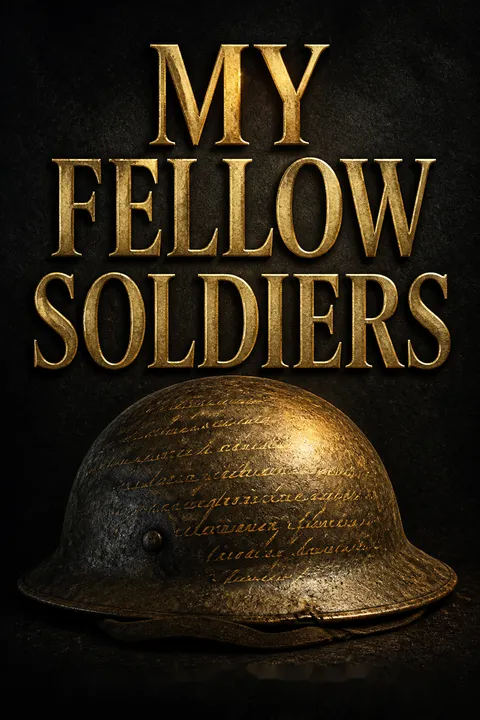


Key Takeaways
Read wartime letters to recover the people hidden inside military history
A human-scale archive. The book builds its account of World War I from letters, diaries, and personal recollections, not only from generals’ reports. A bundle of letters reveals that General John Pershing, while commanding the American Expeditionary Forces, still longed for news from home. His private writing also records the grief that followed the 1915 fire that killed his wife and three daughters. Those intimate details complicate the public image of a rigid commander.
One life beside millions. The same method brings readers into trenches, hospitals, airfields, and transport camps through the voices of soldiers, nurses, ambulance drivers, and journalists. Their accounts make vast casualty totals legible as individual experience, including fear, boredom, pain, homesickness, and kindness between strangers.
What's striking is how the letters change the scale of historical understanding. Official records explain where armies moved; personal writing shows what those movements felt like to the people inside them. That is a powerful corrective to histories that turn suffering into a tally. Letters are not neutral windows, however. Writers chose what to disclose, and censorship or the desire to reassure family could shape the story. Their value lies less in representing every soldier than in restoring human detail that institutional records cannot easily preserve.
Unrestricted submarine warfare and one coded telegram ended American neutrality
Neutrality under strain. President Woodrow Wilson tried to keep the United States out of the war, even after the 1915 sinking of the Lusitania killed 123 Americans. Germany's renewed policy of attacking ships without warning made neutrality harder to maintain. The decisive revelation came in the Zimmermann telegram, a coded German message proposing an alliance with Mexico and support for reclaiming Texas, Arizona, and New Mexico if the United States entered the war.
A decision, not a reflex. The British deciphered the message and passed it to Washington in February 1917. Its authenticity was disputed until German Foreign Secretary Arthur Zimmermann acknowledged writing it. Germany's submarine campaign and the telegram intensified pressure, but Wilson still deliberated. Congress declared war on April 6, 1917, after he concluded that the country could no longer remain outside the conflict.
The episode illustrates how foreign policy can turn on both material threats and the credibility of information. The telegram mattered not simply because it was alarming, but because its source and authenticity became public and then were confirmed. That sequence resembles a modern information crisis: evidence must be disclosed, tested, and trusted before it can shift public judgment. The book also resists a single-cause explanation. The telegram helped change opinion, while submarine attacks and years of accumulating outrage had already weakened the case for neutrality.
A small peacetime army cannot improvise its way into a world war
The scale mismatch. When America entered the war, its regular Army had just over 127,500 soldiers and the National Guard about 66,500. Pershing had to build, train, supply, and transport a force vastly larger than the military he inherited. He had already commanded 12,000 troops in Mexico during the hunt for Pancho Villa, but that expedition exposed shortcomings rather than solving them. Its eight aircraft proved unable to handle the mountainous terrain, and unreliable maps and communications hampered the pursuit.
Mobilization takes infrastructure. The AEF required ships, ports, rail lines, food, weapons, hospitals, doctors, nurses, and a system for delivering mail. Volunteers alone could not fill the ranks: after six weeks, only about 70,000 had enlisted. The 1917 Selective Service Act changed the scale of recruitment, and more than nine million men registered within three weeks.
The contrast between a policy decision and the capacity to carry it out is central here. Declaring war is an act of government; creating a functioning military is a prolonged industrial and administrative project. The Mexican expedition gave Pershing and other officers practical lessons, but experience at one scale could not substitute for preparation at another. The book makes a useful distinction between enthusiasm and readiness: a country may support a cause while still lacking the systems needed to pursue it effectively.
Preserve command autonomy without mistaking stubbornness for sound strategy
An American army, not scattered units. British and French commanders wanted American regiments folded into their depleted forces. Pershing refused, arguing that U.S. troops should fight under their own command and retain a distinct identity. He held to that position even as the Allies faced German offensives and urgently needed reinforcements. In 1918, Marshal Ferdinand Foch proposed breaking up the American First Army before the attack on Saint-Mihiel. Pershing rejected the plan, then committed his army to Saint-Mihiel and the Meuse-Argonne campaign.
Autonomy has a price. Pershing's insistence protected American command authority and helped establish a coherent force. It also produced repeated friction with allies whose immediate priority was survival. The disagreement was not just about pride. It concerned who would decide when U.S. troops were ready, how they would be used, and whether American forces would remain answerable to their own government.
Coalitions need both a shared purpose and a clear account of authority. Pershing's position helped prevent American troops from becoming an uncredited reserve for other armies, while his allies could point to the immediate danger of withholding trained men. The tension is familiar in any partnership where one member contributes a growing share of resources. Autonomy can protect long-term capacity, but it can also become an end in itself. The strategic test is whether independence improves coordination and outcomes, not whether it satisfies institutional pride.
Make logistics and blunt feedback part of battlefield courage
Courage needs conditions. American troops arrived with inadequate training, faulty supplies, and poor living conditions. Pershing complained that shipments included items such as lawn mowers and bathtubs while winter clothing and weapons were lacking. During one inspection, he criticized the 1st Division's commander, William Sibert. Captain George Marshall challenged Pershing directly, arguing that poor equipment and daily shortages were failures of the wider command, not simply of the division. Pershing later valued Marshall's candor and used him to obtain a clearer picture of conditions.
Plans move people. Marshall's importance grew because he could turn broad orders into workable troop movements. Before the Meuse-Argonne Offensive, he had to coordinate a huge transfer of forces through only three usable roads. Training, supplies, communications, and transportation were not background details. They determined whether soldiers could act together once the shooting began.
This account connects leadership to systems thinking. A commander who demands discipline while ignoring shortages risks treating organizational failure as a character flaw in the people at the bottom. Marshall's confrontation matters because it delivered information upward that authority alone could not supply. At the same time, candor is useful only when leaders can act on it. The episode suggests that accountability should travel in both directions: troops answer for performance, and commanders answer for the conditions they create.
A country cannot preach democracy abroad while denying it at home
Service under segregation. African American soldiers faced lynchings, mob violence, and Jim Crow laws while being asked to fight for democratic ideals overseas. The 369th Infantry Regiment, known as the Harlem Hellfighters, endured hostility in Spartanburg, South Carolina, and was initially assigned to labor rather than combat in France. Pershing's headquarters also circulated a racist memo advising French officers to limit social contact with black American troops and avoid praising them too highly.
Proof in combat. In May 1918, Henry Johnson and Needham Roberts fought off a much larger German patrol while serving with French forces. Their action helped bring attention to the regiment's courage. The book shows African American soldiers insisting on their citizenship through service, even as military and civilian institutions restricted their rights and recognition.
The contradiction is more than a gap between rhetoric and reality. It shows how institutions can demand loyalty from people while withholding equal standing from them. Johnson and Roberts's actions challenged racist assumptions, but battlefield distinction did not automatically produce justice: Johnson received the Medal of Honor only in 2015, decades after his death. The story also cautions against treating service as a simple bargain in which sacrifice guarantees equality. The soldiers' agency and courage mattered, but the burden of proving their worth should never have been theirs alone.
Count the cost behind victories, not just the ground gained
A costly advance. The 47-day Meuse-Argonne campaign involved 1.2 million Americans and became the war's largest American operation. Half of the 53,400 U.S. combat deaths in the conflict occurred there. Early progress sometimes concealed trouble: the 79th Division suffered severe losses at Montfaucon, while rivalry between commanders contributed to a neighboring division bypassing the support it was meant to provide. Broken communications and crowded roads further impeded the advance.
The human record resists simplification. Soldiers endured hunger, thirst, shelling, gas, and confusion. The Lost Battalion spent five days surrounded in the Argonne, relying on carrier pigeons to communicate with headquarters. These episodes show why a map marked with captured territory cannot, by itself, measure what an offensive achieved or what it cost.
Military history often rewards visible outcomes: territory taken, lines broken, and dates secured. The letters and battlefield accounts make less visible costs harder to ignore, including failed coordination, exhaustion, and deaths that followed avoidable confusion. Still, casualty totals alone do not explain whether a campaign was strategically necessary or what alternatives existed. A fuller assessment holds operational results and human consequences together, rather than using one to erase the other. That discipline is valuable well beyond military history, wherever institutions judge success by outputs while obscuring who paid for them.
Treat rescue, nursing, and remembrance as part of the war effort
Care was service. American ambulance drivers brought wounded soldiers from the front to hospitals, while women volunteers delivered medical supplies and small comfort parcels. Their work could be dangerous, physically punishing, and emotionally difficult. Army nurse Alta May Andrews arrived eager to serve near the front, then found herself caring for hundreds of badly wounded Americans after the fighting around the Marne. Her diary records both her initial shock at severe injuries and her attention to patients' fear, pain, and longing for home.
The work continued after battle. The American Graves Registration Service recovered and identified the dead, then buried them in military cemeteries or returned them to families. Dog tags helped identify nearly 99 percent of American dead. These tasks did not replace combat, but they carried the war's obligations into hospitals, letters home, and the care of the fallen.
The account widens the definition of contribution without pretending every role involved the same risks. Ambulance drivers and nurses faced different dangers from infantrymen, yet medical care and identification of the dead were essential to how armies functioned and how families endured loss. This resembles the invisible work in many institutions: support roles are often noticed only when they fail. The book's focus on care also complicates heroic narratives, showing that service includes not only defeating an enemy but tending to the wounded and treating the dead with dignity.
Mobilize public feeling without turning patriotism into permission for abuse
A campaign against doubt. President Wilson created the Committee on Public Information to support the war effort. It produced films, posters, and short speeches through the Four-Minute Men. The campaign helped communicate a national purpose, but wartime suspicion also turned against German language, books, names, and citizens. In Illinois, a crowd seized German-born miner Robert Prager from jail and lynched him on suspicion of disloyalty. The men charged with his murder were acquitted.
Unity can become coercion. The Selective Service Act built the Army, but the pressure to appear patriotic could silence dissent and encourage collective punishment. The book shows both the practical need to explain a difficult war and the danger of treating criticism, ancestry, or unfamiliar customs as proof of treachery.
Public communication is not inherently manipulative; a democracy needs ways to explain shared obligations, especially in a crisis. The danger appears when persuasion fuses loyalty to the country with obedience to a particular policy or hostility toward a targeted group. Prager's killing shows how quickly rumor can substitute for evidence when fear is socially rewarded. A healthy civic response requires more than rejecting propaganda. It requires institutions willing to protect due process and unpopular speech when public emotions are running hottest.
Victory ends firing, not grief, responsibility, or the argument over peace
The armistice was not an ending for everyone. The war ended on November 11, 1918, but combat deaths, disease, and psychological wounds remained. The book estimates that the war killed about 17 million people, including six million civilians. Some veterans returned to public honor; others, including Lost Battalion commander Charles Whittlesey, remained haunted. Nurses carried memories of the wounded, and Pershing continued to feel the loss of his family and his soldiers.
Peace carried its own dispute. Wilson feared that excessive penalties on Germany would invite revenge, while French leaders argued that security required harsher terms. Pershing later asked to be buried at Arlington beside the troops he had commanded, under the same plain marker used for them. The gesture brings the story back from a general's fame to the people whose service made the army.
The book refuses the tidy ending in which a ceasefire resolves the damage that war has done. Its accounts of grief and remembrance keep consequences in view, while the debate over the peace settlement shows how victory can leave political questions unsettled. Hindsight can make the Treaty of Versailles seem like a direct path to another war, but the book presents a more complicated picture: leaders disagreed about security, punishment, and reconciliation, and later choices mattered too. Pershing's grave offers a quieter conclusion, grounded in shared service rather than rank.
Analysis
The book's central achievement is not a new military chronology but a change in viewpoint. The war is narrated through letters and diaries, which make the machinery of mobilization, command, and combat answerable to personal experience. Pershing remains the organizing figure, yet the story repeatedly shifts toward people beyond headquarters: volunteers who enlisted before America entered the war, nurses and ambulance drivers, Black soldiers, enlisted men, and journalists who witnessed the front. This keeps the narrative from confusing command with ownership of the history.
Pershing emerges as a productive contradiction. His discipline and determination helped build an American force capable of fighting as an independent army, while his insistence on control strained relations with allies and sometimes concealed operational failures. His private grief challenges the image of the impassive general without making his decisions immune from scrutiny. Likewise, the soldiers' courage is not presented as proof that every plan was wise. The campaign accounts show how leadership rivalries, inadequate preparation, and communications breakdowns could shape losses alongside enemy action.
The book's strongest moral tension lies between the language of democracy and the treatment of Black Americans. Their service exposes the limits of patriotic abstraction: a nation can make universal claims while enforcing unequal citizenship. Their bravery helped contest racist assumptions, but recognition remained partial and delayed. The account also resists turning the war into a simple morality play. Wilson's hesitation, the propaganda campaign, the Allied demand for a separate American army, and the postwar settlement all reveal competing responsibilities rather than effortless consensus.
Taken together, the letters function as evidence and as a form of memorial. They cannot represent every participant, and personal accounts may be shaped by censorship, memory, or the wish to reassure loved ones. But they restore texture that operational summaries lose. The result is a portrait of war as both an immense strategic event and a sequence of individual encounters, including acts of care, failures of judgment, and losses that did not end with the armistice.
Review Summary
My Fellow Soldiers is praised for its engaging portrayal of America's WWI experience through personal letters and stories. Readers appreciate the balanced coverage of diverse perspectives, including those of women and African American soldiers. The book offers insights into famous historical figures like Pershing, Patton, and Truman. While some criticize editing issues and limited use of primary sources, most find it a compelling, well-researched narrative that brings the era to life. Many recommend it as an excellent introduction to America's role in WWI.
People Also Read



Glossary
American Expeditionary Forces
U.S. forces in EuropeThe American Expeditionary Forces, commonly shortened to AEF, were the United States military forces sent to Europe during World War I. General John Pershing commanded them. The AEF grew from a small initial force into a large army, and Pershing sought to keep American units under American command rather than distribute them permanently among French and British forces.
Lafayette Escadrille
American pilots serving FranceThe Lafayette Escadrille was a French air squadron formed from American volunteers before the United States officially entered World War I. It was initially called the Escadrille Américaine, but its name changed after Germany objected that it suggested the United States was not neutral. The squadron's pilots included Kiffin Rockwell, Victor Chapman, and Raoul Lufbery.
American Field Service
Volunteer ambulance organizationThe American Field Service, or AFS, grew out of an ambulance corps organized by Abram Piatt Andrew in France. Its volunteer drivers transported wounded soldiers and moved medical supplies. Some drivers were women, and the organization also delivered comfort parcels assembled by people in the United States. The work offered a way to serve without enlisting as a combat soldier.
Four-Minute Men
Short-speech war advocatesThe Four-Minute Men were volunteers recruited by the Committee on Public Information to give brief patriotic speeches, often in movie theaters while film reels were being changed. George Creel, who led the committee, organized about 75,000 speakers. Their talks aimed to build support for the war and communicate the government's case to the public.
shell shock
War-related psychological injuryShell shock was a term coined during World War I for physical and psychological symptoms experienced by some soldiers after combat. Reported effects included tremors, headaches, tinnitus, insomnia, memory loss, depression, and suicidal thoughts. The book describes nurses and ambulance workers encountering men whose suffering was severe even when their bodies showed no obvious wound.
Selective Service Act of 1917
Law requiring military registrationSigned by President Woodrow Wilson on May 18, 1917, the Selective Service Act required eligible American men to register for military service. The law helped expand the Army after voluntary enlistment proved insufficient. Unlike the Civil War system described in the book, a draftee could not simply pay a fee to avoid service.
Lost Battalion
Surrounded American unitThe Lost Battalion was a group of roughly 550 American soldiers from the 77th Division who became surrounded by German forces in the Argonne Forest in October 1918. Cut off and short of food and water, the men relied partly on carrier pigeons to communicate. A pigeon named Cher Ami carried a message that helped stop American artillery from striking their position.
American Graves Registration Service
Recovery and identification of deadThe American Graves Registration Service was responsible after the armistice for recovering and identifying American service members killed in the war. Depending on families' wishes, the dead were buried in American military cemeteries in Europe or returned to the United States. The service's work was aided by identification tags issued to American troops.
Download PDF
Download EPUB
.epub digital book format is ideal for reading ebooks on phones, tablets, and e-readers.








