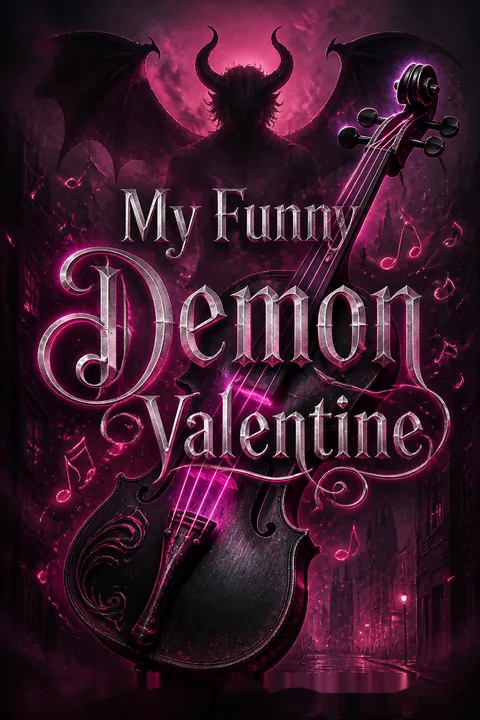


Plot Summary
The Violinist Sees Ash
Asmodeus, a fugitive demon known as Ash, watches Eva, a Montreal DJ, weave live violin through electronic music. He is used to going unnoticed by women, but Eva approaches him, drawn both to his face and to his attention during her set. Their attraction surprises him. Before they can leave together, gunfire scatters the nightclub.
Ash shields Eva, takes bullets without stopping, and carries her outside with impossible speed. Worried, she returns to find him. Instead, she sees Ash and his brothers in monstrous forms, confronting a gargoyle sent from Hell. Ash kills the creature, and Belial burns its remains. Eva escapes without telling the police what she saw, but the night has made her ordinary explanations impossible.
The opening makes visibility a problem of recognition rather than eyesight. Ash can be physically present and still socially erased, while Eva’s attention grants him a kind of existence he has been denied for millennia. Her response to the shooting is equally defining: fear does not keep her outside. She goes back for him, choosing concern before she understands what he is. The rescue creates intimacy, but it also plants a dangerous imbalance. Ash has already decided that the human who sees him is desirable; Eva has not yet learned what that desire might cost.
A Date Full of Questions
Unable to concentrate after the shooting, Eva tells her open-minded mother, Jacqui, what she thinks she saw. Jacqui advises her to investigate rather than dismiss herself as unstable. A week later, Ash calls, and Eva meets him at Bootleg, a crowded jazz club where she works and plays. She questions his evasive past and learns that he cannot taste, smell, feel normally, or see color.
Ash admits he learned piano from a human friend, though he avoids explaining how that friend died. When Eva takes the stage with her flute, Ash joins her at the piano. Their improvised duet surprises them both with its ease and exhilaration. After the set, they kiss, and Eva leaves with him, her investigation giving way to desire.
Eva’s curiosity is not merely a device for extracting exposition. She has been troubled by a lifelong sense of being incomplete, so testing Ash also tests her own grasp of reality. His sensory losses make him an unusually intimate witness: he notices music because most other pleasures have been taken from him. Their duet briefly replaces the interview with collaboration. Neither has to explain himself for the connection to register. Yet the closeness begins on uneven ground, since Eva is asking for truth while Ash is practicing selective disclosure.
The Piano Becomes Their Stage
At Eva’s apartment, attraction overtakes the questions she meant to ask. She and Ash have sex through the night, and their ease together makes it harder for her to treat the impossible events at the club as a reason to leave. In the morning, Eva checks his hands and back for signs of claws or wings, then searches his wallet and phone.
She finds cash but no identification, and only three contacts, Ash’s demon-named brothers. Ash catches her with his phone but does not explain the gaps in his story. A call from Belial warns that the Hunter may be tracking them, yet Ash refuses to leave Eva. Their parting is uncertain, but Ash says he wants to see her again, and Eva agrees.
Physical intimacy gives Eva pleasure and evidence of connection, but it does not repair the epistemic gap between them. Her snooping is both a breach of privacy and an effort to recover agency after a frightening event she cannot explain. Ash’s lack of anger lets the relationship continue, although his silence preserves the imbalance. His choice to remain with Eva despite Belial’s warning marks the first time desire competes with his established duty to protect his brothers. Neither yet knows how to name what is forming, so sex and music carry meanings their conversations cannot.
A Secret Called Sight
As the two keep in touch, Eva finally tells Ash what she believes she witnessed: his wings, his red skin, and the gargoyle’s death. Ash realizes she may possess the Sight, an ability to perceive supernatural beings, but hides the truth and suggests she might descend from witches.
Meanwhile, repeated gargoyle attacks confirm that Hell is searching for the escaped brothers. They hide in a blood-marked apartment protected by wards, and Belial warns that the Hunter, Mishetsumephtai, may be coming.
Eva and Ash speak by phone, share music and fantasies, and grow more attached, though Ash still frames their bond as desire. Eva’s honesty has given him a clue about her unusual perception, but it also makes her a liability if Hell discovers she knows what he is.
The Sight turns Eva’s perception into a source of both knowledge and danger. Ash recognizes that she may be able to see past supernatural concealment, but he chooses to manage her curiosity instead of trusting her with the truth. This mirrors the way Hell treats demons as instruments: information is controlled to keep a person useful and safe. Their nightly calls create genuine intimacy, yet they also let Ash postpone a difficult disclosure. The looming Hunter gives that evasion a practical rationale, but the relationship’s central problem is now visible: protection built on concealment can easily resemble manipulation.
Blood Bought for Freedom
With the Hunter closing in, Belial summons Naiamah, a powerful succubus bound to him by an old contract, and asks her to find Nephilim blood. The blood can hide demons from trackers, but the supply is rare and expensive. Naiamah agrees to locate it in exchange for a sexual favor, and Belial accepts despite his resentment and his knowledge that she feeds on his power.
At Bootleg, Eva introduces Ash to Belial, Meph, and Raum. Her friend Skye notices the brothers far more readily than Ash, and Belial meets her while she is trying to abstain from dating. Her resolve prompts him to vow a similar break from sex. When Ash plays with Eva, the music briefly changes the way others perceive him.
Belial’s bargain exposes the price of survival in a world where even freedom is negotiated through old debts. He hates being controlled by Naiamah, yet accepts the familiar humiliation because he feels responsible for his brothers. Skye’s self-imposed boundary offers a different model of restraint: a promise made for self-respect rather than imposed by a ruler. Belial’s response suggests that he is beginning to imagine a life not organized around appetite and dominance. The chapter’s parallel relationships also sharpen the novel’s central question: can a being shaped by coercion learn to choose desire without turning it into ownership?
Music Breaks the Curse
As Ash and Eva perform together at Bootleg, his curse lifts for the first time in centuries. He sees color, smells the room, and becomes visible as a potential lover to the women around him. Their sudden attention unnerves him rather than delighting him; he wants Eva, who pulls him from the crowd.
Belial sees the change and suspects music has interrupted the curse, though its effect fades. Eva’s father, Dan, calls in alarm and warns her away from Ash, but she does not heed him. Soon after, the Hunter appears in her apartment. Mist tells Ash that he can track him despite the Nephilim blood, then threatens Eva to force Ash back to Hell. Ash refuses, and the two demons begin fighting.
The curse’s brief failure reverses the social order Ash has known: instead of being ignored, he is suddenly pursued. His panic reveals that the attention he once imagined wanting has little value without trust or emotional choice. He does not select the largest crowd or the easiest sexual opportunity; he seeks Eva. Music functions as a temporary restoration of sensory life, but its deeper consequence is relational. Ash discovers that desire has become particular. Dan’s warning and Mist’s arrival then compress the romance’s private uncertainty into an immediate question of survival.
The Monster Is Real
Mist’s attack shatters Eva’s remaining hope that she imagined the supernatural. Ash grows into his red-skinned, horned demon form and fights the gray-winged Hunter through the apartment, sending both crashing through a window.
Ash returns alone, wounded but alive, and urges Eva to leave before Mist recovers. She chooses to trust him over the creature threatening her, but refuses to abandon her cat, Thelonious. During the reckless drive to Ash’s apartment, Ash explains Hell’s rules, his escape, and the curse Raphael placed on him after he killed villagers during a mission involving a woman named Sarah.
Eva learns that demons can evolve, and that Ash’s musical teacher, Miguel, was killed. His past is brutal, but his remorse and protectiveness complicate her fear.
Eva’s fear does not vanish when the truth becomes undeniable; it changes from uncertainty into a practical decision about whom to trust. Ash’s account of his past prevents the story from treating his danger as an illusion. He has committed mass violence, and his explanation does not erase responsibility. At the same time, the fact that he can feel grief for Miguel and guilt toward Eva unsettles the fixed category of demon as pure evil. His theory of evolution becomes less abstract here. It is tested against the painful evidence of a creature learning to understand consequences.
A Bloodbound Escape
At the brothers’ apartment, Belial rages when Ash admits Mist found him, and Raum douses Belial before his temper destroys the building. Ash collapses from blood loss after dismissing his wounds, so Eva offers her blood to help him heal. The next morning, she learns her father has researched the demons and that Jacqui has found a grimoire in Dan’s studio.
The group needs a safe place, and Belial persuades Jacqui to draw a gate sigil. Because humans cannot use demon gates without demonic blood, Eva drinks from Ash, despite the nausea. The five fugitives travel through a terrifying vision of Hell before emerging at Jacqui’s home on Vancouver Island. Eva has crossed from observer into participant.
The blood exchange makes trust bodily rather than rhetorical. Eva gives Ash her blood while he is unconscious, and later accepts his blood to escape, each act crossing a boundary she once assumed would remain absolute. Her choice is compassionate, but it also carries consequences neither of them understands. The gate journey literalizes the cost of leaving ordinary life: even a route to safety passes through the place Ash fled. Jacqui’s willingness to help offers a fragile alternative to secrecy, yet Dan’s unexplained occult work signals that family protection may itself conceal a threat.
The Father Draws Steel
At Jacqui’s home, Eva reunites with her mother while Dan remains absent. Jacqui shows Belial and Raum the grimoire and Dan’s tracking sigils, raising suspicion about his hidden knowledge. Eva and Ash play music together; when Ash’s curse lifts, he sees her clearly and confesses his attachment. Before they can resolve what it means, Dan attacks with a sword and traps Ash inside an angelic sigil.
He handcuffs Eva to a stair rail, then turns on the other demons. Dan stabs Meph with a consecrated knife, and Belial erupts into a destructive rage. Jacqui breaks free of Dan’s grip, enters the burning studio, and pulls the knife from Meph’s chest, stopping Belial’s assault before it kills anyone.
Dan’s violence transforms protection into its most frightening form: he tries to preserve Eva’s safety by denying her choice and attacking the people she trusts. His secrecy has made it impossible for his family to distinguish precaution from betrayal. Jacqui’s intervention is significant because she does not have supernatural strength; she acts through judgment and commitment, refusing to let fear determine whom she helps. Belial’s rage is neither romanticized nor excused, but his grief over Meph exposes the attachment he struggles to govern. The scene forces every character to reveal what their idea of loyalty permits them to do.
Eva Claims Her Power
While Dan’s fight rages, Eva tears the iron rail from the stairs and breaks Ash’s prison sigil, discovering that her strength and glowing eyes are not human. She reaches the studio as Jacqui frees Meph, then uses her emerging power to heal Ash, Raum, and Meph. Dan reveals that he is a fallen angel, that Eva is a Nephilim, and that he bound her powers as a child to hide her from angels and demons.
The earlier exchange of blood between Eva and Ash has broken that protection. Dan says he cannot restore it. Eva refuses to let him kill Ash and offers the brothers her blood in return for protection and training. Ash admits his love, returns hers, and collapses from the force of an emotion he has never known.
Eva’s power arrives alongside a change in self-understanding. The feeling of incompleteness that shadowed her life was tied to a hidden identity, and the awakening gives her a sense of wholeness even as it makes her less safe. Dan’s protective binding preserved her ordinary life by denying her knowledge and agency; its failure forces her to decide what risks are worth choosing. Her offer of blood is not passive surrender but a negotiated act of solidarity. Ash’s collapse makes love physically disruptive, a new experience powerful enough to overwhelm the demon who spent centuries believing himself incapable of it.
A Marriage Comes Undone
After the fight, Dan explains to Jacqui that he hid his identity and Eva’s ancestry to protect them, and that his binding was meant to make their daughter live as human. He also reveals that he is immortal and thousands of years old. Jacqui cannot reconcile the husband she loved with the years of concealment, and asks for time rather than offering forgiveness.
Dan leaves, but tells Ash where he trapped Mist and agrees not to expose the demons, trusting them to guard Eva. He kisses his sleeping daughter goodbye before teleporting away. The family’s safety has been bought with truth, but the truth does not restore the marriage. Eva and Ash remain together, while Jacqui is left to grieve the life she thought she shared.
Dan’s motives are protective, but motive cannot substitute for consent or honesty. By making decisions for Jacqui and Eva, he has preserved their safety at the cost of their ability to know their own lives. Jacqui’s response avoids an easy reconciliation: affection persists, but trust has been damaged by decades of asymmetry. Dan’s departure is therefore neither punishment alone nor clean redemption. His willingness to tell Ash where Mist is and to leave Eva under the demons’ protection begins a form of accountability, but it cannot compel his wife to accept the consequences of his choices.
A Home Among Demons
The brothers return to Montreal and find the Hunter living in Eva’s repaired apartment after escaping Dan’s damaged sigil. Mist admits he has kept their location secret and wants time on Earth to understand human attachment, though he initially describes a partner as a pet. Eva insists that he learn to treat humans as equals and sets rules for his stay.
The group binds him to secrecy and agrees to help him adapt. Belial, Meph, and Raum decide to rent another unit in Eva’s building, while Ash moves in with her. Their future remains dangerous, but it is no longer defined solely by flight: they share a neighborhood, music, and a home. Ash’s curse also begins to lift when he thinks of loving Eva.
The final arrangement does not erase danger; it changes the group’s relation to it. Mist’s bargain extends the novel’s argument about change beyond Ash: even the Hunter, whose identity has been built around enforcement, wants to test a different life. Eva’s insistence that a human companion is not property gives the negotiation an ethical boundary, not merely a tactical one. The demons’ decision to live nearby turns found family into a literal domestic structure, complete with predictable intrusion and shared responsibility. Ash’s curse responding to love suggests transformation is sustained not by a single performance but by a life repeatedly chosen.
Analysis
My Funny Demon Valentine makes recognition the first condition of intimacy. Ash is not literally invisible, yet Raphael’s curse teaches him to experience himself as socially absent. Eva’s attraction initially seems to solve that injury, but the novel refuses to equate being desired with being known. She asks questions, catches his evasions, and finally insists that sexual chemistry is not enough. Ash’s development begins when he stops treating Eva as a rare exception to exploit and starts understanding that her separate needs and boundaries matter.
Music provides the book’s most precise image of that development. Eva and Ash improvise together before they can fully trust each other, listening and responding without domination. Their duet briefly restores Ash’s senses, suggesting that creative participation makes him less confined by the identity imposed on him. The supernatural mechanism is also psychological: he becomes visible when he is engaged in something that requires attention to another person, not simply when he wants to attract an audience.
The novel’s family conflicts complicate its romance. The demons form kinship by choice, but their loyalty is repeatedly strained by Belial’s rage and Ash’s secrecy. Dan, by contrast, hides the truth to protect his wife and daughter, then discovers that protection without consent can become another form of control. Jacqui’s hurt is not erased by his love, just as Ash’s past violence is not erased by his capacity for tenderness. The story allows change without pretending that change cancels consequence.
Eva’s emergence as a Nephilim makes self-knowledge inseparable from risk. Her hidden powers explain the lifelong feeling that part of her was missing, but discovering them also removes the protection that kept her life ordinary. She chooses knowledge and negotiated interdependence over safety purchased through ignorance. The ending extends that choice to Mist, whose curiosity about human attachment opens the possibility that even an enforcer can question his assigned role. Freedom here is not escape from obligation; it is the chance to choose which obligations are worth keeping.
Review Summary
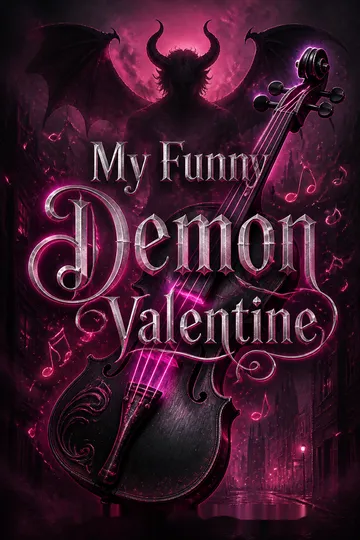
My Funny Demon Valentine is a paranormal romance about Asmodeus, a cursed demon, and Eva, a human musician. Reviews praise the book's humor, steamy scenes, and engaging characters, particularly the demon brothers. Many readers enjoyed the unique premise and jazz music elements. Some critics found the writing style and pacing inconsistent. Overall, readers appreciated the blend of romance, action, and supernatural elements, with many eagerly anticipating the next books in the series. The book's reception was generally positive, with most readers finding it entertaining and addictive.
People Also Read

Characters
Eva Gregory
The music-making truth seekerEva is a Montreal DJ, multi-instrumentalist, and fiercely independent young woman whose curiosity keeps outrunning her fear. She builds a life around music, her cat Thelonious, and a close friendship with Skye, while remaining unsure why she has always felt somewhat disconnected from herself. Her attraction to Ash is immediate, but she also wants honesty and emotional reciprocity rather than accepting chemistry as a substitute for trust. Eva is compassionate without being meek: she investigates what frightens her, challenges the people who conceal information, and makes her own decisions when others try to protect her by controlling her. Her confidence and creative instinct allow her to meet the supernatural world with both skepticism and openness.
Asmodeus, called Ash
The cursed demon musicianAsh is an ancient demon and fugitive from Hell whose curse has dulled his senses and made potential lovers overlook him. Reserved, observant, and often blunt, he has spent so long treating pleasure as a short-lived indulgence that he struggles to recognize attachment as something deeper. Music matters to him because hearing remains his clearest channel to the world, and playing with Eva awakens a joy he had nearly stopped expecting. He is protective of his demon brothers and wary of authority, but his history includes grave harm that he cannot simply dismiss. Eva challenges him to become honest about what he wants, while his own emerging emotions force him to reconsider what a demon can become.
Belial
The volatile guardianBelial is Ash’s enormous, powerful brother and the group’s most formidable protector. His legendary status in Hell contrasts with his domestic devotion to cooking, which gives his temper a constructive outlet. He carries responsibility for the others and often makes hard decisions, but his anger can overwhelm his judgment and frighten the very people he wants to keep safe. Belial resents dependence and struggles with promises he has repeatedly broken, yet he is capable of listening when someone offers him a different way to understand self-control. His protectiveness can be both generous and overbearing.
Mephistopheles, called Meph
The tattooed wild cardMeph is Ash’s younger brother, recognizable by his extensive tattoos, piercings, muscular build, and irrepressible grin. He jokes when danger rises and often says the inappropriate thing everyone else is trying not to say. Beneath that chaos is a survivor who has endured enough to channel destructive impulses into art and exercise. His humor helps the brothers breathe, but it can also disguise how much he needs affection and recognition. Meph is fiercely loyal, quick to provoke Belial, and unexpectedly capable of making peace when the family is close to breaking.
Raum
The watchful quiet brotherRaum is Ash’s brooding brother, a powerful demon with gold eyes, a muscular frame, and a calmness that can cut through his family’s noise. He watches more than he speaks, often noticing when a situation is about to turn dangerous. His affinity for animals reveals a gentler side that clashes with his intimidating presence. Raum can be blunt and difficult to read, but his loyalty is practical: he intervenes, tends wounds, and helps keep the group functioning. He is often the quiet counterweight to Belial’s temper and Meph’s impulsiveness.
Jacqui Gregory
Eva's open-minded motherJacqui is Eva’s warm, unconventional mother, an artist who meets strange revelations with curiosity rather than ridicule. She gives Eva room to make her own choices, even when she worries about the risks, and encourages honesty as the foundation of intimacy. Her welcoming manner helps turn her home into a refuge, but it does not make her passive when people she cares about are threatened. Jacqui values creative expression and sees art as a way to transform difficult impulses. Her long marriage and deep affection for her family make concealed truths especially painful.
Dan Gregory
Eva's guarded fatherDan is Eva’s protective father, an artist and occult scholar whose concern for his family is matched by an instinct to keep dangerous knowledge under his control. He is physically capable, disciplined, and accustomed to operating behind the scenes. His first response to risk is to prepare, conceal, and act before others can object, which can make his care feel like coercion. Dan loves Jacqui and Eva deeply, but the years of secrecy surrounding his private work have made trust a fragile matter. He represents the cost of treating protection as a reason to withhold the truth.
Mishetsumephtai, called Mist
Hell's relentless HunterMist is Hell’s formidable tracker, a winged demon whose skill at pursuing fugitives makes him a serious threat to Ash and his brothers. He is disciplined, perceptive, and shaped by a strict understanding of duty. Human behavior puzzles him, particularly the bonds people form despite their vulnerability and short lives. His questions reveal a mind capable of observation beyond the task he has been assigned. Mist’s imposing appearance and precise manner make even his moments of curiosity unsettling.
Skye
Eva's impulsive best friendSkye is Eva’s beautiful, outspoken best friend, a woman with a high appetite for romance and a history of choosing men who do not offer the lasting affection she wants. Her humor makes her easy company, but her decision to impose a boundary on herself shows a serious desire to change her habits. Skye is not ashamed of wanting pleasure; she is trying to understand when desire serves her and when it leaves her feeling diminished. Her candidness gives Eva a trusted confidante and unexpectedly influences Belial.
Naiamah
The calculating succubus queenNaiamah is a powerful succubus and former lover of Belial, bound to him by a contract that gives her access to valuable favors. She is seductive, politically connected, and skilled at turning another person’s need into leverage. Her relationship with Belial is defined by mutual attraction tangled with resentment and dependence. She understands the power she holds over him and uses it without sentimentality.
Raphael
The angel who cursed AshRaphael is an angel whose intervention changed Ash’s existence after Ash’s actions during a demonic assignment. He represents Heaven’s authority and its capacity to punish supernatural beings through binding magic. Ash remembers the consequence far more vividly than any explanation Raphael may have offered.
Miguel
Ash's human piano teacherMiguel was the human pianist who taught Ash in Cuba. Their friendship gave Ash a rare connection to human creativity and helped awaken his love of the piano. Miguel’s fate remains one of the losses Ash cannot comfortably explain.
Sarah
The target of Ash's missionSarah was the woman Ash was assigned to tempt during one of his missions on Earth. Her innocence and the village’s expectations made her a target in a conflict she did not understand. Her story remains bound to the event that changed Ash’s standing in Hell.
Plot Devices
Raphael's curse
Makes Ash unseenThe curse suppresses Ash’s senses and makes him seem uninteresting to people who might be attracted to him. It turns his former role as a lust demon into a sustained punishment: he can be physically present, even speak with a woman, yet fail to register as desirable. Eva’s attention first breaks this pattern, while music later appears to loosen it temporarily. The curse externalizes Ash’s isolation and makes recognition a concrete condition of romance. Its changing effects also provide evidence that Ash may be evolving beyond the nature Raphael originally punished.
Music and the curse
Makes connection audibleEva’s violin, flute, and improvisation with Ash’s piano create a shared language before either of them can speak plainly about their pasts. When Ash plays with Eva, his curse temporarily lifts: his senses return and women can notice him. That effect makes music both a source of pleasure and a clue about his changing nature. It does not simply restore Ash’s social desirability; it reveals that he does not want indiscriminate attention once he has found a particular connection. Music is the story’s practical mechanism for linking creative expression, emotional development, and supernatural change.
Nephilim blood
Conceals fugitivesBlood from a Nephilim can obscure demons from supernatural tracking and allow a human to use a demon gate. The brothers seek it as temporary protection from Hell’s Hunter, and Eva drinks Ash’s blood so she can travel with them. Earlier, she gives Ash her own blood to help him recover from severe wounds. Because the exchange runs both ways within the required period, it also breaks the binding that concealed Eva’s ancestry. The same substance therefore becomes a tool of escape, an act of care, and the mechanism that exposes a hidden identity.
Sigils and hellgates
Bind, hide, transportDemons use Sheolic sigils to ward a territory, open a gate between locations, or bind a creature. Hellgates let the brothers flee Montreal for Jacqui’s home, but human travelers need demonic blood to pass through them. Dan uses an angelic sigil to trap Mist and another to imprison Ash, showing that different supernatural traditions can impose their own rules. A small break in Mist’s binding circle later lets him escape. These designs make abstract magic spatial and consequential: a chalk line can offer shelter, become a prison, or fail through one damaged mark.
The blood pact
Makes brothers by choiceAsh, Belial, Meph, and Raum became brothers through a shared blood pact rather than human ancestry. The pact formalizes their commitment not to betray one another and explains why they endure each other’s tempers, recklessness, and conflicting habits. It gives Ash a model of chosen kinship before he learns how to understand romantic attachment. The brothers’ loyalty is not sentimental or always gentle, but it repeatedly shapes their decisions: they escape Hell together, protect one another, and treat each other’s safety as a shared responsibility.
FAQ
Synopsis & Basic Details
What is My Funny Demon Valentine about?
- A Demon's New Life: My Funny Demon Valentine follows Asmodeus, a former Prince of Lust and one of four powerful demons who have escaped Hell to seek a new, free existence on Earth. Plagued by a curse that renders him invisible and numb to those who might desire him, Asmodeus finds his monotonous life irrevocably changed when he encounters Eva, a vibrant human musician.
- Unlikely Connection Forged: The story chronicles the burgeoning, complicated romance between Asmodeus and Eva, whose unique ability to "see" him breaks through his ancient curse. Their connection is tested by supernatural threats, the revelation of hidden identities, and the constant danger posed by Hell's relentless tracker, Mist, who seeks to drag the rogue demons back to their infernal duties.
- Found Family and Self-Discovery: Beyond the central romance, the novel explores themes of chosen family as Asmodeus and his brothers navigate human society and their own evolving natures. Eva, too, embarks on a journey of self-discovery, uncovering her own extraordinary heritage and powers, ultimately leading to a confrontation that redefines what it means to be human, demon, or something in between.
Why should I read My Funny Demon Valentine?
- Unique Paranormal Romance: Dive into a fresh take on the demon romance genre, where ancient beings grapple with very human emotions and mundane challenges like cooking and apartment hunting. The novel subverts typical tropes, offering a nuanced exploration of good, evil, and the gray areas in between.
- Deep Character Evolution: Witness compelling character arcs, particularly Asmodeus's journey from cursed numbness to emotional awakening through love and music, and Eva's transformation as she embraces her hidden powers and identity. The supporting cast, including Asmodeus's chaotic brothers and Eva's eccentric parents, adds rich layers of humor and heart.
- Intriguing World-Building: Explore a world where angels, demons, and hybrids secretly coexist, governed by ancient rules and powerful magic. The story seamlessly blends supernatural action with slice-of-life moments, offering both thrilling confrontations and tender, intimate scenes that resonate deeply.
What is the background of My Funny Demon Valentine?
- Mythological & Literary Allusions: The novel draws heavily from demonology, specifically the Ars Goetia (Lesser Key of Solomon), for its demon characters like Belial, Asmodeus, and Raum, grounding them in established lore while giving them unique personalities. Mephistopheles is inspired by the Faust legend, and Naiamah (Naamah) from Jewish scriptural texts, adding layers of intertextual richness.
- Author's Personal Influence: Author Aurora Ascher, a professional piano player, infuses the story with her passion for music, particularly jazz. The "Bootleg" club and its jam nights are directly inspired by real-life Montreal jazz scenes, lending authenticity and a vibrant backdrop to the supernatural events.
- Exploration of Human Experience: Despite its fantastical elements, the book delves into relatable human experiences: the search for belonging, the complexities of family (both biological and chosen), the struggle with personal demons (literal and metaphorical), and the transformative power of art and love, making it resonate beyond its genre.
What are the most memorable quotes in My Funny Demon Valentine?
- "I haven't heard anyone play the violin like that in two hundred years." (Asmodeus, Chapter 1): This quote is pivotal as it's Asmodeus's first genuine, uncursed reaction to Eva, signaling the profound impact her music will have on his existence and foreshadowing the lifting of his curse. It highlights his ancient nature and the rarity of his emotional response.
- "I'm not interested. No, the great and legendary King Belial, whose name is synonymous with evil itself, would rather hide in human form on Earth." (Naiamah, Chapter 11): This quote from Naiamah perfectly encapsulates Belial's internal conflict and the central theme of demonic evolution. It underscores the dramatic shift in his character from a feared King of Hell to a demon seeking a quieter, more domestic life, highlighting the subversion of traditional demon roles.
- "If you've actually never enjoyed your life more than when you're with me, that sounds like love." (Eva, Chapter 22): This line is the emotional climax of Asmodeus and Eva's relationship, where Eva articulates the true nature of his burgeoning feelings. It's a powerful moment of vulnerability and insight, defining their bond and solidifying the novel's core message about love's transformative power, even for a demon.
What writing style, narrative choices, and literary techniques does Aurora Ascher use?
- First-Person Dual POV: The story primarily alternates between Eva's and Asmodeus's first-person perspectives, offering intimate access to their thoughts, feelings, and internal struggles. This choice allows readers to deeply empathize with both characters, understanding Asmodeus's unique sensory experience and Eva's journey of self-discovery.
- Witty Dialogue and Internal Monologue: Ascher employs sharp, humorous dialogue, especially in the bickering between the demon brothers and Eva's internal commentary, which provides comic relief and reveals character personalities. The internal monologues offer profound insights into the characters' psychological states, particularly Asmodeus's confusion about his evolving emotions.
- Sensory Language and Metaphor: Given Asmodeus's curse, the narrative cleverly uses sensory descriptions (or lack thereof) to highlight his experience, making the moments when his senses return (color, smell, taste) incredibly impactful. The curse itself serves as a powerful metaphor for emotional numbness and isolation, while music and love are presented as catalysts for sensory and emotional awakening.
Hidden Details & Subtle Connections
What are some minor details that add significant meaning?
- Thelonious the Cat's Reactions: Eva's cat, Thelonious, initially hisses at Asmodeus (Chapter 7) but later curls up lovingly with Raum (Chapter 17). This seemingly minor detail subtly reinforces the demons' individual natures and their varying degrees of "demonic" energy. Thelonious acts as an intuitive barometer, confirming Asmodeus's initial "wicked" nature and Raum's gentler, animal-friendly disposition, hinting at their evolving souls.
- Belial's Culinary Passion: Belial's obsession with cooking (e.g., making pancakes in Chapter 4, risotto in Chapter 10) is more than just a quirky hobby. It's explicitly stated as an outlet for his infamous rage (Chapter 11), a "damned miracle" that prevents him from "burning the building down." This detail highlights his struggle for self-control and his surprising capacity for nurturing, showcasing his internal conflict and growth.
- The Montreal Apartment's State: The rundown, "shithole" apartment (Chapter 4) with slanted floors, old stoves, and exposed pipes serves as a symbolic grounding for the powerful demons. It contrasts sharply with their ancient, regal pasts, emphasizing their exile and their attempt to blend into mundane human life. Its later mysterious repair (Chapter 27) hints at Dan's unseen intervention and the subtle ways supernatural forces interact with the human world.
What are some subtle foreshadowing and callbacks?
- Eva's "Dark Thing Inside Her": Early in the story, Eva reflects on a "sense that she wasn't quite normal. Sometimes it felt like there was something dark inside her, coiled and waiting for the day it would finally break free from its cage" (Chapter 3). This seemingly throwaway line subtly foreshadows her true Nephilim nature and the awakening of her latent powers, which she later embraces as a missing piece of herself.
- Skye's Vow of Self-Control: Skye's impulsive nature and her decision to "swear off men for six months" to gain self-control (Chapter 9) directly parallels Belial's later, more dramatic vow of celibacy (Chapter 17). This mirroring highlights the universal struggle for willpower and personal growth, regardless of whether one is human or demon, subtly connecting their journeys.
- Asmodeus's Similes for Music: In Chapter 1, Asmodeus describes Eva's music with a series of human-like similes ("like the first heat of the sun in spring," "a tall glass of cool water," "a pleasant breeze"). This early detail subtly foreshadows the profound impact music will have on him, not just as an enjoyable sound, but as a catalyst for the return of his dulled senses and emotional capacity, hinting at the curse's eventual reversal.
What are some unexpected character connections?
- Skye and Belial's Shared Struggle: The most unexpected connection is between Skye, Eva's impulsive human friend, and Belial, the rage-filled King of Hell. Their conversation about self-control and breaking bad habits (Chapter 17) reveals a surprising depth to Belial, showing his vulnerability and genuine desire for change, and establishing an unlikely bond based on shared personal struggles.
- Meph's Vulnerability to Jacqui: Despite his tough, tattooed exterior and constant joking, Mephistopheles shows a rare moment of genuine vulnerability when Jacqui praises his tattoos and offers a compassionate interpretation of his self-destructive tendencies (Chapter 21). His blushing and admission that "No one's ever cried over me before" (Chapter 27) reveals a hidden longing for acceptance and maternal affection, creating an unexpected tender connection.
- Mist's "Human Pet" Desire: The relentless Hunter, Mist, initially appears as a pure antagonist, but his later desire for a "human pet" (Chapter 28) reveals an unexpected yearning for connection and attachment, mirroring Asmodeus's own journey. This surprising motivation transforms him from a one-dimensional villain into a complex character seeking his own form of "evolution" and belonging.
Who are the most significant supporting characters?
- Jacqui Gregory: Eva's mother, Jacqui, is crucial not just as a supportive parent but as a catalyst for understanding. Her open-mindedness allows her to accept the supernatural revelations, and her artistic perspective provides the key insight into Asmodeus's curse and the demons' evolution (Chapter 21). She acts as an emotional anchor and a bridge between the human and supernatural worlds.
- Skye: Eva's best friend, Skye, serves as more than just comic relief. Her struggles with impulsivity and her quest for a meaningful relationship (Chapter 9) subtly parallel the demons' own journeys of self-control and connection. Her initial inability to "see" Asmodeus (Chapter 12) highlights the curse's power, while her later attraction confirms its temporary lifting, making her a vital plot device and a relatable human foil.
- Thelonious the Cat: While a minor character, Thelonious acts as a consistent, subtle indicator of demonic presence and nature. His strong reactions (hissing at Asmodeus, purring for Raum, howling during chaos) provide a non-verbal confirmation of the supernatural events and the individual "vibes" of the demons, adding a touch of grounded realism and humor to the fantastical elements.
Psychological, Emotional, & Relational Analysis
What are some unspoken motivations of the characters?
- Asmodeus's Quest for Authenticity: Beyond simply escaping Hell, Asmodeus is driven by an unspoken, deep-seated desire for authenticity and genuine experience. His curse, which strips him of sensory pleasure and makes him "uninteresting," is a constant reminder of his superficial existence as a lust demon. His pursuit of Eva is not just for sex, but for a connection that makes him feel truly alive and seen, as evidenced by his panic when other women suddenly desire him (Chapter 13).
- Belial's Need for Control: Belial's constant struggle with his rage (Chapter 14, 16) and his meticulous cooking (Chapter 4, 10) are manifestations of a profound need for control. As a former King of Hell, he's accustomed to absolute power, and his escape to Earth, where his powers are dampened, forces him to confront his internal chaos. His protective instincts towards his brothers and Eva stem from a desire to maintain order and prevent further loss, reflecting a deep-seated fear of helplessness.
- Dan's Fear of Exposure: Dan's extreme secrecy and overprotective actions (binding Eva's powers, attacking the demons) are motivated by a deep-seated fear of exposure and the devastating consequences it would bring. As a Grigori, he knows the brutal realities of Heaven and Hell's hunt for Nephilim. His lies and attempts to control Eva's destiny, while misguided, are rooted in a desperate love and a desire to shield his family from a dangerous world he intimately understands.
What psychological complexities do the characters exhibit?
- Asmodeus's Emotional Illiteracy: Asmodeus, having lived millennia as a "soulless" demon with dulled senses, exhibits profound emotional illiteracy. He struggles to identify and articulate his feelings, often describing them in physical terms ("my chest aches," "stomach feels weird," Chapter 19). This complexity highlights the profound impact of his curse and his "evolution," as he slowly learns to process and name emotions like guilt, anxiety, and ultimately, love, making his journey deeply poignant.
- Belial's Suppressed Trauma: Belial's explosive rage and his need for control suggest a history of suppressed trauma from his time as a King of Hell. His "eye-of-the-storm calm" (Chapter 16) before a full-blown rage attack indicates a constant internal battle. His surprising vulnerability when discussing his self-loathing after interactions with Naiamah (Chapter 11) reveals the psychological toll of his past and his efforts to transcend his destructive nature.
- Mephistopheles's Mask of Humor: Meph's constant joking, piercings, and tattoos serve as a psychological mask, a coping mechanism for the "shit he'd survived in Hell" (Chapter 9). Beneath the bravado, he yearns for acceptance, as seen in his reaction to Jacqui's praise (Chapter 21) and his genuine concern for his brothers. His impulsivity and "unstable" nature hint at deeper psychological wounds that he attempts to deflect with humor.
What are the major emotional turning points?
- Asmodeus's Panic at the Club: When Asmodeus's curse temporarily lifts at the jazz club, and he is suddenly swarmed by desiring women, his reaction is not pleasure but panic (Chapter 13). This is a major emotional turning point, as it reveals his true desire for genuine connection over superficial lust, and his unexpected preference for Eva, who sees beyond his physical form.
- Eva's Decision to Give Blood: Eva's choice to give her blood to an unconscious Asmodeus for healing (Chapter 17), despite her fear and anger at his deception, is a profound emotional turning point. It signifies a deep level of trust and compassion, moving beyond rational fear to an intuitive act of care, and unknowingly breaking her own binding spell.
- Belial's Vow of Celibacy: Belial's conversation with Skye about self-control (Chapter 17) leads him to make a personal vow of celibacy for six months, specifically to avoid Naiamah. This is a significant emotional turning point, demonstrating his commitment to personal growth and self-mastery, prioritizing his inner peace over immediate gratification, and showing a profound shift in his demonic nature.
How do relationship dynamics evolve?
- Asmodeus and Eva: From Curiosity to Unconditional Love: Their relationship evolves from initial mutual curiosity and intense physical attraction (Chapter 1, 8) to a deep, unconditional love. They navigate the shock of supernatural revelations, his emotional illiteracy, and her Nephilim awakening. Their commitment is solidified when they choose to face dangers together and confess their love, accepting each other's true forms and pasts (Chapter 25).
- The Brothers: From Dysfunctional Unit to Found Family: The dynamic between Asmodeus, Belial, Meph, and Raum transforms from a bickering, co-dependent group of exiles (Chapter 1, 7) into a truly supportive and protective "found family." Belial learns to temper his rage and trust Asmodeus's judgment, while Meph and Raum show deeper loyalty and care, especially during crises (Chapter 16, 24). Their shared vulnerability and reliance on each other strengthen their chosen bond.
- Eva and Her Parents: From Secrecy to Honest Acceptance: Eva's relationship with her parents, particularly Dan, undergoes a dramatic evolution. Initially, it's built on Dan's protective secrecy, leading to Eva's feeling of disconnect (Chapter 3). The supernatural revelations force a painful reckoning (Chapter 25), but ultimately lead to a more honest and accepting dynamic, where Jacqui embraces the demons and Dan, despite his pain, acknowledges Eva's autonomy and new identity.
Interpretation & Debate
Which parts of the story remain ambiguous or open-ended?
- The Long-Term Effects of Demonic Evolution: While Asmodeus theorizes about demonic evolution and the lifting of his curse through love, the exact nature and permanence of this transformation remain somewhat ambiguous. It's unclear how far this evolution can go, whether it truly makes them "good," or if their inherent demonic nature will always pose a challenge. The story leaves room for future exploration of this complex concept.
- The Future of Eva's Nephilim Powers: Eva's Nephilim powers awaken dramatically, but her understanding and control over them are still nascent. The implications of her being a hunted hybrid are vast and largely unresolved by the end of the book. Her promise to learn to protect herself suggests a future journey of training and self-mastery, leaving the full extent of her abilities and the threats she faces open-ended.
- Dan's Path to Redemption: Dan, the Grigori father, leaves at the end, vowing to find others of his kind and potentially resume hunting. His relationship with Jacqui is fractured, and his acceptance of the demons is grudging. His future role in the supernatural world and his path to full reconciliation with his family remain ambiguous, setting up potential conflicts or alliances in subsequent books.
What are some debatable, controversial scenes or moments in My Funny Demon Valentine?
- Asmodeus's Initial Intentions with Eva: A controversial point could be Asmodeus's initial motivation for pursuing Eva. He explicitly states he wants to "get laid" (Chapter 4) and that his interest is primarily sexual due to her ability to see through his curse. This raises questions about consent and manipulation, especially given his demonic nature and Eva's initial ignorance of his true form. Readers might debate whether his later emotional development fully redeems these early intentions.
- Dan's Binding of Eva's Powers: Dan's decision to secretly bind Eva's Nephilim powers at birth (Chapter 25) is highly debatable. While he claims it was for her protection, it stripped her of her true identity and autonomy, causing her a lifelong sense of disconnect. This action sparks a heated argument about paternal control versus a child's right to self-determination, and whether his love justifies such a profound deception.
- Mist's Desire for a "Human Pet": Mist's proposal to the demons that he wants a "human pet" to experience attachment (Chapter 28) is a controversial moment. Despite his later attempts to understand human relationships, the term "pet" and his initial, detached reasoning raise ethical questions about his capacity for genuine connection and whether his "evolution" is truly benevolent or merely a sophisticated form of self-interest.
My Funny Demon Valentine Ending Explained: How It Ends & What It Means
- Triumph of Chosen Family and Love: My Funny Demon Valentine concludes with the formation of a powerful, unconventional "found family." Asmodeus and Eva confess their love, solidifying their bond despite their
Hell Bent Series
Download PDF
Download EPUB
.epub digital book format is ideal for reading ebooks on phones, tablets, and e-readers.








