

Plot Summary
Sheep, Ashes, and Stone
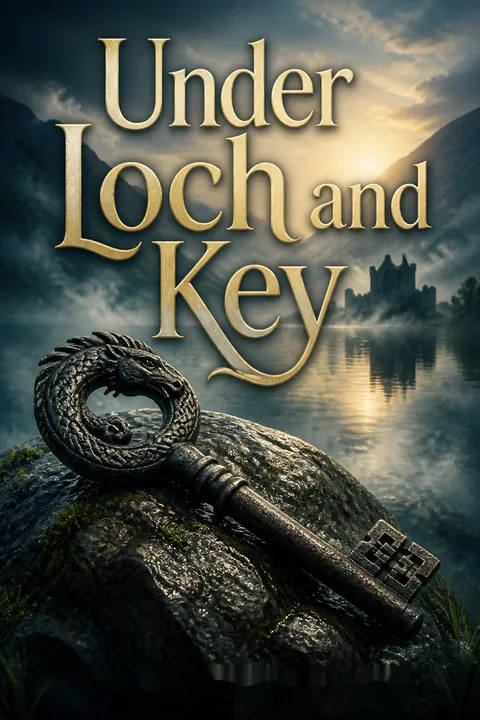
After her father, Duncan, dies, twenty-seven-year-old Keyanna MacKay leaves New York and drives into rural Scotland to honor his wish to be returned to Loch Ness. A flock of sheep blocks her rental car, and farmer Hamish Campbell helps get it moving again. At the cove, Key carries Duncan's urn toward the water, but slips on the rocks before she can scatter his ashes.
A stranger catches her and hauls her safely back to shore. He is striking, Scottish, and immediately rude, insisting that she ignored the warnings. When Key says she is visiting her grandmother, Rhona MacKay, the stranger reveals that he owns the land. His name is Lachlan Greer, and their first meeting turns grief into a quarrel.
Key's journey begins as an act of care for her father, but also as a search for a place where his absence might feel less final. The cove gives that private grief a physical setting: she must cross unstable ground to complete a promise. Lachlan's rescue creates immediate attraction and irritation, a pairing that lets Key defend herself rather than remain only a mourner. His claim to the land also makes her pilgrimage collide with a local family history she does not yet understand. The scene establishes the novel's central tension: inherited stories can draw people together even when they teach them to distrust one another.
The MacKay Door
Lachlan drives Key to the MacKay farm in worsening rain, where Rhona recognizes her and says she should not have come. Key asks for the chance to know the family her father left behind, and Rhona reluctantly lets her stay if she works. Finlay, Key's grandfather, greets her with open affection, while cousin Brodie keeps his welcome polite and reserved.
The warmth is uneven, but Key takes it as a reason to try. At the pub, twins Blair and Rory introduce themselves and send her to Loch Land, claiming it will help her learn about the monster her father described. Lachlan is present and lets the prank stand. Meanwhile, he has spent months searching the MacKay property for a way to understand his own inherited affliction.
The farm offers Key what she came for in fragments, not as a ready-made family. Finlay's affection gives her a foothold, while Rhona's reserve makes belonging feel conditional on effort. Key responds by volunteering to work, a familiar caregiving strategy that turns need into usefulness. Lachlan's secret investigation runs alongside her search for connection, but his suspicion keeps the two quests apart for now. The Loch Land prank marks the locals' teasing as both social welcome and a small test of whether Key can laugh at herself. The section makes clear that trust in Greerloch will be built through repeated actions, not inherited names.
The Loch Answers
Loch Land proves to be a childish tourist attraction, and Key leaves embarrassed after Lachlan lets the joke continue. At the farm, she overhears Rhona insisting that Duncan is no longer part of her family. Key packs and returns to the cove at night, determined to scatter his ashes before leaving Scotland. She completes the ritual, but something large strikes her and throws her into the loch.
A long-necked creature charges; another fights it off and shields her long enough for her to reach shore. The defender is badly wounded. Key presses her jacket against its torn flesh, pleading with it to survive, and an unfamiliar heat rises through her palms. She blacks out beside the creature, unaware that she has saved Lachlan.
Key's attempt to leave is driven by a fresh rejection that confirms her oldest fear: without her father, she has no family to claim her. Yet she returns to the cove because the promise matters independently of Rhona's response. The monsters transform Duncan's bedtime story from sentimental inheritance into immediate danger, then complicate fear through the second creature's protective behavior. Key's instinct to treat its wound repeats her role as her father's caregiver, but this time her hands produce an unexplained force. Her grief does not disappear; it becomes the pressure that makes her act. The scene joins mourning, wonder, and nascent power in one consequential choice.
Nessie Has a Face
Key wakes beside the loch to find Lachlan naked and pretending he merely rescued her from the water. A fresh bite-shaped wound on his shoulder matches the injury she treated, defeating his explanation.
He finally admits that he becomes the Loch Ness Monster after sunset and resents the danger of anyone discovering him. Key does not expose him. She believes the creature may connect to the monster that once saved Duncan, so she offers to help Lachlan find a cure.
At the pub, Blair and Rory confirm that the cove is protected, while Key keeps Lachlan's secret. Finlay brings her back to the farm, and Rhona explains that a bitter argument over Duncan's marriage and future drove him away. Rhona admits her coldness came from regret and begins trying again.
The physical mark on Lachlan's shoulder makes denial untenable, turning Key from a witness into the keeper of a dangerous confidence. Her offer to help is not simple fascination with a cryptid. She sees a possible link to the story her father held onto even as illness took other memories from him. The conversation with Rhona reframes the family rupture too: the grandmother's rejection is rooted in shame and grief, not indifference to Key herself. By choosing to return, Key accepts imperfect kinship rather than waiting for an apology to erase the hurt. Both relationships move forward when people risk telling a partial truth.
A Graveyard's Old Bargain
Lachlan takes Key to the divided family cemetery and shows her the grave of the Greer ancestor blamed for an eight-hundred-year curse. The inherited account says a kelpie witch cursed every Greer son to become a creature at night after the ancestor betrayed her.
Lachlan explains that his father, Callum, entered the loch and never returned to human life; Duncan's old encounter with a monster was real, and Callum saved him. The families were once close, but Lachlan believes Duncan abandoned Callum after promising to help.
He also suspects Key descends from the kelpie through a MacKay stablehand. Key apologizes for the suffering her family may have caused, and Lachlan accepts her as an ally. Together, they decide the lost bridle may hold the answer.
The cemetery turns family history into contested evidence. Lachlan has been raised on a compact moral narrative: Greers suffer, MacKays cannot be trusted, and a witch began the wrong. Key's presence unsettles that certainty because she can be both a descendant of the accused line and a person who chooses accountability. Her apology matters emotionally, though neither character yet knows whether the inherited account is accurate. The bridle gives their investigation a concrete object to seek, while Callum's condition makes the stakes more intimate than breaking a curse in the abstract. The partnership begins when Key acknowledges harm without claiming guilt for acts she did not commit.
Fire in the Barn
As Key tries to prove herself at the farm, Lachlan helps her with the pitchfork and introduces her to the cows, teasing until her fear gives way to laughter. Their guardedness loosens during a long hike toward the Greer castle.
A storm traps them in a ruined barn, where they trade memories of their fathers: Lachlan recalls Callum's last apology, and Key describes Duncan briefly recognizing her near the end of his illness. They nearly kiss. Instead, Key's growing heat ignites straw beneath her hand.
She extinguishes the flame, but neither can dismiss the event as coincidence. Her earlier unexplained window opening and the rain stopping on request now look like signs of the same ability. Lachlan urges them to search the castle before his nightly transformation.
The barn's intimacy grows from reciprocal disclosure rather than instant romantic certainty. Key and Lachlan recognize parallel forms of loss, but the asymmetry matters: she remembers a final moment of recognition, while he carries the pain of a father who has been absent for decades. The accidental fire interrupts their closeness and makes Key's emotional intensity materially consequential. Her magic appears less like a mastered talent than an overflow, a body responding before her conscious mind can direct it. That instability raises the cost of intimacy: desire, grief, and power are already entangled. The castle search offers a practical task through which they can continue approaching truths neither is ready to face alone.
The Castle's Hidden Cell
At the ruined Greer castle, Key's curiosity takes her across a decayed floor and drops her into a hidden chamber. Lachlan follows and finds iron restraints beside carvings of a beautiful woman offering a bridle to his ancestor.
Other images suggest she was imprisoned, not simply a treacherous witch. The discovery complicates the story Lachlan has repeated all his life. He tells Key she is not responsible for ancient crimes, and their near-kiss becomes a real one when a beam crashes and he shields her.
Once they escape, however, Lachlan says their attraction is too risky while the curse remains unresolved. Key feels rejected, though she understands his fear of becoming like Callum. She returns to the farm determined to help him, even if he refuses to name what they are.
The hidden chamber gives architecture the force of testimony. Lachlan's family's official story has no surviving records to challenge it, but the carved walls preserve an image of restraint and captivity that does not fit the legend of a freely malicious witch. Key's fall is accidental, yet her willingness to keep exploring makes her an active reader of evidence. The kiss occurs amid danger and protection, but Lachlan's retreat shows how fear can disguise itself as responsibility. He tries to prevent future grief by denying present attachment. Key's response is not to demand that he stop being afraid; she continues the shared work while refusing to accept his fear as a verdict on her choices.
A Kiss, Then a Kilt
Key confronts Lachlan for deciding alone that their relationship is too dangerous, then chooses intimacy with him despite his protests. When his claws emerge and scratch her, Lachlan recoils in horror, but Key reassures him that she trusts him and refuses to treat a minor injury as proof he is a threat.
Their relationship becomes private and physical, while Key's powers flare around them. At Greerloch's Highland Games, Lachlan enters the contests after seeing other men vie for Key's ceremonial kiss. He wins the final tug-of-war and kisses her publicly.
Later, at the loch, Key asks to witness his transformation. She meets the enormous creature with tenderness, recognizing Lachlan within it. The trust she offers makes their bond feel less like an attraction to hide and more like a life they might build.
This stretch tests the difference between protection and control. Lachlan's caution is understandable, given Callum's history, but Key insists that she has the right to assess risk for herself. Her response to the claws does not deny danger; it distinguishes accidental harm from malicious intent and allows them to negotiate trust in real time. The games externalize a jealousy Lachlan has barely admitted to himself, while his public victory makes their relationship visible to the town. Key's acceptance of his full transformation is a decisive form of recognition: she does not love only the human mask that daytime permits.
The Journal Beneath Home
Rhona mentions that Duncan once found an old journal in a trunk, and Brodie's family research identifies Tavish MacKay as the stablehand who first settled the MacKay land beside the Greer graves.
The clue sends Key back to her father's old bedroom, where she searches beneath a loose floorboard and finds the journal hidden there. A letter in Duncan's handwriting says he left Scotland because he feared what the old story meant for his unborn daughter, not because he stopped loving Rhona.
Lachlan reads Tavish's account and learns that his ancestor was a brutal laird who imprisoned Sorcha, the kelpie. Tavish's journal describes the captor as the real monster. The revelation shatters Lachlan's inherited belief that the Greers were the original victims.
The journal is discovered not in the castle or a formal archive, but beneath the room where Key has been sleeping, tying historical recovery to her own unsettled inheritance. Duncan's note explains his departure as a fearful act of protection, though it also exposes the cost of choosing silence. Tavish's record does something more disruptive: it reverses the moral roles that Lachlan has used to organize his identity. The evidence does not instantly resolve the family's past; it makes certainty impossible. For Lachlan, this is not merely a correction to genealogy. It threatens the story that has helped him endure a curse by giving suffering a clear, external cause.
The Curse's Second Verse
Reading to the journal's final page, Key finds Sorcha's account: she left her bridle with Tavish, and a future MacKay daughter would inherit her magic and have the chance to end the curse through forgiveness. Key realizes she is the daughter named in the prophecy. She also understands that Lachlan knew the curse had a second verse and withheld it.
When he wakes, she confronts him, furious that he kept her role in their fate from her while claiming to trust her. Lachlan says he feared burdening her, but Key hears another person deciding what truths she can bear. She asks for space and takes the journal. Their separation turns the search for a cure into a test of whether their relationship can survive the secrecy that shaped both families.
The prophecy offers a path toward change but also risks reducing Key to a function written by someone else's magic. Her anger is therefore about more than a hidden clue: Lachlan has denied her informed choice at the precise moment her agency matters most. His protective rationale repeats the family pattern of withholding painful truths in the hope of preventing harm. The conflict also echoes Rhona and Duncan's silence, though Key and Lachlan still have the chance to respond differently. Their temporary separation is consequential because love cannot substitute for consent or candor. The story makes trust an action that must include letting another person know what they are choosing.
The Bridle Burns
Brodie knocks Lachlan unconscious and chains him beside the MacKay graves, demanding the bridle so he can gain power, win his family's respect, and prove the Historical Society wrong. Key follows a magical trace to the graveyard, where she recognizes Tavish's horse-shaped headstone and removes the bridle from its carved figure.
Brodie takes it, but when Key uses fire to stop him attacking Lachlan, the ancient leather burns in his grasp. Lachlan is stabbed, and Key heals him with the power in her hands. He urges her to trust that the magic itself can end the curse. Remembering Sorcha's condition, Key forgives Lachlan for hiding the prophecy. The force surrounding them fades, and the curse breaks before sunset can take him.
Brodie's desperation turns the story's historical injury into present violence. His desire for respect is intelligible, shaped by rejection at home and dismissal at work, but he converts that pain into entitlement to other people's bodies and knowledge. Key's magic first guides her, then protects and heals; it becomes purposeful through action rather than mastery over an artifact. The bridle's destruction appears to remove the obvious solution, forcing the characters to rely on the harder one: an informed act of forgiveness after a real breach of trust. Forgiveness here does not erase harm or excuse silence. It makes repair possible because Lachlan has admitted what he did.
A Father Returns
After the curse lifts, Lachlan and Key hurry to the loch, where Callum emerges human and recognizes his son. Their reunion gives Lachlan back the father he had spent years seeking, though Callum has lost decades and must still reconnect with his family. In the weeks that follow, Key decides to remain in Scotland.
She brings Duncan's journal and his letter to Rhona, who learns that her son left in fear, not from lack of love. Key tells her grandparents she wants to build a life among them, and Rhona welcomes the chance to know her. Lachlan and Key also explain the family history. The old feud does not vanish, but both families now have evidence with which to replace inherited blame with a more honest account.
The reunion with Callum resolves Lachlan's most private hope, but the novel avoids treating restored life as instant restoration of every relationship. Callum and Lachlan have time to recover what the curse stole, while Callum's return opens a difficult path back toward Lachlan's mother. Key's decision to stay answers the opening journey: Scotland becomes home not because the landscape or bloodline guarantees belonging, but because people choose to make room for her. Sharing Duncan's letter with Rhona also closes a loop of silence. The family can grieve what was lost without continuing to mistake pride and fear for the whole truth.
Epilogue
Four years later, Lachlan and Key are raising their daughter, Sorcha, and restoring the old Greer castle. On the little girl's second birthday, Key's magic helps with the house as grandparents, friends, and Lachlan's returned father gather around her.
Lachlan's mother has begun rebuilding her relationship with him, and the family's life now includes ordinary tasks alongside the strange gifts that once frightened them. The stained-glass window installed in Sorcha's room links the child to the castle's past, while Lachlan hopes she will grow up knowing that her choices, not her ancestry, will shape her future.
The epilogue measures the cure by what it makes possible: not simply a human body for Lachlan, but mornings, parenting, home repairs, and family members learning to return to one another. The restored castle does not erase its history. The stained glass is carried into the next generation as a chosen inheritance, rather than a hidden burden. Naming the daughter Sorcha acknowledges the woman whose magic shaped the family's past without making the child responsible for repeating it. Lachlan's hope that Sorcha will choose her own path completes the novel's argument that descent explains where people begin, not what they must become.
Analysis
Under Loch and Key makes family history a living force rather than a settled record. Key arrives believing that her father's stories will restore a lost connection, while Lachlan believes the stories passed down by his family explain why he is doomed. Both inherit partial truths. Duncan's silence leaves Key without context; the Greer account casts a victimized family as innocent and a kelpie as a convenient source of blame. The journal does not merely add information. It forces Lachlan to reconsider who his ancestors were and Key to face how secrecy can be meant as protection and still cause harm.
The romance develops through choices about agency. Lachlan repeatedly tries to decide what Key can bear, initially calling that restraint protection. Key challenges him because she has already lived through a life organized around someone else's needs. Her response to his transformations is not a denial of danger, but an insistence that she can judge it for herself. Their intimacy becomes credible when trust includes disclosure, consent, and the possibility of repair after betrayal.
The supernatural plot turns on the difference between inheritance and destiny. Key's ancestry gives her access to magic, but the decisive power is not the bridle or her bloodline in isolation. It is her ability to act with knowledge, to forgive without pretending that harm did not occur, and to choose what kind of descendant she will be. Lachlan likewise becomes more than the story his family told about Greers and MacKays. By questioning that story, he can refuse to repeat it.
The ending does not erase the past. Callum's return cannot restore the lost years, Rhona cannot undo her estrangement from Duncan, and Brodie's pain does not excuse his violence. Instead, the novel offers repair as a practice: records are shared, family members make room for one another, and the next generation is promised a history without a predetermined role. Home becomes something the characters build through truth and repeated acts of care.
Review Summary
Under Loch and Key received mixed reviews, with ratings ranging from 2 to 5 stars. Readers praised the unique premise of a Loch Ness monster romance, Scottish setting, and entertaining banter. Many found the spicy scenes well-written, though some felt they overshadowed the plot. Critics noted pacing issues, particularly in the middle, and found some character development lacking. The audiobook narration was highly praised. Overall, readers enjoyed the blend of contemporary romance with paranormal elements, though some felt the execution could have been stronger.
People Also Read


Characters
Keyanna MacKay
Grieving heir in exileKey, twenty-seven, is a New Yorker whose closest relationship has been with her father, Duncan. After his death, she travels to Scotland carrying his ashes and a need to understand the family he left behind. She is outspoken, curious, and quick to turn vulnerability into action, whether that means helping on a farm or pressing for answers others would rather avoid. Her years caring for Duncan have taught her attentiveness, though they have also left her lonely and uncertain how to build a life beyond caregiving. Key is drawn to stories because they preserve what illness and silence can erase. Her challenge is to honor the past without letting it dictate her choices.
Lachlan Greer
Guarded keeper of the lochLachlan, thirty-four, works on the MacKay farm while privately searching its land and records for answers about his family's inherited curse. Wry, physically capable, and habitually guarded, he uses sarcasm to keep others at a safe distance. His father vanished into the loch when Lachlan was a boy, and his mother has struggled to remain close to him, leaving him to carry grief with little support. Lachlan believes loyalty means enduring danger alone, a conviction that makes intimacy feel both precious and threatening. He is suspicious of the MacKays because of what he has been taught about them, but his relationship with Key forces him to distinguish a person's choices from the history attached to their name.
Rhona MacKay
Proud, grieving matriarchRhona is Key's grandmother and the stern center of the MacKay household. She values work, routine, and self-reliance, and she often expresses care through practical acts rather than easy affection. Her long estrangement from Duncan has hardened into a reflexive defense against regret. Key's arrival brings that old wound into the house, making Rhona's reserve painful even when it is not simple hostility. Beneath her discipline is a woman who has spent years protecting herself from a loss she helped create.
Finlay MacKay
The family's open-hearted anchorFinlay, Key's grandfather and Rhona's husband, greets Key with a tenderness that contrasts with Rhona's caution. Emotional, sociable, and fond of cards, he is quick to call her family and eager to show her the farm. His warmth can become overwhelming, but it offers Key a first experience of belonging in Scotland. Finlay also acts as a bridge between household members, using humor and persistence to keep people at the same table.
Brodie MacKay
Bookish, bruised cousinBrodie is Key's cousin, a historian connected to the Inverness Historical Society who is staying at the MacKay farm. Quiet and observant, he is more comfortable with records than with social ease. His interest in genealogy comes from a genuine attachment to the past, but family criticism has left him sensitive to comparison and eager to prove that his work matters. He can seem friendly while keeping much of himself concealed, especially when his professional and family lives press on the same sore points.
Callum Greer
A father lost to legendCallum is Lachlan's father, a man whose bond with his young son shaped Lachlan's earliest memories. He was also close to Duncan, linking the Greer and MacKay families before their estrangement. Callum's absence has left Lachlan with unresolved grief and a persistent need to understand what happened. His story represents the cost of carrying a family secret without the language or support to confront it.
Duncan MacKay
The storyteller who leftDuncan is Key's father, a Scottish-born man who raised her in New York and filled her childhood with stories of the loch. His memories become especially important after his health declines, when one story remains vivid and his request brings Key back to Scotland. To Key, he is both beloved parent and an incomplete archive: she knows his tenderness, but not the history he kept from her.
Lachlan's mother
A grieving, distant motherLachlan's mother loved Callum deeply and knew about the Greer family's unusual inheritance. After Callum's disappearance, grief and fear made it difficult for her to remain a steady presence in Lachlan's life. Their strained contact leaves him protective of her even as he feels abandoned. She embodies how one person's trauma can shape a family long after the initiating event.
Sorcha
A woman in old folkloreSorcha is a mysterious woman preserved in the old stories and carvings connected to the Greer and MacKay families. Her history has been filtered through generations of retelling, making her difficult to separate from the labels others placed on her. The traces she leaves behind invite the living to question whether inherited legends record truth or protect the people who first told them.
Blair Campbell
Sharp-eyed pubkeeper twinBlair co-owns The Clever Pech with her twin, Rory, and has known Lachlan since childhood. Bold, teasing, and quick to read a room, she uses jokes to draw people into Greerloch's social life. Her mischief can embarrass Key, but it also signals that the pub is a place where newcomers can become known. Blair's loyalty to Lachlan includes protecting the secrets he is not ready to share.
Rory Campbell
Mischievous pubkeeper twinRory runs The Clever Pech alongside Blair and shares her irreverent humor and history with Lachlan. He is talkative, impulsive, and delighted by local legends, sometimes needing Blair to rein him in. Beneath the clowning, he is a loyal friend who helps maintain the boundary between Greerloch's public stories and the private truths its residents protect.
Hamish Campbell
The helpful sheep farmerHamish is a local farmer whose flock blocks Key's road into Greerloch. Friendly and curious, he helps with her car and points her toward the cove, offering her first glimpse of the town's communal, talkative character.
Fergus Campbell
The pub's irascible patriarchFergus is Blair and Rory's father and a regular presence at the pub. He drinks, works on crosswords, and trades insults with the twins, lending the gathering place its scruffy, lived-in humor.
Leo
A wary local mechanicLeo owns the garage where Key's damaged rental car is repaired. He is a practical local whose reluctance to use a phone reflects the town's eccentric independence.
Ewan and Niall
Competitive university brothersThe brothers are visitors to Greerloch who enter the Highland Games. Their confidence and showmanship spur Lachlan's competitive streak and reveal how protective he has become of Key.
Malcolm
A showy games competitorMalcolm joins the Highland Games in a conspicuous kilt and competes against Lachlan and the visiting brothers. His presence adds comic spectacle to the event and helps turn Lachlan's jealousy into action.
Plot Devices
The Greer curse
The nightly inheritanceFor generations, Greer sons have transformed into a creature of the loch after sunset. The curse shapes Lachlan's daily routine, his fear of losing his human identity, and his strained relationship with his parents. The version passed down in his family blames a kelpie and makes the Greers seem like victims of an inexplicable punishment. As the characters uncover records, that account changes. The curse is not only a supernatural threat but a test of how inherited explanations can conceal the violence that produced them.
Sorcha's bridle
Magic made tangibleThe ancient bridle is believed to contain the kelpie's power and to offer a way to undo the Greer curse. It gives Key and Lachlan a concrete object to seek through family land, the castle, and the cemetery. The bridle also carries the story's changing account of control: first it appears to be a tool that can command magic, then it becomes a sign of the bond between Sorcha and Tavish. Its destruction forces Key to rely on her own inherited ability rather than an artifact.
Tavish's journal
A buried counter-historyThe old journal survives under a floorboard in Duncan's childhood room, alongside a letter Duncan left for Rhona. Tavish's entries challenge the Greer family's inherited account of the curse, while Sorcha's final writing reveals the prophecy concerning a future MacKay daughter. The document links public history, private family memory, and the personal choices of Key and Lachlan. Because the journal is incomplete as a guide to where the bridle went, it does not solve the problem mechanically. Instead, it changes what the characters believe they must do.
Key's inherited magic
An inheritance awakeningKey's powers first appear as unexplained changes: a stubborn window opens, rain stops, and heat gathers in her hands. The manifestations grow stronger when she feels intense grief, fear, or protectiveness. At first she treats them as coincidences or dangerous accidents; later, she learns to call up fire, follow a magical trace, and heal an injury. The magic is tied to her ancestry, but the story makes its meaningful use depend on Key's judgment and choices, not bloodline alone.
The loch's transformations
Boundary between formsThe loch is the place where Greer men become creatures at night and where Callum has remained beyond human recognition. Its shore is also the setting of Duncan's childhood story and Key's first encounter with the truth. The water separates families, hides evidence, and makes danger visible only after dark. At the same time, it is not simply a prison: it is where Lachlan and Key can meet the supernatural reality they have inherited and where a changed future first becomes imaginable.
FAQ
Synopsis & Basic Details
What is Under Loch and Key about?
- A Grieving Daughter's Quest: Under Loch and Key follows Keyanna MacKay, a young American woman who travels to the Scottish Highlands to scatter her recently deceased father's ashes at Skallangal Cove, a place central to his fantastical childhood stories. Her journey is a pilgrimage to reconnect with her estranged Scottish family and uncover the hidden truths of her father's mysterious past.
- A Cursed Monster & Ancient Feud: Upon arrival, Keyanna encounters Lachlan Greer, a brooding local farmhand who is secretly cursed to transform into the legendary Loch Ness Monster each night. Their initial animosity quickly evolves as Keyanna discovers Lachlan's secret, revealing a centuries-old feud and a deep-seated curse linking their families.
- Unraveling a Fated Destiny: As Keyanna delves into her family legacy, she uncovers a hidden journal that exposes the true origins of Lachlan's curse and her own unexpected role as a "daughter of MacKay" prophesied to either break or fulfill it. Together, they must navigate ancient secrets, burgeoning magic, and a desperate antagonist to forge a future free from the burdens of their intertwined pasts.
Why should I read Under Loch and Key?
- Enemies-to-Lovers with a Paranormal Twist: If you crave a romance where initial sparks of irritation ignite into undeniable passion, set against the backdrop of Scottish folklore, this book delivers. The dynamic between Keyanna and Lachlan is filled with witty banter, simmering tension, and a deep emotional connection that develops organically.
- Rich World-Building & Deep Lore: Beyond the romance, the novel offers a captivating dive into Scottish myths, particularly the Loch Ness Monster and kelpies, weaving them into a complex family saga. Readers will appreciate the intricate history of the Greer and MacKay clans, exploring themes of inherited trauma, betrayal, and the power of forgiveness.
- A Journey of Self-Discovery & Healing: Keyanna's story is not just about finding love, but also about healing from grief, discovering her own identity, and embracing a latent magical heritage. Her growth from a lost, grieving daughter to a powerful, self-assured woman is both inspiring and deeply resonant, making it a compelling read for those seeking emotional depth.
What is the background of Under Loch and Key?
- Rooted in Scottish Folklore: The novel draws heavily from Scottish mythology, particularly the legend of the Loch Ness Monster (Nessie) and kelpies. It reimagines Nessie not as a prehistoric creature, but as a cursed human, and integrates kelpies as powerful, shape-shifting fae creatures, giving a fresh perspective on familiar tales.
- Historical Family Feuds: The story is set against a backdrop of ancient family rivalries between the Greer and MacKay clans, reflecting historical Scottish clan conflicts over land and power. This deep-seated animosity provides a compelling historical context for the personal struggles and inherited burdens faced by the protagonists.
- Themes of Grief and Belonging: Culturally, the narrative explores the universal experience of grief and the search for belonging, particularly for someone like Keyanna who feels disconnected from her roots. Her journey to Scotland is a quest for ancestral connection and a sense of "home" after profound loss, resonating with anyone who has felt adrift.
What are the most memorable quotes in Under Loch and Key?
- "You are not who you are because of where you come from; you are who you are because of where you choose to go.": This powerful quote, uttered by Keyanna to Lachlan, encapsulates the novel's central theme of breaking cycles of inherited trauma and choosing one's own destiny over the burdens of the past. It defines a pivotal moment of self-acceptance and empowerment for Lachlan, highlighting the transformative power of individual choice.
- "I'd rather spend a short time with her than have even decades without her.": Lachlan's internal confession reveals the depth of his love for Keyanna, transcending his lifelong fear of the curse and its potential consequences. This quote marks his emotional turning point, signifying his willingness to embrace an uncertain future with Keyanna, even if it means risking his own fate.
- "I leave my bridle with my beloved, for my magic is my heart, and only he can hold it.": Written by Sorcha, the kelpie witch, in Tavish's journal, this quote is a profound statement of love, trust, and the true source of her power. It redefines the symbolism of the bridle, shifting it from a tool of control to a metaphor for a heart given freely, and foreshadows Keyanna's ultimate role in breaking the curse through forgiveness and love.
What writing style, narrative choices, and literary techniques does Lana Ferguson use?
- Dual POV with Intimate Internal Monologue: Ferguson employs a dual first-person point of view, alternating between Keyanna and Lachlan. This narrative choice allows readers deep access to each character's internal thoughts, fears, and desires, enriching their emotional arcs and building profound empathy. The internal monologues are particularly effective in revealing Lachlan's struggle with his monstrous identity and Keyanna's journey of self-discovery.
- Witty Banter & Steamy Romance: The dialogue is characterized by sharp, often humorous banter, especially between Keyanna and Lachlan, which serves to both build their "enemies-to-lovers" dynamic and lighten the heavier thematic elements. This is seamlessly integrated with explicit, high-heat romantic scenes that emphasize emotional connection and vulnerability alongside physical intimacy.
- Symbolism and Foreshadowing: The author skillfully uses symbolism, such as the Loch Ness itself, the ancient castle, and the recurring motif of "home," to deepen the narrative's meaning. Subtle foreshadowing, like Keyanna's early, uncontrolled magical manifestations and the incomplete curse poem, builds suspense and hints at future revelations, rewarding attentive readers with a richer understanding of the plot.
Hidden Details & Subtle Connections
What are some minor details that add significant meaning?
- The "Hum of Life" in Scotland: Keyanna repeatedly notes feeling a "hum of life" in Scotland, a subtle detail that foreshadows her inherent magical connection to the land and her kelpie ancestry. This sensory experience isn't just poetic description; it's her nascent magic stirring, a subconscious recognition of her true heritage long before she understands it.
- Lachlan's Mother's Warning: Lachlan's mother's grave warning to "stay away from that girl" (Keyanna) is a seemingly throwaway line that gains immense significance. It hints at the full, darker prophecy of the "daughter of MacKay" and underscores the deep-seated fear and inherited trauma within the Greer family, revealing that the curse's true implications were known, at least partially, by some.
- The Stained-Glass Window in Greer Castle: The ancient stained-glass window depicting the Greer family crest (tree for strength, sword for power) is more than just a historical artifact. It symbolizes the Greer family's self-perception of strength and dominance, a stark contrast to the truth revealed in Tavish's journal about their ancestor's villainy and betrayal, highlighting the theme of distorted historical narratives.
What are some subtle foreshadowing and callbacks?
- Keyanna's Unconscious Magic: Early in the story, Keyanna experiences unexplained phenomena: the rusted window latch inexplicably opening after her frustration, and the rain slowing at her command. These seemingly coincidental events subtly foreshadow her latent kelpie magic, hinting at her power before she or Lachlan fully comprehend its existence or origin.
- The Incomplete Curse Poem: Lachlan initially recites only the first part of the curse poem, focusing on the Greer men's transformation. The later revelation of the full poem, including the lines "For the end only comes with a daughter of MacKay," is a powerful callback that recontextualizes everything, revealing Keyanna's fated role and shifting the narrative from a tale of inevitable doom to one of potential redemption.
- Finlay's "Lovestruck Fools" Comment: Rhona's casual remark about MacKay men being "lovestruck fools" who sacrifice for love, and Finlay's story about his father's devotion, subtly foreshadows Tavish MacKay's actions in the journal. It establishes a pattern of MacKay men prioritizing love, which contrasts sharply with the Greer ancestor's betrayal, setting up the thematic resolution of love overcoming ancient wrongs.
What are some unexpected character connections?
- Duncan MacKay and Callum Greer's Friendship: The revelation that Keyanna's father, Duncan, and Lachlan's father, Callum, were "thick as thieves" and even investigated family history together in Inverness is a surprising connection. This deep friendship complicates Lachlan's inherited animosity towards the MacKays and highlights the personal tragedy of Callum's disappearance, showing that the family feud wasn't always absolute.
- Brodie's Hidden Journal Discovery: Brodie's claim of finding Tavish's journal in a "false bit of a wall that hadn't burned" during castle renovations is a crucial, unexpected detail. It reveals his long-standing knowledge of the curse's true origins and his calculated plan to use it for personal gain, transforming him from a seemingly innocuous cousin into a desperate, power-hungry antagonist.
- Keyanna's Mother's Unseen Role: Duncan's letter to Rhona reveals he left Scotland "for her" (Keyanna's mother), not Rhona. This implies Keyanna's mother, an American, was unknowingly central to Duncan's decision to protect Keyanna from the prophecy. Her unseen presence connects the American and Scottish sides of Keyanna's heritage, adding another layer to the family's intertwined destiny.
Who are the most significant supporting characters?
- Finlay MacKay: Keyanna's warm and unconditionally accepting grandfather, Finlay, serves as a crucial emotional anchor. His immediate love and support provide Keyanna with a sense of belonging she desperately craves, contrasting sharply with Rhona's initial coldness. He also acts as a bridge between Keyanna and Rhona, and unknowingly provides key historical details about the MacKay family and Duncan's past.
- Rhona MacKay: Initially presented as a cold and distant matriarch, Rhona's significance lies in her complex emotional arc. Her deep-seated grief and regret over her son Duncan's estrangement and death drive her initial hostility towards Keyanna. Her eventual vulnerability and acceptance of Keyanna are pivotal for Keyanna's healing and for understanding the MacKay family's emotional landscape, highlighting themes of forgiveness and breaking generational pride.
- Brodie MacKay: Brodie, Keyanna's cousin, is a significant antagonist whose motivations stem from a profound sense of inadequacy and a desperate desire for validation. His knowledge of the journal and the curse, combined with his resentment towards Lachlan and his own family, makes him a dangerous catalyst. His actions force Keyanna to fully embrace her powers and confront the darker aspects of her family legacy, pushing the plot towards its climax.
Psychological, Emotional, & Relational Analysis
What are some unspoken motivations of the characters?
- Lachlan's Fear of Self-Loss: Beyond the physical transformation, Lachlan's deepest unspoken motivation is the terror of losing his human mind and identity, just as his father did. This fear drives his initial isolation and reluctance to form deep connections, especially with Keyanna, as he believes intimacy could accelerate his descent into a permanent monstrous state. This is a core aspect of Lachlan's motivations.
- Rhona's Protective Pride: Rhona's initial coldness towards Keyanna is an unspoken manifestation of her profound grief and pride. She subconsciously blames Keyanna's birth for Duncan's final departure, and her harsh demeanor is a defense mechanism to protect herself from reliving the pain of losing her son, which she sees mirrored in Keyanna's face. Her motivations are rooted in deep regret.
- Brodie's Quest for Validation: Brodie's seemingly friendly but ultimately manipulative actions are driven by a deep-seated need for validation and respect, particularly from his father and the academic community. His "sabbatical" from the Historical Society due to his "monster" theories fuels his desperation to prove himself, leading him to seek the bridle's power as a means to gain the recognition he feels he's been denied. This explains Brodie's motivations.
What psychological complexities do the characters exhibit?
- Lachlan's Dual Identity & Inherited Trauma: Lachlan grapples with a profound psychological complexity stemming from his dual identity as man and monster, and the inherited trauma of his family's curse. He constantly battles the fear of losing control and becoming the "beast" permanently, mirroring his father's tragic fate. This internal conflict manifests as guardedness and a struggle with trust, particularly with Keyanna, as he fears repeating past mistakes. This is central to Lachlan's psychological analysis.
- Keyanna's Grief-Driven Purpose: Keyanna's journey is psychologically complex, driven by unresolved grief and a desperate search for purpose after her father's death. Her determination to fulfill his last wish and uncover his past is intertwined with her need to find a new sense of belonging and identity. Her initial resistance to her burgeoning magic reflects a struggle to accept an extraordinary destiny when she craves ordinary connection, highlighting her psychological complexities.
- Rhona's Mask of Stoicism: Rhona's character is a study in the psychological impact of unresolved grief and pride. Her stoic, often harsh exterior masks immense pain and regret over her estrangement from Duncan. Her inability to express vulnerability creates a barrier, but her eventual softening towards Keyanna reveals a deep longing for reconciliation and a desire to heal old wounds, showcasing the psychological complexities of her character.
What are the major emotional turning points?
- Keyanna Overhearing Rhona's Confession: The moment Keyanna overhears Rhona telling Finlay that she's "not interested in anything he [Duncan] left behind" is a devastating emotional turning point. It shatters Keyanna's fragile hope for acceptance and belonging, driving her to the cove in despair and setting the stage for her first direct encounter with Lachlan in his monster form, intensifying her emotional journey.
- Lachlan's Confession in the Barn: Lachlan's vulnerable confession to Keyanna about his father's disappearance, his mother's abandonment, and his own near-permanent transformation marks a significant emotional shift. This shared intimacy, born from mutual vulnerability and grief, breaks down the walls between them, transforming their antagonistic relationship into one of tentative trust and deep emotional connection.
- Keyanna's Realization of Her Role: Discovering Sorcha's full prophecy in Tavish's journal, particularly the line "For the end only comes with a daughter of MacKay," is a monumental emotional turning point for Keyanna. It shifts her purpose from merely helping Lachlan to realizing her own fated, powerful role in breaking the curse, imbuing her with a new sense of agency and responsibility, and deepening her emotional investment.
How do relationship dynamics evolve?
- **[Keyanna
About the Author
Other books by Lana Ferguson
Download PDF
Download EPUB
.epub digital book format is ideal for reading ebooks on phones, tablets, and e-readers.








