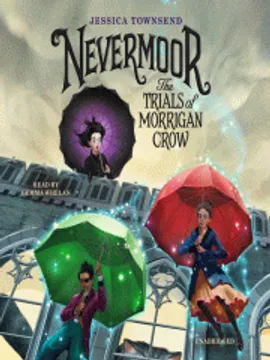


Plot Summary
Prologue
Before Morrigan’s story begins, reporters gather outside Crow Manor for the burial of Corvus Crow’s daughter. The chancellor announces that she is dead and that the danger surrounding her has passed.
The statement sounds like a family’s grief made useful for politics, but its certainty is premature: Morrigan is still alive, and the forces that pursued her have not been defeated.
The opening places public certainty against private reality. Corvus uses official language to close the story of his daughter, presenting her death as both a personal loss and a civic relief. That performance anticipates the way Morrigan has been treated throughout her childhood: other people turn her into an explanation for misfortune, then mistake their explanation for truth. The report also creates dramatic irony. Readers know the funeral is not the end, so Corvus’s confidence feels less like mourning than an attempt to control what the community believes.
A Childhood Measured in Disasters
Morrigan Crow is blamed whenever something goes wrong in Jackalfax, from a dead kitchen cat to storms, accidents, and an old gardener’s death. At monthly meetings, caseworkers catalogue compensation claims and apology letters, while Morrigan’s father, Chancellor Corvus Crow, accepts some accusations and dismisses others as political nuisances.
The pattern teaches Morrigan to expect suspicion even when she has done nothing. Worse, Corvus ends her education because she is supposedly destined to die at Eventide, the final night of the Age.
With her eleventh birthday approaching, Morrigan asks to attend Bid Day, where children receive offers for their futures. Her family refuses at first, then agrees when Corvus’s assistants see a chance for favorable publicity.
Morrigan’s supposed curse operates first as a social arrangement, not a supernatural fact: adults turn coincidence into blame, and the resulting shame makes her police herself. Corvus’s refusal to educate her is especially damaging because it converts a prediction into a policy. Her request to attend Bid Day is therefore more than a childish bid for entertainment. She is asking to be included in a future that everyone around her has already withdrawn.
Four Bids at Eventide
At the ceremony, Morrigan watches other children accept offers until an anonymous bid is read in her name. Three more follow, including one from Jupiter North of the Wundrous Society. In a private interview, Ezra Squall’s assistant, Mr Jones, offers her an apprenticeship and a future as Squall’s heir, but disappears before Morrigan can understand why.
Corvus calls the bids a prank and tears up the letters. That night, Morrigan finds a genuine Wundrous Society invitation and signs its magical contract, though she believes the opportunity cannot be real. Then the Skyfaced Clock turns black years earlier than expected. Eventide has begun, and Morrigan’s supposed death is only hours away.
The bids briefly give Morrigan what her home has denied her: evidence that someone might want her future. Their uncertainty makes the offer emotionally potent, not merely prestigious. The clock’s sudden turn then collapses the difference between political forecast and bodily threat. Morrigan has been taught to live as if her future is already settled; the unexpected deadline makes that lesson terrifyingly immediate.
The Clock Opens
On Eventide night, Morrigan’s family eats a tense birthday dinner, and her stepmother, Ivy, announces that she is expecting a child. Jupiter arrives before midnight with Morrigan’s signed contract and insists that she can choose to live. He uses silver dust to make her family believe a fallen curtain is Morrigan’s body, then leads her upstairs as the Hunt of Smoke and Shadow races toward the manor.
The hunters pursue Morrigan, not her family. She and Jupiter leap into Octavia, his brass, eight-legged machine, and flee through the Skyfaced Clock while the Hunt climbs after them. On the far side, Jupiter talks his way past a bewildered border guard and carries Morrigan into Nevermoor, a city she never knew existed.
Jupiter’s rescue turns a choice Morrigan has never been allowed to make into the center of the story: whether she wants to live. His trick with the curtain protects her family by leaving them a believable death to mourn, while also exposing how easily they accept her absence. The leap through the clock makes escape literal, but it does not erase the fear she has carried. Morrigan reaches safety still unsure whether she has escaped a curse or merely changed its setting.
A Hotel That Changes
Jupiter takes Morrigan to the Hotel Deucalion, his grand, eccentric home, where the staff include a talking cat named Fenestra, a courteous concierge named Kedgeree, and a vampire dwarf called Frank.
On the New Age morning, Morrigan joins the hotel’s umbrella-jump tradition and lands safely, her first physical proof that life may hold more than dread. Her room begins changing around her, seeming to welcome her. Yet a Wunderground train derails and the hotel’s chandelier crashes, renewing her fear that she brings catastrophe wherever she goes.
Mr Jones later confirms that Squall’s apprenticeship offer was genuine and notices the chandelier regrowing. Jupiter explains that Morrigan must pass four trials to enter the Society, but will not tell her what her own knack is.
The Deucalion gives Morrigan care in forms she can touch: a room that adapts, a staff that includes her, and a birthday gift chosen for her safety. Her instinct is still to interpret every accident as evidence against herself. The growing chandelier quietly challenges that habit: damage here can become change rather than proof of permanent ruin. Jupiter’s refusal to explain her knack complicates the refuge, because belonging arrives alongside a test she cannot yet understand.
The Welcome Is a Test
At the Wundrous Welcome, Morrigan meets candidates whose talents and confidence make her feel out of place. When Noelle Devereaux mocks Anah, a gentle girl raised by nuns, Morrigan intervenes. Hawthorne Swift, a dragonrider and gleeful prankster, helps Morrigan drop a barrel of toads onto the garden party, and the two begin to trust each other.
Their new friendship is tested when Inspector Flintlock arrives at the Deucalion demanding Morrigan’s citizenship papers. Jupiter uses Society law to protect her during the trials, but Flintlock warns that failure will leave her vulnerable to deportation. Morrigan now has a reason to fear losing beyond the Society’s approval: if she is sent back to the Republic, the Hunt may find her again.
Morrigan’s defense of Anah is a small but decisive shift from self-protection to solidarity. The toad prank gives her a peer who enjoys her company without treating her as dangerous or pitiable. Flintlock turns the competition into a legal lifeline: each trial is also a temporary shield. The stakes therefore bind personal belonging to bodily safety, making even friendship feel precarious.
The Book Demands Truth
For the Book Trial, candidates first face exam booklets that expose dishonest answers by burning their pages. Morrigan passes only after admitting that she wants people to like her and fears being forgotten by a family that might prefer she had never existed. The oral test is no easier: the Elders reject factual answers to questions about Nevermoor and reward her when she reasons through their strange, figurative logic.
Morrigan advances, but the trial leaves her thinking about how little she knows of herself. During the months before the next test, she studies with Hawthorne and grows more at home in the Deucalion. Jupiter remains frequently absent, while his nephew Jack returns from school and treats Morrigan with suspicion.
The Book Trial distinguishes factual knowledge from self-knowledge. Morrigan can study the history of Nevermoor, but the booklet will not accept achievement as a substitute for the fear she actually carries. Her answer about being forgotten names the wound beneath her wish for status: she wants a community that will remember her because it chooses to keep her. Passing does not remove that fear, but it makes honesty part of her competence.
The Chase Turns Back
For the Chase Trial, Jupiter chooses Fenestra as Morrigan’s steed. Fen ignores his safer route and races toward the gold targets at Courage Square, where a rhinoceros throws its rider, Cadence Blackburn, into the path of the competitors.
Morrigan makes Fen turn back to rescue Cadence, sacrificing their lead. Cadence later claims the winning target, leaving Morrigan without the gold invitation. Noelle, meanwhile, has been tipped off by her patron, Baz Charlton, about a hidden target.
Morrigan appears to have failed until officials discover that a supposed unicorn was actually a Pegasus in disguise, breaking the rules. Its disqualification opens a place for Morrigan in the next trial. Flintlock arrives to demand her papers, but Society law still protects her.
The Chase makes the Society’s stated virtues collide. Morrigan’s decision to rescue Cadence costs her the advantage she has been told to pursue, while the officials initially reward the person positioned to claim the target. The later disqualification gives Morrigan another chance, but it does not make the contest feel just. Noelle’s inside information further shows how privilege can disguise itself as talent. Morrigan advances through both judgment and chance, without being able to control either.
Two Frights, One Secret
On Hallowmas, the Fright Trial begins when witches of Coven Thirteen separate Morrigan and Hawthorne from the Black Parade. They face a cemetery crowded with rising corpses, find one another, and follow clues from a candle-bearing angel to an open grave that drops them into the Wundrous Society gardens.
There, Morrigan chooses the pond candle while Hawthorne chooses another route; Cadence shoves Morrigan into the water. Morrigan emerges alone in a dark street and sees the Hunt closing around her.
Remembering Mr Jones’s explanation that shadows seek darkness, she climbs toward the light and reaches the parade again. The witches reappear to confirm that both friends have passed. Afterward, Morrigan learns that Ezra Squall is Mr Jones’s employer, and a portrait makes her suspect she has met Squall himself.
The trial weaponizes Morrigan’s oldest fear by making the Hunt appear again, but survival now depends on applying knowledge rather than waiting for rescue. Mr Jones’s earlier account of shadows becomes a practical tool, linking his apparently harmless visit to the moment Morrigan needs it. Cadence’s shove keeps her morally difficult to read. The trial rewards courage, but leaves Morrigan with a new danger: the man who offered her an apprenticeship may be tied to Nevermoor’s buried history.
Home Through the Gossamer
As Christmas approaches, Morrigan’s fear of the Show Trial grows, and she asks Jupiter to take her home. He brings her through the secret Gossamer Line, which lets their consciousness visit Jackalfax while their bodies remain in Nevermoor. Morrigan sees Ivy, Corvus, and their twin infant sons, then finds her portrait among the dead Crows.
Her grandmother, Ornella, recognizes Morrigan and warns that the Hunt will return. Corvus cannot see his daughter and is more concerned that the family never speak of the Hunt. Jupiter reveals that he had trusted Ornella with Morrigan’s contract before Eventide. Back in Nevermoor, Dame Chanda gives Morrigan a portrait of Ezra Squall, confirming that it is the same man she knew as Mr Jones.
The visit offers no simple homecoming. Morrigan sees that her family has continued without her, while her grandmother’s recognition confirms that someone knew the truth and chose to help. Corvus’s refusal to acknowledge the Hunt shows that political respectability still governs what he can admit. The portrait of Squall converts a vague suspicion into a personal threat. Morrigan is caught between the home that erased her and a new home whose dangers she has not fully disclosed.
A Gift Without a Knack
At the Show Trial, Hawthorne’s dragonriding earns him the top rank, while Noelle’s singing and Cadence’s ability to make people forget her actions also impress the judges. Jupiter returns for Morrigan’s turn but tells her she has no ordinary knack.
He then touches foreheads with the Elders, letting them see the gathering Wunder around her. They place Morrigan first, but demand nine signatories to a safeguard pact before confirming her membership. Jupiter has seven; Elder Quinn agrees to become the eighth.
Baz Charlton and Inspector Flintlock try to have Morrigan arrested once the trials end. Cadence makes them believe a troll-fight poster is Morrigan’s citizenship document, sending the officers away. On the journey back, the Hunt attacks the stopped Wunderground train and carries Morrigan off.
Morrigan’s success overturns the assumption that the Show Trial is a straightforward demonstration of talent. Her power is visible to the Elders, but visibility brings regulation before it brings acceptance. The safeguard pact frames her as a danger the institution must contain, even as it grants her a place. Cadence’s intervention offers a sharp counterpoint: the girl whose knack hides her from memory uses it to protect someone who remembers her.
Squall Claims His Heir
Morrigan wakes at the Gossamer Line platform beside Mr Jones, who reveals himself as Ezra Squall, the feared Wundersmith. He admits that the Hunt was meant to herd Eventide-born children, not kill Morrigan immediately, and that he caused the Wunderground disasters while finding a way to seize her.
Through the Gossamer, he takes her to Crow Manor and reveals that the curse was a lie designed to eliminate children who might draw Wunder away from him. Squall calls Morrigan a Wundersmith and tries to teach her by setting an illusion of her family’s home ablaze.
When the Hunt closes around the Crows, Morrigan releases a burst of golden light that extinguishes the fire and drives the hunters away. She escapes by picturing her umbrella on the Nevermoor platform.
Squall’s revelation reorders Morrigan’s childhood without absolving the people who blamed her. The curse was manufactured, but its social consequences were real: her family and community accepted it because it explained their fear and protected their interests. Squall presents power as inheritance and obedience, using her family as leverage. Morrigan’s light is the first answer she gives that belongs to her alone. It does not settle what she is, but it rejects Squall’s claim to decide what she will become.
The W Becomes Hers
Back at the Deucalion, Morrigan tells Jupiter what happened, and he confirms that she is a Wundersmith. He explains that Wundersmiths were once honored protectors before Squall turned the name into a warning.
Morrigan also learns that Jack is a Witness like Jupiter, and that his eye patch helps him filter what he sees. The other children on the Cursed Children’s Register are safe, Jupiter tells her, though he offers few details. He gives Morrigan her golden W pin before the inauguration, even though the safeguard pact still needs another signatory.
At the hotel, her friends and chosen family surround her. Morrigan accepts that Squall may return, but now faces that possibility as a member of the Society and a girl who can choose what her power means.
The ending answers the emotional question that began with Morrigan’s isolation: she is not required to earn affection by becoming useful, because the Deucalion’s people already care for her. The pin marks institutional belonging, but Jupiter’s explanation gives her a more difficult inheritance: a power whose name has been damaged by one person’s crimes. By separating identity from destiny, the resolution does not promise safety. It gives Morrigan the agency to meet danger without accepting Squall’s definition of her.
Analysis
Nevermoor builds its central conflict around a child who has been taught to mistake other people’s fear for evidence about herself. Morrigan begins by accepting responsibility for disasters she did not cause, because adults have made blame the most stable fact in her life. The supposed curse is therefore more than a fantasy premise: it is a system that distributes fear downward, allowing families, officials, and institutions to avoid examining their own choices.
The trials make this structure visible in miniature. They promise membership to children with unusual gifts, but the competition also rewards access, strategic advantage, and the ability to perform under scrutiny. Morrigan’s moral decisions matter precisely because the tests do not reliably measure goodness. She loses an apparent victory when she turns back to save Cadence, and later succeeds only after the Elders witness something they cannot easily classify. The book asks whether an institution can recognize a person without reducing her to her gift.
The Deucalion offers an alternative model of belonging. Its rooms change around Morrigan, and its residents accept her through ordinary acts of food, teasing, protection, and celebration. That chosen household does not erase the damage of Crow Manor, but it gives Morrigan experiences against which she can measure her old beliefs. She begins to act from attachment rather than from the expectation of being blamed.
Squall’s revelation makes the conflict more dangerous, not simpler. The curse was fabricated, yet the prejudice it produced was real; Morrigan’s power is extraordinary, yet it cannot determine whether she will become cruel. By ending with a golden pin and an unresolved threat, the story refuses a false cure. Morrigan gains a home and a new name for her capacity, but her essential task remains ethical: to choose what her power will mean before someone else chooses for her.
Review Summary
Nevermoor: The Trials of Morrigan Crow is widely praised as a delightful, magical middle-grade fantasy. Readers love the whimsical world-building, charming characters, and engaging plot. Many compare it favorably to Harry Potter while noting its unique qualities. The story follows Morrigan, a cursed child who must complete trials to join a magical society. Reviewers highlight the book's humor, creativity, and positive messages about friendship and self-belief. While some found it predictable or derivative, most consider it a captivating start to a promising series.
People Also Read
Characters
Morrigan Crow
The blamed outsiderMorrigan is a sharp-eyed, wary girl raised to believe that her birth makes her dangerous and that she will die at eleven. Years of being blamed have made her cautious, sarcastic, and quick to assume she has caused harm, but she also notices unfairness and acts when someone else is being targeted. Her deepest wish is not wealth or distinction but a place where people will keep choosing her. As she enters unfamiliar trials and relationships, she begins to test the difference between what others say she is and what she actually does.
Jupiter North
The daring patronJupiter is Morrigan’s patron, an explorer and hotelier whose extravagance conceals careful judgment. He rescues her from the Hunt and brings her to Nevermoor, then commits himself to guiding her through the Wundrous Society trials. His warmth is genuine, but his instinct to keep difficult information from Morrigan creates mistrust as often as it protects her. Jupiter believes people must be seen as more than their gifts, and his care for the Society’s family bonds reveals a private tenderness beneath his adventurous reputation.
Hawthorne Swift
The fearless friendHawthorne is Morrigan’s first close friend in Nevermoor, a lanky boy with a talent for mischief and a deep love of dragons. He approaches friendship without treating it as a bargain, which matters to a girl accustomed to being feared or avoided. His jokes and pranks can be reckless, but his courage becomes unmistakable when danger arrives. Hawthorne offers Morrigan companionship without demanding that she first prove her worth, and their loyalty gives both children a steadier footing in the competitive trials.
Jack Korrapati
The guarded nephewJack is Jupiter’s nephew, a serious student at Graysmark School whose sharp tongue and eye patch make him difficult for Morrigan to read. He dislikes intrusion and tends to meet curiosity with irritation, particularly when Morrigan challenges his routines. Beneath his prickliness is a young person managing an unusual way of perceiving the world and the strain it creates. His guardedness echoes Morrigan’s own defenses, though neither initially knows how to approach that resemblance.
Corvus Crow
The distant fatherCorvus is Great Wolfacre’s chancellor and Morrigan’s father. He is preoccupied with public standing, political advantage, and the practical burden of her alleged curse. Rather than offer his daughter reassurance, he treats her expected death as a fact around which the family must organize itself. His formality protects him from emotional uncertainty, but it also leaves Morrigan to interpret his silence as rejection.
Ivy Crow
The polished stepmotherIvy is Corvus’s younger, sunny, socially polished wife. Her tastes and manner contrast with the austere Crow household, and she often speaks to Morrigan as if the child were an inconvenience. Ivy cares about appearances and domestic comfort, but she does not understand how her casual remarks reinforce Morrigan’s exclusion.
Ornella Crow
The severe grandmotherOrnella is Morrigan’s formidable grandmother, a woman of rigid manners and cutting judgment. Her severity is not simple cruelty: she can recognize the absurdity of family behavior and occasionally defend Morrigan when others refuse to see the child’s feelings. Ornella is closely tied to Crow family history and its silences, making her both an intimidating presence and a source of unexpected knowledge.
Fenestra
The formidable housekeeperFenestra is a huge, talking Magnificat who runs housekeeping at the Deucalion. Blunt, territorial, and prone to threats involving sardines, she initially seems as likely to frighten Morrigan as to help her. Her fierce loyalty to Jupiter and the hotel gradually makes her a dependable protector. Fenestra expresses affection in practical, unsentimental ways, often standing between danger and the people she considers hers.
Cadence Blackburn
The hard-to-remember rivalCadence is a candidate whose flat manner and shifting loyalties make her hard to place. She can be spiteful, strategic, and unexpectedly helpful, while others often fail to remember her once she has left the room. Her actions raise questions about the difference between being overlooked and choosing to disappear. Morrigan’s insistence on remembering her becomes significant to the way Cadence understands herself.
Noelle Devereaux
The favored competitorNoelle is a poised, popular candidate with a remarkable singing voice and an instinct for social dominance. She uses charm and ridicule to keep other children below her, especially those who lack status or confidence. Her ease in elite settings reflects the advantages given to polished performers, while her competitiveness makes her attentive to rank and recognition.
Ezra Squall
The powerful industrialistEzra Squall is the elusive head of Squall Industries, the Republic’s dominant supplier of Wunder and its many uses. His influence reaches into ordinary life through energy, transport, manufacturing, and technology, giving him a power few public figures can match. He is rarely seen directly, and those who speak of him often do so with reverence or unease. His interest in Morrigan begins with an extraordinary offer whose purpose is not immediately clear.
Mr Jones
Squall’s quiet envoyMr Jones is Ezra Squall’s polished assistant, a precise and private man who speaks on his employer’s behalf. His offer to Morrigan is unusually generous, and his appearances in Nevermoor leave her uncertain about his motives and his access to the city. He carries himself with controlled restraint, but brief moments of fascination suggest that his relationship to Squall is more complicated than ordinary employment.
Dame Chanda Kali
The celebrated sopranoDame Chanda is a celebrated opera singer and member of the Wundrous Society who lives at the Deucalion. Her commanding artistry draws animals as well as human admirers, and her elegance can make Morrigan feel out of place. Chanda is also perceptive and generous, offering guidance without mistaking kindness for fragility. Her knowledge of Nevermoor’s history helps Morrigan interpret the frightening stories surrounding the Society.
Kedgeree Burns
The hotel’s steady conciergeKedgeree is the Deucalion’s elderly concierge, a patient, observant man who knows the hotel’s endless corridors and its residents. His humor softens the hotel’s oddities, while his loyalty gives its staff a sense of family. He understands Nevermoor’s traditions and history, though he sometimes chooses reassurance over the full truth.
Martha
The kind housemaidMartha is a capable young housemaid at the Deucalion. She welcomes Morrigan with small, practical kindnesses, including food, guidance, and reassurance. Her growing closeness with the chauffeur Charlie adds a gentle romantic thread to the hotel’s busy life.
Charlie McAlister
The hotel chauffeurCharlie is the Deucalion’s chauffeur and a steady presence in its daily operations. He is often called on when Jupiter must travel, and his affection for Martha is quietly apparent to nearly everyone around them.
Inspector Harold Flintlock
The hostile border officerFlintlock is a Nevermoor police inspector who believes strict borders protect the city from outsiders. He treats Morrigan’s uncertain citizenship as an opportunity to enforce his authority and uses openly contemptuous language about refugees. His pursuit turns the trials into a legal contest as well as a test of talent.
Elder Gregoria Quinn
The sharp-eyed judgeElder Quinn is a senior member of the Wundrous Society’s ruling council. Small, stubborn, and intellectually nimble, she tests candidates through questions that reward judgment rather than memorization. She takes the Society’s traditions seriously, but she is capable of acting independently when a candidate’s unusual circumstances demand more than routine procedure.
Baz Charlton
The opportunistic patronBaz Charlton is a patron who enters many candidates into the trials, hoping that one will succeed. Loud, self-satisfied, and dismissive of Morrigan, he treats the competition as a game of advantage. His approach contrasts with Jupiter’s more personal investment in the children he sponsors.
Nancy Dawson
Hawthorne’s dragonriding patronNancy Dawson, known as Nan, is a former champion dragonrider who now coaches young competitors. Her engineered wooden leg reflects both a serious injury and her determination to remain in the sport. She is frank, warm, and deeply proud of Hawthorne’s abilities.
Frank
The dramatic party plannerFrank is a vampire dwarf who plans parties at the Deucalion and takes great pride in his theatrical instincts. Moody, vain, and fond of frightening performances, he also contributes to the hotel’s exuberant sense of celebration.
Anah
The gentle candidateAnah is a shy candidate raised among the Sisters of Serenity. Noelle’s teasing makes her a target at the Wundrous Welcome, and Morrigan’s decision to defend her reveals a more generous, courageous side of Morrigan.
Plot Devices
Eventide and the curse
A deadline built from fearIn Morrigan’s home state, children born on Eventide are believed to die when they reach eleven. This belief shapes family decisions, public suspicion, and the monthly list of supposed disasters attributed to Morrigan. The approach of Eventide makes her birthday a countdown rather than a celebration. Later, the story reveals that the belief has been deliberately cultivated, turning an apparent supernatural fate into a tool for social control and energy protection.
The Wundrous Society trials
Belonging put to a testThe Book, Chase, Fright, and Show Trials decide which candidates may join the Wundrous Society. Each tests a different quality, including honesty, strategy, courage, and unusual ability. For Morrigan, they are both an education in Nevermoor and a way to remain legally protected from Inspector Flintlock. The trials expose unfairness as well as talent: candidates can receive secret advantages, be misjudged, or lose ground through choices that reveal their character.
The Gossamer
A hidden web between livesThe Gossamer is an invisible network that connects people, objects, places, and their histories. Jupiter’s Witness ability lets him perceive traces that others cannot, while the secret Gossamer Line allows consciousness to travel across realms without moving the body. The line lets Jupiter take Morrigan back to Jackalfax, but it also offers a route that can be exploited by someone with rare knowledge and power. Morrigan’s umbrella serves as an anchor that can guide her back to Nevermoor.
The Hall of Shadows
Fear made visibleThe locked Hall of Shadows magnifies hand-made silhouettes until they move and grow beyond their creators’ intentions. Morrigan and Hawthorne discover that their shadow figures can become frightening creatures, and one scene echoes the Hunt that pursued Morrigan. The room provides a supernatural rehearsal for the Fright Trial, while also foreshadowing how Morrigan’s imagination, fears, and unusual gifts may interact. Its illusions are not the same as the real Hunt, but Morrigan cannot initially know that distinction.
Wunder and the Wundersmith
Power with a contested meaningWunder is the force behind Nevermoor’s technology and the extraordinary talents of its people. The title Wundersmith carries a history that has been distorted by Ezra Squall’s actions and the legends built around him. Morrigan’s connection to Wunder becomes visible during the Show Trial, but the story insists that the power itself does not dictate her moral character. Her confrontation with Squall makes that distinction urgent: she must decide whether power means domination, danger, or something she can shape for herself.
Download PDF
Download EPUB
.epub digital book format is ideal for reading ebooks on phones, tablets, and e-readers.








