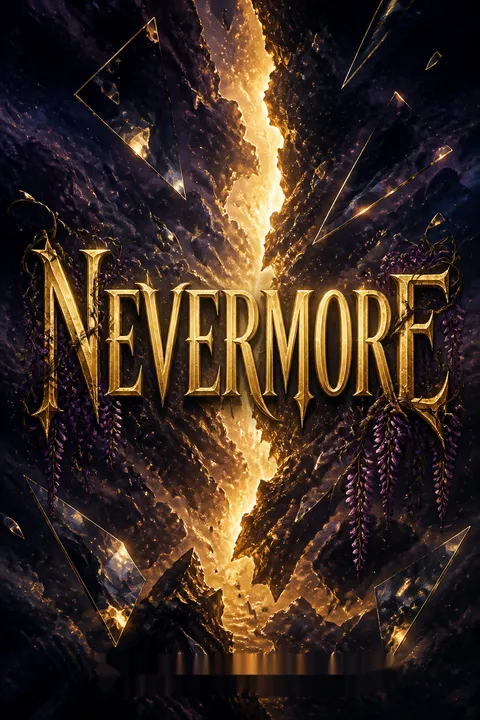


Plot Summary
Prologue
Six years before the main story, Paesha stands outside the room of three-year-old Quill, resisting the urge to comfort the abandoned child. Paesha fears the Maestro, the crime lord who could use affection as leverage, and has sworn not to let herself become Quill’s mother.
But the child’s sobs reopen Paesha’s own memories of being left alone on Requiem’s streets. She enters, sits beside Quill, and recognizes their shared loneliness. By choosing to care for her despite the danger, Paesha creates a bond that will later pull her across worlds.
The prologue makes care an act of risk rather than instinctive sweetness. Paesha understands the Maestro’s power because she has survived his bargains, so keeping distance from Quill is rational self-protection. Yet the child’s distress makes that calculation resemble the abandonment Paesha herself endured. Entering the room does not erase the danger; it makes her responsible to someone vulnerable. That choice gives the later fantasy crisis an intimate measure: saving the realms matters because Quill is among the people Paesha refuses to abandon.
Seventy-Five Days
Years after Ezra’s murder, Paesha finds him again in Death’s Court, but reunion cannot quiet her dread for Quill, the child she left in Requiem. A portal briefly shows Quill crying in her room, and the goddess Ro explains that the girl is a Fera whose power bears and can manipulate emotion. If Quill’s grief grows unchecked, it may bring down her world and others.
The supreme god Reverius refuses to send Paesha directly home, instead offering a route through Wisteria and the city of Stirling. Paesha accepts his bargain without hearing all its terms: she has seventy-five days to reach Quill or lose her memories and remain trapped. The portal takes her before she can reconsider.
The inciting bargain turns a private attachment into a cosmic obligation, but it also exploits Paesha’s deepest fear: repeating abandonment. Reverius makes the deadline sound like a route to rescue while structuring it as a trap, so her consent is both deliberate and compromised. Quill’s emotional power makes grief materially dangerous, yet the stakes are not abstract. Paesha has already learned that care creates vulnerability; now she must choose it under pressure. The story’s central conflict begins where love and coercion become difficult to separate.
The Story Thief
In Stirling, Paesha survives by stealing warmth, liquor, and anything else the unfamiliar city withholds. A street child offers directions to the Hollow in exchange for a story about love. As Paesha tries to recall Ezra, the memory disappears, leaving only the conviction that she has never loved anyone.
The boy knows her title, Huntress, though she has not shared it. Before she can question him, another child points her toward the route and the elusive Lord of the Salt. A masked Cimmerian then accuses her of theft and attacks her in an alley. Paesha gouges his eyes and, when he keeps coming, kills him with a stolen letter opener. Other guards knock her unconscious.
The first cost of Paesha’s journey is not bodily injury but a theft from her own identity. The missing love story leaves her able to act while severing her from the emotional history that explains her choices. Her killing of the guard also marks a sharp change in the rules she knows: in Requiem, Death alone takes lives, but Wisteria makes violence final. The street children establish a world where information itself is dangerous currency. Paesha’s skills keep her alive, yet her confidence in reading people cannot protect her from forces she does not recognize.
Atticus Sings Below
Paesha wakes chained in a hidden prison and hears a song from the cell of Atticus, an old man whose warning is to give the Cimmerians nothing. The guards whip her, stretch her on a rack, and demand a confession for the killing. Atticus endures punishment to draw them away from her.
When Archer and Harlow break into the tunnels with their powerful, silent companion Thorne, Paesha refuses to leave without the old man. She finds the keys and reaches Atticus, but he has died. The rescuers carry Paesha out through a concealed passage and give her clothes and a cloak. Atticus’s sacrifice changes her idea of courage: she leaves the prison grieving a stranger who chose to protect her.
The prison sequence overturns Paesha’s inherited model of heroism. She once imagined courage as force on a battlefield; Atticus shows it as the decision to absorb another person’s danger without certainty of reward. His song also gives suffering a form that is not submission. Paesha cannot repay him by saving him, which makes survival feel ethically complicated rather than triumphant. The rescuers offer physical escape, but the old man’s death becomes the first bond Paesha carries into Wisteria, foreshadowing how quickly her supposedly temporary passage will gather obligations.
The Tithe Marriage
Outside the prison, Paesha tries to reach the Hollow, but the king’s Tithe herds Silk and Salt alike into a square for taxes and punishment. Prince Farris mutilates a protester in public, then threatens Tilly Page, the keeper of an orphanage, over unpaid coin. A boy named Reuben produces stolen money that saves Tilly and the children.
When Paesha reaches the front, Thorne steps beside her and claims she is his wife, paying her tax and giving her the name Paesha Noctus. Farris accepts the explanation but orders guards to watch them. Thorne pulls Paesha away before she is seized again. She resents his command, yet follows him because the prince’s attention has made solitary survival impossible.
The false marriage is a practical rescue that immediately reproduces the power struggle Paesha distrusts. Thorne prevents Farris from taking her, but his solution publicly assigns her a role and a name without her consent. Paesha’s resistance matters because it distinguishes protection from ownership, even when she has few alternatives. The Tithe also reveals Stirling’s hierarchy as a machine, not merely a divide between rich and poor: the prince manufactures scarcity and then stages punishment as proof of authority. Tilly and Reuben’s brief intervention shows that the Salt are not simply victims; they protect one another through improvised acts of risk.
The Paramour’s Dance
At Thorne’s lavish home, Paesha discovers he cooks for himself, keeps secrets in a strange golden notebook, and knows more about her murder charge than he admits. He takes her to Lithe, a masked celebration in Serene’s temple, where naked dancers and watchful Cimmerians make her prison memories surge back. Serene selects Paesha as the king’s Paramour and uses divine desire to unsettle her.
During the revel, Paesha notices Harlow’s stolen bracelet fall near Farris’s guards. She hides it and distracts the prince by dancing with him, allowing Harlow to escape suspicion. Thorne joins them and performs jealousy convincingly. Paesha leaves the temple with a new question: why do Thorne and his friends steal from the Silk?
Lithe converts performance, Paesha’s lifelong skill, into both defense and exposure. She can command attention, but Serene’s power makes attention invasive, pressing desire onto Paesha’s body without consent. The scene clarifies that performance is not automatically freedom: the same trained ability that lets Paesha redirect Farris also makes her useful to other people’s schemes. Her rescue of Harlow begins a reciprocal bond, not a calculated bargain. Meanwhile, the fabricated marriage becomes a public story that Thorne and Paesha must repeatedly sustain, creating intimacy through acting while leaving both uncertain where the act ends.
The Hollow’s Real Door
Harlow brings Paesha to the Hollow expecting a secret route, but the building is a shelter where Jasper feeds the Salt and children sleep safely. Paesha learns that Harlow and Archer belong to the Fray, a circle of wealthy Silk who steal from their own class to support the poor. Thorne leads the operation and is secretly the Lord of the Salt, the fugitive Farris publicly hunts.
He admits the danger of Paesha’s presence and offers her a choice: join the Fray or have her memories of them removed. Paesha refuses to give up her freedom, then joins anyway because she needs protection and a path toward her mission. Her practical bargain draws her into a community she had meant to leave behind.
The Hollow disappoints Paesha’s literal hope for a portal but gives her a more consequential discovery: a structure of mutual aid that resembles the chosen family she left in Requiem. The Fray complicates her belief that survival requires solitary calculation. Their disguises depend on class privilege, yet their resources are redirected toward people the kingdom treats as disposable. Thorne’s ultimatum echoes the coercive bargains Paesha has fled, but the group’s daily work gives her a reason to participate beyond self-interest. She still intends to leave; belonging begins before she is willing to name it.
Jasper’s Severed Bond
Farris hears that Reuben has magic and raids Tilly’s orphanage, killing Tilly when she tries to keep the boy from the Cimmerians. Harlow and Willard recover Reuben while Thorne draws the prince’s attention elsewhere. At the same time, Jasper is caught stealing vegetables to feed the Hollow. Farris drains Jasper’s magic in a public ceremony and brands him as a Cimmerian.
Jasper returns to the Hollow terrified that the bond will force him to betray the Fray, so the group removes his branded arm before it can take hold. Soon after, Farris raids the shelter. Brigid, a healer, is killed as the others flee. The Fray lose their home and another caretaker, and the children move into Thorne’s house.
These events show Farris’s rule operating through both spectacle and intimate terror. Magic is not merely a gift in Wisteria; it is a resource the prince can seize, and the Cimmerian mark turns forced service into a threat to every relationship. Jasper’s severed arm is a brutal attempt to preserve loyalty by sacrificing part of himself. The rescue of Reuben and the death of Brigid place care under military pressure: protecting a child does not guarantee a safe outcome. The Hollow’s destruction also makes the community portable, forcing the Fray to carry their social world into whatever shelter remains.
Alastor Names Her
The king disappears from a palace event, and the Fray suspect Farris has hidden him. At a meeting in the Hollow, Alastor, god of lost and broken things, rejects Thorne’s request for a trading alliance. He recognizes Paesha as the Huntress and tells her that her soul descends from two gods, not merely the bloodline she assumed.
He also says the paths lead toward the prince, leaving the warning unexplained. Paesha’s magic is eventually exposed when she senses Farris approaching the Hollow, but he turns away before arriving. She tells Thorne and Harlow that she can locate people and objects she has touched. Her gift now makes her useful to the Fray and more vulnerable to Farris’s tests.
Alastor’s refusal is not a simple denial of aid; his riddling attention redirects the group toward hidden causes and makes Paesha herself part of the mystery. His claim about her soul destabilizes the ordinary language of inheritance, separating magical identity from blood. Paesha’s disclosure of her tracking ability is a consequential choice because the power that helps locate the missing king also places her under suspicion. The scene’s competing forms of knowledge matter: Thorne reads political systems, Paesha reads traces and people, while Alastor withholds the terms that might connect them.
Fire Against Poison
Someone poisons Paesha, leaving her feverish and nearly unable to move. Archer and the others try to care for her, but Thorne returns and carries her to Alastor, who says a price is required. In her delirium, Paesha gives a weak assent while Thorne accepts a debt involving four broken souls.
Alastor’s blue fire tears the poison from her body, but it burns Thorne severely as he holds her through the ordeal and guides her back by a song and the memory of dance. Paesha survives; Thorne is left badly injured. When she wakes, she learns he refused to let go, but cannot yet know what his bargain means or why he would pay so much for her life.
The rescue makes care visible as bodily cost. Thorne’s choice is not a speech about devotion but the physical act of enduring the same supernatural fire that saves Paesha. Yet Alastor’s price prevents the moment from becoming uncomplicated romance: Paesha is alive, but her life has been folded into another bargain she did not knowingly negotiate. Music and dance, once Paesha’s escape from memory, become the means of keeping her conscious. The episode suggests that intimacy can stabilize a person without granting either partner full knowledge or control.
The Clockmaker’s Price
After the Fray shelters Stirling’s displaced children, Thorne angers Vesalia, Goddess of Time, by challenging her. She fills his home with multiplying clocks, then agrees to remove them only after he accepts a week in her hidden prison. Before that separation, Harlow and Archer reveal the history behind their conflict: when they were children, Farris took Harlow’s magic after Archer struck his carriage, and Archer has carried guilt ever since.
Paesha and Archer later enter Farris’s underground headquarters disguised as Cimmerians. They find notes and a map marking raids, recover information about the king’s search, and help rescue the tortured Tuck. Farris is stockpiling stolen magic without knowing how to transfer or wield it.
The clocks make time an active antagonist rather than a neutral measure. Paesha’s deadline is private, while Vesalia’s punishment traps Thorne for a week and visibly disrupts the Fray’s ability to protect the children. Harlow’s history reveals how Farris’s violence divides families by converting one child’s sacrifice into another’s lifelong guilt. The catacomb infiltration then adds political evidence: Farris’s program is not simply the suppression of magic, but an attempt to accumulate it. Paesha’s willingness to enter the prince’s machinery turns her from observer into participant, even as she continues hiding the reason she must get home.
The King’s Hidden Heirs
The Fray plan to find King Aldus by tracking the Cimmerians, while Paesha and Archer’s investigation suggests the king may be held beyond the palace. Harlow warns that the coming Hunt looks like a trap and refuses to risk Archer’s life. Their argument exposes a family secret: they are the king’s children, born from their mother’s hidden affair with him, and Archer wants recognition while Harlow fears Farris will kill them.
The siblings nevertheless ride after the Hunt with Paesha and Thorne. A map hidden in Farris’s camp points to the king’s tent, but the prisoner inside is Jasper, used as bait. Thorne cuts Jasper free and stays behind to fight the guards while Paesha is dragged away.
The Bramwell revelation changes the political stakes without erasing the siblings’ personal motives. Archer wants the king to acknowledge the family history; Harlow fears that recognition will expose them to Farris. Their disagreement is not courage against cowardice but two different calculations shaped by the same childhood loss. The Hunt turns their divided inheritance into a tactical danger, since Farris’s camp is designed to make the rescuers choose between evidence and people. Thorne’s decision to stay behind repeats Paesha’s own fear of abandonment, but now she is the one being carried away from someone she loves.
A Sister’s Last Choice
Paesha, Archer, and Harlow escape the Hunt with Jasper, and Thorne returns alive after fighting through the Cimmerians. They bring the real King Aldus back to Stirling. The rescue does not restore safety: during the struggle around the carriage, an attacker throws a dagger at Archer, and Harlow steps between them. The blade kills her.
Archer holds his twin as she dies, while Paesha and the Fray can only witness his grief. At Harlow’s funeral, King Aldus attends in secret, and Archer blames himself for her death. The Fray’s rescue has secured the monarch, but the cost is irreversible. Paesha sees another family broken by violence, while Archer loses the person who had anchored him since childhood.
Harlow’s death is not a random cost added to the climax; it completes the pattern of her life being shaped by other people’s dangers and expectations. She has repeatedly protected Archer, and in the final crisis she chooses to do so again, but the choice does not make her loss feel redemptive. The king’s rescue cannot compensate Archer for his twin. The funeral makes communal grief visible across class lines, while Archer’s self-blame shows how love can convert survival into perceived debt. Paesha recognizes this structure because she too carries responsibility for people she could not keep safe.
Names Beneath the Memories
After Harlow’s funeral, Paesha gives Alastor her name and sees a vision of Thorne mourning a woman called Winter, whose death left him shattered. She then gives King Aldus’s name and watches another life unfold: Paesha in a wedding gown, turning toward her beloved just before he stabs her in the back. The visions restore the love memory stolen when she first entered Stirling.
Paesha remembers Ezra Prophet, her former beloved, and confronts the Story Snatcher, who denies knowing her. Thorne arrives, but Alastor identifies him as Reverius, the Keeper of Memories and the god who made her original bargain. Paesha gives Alastor Reverius’s name as the next broken soul, and the Remnants pull her into another memory.
Alastor’s name ritual turns identity into evidence: each name opens a memory, but the resulting knowledge arrives through pain rather than explanation. Paesha’s recovered history destabilizes her present attraction to Thorne, whose resemblance to Ezra makes emotional recognition unreliable. The revelation that he is also Reverius reframes the original bargain as an intimacy built inside deliberate concealment. Yet the name system does not offer simple clarity; it exposes one truth while drawing Paesha deeper into the gods’ conflict. Memory here is not a stable archive but a power that can be withheld, stolen, and weaponized.
The Keeper’s Betrayal
In the next vision, Paesha sees herself accepting a proposal from Reverius before his twin brother appears and shoots at them. Back in the present, Vesalia insists that both brothers have manipulated her, while Reverius admits his love and his masks without explaining the betrayals.
Paesha rejects him and sees Archer, grieving Harlow, carrying a dagger toward Farris’s procession. She intercepts him before he can attack alone. Vesalia freezes the square and tells Paesha the path ends with Farris: the prince’s hoarded power is draining magic from the world.
Paesha realizes Farris’s power comes through his blood and that killing him may release what he stole. She persuades Archer to attack with her, not as a solitary act of revenge but as their last chance to stop the drain.
The revelation of Reverius’s identity makes romance and divine manipulation inseparable, but it does not settle whether his love is genuine. His admission arrives alongside the discovery that he has engineered Paesha’s consent and concealed crucial facts. Vesalia’s intervention is equally self-serving, offering a direction that may help Paesha while demanding power for herself. Paesha’s most consequential choice is to interrupt Archer’s revenge without dismissing his grief. She converts his impulse into a shared plan, reclaiming some agency in a story where gods have repeatedly decided what she is meant to do.
Power From the Prince
Paesha and Archer track Farris to a brothel, disguise themselves as drunken lovers, and slip past his guards. Archer disables the woman with the prince, while Paesha drives an obsidian dagger into Farris’s chest. She then uses her tracking magic to draw the accumulated power from his blood, taking the magic he had stolen from Wisteria’s people.
The force overwhelms her, and it refuses to follow the route to Vesalia’s temple. Instead, it pulls her and Archer to the eastern edge of the city, where Paesha sees a translucent barrier that Archer cannot perceive. Vesalia appears and explains that it is the Veil separating Wisteria from Requiem. Paesha has not been trapped in another realm; home has been just beyond the barrier all along.
Farris’s death is both political action and a dangerous transfer of accumulated violence. Paesha kills the prince to release the magic he has hoarded, but the power enters her through the same act that ends his rule. The result is not immediate liberation; she must resist the magic’s pull and decide who will control it next. The Veil revelation also recasts the entire journey. Paesha’s apparent distance from Quill was maintained by a boundary she could not perceive, while the gods directed her toward it for their own purposes. Homecoming becomes physically possible just as its moral cost becomes hardest to bear.
The Veil Comes Down
Vesalia offers to take Farris’s power and open a passage for Paesha, but the magic inside her recognizes another trap. Archer trusts Paesha when she asks him to hold on, and she names herself as descended through both Alastor’s lost things and Irri’s broken things.
She unleashes the stolen power instead of handing it to the goddess. The force tears through the Veil, joining Wisteria and Requiem as pieces of the barrier fall between them. Paesha reaches the threshold between her worlds with Archer beside her, but Reverius and Vesalia disappear.
She refuses to pursue Thorne or accept the gods’ terms, ending the book armed with stolen magic and new Remnants that may be her own. Quill is within reach, but Paesha’s return and the power’s consequences remain unresolved.
Paesha’s final act refuses the binary the gods have imposed: surrender power to a deity or remain trapped. She uses the very force Farris accumulated to destroy the barrier that made her dependent on divine permission. This is liberation with no guarantee of safety, since the power now behaves as part of her and the worlds have collided. Archer’s presence matters because he trusts her without demanding that she make her choice legible first. The ending resolves the physical separation from home while withholding emotional restoration; Paesha can reach Quill, but she leaves Wisteria carrying rage, grief, and an altered self.
Epilogue
Reverius lies imprisoned, unable to move while his thoughts return to Paesha’s rejection. He recalls the trust he cultivated and the affection that grew between them, but interprets her refusal as an injury to avenge rather than a consequence of his deception.
He vows to escape and hunt her, imagining that he can still reclaim the bond he helped create. The final image turns the romance into a threat: the Keeper of Memories is trapped for now, but his fixation survives, and Paesha’s passage home has not ended the danger between them.
The epilogue denies a clean romantic resolution by giving Reverius the last perspective. His grief is real, but he converts it into entitlement: because he remembers intimacy, he treats Paesha’s autonomy as something he can recover by force. The prison reverses their earlier imbalance without making him repentant. He remains dangerous precisely because he can narrate manipulation as love and vengeance as restoration. His threat also preserves the duology’s forward tension. Paesha has broken the Veil, but crossing home has not ended the conflict with the god who shaped her journey.
Analysis
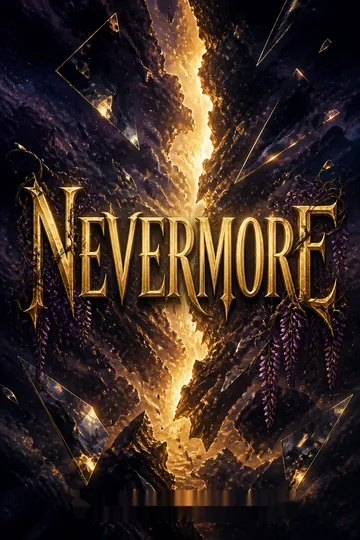
Nevermore makes memory a contested form of property. Paesha’s love for Ezra is stolen by the Story Snatcher, her origin is concealed by Reverius, and Alastor’s Remnants force the past back into her body through visions. These events do not treat memory as a neutral record. What Paesha remembers determines whom she trusts, what she owes, and whether she can act freely. Her struggle is therefore not simply to recover facts, but to regain authority over the meanings attached to them.
The novel also distinguishes care from control through repeated bargains. Paesha’s promise to Quill begins as a freely chosen responsibility, but gods convert it into deadlines and costs. Thorne’s protection can be generous and still rest on concealed knowledge; Farris’s protection of the monarchy becomes violent possession. Against these forms of authority, the Fray build practical solidarity: food, shelter, medical care, and shared danger. Their work suggests that political resistance is not only the overthrow of a ruler, but the daily refusal to let vulnerable people become disposable.
Paesha’s emotional arc moves from defensive isolation toward attachment, then through betrayal into self-directed action. She does not become brave by ceasing to fear loss. She becomes more capable of acting while grief and uncertainty remain present. The ending refuses the comfort of a restored romance or a settled homecoming. Paesha breaks the Veil with power she cannot fully govern, reaches the threshold of Requiem, and rejects the gods’ claim to direct her. Freedom arrives as a dangerous choice rather than a safe conclusion. The book’s sharpest insight is that consent cannot be separated from knowledge: a choice made under hidden terms may look voluntary while still serving another person’s design.
Review Summary
Nevermore by Miranda Lyn receives high praise from readers, with an average rating of 4.37 out of 5. Reviewers commend the captivating world-building, complex characters, and intense slow-burn romance. The book features a strong female protagonist, Paesha, navigating a new realm after making a deal with gods. Readers appreciate the banter, found family elements, and unexpected plot twists. While some found the pacing inconsistent and world-building confusing, most eagerly anticipate the sequel, Evermore, to conclude Paesha's story.
People Also Read

Characters
Paesha Vox
The defiant HuntressPaesha is a street-raised thief, dancer, and tracker whose instincts were shaped by hunger, exploitation, and survival. She protects her independence because past bargains taught her that affection can be turned into leverage. Her bond with Quill gives her a reason to accept dangerous obligations, while her growing ties to the Fray challenge her belief that she must face every threat alone. Paesha’s sharp humor and talent for performance let her navigate class and power, but her deepest struggle is deciding when self-protection becomes another form of abandonment. She is capable of tenderness and violence, and increasingly refuses to let gods or lovers define which one she must be.
Thorne Noctus
The guarded Lord of SaltThorne is a wealthy, disciplined man whose public composure hides a life organized around secrecy, study, and responsibility for Stirling’s poor. He cooks for himself, keeps meticulous records, and expresses care through practical acts, from supplying food to tending Paesha after nightmares. His attraction to Paesha unsettles his reliance on control, while his leadership makes him wary of choices that could endanger the Fray. Thorne’s past grief informs his reluctance to risk intimacy, but he is also drawn to Paesha’s refusal to be managed. His polished manners and dry humor make him difficult to read, even when his actions reveal loyalty.
Quill
The vulnerable FeraQuill is the child Paesha took into her care after finding her abandoned. Her empathy is unusually powerful: she can bear other people’s emotions and, at greater strength, manipulate them. She gives Paesha a daily reason to protect someone beyond herself, while also reflecting the loneliness and neglect that shaped Paesha’s childhood. Quill’s innocence is not ignorance; she notices patterns in adults and knows when Paesha’s refusal hides affection. Her bond with Paesha makes the danger of abandonment personal, even as her power places immense pressure on the worlds around her.
Archer Bramwell
The daring Fray thiefArcher is Harlow’s twin and one of Thorne’s closest allies in the Fray. Quick with a coin, a joke, or a break-in, he uses charm to disguise how deeply he feels responsible for his sister and their shared history. His magic can accelerate healing, a gift he finds difficult to use because of what it cost Harlow. Archer wants to act rather than wait for permission, which makes him brave and dangerous in equal measure. He responds to Paesha as a friend and teammate, valuing her ability to notice what others miss while refusing to treat her as a helpless outsider.
Harlow Bramwell
The sharp Fray bladeHarlow is Archer’s twin, a skilled thief and organizer who moves comfortably between Silk society and the Salt community. Her polished appearance conceals a practical, lethal competence and a long history of putting other people’s needs before her own. Farris’s violence shaped her relationship to power, family, and risk, while her attachment to Willard complicates her determination to make independent choices. Harlow is both protective and perceptive; she often sees danger before Archer does, but her loyalty can keep her in relationships that diminish her. Her friendship with Paesha grows through shared work, candid observation, and mutual respect.
Alastor Erevar
The god of lost thingsAlastor is an ancient god whose influence reaches through the black market called the Vale. He is drawn to what has been discarded, whether objects, memories, or people, and he treats information as a kind of power. His dealings with Thorne are shaped by old grievances, while his interest in Paesha suggests a personal connection he reveals only in fragments. Alastor can save a life and still impose a dangerous debt, making gratitude difficult to separate from obligation. He enjoys riddles, keeps his motives close, and expects mortals to understand the cost of asking him for help.
Prince Farris
The magic-hoarding princeFarris rules through spectacle, surveillance, and punishment, making public cruelty a warning to anyone who might resist. He uses the Cimmerians to test and capture magic users, then takes their power while presenting his actions as justice. His ambition is joined to a hunger for control that reaches beyond ordinary succession politics. Farris is skilled at turning fear into performance: he can appear charming at a feast and monstrous in a square without treating either face as false. His rule forces the Fray to balance resistance against the danger of exposing everyone they shelter.
King Aldus Wendale
The withdrawn monarchAldus is a gentle, courteous king whose warmth contrasts with the cruelty spreading through his kingdom. He dislikes court spectacle and has allowed himself to be isolated from ordinary life, leaving others to suffer in the gap between his authority and his action. His private grief has shaped his judgment and his family, though he rarely speaks plainly about it. Paesha encounters him first as a considerate dance partner, then as a vulnerable man whose people have continued to fight for him even when he has stopped fighting effectively for them.
Ezra Prophet
Paesha’s remembered belovedEzra is the man Paesha loved before her arrival in Wisteria, and his murder left a lasting wound in her life. Her memories of him are initially obscured, so the love she felt is present as grief before it is present as a story. Paesha remembers him as familiar, tender, and deeply connected to her early adulthood. His place in her history complicates her growing attachment to Thorne, because recovered memory changes the meaning of what she believes she has chosen.
Reverius
The Keeper of MemoriesReverius is the supreme keeper of realms and memories, an authority who speaks in carefully controlled terms and binds Paesha to a deadline. He sees the collapse of worlds as a problem to be managed through bargains, even when the mortal paying the price has little chance to understand the conditions. His power over memory makes him uniquely dangerous: he can shape not only what people know, but the emotional evidence by which they judge their past. Reverius’s connection to Paesha is rooted in a history he conceals, and his idea of devotion repeatedly collides with her need for autonomy.
Vesalia
The exacting time goddessVesalia governs time and treats it as both a domain and a means of leverage. She can freeze a crowded room, impose a personal cost, and speak about fate with unsettling confidence. Her apparent interest in Paesha mixes useful guidance with self-interest, leaving it unclear whether she is helping the Huntress or steering her toward a result. Vesalia’s clocks turn abstract deadlines into physical pressure, while her controlled demeanor suggests she prefers to make others feel the consequences of defying her.
Serene
The goddess of lustSerene rules the temple where Lithe is held and wields desire as a force that can overwhelm mortal judgment. She selects Paesha as the king’s Paramour, then watches how Paesha withstands her influence. Serene’s power is theatrical and intimate, turning a crowded celebration into a test of bodily autonomy. Her interest in the Fray and in Paesha is difficult to read, but she knows how to make attention feel at once flattering, coercive, and dangerous.
Jasper Boon
The one-armed cookJasper is the Hollow’s warm-hearted cook, a storyteller who makes scarce ingredients feed a crowded shelter. His clumsiness is comic, but his kindness is deliberate: he notices grief, teaches children, and keeps the work of feeding others from becoming merely grim. Jasper’s practical magic and loyalty put him at risk under Farris’s rule. He measures a good day less by safety than by whether the people around him have eaten, which makes him a quiet moral center for the Fray.
Atticus
The singing prisonerAtticus is an elderly prisoner whose song gives Paesha a fragile anchor during torture. He has endured the Cimmerians long enough to understand that silence can protect more than the speaker. His compassion emerges through action rather than reassurance, as he redirects punishment away from Paesha. Atticus’s connection to Tilly and the orphanage makes his imprisonment part of the wider cost of Farris’s rule.
Tilly Page
The orphanage keeperTilly runs an orphanage and treats the children’s safety as a duty that outweighs her comfort. At Tithe, she tries to pay what she can and protects the children from the prince’s collectors. Her courage is not grand or theatrical; it appears in the daily work of keeping a household together under a predatory system. The Salt remember her care and rally around the children who depended on her.
Reuben
The resourceful orphanReuben is a quick-thinking boy who uses stolen coins to save Tilly and the children during Tithe. His courage draws Farris’s attention when the prince learns he has magic. Though young and frightened, Reuben wants to help others and later offers to use his developing power to ease Jasper’s suffering. The adults’ efforts to protect him give the Fray’s struggle a concrete future to defend.
Willard
The Silk with divided loyaltiesWillard is a wealthy member of the Fray whose social standing helps the group move through Silk society. His relationship with Harlow is complicated by his desire for control and his concern about the risks she takes. He can be useful and dependable, but he sometimes mistakes his judgment for the right to decide for her. His position forces Harlow to distinguish protection from authority.
Tuck
The Fray’s steady driverTuck is Thorne’s trusted driver and a reliable source of reports about the streets, the Cimmerians, and the Fray’s movements. His broad, quiet presence makes him seem difficult to frighten, but his loyalty is tested when the Cimmerians capture and torture him. Tuck’s practical knowledge keeps the group connected to the city beyond their safe rooms and secret meetings.
Brigid
The Hollow’s healerBrigid treats the Salt in the Hollow and understands how quickly small injuries can become crises when supplies are scarce. Her calm medical work helps make the shelter more than a hiding place. She asks for practical help rather than attention and embodies the care network Thorne and the Fray are trying to preserve.
The Story Snatcher
The memory-taking childThe Story Snatcher appears as a street child who asks Paesha for a love story and takes the memory that gives it meaning. He presents himself as an ordinary guide, but knows details Paesha has not shared. His role makes stories and recollection tangible forms of power, and his childlike appearance complicates Paesha’s instinct to trust the young.
Ro
The Fera’s divine guideRo explains Quill’s rare emotional power and warns Paesha that the child’s grief could spread through the realms. Her obligations as a goddess limit her direct involvement, leaving Paesha to pursue the rescue herself.
Orin
Paesha’s loyal protectorOrin is Paesha’s close friend from Requiem, a steadfast presence who supports her through grief and danger. He remains part of the family she fears abandoning when she accepts Reverius’s bargain.
Deyanira
The marked Death MaidenDeyanira is a fierce ally in Death’s Court, marked by Death and quick to challenge those who threaten her friends. Her protectiveness makes her wary of Paesha’s dangerous bargain.
Thea and Elowen
Paesha’s chosen familyThea and Elowen are members of Paesha’s Requiem household who help care for Quill and form part of the chosen family Paesha leaves behind. Thea’s practical fighting knowledge and Elowen’s steady care are among the forms of support Paesha hopes will keep Quill safe until she returns.
Plot Devices
Reverius’s seventy-five-day bargain
A deadline with a memory costReverius allows Paesha to leave Death’s Court for Wisteria but gives her seventy-five days to reach Quill. If she fails, she will lose her memories and remain in the new world, while the realms face the consequences of Quill’s grief. The bargain also prevents Paesha from explaining where she came from or why she must return. It drives her urgency, isolates her from potential allies, and makes every delay feel both emotional and political.
The Veil
A barrier disguised as distancePaesha believes Wisteria is a separate world from Requiem, but the ending reveals that a magical Veil has been muting power and separating the two places. Its concealment makes her journey appear to require travel between realms, when home is physically close. The Veil is also a political mechanism: the power Farris hoards strains it, and Paesha’s use of that stolen magic finally breaks it. Its destruction brings the worlds together without resolving what that collision will mean.
The golden notebook
A private line through distanceThorne’s little gold notebook lets him and Paesha exchange written messages even when separated. Its mysterious magic becomes a source of practical communication during the rescue at the Hunt, where Thorne sends warnings by coded locations while Paesha searches for the king. It also gives their relationship a quieter register than their public marriage performance: teasing, care, and hesitation can appear on the page before either can say them aloud. When the notebook is stolen, Paesha loses a crucial link to the people trying to find her.
Names and Remnants
A debt paid in broken soulsAlastor’s Remnants respond to the names of broken souls and pull Paesha into memories connected to them. The power makes memory a physical threshold, revealing pieces of Paesha’s past while fulfilling a debt Thorne accepts to save her from poison. Paesha must identify four names, but her first guesses do not all qualify. Each encounter gives her information and exacts a cost, so the device joins the mystery of her identity to the danger of divine bargaining.
Stolen magic
Power becomes both weapon and burdenFarris takes magic from people he captures and stores the power without understanding how to use it. The Cimmerian brand makes the stolen power part of a system of forced obedience, while Jasper’s severed arm shows that the bond can sometimes be broken before it takes hold. After Farris’s death, Paesha draws the accumulated power into herself. It gives her the force to break the Veil, but its rage resists control and leaves her changed, making liberation inseparable from the danger of becoming what she opposes.
The Never Sky Series
About the Author

Download PDF
Download EPUB
.epub digital book format is ideal for reading ebooks on phones, tablets, and e-readers.








