

Plot Summary
A Letter Names the Ghost
Slate Ardoin has made a life in Marseille through theft, stubbornness, and loyalty to Bastian, the foster brother he once protected from abuse. A letter from Professor Rainier de Morel identifies Slate as Rémy Roland, heir to one of Brume’s founding families, and offers him a scholarship, housing, and access to an inheritance. It also reveals his parents are dead.
The news cracks the story Slate has told himself: that his parents abandoned him. Rage at Rainier for withholding the truth competes with a relief Slate refuses to admit. Bastian urges him to investigate his origins and leave the dangerous life he knows. Slate decides to travel to Brume, partly for answers and partly to take revenge on the professor.
Slate’s first response to family history is not longing but accusation. His anger protects him from the more destabilizing discovery that he was not unwanted in the way he believed. Bastian recognizes that Slate’s criminal competence has become both armor and confinement, and nudges him toward a choice that is not merely practical. The inheritance and scholarship give the journey material incentives, but its deeper force is psychological: Slate must confront the possibility that his identity was assigned by abandonment rather than freely chosen. His decision to go, framed as revenge, lets him approach that vulnerability without naming it.
The Ring Chooses a Thief
On New Year’s Eve, Slate reaches fogbound Brume and finds its medieval customs more quaint than convincing. Angry and drunk, he breaks into the De Morel family crypt, steals jewelry, and pries open a sarcophagus. A red gemstone ring catches his eye; when he slips it on, it will not come off. Outside, he collides with Cadence de Morel, Rainier’s daughter, who suspects he is a thief.
At her family’s party, Slate meets her again, returns Alma’s pearl ring after lifting it as a trick, and declines the traditional midnight kiss. Cadence is intrigued by his nerve, but Slate leaves her with a warning about making her own luck, unaware that his stolen ring has already made his choices for him.
The ring turns Slate’s defining skill, taking what others guard, into a literal trap. His break-in is aimed at Rainier, yet it violates the private grief of people he has not met, making the consequences relational before they become supernatural. Cadence’s suspicion is grounded in evidence rather than instinct, while Slate’s refusal to use the midnight custom for a kiss reveals a sliver of restraint beneath his practiced charm. The scene establishes a useful inversion: Slate believes he controls every encounter through nerve and quick hands, but Brume’s oldest object has made his body answerable to a history he cannot yet see.
The Clock Wakes
The morning after the party, Cadence and history professor Adrien Mercier hear Brume’s astronomical clock begin to tick for the first time. Slate asks Cadence to consult the archives about the town’s four-leaf symbol, and she introduces him to the legend of a magical source broken into pieces. Later, Cadence visits her mother’s crypt and discovers the grave open, the coffin exposed, and a wine bottle left behind.
Slate has returned to confront Rainier when Cadence arrives in tears and accuses him of the desecration. Rainier recognizes the ring as the Bloodstone, explains that it is fused to Slate’s blood, and reveals that the magic of Brume is real. The Bloodstone will kill Slate unless the hidden pieces are reunited.
The clock and the violated grave give Brume’s buried past two sharply different forms: public wonder and private harm. Cadence’s attachment to her mother is expressed through a quiet cemetery ritual, so Slate’s theft cannot remain an abstract offense against property. His shame begins when he sees the human consequence of the act, not when Rainier names the curse. Meanwhile, Cadence’s inherited stories change status from comforting lore to urgent evidence. The plot makes knowledge costly: learning the truth about magic does not simply enlarge the characters’ world; it forces them to accept responsibility for damage already done.
Four Heirs, Fifteen Days
Rainier explains that the Quatrefoil was divided in 1350 after magic was used destructively, and four founding families became its guardians. Slate, Cadence, Adrien, and Gaëlle Bisset each descend from one of those families and must retrieve the piece tied to their element.
The Bloodstone reacts when a piece is near, while each artifact protects itself with a dangerous challenge. Rainier’s account carries its own cost: his wife Amandine died from the Bloodstone’s poison, and an earlier gathering killed four of eight guardians, including Slate’s parents and Gaëlle’s father.
Rainier’s legs were also damaged. The leaves will disappear at the new moon, and Slate will die if the ring remains on him, giving the reluctant group only fifteen days.
The guardianship system binds inheritance to obligation without pretending that blood makes people virtuous. Each character receives power through lineage, but none has chosen the risks attached to it. Rainier’s protective secrecy has left Cadence unprepared, while Slate’s absence from Brume has left him skeptical and resentful. The earlier generation’s casualties make the quest less like a fantasy tournament than a family history repeating under pressure. The clock’s lunar measure turns time into an active antagonist. The group must cooperate before trust is earned, which exposes how survival sometimes requires dependence on people one has good reason to distrust.
The Well Takes a Face
Slate’s ring burns near the Puits Fleuri, a wishing well, and the water swells until it freezes across the square. At first, Cadence sees her father in the well; Slate later sees Cadence drowning beneath its surface. He smashes the ice and reaches through the grate, but the vision is a groac’h, a shapeshifting water spirit meant to lure him into the water.
Adrien and Gaëlle keep the crowd away while Cadence helps plan the descent. Slate enters the well in diving gear, searching through the coins as the spirit repeatedly uses Cadence’s voice and face to distract him. He resists the illusion, wounds the creature with a bronze dagger and iron pick, and finds a golden Water leaf in the sludge.
The well weaponizes attachment by turning rescue into a test of perception. Slate’s instinct to save the apparent Cadence is not a weakness, but it becomes dangerous when the creature exploits the very responsiveness he has spent years suppressing. His success depends on combining technical preparation with emotional discipline: he can care about the person in danger without accepting the image as truth. Cadence’s role also changes from skeptical observer to active partner, researching the creature and helping him remain oriented. The challenge makes the story’s central tension concrete: intimacy can guide someone through danger, but it can also be imitated and used against them.
Matthias Returns as Wind
After the well, Cadence visits Gaëlle’s shop and sees Matthias, Gaëlle’s estranged husband, standing outside in a bloodied, broken state. The truth is worse than abandonment: Matthias is dead, and his ghost is Gaëlle’s Air challenge.
Slate, Adrien, Cadence, and Rainier meet at Slate’s neglected family home, where Rainier reveals that Matthias touched a cursed Fire piece years earlier and later attacked Gaëlle and their children. Gaëlle had killed him while protecting her unborn twins, then buried him on Roland property.
She lures the ghost to his shallow grave, but garlic, pepper, and a rope fail to contain him. At last, Gaëlle rejects his accusations, stuffs her scarf into the reanimated corpse’s mouth, and the ghost dissolves, leaving the Air leaf.
Gaëlle’s challenge is not a contest of strength but a struggle over the story she tells herself about survival. Matthias uses grief and guilt to recast her defense of her children as betrayal, while the others’ presence gives her a witness against that distortion. The physical grave makes denial impossible: she must confront both the man she loved and the act that ended his life. Her victory comes when she names the danger plainly and refuses to accept his language. The scarf, an intimate object associated with warmth and care, becomes an instrument of resistance. The scene distinguishes remorse from culpability, showing that grief does not require surrendering one’s judgment.
Bastian Finds Slate
After Gaëlle secures the Air leaf, Slate explores the abandoned Roland home and finds traces of the childhood he cannot remember, including a nursery bearing his birth name. Bastian then arrives from Marseille, determined to see Slate attend university and unwilling to leave him alone in Brume.
Cadence, Slate, and Bastian share dinner with Alma, whose easy warmth draws Bastian out. Cadence learns how fiercely Slate protected Bastian through foster care, while Slate sees the kind of gentleness he usually dismisses as weakness.
After the others step away, Cadence and Slate kiss. Their growing closeness is interrupted the next morning when a frightened little girl named Emilie begins flickering in and out of Slate’s dorm room, her body held in place only while Slate grips her hand.
Bastian’s arrival reconnects Slate with the one relationship in which he has consistently practiced care. His protective instincts are no longer merely a backstory; Cadence witnesses them and revises her understanding of what lies beneath his bravado. The kiss follows that recognition, making attraction part of a developing trust rather than a sudden reward for danger. Emilie’s appearance immediately tests the intimacy they have begun to build. Slate’s promise to hold the child echoes his earlier commitment to Bastian, placing his most dependable trait, staying when others are vulnerable, at the center of the next crisis.
A Child Goes Still
Cadence discovers that Emilie became cursed after walking through Matthias’s ghost at Gaëlle’s shop. Rainier believes the child must touch the Air leaf to stop the curse, so Gaëlle brings her to the manor while Slate keeps hold of her.
When Slate releases Emilie to let her reach the artifact, her flickering stops, but she collapses without a pulse. Slate attempts to revive her; nothing works. Mayor Geoffrey Keene arrives and offers to impose a false quarantine, but demands the chance to become a guardian when magic returns.
Slate accepts the bargain in exchange for public safety and offers him his own future Council seat. The group carries Emilie to the lake and lets her body sink, refusing to weigh it down because her mother deserves to know she is gone.
Emilie’s death turns an abstract curse into a moral injury. Slate’s choice to release her is made to help, but the promise he gave her makes the outcome feel personal and irreversible. The group’s failure to save her also exposes the limits of inherited expertise: Rainier’s plan is based on precedent, not certainty. Geoffrey treats catastrophe as political leverage, while Slate tries to convert his own responsibility into protection for the town. The lake burial resists the convenience of concealment. By leaving Emilie’s body discoverable, the group acknowledges that protecting the living cannot erase the obligations owed to the dead and their families.
The Dragon at Adrien’s
Five days after Emilie’s death, Cadence attends Adrien’s surprise birthday gathering, uncertain about Slate and hurt by her father’s claim that Slate seduces women to steal from them. She confronts Slate, who lets the accusation stand rather than explain himself.
Moments later, Charlotte’s sweater catches fire, and Adrien attacks her, convinced she is the Fire piece’s demon. Slate and Cadence recognize that something is wrong and stop Adrien from hurting her. The real threat erupts from the fireplace: a demonic guivre that tears through Adrien’s house.
Cadence and Slate help Adrien use salt to contain it; the creature’s own fire rebounds against it. Adrien recites the binding spell and gathers the Fire leaf from the dragon’s ashes, but Cadence and Slate’s relationship is left wounded by the accusation and silence.
This turning point braids romantic mistrust with a crisis of interpretation. Cadence’s belief in Rainier makes Slate’s silence look like confirmation, while Adrien’s certainty that Charlotte is a demon shows how fear can turn knowledge into a weapon. The group survives only when they question the first explanation and test what the ring reveals. The guivre’s self-destruction through its own fire makes the challenge depend on understanding the threat, not merely overpowering it. Yet the practical victory does not repair the emotional damage. Slate’s willingness to absorb a false reputation is meant as protection, but it reproduces the very isolation that keeps Cadence from trusting him.
The Scroll Goes Missing
After the fire, Slate learns that his estate contains forty-two million euros and discovers that Rainier transferred one hundred thousand euros from it to a professor named Marianne Shafir.
At the university, Slate finds a tile commemorating his parents and himself, evidence that Brume remembered him even when he did not remember Brume. The group returns to the archives to study the Kelouenn, the old scroll explaining how to reassemble the Quatrefoil, but the translations prepared by Adrien’s late mother are missing.
Adrien remembers that some pages were already gone years earlier. Slate spots a suspiciously dark ink blot in the original and photographs the scroll. He and Cadence reconcile enough to kiss, then join the others in decoding the text from the surviving image.
The missing translation makes the quest a problem of broken records as well as dangerous magic. The university tiles offer Slate a form of belonging that does not depend on Rainier’s approval, while the financial transfer complicates his anger: Rainier’s actions may include both paternal neglect and aid to someone in need. Cadence’s trust remains vulnerable because she has been asked to accept competing versions of Slate and her father without evidence. Their kiss does not solve that conflict; it occurs alongside investigation. The narrative links intimacy to interpretation: learning another person requires reading what is present while admitting that the archive, like memory, may have been altered.
Three Leaves, One Clock
The group deciphers enough of the Kelouenn to learn that the leaves must be placed in Brume’s beating heart at eventide. Bastian’s astronomical calculation points them toward the dihuner, the huge clock at the center of the old temple.
When the guardians touch its elemental symbols, hidden recesses appear in the clock face. The three recovered leaves belong in the Water, Air, and Fire cradles, while Cadence’s Earth cradle remains empty. At twilight, Slate, Adrien, and Gaëlle place their pieces into the clock.
Its gears accelerate, the temple shakes, and glass rains from the cupola. Outside, Cadence’s terracotta statue of the war god Ares breaks free from the art building. The last challenge has begun, and the team’s attempt to protect Cadence has left her facing it alone.
The clock transforms the group’s research into a practical ritual, rewarding collaboration across different kinds of knowledge: Adrien’s history, Cadence’s reading, and Bastian’s calculation. Its cradles make the Quatrefoil’s abstract structure tactile, while the empty Earth space ensures that the apparent progress remains incomplete. The timing rule also forces action before certainty is possible. Slate’s insistence that Cadence stay outside expresses real care, but it reproduces a protective pattern that removes her agency at the moment she needs it most. The earthquake is therefore both magical escalation and consequence of a human decision. The group has found a way forward, but not a safe one.
Ares Breaks the Temple
Ares pursues Cadence across the snow and into the Beaux-Arts building, swinging a clay sword while she searches for a weapon. She realizes the statue can crumble, then uses a marble bust to break one ankle and a sword from the armor display to shatter the other. When Ares collapses, the Earth leaf falls among the debris.
Cadence grabs it, but the building’s columns and ceiling give way before she can escape. Trapped inside the library, Slate and Adrien cannot reach her; Bastian is knocked unconscious outside. Rescuers eventually pull Cadence from the rubble alive, but she is in a coma, and the leaf is missing. The new moon approaches while Slate waits beside her hospital bed, certain his failure has doomed him.
Cadence wins by applying intimate knowledge of the building and its contents, not by becoming stronger than the statue. The art she grew up among supplies the tools that let her resist a figure made by her own mother, turning cultural inheritance into practical agency. Yet victory is immediately separated from possession: the leaf is won but lost in the collapse. This distinction prevents the trial from becoming a simple triumph and makes the aftermath ethically difficult. Slate’s decision to keep Cadence outside was intended to spare her, but his absence leaves him unable to help when the danger arrives. His guilt reveals the limits of protection when it becomes control.
The Last Moon Waits
For days, Cadence remains unconscious while Slate refuses to leave her bedside. He learns from Nolwenn that Amandine asked her to take toddler Slate away from Brume because she feared Rainier would try to restore the Quatrefoil regardless of the child’s safety.
Nolwenn lost track of him, and Rainier did not know where he had gone. Slate also learns that Rainier’s claim about his inheritance helping Marianne Shafir was false, though the full reason for the transfer remains uncertain.
Bastian tries to cut off Slate’s ringed finger, but the wound heals around the Bloodstone. As the new moon nears, Slate considers jumping from the clinic roof, then returns to Cadence. She wakes just before the deadline, but the Earth leaf has not been recovered.
The revelation about Slate’s childhood revises the story without offering a clean absolution. Amandine’s decision was protective, Nolwenn’s was fallible, and Rainier’s absence from the choice does not erase the harm Slate suffered in foster care. The truth arrives when Slate is close to death, too late to restore his childhood but early enough to alter his judgment of the adults who shaped it. His refusal to jump is not a sudden cure for despair; it is a choice to remain available to Bastian and Cadence. The missing leaf keeps hope precarious, while Cadence’s awakening offers connection rather than proof that the danger is over.
Epilogue
Outside the clinic, Slate waits for the Bloodstone’s poison to begin, but the ring slips off his finger without pain. Cadence has just awakened, and the others gather around as Rainier connects the release to the leaves placed in the clock’s cradles.
The Earth leaf remains lost in the ruined art building, so the group has not visibly completed the Quatrefoil, but Slate is no longer bound to the ring. Cadence, still in her hospital gown, insists he has no right to give up on a future with her. Slate chooses to stay in Brume, turning the home he once resented into somewhere he might build a life.
The ending grants emotional release while preserving a factual gap: the ring falls away after three leaves have been secured, although Cadence’s Earth leaf was lost in the collapse. The characters interpret the release as evidence that the clock’s cradles changed the curse, but the text does not show the whole Quatrefoil restored. That uncertainty suits Slate’s development. He began by treating Brume as a temporary stop and his inheritance as something to extract; he now chooses to remain without a guarantee that the town is safe or that magic has been mastered. Cadence’s insistence that he stay is not rescue by romance alone. It gives Slate a reason to imagine a future, while he must still decide to accept it.
Analysis
Of Wicked Blood treats inheritance as an unstable combination of resource, burden, and story. Slate inherits money and a name, but neither automatically repairs the years he spent believing himself disposable. Cadence inherits a town’s history and her mother’s art, yet the same inheritance brings danger and truths her father withheld. The four elemental challenges make family legacy bodily: each character must encounter the particular damage and fear passed down through their line.
The novel is equally interested in the ethics of protection. Rainier withholds information to shield Cadence; Slate hides his past and lets a false reputation stand to avoid drawing her closer; the guardians initially mistake containment for care. These choices are understandable, but they deprive others of informed agency. Emilie’s death makes that failure impossible to aestheticize. The group’s intentions do not cancel the consequences, and Slate’s guilt becomes meaningful only when it changes how he acts toward others.
The romance develops through recognition rather than simple opposites-attract fantasy. Cadence sees that Slate’s criminal skill and emotional restraint coexist with a history of protecting Bastian. Slate sees that Cadence’s caution conceals intellectual courage and a willingness to act. Their attraction matters because it asks each to revise a judgment, but it cannot substitute for honesty or repair. The ending’s unresolved artifact problem reinforces that distinction: Slate can choose to stay and Cadence can wake, yet neither event proves the town’s dangers have vanished. Belonging is presented not as a reward bestowed by blood, but as a continuing choice to remain accountable to other people.
Review Summary
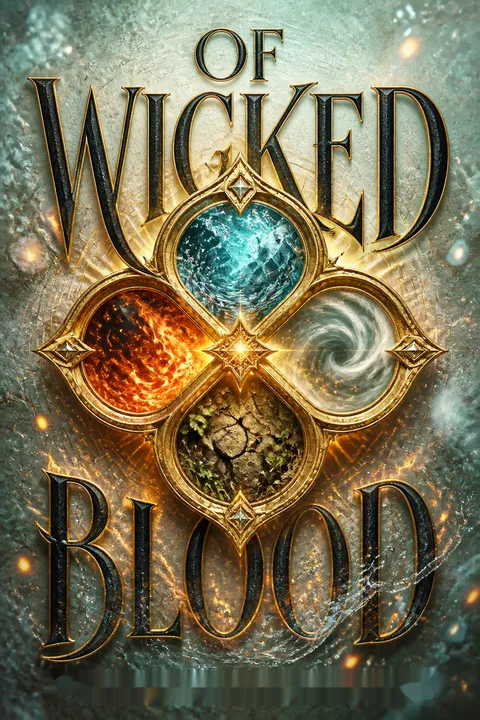
Of Wicked Blood is a captivating urban fantasy with a French setting, mixing magic, romance, and adventure. Readers praise the unique plot, well-developed characters, and engaging world-building. The story follows Slate and Cadence as they navigate magical trials and a budding romance. While some found the pacing slow at times, many enjoyed the atmospheric writing and witty banter. The ending left readers eager for the sequel, though a few felt frustrated by unanswered questions. Overall, the book received positive reviews for its blend of fantasy elements and compelling storytelling.
People Also Read

Characters
Slate Ardoin
The guarded survivorSlate, born Rémy Roland, is an orphan who built a life through theft, nerve, and self-reliance after years in abusive foster homes. He protects Bastian with a devotion he rarely extends to anyone else, then hides his vulnerability beneath charm, sarcasm, and a belief that needing people is dangerous. Brume forces him to depend on Cadence and the other guardians, while the consequences of his actions challenge his habit of treating objects and graves as ownerless opportunities. His capacity for care is present from the beginning, but it becomes more visible as he accepts responsibility rather than explaining it away. He is driven by survival, anger at abandonment, and a growing desire to belong somewhere.
Cadence de Morel
The lore-loving guardianCadence is Rainier’s seventeen-year-old daughter, a serious student of Brume’s history and a devoted friend to Alma. Her care for her father and her memories of her mother give her a strong sense of duty, though she often mistakes caution for maturity and keeps her own wants contained. She is drawn to Adrien’s kindness and long familiarity, yet Slate unsettles the orderly image she has of herself. Cadence’s scholarship becomes practical under pressure: she researches the artifacts, reads the old texts, and eventually faces a challenge rooted in her own artistic home. Her curiosity does not make her naïve; it gives her a way to act when inherited stories become real.
Bastian
Slate’s steadfast brotherBastian is Slate’s younger foster brother, a bright, bookish young man who survived the same unstable system without adopting Slate’s cynicism. He studies social work because he wants to help children still living through the kind of neglect they endured. Bastian is affectionate, observant, and persistent, willing to challenge Slate when his self-destructive habits masquerade as independence. His knowledge and analytical patience prove useful in Brume, but his deeper importance is emotional: he is the person who has consistently stayed. Their bond shows Slate’s capacity for loyalty before the romance or magic gives it a new shape.
Rainier de Morel
The secretive fatherRainier is Cadence’s father, Brume’s university dean, and a wheelchair user whose authority carries both intellectual and familial weight. He is disciplined, proud, and convinced that withholding information can shield the people he loves from danger. That protective instinct becomes controlling when he delays telling Cadence about magic and manages Slate’s return according to his own timetable. Rainier’s history with the previous guardians has left him carrying grief, guilt, and a fierce commitment to the town. He is neither simply a wise mentor nor a villainous gatekeeper; his failures arise partly from the same fear that motivates his care.
Adrien Mercier
The scholar and guardianAdrien is a young history professor, Camille’s son, and Cadence’s longtime family friend. Educated, gracious, and confident in his expertise, he often assumes the role of planner and protector. His knowledge of Brume’s past makes him indispensable, but his composure can obscure anxiety and encourage him to underestimate others’ agency. Adrien is entangled in an unsatisfying relationship with Charlotte and struggles to see Cadence as someone who has grown beyond the childhood bond they share. He is not merely the polished contrast to Slate: grief, fear, and mistaken judgment complicate his gentlemanly surface.
Gaëlle Bisset
The burdened motherGaëlle is a founding-family descendant, owner of a witch-themed shop, and mother to three children, including twins. Warm and practical, she balances business, caregiving, and the demands of a dangerous inherited history. Her kindness does not make her emotionally untroubled; she carries deep grief and guilt connected to her former husband, Matthias. Gaëlle’s challenge exposes the difference between compassion and self-erasure. She must protect her children while confronting memories that make her question her own actions. Her healing remedies and care for others reflect a wish to repair what can be repaired, even when she cannot undo the past.
Alma
Cadence’s bold best friendAlma is Cadence’s expressive, sociable best friend, known for bright clothes, physical affection, and an irrepressible appetite for gossip. She teases Cadence out of her reserve but also notices when fear or grief has made her withdraw. Her confidence often masks uncertainty, and she can leap to conclusions about relationships before considering their consequences. Alma brings humor and social warmth into the guardians’ increasingly grim work, while her loyalty means she remains present when the supernatural stops being entertaining.
Amandine de Morel
Cadence’s absent motherAmandine is Cadence’s mother, a sculptor, and Rainier’s wife. Though absent from the present action, she is remembered through her art, family customs, and the choices adults made around her. Her creative work gives Cadence a tangible connection to her, while her history ties the De Morel family to Brume’s magical past. Amandine’s influence is not limited to memory: the questions surrounding her decisions shape how Slate understands his origins and how Cadence interprets her father’s secrecy.
Geoffrey Keene
The ambitious mayorGeoffrey is Brume’s mayor, Adrien’s father, and a political operator who measures crises partly by their effect on his authority. He is polished and socially powerful, but his rivalry with Rainier is old and personal. Geoffrey’s interest in the Quatrefoil reveals how readily he treats communal danger as an opportunity to negotiate for status. His relationship with Adrien is shaped by expectation and control, even as his public role demands that he respond to the town’s needs.
Camille Mercier
Adrien’s remembered motherCamille is Adrien’s mother and a beloved presence in Cadence’s childhood memories. She helped raise Cadence through the practical milestones her own mother could not witness and was known for warmth beneath her public composure. Her death leaves Adrien and Rainier with different forms of grief, while her art and relationships remain part of Brume’s living history. Camille’s remembered kindness provides a counterweight to the town’s secrecy and suspicion.
Nolwenn
The tavern’s watchful keeperNolwenn owns La Taverne de Quartefeuille with her husband, Juda, and serves as one of Brume’s most attentive observers. She knows local families and traditions intimately, though she does not volunteer everything she knows. Her hospitality is genuine, but it coexists with caution shaped by years of living near the town’s dangerous history. Nolwenn’s concern extends beyond customers to the younger people whose choices may reopen old wounds.
Matthias
Gaëlle’s troubled former husbandMatthias is Gaëlle’s former husband and Romain’s father, once remembered as kind and attentive. His complicated place in the Bisset and Mercier families is shaped by the legacy of a curse and by the harm that fear can do to a person’s judgment. The contrast between the man Gaëlle loved and the danger she remembers makes him central to her emotional life, even before Brume’s magic brings their history into view.
Emilie
The frightened childEmilie is a young Brume resident whose sudden appearance in Slate’s room reveals that the guardians’ actions can affect people far beyond their circle. Frightened and separated from the familiar safety of home, she trusts Slate because he stays physically beside her. Her vulnerability makes the consequences of magical decisions immediate and personal.
Romain
Gaëlle’s growing stepsonRomain is Gaëlle’s teenage stepson and the eldest of the children she cares for. He is still growing into his place in the family, but Gaëlle treats him with the devotion of a parent. His bonds with Cadence and Alma place him among the younger residents whose safety gives the guardians’ choices real stakes.
Charlotte
Adrien’s girlfriendCharlotte is Adrien’s girlfriend and a student in Brume. She is socially confident and accustomed to being the focus of attention, but her relationship with Adrien is less secure than its public appearance suggests. Her presence sharpens Cadence’s uncertainty about Adrien and complicates the group’s attempts to distinguish ordinary conflict from magical danger.
Sylvie
Brume’s town doctorSylvie is Brume’s physician, an experienced professional with a colorful public manner and a practical approach to injuries. She treats Slate after the well challenge and helps maintain the appearance of ordinary medical care while the town faces extraordinary events. Her presence grounds the story in the small community’s everyday systems of support.
Plot Devices
The Bloodstone
The binding and detectorThe red ring Slate removes from Amandine’s grave is the Bloodstone, a key artifact that carries the blood and power of the four founding families. It bonds to Slate’s body, cannot be removed by ordinary means, and reacts when a Quatrefoil leaf is nearby. Its curse gives the quest a personal deadline: if the pieces are not reunited before the new moon, Slate will die. The ring also makes his body a sensor for the hidden artifacts, connecting the heist that begins the plot to every later challenge. Its release at the end is real, although the story leaves uncertainty about why it comes free before the Earth leaf is visibly recovered.
The Quatrefoil
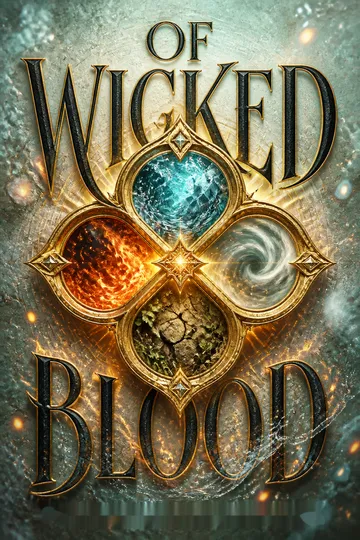
Four elemental trialsThe Quatrefoil is a magical source broken into four elemental leaves, each guarded by a descendant of one of Brume’s founding families. Slate, Cadence, Adrien, and Gaëlle must each face the challenge associated with their element, and another person’s intervention can trigger a curse. Water manifests as a shapeshifting well spirit, Air as Matthias’s ghost, Fire as a guivre, and Earth as Cadence’s animated statue of Ares. The separate trials turn the group’s family history into physical tests, requiring each guardian to confront a danger particular to their lineage.
The Dihuner
The lunar deadline clockBrume’s immense astronomical clock, called the dihuner, measures lunar phases rather than ordinary hours. It begins ticking when Slate puts on the Bloodstone, then reveals hidden cradles for the elemental leaves. The Kelouenn points the guardians to the clock as Brume’s beating heart and specifies that the leaves must be placed there at eventide. When three leaves enter their cradles, the clock accelerates and the temple begins to shake, setting the final Earth challenge in motion. Its lunar dial makes the countdown visible while its mechanism joins the folklore to the physical architecture of Brume.
The Kelouenn
A damaged set of instructionsThe Kelouenn is an ancient scroll whose text and illustrations record the history and mechanics of Brumian magic. Its translation is incomplete, and prepared pages have disappeared from the university archives, forcing the guardians to interpret the original themselves. Slate notices that a dark mark on the parchment may have been deliberately added, while Bastian helps identify the significance of the wording about eventide and Brume’s beating heart. The scroll makes research an active part of the quest, but its gaps also show that knowledge can be withheld, damaged, or politically controlled.
Brume’s Founding Families
Inheritance becomes obligationThe four founding families connect Brume’s present residents to the guardians who divided the Quatrefoil centuries earlier. Their descendants inherit both an elemental affinity and a responsibility they did not choose. The family system explains why Slate is summoned, why Cadence and her friends are drawn into the hunt, and why previous generations’ mistakes remain dangerous. It also complicates the idea of belonging: Slate has roots in Brume despite growing up elsewhere, while Cadence must learn that her family’s traditions contain both care and concealment.
The Quatrefoil Chronicles Series Series
About the Author
Other books by Olivia Wildenstein





Download PDF
Download EPUB
.epub digital book format is ideal for reading ebooks on phones, tablets, and e-readers.








