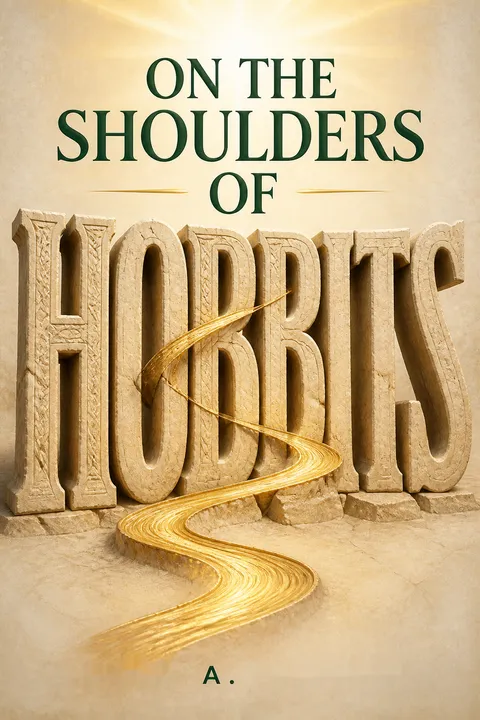


Key Takeaways
Use stories as rehearsal rooms for moral choice
Stories make values visible. Markos argues that people learn virtue not only through rules and abstract ideas, but by watching characters choose, fail, repent, and endure. The great stories of Tolkien and Lewis let readers experience moral decisions from the inside: the cost of greed, the strain of courage, and the value of loyalty. Their fantasy settings are not an escape from life so much as a way to see its stakes more clearly.
Read for formation. The book treats Middle-earth and Narnia as moral worlds where goodness, evil, and human purpose are real. Readers are invited to ask not only what a story means, but what its characters teach about living. These tales can also give families a shared language for discussing difficult choices.
Stories can make moral ideas memorable because they attach them to motives, consequences, and relationships, rather than leaving them as slogans. That is a powerful form of learning: readers can test a choice imaginatively before facing an analogous one in life. Yet stories do not automatically teach sound ethics. A compelling hero can model cruelty as easily as courage. Their value depends on thoughtful attention, including questions about who is harmed, whose perspective is absent, and whether the ending truly justifies the means.
Leave the Shire to discover what your life is asking
Comfort can conceal a calling. Frodo begins in the sheltered Shire, fond of its familiar pleasures and reluctant to face the wider world. Bilbo has already travelled beyond it, but only after many years does he recognize that the adventure changed him. Shasta, in Lewis’s The Horse and His Boy, faces the opposite problem: his unhappy home gives him reason to flee, yet he must still discover who he is and where he belongs.
The Road changes its travelers. For Markos, pilgrimage is more than seeing new places. It exposes people to danger, loss, and unfamiliar companions, stripping away assumptions that comfort can preserve. Frodo learns that the Shire cannot be a permanent refuge from the world, and Shasta’s journey helps him grow beyond a narrow sense of himself.
The contrast between Frodo and Shasta keeps the book’s account of departure from becoming a simple celebration of risk. One leaves a good home that cannot protect him forever; the other leaves a bad one in search of a truer life. In both cases, change requires more than movement. It comes through encounters that revise identity and widen responsibility. Still, hardship is not inherently enlightening. The useful question is whether an experience deepens understanding and care, not whether it merely takes someone far from home.
Follow a calling without demanding a map of the whole road
Purpose can precede clarity. Frodo is entrusted with carrying the Ring toward its destruction, though he cannot see how the mission will end. Sam joins first from loyalty and curiosity, then comes to sense that his part in the journey matters beyond his original reasons. In Narnia, the mouse Reepicheep follows a lifelong conviction that the eastern sea leads toward Aslan’s Country, even though he does not know precisely what awaits him.
A larger story gives direction. Markos presents these characters as participants in a purpose greater than individual ambition. They retain the ability to choose, refuse, or falter, but their choices take meaning within a wider history. The book calls this trust in a purpose beyond one’s sight a form of faith, especially when the next right action is clearer than the final destination.
A sense of purpose can help people persist when outcomes are uncertain, and a larger story can prevent hardship from feeling arbitrary. The strongest examples here pair conviction with concrete service: Sam’s loyalty is expressed through accompanying Frodo, not simply declaring a destiny. That distinction matters. Claims of calling can inspire courage, but they can also make harmful decisions seem sacred. A responsible sense of vocation remains answerable to its effects on others and to the moral character of the actions it demands.
Measure courage by what you endure for others
Fortitude is sustained courage. Markos uses the classical virtue of courage, or fortitude, to describe more than boldness in a crisis. Frodo continues toward Mordor as the Ring strips away his strength and ordinary pleasures. Aragorn accepts a nearly hopeless battle to divert Sauron’s attention from Frodo. In Narnia, Aslan endures humiliation and death rather than abandon Edmund, who has betrayed his family.
Endurance is not recklessness. A courageous person is not simply someone who ignores fear or charges into danger. The book distinguishes patient service from rash action, and treats self-sacrifice as meaningful when it protects others or serves a worthy purpose. The heroes’ endurance is not mainly a route to recognition: Frodo understands that the Shire may be saved without restoring his own former life.
This account makes courage less glamorous and more ethically demanding. It asks whether someone can bear inconvenience, fear, or loss for a purpose that is not self-display. That emphasis fits a broader distinction between persistence and stubbornness: endurance is admirable only when the goal is worth the cost. The stories also complicate any fantasy of self-sufficiency. Frodo’s will weakens under the Ring, and success depends on help beyond his own strength. Courage can begin alone, but it rarely works alone.
Temper desire with judgment, not blanket denial
Self-control is not joylessness. Aristotle’s idea of temperance, as Markos presents it, lies between indulgence and excessive denial. Tolkien’s Hobbits enjoy food, drink, and pipe-weed, while Gandalf’s warmth and laughter suggest that pleasure can belong to a serious moral life. The point is not to approve every appetite, but to ask whether a pleasure strengthens life and fellowship or becomes a means of escape and harm.
Discernment governs restraint. Faramir sees the Ring as a chance to gain power and earn his father’s approval, yet refuses to take it. Saruman makes the opposite mistake: his desire for knowledge and control leads him to misuse a seeing-stone and misread what he sees. Markos calls the wisdom that distinguishes good from evil, and sound action from folly, discernment. Restraint without judgment can become rigid; cleverness without restraint can become ruinous.
The pairing of temperance and discernment is useful because self-control is not simply suppressing desire. It involves judging which desires deserve cultivation and which choices carry hidden costs. Faramir’s refusal is especially revealing because the Ring offers both political power and personal validation. The book’s praise of ordinary pleasures also guards against confusing morality with austerity. Its account remains contextual, however: a pleasure that supports one person’s fellowship can become dependence or harm in another situation. Judgment cannot be replaced by a universal permission slip.
Judge justice by whether power serves and restores
Authority is stewardship. Markos reads Tolkien’s kingship through a premodern idea of justice: people have equal dignity, but leadership and responsibility are not identical roles. A good ruler protects the people and helps restore order. When Aragorn becomes king, his rule is shown not only through ceremony but through the promise that dangerous roads and wasted lands can become safe and fruitful again.
Right order is measured by service. Lewis’s first Narnian king, Frank the cabby, receives authority from Aslan with duties to protect and do justice among the creatures. For Markos, this is hierarchy at its best: power is legitimate when it carries responsibility for others, not when it exists for the ruler’s comfort. The idea differs from a modern view of justice that focuses chiefly on equal treatment, but it does not make dignity depend on rank.
The stewardship model offers a practical test for authority: does leadership protect people, repair damage, and enable shared life? That question can apply beyond monarchies, including workplaces and public institutions. The book’s defense of hierarchy deserves careful handling, since inherited or sacred authority can also shield abuse and exclude those with less power. Its strongest safeguard is the demand that rulers serve. A fuller account also needs mechanisms for accountability, because benevolent intent alone cannot reliably prevent unjust rule.
Let friendship make your courage more dependable
Companions keep the quest human. Frodo initially hopes to leave the Shire without involving his friends, but Sam, Merry, and Pippin refuse to let him face danger alone. Sam’s practical loyalty helps Frodo continue when the Ring’s burden becomes overwhelming. When Merry and Pippin are captured, Aragorn, Gimli, and Legolas choose to pursue them rather than follow the safer route toward their own larger plans.
Friendship can cross old boundaries. Gimli the Dwarf and Legolas the Elf begin with inherited suspicion between their peoples. Shared danger gradually gives way to respect, curiosity, and a promise to experience each other’s beloved places. Markos treats friendship as a virtue because it teaches people to value another person’s good, not merely their own success. It can even make unconventional or inconvenient choices morally necessary.
The Fellowship illustrates a form of resilience built from relationships rather than individual toughness. Friends notice what a person cannot see alone, and loyalty can keep a difficult undertaking from collapsing under fatigue or fear. Their bond also changes how they interpret difference: Gimli and Legolas become curious about one another’s worlds. Friendship is not automatically virtuous, however. Tight groups can become cliques that protect members from criticism. Its moral force depends on loyalty remaining compatible with honesty and concern for outsiders.
Trust the larger story when outcomes remain unseen
Faith looks beyond immediate evidence. At the Council of Elrond, people from different lands bring fragments of warnings and history together. Their accounts reveal that the Ring, the broken sword, and Frodo’s arrival belong to one unfolding crisis. Markos compares this recognition to a kairos, a moment when separate events converge into a meaningful opportunity or turning point.
Hope expects more than survival. Near Mordor, Sam glimpses a star through the darkness and gains renewed confidence that evil is not the whole of reality. Markos uses Tolkien’s term eucatastrophe for a sudden, unexpected reversal in which good emerges from apparent defeat. Such hope does not deny grief or guarantee that each individual will be rescued. It holds that suffering and evil do not have the final word in the Christian story the book affirms.
The distinction between hope and optimism gives this section its force. Optimism predicts a favorable outcome; hope can persist without knowing whether a particular person or plan will succeed. The Council scene also shows how a wider view can emerge through shared testimony rather than private certainty. Yet interpreting events as part of providence remains a matter of faith, not a conclusion everyone must accept. The more general lesson is that limited perspective should encourage humility before declaring a struggle meaningless or already lost.
Pity the damaged without pretending they are harmless
Mercy begins with attention. In The Hobbit, Bilbo has a chance to kill Gollum but recognizes his misery and spares him. Years later, Gandalf reminds Frodo that no one sees every consequence, and Frodo gradually treats Gollum with a mixture of compassion and caution. Sam, who distrusts Gollum, also hesitates when he sees the creature helpless and wretched.
Pity is not naïveté. Gollum remains dangerous and eventually returns to the Ring, but the mercy shown to him helps shape the events that lead to the Ring’s destruction. Markos understands charity as self-giving love that moves beyond self-absorption. It does not require denying wrongdoing, abandoning judgment, or trusting an unsafe person. It asks people to resist treating another person as nothing more than the worst thing they have done.
The Gollum story makes mercy intellectually demanding: it asks characters to act without knowing all the consequences, while still recognizing real danger. Compassion and boundaries are not opposites. In contemporary terms, empathy may help explain another person’s behavior without excusing it or requiring continued exposure to harm. The story’s providential outcome is compelling within its Christian framework, but it should not be mistaken for a rule that mercy always produces visible reform. Its value can lie in refusing needless cruelty even when the result remains uncertain.
Reject victories that require becoming what you oppose
Evil distorts rather than creates. Markos draws on a Christian tradition in which evil is a corruption of good, not an independent power equal to it. Sauron was not evil from the beginning; Saruman turns knowledge toward domination; and Gollum’s fixation on the Ring reduces his life to the pursuit of what has damaged him. Their stories show different forms of good capacities twisted by pride, greed, or fear.
Some tools change their users. Boromir argues that Gondor should use the Ring against Sauron, while Nikabrik proposes seeking help from Narnia’s old enemy, the White Witch. Both treat power as if it could be borrowed without changing the borrower. Faramir, by contrast, is willing to fight for his people but refuses the Ring. The book’s warning is not that every compromise is evil, but that a victory can destroy the values it claims to defend.
The Ring gives the book a sharp model of corrupting power: the danger lies not only in how a tool is used, but in the desires it cultivates and the institutions it reshapes. That insight travels beyond fantasy, since organizations can normalize methods that once seemed unacceptable when survival or victory is treated as the only measure. Still, not every morally difficult choice is equivalent to taking the Ring. Serious judgment must weigh necessity, alternatives, proportionality, and accountability rather than dismissing all compromise as corruption.
Analysis
Markos’s central method is to make virtue visible through narrative. Rather than treat courage, justice, or hope as definitions to memorize, he follows characters through choices whose consequences make the virtues legible. The structure moves from pilgrimage to the classical and theological virtues, then to evil, so the reader first sees the kind of life being sought before examining the forces that deform it. Tolkien’s long journey gives this argument its weight: virtue appears as repeated action under pressure, not as a fixed heroic personality.
The book’s distinctive claim is that fantasy can be a serious form of moral realism. Middle-earth and Narnia offer heightened moral contrasts that help readers notice patterns obscured by ordinary life: how power masquerades as rescue, how pity differs from credulity, and how friendship can become a source of courage. Markos also insists that these stories belong within a Christian account of creation, fall, and redemption. That grounding gives his reading coherence, but it also sets a boundary. Readers who do not share that theology may still value the ethical insights, while questioning whether providence, hierarchy, and the afterlife are required to support them.
The book is strongest when its principles are tested against ambivalence. Frodo falters, Boromir repents, and Gollum remains both pitiable and dangerous. These complications prevent virtue from becoming a simple sorting of heroes and villains. More caution is warranted when the argument moves from literary kingship to political order, or from religious beliefs about death to claims about modern society. Fiction can illuminate moral possibilities, but it cannot by itself settle empirical or political disputes. Its most durable contribution is a practice of attention: stories help readers imagine what a choice costs, whose welfare it serves, and what kind of person it may make of the chooser.
Review Summary
On the Shoulders of Hobbits explores virtues in Tolkien and Lewis's works, examining themes like heroism, friendship, and good vs. evil. Many reviewers praise Markos's insightful analysis and engaging writing style, finding the book thought-provoking and inspiring. Some appreciate the connections to classical literature and Christian themes. A few criticize repetitiveness or disagree with certain interpretations. Overall, most readers find it enriching, deepening their appreciation for The Lord of the Rings and Narnia while prompting reflection on timeless virtues.
People Also Read


Glossary
The Road
Life as pilgrimageMarkos uses the Road as a metaphor for a life journey that carries people beyond familiar safety and exposes them to trials, choices, and change. In Tolkien and Lewis, travelers do not simply reach a destination. The journey tests their character, reveals their dependence on others, and helps them understand their place within a larger purpose.
Cardinal virtues
Four classical moral virtuesThe cardinal virtues are justice, temperance, wisdom, and courage, which Markos presents as the core moral virtues recognized in classical Greek thought and adopted within Christian tradition. Courage enables endurance, temperance governs appetite, wisdom discerns sound action from folly, and justice orders relationships and responsibilities toward what is right.
Theological virtues
Faith, hope, and loveThe theological virtues are faith, hope, and love, understood in the book as virtues grounded in Christian revelation. Faith trusts what cannot be fully seen, hope anticipates good beyond present suffering, and love gives itself for others. Markos distinguishes them from the classical virtues while showing how both groups shape the conduct of pilgrims.
eucatastrophe
Sudden turn toward goodA term Tolkien used for an unexpected, joyful reversal in a story, when apparent defeat gives way to deliverance. Markos connects the idea to Christian hope: the reversal does not erase sorrow or make suffering unreal, but suggests that evil and loss need not determine the final outcome. In the book, the Ring’s destruction is a central example.
kairos
A decisive moment of convergenceA Greek term for an opportune or significant moment, distinguished from ordinary chronological time. Markos applies it to scenes in which separate histories, warnings, and events come together at a turning point. At the Council of Elrond, scattered accounts help reveal the shared crisis surrounding the Ring and the choices it demands.
Byronic Hero
Rebellious, self-destroying antiheroA literary figure whose ambition, defiance, or pursuit of forbidden power appears grand but leads toward isolation and ruin. Markos uses the type to interpret characters such as Isildur, Boromir, and especially Gollum. Their courage or strength does not protect them from corruption when pride and desire override moral limits.
numinous fear
Awe before the supernaturalA form of fear associated not simply with physical danger, but with encountering a presence that overwhelms the spirit through its power or holiness. Drawing on Lewis’s use of the term, Markos distinguishes this experience from ordinary fear of injury. Aragorn’s willingness to enter the Paths of the Dead illustrates courage in the face of such dread.
Gift of Men
Human mortality as giftIn Tolkien’s mythology, the Gift of Men is the mortality given to humans by the Creator, Ilúvatar. Unlike the Elves, humans are not bound forever to Middle-earth and are destined for an unknown fate beyond it. Markos uses the idea to challenge the view that death is only a terror, while presenting it within Tolkien’s and Lewis’s Christian understanding of hope beyond earthly life.
FAQ
What's "On the Shoulders of Hobbits" about?
- Exploration of Virtue: The book explores the moral and spiritual lessons found in the works of J.R.R. Tolkien and C.S. Lewis, focusing on the virtues embodied in their stories.
- Christian Humanism: It aims to recover a sense of Christian humanism, emphasizing the importance of virtues in a world that often overlooks them.
- Literary Analysis: Through a detailed analysis of Tolkien's and Lewis's narratives, the book highlights how these stories can guide readers in understanding and practicing virtues.
- Cultural Critique: The author critiques modern society's lack of moral compass and offers these literary works as a remedy to that deficiency.
Why should I read "On the Shoulders of Hobbits"?
- Moral Guidance: The book provides insights into how classic literature can offer moral and spiritual guidance in today's world.
- Understanding Virtues: It helps readers understand and appreciate the classical and theological virtues through the lens of beloved literary works.
- Cultural Relevance: The book addresses contemporary issues of moral relativism and existentialism, offering a counter-narrative rooted in timeless stories.
- Engaging Analysis: For fans of Tolkien and Lewis, it offers an engaging analysis that deepens the appreciation of their works.
What are the key takeaways of "On the Shoulders of Hobbits"?
- Virtue as Central Theme: The book emphasizes the importance of virtues such as courage, temperance, wisdom, and justice, as well as faith, hope, and love.
- Role of Stories: It highlights the power of stories to shape moral character and provide a sense of purpose and direction.
- Christian Humanism: The book advocates for a return to Christian humanism, where divine revelation complements human reason.
- Cultural Critique: It critiques modern society's moral blindness and offers the narratives of Tolkien and Lewis as a corrective.
How does "On the Shoulders of Hobbits" explore the concept of the Road?
- Life as a Journey: The book uses the metaphor of the Road to describe life as a journey filled with challenges and opportunities for growth.
- Pilgrimage and Purpose: It discusses the idea of pilgrimage, emphasizing the importance of having a higher purpose and direction in life.
- Thresholds and Trials: The narrative explores the trials and thresholds characters must cross, symbolizing the transition from innocence to experience.
- Spiritual Lessons: The Road serves as a spiritual metaphor, teaching lessons about perseverance, faith, and the ultimate destination.
What virtues are highlighted in "On the Shoulders of Hobbits"?
- Classical Virtues: The book discusses the classical virtues of courage, temperance, wisdom, and justice, as understood by ancient philosophers.
- Theological Virtues: It also explores the theological virtues of faith, hope, and love, which are central to Christian teachings.
- Friendship as a Virtue: The book elevates friendship to a virtue, emphasizing its role in moral and spiritual development.
- Practical Application: Each virtue is illustrated through episodes from Tolkien's and Lewis's works, providing practical examples for readers.
How does "On the Shoulders of Hobbits" address the theme of evil?
- Nature of Evil: The book explores the nature of evil as a perversion and corruption of good, drawing on theological insights.
- Byronic Hero: It critiques the romanticization of the Byronic hero, showing how such figures ultimately lead to destruction.
- Moral Choices: The narrative highlights the moral choices characters face, illustrating the consequences of succumbing to evil.
- Redemption and Grace: Despite the presence of evil, the book emphasizes themes of redemption and the possibility of grace.
What role does friendship play in "On the Shoulders of Hobbits"?
- Central to the Narrative: Friendship is portrayed as a central theme, essential for the characters' journeys and moral development.
- Loyalty and Sacrifice: The book highlights the importance of loyalty and the willingness to sacrifice for friends, as seen in the Fellowship of the Ring.
- Transcending Differences: It shows how friendship can transcend differences, as exemplified by the bond between Gimli and Legolas.
- Moral Support: Friendship provides moral support and strength, enabling characters to face challenges and grow spiritually.
How does "On the Shoulders of Hobbits" interpret the concept of eucatastrophe?
- Sudden Turn of Events: Eucatastrophe is described as a sudden and miraculous turn of events that leads to a happy ending.
- Hope and Redemption: The concept embodies hope and the belief in redemption, even in the face of despair and defeat.
- Literary Device: It is a key literary device used by Tolkien and Lewis to convey the ultimate triumph of good over evil.
- Spiritual Significance: The book connects eucatastrophe to Christian theology, likening it to the resurrection and the promise of eternal life.
What are the best quotes from "On the Shoulders of Hobbits" and what do they mean?
- "The Road goes ever on and on": This quote emphasizes the ongoing journey of life and the importance of perseverance and purpose.
- "Evil is not a positive or creative entity": It highlights the theological view that evil is a negation of good, lacking its own substance.
- "Friendship seemed the happiest and most fully human of all loves": This underscores the book's elevation of friendship as a vital and enriching virtue.
- "The Consolation of the Happy Ending": This phrase captures the essence of eucatastrophe, offering hope and joy in the narrative's resolution.
How does "On the Shoulders of Hobbits" critique modern culture?
- Moral Relativism: The book critiques the modern embrace of moral relativism, which it sees as leading to a loss of moral direction.
- Existentialism: It addresses the existentialist view that life lacks inherent meaning, offering stories as a counter-narrative.
- Loss of Virtue: The narrative laments the decline of classical and theological virtues in contemporary society.
- Cultural Blindness: It argues that modern culture is blind to the sacred drama of God's work in the world, needing a revival of Christian humanism.
How does "On the Shoulders of Hobbits" use Tolkien's and Lewis's works to illustrate its themes?
- Character Analysis: The book analyzes key characters from Tolkien's and Lewis's works to illustrate virtues and moral lessons.
- Narrative Episodes: It selects specific episodes from the stories to highlight themes of courage, friendship, and redemption.
- Comparative Approach: By comparing the two authors' works, the book draws out shared themes and messages.
- Literary Criticism: It employs literary criticism to delve into the deeper meanings and spiritual insights of the narratives.
What is the significance of the title "On the Shoulders of Hobbits"?
- Standing on Giants: The title suggests that by standing on the shoulders of Tolkien and Lewis, readers can gain greater insight into virtue and morality.
- Hobbits as Everyman: Hobbits represent the everyman, whose simple virtues and courage are central to the narrative's moral lessons.
- Journey and Growth: The title implies a journey of growth and understanding, guided by the wisdom of the stories.
- Legacy of Literature: It acknowledges the lasting impact of Tolkien's and Lewis's works on readers and their moral development.
Download PDF
Download EPUB
.epub digital book format is ideal for reading ebooks on phones, tablets, and e-readers.








