

Key Takeaways
The dog is not merely a tamed wolf, but a co-evolutionary partner.
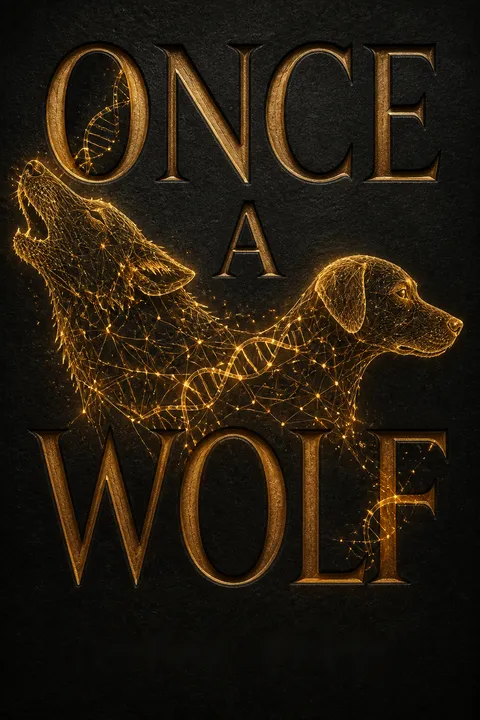
A shared history. Sykes’s opening scene imagines a wolf named Lupa and human hunters learning to cooperate. The scene is invented, but it introduces the book’s central argument: the dog’s rise was not simply humans controlling wolves. Both species could gain from working together, and their changing relationship shaped each other over time.
More than companionship. Sykes argues that cooperative hunting may have helped early Homo sapiens thrive, alongside tools, language, and other innovations. In return, wolves gained access to food and eventually to human settlements. The bond familiar today, between a person and a dog on an ordinary walk, is the latest form of a relationship that may have begun tens of thousands of years ago.
The co-evolution lens usefully replaces a one-sided story of human mastery with a partnership between species. It also makes the relationship easier to explain in evolutionary terms: enduring bonds need not begin as sentiment if both parties gain practical advantages. The claim that dogs helped Homo sapiens outcompete other humans is more ambitious than the evidence presented here can establish. The book’s strongest case is that dogs and people influenced each other, not that one partnership alone determined humanity’s success.
Read dog origins as a long transition, not a single date or birthplace.
Two kinds of evidence. Genetic studies show that dogs descend from wolves, not jackals, coyotes, or another proposed ancestor. But when and where the transition began are harder questions. One estimate based on modern mitochondrial DNA placed it between 76,000 and 135,000 years ago. A later study of ancient canid DNA instead supported a European origin between 19,000 and 32,000 years ago.
Bones complicate labels. A skull from Belgium’s Goyet cave, dated to about 31,700 years ago, differs in shape from wolf skulls, yet researchers still debate whether it belonged to a dog, a wolf, or an intermediate animal. The boundary is partly a matter of classification: the first dogs would have looked very much like wolves.
The apparent conflict between genetic dates and ancient remains is a reminder that a family tree and a fossil are answering different questions. DNA estimates depend on mutation rates and population history; fossils record particular bodies in particular places. Neither is a perfect clock. The book is most convincing when it treats domestication as a gradual shift and explains why evidence can narrow possibilities without delivering a universally agreed starting point.
Ask what wolves gained, not only what humans selected.
A hunting bargain. Sykes proposes that early hunters watched wolves pursue and exhaust large prey, then used spears to make the killing blow from a safer distance. Sharing the carcass could benefit both groups: humans gained help locating and tiring prey, while wolves received parts of the kill. Wolves and humans also hunted in social groups, making cooperation more plausible than it would be with solitary predators.
A plausible story, not a proven event. The imagined encounter between Lupa and the hunters gives this theory life, but the book acknowledges that direct evidence for a hunting alliance is scarce. It contrasts this explanation with the idea that wolves first gathered around human camps to scavenge, arguing that this would not explain the depth of the eventual bond.
The question of what each species gained is a strong test for any account of domestication. It avoids portraying wolves as passive raw material for human preferences. At the same time, a useful evolutionary story is not automatically a demonstrated history. Shared hunting makes sense as a possible route to trust, but the evidence does not establish that it was the first route, or the only one. The proposal is best held as a compelling hypothesis.
Agriculture turned a hunting ally into a competitor for livestock.
A changed bargain. For hunter-gatherers, wolves and people could pursue wild prey without competing over owned animals. As agriculture and livestock raising spread, roughly 10,000 years ago, wolves began taking animals that humans depended on. The wolf’s natural hunting behaviour now threatened human livelihoods, and the animal increasingly became an enemy rather than an ally.
Fear has a history. Sykes contrasts this conflict with accounts from Inuit and other Indigenous communities that maintained closer relationships with wolves. He also describes the persecution of wolves in Europe and North America, where stories cast them as vicious threats. The reintroduction of wolves to Yellowstone in 1995, after an absence of about seventy years, illustrates their ecological reach: changes in prey numbers affected vegetation and other wildlife in a cascade of effects.
This account connects cultural attitudes to material interests. An animal can be valued as a hunting partner in one economy and condemned as a threat in another, without changing its underlying nature. The Yellowstone example also shows why predator management is rarely just a question of liking or disliking wolves: effects spread through ecosystems and into livestock economies. The book’s contrast between Indigenous and settler perspectives is illuminating, though no community has a single, uniform view.
Dogs inherited social skills from wolves, then learned to read human cues.
Life in a pack. A typical wolf pack is an extended family, often numbering around six animals. Members hunt together, care for young, and depend on the group for survival. Sykes argues that this social organization helped wolves fit into human groups. He also cautions that captive wolves, often unrelated and confined, can appear more aggressive and rigidly ranked than wild packs.
Reading people. In experiments described in the book, dogs quickly followed a person’s gesture to find food under one of two containers. Chimpanzees, despite their ability to solve other tasks, did not do as well. Dogs are especially attuned to social signals, a capacity that may have developed from responding to pack members and reading prey. That sensitivity helps explain how a dog can notice signs of an impending walk before its owner reaches the door.
The comparison highlights that intelligence is not a single ladder with humans at the top. A chimpanzee may excel at a problem that a dog handles poorly, while a dog may be unusually skilled at interpreting human gestures. This is a useful distinction between general problem-solving and social attunement. The book also makes an important methodological point: behaviour observed in confined animals may reflect the conditions of captivity, not the natural structure of a family group.
Selecting for tameness can transform behaviour and appearance together.
The fox experiment. In 1959, Russian scientist Dmitri Belyaev began breeding silver foxes for their response to people, not for a particular coat. His starting group included thirty males and one hundred females. After about twenty generations of selecting the least aggressive animals, the foxes had become unusually friendly and playful. Some also developed floppy ears, curled tails, and patchy coats, traits that resemble features associated with domestication.
A possible biological bridge. Research described in the book found that mutual gazing raised oxytocin levels in both dogs and their owners, but not in comparable interactions with wolves. Oxytocin is involved in attachment and social bonding. These findings suggest that selection for sociability may have changed how dogs and people respond to each other, although the small study does not prove that one hormone explains the entire bond.
Belyaev’s experiment is powerful because it shows how selection on one behavioural difference can produce broad changes in a population. It also warns against assuming that visible traits were always chosen directly: some may accompany selection for other qualities. The oxytocin result adds a plausible biological mechanism to the story of attachment. Yet friendliness, appearance, and a hormonal response are distinct outcomes, and the experiment does not show that the same sequence explains every step of dog domestication.
A small number of genetic changes can create striking canine variety.
Big effects from few genes. The dog genome has about 19,300 protein-coding genes. Research described by Sykes found that a genetic region near the IGF1 gene strongly influences small body size across many breeds. Three genes account for much of the variation in coat length, curl, and facial furnishings. A two-base deletion in the myostatin gene can produce the unusually muscular Bully Whippet, while a separate mutation affects the Dalmatian’s processing of uric acid.
Breeding amplifies variation. These examples show how a small number of genetic changes can have visible consequences, especially when breeders repeatedly select for particular traits. A coat pattern, body size, or unusual muscle build can become common within a breed. The same process can carry unintended effects, as with the Dalmatian mutation associated with health problems.
Dogs are unusually useful for studying traits because breed formation has concentrated genetic variation into recognizable groups. That makes some discoveries, such as the major contribution of a gene near IGF1 to small size, easier than equivalent work in humans. But a clear genetic explanation for one visible feature should not be mistaken for a complete account of an animal. Behaviour, health, and development involve interactions that a list of trait genes cannot capture on its own.
Closed breed registries preserve appearance while exposing hidden disease.
The carrier problem. Pedigree rules generally allow registered dogs to breed only with others of the same breed. This keeps a breed’s appearance consistent but also narrows its gene pool. A healthy dog can carry one copy of a harmful recessive mutation without showing symptoms. If two carriers have puppies, each puppy has a one-in-four chance of inheriting two copies and developing the disorder.
Reduce risk without shrinking the breed further. DNA tests can identify carriers, and breeders can avoid mating two carriers together. But removing every carrier at once can discard valuable genetic variation, especially in a small breed. The Dalmatian’s uric-acid disorder illustrates how a harmful mutation can become widespread alongside a desired feature. The book describes an effort to restore healthier variation through Pointer crosses, initially opposed by people concerned about breed purity.
This is a case where standards designed to protect a category can undermine the animals inside it. The genetic trade-off is concrete: strict closure can stabilize appearance while making shared inherited problems more likely. Carrier testing helps, but the Dalmatian example shows why a test alone cannot settle breeding policy. Maintaining health may require accepting that a breed’s history is more valuable than a perfectly sealed registry.
A DNA test estimates ancestry; it cannot define a dog’s identity.
Different genetic records. Mitochondrial DNA traces ancestry through mothers, while the Y-chromosome traces it through fathers. Most of a dog’s genome comes from both parents and is more useful for comparing breeds. The systems can tell different stories: dogs of one breed may have different maternal lineages, while dogs from different breeds may share one.
Archie’s unexpected mix. A DNA test described in the book identified a Labradoodle named Archie as 62.5 percent Standard Poodle, 25 percent Golden Retriever, and 12.5 percent Labrador. His owners had understood him to be a Labradoodle. The result could reflect the best match to the company’s reference database, but it did not change the dog they knew. Breed names are human categories, not proof of genetic purity.
The distinction between genetic similarity and social identity matters well beyond dogs. A test translates a complicated ancestry into categories drawn from a database; those categories can be useful without being absolute. Archie’s story makes the limits tangible: the report modifies a family’s description of his ancestry, not his established place in their lives. Genetic tools are strongest when their findings are treated as evidence with boundaries, rather than as final verdicts.
A working dog can be a teammate and family member, not a tool.
Affection beyond the sofa. In New Zealand, professional musterer Ewan Grant used Huntaways and Border Collies to gather thousands of sheep across difficult mountain country. He called the dogs his livelihood, but also described the satisfaction of training them and finding retirement homes for those too old to work. He did not treat their working role as a reason to withhold affection.
Care has practical consequences. Interviews with owners and the visit to Battersea Dogs and Cats Home show a wide range of relationships, from companion animals to abandoned pets needing new homes. Many owners described dogs as family, while still drawing boundaries around treatment and spending. The book’s account suggests that attachment is not limited to pampered pets. It can grow through work, routine, responsibility, and the particular history shared by a person and an animal.
Ewan’s example resists the easy divide between working animals and loved companions. A relationship can involve commands, discipline, and practical dependence without becoming purely instrumental. That distinction is important for welfare: affection is meaningful, but it does not by itself guarantee good care. The rescue centre supplies the counterweight, showing what happens when human responsibility fails. A useful measure of the bond is not how lavishly a dog is treated, but whether its needs remain central.
A clone can copy a dog’s DNA, not the life that made it unique.
Copying is not restoration. The first cloned dog, Snuppy, was born in 2005 after researchers transferred genetic material into dog eggs and implanted the resulting embryos. The process was highly inefficient: 1,095 transferred embryos produced two live puppies. Cloning may reproduce a genome, but an animal’s development and behaviour are also shaped by its experiences.
The same genes do not guarantee the same individual. Identical human twins are not identical in every respect, and cloned dogs can differ from the animal they were meant to reproduce. Even cloned cats with matching DNA can have different coat patterns because of how X-chromosomes are switched off in developing cells. The book also raises the cost to egg donors and surrogate dogs, a welfare issue easily obscured by the promise of seeing a lost pet again.
Cloning reveals a common confusion between biological continuity and personal identity. A genetic copy may resemble a beloved animal, but resemblance cannot recreate shared memories or the original relationship. The emotional appeal is understandable, especially in grief, yet the process also distributes its costs among animals used as donors and surrogates. The ethical question is therefore not only whether a clone can be made, but whose interests the procedure serves and who bears its burdens.
Analysis
The book’s central achievement is to join three stories that are often kept apart: the biological transformation of wolves, the human history of domestication, and the emotional life of dog ownership. Its strongest evidence comes from convergence. Mitochondrial and Y-chromosome studies identify wolves as the dog’s ancestors; ancient DNA and skull measurements help place early dog-like animals in time; genome research explains some of the dramatic differences among breeds. No single method answers every question, and Sykes is most persuasive when he shows how each method has a different reach.
The narrative’s most memorable scene, Lupa’s encounter with human hunters, is explicitly imaginative. It works as a model of mutual benefit, not as recovered history. The same distinction matters for the broader claim that cooperation with dogs helped Homo sapiens prevail over Neanderthals. That proposal is evocative, but the account does not establish its scale or causal importance. The book’s evidence supports a long relationship and plausible advantages more firmly than it supports a decisive role in human dominance.
The contrast between the ancient partnership and modern pedigree breeding gives the book contemporary force. Human selection produced extraordinary variation, but closed registries can preserve appearance at the expense of genetic health. The discussion of DNA tests and cloning extends the same caution: scientific techniques reveal real information, but do not settle questions of identity, welfare, or value by themselves.
The book’s structure helps make technical genetics accessible. Fossils, field encounters, experiments, and owners’ stories keep the science connected to living animals. Its principal limitation is also its narrative strength: a compelling evolutionary explanation can make speculation feel more certain than it is. Read with that distinction in mind, the book offers a lasting insight. The dog is neither simply a wolf remade by people nor merely a sentimental companion. It is the result of a deep, uneven, and still consequential relationship between two social species.
Review Summary
Once a Wolf explores the genetic evolution of dogs from wolves, blending scientific explanations with dog owner interviews. Readers appreciate Sykes' insights on wolf-human partnerships and canine genetics, but some find the structure disjointed and the science dense. The book's strength lies in its genetic analysis and historical speculation, though the author's admitted lack of affinity for dogs puzzles some readers. Overall, it's seen as an informative, if uneven, read for those interested in canine evolution and genetics.
People Also Read


Glossary
Mitochondrial DNA
DNA inherited through mothersDNA found in mitochondria, structures within cells that help convert food into usable energy. In animals, mitochondrial DNA is passed from mother to offspring, so researchers can use it to trace maternal ancestry. It records only one line of descent, not the full genetic history of an individual or population.
Y-chromosome
DNA passed through fathersA sex chromosome found in males and passed from father to son. Because it is inherited along a direct paternal line, the Y-chromosome can be used to study male ancestry. Like mitochondrial DNA, it records only one narrow line of descent and cannot represent all the ancestors contributing to an animal’s genome.
Single nucleotide polymorphisms (SNPs)
Single-letter DNA variationsSNPs are places in the genome where individuals differ by one DNA base. Researchers use them as markers to compare animals, map inherited traits, and estimate relationships among breeds. A single SNP rarely identifies a breed or trait on its own. Patterns across many markers are more informative.
Haplotype blocks
Inherited stretches of DNAHaplotype blocks are stretches of nearby genetic markers that tend to be inherited together. Recombination gradually breaks these stretches into shorter segments over generations. Comparing shared blocks can help researchers study relationships among breeds and estimate how long populations have been evolving separately, though the result depends on the quality of the genetic data and historical assumptions.
Saturation mapping
Genome-wide search for traitsA method that examines genetic markers spread across the genome to find regions associated with a trait. Rather than beginning with a suspected gene, researchers look for markers that occur alongside the trait and then investigate nearby genes. The method can locate a likely region, but further work is needed to identify the causal mutation.
Inbreeding depression
Reduced fitness from inbreedingA general decline in health or reproductive success that can occur when a population has little genetic diversity and close relatives breed. It may involve reduced fertility, weaker resistance to infection, or lower survival. It is distinct from a single inherited disorder, although small, isolated populations may face both risks.
Oxytocin-gaze positive loop
Mutual gaze and bondingA phrase describing research in which mutual gazing between dogs and their owners was associated with increased oxytocin in both. Oxytocin is a hormone involved in social attachment. The study described in the book found a different response in dog-owner interactions than in interactions with wolves, suggesting a possible biological component of the human-dog bond.
Conversation of Death
Wolves assess potential preyA term used in the book for the close observation between wolves and animals in a herd before a hunt. Wolves assess how prey respond, which may help them identify vulnerable individuals. The name emphasizes the stakes for the animal being watched, while describing a practical part of prey selection rather than a literal exchange of language.
Domestication
A long human-animal transitionThe book uses domestication for the gradual transformation of wolf populations into dogs through changing relationships with humans, environmental pressures, and selection. Sykes considers the term imperfect because it can imply a one-sided process controlled entirely by people. His account emphasizes mutual adaptation, while recognizing that the precise timing and route remain debated.
Download PDF
Download EPUB
.epub digital book format is ideal for reading ebooks on phones, tablets, and e-readers.








