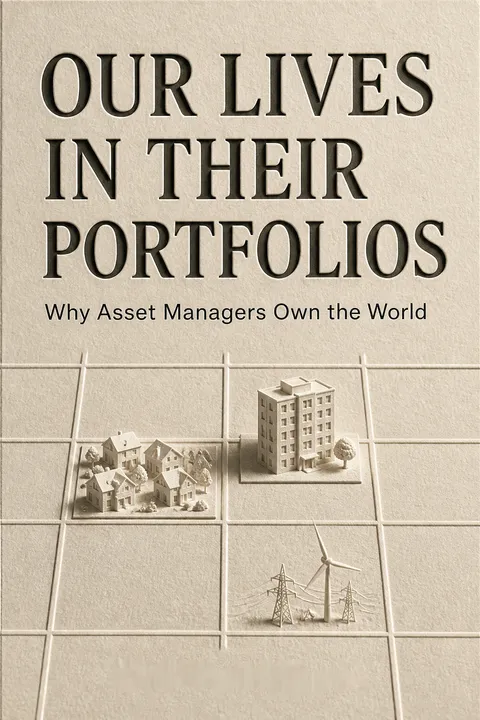


Key Takeaways
Treat housing ownership as a question of power, not just property
One complex, many owners. Summer House, an apartment complex in Alameda, California, began its recent history as a deteriorating rental property. In 2004, its owner, Fifteen Group, evicted every tenant, saying it planned renovations. Kennedy Wilson bought the property, raised rents, and sold it in 2017 for $231 million. Blackstone became the next owner, without publicly identifying itself as the buyer.
The financial turn. Kennedy Wilson had repurchased the complex in 2010 for $86 million. Debt magnified its return: the firm said its gain was about 700 percent. For tenants, the ownership changes meant rising rents, eviction pressure, and continuing repair complaints. The book uses this story to show how finance can shape ordinary life through control of physical homes.
What's striking is how the ownership trail is both consequential and hard for tenants to see. The landlord they encounter may be a management company, while decisions and profits sit farther up a chain of funds and corporate vehicles. That distance can make accountability difficult: residents experience the rent increase directly but may not know who set the investment strategy. The story also cautions against treating a building's sale price as a neutral measure of success. A higher valuation may reflect a successful investment, while also signaling that housing has become less affordable to the people who live there.
Distinguish owning shares from controlling the systems people depend on
A direct stake in daily life. Asset-manager society describes a society in which asset managers control essential physical assets, including homes, roads, water systems, and power networks. Asset managers are firms that invest money on behalf of clients, often pension plans and insurers, and charge fees for doing so. The assets are usually held by investment funds they manage, rather than by the management firm itself.
Control changes the relationship. A fund owning a minority stake in a publicly traded landlord is not the same as a fund controlling the homes themselves. Large index managers such as BlackRock, Vanguard, and State Street generally hold minority shares across many companies. In asset-manager society, firms such as Blackstone, Macquarie, and Brookfield can exercise direct control over particular homes or infrastructure, deciding how those assets generate income.
This distinction clarifies why ordinary talk about institutional ownership can blur very different kinds of power. A small shareholding may influence corporate governance, but it does not necessarily give an investor command over a particular water network or rental complex. Control over essential assets brings decisions closer to people who depend on them, while often placing those decisions outside familiar democratic channels. Still, control exists by degree: joint ventures, concessions, and minority positions complicate any sharp boundary. The useful question is not simply who owns a share, but who can set prices, direct maintenance, and decide how an asset is used.
Trace privatization and public policy before blaming investor appetite
Markets were made. Asset-manager society took shape when three trends converged: institutions began investing through asset managers, housing and infrastructure became available for private purchase, and investors started allocating more money to these assets. Australia was an early proving ground. In the 1990s, public infrastructure sales and concessions gave asset managers assets to buy, while dedicated infrastructure funds gave pension schemes a way to invest in them.
The state shaped the offer. In Europe, privatization and public-private partnerships opened further opportunities. Governments also made projects more attractive by guaranteeing payments or reducing risks investors were unwilling to accept. After the 2007-09 financial crisis, low interest rates and public austerity helped accelerate real-asset investment. The rise of the industry, then, was not simply a spontaneous response to demand. Policy helped create investible assets and investment conditions.
This account shifts attention from investor preference to the institutions that make particular investments possible. A road becomes an investment opportunity through legal rights, contracts, revenue rules, and public decisions about ownership. That is a useful corrective to explanations that treat markets as natural arenas where capital merely finds its best use. It also raises a practical question for policymakers: if public guarantees make an asset attractive, what public value is secured in return? De-risking may mobilize private capital, but its terms determine whether the public receives durable service improvements or mainly assumes risks that investors decline.
Follow the fund: fees and leverage determine who bears the risk
The fund is the engine. Asset managers pool client money in investment funds, which acquire homes and infrastructure. Many unlisted funds are closed-end, meaning they operate for a defined period, commonly seven to twelve years, and must sell their assets before winding up. Managers typically earn annual management fees, often alongside performance fees. The familiar shorthand is “two and twenty,” though actual terms vary.
Debt magnifies returns. Funds often finance purchases with substantial borrowing. BlackRock's 2018 purchase of a Norwegian wind farm used about 70 percent debt. Leverage can multiply investors' gains if an asset rises in value, but can intensify losses if it falls. The debt is often placed on the acquired company or asset-holding vehicle, limiting the fund's exposure. Managers also tend to invest only a small share of fund capital themselves, so their financial stake may be modest relative to clients'.
The fund structure separates decision-making, ownership, and liability. Investors supply most of the capital, managers direct the investment, and debt may sit in a separate company that owns the asset. This can make a complicated transaction look simpler than it is, while obscuring who absorbs losses in a downturn. Leverage is not inherently reckless: stable income can support borrowing, and debt can finance useful assets. But its social meaning depends on the contract and the fallback plan. When essential services are involved, limited liability for investors can coexist with lasting consequences for users and governments.
Demand transparency where private funds govern public necessities
Ownership often has layers. A tenant may pay rent to a local company, which is owned by a holding company, which is controlled by an asset manager's funds. Infrastructure can be held through similar chains, or through long-term concessions and public-private partnership contracts. The manager may outsource day-to-day operations, leaving its name absent from the service people encounter.
The map is uneven. In 2020, global assets under management across the entire asset-management industry exceeded $100 trillion. That figure is not a measure of housing and infrastructure alone. Capital for real-asset funds comes largely from North America and Europe, while investments also reach other regions. The book describes asset managers controlling assets across housing, energy, transport, telecommunications, water, farmland, and social infrastructure. Yet limited disclosure, especially for unlisted funds, makes it difficult to establish exactly what they own and who ultimately benefits.
Opacity is not merely a research inconvenience. When an owner controls infrastructure or housing that people cannot easily avoid using, public knowledge is part of the accountability structure. The chain of entities may serve ordinary legal or financial purposes, but it also makes it harder to identify who is responsible for decisions and who receives payments. Transparency alone cannot guarantee fair prices or good service. It does, however, make scrutiny possible, and helps distinguish a genuine operational failure from a deliberate investment choice. The case for disclosure is strongest where private control affects services essential to daily life.
Do not confuse risk capital with risk shifted onto taxpayers
Contracts can protect investors. Governments and public bodies sometimes guarantee revenue to attract private investors. Under a 2012 deal for Bayonne, New Jersey's water system, KKR and water company Suez received a minimum-revenue guarantee. The city also accepted responsibility for unexpected capital costs. Residents initially faced an 8.5 percent rate increase; later, rates rose by 13.25 percent. KKR sold its stake after about five years, reportedly earning a 36 percent internal rate of return.
The public may pay twice. If demand falls short or repairs cost more than expected, contractual protections can transfer the shortfall to taxpayers or customers. Chicago's parking concessions similarly included terms that led the city to pay investors when public works or street closures affected parking revenue. These agreements can constrain future decisions about transport and public space, long after the original officials have left office.
The key issue is not whether private investors take any risk, but how much risk remains with them after the contract is signed. Revenue guarantees can make projects financeable, and private partners may bring expertise or funding that public agencies lack. Yet a contract that protects returns by charging users or taxpayers for weak demand is not a simple transfer of risk. It is a redistribution of it. Evaluating a partnership therefore requires looking beyond its announced investment total to the contingencies, penalties, and public obligations embedded in the fine print.
Short fund horizons turn homes and infrastructure into resale projects
Exit shapes ownership. Closed-end funds must sell assets within their limited lives. This structure encourages managers to prepare assets for resale, even when the assets themselves are meant to serve people for decades. The operational priorities are often to increase revenue, reduce running costs, and avoid investments whose benefits arrive after the fund exits.
Tenants feel the trade-off. At Invitation Homes, the rental company Blackstone created to buy US houses, average monthly rents rose from $1,424 in 2014 to $1,600 in 2016. At the same time, annual spending on repairs and preparing homes for new tenants fell from $1,362 to $1,146 per home. Blackstone began selling shares after only a few years. Separately, a study of US care homes found lower staffing and higher patient mortality under asset-manager ownership than under other for-profit ownership.
A short ownership period does not prove that every manager neglects an asset, and regulation or enforceable maintenance obligations can limit that risk. But the time horizon creates a structural tension: the person deciding whether to pay for long-lived repairs may not be present to receive their benefits. For investors, an income stream can make an asset more attractive to the next buyer; for users, the same income strategy can mean higher charges and less maintenance. The important distinction is between improving an asset's long-term usefulness and improving the numbers that support its sale price.
Ask who gains: retirement claims conceal concentrated rewards and losses
Returns shrink along the chain. In a hypothetical successful fund, $300 million of client capital grows to $690 million before fees. After management fees, carried interest, and expenses, limited partners receive $540 million. After pension-scheme fees, savers in the example receive about $500 million, a 1.6 multiple on their original capital, rather than the fund's headline 2.3 multiple. The manager's fees and carried interest, meanwhile, go to a relatively small group of people.
Losses travel downward. If the fund fails, managers can still collect management fees, while pension savers bear most of the investment loss. Their gains are unequal, too: in the United States, the top lifetime-earnings quintile held half of retirement savings in 2010, while the bottom quintile held just 1 percent. Asset managers also raise money from insurers, banks, wealthy individuals, and sovereign wealth funds, not only pension plans.
The “ordinary saver” story is powerful because it connects finance to recognizable people and public service. But it says little about the size of each person's stake, how fees divide returns, or who absorbs losses. Looking through the entire chain makes the distribution visible: small percentages can produce enormous rewards when collected from large pools of capital, while dispersed savers receive modest individual gains. This does not mean pension investment is pointless. It means that claims of broad benefit need to be judged against both the concentration of wealth among savers and the asymmetric allocation of fees and risk.
Track interest payments to see how asset deals can drain public revenue
Debt can redirect income. The book calls a pattern fiscal extractivism: public-use assets generate revenue, but financial structures channel part of that revenue away from public tax receipts and toward private investors. One mechanism is a shareholder loan, in which an owner lends money to a company it controls. Interest payments reduce the company's taxable profits while paying the owner.
The location matters. In Sweden, Innisfree and a construction partner controlled the company building and operating a Stockholm hospital. Innisfree funds lent the project money at a reported 9 percent interest rate. Reporters estimated that the interest could total about 1.3 billion kronor over the contract, while reducing the project's taxable profits in Sweden. Funds domiciled in low-tax jurisdictions may receive the interest income. Real-estate investment trusts and private debt funds provide other ways to structure income and tax exposure.
This lens adds a fiscal dimension to debates that often focus only on rents, tolls, or service quality. A project can appear privately financed while its revenue is routed through debt payments, fees, and tax arrangements that shape how much remains in the public jurisdiction where the asset operates. The argument is not that every loan or offshore fund is abusive. It is that ownership structures should be assessed as a whole, including the tax base they leave behind. A public contract's cost is not fully visible in its headline price if the surrounding financial architecture is excluded.
Housing and climate crises can deepen private ownership unless policy changes
Crisis creates openings. The book argues that housing shortages and climate investment needs can create fresh opportunities for asset managers. Governments may use public money to make private projects safer instead of taking ownership themselves. The 2022 US Inflation Reduction Act, for example, relied heavily on tax credits to encourage private investment in clean energy rather than establishing broad public ownership of new power infrastructure.
Public support can underwrite private control. BlackRock's Climate Finance Partnership raised $673 million for infrastructure in Global South countries. Public development banks and philanthropic investors contributed $130 million in capital designed to absorb losses before private investors; BlackRock itself committed $20 million. This structure illustrates how public and philanthropic support can help mobilize private capital. The book's conclusion is that asset-manager society grows not because private ownership is inherently best, but because money and political choices increasingly direct essential assets into private hands.
The climate example shows why the form of investment matters as much as its purpose. A wind farm can help reduce emissions while still placing control and income in private hands, supported by public guarantees or subsidies. That does not make private investment useless: it can mobilize capital and expertise quickly. But a climate response must also ask who owns the resulting infrastructure, who can afford its services, and who carries losses when projects disappoint. Treating private finance as the default solution narrows the political imagination before those questions are answered.
Analysis
The book's central contribution is to move the debate from the abstract growth of finance to the physical systems through which people live. Asset managers are not merely large shareholders in remote corporations. In housing and infrastructure, they can control assets directly, set commercial priorities, and shape the terms on which people obtain shelter, water, transport, and energy. That distinction makes ownership a question of governance, not just accounting.
The explanation is deliberately institutional. The state privatizes assets, writes contracts, guarantees revenues, and helps construct markets. Pension funds and insurers supply much of the capital, while asset managers organize it through funds, fees, and debt. These arrangements explain why the industry can be both highly profitable and difficult to scrutinize. They also challenge the comforting account that private investors simply take risks the public sector cannot bear. Often, contracts redistribute risk rather than remove it.
The analysis is strongest when it connects financial structure to tangible consequences: a tenant's rent, a city's narrowed planning options, or a taxpayer's long-term obligation. It is less useful to treat all private ownership as identical. An asset manager's short fund horizon, an operating company's business model, and a public agency's constraints create different incentives, and specific outcomes depend on regulation, contract design, competition, and local housing supply. The book's case is not that every asset manager behaves identically, but that its recurring structures generate predictable pressures.
That distinction also points toward the practical test for reform. Public debate should evaluate not only how much capital a project attracts, but who controls the asset, who pays when projections fail, what maintenance is enforceable, how income is taxed, and whether the public retains meaningful choices. Without those questions, investment can be mistaken for public benefit. The book's lasting warning is that essential assets do not become socially governed merely because pension money helped buy them. Ownership rights, contracts, and public accountability determine whose priorities shape the places people call home.
People Also Read







Glossary
asset-manager society
Private control of essentialsA society in which asset managers increasingly control essential physical assets, such as housing, roads, energy networks, and water systems. These managers invest money pooled from clients, often institutional investors, through funds. The term emphasizes their direct influence over everyday social life, which differs from their more indirect influence as shareholders in publicly traded companies.
asset-manager capitalism
Asset managers as shareholdersA term used for a form of capitalism in which asset managers hold large stakes in publicly traded companies on behalf of investors. These holdings are often minority positions spread across many firms, and managers generally do not directly control the companies. The book distinguishes this indirect ownership from asset-manager society, where managers can control specific physical assets.
closed-end fund
Fund with a fixed lifespanAn investment fund with a specified term, commonly seven to twelve years, and a limited period for investors to commit capital. The fund's managers typically make investments during its early years and must sell its assets before the fund ends. Because the fund has a deadline, its structure can encourage asset sales even when the underlying property or infrastructure has a much longer useful life.
de-risking
Shifting investment risk elsewhereMeasures that make an investment more appealing to private investors by reducing or transferring risks they would otherwise bear. Governments may guarantee minimum revenues, promise payments regardless of use, or absorb unexpected costs. De-risking can help a project secure financing, but it may leave taxpayers or service users responsible when demand, costs, or construction outcomes differ from expectations.
fiscal extractivism
Private capture of public revenueA pattern in which revenue from public-use assets is redirected toward private investors through financial and tax structures. For example, a shareholder loan can generate interest payments to an asset owner while reducing the operating company's taxable profits. The concept highlights how private finance can capture income that might otherwise have supported public revenues in the place where an asset operates.
fiscal mutualism
Public savings fund public assetsA historical arrangement in which public pension savings helped finance infrastructure owned by public bodies, often through purchases of municipal bonds. The public sector issued the debt, built or maintained assets, and benefited from the financing. The term contrasts this arrangement with asset-manager-led investment, where private intermediaries can control public-use assets and extract fees and income.
carried interest
Manager's share of fund profitsA performance-based payment to an investment fund's manager, generally calculated as a share of profits after specified conditions are met. In real-asset funds, the share is often around 20 percent, sometimes payable only after investors receive a minimum return. It can give managers substantial earnings relative to their small share of the capital committed to the fund.
Download PDF
Download EPUB
.epub digital book format is ideal for reading ebooks on phones, tablets, and e-readers.








