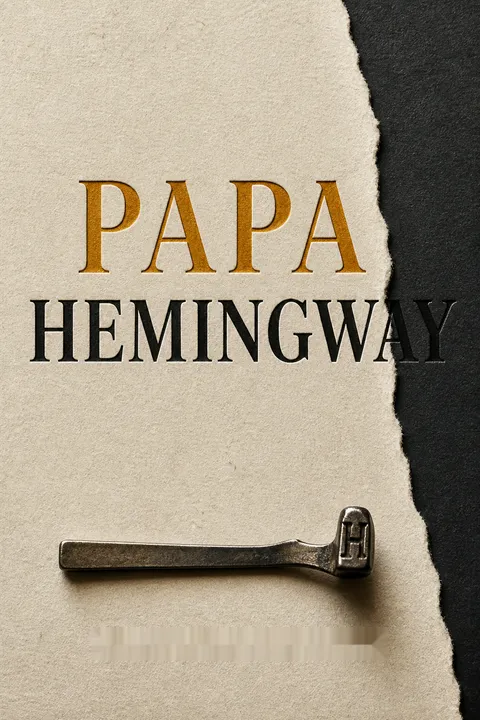


Key Takeaways
Replace Hemingway awe with attention to the generous, difficult man.
A legend becomes human. In 1948, Hotchner arrived in Havana with an assignment to ask Hemingway about the future of literature. Too intimidated to knock on his door, he sent a note instead. Hemingway called, invited him for a drink, then took him fishing and patiently coached him through landing a marlin. That first encounter began a friendship lasting thirteen years. Hotchner remembers Hemingway as exuberant, funny, and unusually attentive, but also proud, volatile, and hard to please. The memoir opens with Hemingway’s death and admits that even a close friend cannot explain why it happened. Its account offers something more dependable than a simple verdict: scenes in which the famous writer appears as a complicated person.
The memoir’s intimacy is its strength, but intimacy does not make a portrait complete. Hotchner sees Hemingway in settings where the writer is at ease, including fishing trips, dinners, and travel, and his affection shapes what he notices. That perspective still complicates the public persona effectively: patience with a novice fisherman sits beside prickliness toward critics and strangers. Biography often works best this way, not by replacing one myth with another, but by showing how conflicting traits coexist. Readers can value Hotchner’s access while remembering that friendship grants proximity, not omniscience.
Use life as raw material, then reshape it until it becomes fiction.
Experience needs invention. Hemingway described his fiction as drawn from what he had known, seen, and felt, but not copied directly. Catherine Barkley in A Farewell to Arms, for example, combined elements of a Red Cross nurse he loved in Italy, his first wife Hadley, and his second wife Pauline. The novel’s childbirth scene came from Pauline’s experience, not the nurse’s. He also drew on accounts from other soldiers for parts of the war he had not personally witnessed. His point was not that every detail happened to him, but that emotional credibility depends on deeply understood material, transformed through imagination. A character can therefore be assembled from several lives and still feel more coherent than a literal record.
This approach resembles how autobiographical memory works: recollection is reconstructed from fragments, not replayed like a recording. Fiction makes that reconstruction deliberate, allowing an artist to preserve emotional patterns while changing events and people. The method also raises an ethical question. Transforming someone into a composite may protect privacy, but it can still leave recognizable traces, especially when the writer is famous. Hemingway’s practice is useful as a model of craft, not a blanket permission to claim other people’s lives as raw material.
Treat revision as part of writing, not cleanup after inspiration.
The work continues after drafting. Hemingway’s routine started early: he reread and edited the previous day’s pages before continuing, so the book remained active in his mind. He told Hotchner that A Farewell to Arms went through thirty-nine manuscript endings and another thirty revisions in proof. He also edited a story by his son and changed only one word, arguing through the act that a tiny change can matter if it is the right one. Hemingway believed writers often avoid the hardest part of the job by failing to hone what they have written. Inspiration might begin a passage, but rhythm, precision, and meaning emerge through repeated attention to it.
Revision is a form of thinking, not merely correction. Repeated passes let a writer detect patterns that are invisible while composing, much as an editor or scientist tests an initial interpretation against the evidence. Hemingway’s practice also suggests a useful stopping point: he often ended a session knowing what came next, reducing the effort required to restart. His intense schedule should not be mistaken for a universal prescription. The transferable principle is sustained engagement with the draft, not copying one writer’s hours, posture, or temperament.
Plan pleasure as deliberately as work, and let it restore attention.
Leisure had a place on the calendar. Hemingway regularly reserved time to recover from writing and travel. Hotchner describes these pauses as periods of fishing, hunting, bullfights, meals, and local exploration. In Paris, Hemingway and Hotchner organized a racing partnership, studied the horses, and attended the Auteuil steeplechase meet day after day. On a long drive through France, they stopped for meals and small-town shooting booths, turning the journey itself into part of the pleasure. Hemingway believed that enjoyment was not an accidental bonus to a life of work. He made plans for it, while leaving room for detours. The memoir shows recreation as a serious part of how he experienced the world.
Deliberate leisure can protect attention from becoming a scarce resource spent entirely on obligation. In contemporary behavioral health, planned rewarding activity is also used to help people re-engage with daily life, though it is not a substitute for treatment when someone is ill. Hemingway’s pleasure was intensely sensory and social, anchored in place, skill, food, and company. The limits matter too: some pursuits he celebrated, including animal sports and hunting, are ethically contested. A reader can learn from the care he gave to recreation without adopting every pastime or assuming pleasure prevents distress.
Defend creative immersion from publicity that treats a writer as public property.
Attention can be interrupted into silence. After Hemingway received the Nobel Prize, journalists, photographers, visitors, and commercial suitors descended on his Cuban home. He was already recovering from serious injuries and trying to write. He told Hotchner that publicity had knocked the developing book out of his concentration. He turned down interviews and asked for privacy, yet people continued arriving, sometimes announcing projects as if he had agreed to them. The conflict was not simply dislike of attention. Hemingway felt that writing required sustained solitude, and that interruption threatened work he was struggling to complete. The acclaim surrounding The Old Man and the Sea brought recognition, but it did not provide the quiet or companionship he needed.
Creative concentration depends on more than a strong work ethic. Cognitive research on task switching finds that moving between demanding activities carries a cost: attention must be reoriented, and the unfinished task remains mentally active. Hemingway’s experience gives that abstract problem a human scale, especially because his public fame made privacy harder to defend. Still, isolation is not the only condition for good work, and public engagement can bring resources and readership. The key distinction is consent. Attention offered to a writer is not automatically access to the writer’s time.
For Hemingway, friendship meant practical loyalty, tested under pressure.
Affection took practical form. Hemingway helped friends and acquaintances with money, advice, introductions, and time. He supported Spanish refugees in Cuba, encouraged young writers, and offered Hotchner help if freelance work left him short of money. He also valued people who stayed dependable when circumstances turned difficult. Yet his standard of loyalty could be severe. He sometimes cut people off publicly over disagreements or perceived slights, even when he later resumed contact. Hotchner presents both sides: a man who could be generous and protective, and one who made friendship feel like an examination. For Hemingway, trust was shown through conduct, not declarations. But that standard could leave little room for ordinary error or disagreement.
The memoir distinguishes social warmth from dependable support. In research on social relationships, practical help and a sense of reliable connection are often treated as distinct dimensions of support, both of which matter during stress. Hemingway offered the first generously and demanded the second intensely. The tension is instructive: loyalty can make friendship durable, yet loyalty framed as a test can become control. Hotchner’s affection does not conceal the cost of Hemingway’s judgments. The most useful model is reciprocal care, with enough trust to repair a rupture rather than treating every disappointment as proof of disloyalty.
When vocation becomes the whole self, losing it can feel like annihilation.
Writing carried his identity. Hemingway’s sense of himself was tied to several kinds of prowess: writing, physical courage, hunting, fishing, drinking, and sexual confidence. After the 1953 African crashes, he endured pain and struggled with health, while the Nobel Prize brought unwanted scrutiny. Later, he faced the loss of his Cuban home, anxiety about his eyesight, and difficulty working. In conversation with Hotchner, he could not treat writing as one activity among many. If he could not trust his ability to write, he felt that life on his own terms was no longer possible. He had published major books and stories, but his remaining ambitions still felt like obligations he had not fulfilled.
A strong vocation can organize effort and give a person a durable sense of purpose. It can also become a single point of failure when identity depends on continued performance. Psychological theories of self-complexity propose that people with meaningful roles across several areas may have more protection when one role is threatened. That idea should not be reduced to advice to pick up hobbies: Hemingway’s writing was not a pastime but the center of his self-understanding. The memoir makes the cost of that narrow center visible without proving that it caused his illness or death.
Treat paranoia and suicidal despair as illness requiring care, not argument.
Friendship could not cure crisis. In 1960 and 1961, Hemingway became increasingly convinced that federal agents were monitoring him and planning to prosecute him. Hotchner and other friends tried to reason with him, but the beliefs persisted and spread. Doctors arranged hospital care, including electroconvulsive treatments, which Hemingway feared had damaged his memory and writing ability. His condition appeared to improve, then deteriorated again. Hotchner describes his own attempts to help, the concern of Mary and Hemingway’s doctor, and the limits of what friends could do. Hemingway died by suicide in 1961. Hotchner refuses to claim a single explanation, distinguishing what he witnessed from what he could not know.
The memoir’s refusal to offer a neat cause is a form of honesty. Severe mental illness and suicidal crises are not reliably resolved by debate, reassurance, or personal will; they call for professional care and support from trusted people. Electroconvulsive therapy remains a treatment for some severe conditions, but memory effects, consent, and follow-up care deserve serious attention. Hotchner’s account of the period reflects its own medical context and the uncertainty facing the people around Hemingway. Its most important lesson is not that friendship failed, but that friendship alone was never enough.
Analysis
Papa Hemingway is a witness memoir organized less by argument than by encounters: a first fishing trip, Paris racetracks, Spanish bullfights, hospital rooms, and the final years in Idaho. Travel is not decorative scenery. Each place lets Hotchner show Hemingway performing a version of himself, as guide, hunter, host, writer, or friend. The settings make the changes in his vitality legible. The energetic man who navigates roads, teaches fishing, and plans elaborate outings becomes a man who cannot trust his memory, health, or work.
The central tension is between extraordinary capability and dependence. Hemingway’s knowledge and discipline are real, as is his generosity. So is his need to measure life through performance. He plans pleasure with the same intensity he brings to writing, and he expects loyalty with similar force. These traits help create a vivid life, but the memoir also shows how a self built around prowess can become vulnerable when the body and work falter. That vulnerability is a theme, not a diagnosis or a sufficient explanation for suicide.
Hotchner’s proximity offers unusual detail, but it also limits certainty. He records conversations and behavior with an editor’s ear, while his affection encourages a sympathetic reading. The memoir acknowledges this limit directly: a friend can narrate circumstances without claiming access to the final cause. That distinction is especially important in the account of Hemingway’s decline. It preserves both the reality of suffering and the irreducible uncertainty of another person’s inner life.
The book’s lasting value lies in that combination of vividness and restraint. Hemingway is neither reduced to his fame nor explained away by his death. Readers encounter the pleasure he took in work, landscape, and companionship, alongside the costs of public intrusion, physical decline, and a demanding ideal of selfhood. The result is not a solution to the mystery of Hemingway, but a close account of what a life looked and felt like to someone who shared it.
Review Summary
Papa Hemingway is a memoir by A.E. Hotchner detailing his friendship with Ernest Hemingway from 1948 to 1961. Readers praise Hotchner's intimate portrayal of Hemingway's adventures, writing process, and eventual decline. The book offers insight into Hemingway's personality, showcasing both his larger-than-life persona and vulnerability. While some criticize potential bias or embellishment, most find it a compelling and honest account of Hemingway's final years. The narrative is described as engaging, providing a unique perspective on the legendary author's life and work.
People Also Read






Glossary
Black-Ass
Hemingway’s label for despondencyHemingway’s informal term for a period of deep gloom, discouragement, or emotional distress. He uses it for moods associated with injury, illness, work pressures, and other troubles. It is not a clinical diagnosis, and the memoir does not present it as one; it is Hemingway’s own shorthand for feeling profoundly low.
double dicho
A saying reversible in meaningHemingway’s term for a saying that can be turned around to express a contrasting idea. In the memoir, he applies it to the thought that a person may be physically overcome without surrendering inwardly, while its reversal suggests that a person may be inwardly overcome without being physically destroyed. The term reflects his interest in compressed, opposing formulations.
Hemhotch, Ltd.
Hemingway and Hotchner’s partnershipThe name Hemingway and Hotchner gave their joint venture for betting on steeplechase races and pursuing other sporting interests. It began as a shared racing fund in Paris and was later formally incorporated in New Jersey. The name combines parts of their surnames and represents the playful, practical partnership at the center of many of their travels.
sobresaliente
Standby matador in a mano a manoIn the memoir’s bullfighting context, the sobresaliente is the substitute matador assigned to a mano a mano, a contest between two matadors. The substitute is expected to take over if either contestant cannot continue. Hotchner is dressed in a matador’s suit and presented in this role as an elaborate joke, though he is not a professional bullfighter.
big book
Planned land, sea, and air workHemingway’s name for an ambitious, multi-part literary project intended to encompass land, sea, and air. The memoir refers to separate sections and related manuscripts, including The Old Man and the Sea and an unpublished sea narrative. The project remained a changing plan rather than a completed, unified book during Hotchner’s account.
FAQ
What's Papa Hemingway: A Personal Memoir about?
- Personal Insights on Hemingway: The memoir by A.E. Hotchner offers a detailed account of his friendship with Ernest Hemingway, spanning fourteen years.
- Exploration of Hemingway's Life: It covers significant events in Hemingway's life, including his struggles with health, writing, and relationships.
- Themes of Friendship and Legacy: The book emphasizes the deep friendship between Hotchner and Hemingway, showcasing how their bond influenced both their lives and careers.
Why should I read Papa Hemingway: A Personal Memoir?
- Intimate Portrayal of a Legend: Readers gain an intimate look at Hemingway's personality, his creative process, and the challenges he faced.
- Literary and Historical Context: The memoir provides context to Hemingway's life during a tumultuous time in history, including the impact of World War II.
- Rich Anecdotes and Stories: Hotchner shares numerous anecdotes that highlight Hemingway's wit, charm, and complexity, making the memoir both entertaining and enlightening.
What are the key takeaways of Papa Hemingway: A Personal Memoir?
- Understanding Hemingway's Duality: The memoir illustrates the contrast between Hemingway's public success and private struggles.
- The Importance of Friendship: Hotchner emphasizes the significance of loyalty and companionship in Hemingway's life.
- Legacy of a Literary Giant: The book reflects on Hemingway's lasting impact on literature and culture, encouraging readers to appreciate his contributions.
What are the best quotes from Papa Hemingway: A Personal Memoir and what do they mean?
- "Every man's life ends the same way.": Reflects Hemingway's belief in the universality of death and the importance of authenticity in life.
- "Man can be destroyed but not defeated.": Encapsulates Hemingway's resilience and belief in the human spirit's ability to endure hardships.
- "A writer should write what he has to say and not speak it.": Emphasizes Hemingway's belief in the power of the written word over spoken language.
How does Papa Hemingway: A Personal Memoir portray Hemingway's relationships?
- Complex Marriages: The memoir discusses Hemingway's tumultuous relationships with his wives, highlighting emotional struggles and conflicts.
- Friendships with Other Writers: Hotchner details Hemingway's friendships with other literary figures, showcasing camaraderie and competition.
- Connection with Family: The memoir touches on Hemingway's relationship with his children, illustrating the challenges he faced as a father.
What insights does Papa Hemingway: A Personal Memoir provide about Hemingway's writing process?
- Daily Writing Routine: Hotchner describes Hemingway's disciplined writing habits, including his preference for writing early in the morning.
- Editing and Revision: The memoir emphasizes Hemingway's commitment to editing, revealing his dedication to achieving clarity and precision.
- Influence of Life Experiences: Hotchner illustrates how Hemingway's life experiences directly informed his writing.
How does Papa Hemingway: A Personal Memoir address Hemingway's mental health?
- Struggles with Depression: The memoir candidly discusses Hemingway's battles with depression and anxiety, particularly in his later years.
- Impact of Fame: Hotchner explores how Hemingway's fame contributed to his mental health issues, suggesting overwhelming scrutiny and expectations.
- Coping Mechanisms: The book reveals Hemingway's love for adventure and the outdoors as temporary relief from his inner turmoil.
What role does friendship play in Papa Hemingway: A Personal Memoir?
- Support System: Hotchner emphasizes the importance of friendship in Hemingway's life, portraying his friends as crucial support during difficult times.
- Creative Collaboration: The memoir illustrates how friendships often led to creative collaborations, showcasing the collaborative nature of the literary world.
- Emotional Connection: Hotchner's reflections reveal the deep emotional bonds that enriched both their lives and work.
How does Papa Hemingway: A Personal Memoir reflect on Hemingway's legacy?
- Cultural Impact: The memoir discusses Hemingway's significant influence on literature and culture, noting his writing style and themes.
- Personal Reflections: Hotchner shares his personal reflections on Hemingway's legacy, expressing admiration for his talent and acknowledging his complexities.
- Enduring Relevance: The memoir suggests that Hemingway's themes of struggle and resilience remain relevant today.
What does Papa Hemingway: A Personal Memoir reveal about Hemingway's health struggles?
- Physical Ailments: The memoir details Hemingway's struggles with high blood pressure, kidney problems, and the effects of aging.
- Mental Health Challenges: Hotchner discusses Hemingway's mental health struggles, including depression and paranoia.
- Impact on Creativity: The book illustrates how Hemingway's health issues affected his writing process, leading to frustration and self-doubt.
How does A.E. Hotchner describe his relationship with Hemingway in Papa Hemingway: A Personal Memoir?
- Deep Friendship: Hotchner portrays a close and supportive friendship with Hemingway, marked by mutual respect and shared experiences.
- Mentorship and Influence: The memoir highlights how Hemingway served as a mentor to Hotchner, guiding him in his writing career.
- Emotional Connection: Hotchner shares personal anecdotes that reveal the emotional depth of their relationship.
What role does the setting play in Papa Hemingway: A Personal Memoir?
- Cuban Backdrop: The memoir frequently references Hemingway's beloved Finca Vigia in Cuba, highlighting its influence on his writing.
- Key West and Ketchum: Hotchner discusses the significance of these locations in Hemingway's life, shaping his identity and literary output.
- Cultural Context: The settings provide cultural context for Hemingway's experiences, reflecting the social and political climates of his times.
Download PDF
Download EPUB
.epub digital book format is ideal for reading ebooks on phones, tablets, and e-readers.








