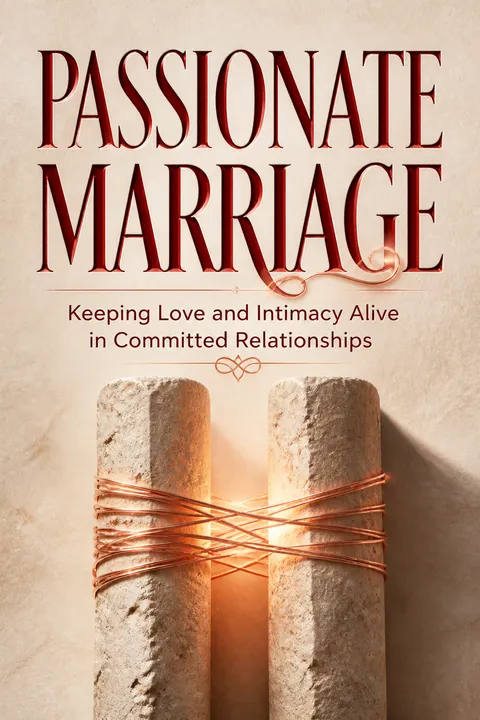


Key Takeaways
Treat marriage as a place to grow, not a test you passed.
Marriage is a process. Schnarch argues that people rarely begin committed relationships fully prepared for them. Instead, the pressures of living together reveal habits, fears, and dependencies that partners must learn to handle. Bill and Joan, for example, began with low self-esteem and a fear of being alone. Those imperfect motives did not predetermine failure. Their repeated conflicts could show them what each needed to develop.
Problems can teach. This does not mean every painful relationship is healthy or should be preserved. The book’s narrower claim is that conflict is not automatic evidence of incompatibility. A sexual difficulty, recurring argument, or mismatch can expose a personal task that ordinary advice about communication may not resolve. The question shifts from who is defective to what the relationship is making visible.
The book’s strongest reframing is to treat a relationship as a setting for development, not as a verdict on whether two people chose correctly. This fits systems thinking: patterns emerge between people and cannot always be explained by locating a fault in one partner. Yet growth language needs a boundary. Persistent coercion, fear, or violence should not be romanticized as a developmental lesson. A useful reading distinguishes difficult mutual conflict from danger, and asks whether both partners retain real agency.
Stay close without surrendering your separate mind.
Differentiation means selfhood in relationship. It is the ability to keep a stable sense of personal values and judgment while remaining emotionally connected to important people. It is not cold independence, constant disagreement, or simply creating distance. Schnarch contrasts it with emotional fusion, in which a person’s identity and emotional balance depend heavily on a partner’s responses.
Distance can disguise dependence. Bill and Joan felt alienated, yet their fierce reactions to each other showed how much they were emotionally entangled. Joan’s father had enforced a fixed family hierarchy, where disagreeing could be treated as disrespect. She and Bill carried similar rules into marriage. Differentiation meant tolerating disagreement without either collapsing into compliance or fleeing the relationship to feel like an individual.
This distinction is useful because it separates autonomy from avoidance. A person who can remain present during disagreement has more choices than someone who must submit, attack, or leave to regain equilibrium. The idea also complements attachment theory, which emphasizes that connection and exploration can support each other. The book’s language can sound as though partners should always manage distress alone. A more balanced application allows mutual comfort while resisting the belief that one partner must regulate every feeling for the other.
Disclose to be known, not to extract reassurance.
Intimacy is not guaranteed approval. Schnarch distinguishes other-validated intimacy, which depends on a partner’s acceptance or reciprocal disclosure, from self-validated intimacy, in which a person shares honestly without requiring a particular response. Self-validation does not mean rejection is painless. It means personal worth is not handed over to the listener to decide.
Joan’s strategy kept her stuck. She disclosed feelings hoping Bill would open up in return and reassure her. When he did not, she felt unable to continue. Her turning point came when she spoke about what mattered without demanding that he agree or respond in kind. That gave Bill a clearer picture of her and required her to stand behind her own experience, rather than using disclosure as a bargain for comfort.
The distinction helps explain why more talking does not always create more closeness. A disclosure can be an invitation, but it can also function as an unspoken demand for reassurance. Self-validation makes honest speech less dependent on another person’s immediate reaction. Still, reciprocity is not inherently immature: care, responsiveness, and repair are central to healthy bonds. The useful test is whether disclosure permits two perspectives to exist, or whether one partner must validate the other before the conversation can continue.
Read sex as a meaning-rich interaction, not a performance test.
Bodies respond to context. The book’s quantum model describes sexual response as the combined effect of physical sensation and the thoughts, feelings, and meanings surrounding an encounter. When that combined stimulation passes a person’s threshold, arousal or orgasm may occur. The model helps explain why the same touch can feel welcome one day and irritating another, or why anxiety can interrupt an erection despite adequate physical stimulation.
Orgasm is not a report card. Bill’s erection difficulty worsened when intercourse felt like a test of whether he could perform. His attention shifted from connection to failure, lowering his arousal. The wider point is that orgasm can happen without deep connection, while meaningful sex can include more than orgasm. Technique matters, but it cannot substitute for emotional presence.
This account moves beyond a simple mechanical model of sex by treating attention, expectation, and relationship meaning as part of the bodily event. That is compatible with a biopsychosocial view, where physiology and context interact rather than compete. Its practical value is substantial: a symptom can become information about the encounter instead of proof of personal defect. The model should not, however, make medical causes disappear. Pain, medication effects, hormonal changes, and other physical factors may require clinical assessment alongside relational reflection.
Ask what low desire protects before trying to fix it.
Desire has a relationship history. Schnarch rejects the assumption that sex drive is simply a biological appetite everyone should feel. Desire can involve wanting a particular partner, seeking reassurance, avoiding vulnerability, or responding to the emotional tone of sex. In the book’s account, the partner with less desire usually controls how often a couple has sex, whether or not either person likes that arrangement.
Carol’s pattern made sense in context. She often wanted sex at first, when her partner’s interest reassured her that she mattered. Once that reassurance arrived, her desire faded and she felt pressure to serve his needs. Her low desire was not simply a defect to eliminate. The pattern invited curiosity about what sex meant to each partner, while leaving room for physical health, grief, medication, and other causes.
This lens can replace blame with investigation. Rather than labeling one partner normal and the other broken, it asks what the couple’s pattern rewards, avoids, or communicates. That is a useful systems question, especially when pursuit and withdrawal reinforce each other. The low-desire partner’s control of frequency describes a practical asymmetry, not a right to sex or a reason to pressure anyone. Desire should be explored with consent and care, and no one owes sexual participation as proof of commitment.
Use touch to notice connection, not to force a result.
Hugging can reveal a pattern. Schnarch’s practice of hugging till relaxed is not merely a relaxation drill. Partners stand on their own feet, embrace, attend to their own tension, and settle themselves rather than trying to manage the other person’s feelings. A partner’s urge to pull away, lean heavily, or adjust can reveal how closeness and anxiety operate between them. The hug is useful because its emotional signals are hard to hide behind sexual technique.
Foreplay communicates too. Kissing, eye contact, and the transition from caressing to genital touch all carry information about pace, interest, and emotional contact. Opening the eyes during kissing may expose a couple’s discomfort, but it can also help them see each other more clearly. These practices are invitations to observe, not assignments or tests of love.
The practices turn abstract relationship patterns into observable experience. That resembles experiential learning: a person can notice a bodily reaction before explaining it away. The insistence on using touch as a diagnostic window is more original than another checklist of bedroom techniques. But the method only works when both partners freely consent and feel physically safe. A refusal, freeze response, or need to stop deserves respect, not an interpretation that the person is resisting growth.
Expand your erotic range beyond your default sexual script.
Sex has more than one mental mode. Schnarch describes sexual trance, centered on sensation; partner engagement, centered on relational contact; and role play, centered on imaginative scenarios. People may favor one mode and neglect others, limiting the kinds of connection and pleasure available to them. The aim is not to perform every style, but to notice whether a supposed preference is actually a fear or a narrow habit.
Doing and receiving both matter. The book also explores the erotic meaning of actively giving pleasure, allowing oneself to receive it, and engaging in forceful or playful sex. George initially struggled to express sexual assertiveness with Betty because he feared becoming like his abusive father. Their work was not to erase his fear, but to distinguish consensual erotic energy from cruelty.
This framework treats sexual variety as a form of expressive range, not a contest in novelty. Its connection to role play is especially revealing: imagination can make a familiar partner feel newly discoverable, while clear selfhood makes experimentation less threatening. A crucial qualification is that assertiveness and power are not automatically healthy because they occur in marriage. Consent, negotiated boundaries, and the ability to stop distinguish erotic play from coercion. No particular style is a measure of maturity.
Let gridlock clarify your choices; don't outsource your self-respect.
A two-choice dilemma has a cost. In Schnarch’s terminology, it is a conflict between difficult alternatives, such as preserving a relationship as it is or risking change to protect one’s integrity. Couples often try to avoid choosing by pressuring a partner to give way. The resulting impasse can build toward critical mass, the point at which enough pressure prompts a fundamental shift in the relationship.
Change starts with self-confrontation. Joan stopped trying to make Bill talk and instead stated what she would and would not accept. She did not control his decision, but she stopped pretending the status quo worked for her. Schnarch pairs this with self-soothing: calming one’s own anxiety enough to think and act deliberately. Insight matters, but it cannot replace action.
The framework is powerful because it names the hidden price of waiting for perfect certainty. It also clarifies why a partner’s change can feel controlling even when no demand is made: the available choices have shifted. The model is less useful if critical mass is treated as a goal or a reason to provoke crisis. In unsafe relationships, increased pressure can increase danger. Support from a qualified professional may be important, and safety takes precedence over a theory of growth.
Own the small cruelties you deny, especially under monogamy.
Love does not prevent harm. Schnarch calls ordinary acts of withholding, humiliation, manipulation, and denial normal marital sadism. The term does not excuse those acts. It names how partners can hurt each other while insisting they mean no harm, or use sexual frustration to punish a partner without acknowledging the choice.
Commitment is not ownership. The book challenges the idea that marriage makes a partner’s body communal property. A spouse may decline sex; the other may also decide the relationship no longer works. The ethical task is to state preferences honestly instead of using guilt, deception, or a so-called mercy encounter to keep the other person in place. Where coercion or violence exists, the issue is safety, not ordinary couple conflict.
Naming everyday cruelty can interrupt the comforting story that harm only occurs in obviously abusive relationships. It makes accountability possible without turning every slight into a diagnosis. The author’s blunt language also risks flattening distinctions between petty retaliation and sustained abuse. Those differences matter for safety, power, and appropriate response. A careful application keeps the emphasis on honest ownership while refusing to normalize coercion under the label of a common marital pattern.
Expect erotic capacity to mature, and love to expose you to loss.
Sexual maturity takes time. Schnarch argues that genital responsiveness in youth is not the same as a person’s full sexual potential. Greater self-knowledge, confidence, and capacity for intimacy can deepen erotic life in middle and later adulthood. The book describes older couples discovering forms of connection they had never experienced when younger, rather than treating age as an automatic end to passion.
Love also raises the stakes. In the closing chapters, the author connects intimacy with mortality. He recounts a period when his wife faced a suspicious breast lump, making their shared future feel uncertain. A separate story follows Julia, whose husband died suddenly soon after they discussed the strength required to love. The point is not to romanticize grief, but to recognize that profound attachment carries vulnerability.
The argument offers a useful alternative to youth-centered sexual ideals: maturity can add emotional depth even as bodies change. It also resists presenting intimacy as a permanent refuge from pain. The closing emphasis on mortality gives the book’s growth model gravity, because self-reliance is not a way to need nobody; it is part of loving someone whose life remains finite. Claims about sexual peaks should be read as clinical perspective, not a guarantee for every person or couple.
Analysis
Schnarch’s central contribution is to connect three subjects often treated separately: personal development, marital conflict, and erotic life. His systems perspective asks readers to track what happens between partners, not merely diagnose an individual’s deficiency. A recurring conflict can be both painful and informative: the partner who pursues reassurance may intensify the other’s withdrawal, while each person’s response helps preserve the pattern. The proposed alternative is not detachment, but a self that can remain in contact without requiring agreement as proof of worth.
That idea gives the book unusual explanatory reach. It reframes sexual difficulties as interactions shaped by anxiety, meanings, and history, and it offers embodied experiments, such as relaxed hugging and eye contact, to make those dynamics observable. The case narratives show change through decisions and behavior, not insight alone. The approach also explains why intimacy may feel exposing rather than soothing, and why sexual pleasure cannot be reduced to technique or orgasm.
The framework is most persuasive when it increases curiosity and responsibility. It is less persuasive when its broad claims sound universal. The model’s language about differentiation can overvalue self-reliance, while its descriptions of conflict as a growth process can be misapplied to coercive or dangerous relationships. Consent and safety are not obstacles to development. They are conditions for ethical intimacy. Likewise, medical factors and cultural pressures should not be collapsed into relationship dynamics. The book’s neuroscience and developmental claims reflect its era and should be treated as supporting arguments, not settled proof.
Read with those limits in view, Passionate Marriage offers a durable practical question: what is each person doing to preserve the pattern, and what would it take to act with greater honesty without trying to control the other? Its answer is demanding but specific: know one’s own position, tolerate uncertainty, and make choices one can own. That is the book’s bridge from selfhood to closeness.
Review Summary
Passionate Marriage receives mostly positive reviews, praised for its insights on differentiation, self-validation, and personal growth within relationships. Readers appreciate Schnarch's unique perspective on intimacy and marriage. Many found the book life-changing, though some criticized its length and explicit content. The concept of differentiation resonated strongly with readers, who felt it improved their relationships and self-understanding. Some found the writing style challenging, but most agreed the content was valuable. A few readers disliked the author's tone or found the book difficult to apply without professional guidance.
People Also Read









Glossary
Differentiation
Selfhood within connectionThe capacity to maintain a stable sense of values, judgment, and identity while staying emotionally connected to important people. Differentiation is a continuing process, not a fixed personality trait. It allows a person to disagree without severing connection, accept influence without automatically submitting, and regulate personal anxiety without making a partner solely responsible.
Emotional fusion
Connection without selfhoodA relationship pattern in which people rely heavily on one another’s agreement, attention, or emotional state to maintain their own sense of stability. Fusion can look like intense closeness, conflict, or withdrawal. In Schnarch’s framework, even distancing can be a reaction to feeling controlled by the relationship rather than a freely chosen form of independence.
Self-validated intimacy
Disclosure without demanded approvalA form of intimacy in which someone shares personal experience without requiring the other person to agree, reassure, or disclose in return. Self-validation means maintaining one’s sense of worth while being known, including when the response is disappointing. It does not mean that reciprocity and care are unimportant, or that a person must disclose in an unsafe situation.
Borrowed functioning
Strength sustained by a partnerA relationship pattern in which one partner appears more capable or stable because the other supplies reassurance, accommodation, or emotional support in ways that diminish the other’s functioning. The apparent strength depends on the relationship’s current balance and may falter when the supportive partner changes. Schnarch distinguishes this from mutual support, which need not weaken the giver.
Quantum model
A model of total stimulationSchnarch’s account of sexual response as the combined effect of physical sensation and psychological experience, including feelings, thoughts, anxiety, and the meaning of the encounter. Arousal and orgasm occur when this combined stimulation crosses bodily thresholds. The model is intended to explain why technique alone cannot account for sexual response or satisfaction.
Hugging till relaxed
A practice for connectionA structured embrace in which partners stand on their own feet, hold one another, attend to personal tension, and calm themselves rather than trying to manage each other. Schnarch presents it as both an experience of touch and a way to notice how closeness, anxiety, and self-regulation operate in a relationship. It is an invitation, not a required exercise.
Two-choice dilemma
A choice between hard optionsSchnarch’s term for a situation in which a person must choose between difficult alternatives, rather than avoid anxiety altogether. In committed relationships, examples can involve preserving the current arrangement or risking change to protect personal integrity. The term emphasizes that refusing to choose can itself have consequences for both partners.
Critical mass
Pressure that triggers changeThe point at which accumulated pressure in a relationship prompts a fundamental shift in how one or both partners function. Schnarch borrows the term from physics to describe a threshold for differentiation. The intensity required varies by person and couple. It describes a possible turning point, not a crisis that should be deliberately manufactured.
Normal marital sadism
Everyday relational crueltySchnarch’s label for ordinary but harmful ways partners may punish, manipulate, humiliate, or withhold from one another while denying their own role. The word normal describes how common the pattern may be, not that it is acceptable. The concept is meant to make concealed harm visible and support responsibility for behavior.
Self-soothing
Regulating one’s own distressThe ability to calm and comfort oneself enough to regain perspective and act deliberately during anxiety, disappointment, or conflict. In this book, self-soothing is not emotional suppression or self-indulgence. It supports staying engaged without demanding that a partner immediately remove all distress, while still allowing people to seek support when needed.
Mismatch and repair
Disconnection followed by recoveryA pattern in infant-caregiver interaction discussed through research by Edward Tronick and colleagues. Caregiver and infant move in and out of coordination, and interactions may recover after a mismatch or remain temporarily uncoordinated. Schnarch uses this research to support the view that disconnection is not automatically catastrophic and that people develop ways to regulate themselves.
FAQ
What's Passionate Marriage about?
- Focus on Intimacy: Passionate Marriage by David Schnarch delves into maintaining love, sex, and intimacy in committed relationships, emphasizing personal growth and differentiation.
- Differentiation Concept: It introduces differentiation, the ability to maintain a sense of self while being close to others, crucial for intimacy and sexual satisfaction.
- Real-Life Applications: The book uses real-life examples and case studies to show how couples can enhance their sexual potential through understanding and communication.
Why should I read Passionate Marriage?
- Transformative Insights: The book offers profound insights that can change perspectives on relationships, providing a roadmap for exploring sexual potential and improving intimacy.
- Applicable to All Relationships: Its principles apply to all committed relationships, making it valuable for anyone seeking deeper emotional connections.
- Hopeful Message: It conveys hope, suggesting that relationships can improve over time as individuals grow and learn about themselves and their partners.
What are the key takeaways of Passionate Marriage?
- Differentiation is Key: Maintaining your identity while being emotionally connected is essential for a healthy relationship, allowing for deeper intimacy and sexual satisfaction.
- Self-Validated Intimacy: Emphasizes expressing oneself without needing partner validation, leading to more authentic connections.
- Sexual Potential: Discusses how sexual desire and intimacy can evolve, encouraging exploration beyond societal norms.
What is the concept of differentiation in Passionate Marriage?
- Maintaining Self in Relationships: Differentiation is about maintaining your sense of self while being emotionally close to others, allowing expression of needs and desires.
- Balancing Individuality and Togetherness: It involves balancing individuality with togetherness, crucial for sustaining intimacy and connection.
- Impact on Intimacy: Higher differentiation leads to healthier relationships, supporting each other’s growth without feeling threatened, enhancing sexual desire and satisfaction.
How does Passionate Marriage address sexual desire?
- Complex Nature of Desire: Sexual desire is influenced by emotional connection and personal growth, not just biological drive.
- Desire and Intimacy Connection: Intimacy and sexual desire are interconnected; lack of emotional connection can diminish desire, while increased intimacy can enhance it.
- Exploring Sexual Potential: Encourages exploring sexual potential by deepening emotional involvement and experimenting with different sexual styles.
What is "hugging till relaxed" in Passionate Marriage?
- Technique for Emotional Connection: "Hugging till relaxed" helps couples achieve deeper emotional and physical intimacy by embracing and focusing on self-awareness.
- Promotes Differentiation: Encourages maintaining a sense of self while being physically close, fostering security and connection.
- Foundation for Deeper Intimacy: Builds a foundation for profound sexual experiences, setting the stage for emotional vulnerability and connection.
What is the "crucible" in Passionate Marriage?
- Metaphor for Challenges: The "crucible" represents relationship challenges that can lead to personal and relational growth.
- Self-Confrontation: Requires facing personal issues and insecurities, leading to greater intimacy and understanding.
- Interlocking Experiences: Highlights that changes in one partner affect the other, leading to mutual growth and transformation.
How does Passionate Marriage define emotional fusion?
- Lack of Individuality: Emotional fusion occurs when partners overly depend on each other for validation, losing their sense of self.
- Diminished Intimacy: Can lead to superficial interactions and dissatisfaction, as partners avoid confronting their feelings.
- Need for Differentiation: Differentiation is essential to remedy emotional fusion, fostering healthier dynamics and deeper connections.
How can couples use Passionate Marriage to improve their relationship?
- Implementing Differentiation: Apply differentiation principles to maintain individuality while fostering intimacy through open communication.
- Facing Challenges Together: Embrace the crucible and face challenges as growth opportunities, strengthening the bond.
- Exploring Sexual Potential: Use tools to explore sexual potential and enhance connection, leading to a more fulfilling relationship.
What role does self-soothing play in Passionate Marriage?
- Calming Anxiety: Self-soothing helps regulate emotions and calm anxiety during difficult times, crucial for a healthy relationship.
- Supporting Differentiation: Allows individuals to hold onto themselves, avoiding over-dependence on partners for emotional support.
- Enhancing Intimacy: Creates a stable environment for intimacy, fostering deeper connections and enhancing relationship quality.
What are the best quotes from Passionate Marriage and what do they mean?
- “Marriage makes you ready for marriage!”: Highlights that marriage challenges prepare individuals for deeper commitment and understanding.
- “Intimacy is not for the faint of heart.”: Emphasizes that true intimacy requires vulnerability and courage, necessary for a fulfilling relationship.
- “You don’t think your way to a new way of living. You live your way to a new way of thinking.”: Underscores the importance of action in personal growth and relationship development.
How does Passionate Marriage suggest couples handle gridlock?
- Understanding Gridlock: Emotional gridlock occurs when partners compromise to the point of losing integrity; recognizing this is the first step.
- Self-Confrontation: Address underlying issues causing gridlock by exploring personal feelings and motivations.
- Embracing the Crucible: Use the crucible to break through gridlock, facing challenges together for growth and strengthening the relationship.
About the Author


Download PDF
Download EPUB
.epub digital book format is ideal for reading ebooks on phones, tablets, and e-readers.








