

Key Takeaways
Treat attention as the scarce resource that shapes your lived world
The central claim. The Pleiadian voices describe existence as a connected, multidimensional field in which thoughts, feelings, and beliefs help shape personal experience. Beliefs are agreements about what reality permits. The book’s practical invitation is to notice where attention goes, question assumptions, and make deliberate choices rather than living on autopilot. It portrays social turmoil as a catalyst for expanded awareness, not merely a threat to endure. These are spiritual claims presented through channeling, not established descriptions of how the universe works.
Agency has limits. Attention can influence what a person notices, expects, and does, but it cannot guarantee control over illness, political events, or other people. The useful idea is to reclaim influence over interpretation and action without confusing that influence with total authorship of every circumstance.
The emphasis on attention connects well with psychology: what people attend to shapes what they notice, remember, and prepare to do. That makes attention a practical lever even without accepting a cosmic energy field. The useful distinction is between shaping a lived experience and causing every event. The first is plausible and actionable; the second can turn empowerment into blame, especially when someone faces violence, poverty, or illness. Read the book’s metaphysics as an imaginative framework for agency, not as evidence that suffering was consciously selected.
Audit inherited beliefs before mistaking them for facts
Beliefs are filters. The book treats personal and collective beliefs as instructions for what people expect, tolerate, and pursue. Family habits, childhood lessons, culture, religion, and social institutions all contribute to those instructions. A person who assumes that change is impossible may overlook choices; someone expecting safety may perceive more room to act. The text proposes writing down beliefs about health, money, relationships, and self-worth, then asking whether daily life reflects them and whether they remain useful.
Try the audit. Notice repeated patterns and the assumptions beneath them. For instance, a belief that one must never disappoint others may quietly shape work and relationships. The book’s point is not that every belief creates external events, but that unexamined beliefs can narrow the options a person sees.
This is a strong case for metacognition, the ability to notice and examine one’s own thinking. Cognitive therapy similarly asks people to test assumptions against experience rather than treating every thought as fact. The book’s language of beliefs as reality-making is broader than the evidence supports, but its self-audit can still reveal how expectations guide behavior. A useful safeguard is to ask both, “What can this belief help me change?” and, “What conditions outside my control also matter?” That prevents reflection from erasing social realities.
Use feelings as clues, not commands, to uncover hidden assumptions
Emotion carries information. Marciniak’s Pleiadian speakers present feelings as signals that can lead back to underlying beliefs. Persistent anxiety, resentment, or frustration may point to an unmet need, a feared choice, or an old interpretation that deserves attention. The suggested process is to name the feeling, notice what situation activates it, and ask what belief gives it meaning. The book especially urges readers to stop suppressing emotions and to express them thoughtfully, through conversation, writing, or time alone.
Feel, then assess. A feeling can identify what matters without proving that its interpretation is correct. Anger may signal a boundary problem, but it does not establish another person’s intent. The practical lesson is to listen to emotion, investigate its message, and choose a response rather than react automatically.
The distinction between emotion and evidence is essential. Emotions can organize attention around threat, loss, or injustice, and naming them often creates space for deliberate response. This echoes emotional labeling practices used in psychological approaches to self-regulation. Yet feelings are not infallible detectors of truth: anxiety can misread a safe situation, while social learning can make harmful conditions feel normal. The book’s method is strongest when feelings are treated as data to interpret alongside context, not as unquestionable instructions from a hidden or cosmic source.
Use breath, imagery, and journaling to make reflection operational
Practice attention deliberately. The book repeatedly uses slow breathing, visualization, and sensory awareness to help readers settle and direct their attention. Its “answer room” exercise asks a person to imagine a calm inner space, pose a question, and watch for useful ideas over the following days. Another exercise invites a written inventory of beliefs, while mirror work is offered as a way to examine discomfort with self-acceptance. These practices are presented as ways to explore the mind, not as demonstrated access to other dimensions.
Keep it grounded. A simple version is to breathe slowly, write down one recurring concern, and record what thoughts and feelings arise. Then compare any insight with ordinary evidence and practical options. The value lies in creating a pause for observation, not in guaranteeing a supernatural answer.
The book’s exercises give its abstract cosmology a practical foothold. Slow breathing can support calm, while imagery and journaling can help people organize attention and surface associations. These tools are valuable partly because they make reflection repeatable. Their effects do not require the claim that imagination opens a portal or that answers arrive from a cosmic mind. A further strength is the invitation to notice bodily responses rather than demand instant insight. The caution is to treat vivid images as material for reflection, not as verified memories or external messages.
Take responsibility without turning hardship into personal blame
Responsibility means response. The book urges readers to leave victimhood behind by examining their choices, reactions, and participation in recurring situations. It argues that accepting responsibility can restore a sense of agency and help people take practical steps. Its wider spiritual model goes further, suggesting that individuals help create all they encounter and may have chosen difficult life circumstances before birth.
Keep compassion in the frame. That stronger claim is not necessary for the useful lesson. A person can ask, “What is within my influence now?” without concluding, “I caused this harm.” In cases of abuse, trauma, illness, or injustice, responsibility belongs to perpetrators and institutions as well as to individuals making choices. Use self-examination to find room for action, never to excuse someone else’s wrongdoing.
The book’s call to agency has a valuable counterpart in trauma-informed thinking: people benefit from restoring choice and control, but healing should not require accepting blame for what was done to them. This distinction protects the insight from becoming morally coercive. “What can be done now?” is empowering; “I must have created this suffering” can deepen shame. The most defensible version of the book’s position is that responses and future choices matter, even when past events were not chosen and cannot be undone.
Care for the body, but never confuse mindset with medical treatment
The body deserves attention. Marciniak presents the body as an intelligent, responsive system and encourages readers to notice stress, rest, breathing, movement, food, hydration, and emotional strain. She also describes illness as a message about unresolved feelings and argues that belief and attitude directly determine health. These ideas lead to some sensible reminders about care, but the stronger medical claims are unsupported in the text.
Do not substitute belief for care. Symptoms can have many causes, and illness is not proof of emotional failure or inadequate self-love. The book’s advice to distrust conventional medicine, along with its unsupported claims about disease, diet, and cleansing, should not guide treatment decisions. Use reflection and healthy routines as complements to qualified medical care, not replacements. Seeking diagnosis or treatment is an act of responsibility, not a surrender of personal power.
The mind and body clearly interact: stress, sleep, relationships, and habits can affect well-being. That makes the book’s attention to bodily experience relevant. But it overreaches when it treats illness as a readable message from beliefs or implies that positive thinking can cure disease. Such claims can blame patients and delay effective care. A careful reader can keep the useful practices, such as rest and self-observation, while rejecting unsupported medical explanations. Personal agency includes asking for evidence-based help and making informed choices with qualified clinicians.
Make sexual energy a practice of consent, trust, and self-knowledge
Sex involves more than mechanics. The book treats sexuality as a powerful form of creativity and intimacy that can affect self-worth, emotional openness, and relationships. It urges people to approach sex with honesty, mutual respect, clear boundaries, and attention to how an encounter feels afterward. It also frames sexual experiences as spiritually and psychically transformative, including the possibility of contact with other realities. Those metaphysical claims are part of the book’s worldview, not established facts.
Let consent lead. Its most grounded lesson is that pleasure should not override another person’s autonomy. Trust, communication, and compatibility matter more than performance or spectacle. Readers can use sexual experiences to learn about preferences and boundaries, while recognizing that no one owes intimacy or orgasm. The book’s sacred language is most useful when it deepens respect for bodies and mutual choice.
The focus on trust and vulnerability connects sexuality to relational psychology: communication and mutual safety shape how people experience intimacy. The book’s insistence that sex can reveal emotional patterns may encourage honest conversation, particularly when partners avoid difficult subjects. Its spiritual claims about psychic exchange or nonphysical entities are not needed to support that case. The boundary is especially important here: no metaphysical story should be used to explain away coercion, abuse, or distress. Consent, safety, and accountability remain concrete standards, not matters of vibration or interpretation.
Read symbols as prompts for inquiry, not proof of hidden plots
Symbols can redirect attention. The book portrays symbols as compact carriers of meaning that help people notice patterns in experience. It gives special weight to the checkerboard: its alternating squares are interpreted as a map of polarity, balance, and the “game” of existence. One proposed exercise is to photograph checkerboard patterns in everyday places, then look for what the images prompt the observer to notice. The book also treats nature, celestial cycles, and personal events as symbols worth interpreting.
Separate meaning from evidence. A pattern may inspire a question without proving a hidden cause or plan. The author often connects ordinary symbols to secret control and ancient knowledge, but noticing a pattern does not establish that interpretation. Use symbols to reflect on values and assumptions, while checking factual claims independently and remaining open to simpler explanations.
Symbolic thinking is a powerful human skill: it lets people connect an image with memory, emotion, or cultural meaning. The checkerboard exercise can therefore work as attention training, regardless of its proposed cosmic history. The risk is confirmation bias, the tendency to notice evidence that supports a favored explanation and overlook what does not. That risk grows when every coincidence is treated as a message from hidden forces. A disciplined reader can ask what an image means personally, then separately ask what evidence supports any claim about its origin or use.
Choose the probability your actions help build, especially peace
The future is a choice. The book’s title idea is that people can select among “probable” versions of reality through attention, belief, intention, and action. It places this choice inside a cosmic transition it calls the “nanosecond,” a period from 1987 to 2012 that it describes as a surge in consciousness culminating in a Galactic Center alignment. That forecast belongs to the book’s spiritual cosmology; the proposed dates and mechanism should not be mistaken for established science.
Build what you value. The practical conclusion is to direct effort toward a world that respects life, protects the Earth, and resists fear-driven conflict. Marciniak recommends shared intention and peaceful gatherings as ways to strengthen collective purpose. Such practices may build solidarity, but lasting change also requires decisions, institutions, and material action. The book’s “probable choice” is most useful as a prompt to ask what today’s conduct makes more likely.
The book turns personal empowerment outward, linking private attention to collective responsibility. That move matters: societies are shaped not only by individual intentions but also by coordinated behavior, institutions, and shared norms. Ritual or collective reflection can strengthen belonging, but it cannot replace organizing, policy, or evidence-based responses to conflict and ecological harm. The 1987 to 2012 timeline gives the book a dramatic structure, yet its predictions are now historical claims to assess, not future warnings. Its durable question is practical: which outcomes do present choices support?
Analysis
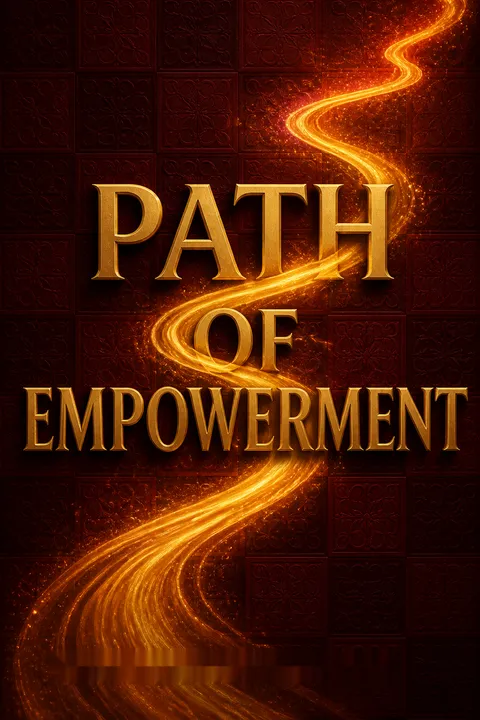
Path of Empowerment is a channelled spiritual self-help book organized as a widening journey. It begins with the claim that reality is multidimensional and responsive to consciousness, then turns that claim into guidance about attention, emotion, health, sexuality, history, and collective choice. The recurring image is a person learning to steer through a turbulent world by becoming more observant and more deliberate. Breath, journaling, visualization, self-inquiry, nature, and intimacy are the book’s most usable tools. Its most memorable narrative device is the “nanosecond,” the author’s name for 1987 to 2012 as an accelerated cosmic transition. Because that period has passed, the prediction functions today as evidence of the book’s historical setting and worldview, not as a current forecast. The work’s central strength is its insistence that interpretation matters. People can examine assumptions, understand emotional reactions, and choose more constructive responses. It also asks readers to extend personal responsibility into care for the Earth and opposition to war. These concerns are meaningful even when separated from the book’s cosmology. Its central weakness is the tendency to turn metaphor into explanation: cosmic radiation, telepathy, reincarnation, extraterrestrial influence, and hidden historical control are asserted without evidence. More seriously, the claim that illness reflects beliefs or emotional blockage can burden patients and encourage distrust of medical care. These claims require clear separation from the book’s sounder invitations to self-reflection and healthy daily habits.
The best way to read the book is as a mixture of spiritual imagination, practical exercises, and unsupported factual assertions. Its language of frequencies and probable realities can be treated as metaphor for attention, mood, and choice. The reader can retain curiosity, compassion, and agency while refusing both conspiratorial certainty and self-blame. Empowerment is strongest when it means taking meaningful action within real limits, not believing that every circumstance was personally created or that belief alone can cure it.
Review Summary
Path of Empowerment receives an overall rating of 4.34/5, with most readers finding it deeply transformative and spiritually enlightening. Many describe it as thought-provoking, requiring slow, careful reading to absorb its wisdom. Fans of Marciniak's previous works consider it essential reading, though newcomers are advised to start with earlier books. Critics note it can feel preachy, repetitive, or limiting in its guidelines. The channeled Pleiadian content resonates strongly with spiritually-minded readers while remaining too unconventional for others.
People Also Read






Glossary
Nanosecond
A claimed era of accelerationThe book’s name for the 25-year period from 1987 through 2012, which it presents as an unusually intense transition in human consciousness. The term is not a literal scientific unit or an established astronomical period. It organizes the author’s claims about rapidly changing energy, collective awakening, and a predicted 2012 alignment.
Web of existence
A connected field of realitiesThe book’s model of existence as an interconnected field in which consciousness, events, and information are linked across physical and nonphysical realities. Thoughts and feelings are said to participate in this field and influence experience. The term belongs to the book’s metaphysical framework, rather than to a recognized scientific account of the universe.
Thought-form
A thought shaped into energyA thought-form is described as a vibrational pattern created by focused thought and emotion. In the book’s account, similar thoughts can gather into shared patterns that influence collective experience, with mass attention strengthening them. It is a spiritual concept used to explain how ideas might shape reality, not a scientific term for a measurable energy structure.
Healing on the lines of time
Reinterpreting pain across timelinesThe book’s name for healing understood as changing the meaning and emotional charge of past experiences, including experiences attributed to ancestors or other lifetimes. The author proposes that such changes affect present and future versions of the self. In practical terms, the idea resembles revisiting painful experiences from a new perspective, while its claims about timelines and inherited psychic records are metaphysical.
Cosmic chakras
Energy centers beyond the bodyIn addition to seven bodily chakras, the book describes six further centers extending from above the body through the solar system, galaxy, universe, and multiverse. These centers are presented as gateways through which consciousness perceives wider realities. The expanded 8th through 13th chakra scheme is specific to the book’s spiritual teaching and is not an anatomical model.
Game board
A map of existence’s polaritiesThe book uses the checkerboard pattern as a symbolic model of the field of existence. Its alternating squares represent polarities such as dark and light, while intersections signify points where energies or realities meet. The author suggests photographing checkerboard designs as an exercise in noticing symbols. This is a contemplative interpretation, not evidence that the pattern has a hidden cosmic function.
Probable choice
Selecting a possible realityThe book’s idea that people participate in choosing among multiple possible versions of experience through their beliefs, attention, intentions, and actions. It combines a practical emphasis on choice with a metaphysical claim that realities exist simultaneously and can be selected by consciousness. The term is useful as a metaphor for shaping outcomes, but the multiverse mechanism is not established by the text.
About the Author
Other books by Barbara Marciniak
Download PDF
Download EPUB
.epub digital book format is ideal for reading ebooks on phones, tablets, and e-readers.








