

Key Takeaways
Treat PCOS as manageable, not a verdict on fertility or your future
A diagnosis is not destiny. Spencer begins with her own shock after learning she had PCOS. She feared lifelong weight gain, acne, and infertility, then found that her symptoms could be managed. The book describes PCOS as a varied condition, commonly identified by at least two features such as irregular periods, elevated androgens, insulin resistance, or ovarian cysts. It cites estimates that PCOS affects 4 to 8 percent of women worldwide, with higher rates in some populations.
Expect variation, not guarantees. The book links insulin resistance with PCOS, but notes that the relationship is not universal and that body size and symptoms differ. Its central promise is management, not cure. Changes in food and activity may help, but they cannot guarantee that every symptom will disappear or that conception will happen without medical support.
What's valuable here is the shift from fatalism to agency without making the diagnosis a character flaw. A personal account can make an isolating condition feel less lonely, but one person's improvement cannot predict another person's fertility or symptom course. That distinction matters because hope is most useful when it invites practical action without turning an uncertain outcome into a test of discipline. The book's own reminder to consult a health-care provider is essential, especially when symptoms change or pregnancy is a goal.
Build meals around fiber-rich carbohydrates, protein, and unsaturated fats
Balance beats carb panic. The book recommends meals combining slow-digesting carbohydrates with protein and healthy fats, rather than eating carbohydrates alone. Its examples include beans, oats, sweet potatoes, brown rice, vegetables, eggs, fish, lean meats, nuts, seeds, and olive oil. The recipes put that approach into practice with dishes such as lentil bowls, fish with vegetable slaw, and eggs with greens.
Choose foods with staying power. Spencer argues that whole or minimally processed foods provide a steadier source of energy than sugary drinks, sweets, and refined-flour foods. She advises against eliminating carbohydrates altogether, while recommending less processed food and fewer refined sugars. The practical idea is to compose a meal, not to label one nutrient as the enemy.
This meal pattern is useful because it turns an abstract metabolic concern into a repeatable kitchen decision: pair a carbohydrate source with protein, fiber, and fat. It also gives the recipes room for variety, from legumes to seafood, rather than prescribing a single menu. The harder question is whether every food restriction in the book is needed for every reader. Its strongest principle is the emphasis on nourishing combinations, not the assumption that one rigid food list suits every person with PCOS.
Use glycemic load to judge portions, not to ban carbohydrates
Two measures, two questions. The glycemic index estimates how quickly a carbohydrate food raises blood glucose. Glycemic load also accounts for how much carbohydrate is in a serving, so it gives portion size a role. The book's appendix contrasts chickpeas, listed with a glycemic index of 10 and load of 3, with white rice, listed at 89 and 43. Spencer uses these measures to favor legumes, whole grains, and nonstarchy vegetables over many refined products.
Keep carbohydrates in the picture. The book recommends moderate portions of slower-digesting carbohydrates and says they should not be excessively restricted. Pairing them with protein and fat is another way it suggests moderating a meal's effect on blood sugar. These numbers are guides, not a complete account of what a meal does in an individual body.
Glycemic load improves on a simple good-food, bad-food ranking by making serving size visible. That can help readers understand why a food's effect depends partly on how much is eaten. Still, a table cannot capture every meal, preparation method, or individual response, and the book's own list gives some foods results that may surprise readers. The productive use is as a comparison tool, not a pass-fail score. That keeps attention on practical patterns instead of turning every bite into arithmetic.
Aim for moderate exercise, since overtraining can disrupt menstrual function
Movement helps beyond weight loss. The book explains that working muscles use glucose and cites a study in which three hours of weekly exercise over 12 weeks improved insulin sensitivity and reduced visceral fat, even without weight loss. It recommends a mix of aerobic activity and resistance exercise, with about 30 minutes on most days as a general target. Shorter sessions can be divided across the day.
More is not always better. Spencer cautions that excessive exercise, like severe calorie restriction, can create physical stress and interfere with normal menstrual function. Her beginner plan combines resistance workouts, walks or other aerobic activities, and a day for rest or gentler movement. The larger instruction is to find activity that can be sustained and to adjust it to individual ability.
The emphasis on benefits that do not depend on scale changes is especially useful for people whose weight is slow to change. It makes exercise a form of metabolic support and mood care, not punishment for eating. The book also recognizes that intensity has a cost, although its weekly schedule may be too demanding for some beginners or people with other health conditions. A sensible reading is to use the plan as a template, not a pass-or-fail prescription, and seek clinical guidance when exercise affects symptoms.
Give sleep and stress the same attention as your grocery list
Health is not only on the plate. Spencer connects inadequate sleep and ongoing stress with changes in insulin and hormone regulation. She recommends seven to nine hours of sleep, a regular sleep schedule, a cool and dark bedroom, and a daily period for unwinding. Her suggestions for winding down include reading, meditation, gentle activity, or time with loved ones.
Make recovery part of the routine. The book also warns against patterns such as undereating and overexercising, which it describes as additional sources of stress on the body. Its point is not that one relaxing activity fixes PCOS. Rather, food choices, movement, sleep, and emotional strain form a broader lifestyle context. Small, repeatable routines are presented as more useful than trying to overhaul everything at once.
This wider lens counters the common tendency to treat diet as the only lever. Sleep and stress routines also affect whether meal planning and movement are realistic in daily life. The caution is that hormonal explanations can make stress sound like a personal failure, or imply that relaxation alone controls a complex condition. The more humane reading is that rest is a legitimate health need, not another performance target. If sleep problems or distress persist, a clinician can help identify what self-help routines cannot address.
Track your symptoms to learn your PCOS pattern, not police yourself
Look for patterns over time. The book suggests recording menstrual cycles and symptoms such as acne, hair growth, and weight changes, alongside food and exercise. The purpose is to notice whether particular habits appear to coincide with changes in how someone feels. Spencer stresses that one person's PCOS triggers may not explain another's, and that some people may need to gain weight rather than lose it.
Use records as clues. A journal can help prepare questions for a health-care provider and make gradual experiments more concrete. It is not proof that a particular food caused a symptom, nor should it become a daily scorecard. The author also encourages body respect and self-compassion, especially when progress is slow or the visible effects of PCOS affect confidence.
Self-monitoring can replace vague recollection with observations that are easier to discuss and compare. Its value depends on how the record is used: as a source of questions, not a verdict about personal discipline. Correlation in a food diary does not establish cause, and constant tracking can become burdensome for some people. The book's emphasis on patience and self-kindness helps balance that risk. A useful log is selective enough to reveal patterns without making the condition occupy every waking thought.
Let meal plans and batch cooking shrink the daily decision burden
Make the next meal easier. The guide provides two weeks of meals, recipes, and shopping lists, including breakfasts, snacks, vegetarian dishes, seafood, meat, and desserts. Many recipes are designed to take 15 to 30 minutes, and planned leftovers reduce the need to cook from scratch each day. The book also suggests setting aside one or two hours weekly to prepare proteins, grains, and vegetables in batches.
Build in manageable steps. Rather than changing everything at once, Spencer advises first learning the meal plan and then adding exercise after the eating routine feels more familiar. A habit tracker can mark a small set of realistic actions. The structure is meant to help a newly diagnosed reader move from information overload to a workable routine, not to require perfect adherence.
The cookbook format is more than a collection of meals: shopping lists, leftovers, and advance preparation address the logistical friction that often defeats good intentions. A planned menu can also reduce the mental load of deciding what to eat while learning unfamiliar recipes. But any plan has to fit budget, schedule, culture, access to ingredients, and personal needs. Its real measure is whether it makes a nourishing choice easier, not whether the reader follows every recipe exactly.
Replace food rules with mindful choices and body-respecting support
Use structure as a starting point. After practicing the meal plan, the book encourages a more flexible approach called intuitive eating: noticing hunger and fullness, eating attentively, and paying attention to how foods affect one's experience. It advises against making foods strictly forbidden, since rigid bans can intensify their appeal. A food journal and mindful meals are offered as ways to understand preferences and responses.
Make change social and humane. Spencer encourages readers to seek support from friends, family, partners, or a therapist, particularly when PCOS affects body image or fertility. Her practical message is to build habits while treating oneself with the kindness extended to others. That matters because an eating plan is more likely to endure when it supports a life, rather than becoming the whole of one.
There is a productive tension between the book's detailed avoid lists and its invitation to eat without rigid prohibitions. The flexible principle is more durable: notice what helps, keep nourishing options available, and make room for individual differences. Support from other people can turn a private struggle into a shared practical problem, but no social circle should dictate treatment. Readers can preserve the book's attention to food quality while questioning rules that feel distressing or medically unnecessary.
Analysis
This is part personal account, part beginner's guide, and part cookbook. Its strongest contribution is practical translation: a newly diagnosed reader gets an explanation of PCOS, two weeks of meals, shopping lists, recipes, an exercise schedule, and prompts for tracking habits. The result is less a single diet theory than a scaffold for making several daily choices feel possible. The author's story supplies emotional context, especially around fear of infertility, appearance, and isolation.
The book's central model links insulin resistance with androgen levels and presents food, exercise, sleep, and stress management as ways to improve symptoms. That connection is relevant to many readers, but the model should not be mistaken for a complete explanation of every case. The text itself recognizes that PCOS varies and that insulin resistance is not universal. Its promising anecdotes and cited findings support the case for lifestyle support, not a guarantee of symptom resolution or fertility.
A careful modern reading should separate the broadly useful practices from the more categorical claims. Meals built from minimally processed foods, regular movement, sleep, and gradual habit-building are actionable ideas. By contrast, the book's blanket warnings about dairy, gluten, soy, caffeine, artificial sweeteners, and other foods are presented more confidently than the material supplied here can establish for every reader. The same applies to supplement suggestions and its fixed calorie guidance. They should not be treated as individualized medical advice.
The book is most valuable when it reduces helplessness without promising control over everything. A reader can use its recipes and planning tools as experiments, track outcomes without self-blame, and work with qualified clinicians on diagnosis, medication, fertility, and nutrition questions. In that form, the guide offers useful structure while leaving room for individual biology and evidence to matter.
Review Summary
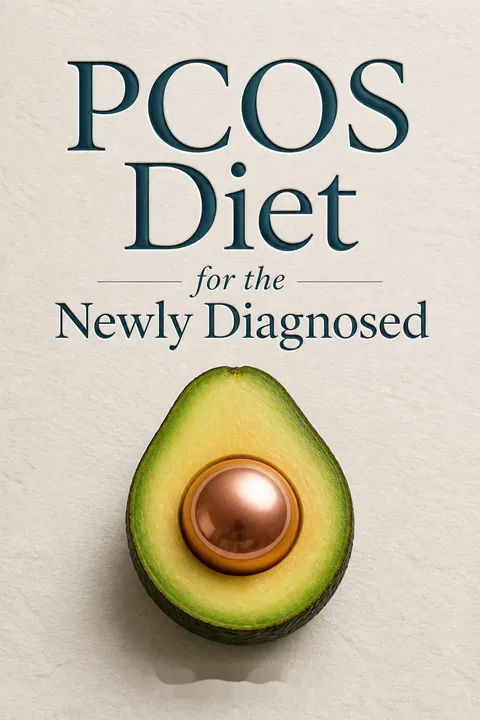
PCOS Diet for the Newly Diagnosed receives mixed reviews. Many readers find it helpful for understanding PCOS and appreciate the recipes, meal plans, and workout guidance. The book is praised for its easy-to-understand information and practical advice. Some reviewers recommend it for the recipes rather than PCOS information. Critics note that the dietary changes suggested may be too extreme for newly diagnosed individuals. Overall, readers appreciate the book's focus on healthy eating and lifestyle changes, though some find the medical explanations challenging to understand without prior knowledge.
People Also Read









Glossary
PCOS
hormonal and reproductive syndromePolycystic ovarian syndrome, a condition involving a range of reproductive and metabolic features. The book describes it through signs such as irregular or absent periods, elevated androgens, insulin resistance, and ovarian cysts, noting that not every person has every feature. Diagnosis and management require individual assessment; the condition is managed rather than cured.
insulin resistance
reduced cellular insulin responseA state in which body cells respond less effectively to insulin, the hormone that helps move glucose from the bloodstream into cells. The book presents insulin resistance as closely connected with PCOS for many, but not all, women. It describes diet and physical activity as possible ways to improve insulin sensitivity, alongside medical care where needed.
glycemic index
carbohydrate response rankingA measure used to rank carbohydrate-containing foods by how quickly they are expected to raise blood glucose. The book's appendix lists values for common foods and uses the index to distinguish many slower-digesting choices from more rapidly digested ones. It is a comparison tool, not a measure of the overall quality of a food or a complete prediction of an individual's response.
glycemic load
portion-aware glucose measureA measure that combines a food's glycemic index with the amount of carbohydrate in a serving. The book recommends considering it alongside the index because portion size changes the likely glucose effect. Its appendix, for example, lists chickpeas with a lower glycemic load than white rice. The number remains a guide rather than an individualized clinical result.
Intuitive Eating
hunger-guided flexible eatingThe book's term for developing a less rigid relationship with food by noticing hunger and fullness, eating attentively, and observing how foods affect one's well-being. It contrasts this approach with strict, long-term meal rules and food bans. Spencer presents a structured meal plan as an initial learning tool, with the longer-term aim of making flexible, informed choices.
Download PDF
Download EPUB
.epub digital book format is ideal for reading ebooks on phones, tablets, and e-readers.








