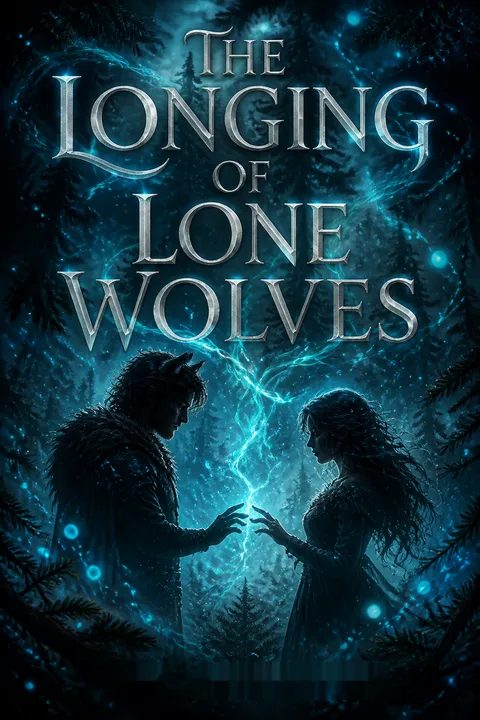


Plot Summary
Vegas Wakes in Snow
Clarke O’Leary comes to in a hot spring beneath a clean blue sky, with snow falling through the trees. Her clothes are rotting, her watch is dead, and the Coke can marked with her initials has rusted. The last thing she remembers is stepping outside in Las Vegas as nuclear winter began. Before she can understand how she survived, a band of fae hunters closes in, led by the scarred Thaddeus.
His men bind and threaten her. A silver-haired stranger watches from the trees, unseen by everyone but Clarke. When she begs him to intervene, he offers help only in exchange for a bargain. Their joined hands flash blue, and the stranger discovers he can touch her without the sickness that normally follows contact.
Clarke’s first evidence of the future is material, not mystical: corrosion has turned familiar possessions into an archaeological record. That grounds the time leap in loss before fantasy can soften it. Her immediate danger also makes the bargain feel less like a choice than a pressured survival strategy. Yet Clarke is not simply rescued; she can see Rush when others cannot, and that perception gives her a small but crucial authority in a world built to treat her as prey.
An Unseen Guardian’s Bargain
The wolves Rush summons scatter Thaddeus’s hunting party, and Clarke collapses from shock and exhaustion. She wakes in Rush’s cabin, tied to his bed while he cooks and keeps her at a distance. He eventually identifies himself as fae, a wolf shifter, and a former Guardian of the Well, the source of Elphyne’s magic.
A curse has made him invisible to nearly everyone and causes severe sickness when he touches living creatures. The bargain lets him compel Clarke’s speech and actions, making her his voice and hands. Rush means to take her to the Order, hoping her help will let him reach his son, Thorne. Clarke resists being treated as property, but the dangerous journey ahead leaves her dependent on him.
The rescue does not erase the violence of the bargain. Rush protects Clarke from Thaddeus, then reproduces the loss of control she has already suffered at the hands of men who exploited her gift. His curse has made isolation feel like identity, so he treats usefulness as safer than intimacy. Clarke’s insistence on dignity challenges that logic before she knows his history. Their bond begins in unequal power, and the story’s central ethical question is whether care can become genuine when it first arrives wrapped in coercion.
Old Guilt, New Apocalypse
As Rush leads Clarke down from the frozen mountains, her visions grow sharper. She sees the torture of Laurel, her friend, by the Void’s mercenary Bones, and remembers giving the men the numbers they demanded. They were nuclear launch codes, not lottery numbers; the resulting war destroyed the world she knew.
Another vision shows the Void studying Elphyne’s mineral deposits and planning to take them. Clarke’s guilt turns into resolve: this time she will not ignore what she sees.
Rush learns that she helped bring about the old world’s destruction, but she explains that her boyfriend Bishop and his employer manipulated her. She also tells Rush that danger is coming for Elphyne. He believes her distress, though his distrust of humanity keeps him from fully accepting her warning.
Clarke’s culpability is real, but the book refuses to confuse culpability with sole responsibility. She made a consequential choice under coercion, after years of having her unreliable-seeming visions exploited, and now must decide what accountability looks like when the original world is gone. Her second chance is not moral absolution. It is an opportunity to act differently with knowledge she did not have before. Rush’s response reveals the parallel problem: inherited prejudice lets him judge an entire people while overlooking the particular person trying to prevent another catastrophe.
Truth in the Bog
In the Whispering Woods, Clarke hears a second heartbeat and a woman’s plaintive song, but Rush dismisses her warning. A creature called the White Woman disguises itself as a helpless woman trapped in a bog, and its enchantment draws Rush into the mud.
Clarke sees through the illusion and forces him to see the monster beneath it. Rush attacks, but the creature bears the same curse-like markings that afflict him and nearly drags him under. Clarke could leave him, yet she returns to pull him from the bog after he loses consciousness.
When he asks why, she refuses to demand repayment. Her choice makes Rush confront how readily he has treated kindness as debt, and he agrees to continue toward the Order with her as a partner rather than merely a tool.
The bog gives Clarke’s intuition a practical test: she is right before she can explain why, and Rush’s trained confidence becomes a liability. Her decision to save him matters because it is not compelled by their magical bargain. She acts from a standard she is choosing for herself, which distinguishes her from the people who have used her gift. For Rush, the experience is an interruption of transactional thinking. He cannot make her goodness into a debt without diminishing the very quality that makes him trust her.
Red Coin, Red Flags
Near Crescent Hollow, Rush and Clarke find a recently killed satyr whose body bears an unnatural mark. Rush recognizes that someone has drained or disturbed its mana and disguised the killing as a vampire attack, a discovery that could inflame the fragile peace between the Seelie and Unseelie courts.
At the village gate, Clarke sees fae suspended in wooden cages as punishment, while Rush’s uncle Thaddeus rules the settlement. They take a room at the Laughing Den, where barmaid Anise offers practical advice and Guardian Caraway explains how to seek help from the Order.
Clarke asks about a portal stone to reach it. She also learns how harshly the village controls relationships and childbirth. The town’s hospitality is real, but its laws and suspicious death reveal a community already primed for conflict.
Crescent Hollow makes Elphyne’s beauty inseparable from its governance. The living landscape may have recovered, yet its residents endure coercive laws, public punishment, and political arrangements that decide whose bodies matter. The satyr’s death shows how easily violence can be repurposed as propaganda: a false attribution could turn local instability into a court-wide conflict. Anise and Caraway offer Clarke something rare, ordinary help, but even their lives are shaped by systems they cannot casually challenge. The setting therefore complicates the idea that fae society is a morally superior alternative to human civilization.
Rush Marks His Mate
Clarke sees Bones inside a clandestine meeting with Thaddeus and other fae, confirming that the human threat has reached Elphyne. When Thaddeus spots her, Rush pulls her close and bites her neck, extending his curse over her so Thaddeus cannot see or remember them. The tactic saves her, but Rush’s wolf instincts take over and he treats the mark as a claim on her.
Clarke refuses his advances and challenges the way he has used their bargain. Rush releases her from it, and she walks away, shaken by both his assumption and the intensity of their connection. The action is protective and violating at once: Rush has kept her alive, but he has also crossed a boundary she did not consent to.
This turning point refuses the easy romance logic that a life-saving act entitles the rescuer to intimacy. Rush’s bite has a tactical purpose, but his possessiveness turns protection into a claim, and Clarke recognizes the danger immediately. Her refusal is not a rejection of desire; it is a demand that desire not erase agency. By releasing the bargain, Rush makes a meaningful correction, though not a complete repair. The scene exposes how instinct, law, and romantic convention can all be used to excuse coercion unless the person affected is allowed to define the boundary.
Véda’s Costly Secret
Clarke returns to Rush at the inn and insists he explain the curse and his fixation on reaching the Order. He tells her that years earlier he fathered a son with Véda, a fae woman he barely knew.
When Thaddeus discovered the pregnancy, the village’s ban on unsanctioned births led to Véda’s execution and the child being taken to the Order. Rush was cursed after the affair, leaving him unable to speak with or protect his son, Thorne. Clarke listens without forcing the confession and understands why Rush believes himself guilty.
He gives her a carved sundial, made because she misses her watch and the father who gave it to her. Clarke chooses him freely, and their intimacy begins on terms she has set. Their mating bond remains unblessed, and Rush’s curse continues.
Rush’s shame has been organized around a false equation: desire caused suffering, therefore he deserves to be cut off from love. Clarke does not excuse his failures, but she distinguishes remorse from permanent self-punishment. The sundial makes that distinction concrete. Unlike the watch, it cannot restore Clarke’s old world, yet it answers a need she voiced and carries the labor of someone paying attention. Their intimacy grows only after she has heard his account and made her own choice. The book links trust not to perfect behavior, but to confession, repair, and the possibility of choosing again.
Chosen at the Well
When Thaddeus and Bones corner them at the inn, Rush uses a portal stone to carry Clarke to the Order of the Well. There she meets Thorne, Rush’s estranged son, and reveals Rush to him through her power.
The Order’s leader, the Prime, says Seers have long predicted Clarke’s arrival as both a threat and a potential savior. During a test, Clarke touches a sacred obelisk and produces a light so powerful the council realizes she can hold extraordinary amounts of mana.
The Prime confirms that Clarke is a human touched by the Well, but refuses to lift Rush’s curse; only a Well-blessed union could do that. Clarke begins training, determined to understand her power and find another answer, while Rush returns to a home that still carries the marks of his former life.
The Order offers recognition, but recognition arrives already shaped by institutional need. Clarke is welcomed as a prophecy before she is understood as a person, and her extraordinary capacity makes her more valuable to the council than her own questions do. The test validates her power while the Prime’s refusal closes the most urgent route to helping Rush. This is a subtler form of control than Thaddeus’s open violence: the Order can speak in the language of destiny and still deny agency. Clarke’s determination to keep searching is therefore both practical and political.
Son Sees His Father
Clarke’s training teaches her to channel mana, though she struggles to control the elements. When she discovers that the Order has restricted help with Rush’s curse, she searches the library herself. She also uses her gift to make Thorne see Rush, allowing father and son to face one another directly.
Rush apologizes for failing Thorne and his aunt, and warns that the missing Guardian Jasper may be in danger at the Summer Court. Thorne does not immediately forgive him, but he listens.
Clarke’s visions reveal that Bones is working with Thaddeus, and the pair escape another confrontation by portal. The Order’s refusal to help and its leader’s unexplained absence leave Clarke increasingly suspicious of the institution that claims to know her destiny.
The father-son meeting is not a sentimental reconciliation. Clarke creates the conditions for recognition, but cannot make Thorne forgive, and Rush’s apology does not erase years of absence. That restraint gives the exchange its emotional credibility. Clarke’s growing power is most consequential when it enables another person to see what has been hidden, rather than when it produces spectacle. At the same time, her library search and suspicions mark a shift from student to investigator. She is no longer waiting for authority to interpret her life; she is learning how to test authority’s claims.
The Prime’s Hidden Price
Rush confronts the Prime and learns that she engineered parts of his exile, hoping his invisibility would keep him beyond the Void’s sight until Clarke awakened. She says she cannot choose whom the Well blesses, but admits she arranged circumstances to bring Clarke to the Order.
She also reveals Clarke is pregnant and tells Rush that the breeding law demands a life for a life. Believing Clarke and the child can survive only if he acts, Rush leaves to find Kyra, his sister, and persuade her to challenge Thaddeus for Crescent Hollow.
Meanwhile, Clarke wakes to find Rush gone and dreams of Anise imprisoned in a cage. She tells Thorne and the Guardians that the Prime traded Jasper to King Mithras to preserve the breeding law, persuading them to return with her.
The Prime’s intervention is neither benevolent guidance nor simple villainy. She treats individual lives as pieces in a long strategy to preserve the Well, and her confidence in outcomes cannot undo the harm caused by that calculus. Rush’s departure repeats his old habit of deciding alone what others can bear, even though he believes he is protecting them. Clarke’s response is different: she turns a frightening vision into evidence, persuades others to act, and accepts uncertainty without surrendering judgment. The parallel choices show two forms of care, one paternalistic and secretive, the other collaborative and answerable.
Metal Cages, Human Gods
The group reaches Crescent Hollow to find captives hanging in cages along the walls. Clarke rushes toward Anise, but a portal yanks her and Kyra into Thaddeus’s camp in the Whispering Woods. Rush follows and collapses from the curse’s sickness. The Void appears with Bones and explains his plan: he has been manipulating fae factions into blaming one another, while Thaddeus helps him acquire metal weapons and harvested mana.
Bones injects Kyra with liquid metal, forcing mana from her body so the Void can consume it and rejuvenate himself. The Void expects Clarke to help him control the future through her visions. Clarke refuses, even as he leaves her trapped with Kyra and Rush at the mercy of Thaddeus’s hunting party.
The Void’s ideology is the old human fantasy of mastery dressed as scientific clarity. He calls the fae animals, claims authorship over their existence, and treats their life-force as fuel. His language makes exploitation sound like rational management, just as Thaddeus’s appeals to fae law make cruelty sound like order. Clarke’s refusal matters because she knows the cost of cooperating under pressure. Yet her resistance is not enough by itself; the cage suppresses her access to power, and Rush is incapacitated. The crisis makes clear that moral clarity must be joined to collective action and material means.
Blue Light Between Them
As Thaddeus threatens Clarke and Kyra, Rush reaches for Starcleaver and kills one of the hunters, but contact sickness leaves him barely able to move. Thaddeus reveals he orchestrated the deaths and punishments that shaped Rush’s life, then attacks him.
Clarke fights from inside the metal cage, while Kyra claws the bullet from her shoulder and regains her wolf form. Rush releases his own wolf and kills Thaddeus. When he presses his nose to Clarke’s hand, she gives him mana, and their bond becomes Well-blessed, lifting his curse and restoring his strength.
The arriving Guardians free the captives, including Anise, and the Void and Bones escape. Rush and Clarke survive, but the enemy’s plan remains active and the larger conflict is not over.
The curse breaks through an act of mutual dependence, not a reward granted by the Order. Clarke gives Rush power, but she does so by choice, and the bond becomes reciprocal rather than another instrument of control. Rush’s wolf form also transforms the symbol of his feared nature into a means of protection, while Thaddeus’s revelations expose how much of Rush’s guilt was manufactured by an abuser. Still, the victory is deliberately incomplete. Anise and the other captives are recovered, but the Void escapes, preventing romance’s resolution from pretending that structural violence has disappeared.
Epilogue
Two years later, Clarke and Rush have built a life beside the hot spring where she first woke. Their daughter Willow plays nearby as Gray, once Rush’s aging companion, raises a litter of pups. The mountains have thawed, Kyra leads Crescent Hollow, and Anise has recovered.
Thorne visits, though his relationship with Rush remains cautious and unfinished. Clarke and Rush have time to live together, but not the certainty of peace. A sudden unease passes between them, and Clarke checks the sundial Rush carved for her. Their quiet is ending; somewhere beyond the cabin, the next danger is already stirring.
The final time jump gives the couple a domestic future that the novel’s earlier conflicts repeatedly denied them. Willow, Gray’s pups, and Kyra’s leadership are not decorative rewards: each marks a life continuing beyond the old systems of punishment and isolation. Thorne’s guarded visits preserve the reality that reconciliation cannot be demanded on a schedule. The sundial gathers the book’s concerns into one object, replacing Clarke’s lost measure of time with a gift made through attention and care. Its final use also refuses a sealed happy ending. Their home is real, but the world that threatened it still requires their vigilance.
Analysis
The novel sets two forms of apocalypse against each other. Clarke’s remembered world collapsed under human extraction and nuclear violence; Elphyne survives because the fae believe magic can restore a damaged planet. Yet survival has not made them innocent. Crescent Hollow punishes intimate choices, the Order treats people as instruments of a larger design, and the Void turns scientific knowledge into another claim of ownership. The contrast prevents environmental repair from functioning as moral absolution. A society can live closer to nature and still reproduce domination.
Clarke’s arc is about agency after exploitation. She begins as someone whose intuition has been monetized by men who frame her gift as their property. Her guilt over the nuclear codes is real, but the story distinguishes responsibility from self-erasure: she cannot undo what happened, but she can decide what she will do with the warning she now carries. Her growing power is most meaningful when it helps someone see clearly or choose freely, rather than when it simply makes her formidable.
Rush faces a related problem from the opposite direction. He has been taught to convert desire into shame and care into duty, until isolation seems like the only ethical response. His curse gives that belief a physical form, while his bargain with Clarke shows how easily protection can become control. Their romance becomes credible not because fate excuses his behavior, but because Clarke names its harm and Rush must alter his conduct. The Well-blessed bond matters as an image of reciprocity: power moves between them rather than belonging to one partner alone.
The book’s most lasting challenge is therefore not defeating a villain, though the Void remains dangerous. It is recognizing that institutions and intimate relationships can both disguise domination as necessity. Clarke and Rush begin to resist that pattern by making decisions together, admitting harm, and refusing to treat another person’s life as an acceptable cost of a grand plan.
Review Summary
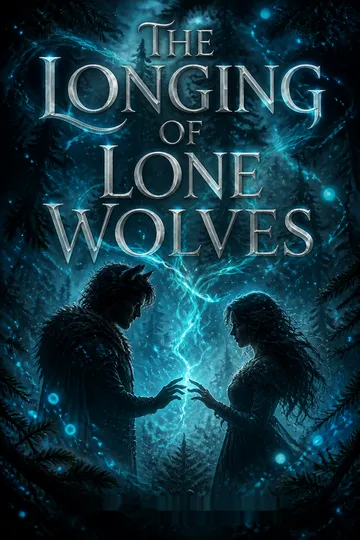
The Longing of Lone Wolves received mixed reviews, with an average rating of 3.95 out of 5. Readers praised the unique world-building, blending fantasy, sci-fi, and post-apocalyptic elements. Many enjoyed the fated mates trope and the chemistry between the main characters, Rush and Clarke. However, some found the pacing inconsistent and the romance lacking depth. The complex plot and intriguing side characters left readers eager for future installments. Despite some criticisms, most reviewers found the book engaging and looked forward to continuing the series.
People Also Read

Characters
Clarke O’Leary
The thawed SeerA quick-witted redhead from pre-apocalyptic Las Vegas, Clarke survived by reading people, gambling when her premonitions helped, and sometimes stealing. Her gift has often been unreliable, which leaves her torn between trusting her instincts and fearing she is inventing danger. Bishop exploited that uncertainty, and she carries guilt for helping his circle obtain nuclear codes. Clarke is funny, stubborn, and alert to power imbalances; she resists being treated as a tool even when she needs help. Her central drive is to make her choices count for more than survival. She is learning to use her intuition in service of others without surrendering her judgment.
Rush
Cursed wolf GuardianA 178-year-old wolf shifter and former Guardian, Rush is physically formidable but made socially invisible by a curse that punishes contact and isolates him from the people he loves. He has spent decades disguising longing as duty and self-contempt, while clinging to the codes of the Order that once gave his life purpose. His protective instincts are genuine, but they can slide into control when fear overwhelms his restraint. Clarke unsettles him because she sees him and challenges his assumptions rather than submitting to his authority. He is driven by a desire to repair a family history he believes he ruined.
Thorne
The guarded wolf sonRush’s son, Thorne is a powerful wolf shifter raised among the Guardians after a childhood marked by loss, compulsory service, and an uncle’s authority. He carries anger close to the surface because it gives shape to injuries no one properly acknowledged. His suspicion of Clarke reflects the hostility toward humans he has been taught, but he is also capable of disciplined loyalty and decisive action. Thorne wants control over a life repeatedly organized by other people’s demands. His bond with his mentor Jasper and his complicated connection to Rush reveal the difference between belonging to a family and trusting it.
Thaddeus
Crescent Hollow’s alphaRush’s uncle and the ruler of Crescent Hollow, Thaddeus presents himself as a protector who can keep his pack safe. He uses that claim to justify domination, public punishment, and the exploitation of weaker people. His charisma matters: he can make cruelty sound like a necessary price of order, which helps him maintain followers. Thaddeus is driven by appetite and authority more than by the welfare of the community he governs. His rivalry with Rush is personal, but his influence reaches into the village’s laws and its political loyalties.
The Void
The human power brokerA calculating human leader whose plans reach across generations, the Void regards other people as resources to be arranged, weakened, or consumed. He combines strategic patience with a grandiose belief that intelligence and power entitle him to rule. His cultivated manner makes his contempt more chilling, since he can discuss violence as though it were merely an administrative measure. The Void’s interest in Clarke’s visions reflects his desire to control outcomes rather than accept uncertainty. He is the human face of an old ambition to dominate the world rather than share it.
The Prime
The Order’s calculating leaderThe Prime leads the Order of the Well and carries the authority of a long-serving strategist. She thinks in terms of generations, ecological survival, and political outcomes, which gives her decisions a scope most people cannot match. That perspective can also make individual suffering seem acceptable if she believes the larger system will endure. She is composed, difficult to read, and accustomed to being obeyed. The Prime’s relationship with Clarke is shaped by the tension between recognizing her unusual importance and respecting her right to decide what that importance means.
Bones
The Void’s enforcerBones is a mercenary who works for the Void and uses torture to force information from others. His compact, birdlike appearance contrasts with his practiced brutality. He functions as the hands-on instrument of a larger plan, willing to inflict pain without needing to believe in its justification. His presence connects Clarke’s old life to the danger now unfolding in Elphyne.
Kyra
Rush’s fierce sisterRush’s sister is a capable wolf shifter with a strong sense of self and little appetite for returning to a life that hurt her. She has survived separation from her family by building independence elsewhere. Kyra’s guardedness is not weakness; it reflects how costly it can be to trust promises after years of being pushed aside. Her skills and history make her a force in her own right, not merely an extension of Rush’s story.
Anise
The candid barmaidA wolf-fae barmaid at the Laughing Den, Anise is sharp-tongued, observant, and willing to share useful information with a stranger. Her friction with Caraway comes from her impatience with people who hide behind professional duty while ignoring suffering nearby. She has an independent livelihood and a practical understanding of the village’s laws, which makes her a valuable guide to Clarke.
Caraway
The reluctant GuardianA large muskox shifter and Guardian, Caraway is sociable and comic, but he uses humor to keep painful questions at a distance. He believes that his official duty has boundaries, especially where local politics are concerned. Anise challenges that separation between work and moral responsibility. Caraway’s knowledge of the Order makes him a useful contact, while his conflict with Anise exposes his uncertainty about how far a Guardian’s obligations should reach.
Leaf
The steady team leaderA golden-haired elf and leader of the Guardians’ Twelve, Leaf is controlled, capable, and accustomed to balancing competing dangers. He follows the Order’s rules but is not blind to their costs. His authority is strongest when he uses it to restrain more volatile members and keep the team focused. Clarke’s arrival forces him to weigh institutional caution against the needs of people in immediate danger.
Cloud
The unruly crow GuardianA crow shifter and Guardian, Cloud is irreverent, provocative, and hard to manage. His past encounters with humans have left him wary of them, and he rarely hides his contempt. Yet his roughness coexists with a willingness to act when someone is being targeted. Cloud’s unpredictable methods make him both a useful fighter and a source of tension within the Order.
Laurel
Clarke’s steadfast friendLaurel is one of Clarke’s closest friends from Las Vegas, a disciplined businesswoman who built a fitness enterprise through ambition and relentless work. Her confidence can shade into control, but she is deeply loyal and protective of the people she loves. Her history with Clarke anchors the protagonist to the world she lost and reminds her that goodness existed in her old life, even amid its failures.
Ada
Clarke’s compassionate friendAda is Clarke and Laurel’s friend, known for helping abused animals recover and return to the wild. Her compassion offers a contrast to the exploitation Clarke encountered through Bishop. She is part of Clarke’s remaining emotional connection to her former life.
Bishop
Clarke’s manipulative exBishop was Clarke’s boyfriend and the person who recognized the earning potential of her premonitions. Charming when it served him, he encouraged her dependence before bringing her abilities into the orbit of more dangerous people. He represents the intimacy through which exploitation can first disguise itself as opportunity.
Véda
A Nightstalk from Rush’s pastVéda is a Nightstalk fae whose past connection to Rush shaped his sense of responsibility and failure. Her circumstances reveal how intensely Crescent Hollow regulates family formation. She remains an important presence in Rush’s memories, though he has difficulty separating what he regrets from what he could not control.
Jasper
Thorne’s missing mentorJasper is a seasoned Guardian and mentor to Thorne, remembered for teaching him how to understand his wolf nature without being ruled by it. His absence creates uncertainty within the Order and gives Thorne a personal reason to question the official account of events. Jasper’s history also links the Guardians to the political world beyond their compound.
Dawn
The Order’s SeerDawn is a Seer on the Order’s council, quiet and sometimes distant while receiving visions. She offers Clarke a way to think about foresight that shifts attention from isolated events to their wider consequences. Her knowledge is valued, but the Order does not always make its reasoning easy for Clarke to understand.
Colt
Clarke’s stern preceptressA pixie and teacher at the Order, Colt trains Clarke in mana and elemental control. She is exacting, impatient with Clarke’s irreverence, and concerned that uncontrolled power can become dangerous. Her strict approach reflects the Order’s emphasis on discipline, even when Clarke needs answers more urgently than lessons.
Gray
Rush’s loyal wolfGray is an aging gray wolf who stays beside Rush and helps protect his mountain home. He offers companionship without judgment, a simple form of loyalty Rush has been denied among people. His steady presence connects Rush to his wolf nature and to the family he has made for himself.
King Mithras
The Seelie kingMithras rules the Seelie kingdom and is associated with the glass palace of the Summer Court. His authority reaches beyond the Order into laws governing fae families and political succession. He is one of the powerful figures whose decisions shape the lives of Guardians and ordinary fae alike.
Plot Devices
The Well of Life
Source of fae powerThe Well is the planet’s living source of mana. Fae draw on it to use magic, shift into animal forms, and help sustain Elphyne’s recovering ecosystem. Power can be replenished slowly from the land or rapidly at a sacred site such as Rush’s hot spring. The Order’s beliefs and laws are built around protecting this source, though leaders sometimes use that duty to justify political control. For Clarke, the Well is both an unfamiliar force and a test of whether she can trust her instincts.
Metal and plastic
Blocks magic, enables weaponsIn Elphyne, mana does not flow where metal and plastic are present. These materials are remnants of the human civilization that poisoned the old world, but metal also has a special use: Guardians can wield it against magical monsters because it nullifies their power. The same property makes metal a weapon against fae, restricting their ability to shift or access mana. Human technology is therefore neither simply evil nor harmless; its effects depend on who controls it and what they intend to do.
Clarke’s visions
Warnings hidden in futuresClarke’s premonitions arrive as bodily sensations, vivid scenes, and sudden flashes rather than orderly explanations. A good feeling can signal safety, while a harsh buzzing often warns of danger. Her gift was exploited in her old life because she could not always distinguish true visions from false ones. In Elphyne, exposure to the Well strengthens her ability, but it does not make every image easy to interpret. The visions propel the plot by connecting the old nuclear disaster to the Void’s plans and by warning Clarke about threats to people she has come to care for.
Rush’s curse and bargain
Isolation with a loopholeRush’s curse makes him invisible to most people, interferes with his ability to communicate, and causes sickness when he touches living beings. His bargain with Clarke lets him use her as a visible voice and physical proxy, but it also gives him the power to compel her. The bargain creates the first bond between them while exposing how easily need can become coercion. Clarke’s ability to see Rush, break a monster’s glamour, and reach him through touch gradually challenges his belief that his life can only end in isolation. The curse’s eventual resolution depends on a later revelation.
Portal stones and mating marks
Travel and shared powerPortal stones allow fae to cross great distances in a burst of magical energy, though their use can leave travelers nauseated and the stones spent. A fae mating mark can identify a partner and serve as protection, but a Well-blessed union is more consequential: it links partners emotionally and allows them to share mana. The distinction matters because a physical claim does not by itself mean the Well approves of a bond. The marking therefore carries both romantic promise and a serious question about consent, choice, and the difference between desire and mutual commitment.
Fae Guardians Series
About the Author

Download PDF
Download EPUB
.epub digital book format is ideal for reading ebooks on phones, tablets, and e-readers.








