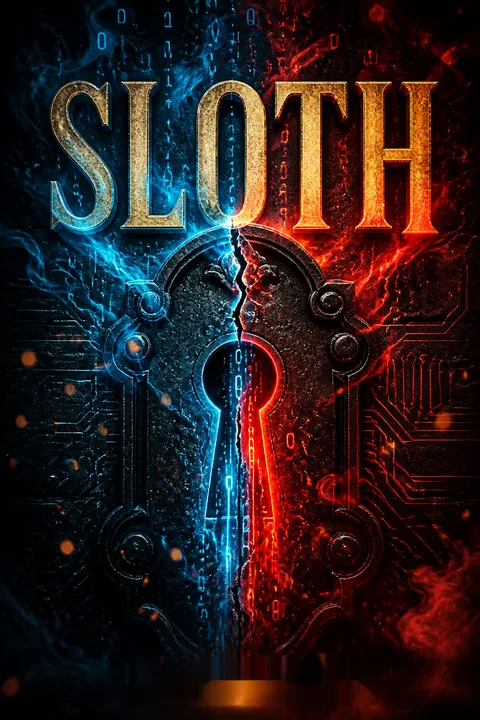


Plot Summary
Prologue
At the Syndicate’s hidden laboratory, Despair, Julius Alcott’s daughter and one of eight engineered Lazarus children, listens as scientist Barry Pinkerton describes a new weapon: animals altered to detect sin and attack whoever carries it. Julius dismisses Barry’s concern that the creatures cannot distinguish the irredeemable from the innocent.
Despair corrects the scientist when he calls the group the Deadly Seven, then privately recalls the siblings who believe she died in a fire. She knows the animals are dangerous, but she also senses the guilt and doubt in their makers. Even she, the Syndicate’s enforcer, knows that no one is free of sin.
The prologue makes the Syndicate’s moral error visible before its machinery is fully revealed. Julius treats sin as an objective mark that can be detected and erased, while Barry’s hesitation and Despair’s own unease expose the human judgment hidden inside that supposedly clean system. The animals are not merely a coming threat: they embody the organization’s belief that violence can sort the worthy from the unworthy. Despair’s correction about the number of siblings quietly places her inside the family she serves against. Her buried memories suggest that the enemy’s certainty depends on suppressing both history and feeling.
Sloan’s Closed Door
For two months, Sloan Lazarus has barely left her apartment, filling the days with code and dodging her family’s training sessions. She turns her hacking skills on Max Johnson, her former online partner, by overheating his office and watching through its security cameras. Max catches her, but Sloan’s attention shifts when her brother Wyatt brings her belongings recovered from his former fiancée Sara.
A coded money trail she has been tracing suddenly yields GPS coordinates to a concealed military site. Wyatt praises her work and asks her to report downstairs. Sloan dresses properly, but at her apartment door she freezes, unable to let go of the handle. The lead has made her useful again. Leaving her room is still its own battle.
Sloan’s withdrawal is presented not as simple laziness but as a narrowing of her world: she can act decisively through screens, where problems have rules and exits, yet struggles to cross a literal threshold. Her prank on Max briefly restores her appetite for mischief, while the coordinates give that energy a purpose beyond retaliation. The distinction matters because Sloan measures her worth against physically formidable siblings and assumes useful work must look like theirs. Her hesitation at the door turns a mundane family invitation into the first test of the story: can she risk being seen, rather than remain safe and competent at a distance?
The Sparring Match
At the family headquarters, Parker recruits Max, an ex-army officer now running Nightingale Securities, to help investigate the site. Sloan resents his return. She believes Max abandoned her after learning the Deadly Seven were vigilantes, and their reunion sharpens an old hurt into open hostility.
When Wyatt challenges Sloan to prove she can protect herself, she agrees to spar with Max. Her kick lands, but the pain strikes her own face and draws blood from her nose. When Max touches her, the pain flares again, then fades as he moves away.
Mary recognizes the sudden balance in Sloan’s biological tattoo as a sign that Max may be her lifemate. Sloan keeps the possibility to herself and retreats, frightened that her new ability is simply another way to hurt.
The sparring match converts romantic tension into bodily evidence, but the evidence is unsettling rather than reassuring. Sloan’s power reflects another person’s sensation before she can interpret it, making intimacy feel less like a choice than an exposure. Her tattoo gives the family a biological explanation, yet Sloan’s first response is not relief: she sees an unwanted bond as another demand placed on a body she already struggles to manage. Max, meanwhile, becomes both the source of her pain and the person whose absence eases it. The scene establishes the novel’s central psychological problem: connection can stabilize them, but it also threatens the independence each has built around old injuries.
A Beast in Cardinal City
Sloan avoids telling her family about the new power and hides in her room until Wyatt and his pregnant partner, Misha, take her to a salon. As Misha explains that she misses ordinary independence, Sloan feels her emotions and then discovers she can spread her own: her distress leaves the entire salon crying. They slip away to shop for a gala dress, but Sloan senses guilt nearby.
A genetically altered beast bursts into the street, killing a shopper and attacking Sloan. Max follows her into the fight, draws the creature away from Misha, and is nearly killed in an alley. Sloan stabs her palm and projects pain into the animal long enough for Max to kill it. A masked white-haired woman dissolves the corpse with acid, then vanishes.
Sloan’s power first appears in a social setting, where emotional attunement can create solidarity, then becomes a weapon in a public attack. The transition shows that her gift does not arrive with a stable boundary between care and force. Her decision to fight the beast also answers the family’s doubts about her physical courage, but Max’s intervention reopens the wound of being treated as someone who must be rescued. The masked woman’s destruction of the evidence turns a street-level attack into proof of organized concealment. Sloan has helped save lives, yet the experience leaves her unsure whether her strength will protect others or overwhelm them.
Barry at the Gala
The family traces the masked woman’s trail to Barry Pinkerton, a geneticist who once worked with Sloan’s adoptive parents, Mary and Flint. At a charity gala, Parker’s plan is to copy Barry’s biometrics without speaking to him.
Sloan instead senses his guilt and approaches with research details Flint supplies through her earpiece. Barry admits through his hesitation that he may want to make amends, so Sloan gives him a way to contact the family and photographs him for a backup biometric match.
Max supports her choice despite Parker’s anger. In the elevator afterward, a prank by Tony traps Sloan and Max together. Their resentment turns into a kiss, but Sloan assumes Max’s desire comes from their engineered pheromones, not from enduring love.
Sloan’s choice at the gala is a small but consequential refusal to let procedure replace judgment. Her ability to sense Barry’s guilt does not prove he is trustworthy, but it gives her a reason to risk conversation and offer a route back. Max’s support matters because he validates her judgment at the moment her family’s leader questions it. The elevator kiss exposes a different kind of uncertainty: Sloan can feel Max’s desire, yet interprets it as a biological compulsion that may not reflect his actual commitment. Both scenes ask whether evidence of feeling can be trusted when the characters have learned to distrust their own perceptions.
The Elevator’s Confession
With the elevator stalled, Max and Sloan finally confront the breakup neither understands. Max believes Sloan moved on with another man; Sloan believes Max arrived in Cardinal City, saw news accusing her family of terrorism, and fled. They kiss again, but Sloan calls it forgiveness for his abandonment, and Max leaves when he realizes they still disagree about what happened.
On the wilderness hike toward the black site, Sloan learns the missing truth: Max had arrived intending to build a life with her, but the army recalled him to rescue his close friend Gale. He left a message and an engagement ring with Sara, then returned to military service. Gale and other soldiers died during the mission, and Max has carried the blame ever since.
The breakup is revealed as a collision between incomplete information and two people too hurt to ask for clarification. Sloan’s confidence in her ability to know everything makes her failure to check Max’s story especially painful; Max’s belief that she had moved on lets jealousy stand in for direct contact. Gale’s death deepens the misunderstanding by explaining why Max left so abruptly and why he has been unable to speak openly about it. The ring left with Sara becomes a material trace of the future both lovers thought the other had rejected. Reconciliation cannot yet be easy: grief and responsibility have become part of Max’s identity.
Inside the Black Site
Max, Sloan, Parker, and Tony continue toward the black site, while Tony’s reliance on alcohol and drugs begins to disrupt the mission. Sloan develops a way to scramble the security drones, and the group reaches the guarded compound under cover of darkness.
She and Max use copied biometrics to enter the administration building, where Sloan installs a backdoor into the Syndicate network. When she senses Barry nearby, she follows him despite Max’s warning to finish the hack and leave.
In a laboratory packed with altered animals and caged plants, Barry admits the Syndicate is holding his teenage daughter, Beatrix, as leverage. He also reveals that the animals are intended for attacks in Cardinal City. Sloan and Max decide to free Barry and create a diversion by opening the cages.
The black site gives physical form to the Syndicate’s abstract program: living creatures are confined, modified, and assigned a single function. Barry’s coercion complicates the temptation to treat complicity as proof of evil; he has participated, but the threat to his daughter has helped keep him obedient. Sloan’s decision to follow him repeats the risk she took at the gala, now with lives and security at stake. Max’s caution is informed by military experience and grief, yet he ultimately trusts her instincts. Their partnership is becoming practical before it becomes settled emotionally, which gives their growing intimacy a credible foundation in shared responsibility.
The Cliff of Teeth
The escape turns violent when two guards wake and confront the group. Max gets Barry through a gap in the fence while Sloan fights the masked enforcer, who is revealed as Daisy, the Lazarus sibling the family believed died in the laboratory fire.
Sloan refuses to let Max shoot her and knocks her unconscious instead. Then altered animals pursue Sloan and Max up the mountain. Their bullets, arrows, and knives cannot stop the swarm, and Sloan’s attempts to impose sleep fail.
When the creatures drag her from a cliff face, she gives up her grip so Max can escape, but his refusal to abandon her helps her fight back. She concentrates the pain of her injuries and blasts it through the attackers, then climbs to Max and safety. In a cave, he tends her wounds.
The cliff sequence brings Sloan’s fear of inadequacy to a breaking point and makes her power effective only after she stops treating pain as something to suppress. Her first attempt at control fails because panic scatters her attention; her later response depends on studying the sensation and directing it outward. The act is neither painless nor morally clean, since she must kill the disabled animals afterward. Daisy’s appearance adds a personal dimension to the threat, but Sloan’s refusal to have her shot preserves the possibility of kinship without pretending it is safe. Max’s choice to reach for Sloan gives her a reason to keep fighting when she has nearly surrendered.
The Ring in the Cave
In the cave, Max and Sloan argue over years of silence and admit they still love each other. Max explains that he left an engagement ring for Sloan with Sara, whose belongings Wyatt later brought to Sloan’s apartment. Sloan recognizes the pink heart-shaped ring and realizes Max had not planned to abandon her.
They kiss, but Max stops before they have sex, wanting their first time to be deliberate rather than a response to danger and exhaustion. After resting, they set out to find Beatrix. Sloan shares what she has learned about Daisy and the boarding school, while Max insists on planning carefully. His old compass, a keepsake from Gale, helps guide them when Sloan’s damaged device fails.
The cave turns a misunderstanding into a shared account of loss rather than a tidy absolution. The ring is powerful because it has survived as an object while its meaning was hidden by other people’s choices. Max’s decision to stop their physical encounter complicates the expected rescue-romance pattern: desire is intense, but he wants their commitment to include care and timing. Sloan’s willingness to explain Daisy’s history, and Max’s insistence on preparation, let them practice a more reliable form of intimacy. The compass links the future they are trying to build with Max’s unresolved grief for Gale, whose memory remains present without dictating every choice.
Daisy Takes Max
Max and Sloan reach St. Peter’s Academy and persuade Beatrix, Barry’s daughter, to leave with them. The school dean delays Max with a demand for official sign-out, while Daisy and two Faithful appear beside the car. The Faithful disable the vehicle and pour kerosene over it.
Max lets Daisy take him in exchange for Sloan and Beatrix’s safety, but the Syndicate’s followers still threaten them. Sloan breaks through the car window, incapacitates one attacker, and learns little from the other except that the Syndicate knows Max is linked to her powers.
She steals the dean’s car and drives Beatrix back to Lazarus headquarters. Overwhelmed by guilt and fear, Sloan attacks Barry on arrival and nearly chokes him, sending her family unconscious before she stops herself.
The rescue attempt forces Sloan to experience the cost of Max’s protective instincts from the other side: he chooses capture to spare her, while she refuses to accept that sacrifice as a safe resolution. Her escape with Beatrix shows practical competence under pressure, but the return to headquarters exposes the danger of grief left unmanaged. Sloan’s attack on Barry is not framed as a considered judgment; it is a reflex that turns her mission to prevent harm into a near act of violence. The scene makes the family’s engineered balance newly precarious. Love can steady Sloan, but separation also removes the person who helps her regulate herself.
Thirteen Days of Static
Barry explains that Sloan’s power has flipped out of balance because Max was taken, and that her engineered bond is meant to prevent a deadly loss of control. Parker confines her to Lazarus House while the family searches for Max.
For thirteen days, Daisy appears on city cameras to taunt Sloan, who resists rushing out and risking another uncontrolled attack. She trains with Tony, using acting exercises to summon pain, sleep, and fear deliberately, while also helping him face his growing dependence on alcohol and drugs.
Sloan and Flint revive Sara’s discarded phone. Evan remembers that Sara once used Wyatt’s phone to contact the Syndicate, and Sloan combines both phones’ location records to find a likely base in the city. News footage then reveals Max, alive, with a bomb strapped to him.
The days of surveillance turn restraint into an active skill. Sloan’s confinement feels punitive, but she uses it to train rather than simply wait, learning that emotional control requires practice in the body, not just an intention to stay calm. Tony’s participation also opens a quieter subplot: the family’s heroic competence does not erase the private coping strategies their sins intensify. Recovering Sara’s phone pays off a neglected object introduced earlier, while Evan’s memory supplies the missing link. The discovery of Max with a bomb converts Sloan’s preparation into an immediate test. She can no longer choose between emotional discipline and action; she must bring both to the same crisis.
The Bomb’s Last Seconds
Daisy calls the family with a deadline and threatens to shoot anyone but Sloan who approaches Max. Sloan joins Parker at the municipal district while Evan and Griffin cover the area. With a bomb-squad officer advancing and a sniper watching, Sloan uses her trained sleep projection to put the officer safely down, then returns to the device.
Her program converts the bomb phone’s binary code into patterns; she finds the timer’s telltale shape and stops the countdown just before it runs out. Max, however, collapses after revealing that Daisy injected him with a substance.
Sloan carries him to headquarters, where Barry identifies the likely danger and the family gives Max a transfusion of their blood. As they wait, Tony recognizes that the clue on Daisy’s note refers to Sloan’s blood. He later contacts a rehabilitation service.
The climax tests a different form of strength from the mountain fight. Sloan must keep her fear contained enough to read a visual pattern while the people around her and the bomb itself create pressure to act blindly. Her training has not made her fearless; it has made fear usable. Stopping the timer resolves the immediate public threat, but Max’s collapse prevents victory from feeling complete. The family’s blood becomes a collective intervention, turning the genetically engineered body that has endangered them into the means of rescue. Tony’s decision to seek treatment is a quieter consequence of the crisis: he recognizes that self-control cannot be delegated to someone else.
A Future by the Falls
Weeks later, Max and Sloan hike to a waterfall after he has recovered from the serum and the transfusion. Max has called Gale’s parents, who confirm that Gale visited the place as a child. The visit suggests Max is beginning to face his grief without treating himself as the sole cause of every loss.
They discuss Daisy’s cruelty and the possibility that she still has doubts about the Syndicate, but they cannot yet resolve what to do about her. Sloan brings game devices, and the couple play together as they once did online, until rain drives them into their tent. There, they finally make love without interruption. Max explains the dates on his tattoo, including the day Sloan first entered his game, and asks her to marry him. She accepts.
The waterfall offers a temporary refuge, not a false promise that the Syndicate has been defeated or Daisy brought home. Max’s call to Gale’s parents is the most important quiet action: it turns grief from private punishment toward shared memory. Playing together reconnects the couple to the early intimacy that existed before they met face to face, while their physical reunion completes a choice delayed by crisis, injury, and fear. The proposal answers the opening’s hidden promise, the ring that Sloan thought had been discarded. Their happiness is grounded in specific acts of attention and repair, rather than in the idea that love has erased their unfinished work.
Epilogue
At the abandoned black-site laboratory, Daisy leaves a potted plant among empty animal cages. A rat creeps out to eat scraps, unaware that a vine is reaching above it.
The plant catches the animal, kills it, and draws its body into the leaves. The Syndicate’s work has not ended with the escape from the base: even in an apparently deserted room, a created predator is still feeding.
The epilogue refuses to let the lovers’ private resolution stand in for a public victory. Daisy’s plant, an object she treated with unusual care, is also a predator engineered to seek out and eliminate living targets. Its attack on the rat echoes the Syndicate’s larger habit of turning life into a weapon while hiding violence inside controlled experiments. The smallness of the scene makes the danger feel persistent rather than spectacular. Nothing explodes and no one announces a new plan; the system continues through the quiet survival of what it has made. The closing image leaves Daisy’s divided loyalties unresolved and the conflict materially alive.
Analysis
Sloth is built around the difficulty of distinguishing chosen conduct from engineered impulse. The Lazarus siblings were designed to sense sin and destroy it, yet their creators offer no dependable measure of guilt, redemption, or harm. Julius’s animal experiments make that failure literal: creatures trained to eliminate sin attack without understanding the lives around them. Barry’s complicity further resists a simple division between villain and victim. He helped build the system, but the Syndicate also threatens his daughter, and Sloan’s willingness to offer him a way back proves more effective than treating guilt as proof of permanent corruption.
Sloan’s arc turns on a related question of agency. She begins by retreating into a private world where code obeys clear rules and other people remain safely distant. Her new ability makes distance impossible: she feels others’ pain and emotions, and her untrained responses can injure an entire room. The answer is not to become less sensitive. Through work with Tony, she learns to identify a sensation, contain it, and direct it. Her technical skill, emotional perception, and physical courage become parts of one capacity rather than competing measures of worth.
Max’s story gives that growth an intimate counterpoint. His guilt over Gale has turned vigilance into self-punishment, while Sloan’s belief that Max abandoned her has made silence seem safer than asking. Their reunion does not erase the harm. It becomes possible when both learn the specific facts they had avoided seeking and accept that responsibility is not the same as omnipotence. The ending offers a promise rather than a cure: they choose one another, while Daisy, the Syndicate, and the biological systems behind the conflict remain unresolved. Love matters here because it creates conditions for better judgment, not because it makes danger disappear.
Review Summary
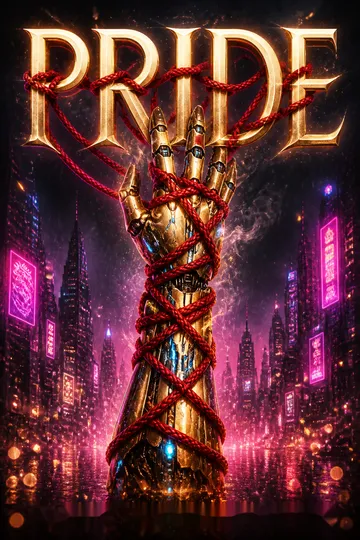
Sloth by Lana Pecherczyk receives an overall rating of 4.27/5 stars. This fourth book in The Deadly Seven series follows Sloan, a computer hacker and gamer who embodies the sin of Sloth, and her second-chance romance with Max, her online boyfriend who seemingly abandoned her. Reviewers praise Sloan's character development, the emphasis on female empowerment, and the series' blend of superhero action with romance. Some criticism focuses on miscommunication tropes and Sloan's empathy power being less impressive than her brothers' abilities. Most readers highly recommend the series for its engaging characters, humor, and Marvel-worthy storylines.
People Also Read



Characters
Sloan Lazarus
The reluctant empathSloan is a gifted hacker and a member of the Lazarus family’s secret crime-fighting team. Her sloth-related vulnerability has made retreat tempting, especially when her stronger, more physically confident siblings set the standard. She uses humor, pranks, and technical mastery to protect herself from judgment, yet she wants her work to matter. Sloan’s emerging ability makes her feel other people’s sensations and emotions, turning her usual problem-solving into a question of boundaries and control. Her relationship with Max presses on old wounds about trust and abandonment. What drives her is not a wish to be invulnerable, but a need to prove that her intelligence and sensitivity can save lives.
Maximilian Johnson
The grieving ex-soldierMax is an Australian former army officer who runs Nightingale Securities with friends from military service. He is disciplined, vigilant, and inclined to carry responsibility long after events have passed. The death of his close friend Gale has left him suspicious of shortcuts and convinced that a missed detail can cost lives. His old relationship with Sloan began online, where humor and shared games gave him a rare sense of home. In person, he is protective without always recognizing when protection can become control. Max’s central struggle is learning to accept connection without treating grief, past mistakes, or military duty as proof that he is unworthy of a future.
Daisy Lazarus
The masked family shadowDaisy is the Lazarus family’s eldest sibling, long presumed lost, and a masked enforcer for the Syndicate. She carries herself with chilling control and rarely lets emotion show, making her motives difficult for others to read. Her life has been shaped by the organization that raised and directed her after the laboratory fire. Daisy is not simply a battlefield opponent: her history links the Syndicate’s experiments to the family’s earliest losses. Small signs of attachment complicate the image she presents, but they do not make her safe. She represents the question at the center of the family’s conflict: how much of a person can be recovered after years of coercion and isolation?
Parker Lazarus
The tactical eldestParker is the eldest active Lazarus sibling and the team’s strategic leader. He values preparation, privacy, and dependable execution, and his wealth and confidence can make his authority feel like condescension. He expects Sloan to meet the same demanding standards he applies to himself, often missing the ways that his bluntness deepens her self-doubt. Parker is protective of the family and alert to the Syndicate’s ability to exploit every weakness. His leadership is strongest when he coordinates the group under pressure, but his control can become a barrier when another person’s judgment deserves room.
Tony Lazarus
The restless performerTony is a movie star by day and a member of the Lazarus team by night. His public charm hides a restless private life, and his gluttony pushes him toward excess when he lacks a balancing influence. Tony can read emotional performance unusually well because acting is both his profession and his shield. He jokes and pranks to keep difficult conversations at a distance, but he also recognizes when Sloan needs practical help. His relationship with his siblings is affectionate and combative. Beneath the showmanship, Tony is searching for a form of steadiness that fame and short-lived distractions cannot provide.
Mary Lazarus
The watchful adoptive motherMary is the adoptive mother of the Lazarus siblings and a former assassin trained by the Hildegard Sisterhood. She is compact, formidable, and skilled at reading danger before others notice it. Her fierce love expresses itself through discipline and vigilance, shaped by the years she spent protecting the children from the forces that created them. Mary knows that power without judgment can become another form of harm, so she teaches restraint alongside combat. Her past and her adoptive children’s origins remain closely intertwined, making family protection both a personal duty and a moral commitment.
Flint Lazarus
The inventive adoptive fatherFlint is the siblings’ adoptive father, a patient engineer and mechanic who works behind the scenes to keep the family equipped. His practical intelligence complements Mary’s combat expertise. Flint also remembers the scientific community that surrounded the children’s creation, which makes him a useful guide when old names and experiments return to the story. He is gentler in manner than Mary but no less committed to the family. His steadiness offers Sloan a kind of support that does not demand she prove her worth before receiving it.
Wyatt Lazarus
The guarded protectorWyatt is Sloan’s brother, a powerful fighter whose wrath and physical invulnerability make him a formidable protector. His instinct to guard the people he loves can harden into overprotection, especially where his pregnant partner is concerned. He pushes Sloan to train because he remembers how exposed the family can become when one member is unprepared. Wyatt’s history with Sara has also made him wary of threats hidden inside intimate relationships. He is devoted, but his challenge is learning that caring for someone does not mean deciding for them.
Evan Lazarus
The electric scoutEvan is a Lazarus sibling whose envy-linked powers let him control electricity. He is social, quick to tease, and capable of shifting from banter to action when the family needs him. Evan’s memories and occasional intuitions can supply clues others have missed, though he cannot command them on demand. He has a close relationship with his siblings and is particularly alert to threats against their partners. His easygoing manner sometimes conceals how much he wants the family to remain connected and useful to one another.
Griffin Lazarus
The metal controllerGriffin is a member of the Lazarus team whose power lets him manipulate metal. He is analytical and measured, often contributing through careful observation rather than forceful leadership. His day job and his secret work require him to move between ordinary civic life and the family’s hidden conflict. Griffin’s devotion to his partner, Lilo, gives him a personal stake in the risks the family faces. He is dependable in a crisis, especially when a precise intervention can prevent a weapon or machine from causing harm.
Liza Lazarus
The working detectiveLiza is Sloan’s sister and a detective whose ordinary police work often intersects with the family’s secret investigations. She is direct, competent, and less patient with romantic tension than her siblings are. Liza helps the family stay connected to official channels without confusing those channels with the whole truth. Her presence also shows how the Lazarus siblings have built public identities that can coexist, uneasily, with their night work.
Misha Minski
The grounding partnerMisha is Wyatt’s partner, a yoga instructor whose warmth and optimism make her a calming presence in the Lazarus household. She understands that protection can become confinement and encourages Sloan to leave her apartment, while also respecting her choice to talk or remain silent. Misha’s pregnancy intensifies Wyatt’s vigilance, but she maintains her independence and sense of humor. She helps Sloan recognize that emotional connection can be supportive without being another demand.
Barry Pinkerton
The compromised geneticistBarry is a geneticist whose research was meant to help people, but whose work has been drawn into the Syndicate’s program of biological weapons. He is intelligent and increasingly troubled by the harm his discoveries enable. The organization’s threats against his daughter constrain his choices, though guilt makes him vulnerable to Sloan’s appeal for redemption. Barry’s knowledge is essential, but the family must weigh his information against the damage he has helped create.
Beatrix Pinkerton
The prepared daughterBeatrix is Barry’s teenage daughter, a capable student who arrives with research books packed for an uncertain escape. She is bossy, observant, and more prepared than Sloan and Max expect. Her quick cooperation during the drive to Lazarus headquarters helps turn a frightening situation into a workable plan. Beatrix’s loyalty to her father gives Barry a reason to resist the Syndicate, while her own intelligence makes clear that she is more than leverage in someone else’s conflict.
Julius Alcott
The Syndicate’s patriarchJulius is the leader of the Syndicate’s research effort and the biological father of the Lazarus children. He believes human wrongdoing can be eliminated by identifying and destroying sinners, even when innocent people are caught in the process. His polished authority masks a willingness to use children, scientists, and altered animals as instruments. Julius values control and treats dissent as a failure of discipline. His certainty is the ideological engine behind the organization’s experiments.
Gale
Max’s absent army friendGale was Max’s closest friend in the army and the person who gave him a durable sense of family after Max lost his parents. The two shared military service, outdoor trips, and the expectation that they would protect one another. Gale’s place in Max’s memories explains Max’s vigilance and his difficulty forgiving himself for mistakes. He remains important through the choices Max makes in the present.
Sara Madden
The dangerous former fiancéeSara is Wyatt’s former fiancée, whose connection to the Syndicate left behind dangerous secrets and a phone containing useful traces. Her past betrayal has affected Wyatt’s ability to trust and continues to shape the family’s investigations.
Bailey Haze
The guarded ex-agentBailey is an ex-CIA operative who works with Max at Nightingale Securities. She is composed, sharp, and protective of her own history. Her guarded approach to trust mirrors Max’s and gives the security firm an intelligence perspective beyond the Lazarus family.
Daymo
Max’s soldier friendDaymo is one of Max’s former army colleagues and a member of Nightingale Securities. His loyalty to Max grew through military service, and his presence helps give the small firm the feel of a team rebuilt after loss.
Tom-Tom
Max’s tattooed teammateTom-Tom is another of Max’s former army friends and a Nightingale Securities operative. He uses humor to keep the team’s shared history close, while remaining dependable when a job turns serious.
Dr. Grace Go
The family’s surgeonGrace is a surgeon and a trusted member of the Lazarus family’s close circle. Her medical skill becomes vital when Max returns gravely ill. Calm under pressure, she combines professional judgment with personal commitment to the people she treats.
Lilo Likeke
The investigative reporterLilo is a reporter whose curiosity helps bring public attention to developments around the Syndicate. Her journalistic instincts make her a useful source of information, while her relationship with Griffin connects her work to the family’s private risks.
Plot Devices
The sin-balance tattoos
A visible measure of balanceThe Lazarus siblings carry biologically responsive Yin-Yang tattoos that mark how much of their engineered sin is present in their systems. Extreme imbalance can make them black out and act violently toward people they sense as sinners. The marks let the family recognize danger before a sibling understands what is happening. Sloan’s tattoo changes when Max is near, then shifts dramatically when he is taken. This device makes an invisible psychological and biological condition visible, while exposing the limits of treating balance as a simple measurement.
The lifemate bond
An engineered emotional safeguardThe Lazarus children were designed with paired lifemates who can help counter their dangerous biological imbalance. Proximity and touch can steady a sibling, and the bond also produces a powerful emotional and physical connection. For Sloan and Max, the bond complicates a relationship already damaged by years of silence: it offers real relief, but neither wants biology to make the decision for them. The Syndicate learns to exploit separation as a weapon, turning the intended safeguard into leverage against both the family and the people they love.
Sloan’s reflected sensations
Feeling turned into forceSloan can experience sensations and emotions she witnesses in others, then project some of them outward. She first discovers the ability through pain and shared distress, then learns to induce sleep and direct pain at enemies. Her power can also spread beyond her intended target when she is overwhelmed. Training with Tony helps her connect a remembered physical gesture to a controlled effect. This device ties Sloan’s emotional development directly to combat: she must learn not to suppress feeling altogether, but to distinguish what she is sensing and choose where it goes.
The sin-sensing beasts
The Syndicate’s living weaponsBarry’s altered animals are engineered to detect sin and attack it, but their impulses are difficult to control and do not reliably distinguish danger from innocence. One escapes into Cardinal City, while a larger population threatens the black-site escape. Their strength and relentlessness force Sloan and Max to confront the consequences of the Syndicate’s experiments directly. The creatures embody the organization’s belief that moral judgment can be automated, yet their indiscriminate violence exposes the cruelty hidden in that belief.
The visual-code program
A hacker’s emergency decoderSloan develops a program that translates binary code into visual patterns, making complex computer data faster for her to interpret. She uses it first to investigate the Syndicate’s financial trail and later to search the bomb phone’s code for the timer mechanism. The program matters because Sloan’s specialized intelligence can change the outcome of a physical crisis: she does not have to outfight the bomb, only recognize its pattern in time. Its payoff validates the technical work she once treated as separate from the family’s more visible heroics.
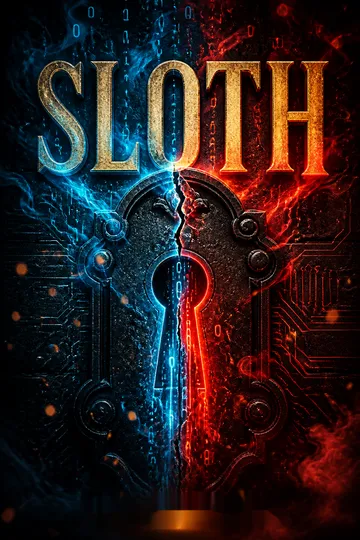
The Deadly Seven Series





About the Author

Download PDF
Download EPUB
.epub digital book format is ideal for reading ebooks on phones, tablets, and e-readers.








