


Plot Summary
A Bar Full of Sin
At Ringo's Bar, Cardinal City detective Liza Lazarus feels the lust of the crowded room as physical sickness. When her brothers tease her about her stalled love life, she tries to prove she can still choose a man, but vomits before the encounter can go further. In the alley, she hears a scarred stranger luring Mirabelle, a runaway teenager, with the promise of a birthday celebration.
Liza senses a more dangerous hunger beneath his kindness and recognizes a trafficking spotter. The warning arrives too late to keep her in control: she blacks out. Wyatt finds the man battered and Mirabelle terrified. Liza gets the girl to a shelter, but her first berserker episode makes clear that her secret condition is worsening.
Liza's attempt to perform ordinary sexual confidence turns into an involuntary exposure of how little control she has over her own body. Her sickness is not simply aversion or embarrassment: it is a sensory burden that makes intimacy dangerous and crowds exhausting. The blackout then converts that private problem into a public threat. Yet the episode also reveals her moral reflex. Liza's violence erupts when she recognizes a predator targeting a vulnerable girl, and she follows the attack by taking responsibility for Mirabelle's safety. Her competence and her loss of control arrive together, making the reader understand why she fears both weakness and the power she cannot yet command.
The Baseball Comes Back
At the precinct, Liza learns that Joe Luciano, her childhood friend and former police partner, has returned to town but asked their old colleagues not to tell her. She brings him the signed baseball they once used to signal that one needed the other's help. Joe rejects the gesture and insists their friendship has ended; his new girlfriend, Tanya, arrives and reveals that their relationship is only two months old.
After Liza leaves, she watches Joe through his apartment window and notices that Tanya's desire does not seem to affect him as expected. Liza's palms release a yellow substance that kills nearby rats, while her inner tattoo settles into balance. She realizes Joe is the one person who quiets her sin-sensing, and may be her mate.
The baseball makes the rupture legible through an object that once meant dependable rescue. Joe's refusal hurts because he is not merely an old friend returning; he is the one person around whom Liza has never felt the bodily punishment of lust. Her discovery therefore links emotional loss to a supernatural possibility she has no framework for accepting. The dead rats turn that possibility into material evidence. The romance begins not with uncomplicated attraction, but with Liza watching from a distance, misreading what she sees, and confronting a power that makes closeness both desirable and frightening.
The Case Behind Masks
At the cathedral, Liza's adoptive mother, Mary, helps her recover from panic and urges her to separate love from the harmful lust she senses. Liza admits that the man she may be bonded to is Joe, an FBI agent whose law-abiding values seem incompatible with her family's secret life.
Mary also reminds her that Daisy, their eldest sister, was left behind during the escape from the laboratory that created them. Meanwhile, Joe joins a Cardinal City task force investigating a serial killer who removes organs, while secretly assembling evidence that the Lazarus family are the masked vigilantes called the Deadly Seven.
Elsewhere, Daisy works with the Faithful, a Syndicate militia, and prepares to obtain stem cells from Wyatt's unborn child for the group's failing replicate experiments.
This section puts the intimate story inside two competing systems of duty. Joe sees the Lazarus family through evidence and criminal procedure, while Liza fears that love will require him to accept a life beyond the law. Mary's counsel offers no easy reassurance; she grounds Liza by showing that grief and guilt can distort judgment without invalidating it. Daisy's parallel plan sharpens the danger. The family member Liza remembers as a source of childhood comfort has been shaped by the enemy's machinery, and the Syndicate's interest in a baby makes the family conflict concrete rather than abstract.
Daisy at Heaven
Assigned to Joe's task force, Liza patrols known trafficking locations with him and points out the alley where she rescued Mirabelle. They go to lunch at Heaven, the Lazarus family's restaurant, where Liza's siblings and their partners are gathered.
Daisy appears and claims she wants to leave Julius Allcott, the Syndicate leader, behind. Liza and her sister Sloan do not know whether to trust her, but Mary arrives and asks the family to hear Daisy out. Before they can decide, masked Faithful flood the street and attack civilians.
Sloan triggers the family's alarm, while Liza identifies herself as a police detective and tries to keep restaurant patrons safe. Daisy takes a knife and joins the fight, forcing Liza to decide whether to treat her as an ally.
Daisy's return offers the family exactly what it has wanted, but arrives under conditions that make trust impossible to grant casually. Liza's response is more open than Sloan's because she remembers Daisy as a protector from childhood, yet she does not confuse memory with proof. The street attack suspends that debate and demands action. Liza's badge remains meaningful even as she enters a battle her ordinary colleagues cannot understand: she tries to protect civilians first, then fights the attackers. Daisy's choice to join her is evidence of conduct, not yet evidence of allegiance.
Yellow Mist, Red Street
The Faithful overwhelm the street, and Liza discovers that her yellow secretion can kill when it reaches an attacker through skin or breath. Joe, Max, and Bailey fire from the restaurant entrance while Sloan uses her empathic power against the masked men.
Daisy fights beside Liza and shields Max from a bullet, leaving her badly wounded. When the battle ends, Liza's poison has spread through the scene, and Joe has seen enough to suspect what she is.
At Lazarus House, Parker identifies the substance as tetrodotoxin, an exceptionally lethal neurotoxin, and warns that one uncontrolled release could kill Joe or a civilian. During testing, Liza injures Parker with a toxic projectile. He also admits that her brothers used to scare away the men she might have dated.
Liza's power turns a rescue into an ethical crisis: the same ability that stops the Faithful can poison people beyond her intended target. Her fear is not merely that she will be judged as a monster, but that she may hurt the one person whose presence has made her feel safe. Parker's warning gives the danger scientific precision, while his admission about the brothers exposes a quieter injury. Liza's isolation was not caused only by her strange sensitivity; her family also decided who could approach her. The battle forces her to confront both the external cost of power and the intimate cost of protection imposed without her consent.
The Poolside Confession
Joe confronts Liza at Lazarus House and names her as one of the Deadly Seven, having seen the poison on her face and the dead rats near his apartment. Liza finally explains that she and her siblings were genetically modified in a laboratory and that the Syndicate still seeks to weaponize them.
At the rooftop pool, Joe admits he left Cardinal City to become worthy of her and reveals that he has never stopped loving her. They kiss, and Liza tells him he is her mate, the partner whose opposing virtue can balance her sin. Joe hears this as proof that biology chose him in place of love, and leaves rather than accept a relationship he fears she did not freely choose.
The poolside encounter makes the romance's central question explicit: can a bond created by biology still contain genuine choice? Joe's fear is not that the connection is unreal, but that it might be sufficient for Liza without being personal. His lifelong habit of measuring himself against her brothers makes him especially vulnerable to the idea that he is merely useful. Liza, meanwhile, has spent years hiding her needs behind sharp humor, so the truth arrives only after Joe has already learned to distrust her signals. Their attraction is real, but neither can yet distinguish desire, destiny, and freely offered love.
The Baseball Statistics
The next day, Joe and Liza find Mirabelle murdered beneath a bridge, her body mutilated in the same pattern as the serial killer's earlier victims. Liza blames herself for letting the trafficking spotter escape; when yellow poison gathers at her mouth, Joe steadies her by reciting baseball statistics until she regains control.
Later, Liza brings case photographs and Evan's disturbing sketches to Joe's apartment. The images suggest that the killer is connected to the Syndicate's search for stem cells. In Joe's bedroom, she discovers the evidence board he has built about her family and realizes that his return began as an investigation. Joe tears the board down, but Liza sees his original purpose before he can explain it.
Mirabelle's death turns Liza's earlier rescue into a painful measure of what she could not prevent. Joe's statistics work because they draw on their shared history, not because they solve the grief; they give her attention somewhere safe to land while her body threatens to become a weapon. The case files then reverse that fragile trust. Liza has opened her world to Joe, only to find he has been studying her family as suspects. His attempt to dismantle the evidence cannot erase the asymmetry between them: she has been emotionally exposed, while he has kept his investigative purpose hidden.
Badges on the Table
Liza attacks Joe after finding his investigation, but he lets her overpower and cuff him rather than strike back. When poison begins to rise in her palms, he uses the baseball statistics to calm her.
Joe admits he hoped to separate her from her family, then confesses that he has loved her since childhood; Liza finally believes him, and they choose each other beyond the supernatural bond. The next morning she tells him she once threatened her abusive father to protect him, and Joe understands the risk she took.
At work, Captain Morais suspends Liza after Gareth Smith files an excessive-force complaint about the alley beating. While Joe investigates the complaint, Daisy undergoes tests at Lazarus House and offers the family a lead on a Faithful hideout.
Joe's confession changes the meaning of the bond without making it disappear. He chooses Liza while acknowledging that his earlier investigation was wrong, and she accepts his love only after hearing him name the history he had kept hidden. Her childhood confession completes a reciprocal exchange: each learns that the other had acted protectively long before either could describe that protection as love. The suspension immediately complicates their reconciliation. Liza's lawful identity is vulnerable to a complaint from the same man she had stopped from targeting Mirabelle, while Daisy's offered intelligence creates an opportunity the family cannot safely ignore.
The House Goes Blind
Daisy's lead sends the Deadly Seven and Joe toward a Faithful hideout, while Daisy remains at Lazarus House with the pregnant Misha and the adoptive parents. Liza senses an unusually fierce hunger, returns to the building, and finds AIMI, the household's security system, offline. Daisy has disabled the elevators, communications, and suit controls, then begun taking Misha toward a helicopter waiting on the roof.
Wyatt breaks free from the elevator, but Daisy threatens to push Misha over the edge. Liza offers herself instead, promising to follow Daisy if she falls. Wyatt knocks Liza unconscious on Daisy's demand. Daisy then leaves with the captured Liza, while Misha falls during the struggle and goes into premature labor.
Daisy's betrayal works because she exploits the family's confidence in its own systems and in her apparent return. The disabled AI is not just a technical failure; it removes the family's shared field of vision and makes each person dangerously isolated. Liza's offer to replace Misha reveals how decisively her protective instinct has shifted: she is willing to become the hostage because the unborn child matters more than her safety. Wyatt's blow is painful precisely because he complies to save Misha. The scene turns familial loyalty into a series of impossible choices, none of them free from loss.
Hooks in the Drawings
While the family raids the laundromat hideout, Joe helps secure the scene and lets reporter Lilo film the recovery of a living replicate from its tank. Parker then tells him Daisy has taken Liza.
Joe returns to the precinct and persuades Captain Morais's detectives to help investigate, despite pressure from his FBI director to focus on the Deadly Seven. He questions Gareth Smith, the man who filed the complaint against Liza, and learns that he uses the Faithful name Quarry, but Smith gives him no location.
Back at his apartment, Joe studies Evan's sketches of women in pain and notices meat hooks and a conveyor belt. With Evan's help and information from a shelter interview, Joe links the images to an abandoned meatpacking plant owned by Smith's family.
Joe's professional identity changes through action rather than a sudden rejection of law. He still gathers evidence, coordinates with local detectives, and seeks corroboration, but he refuses to let federal priorities bury the immediate danger to Liza. His choice to let Lilo broadcast the replicate tank similarly makes truth a tactical act: public visibility may prevent the discovery from being quietly contained. The sketches matter because Joe treats them not as mystical decoration but as evidence with spatial details. His investigative habits, once aimed at exposing the Lazaruses, now become the means by which he can reach them.
The Replicates Wake
At the packing plant, Liza frees her hands and meets Joe, then sends him to the rooms where kidnapped women are being held. In the cooler, she finds Julius Allcott beside dozens of replicate tanks and recognizes the locket Daisy believes contains proof that Julius will save her. When Daisy opens it and finds no strand of her hair, her faith collapses.
Julius activates the tanks, and the newly awakened replicates attack. Daisy lets herself be taken with Julius so Liza can fight; Liza uses her poison and Daisy's knife to stop the clones. Elsewhere, Parker's battle with a Hildegard Sinner ends when their touch reveals a mate bond and he falls into the machinery. Joe and the Lazaruses bring the plant under control and rescue captives.
The plant exposes the Syndicate's promises as a machinery of disposable bodies. Julius has offered Daisy a future to keep her obedient, while the tanks show that his real project treats human life as raw material. Daisy's discovery does not instantly free her; despair drives her to sacrifice herself, repeating the pattern of surrender that has shaped her life. Liza's combat is therefore both rescue and grief. She can stop the replicates, but not persuade Daisy to trust that another future is possible. Parker's unexpected bond with the Sinner echoes the novel's central biological mechanism while leaving its moral question unresolved.
A Baby Named Amari
After the plant battle, Joe's investigation leads to the Ripper's capture and the Syndicate's illegal experiments become public evidence rather than a buried rumor. He refuses to let his FBI director define the case as a pursuit of vigilantes and tells Captain Morais he intends to remain in Cardinal City, where both the local police and the Lazaruses need him.
At the hospital, the family waits through Misha's difficult labor. Wyatt emerges with their daughter, Amari, while Misha recovers from surgery. Parker is also alive after losing an arm in the battle. Liza and Joe reunite, and his gift of reusable straws recalls the small kindnesses of their renewed intimacy. Daisy remains missing, so the celebration carries an unresolved fear.
The resolution gives Joe a place to belong without asking him to abandon the principles that first brought him into law enforcement. He stays because he can use those principles against the Syndicate, not because he has become comfortable with every Lazarus choice. Amari's birth offers a vivid counterimage to the replicates: this child arrives through a difficult but human process, into a family ready to protect and love her. The small gift of straws also returns the romance to ordinary care after the scale of the battle. Joy is real, but Daisy's absence prevents it from becoming a false claim that the danger has ended.
Epilogue
Daisy lies on a medical gurney in a dark laboratory, held through repeated procedures that leave her in pain and cut off from time. She has lost her sense of name and future, but keeps one small possession: a crushed flower bud taken from the daisy bonsai Mary gave her.
When a needle enters her spine, Daisy grips the flower as the last evidence that her past contained tenderness and that some part of her may still hope.
The ending refuses the comfort of treating Daisy's sacrifice as a completed redemption. Her decision at the plant does not free her; it returns her to captivity, where the Syndicate reduces her to a body for experimentation. Against that brutal reduction, the crushed flower preserves a small, private continuity with the childhood she lost and the family that tried to welcome her back. The image does not promise rescue or recovery. It shows how hope can survive as an object held in the hand, even when the person holding it can no longer imagine a future.
Analysis
Lust makes the body both an instrument of knowledge and a site of danger. Liza's sin-sensing tells her when desire is present, but it does not grant her effortless intimacy; instead, it turns other people's appetites into pain and makes her fear that ordinary contact will end in sickness or violence. Her poison intensifies this problem. The ability that lets her stop predators can also injure allies, so protection cannot remain a simple moral good. Liza must learn control without surrendering the compassion that first activates her power.
The romance tests whether supernatural compatibility can coexist with consent. Joe and Liza are linked by a biological bond, but Joe's fear of being chosen by mechanism rather than affection is grounded in a lifetime of believing he is inadequate. Their reconciliation requires more than accepting destiny. Joe admits his earlier attempt to investigate the family and abandon his own assumptions; Liza tells him the truth about her body and their shared childhood. The bond becomes meaningful only when each chooses what biology cannot choose for them.
The family plot complicates the idea that love automatically repairs harm. Mary saved seven children and still carries the grief of leaving Daisy behind. The Lazarus siblings' welcome is sincere, but their suspicion cannot be switched off by kinship alone. Daisy's longing for a promised future makes her vulnerable to Julius, whose rhetoric about a sinless world disguises an economy of coercion, trafficking, and disposable bodies. The replicate tanks expose that ideology in its literal form: people are manufactured, used, and discarded.
Joe's law enforcement work supplies a counterweight to the family's secrecy. He does not become powerful in the Lazarus sense; his contribution is to read evidence, enlist local colleagues, and make the hidden laboratory visible to the public. The novel's resolution therefore depends on different kinds of strength working together. Love offers Liza balance, but neither love nor family alone defeats the Syndicate. They need evidence, restraint, courage, and a willingness to let other people help.
Review Summary
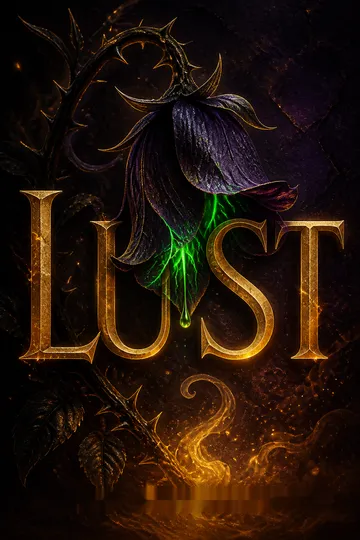
Lust by Lana Pecherczyk is the seventh book in The Deadly Seven series, featuring Liza Lazarus and her childhood friend Joe Luciano. Readers praised the friends-to-lovers romance, noting strong chemistry and emotional depth between the protagonists. The story follows Liza, who embodies the sin of lust, as she reunites with FBI agent Joe, who secretly investigates her vigilante family. Reviews highlight action-packed plotting, sibling dynamics, and the ongoing Syndicate threat. Most readers loved Joe's pining devotion and Liza's badass detective persona. Several noted the subplot involving sister Daisy (Despair) and anticipation for Parker's (Pride) upcoming book.
People Also Read







Characters
Liza Lazarus
The poisoned detectiveA Cardinal City detective raised among the genetically modified Lazarus siblings, Liza combines police instincts with years of martial training. She is blunt, funny, and fiercely self-reliant, partly because she has learned to treat vulnerability as an opening for danger. Her ability to sense lust makes ordinary social life physically punishing, while her developing power makes that sensitivity genuinely hazardous. Liza's deepest conflict is not whether she can fight, but whether she can let another person see the fear beneath her competence. Her loyalty to victims, especially those whom institutions overlook, gives her a moral center that is independent of her family's secret work.
Joe Luciano
The lawbound first loveJoe is an FBI agent in Violent Crimes and Liza's childhood friend, a disciplined investigator shaped by an abusive father and a determination not to repeat his father's violence. He has spent years trying to become strong enough, successful enough, and principled enough to deserve a place beside Liza. That ambition gives him rigor, but also makes him mistake emotional uncertainty for proof that he has failed. Joe values evidence and lawful process, even when the people he cares about operate outside both. His restraint is not passivity: he is capable of force, but continually questions what that force makes him.
Daisy Lazarus
The lost eldest sisterDaisy is the eldest of the Lazarus children, separated from her siblings during their escape from the laboratory where they were created. She grew up under the influence of the Syndicate and carries a different history from the family that survived together. As a child, she was affectionate and protective, especially toward Liza; as an adult, she is guarded and difficult to read. Her longing for belonging is tangled with the habits of obedience and survival that kept her alive. Daisy's identity is further complicated by the names imposed on her by the people who claim authority over her.
Parker Lazarus
The brilliant eldest brotherParker is Liza's highly intelligent older brother, a technology entrepreneur and inventor who treats preparation as a form of care. His confidence can shade into arrogance, especially when he believes his judgment is protecting the family. He designs their systems and equipment, studies the science behind their abilities, and expects others to respect the dangers he can quantify. Under that command lies a less visible fear of failure and of losing the people who depend on him. Parker's devotion is genuine, though he often expresses it through instructions and control rather than reassurance.
Mary Lazarus
The mother who chose rescueMary is the adoptive mother of the Lazarus siblings and a former assassin trained by the Hildegard Sisterhood. She chose to rescue the children rather than carry out the order to kill them, then raised them with discipline, affection, and a belief in practical responsibility. Her training lets her meet danger without theatrics, but it has not erased her guilt over the child left behind. Mary offers Liza calm rather than easy comfort, and her own uncertain relationship with faith reflects the cost of living with choices that saved some people and wounded others.
Flint Lazarus
The family builderFlint is the adoptive father of the Lazarus siblings and Mary's partner. A patient mechanic and technical problem-solver, he contributes weapons, equipment, and steady support without needing to dominate a room. Flint often acts as a bridge when family members turn anger into accusation. His loyalty is expressed in practical work and in making space for people to return, even when forgiveness is difficult.
Wyatt Lazarus
The protective brotherWyatt is Liza's older brother, a powerful fighter associated with wrath and a man whose protectiveness intensifies around his pregnant partner, Misha. He tends to treat danger as something he must physically stand between and his family, a response that can become controlling even when its motive is love. His loyalty is absolute, but he must learn that protection sometimes means trusting another person's judgment and accepting risks he cannot personally control.
Sloan Lazarus
The family's emotional radarSloan is one of Liza's younger siblings, an empath who can sense and influence the emotions of people around her. Her dry humor and bluntness hide a strong instinct for reading the room, and she is particularly alert to threats against her fiancé, Max. Sloan can be formidable in a crisis, though her powers and her attachment to Max also make separation physically and emotionally difficult.
Tony Lazarus
The charming showmanTony is one of Liza's brothers, a famous actor whose public charm contrasts with his capacity for dangerous action. He uses jokes to puncture family tension and is comfortable shifting between celebrity life and the Lazaruses' hidden work. His bond with Bailey connects him to a partner with her own intelligence and professional history.
Griffin Lazarus
The watchful strategistGriffin is one of Liza's brothers, a measured and observant member of the family who thinks about exits, information, and the risks others overlook. His restraint can make him seem distant, but it is part of how he keeps the group organized under pressure. He is married to Lilo, whose reporting gives the family a connection to the city's public life.
Evan Lazarus
The dreaming artistEvan is the youngest Lazarus sibling, an artist whose dreams produce disturbing images that can point toward events and places the family has not yet found. He is less imposing than some of his brothers, but his drawings provide information no ordinary investigation has uncovered. His creative gift makes him both a sensitive observer and an uneasy bearer of knowledge he cannot fully control.
Misha Minski
The independent expectant motherMisha is Wyatt's partner, a pregnant woman who values independence and resists being treated as fragile. Her bright warmth helps soften the Lazarus family's guarded atmosphere, but she is not simply a source of comfort for them. She wants to make her own decisions, even when the people who love her respond to danger by closing ranks around her.
Max Johnson
The security-minded partnerMax is Sloan's fiancé and the owner of Nightingale Securities. He brings professional security experience and physical courage to the Lazarus family's orbit, while his relationship with Sloan requires him to understand the emotional force of her abilities. Max is protective without being defined solely by protection; he is willing to act in public danger and to trust Sloan's strength.
Bailey Haze
The ex-CIA protectorBailey is Tony's partner and a former CIA operative who works in security. She is observant, armed, and hard to surprise, even when pretending to be off duty. Her professional competence gives the Lazarus partners an independent role in dangerous situations rather than leaving them as people to be guarded.
Lilo Likeke
The camera-eyed reporterLilo is Griffin's wife and a reporter for the Cardinal Copy. She tracks the city's public mood and understands how a story can be suppressed or made impossible to ignore. Her newsroom skills complement the family's secrecy, and her willingness to film evidence gives the investigation a route beyond private intelligence.
Grace Go
The steady surgeonGrace is a surgeon at Cardinal City General Hospital and part of the Lazarus family's close circle. Her medical skill matters when battles leave injuries that the family's own first-aid room cannot manage. She brings a grounded, professional calm to emergencies that otherwise pull the family toward panic and improvisation.
Julius Allcott
The Syndicate's ambitious leaderJulius leads the Syndicate, an organization that believes the world can be remade by eliminating sin. He combines wealth, scientific access, and personal authority to make extreme ideas appear orderly and inevitable. His treatment of Daisy reveals the emotional leverage beneath that ideology: he offers belonging and a future in exchange for obedience. Julius sees human beings less as people than as material for a project.
Gareth Smith, Quarry
The Faithful's recruiterGareth Smith, known within the Faithful as Quarry, is a recruiter and a suspect in the city's trafficking and serial crimes. He uses a disarming manner to approach vulnerable young people, masking the violence that supports his work. His family history includes a failed meatpacking business, a detail that becomes important to investigators tracing the Syndicate's operations.
Captain Morais
The hard-nosed police captainMorais runs the Cardinal City Police Department with a sharp eye for institutional pressure and a willingness to back competent officers. He is not sentimental about the law, but he understands that federal priorities can fail the city he serves. His decisions give Joe and Liza room to pursue evidence when larger agencies would rather control the story.
Geoff Slinksi
Joe's FBI colleagueGeoff is Joe's younger FBI colleague, a capable fighter and investigator whose casual manner and lateness make him seem less disciplined than he is. He handles research and field assignments for the task force.
Briggs
The veteran detectiveBriggs is a veteran CCPD detective who knows Liza and Joe from their earlier days in the department. His practical experience and local loyalty become useful when the investigation needs help beyond official channels.
Mirabelle
The runaway Liza protectsMirabelle is a sixteen-year-old runaway whom Liza finds being approached by a trafficking spotter. Her vulnerability gives Liza's instincts an immediate human consequence, and her fate remains connected to the investigation that follows.
Tanya
Joe's brief girlfriendTanya is the woman Joe has been seeing when he returns to Cardinal City. Bubbly and attentive in public, she is uncomfortable with the history Joe shares with Liza and exposes how little Joe's guarded account of his relationship matches its reality.
Alice
Parker's capable assistantAlice works as Parker's assistant and makes frequent visits to the Lazarus household on his behalf. Her careful manner and unusual familiarity draw Mary's attention when they meet at the cathedral.
Plot Devices
The sin-balance bond
The body's counterweightEach Lazarus sibling senses a particular sin and risks becoming dangerously unbalanced without a partner embodying the opposing virtue. A bond can quiet that pressure and unlock the sibling's powers, but the biological mechanism does not settle the emotional question of whether love is freely chosen. For Liza and Joe, the bond first explains why she has never sensed his lust and why his presence steadies her. It then creates a conflict when Joe fears that she wants him only because their biology assigns him a role. The device drives both the supernatural stakes and the romance's argument about choice.
A living neurotoxin
Power with lethal reachLiza's newly active ability produces a yellow toxin through her mouth and hands. When she is frightened or unbalanced, it can spread as mist or strike in concentrated bursts, killing people who inhale it or receive it through a wound. The ability first appears as unexplained residue and dead rats, then becomes a weapon during the Faithful attack and the battle at the packing plant. Parker identifies its danger and helps test Liza's control, while Joe's presence and their shared baseball memories can help interrupt her panic. The toxin makes Liza's instinct to protect others inseparable from the risk of harming them.
Baseball as lifeline
A shared signal of trustThe signed baseball began as a private childhood signal between Liza and Joe. Either could send it when they needed the other, giving the object a history that predates their adult conflicts. As their relationship strains, the ball becomes a physical test of whether their friendship still exists. Its more intimate function appears when Joe recites baseball statistics to ground Liza during a dangerous surge of poison. Their shared knowledge gives her attention a familiar track to follow, making the baseball both an emblem of the past and a practical tool for surviving the present.
The bio-indicator tattoo
A visible measure of imbalanceThe Lazarus siblings carry a yin-yang tattoo that changes as sin accumulates or balance returns. It offers a visible clue to a condition that might otherwise seem like mood, illness, or loss of control. Liza uses its changed appearance to recognize that her connection to Joe is affecting her internal balance, while the family uses the same principle to assess Daisy's condition. The tattoo cannot explain motives or guarantee safety, but it makes invisible biological pressure legible and gives the family a way to monitor danger before a blackout takes over.
The replicate program
An army grown in tanksThe Syndicate grows human replicates in tanks and plans to use them as disposable soldiers in a campaign to remake the world. The experiments require stem cells and depend on technology that can accelerate the clones' growth and direct their actions. The Faithful are promised rebirth as perfect beings, but the program's reality is a mass of short-lived bodies intended for violence. The tanks connect the trafficking and organ-harvesting cases to the larger conspiracy, giving Joe a physical piece of evidence and forcing Liza's family to confront what the Syndicate intends to do with their biology.
The Deadly Seven Series








About the Author





Download PDF
Download EPUB
.epub digital book format is ideal for reading ebooks on phones, tablets, and e-readers.








