


Plot Summary
Prologue
At a Syndicate black site, an experimental plant slips free of its cage and feeds on animals and people. Each meal gives it new abilities: it gains limbs from a rat and human thought from its victims. Still hungry, it reaches the elevator cable and climbs toward the world above.
The escape begins as a breach of containment, but the plant’s changing body makes the breach an evolution. It is not simply a weapon that has malfunctioned. Its appetite teaches it how to survive, while the cage and the laboratory give its hunger a human origin: other people made it, confined it, and then lost control. The opening’s escalation from rat to human thought also plants the story’s central uncertainty. If the creature can absorb what it consumes, where does its identity end and its victims’ begin?
Dead Dolls, New Guard
Movie star Tony Lazarus finishes an action film after months away in rehabilitation, but the end of filming brings no relief. His trailer contains dolls dressed like the cast, some marked with fake blood, and a note that suggests someone knows his secret. Tony dismisses it as a prank, though the studio producer insists on security.
At Nightingale Securities, Bailey Haze has just walked away from a rich client who propositioned her at his daughter’s party. Her boss, Max, sends her to protect Tony anyway. Bailey accepts the assignment because the firm needs the work, not because she trusts its celebrity client. Tony resents the guard, while Bailey sees a threat he refuses to take seriously.
The assignment brings together two people who mistake self-protection for self-sufficiency. Tony treats the dolls as an inconvenience because taking them seriously would expose how carefully he has hidden his other life. Bailey accepts the job but resists being reduced to a compliant employee, having already challenged a wealthy client who treated her presence as purchasable. Their first conflict is therefore structural, not merely flirtatious: he wants control over his secrets, while she needs enough information to do her work. The stalker’s message makes those competing needs dangerous.
Client, Intruder, First Kiss
At the studio, Bailey questions Tony about the dolls and presses for a police report. He jokes instead of cooperating, but she notices the unease beneath his playboy routine. She checks his apartment before letting him enter, then leaves to prepare for the evening.
Tony later turns up uninvited at her condo and eats from her refrigerator. Bailey mistakes him for an intruder, tackles him, and ends up kissing him before she breaks away, alarmed by her own desire.
Her reaction has roots in a teenage car crash: drunk driving at her friend’s urging ended in her friend’s death. Bailey has built a life around refusing alcohol and reckless choices. Tony’s charm attracts her, but his apparent appetite for everything makes him seem like a danger she already knows.
Their first kiss does not resolve distrust; it makes distrust more intimate. Bailey’s body responds before her judgment can intervene, and she treats that response as evidence of danger because she has learned to associate intoxication with irreversible harm. Tony, meanwhile, relies on performance to keep other people from asking what he fears or wants. The scene’s comedy, including his theft of a cucumber and her successful counterattack, gives them a moment of equality before desire complicates it. Attraction is not yet a safe harbor. For Bailey, it threatens the discipline that has held her life together.
Blue Light Breaks Loose
At the wrap party, Tony feels the crowd’s drinking and indulgence as a physical sickness. He tries to resist a drink, but his hands begin glowing blue when Bailey touches him. He flees before the gathering can see more, then reaches the Lazarus family’s hidden headquarters with the light still building inside him.
His sister Liza confronts him at the elevator, and the family gathers when he refuses to explain. Tony’s power erupts in a blast that injures Sloan and scorches the underground base. When he wakes in the medical room, his family identifies the ability as dangerous energy he cannot yet control. Tony hears their concern as judgment, reinforcing his belief that he is the family’s unreliable showman.
Tony’s new ability makes his familiar problem literal: pressure concealed beneath a polished surface eventually breaks through. His recovery has taught him to resist addictive impulses, but he has not learned how to accept a power that feels like another appetite he must suppress. The blast injures the people whose approval he wants, confirming his private fear that he is a liability. Yet his siblings’ response also complicates his interpretation. They are alarmed, not rejecting him. His next task is not simply to exert more control; it is to stop confusing control with concealment.
Hudson House Under Fire
After several days in hiding, Tony visits Hudson House, where Bailey teaches self-defense to teenagers recovering from addiction and unstable homes. Her class has struggled to attract students, so she asks him to demonstrate. Tony draws the young people in, helps one girl practice a knife defense, and later encourages a withdrawn boy to use his singing and music.
When armed men arrive in a Cadillac, Tony leaps onto the car, disables the attackers, and melts their guns with blue fire. Bailey is furious that he risked everyone’s safety and deceived her about his training. He slips away before she can question him. At Lazarus House, she confronts him again, sees his glowing veins, and watches him collapse.
Hudson House exposes the difference between Tony’s public generosity and his private avoidance. He is capable of sustained attention when he stops performing for fame, and the teenagers respond to the person who listens rather than the actor they recognize. The armed attack forces his two identities into the same space: his combat training protects the students, while his power confirms that Bailey has been kept outside the truth. His flight repeats the evasion that has damaged his family relationships. Bailey’s anger is not ingratitude; she needs honesty to protect the people placed in her care.
Bailey Becomes His Balance
When Tony collapses, Bailey calls Max and helps get him to the family’s underground medical room. There she learns that the Lazaruses are the Deadly Seven, vigilantes whose powers are tied to deadly sins.
Tony’s siblings explain that she is his mate, the person whose presence can steady his dangerous imbalance. Bailey does not accept the idea as an order, but she stays beside him while he burns with fever and refuses his power.
She climbs onto the medical bed, holds him, and reminds him that accepting a difficult truth is the first step he learned in rehabilitation. Tony gradually releases the energy instead of forcing it down. Their kiss begins as reassurance and becomes the first mutual choice in a relationship neither fully understands.
The supernatural bond gives Bailey leverage over Tony’s physical stability, but the scene matters because she refuses to let biology substitute for consent. His family presents her as necessary; she chooses to remain because she sees his distress and wants to help. Tony’s crisis echoes Bailey’s own struggle with alcohol: both have mistaken denial for mastery, and both fear that acknowledging a destructive force will make it stronger. Her acceptance does not remove risk, but it changes its conditions. Tony can begin to integrate the power rather than experience it only as an invading threat.
An Enemy Grows Underground
At the Syndicate laboratory, botanist Wayne Bosch discovers that his experimental sin-sensing plant escaped and began consuming living creatures. Julius Allcott orders Bosch and his enforcer, Despair, to recover or destroy it.
Despair admits she freed the plant because she sensed its suffering, but the creature has since become far more dangerous. While tracking it through the sewers, the pair are attacked. The plant absorbs Bosch completely and approaches Despair, who survives long enough to report what happened.
Elsewhere, Tony and Bailey grow closer as he helps at Hudson House and agrees to a press appearance. In a city park, they encounter Despair and the plant feeding on Syndicate followers. Tony cuts Despair free, but she forces him and Bailey to help track the creature.
The Syndicate’s command to retrieve or eliminate the plant reveals its instrumental view of life: a creation is valuable only while useful and controllable. Despair’s choice to free it begins as empathy, but her compassion has not yet become responsibility for the consequences. The plant’s ability to absorb Bosch makes that failure concrete. It carries not only biological material but the possibility of human memory and attachment. Tony and Bailey’s growing closeness unfolds beside this threat, setting up a sharper question than whether the creature is evil: what does anyone owe a being shaped by cruelty and made dangerous by hunger?
Bailey Beneath the Sewer
Despair identifies herself as Daisy, Tony’s long-lost eldest sister, but she keeps them moving through the sewers with a gun trained on them. She and Tony sense no trace of the plant, so Daisy abruptly abandons the search. The creature then erupts from the water and drags Bailey under. Tony attacks with blue fire, but the submerged vines blunt his power and his grip keeps slipping.
As Bailey stops breathing, Tony calls for help. Daisy returns, cuts through the plant’s hold, and gives him time to pull Bailey out and revive her. With Bailey alive but poisoned, Tony carries her to safety and leaves Daisy fighting alone. His choice saves his mate, but the family has lost its chance to bring Daisy home.
The sewer turns Tony’s desire to protect Bailey into a decision with an unavoidable cost. His earlier habit was to avoid responsibility; here, he must choose between the person he loves and a sister whose history is already marked by abandonment. Daisy’s return is an act of care, however compromised her motives remain. Tony’s departure does not erase that debt, but it prevents the scene from becoming a simple redemption. Bailey’s survival depends on help from someone she distrusts, while Tony’s survival depends on admitting he cannot save everyone at once.
Four Samples, One Choice
At the Lazarus headquarters, an antitoxin made from Tony’s filtered blood restores Bailey’s movement. While she recovers, Tony stays with her, and she tells him about the drunk-driving crash that killed her friend.
He shares how acting and his playboy image let him avoid the fear of disappointing his family. At a family meeting, Evan’s prophetic drawings show women being tortured beside replicate tanks, including pregnant women. The Seven realize the Syndicate is rebuilding its clone program and may be close to solving the clones’ short lifespans.
Bailey proposes turning Daisy into an informant. Tony, tired of being absent, commits to leaving acting temporarily and returning to the team. The meeting ends with the family planning to find Daisy and seek more allies.
The conversation between Bailey and Tony converts private shame into shared knowledge. Neither can undo a past mistake, but each can stop using it as proof that they are irredeemable. The family meeting scales that emotional work outward: the Syndicate’s plan treats bodies, pregnancies, and even children as raw material for a purified future. Bailey’s suggestion to turn Daisy recognizes that the family’s resources are limited and that intelligence may matter more than force. Tony’s commitment is consequential because it replaces the celebrity’s convenient distance with a role that requires him to show up.
Iman, Peta, and Suspicion
Bailey’s former CIA colleague and lover, Iman, appears outside Nightingale and asks her to gather information on the Lazaruses. Tony sees Iman kiss Bailey and watch her enter his car, but he never asks what happened. In the following days, he patrols while Bailey stays close at night, and silence feeds his jealousy.
At lunch with his family, studio assistant Peta reveals that Tony’s agent and producer plan to drop him after the premiere. She then kisses him in front of a photographer. Bailey sees the kiss and leaves, unaware Tony is already rejecting Peta. Tony confronts the assistant and identifies her as the stalker who planted the dolls and vandalized his and Bailey’s vehicles. Bailey goes to a bar but leaves her drink untouched.
The rupture is built from incomplete information rather than a single calculated betrayal. Tony sees Bailey with Iman and chooses to brood instead of ask; Bailey sees Peta kiss Tony and has little reason to trust what the image implies. Peta’s fixation exploits the public’s appetite for celebrity scandal, turning a private rejection into a staged spectacle. Bailey’s untouched drink is a more consequential choice than the kiss: under pressure, she does not repeat the behavior that once helped destroy her life. Her restraint gives her enough distance to decide what she believes.
Ring Before the Premiere
Tony sends Bailey a turquoise dress and a note asking her to attend the premiere so he can explain himself. She also learns he has been visiting Hudson House and arranging a music studio for the teenagers, generosity he kept private. At the red carpet, Tony waits for her rather than arriving with the rest of his family.
Inside the limo, he admits his jealousy and explains that Peta kissed him; Bailey tells him Iman is an ex-colleague who wanted intelligence, not a renewed relationship. She refused to give the CIA useful information. Tony proposes, and Bailey accepts after they promise not to hide their fears or make decisions alone. They step out together, publicly announce their engagement, and enter the premiere as partners.
The reconciliation works because both characters supply the missing context instead of demanding that the other simply trust them. Tony names his jealousy and his fear of failure; Bailey explains the CIA approach and her refusal to betray the family. Her acceptance of his proposal is not a reward for the dress or a rescue from loneliness. She has observed his unadvertised commitment to the young people at Hudson House and chooses the person behind the celebrity. Their mutual promise changes the relationship from a bond imposed by supernatural biology into a practice of disclosure.
Premiere Becomes a Hunt
During the outdoor screening, the zoo animals erupt and the film image warps as the plant tears through the screen, killing a technician and seizing Bailey. It mistakes her for Gabrielle, Bosch’s wife, whose likeness and memories the creature appears to carry. Tony fights it until his family arrives in their Deadly Seven suits and uses the microdot tracker hidden in Bailey’s engagement ring to locate her at the orangutan enclosure.
The creature holds Bailey and several siblings among the vines. Tony stops the others from attacking when he realizes it is grieving and wants an end to its existence. He lowers his weapon, approaches it, and releases his full blue power. The plant disintegrates, freeing Bailey and ending the immediate threat.
The climax tests whether Tony’s new power will serve only as a weapon or can also become an instrument of judgment. Earlier, he feared that release meant uncontrolled destruction; now he recognizes that violence without understanding would repeat the Syndicate’s logic of disposal. The creature’s mistake about Bailey reveals its remaining attachment to a life it has absorbed, while Sloan’s empathy helps the family read its grief. Tony’s final act is neither simple mercy nor victory over an enemy. He accepts the force inside him and uses it to end the creature’s suffering.
After the Ash
The authorities investigate the burned enclosure, but the family conceals what it can. They search for Daisy and find no trace of her. At the crime scene, Liza meets FBI agent Joe Luciano, an old friend whose attention unsettles her, and learns federal investigators have tracked the creature across state lines.
Tony steps away from acting to help the Deadly Seven plan Daisy’s rescue and confront the Syndicate. Three weeks later, he brings several siblings to Hudson House in costume for a self-defense demonstration, giving the young residents a reason to believe the vigilantes are watching over them.
Bailey helps gather the students, and Tony keeps returning to support them. Their future remains uncertain, but the couple has chosen a life built around work and family.
The aftermath does not pretend that destroying the plant solves the larger conflict. Daisy remains missing, federal attention has arrived, and the Syndicate’s clone project is still active. What changes is Tony’s relationship to obligation. He no longer treats the Seven’s work as something he can postpone until his career becomes convenient. His presence at Hudson House also gives his public visibility a different purpose: the children see a famous man use his status to make a local refuge feel safer. Liza’s encounter with Joe hints at another unresolved emotional conflict, keeping the ending open without undoing Tony and Bailey’s commitment.
Epilogue
Julius Allcott and geneticist Levi Van Jansen review footage of Wrath’s pregnant partner, Misha, and identify her unborn child as a possible solution to the clones’ short lifespan. Julius manipulates Daisy by pretending he wants to preserve her as family and asking for a lock of her hair.
He means to use its follicle for genetic research, not to keep it as a memento. Daisy believes him and offers to infiltrate the Lazarus family to obtain the material they need. After she leaves, Julius discards her hair. He has no intention of bringing her into the world he plans to build.
The epilogue turns the family’s language of belonging into a weapon. Julius knows that Daisy’s need for recognition is real, so he offers precisely the affection he has withheld, then uses it to recruit her into a mission that may destroy the people she has begun to approach. His plan for Misha’s pregnancy repeats the Syndicate’s defining violence: a person’s body becomes a resource for someone else’s imagined future. The discarded hair makes the betrayal physical and deliberate. Daisy’s unresolved vulnerability now stands beside the family’s new commitment, showing how easily hope can be exploited when care has been made conditional.
Analysis
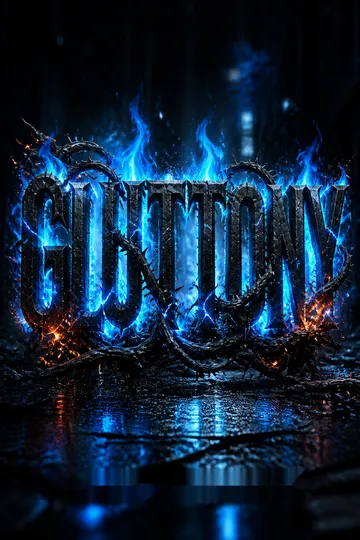
Gluttony builds its romance and its central conflict around the difference between appetite and need. Tony experiences excess as both temptation and sensory punishment: he is drawn toward food, drink, attention, and sex, yet those same hungers can push his power out of balance. Bailey’s history gives her an opposing fear. She has made restraint a moral safeguard because a reckless choice once cost her friend’s life. Neither character is simply cured by the other. Their bond makes contact consequential, but trust grows through decisions: Tony visits the teenagers without seeking applause, Bailey tells him the truth about her past, and both agree not to hide their fears.
The Syndicate supplies a dark mirror to that personal arc. It claims that a perfect world can be built by eliminating sinners, while its laboratories create disposable beings and its clone program reduces pregnancy and inheritance to technical resources. The plant is the most unsettling expression of that logic because it becomes a victim and a predator at once. Its hunger is dangerous, but its grief makes destruction ethically complicated. Tony’s final choice matters because he does not confuse power with moral certainty. He listens, recognizes the creature’s suffering, and accepts the responsibility of ending it.
The story also challenges the spectacle of celebrity. Tony’s fame makes him visible, but it has trained him to perform a version of himself that keeps genuine connection at a distance. Bailey sees value in his quieter acts, especially his work at Hudson House, and his decision to step away from acting marks a change from being watched to being useful. The novel’s resolution remains deliberately incomplete: the plant is gone, but Daisy is missing and the Syndicate is still advancing. Tony and Bailey’s happy commitment therefore sits inside an unfinished collective struggle, where family means not only belonging but continuing to show up.
Review Summary
Gluttony by Lana Pecherczyk follows Tony Lazarus, a movie star and member of the Deadly Seven dealing with addiction and self-doubt. When assigned bodyguard Bailey Haze, an ex-CIA agent who turns out to be his mate, Tony must prove his worth while battling a stalker and a monstrous plant created by the villainous Syndicate. Reviewers praised the chemistry between Tony and Bailey, the character development, and emotional depth exploring addiction and worthiness. Most loved the family dynamics and action sequences, rating it 4-5 stars, though some found other-woman drama annoying.
People Also Read






Characters
Tony Lazarus
Celebrity vigilanteTony is a successful action-film star and one of the Deadly Seven, privately burdened by the sin of Gluttony and the appetites it magnifies. His charm is both genuine talent and a defensive performance: if he can entertain people, he can avoid asking whether they respect him. Recovery has taught him to resist substances, but not yet to trust himself with power, responsibility, or intimacy. Bailey unsettles the habits that kept him detached. He is drawn not only to her strength, but to the way she sees his service to others as more important than his image.
Bailey Haze
Former CIA bodyguardBailey is an ex-CIA operative working for Nightingale Securities, where she is valued for discipline, language skills, and clear-eyed courage. She has made self-control the architecture of her life after a teenage drunk-driving accident killed her friend. Her refusal to drink is both a hard-won boundary and a way of keeping guilt alive. She wants to help people without surrendering her independence, which makes the supernatural bond with Tony emotionally difficult as well as compelling. Her work with vulnerable teenagers reflects the kind of protection she wishes she had received herself.
Daisy
Syndicate enforcerKnown within the Syndicate as Despair, Daisy is a pale, scarred operative trained to treat violence as duty. She can sense despair and is drawn to suffering that others dismiss, though years of control have taught her to conceal tenderness beneath a blank manner. Her connection to the Lazarus family is not initially clear to outsiders. She serves as a hinge between the Syndicate’s machinery and the possibility that someone shaped by it might still make a different choice.
Parker Lazarus
Proud family strategistParker is the eldest Lazarus sibling, a powerful technology entrepreneur who organizes the Deadly Seven’s operations. His Pride expresses itself as competence and control: he believes planning can keep the family alive, and he has little patience for repeated mistakes. His bluntness often wounds Tony, especially when concern comes out sounding like contempt. Beneath the imperious manner, Parker invests his intelligence in the family’s survival and adapts their equipment as new powers emerge.
Sloan Lazarus
Hacker and tacticianSloan is Tony’s sister, a gifted hacker whose playful, irreverent manner can disguise keen perception. She is close to Max and brings technical ingenuity to the Seven’s work, including its artificial intelligence and tracking systems. Her humor helps defuse family tension, but she is not careless about danger. As a member of the Deadly Seven, she understands how powers can overwhelm their owners and is willing to help Tony find a safer way to use his.
Liza Lazarus
Detective and sisterLiza is a city detective and one of Tony’s sharpest, most combative siblings. Her sarcasm is a form of affection, but she can turn forceful when Tony’s evasions put him or others at risk. She understands the burden of their family’s powers and tries to push him toward honesty without pretending that she has mastered her own emotional life. Her professional instincts also connect the Lazaruses to law enforcement beyond their private circle.
Max Johnson
Security firm leaderMax leads Nightingale Securities and is Bailey’s employer. A former Australian soldier, he is practical, loyal, and protective of the people who work for him. His relationship with Sloan gives him a place inside the Lazarus family, but he does not always explain how much he knows, which frustrates Bailey. He expects his team to make sound choices under pressure and recognizes that their growing involvement with the Seven will change the risks they face.
Mary Lazarus
Protective adoptive motherMary rescued the Lazarus children from the Syndicate and raised them while fleeing the Hildegard Sisterhood. Once an assassin with psychic abilities, she taught her children both combat and loyalty. Her powers and health are no longer what they were, but she remains the family’s emotional center. She insists that the children not abandon Daisy, remembering how easily institutions label children beyond saving.
Flint Lazarus
Steadfast adoptive fatherFlint is Mary’s partner and the adoptive father who helped raise the Seven in hiding. He is quieter than the adult children, but his presence is dependable and his loyalty to Mary is plain. He supports the family’s operations without trying to dominate every decision, offering a steadier form of authority than Parker’s command or Tony’s showmanship.
Wayne Bosch
Syndicate botanistWayne is a botanist employed by the Syndicate, ambitious enough to blur ethical limits in pursuit of scientific recognition and financial security. His experimental work contributes to the creation of a mobile, carnivorous plant, though he underestimates what it can become. Debt and professional dependence make him vulnerable to Julius’s demands, and his choices show how ordinary self-interest can serve an extraordinary cruelty.
Julius Allcott
Syndicate leaderJulius leads the Syndicate with polished authority and an apocalyptic vision of a world cleansed of sinners. His private grief over his dead wife and daughter fuels his pursuit of a perfect society, but he treats living people as material for that project. He can imitate tenderness when it serves him, making his paternal manner difficult to separate from manipulation.
Peta
Studio assistantPeta is a production assistant who works closely with Tony during the film shoot. She is observant and competent in a demanding industry, but her private attachment to Tony becomes entangled with his celebrity image. Her access to the studio gives her proximity to the cast and their routines, while her assumptions about intimacy blur the difference between knowing details and knowing a person.
Wyatt Lazarus
Protective powerhouseWyatt is one of the Deadly Seven, marked by Wrath and known for physical strength and a fierce protectiveness toward Misha. He tends to respond to danger with direct action, especially when his family is threatened. His instincts make him a formidable fighter but can narrow his patience for uncertain plans.
Evan Lazarus
Artist and seerEvan is an artist whose prophetic dreams arrive as images he later draws. His visions give the family intelligence they could not otherwise obtain, but they do not come with reliable explanations. He is thoughtful and emotionally perceptive, especially with his partner Grace, and often carries the burden of seeing danger before he knows how to prevent it.
Griffin Lazarus
Measured older brotherGriffin is one of the Seven, associated with Greed, and brings a calmer, more measured temperament to the family. He has learned methods for keeping his sin in balance and values loyalty in his marriage to Lilo. His steadiness provides a counterweight to the more impulsive siblings.
Dr. Grace Go
Family physicianGrace is a surgeon and Evan’s partner. Her medical training makes her the family’s first source of clinical care when their unusual powers cause physical crises. She is compassionate without being credulous, careful to distinguish what she knows from what remains guesswork.
Lilo Likeke
Investigative reporterLilo is a reporter for Cardinal Copy and Griffin’s partner. Her curiosity and professional access make her alert to public narratives, including the stories that might expose the Seven. She is warm, quick-witted, and adept at protecting her family while remaining engaged with the world beyond it.
Misha Minski
Wyatt's pregnant partnerMisha is Wyatt’s partner, a yoga instructor whose humor and warmth help soften his vigilance. She is pregnant during the story and refuses to be treated only as someone fragile to be guarded. Her presence gives the family’s conflict an intimate future to protect.
Damien Holden
Nightingale security partnerDamien is Bailey’s Australian colleague at Nightingale Securities and a former SAS soldier. He is direct, protective, and comfortable teasing Bailey, while respecting her skill and independence.
Tomas
Nightingale field operativeTomas is a fast, intimidating member of Max’s security team. His humor and bluntness help establish the informality among the Nightingale crew, and he is willing to stand with them when their work becomes more dangerous.
Iman Campbell
Bailey's former CIA loverIman is a skilled CIA operative and Bailey’s former partner. He approaches her with a request for intelligence on the Lazarus family, drawing on their past relationship as well as his professional authority. His reappearance forces Bailey to define where her loyalties now lie.
Joe Luciano
FBI investigatorJoe, whom Liza once knew as Joey, is an FBI violent-crimes agent and an old friend. He is observant enough to challenge Liza when she avoids questions, and their history gives his professional scrutiny a personal edge.
Barry Pinkerton
Former Syndicate geneticistBarry is a former Syndicate scientist whose knowledge of genetic experiments remains valuable to the Lazarus family. He has reasons to resist the organization’s work and is a potential source of information, though the Seven cannot assume he knows every part of its plans.
Levi Van Jansen
Syndicate geneticistLevi Van Jansen is the Syndicate’s newly hired geneticist. He is technically capable, ambitious, and willing to pursue research others found ethically indefensible. His work gives Julius renewed hope for the organization’s cloning program.
Plot Devices
The Mate Bond
Biological balanceThe Deadly Seven’s powers destabilize them when their sin becomes unbalanced, and contact with a mate can restore equilibrium. The bond is both a supernatural mechanism and a relational pressure: Tony’s body recognizes Bailey before either of them has decided what they want. Her presence helps him survive the onset of his power, but it does not guarantee trust or commitment. The story distinguishes biological compatibility from chosen intimacy by requiring both characters to disclose fears, respect boundaries, and decide to build a relationship for themselves.
Sin Sense and Tattoos
Danger detectionThe Seven can sense deadly sin as a physical wrongness, allowing them to track people whose indulgence has become dangerous. Bio-indicator tattoos show whether an individual’s internal balance is moving toward an unsafe extreme. For Tony, this gift is especially burdensome: crowded parties and ordinary acts of eating or drinking can cause discomfort, while his own power can make the consequences of imbalance catastrophic. The sensory system links the team’s crime-fighting abilities to the same urges they must continually manage.
The Living Plant
A predator with memoriesThe Syndicate’s sin-sensing plant escapes its enclosure and evolves by consuming animals and people. It acquires physical traits and appears to retain memories or attachments from those it absorbs, eventually confusing Bailey with the botanist’s wife. Its hunger makes it a lethal threat, while its apparent grief makes it more than a simple monster. The plant’s origin exposes the Syndicate’s willingness to create and discard life, and its final encounter forces Tony to choose between destroying a foe and ending a creature’s suffering.
AIMI and the Ring Tracker
Connection and recoveryAIMI, the Lazarus family’s artificial intelligence, supplies information and manages the family’s security systems. Tony’s engagement ring also contains a microdot tracker, allowing his relatives to locate Bailey when the plant takes her during the premiere. Both devices convert private technology into practical care, though their surveillance also reflects how closely the family watches its own. In the climax, the tracker turns a romantic gift into a lifeline without replacing the siblings’ need to act together.
The Replicate Program
Syndicate escalationThe Syndicate grows clone soldiers in tanks, using genetic material from the Lazarus family to reproduce their powers. Earlier replicates suffered short lifespans, but the organization searches for a way to solve that failure. Evan’s prophetic drawings alert the Seven to renewed experiments and to women being subjected to procedures, including pregnant women. The program expands the conflict beyond the immediate plant threat: the Syndicate is not merely hiding past crimes but preparing a larger force and treating bodies as raw material for its planned world.
The Deadly Seven Series





About the Author





Download PDF
Download EPUB
.epub digital book format is ideal for reading ebooks on phones, tablets, and e-readers.








