

Plot Summary
The Djinn at Mornington
At a burning village, wolf-shifter Guardian Thorne joins elf-mage Aeron and crow-shifter River to capture a djinn for questioning. When the storm creature turns toward a woman and child, Thorne draws it away, spends nearly all his mana, and gives Aeron time to weaken it.
Then he ignores the plan and chops the trapped djinn apart. Aeron leaves Thorne with the dead creature and the task of collecting the village’s tax. Back at the Order, the Prime confronts him over losing a chance to learn why the djinn attacked.
Thorne’s resentment runs deep: he believes the Prime shaped his painful childhood and helped cause his mentor Jasper’s disappearance. Clarke, his father Rush’s mate, now tells him that a newly awakened human may lead him to Jasper.
Thorne’s first defining choice is both protective and destructive. He saves the villagers by drawing the djinn away, but his refusal to preserve it for questioning sacrifices knowledge for immediate action. That reflex makes emotional sense for a Guardian who distrusts the institution directing him, yet it also isolates him from his colleagues. The dead djinn leaves him with a bill to collect and no answers, a compact consequence that establishes the novel’s central tension: Thorne’s instinct to act can protect people in front of him while damaging the larger effort to protect them.
A Mate in the Cave
Clarke takes Thorne and Rush into the Elation Mountains to find Laurel, a human preserved in ice since their own time. The search splits at a three-way cave passage, with Thorne heading alone into a tunnel where smoke and flames hide an unconscious woman. He douses the fire, but his depleted mana cannot warm Laurel enough to revive her.
Thorne strips off his clothes and presses his body against hers, then spends his last spark of power trying to restore her. Instead of fading, the blue light spreads across both their arms in matching markings. Clarke has warned that Laurel has endured severe trauma, but Thorne’s discovery is more startling: the Well has bound them as mates before either has met the other awake.
The bond begins not with courtship but with emergency care. Thorne’s physical warmth is an act of rescue, and the magic that answers it turns that rescue into an involuntary relationship. This sequence gives the romance a genuine ethical complication: the connection precedes consent, knowledge, and trust. Laurel is unconscious and cannot choose the bond; Thorne cannot simply treat its force as proof that she will welcome him. His immediate responsibility is therefore not to claim her, but to keep her alive and face what the bond demands of him.
Two Thousand Years Later
Laurel wakes in the cave with Thorne’s arms around her and black sludge on her clothes, believing her former torturer, Bones, may have captured her again. She remembers the nuclear codes her friend Clarke gave up under torture, the bombs that followed, and the sudden freeze that ended their world.
Thorne says Clarke sent him, but his pointed ears and wolf transformation make him difficult to trust. Outside, Laurel reaches Clarke and learns roughly two thousand years have passed.
The planet has recovered into a world of fae and magic, while metal and plastic now interfere with that magic. Clarke also explains that the glowing marks bind Laurel and Thorne as mates. Laurel rejects the idea, grieving the family and life that have vanished beyond her reach.
Laurel’s waking is a double displacement: she has lost her historical world and is suddenly assigned a place in a society whose rules she does not understand. Her suspicion is not simple stubbornness. It is a practiced defense shaped by torture, betrayal, and the recent destruction of everything familiar. The story also reverses the familiar fantasy premise of a human entering a magical world: Laurel has arrived from a technologically advanced society whose materials helped extinguish magic. Her body survives the transition, but her assumptions about power, safety, and belonging must be rebuilt.
The Six at Dawn
At the Order, the Prime welcomes Laurel and assigns her rooms beside Thorne, while the brownie Jocinda refuses to let the newly mated pair sleep separately. Laurel’s first attempt at routine is a dawn run, but a Sluagh from the shadowy house of the Six ensnares her in an intimate, mind-bending assault.
Thorne races out in wolf form and forces the creature to retreat. Laurel punches him in the nose, accidentally igniting her fist, then apologizes and admits she wants to learn how to protect herself.
She offers to help find Jasper in exchange for Thorne’s instruction. He accepts a binding bargain. Laurel’s testing shows an extraordinary reserve of mana, especially for fire, so the Order recognizes that her untrained power could be dangerous.
The run shows Laurel reaching for control through the one practice that once organized her life, only to discover that the new world makes even a familiar act dangerous. Thorne’s rescue matters, but so does Laurel’s response: she apologizes without surrendering her anger and turns the encounter into a negotiation for practical training. Their bargain gives them a workable structure where the mating bond offers none. Her accidental fire also introduces a crucial distinction between power and agency. Laurel possesses a great deal of mana, but possession alone does not mean she can command it safely.
The Lake of Inkeels
Thorne rejects an Order assignment and secretly leaves with Laurel to search for Jasper in Cornucopia. They travel on a kuturi, a large flying animal, and Thorne detours over the ceremonial lake, whose glowing water draws Laurel into a thrilling first use of magic. On the shore, he explains that the Prime forced him into the lake at twelve for the Guardian initiation, where inkeels dragged him through a terrifying trial.
Laurel asks him to teach her, and he tests her with a sparring match. When he taunts her, fear gives way to rage and she erupts in fire, burning him before he shields them in the water. The lake heightens their attraction, and they kiss, but Thorne pulls away when inkeels stir beneath them.
The lake is simultaneously a source of wonder, power, and coercion. Laurel experiences its beauty by choice, while Thorne remembers being forced beneath its surface as a child. Their opposing responses make the same place emotionally double: the Well can nourish life, but institutions can use its sacredness to justify violence. In training, Thorne mistakes provocation for a safe way to summon Laurel’s power. Her fire proves she can resist him, yet it also reveals how easily instruction can cross into reenactment of trauma. The interrupted kiss leaves desire entangled with danger rather than resolving their distrust.
Jasper’s Empty Apartment
Thorne and Laurel land outside Cornucopia, a crowded neutral city where Seelie and Unseelie fae trade and carouse. They find Jasper’s dusty apartment, but not the missing Guardian, and spend several days asking residents about him.
Laurel quickly learns the market’s customs, bargains for fruit, buys clothes, and makes the abandoned apartment feel lived in. Thorne tries to keep her from danger, while his emotional reactions betray how strongly he resents her independence and their growing attraction.
Their search eventually brings them to the Birdcage, an elixir den where Jasper once spent time. Laurel sees human musicians performing under apparent magical compulsion. Thorne warns that intervening could send them to the Ring, but Laurel decides the captives cannot be ignored.
Cornucopia makes visible the social costs of the fae system. It is neutral ground, but neutrality does not mean justice: people with power enjoy the city while human captives entertain them. Laurel’s ability to adapt is practical and relational. She builds familiarity through ordinary acts, while Thorne treats danger as proof that withdrawal is wiser. Their conflict is not simply caution versus recklessness. He has learned to survive by narrowing his obligations; Laurel is trying not to let survival become another form of complicity.
The Birdcage Brawl
Inside the Birdcage, Laurel notices the fear in the human musicians’ faces and grows increasingly unwilling to treat their captivity as somebody else’s problem. Thorne questions the staff about Jasper and learns that an old regular may have disappeared years earlier, while a guarded manager called Patches now oversees the venue.
When Guardians Cloud and Shade arrive to investigate a djinn bottle, their confrontation with the club’s staff sparks a brawl. Laurel uses the confusion to release the musicians.
Patches has her seized and invokes the Ring as punishment. Thorne could leave her to the club’s law, but instead claims the rights of their Well-blessed union. To make the claim credible, he kisses Laurel and warns her that her human disguise must be dropped.
Laurel’s intervention turns moral perception into material risk. Seeing the musicians as people rather than background entertainment obliges her to act, and the cost is immediate: arrest and forced combat. Thorne’s response complicates their uneasy partnership. He has been reluctant to acknowledge their bond, yet when the law threatens Laurel, he invokes it publicly. The act protects her while also exposing her identity and tightening the connection she has tried to keep on her own terms. Their first public performance as mates is therefore neither romantic resolution nor simple deception. It is an improvised use of intimacy as legal protection.
A Line Made of Hair
Under the Ring, Laurel and Thorne enter a hidden settlement where prisoners barter for food and safety. They need to reach Gunther, an old orc who once helped capture Jasper, but his hut is protected by a magical ward. Gunther will answer only if they bring him fish from a fast, toothy river. Laurel proposes making a fishing line from Thorne’s long braid, which he has kept uncut as a promise to find Jasper.
Thorne struggles with the sacrifice, then allows Laurel to cut it. She and Thorne fashion a rod and hook, while a boy named Sparrow guides them and helps guard their work. Their patience secures the fish. Gunther finally admits that King Mithras’s guards took Jasper to the Ring, where he fought as its masked champion.
The braid converts grief into a usable tool without making the grief disappear. Thorne has treated its length as a private vow, a visible measure of how long Jasper has been missing. Cutting it is therefore more than practical ingenuity: he accepts Laurel’s help in changing how he carries that absence. Laurel, meanwhile, solves the problem by combining observation, barter, and cooperation rather than relying on superior force. Sparrow’s presence sharpens the scene’s ethical stakes. The two adults are searching for one lost Guardian inside a system that has also trapped a vulnerable child.
The Champion’s Iron Mask
Sparrow is summoned to fight, and Thorne and Laurel are pulled into the arena with him. Laurel forces the organizers to bargain: the adults will fight their champion if Sparrow is released after the first battle.
Thorne breaks his binding rune by drawing heavily on Laurel’s mana, weakening her even as he summons his metal ax. After they defeat their first opponents and a pack of waradas, the masked champion emerges. Thorne recognizes Jasper, trapped in a half-shift by an iron mask bolted to his face.
Laurel burns the mask away while Thorne shields Jasper from the heat. Before Thorne can reach him, a Well-hound tears into Laurel’s arm. Thorne abandons his chance to hold Jasper and saves her. Jasper and the beasts vanish beneath the arena, leaving Thorne with Laurel and the cost of his choice.
The arena forces competing loyalties into a single, visible decision. Thorne has spent years organizing his life around finding Jasper, yet when Laurel is dragged away he chooses the person in immediate danger. That choice is emotionally decisive but strategically incomplete: Jasper is freed from the mask only to disappear again. The scene also exposes the violence hidden inside apparently formal systems. A binding rune, a crowd’s appetite, and a king’s iron mask all turn bodies into controlled spectacle. Laurel’s power changes the outcome, but her injury proves that the ability to intervene does not make her invulnerable.
Champions in Captivity
Thorne carries Laurel from the arena and refuses to treat her wound as a reason to push her away. In the champion’s suite, she confronts him about choosing her over Jasper, and he admits how fiercely he needs her.
He bites her neck, making their physical bond unmistakable, and Laurel accepts the mark. A healer later confirms that Jasper was imprisoned on royal orders and that Bones, Laurel’s former torturer, appeared in Mithras’s colors. Thorne finds a loophole in the healer’s geas and sends word to Rush, who organizes a Guardian raid.
The raiders find no Jasper at the Ring, but uncover evidence that he has been taken to the king’s palace. Meanwhile, Rush and Clarke bring the still-unconscious Ada to the Order, leaving Laurel afraid for her friend.
The bite is a chosen act after a bond that was not. That distinction matters: Laurel cannot undo the Well’s initial pairing, but she can decide whether to accept a more intimate commitment. Thorne’s care begins to move beyond possessiveness toward responsibility, though he is still quick to act on her behalf without telling her everything. The healer’s testimony expands a personal search into a political investigation, connecting Jasper’s captivity to Bones and Mithras. At the same time, Ada’s coma keeps Laurel’s losses present. A love story is forming, but neither woman’s safety is secure.
The Bond Breaks
At the Order council, the Prime proposes taking Laurel to Mithras’s court because a human who can wield magic may pass where Guardians cannot. Thorne opposes the plan, then reveals that he secretly drew on Laurel’s mana to break his Ring binding and summon his ax.
Laurel had nearly collapsed without understanding why. She sees this as a betrayal of her ability to consent, especially after the torture that once made her powerless, and cancels their original bargain.
She walks out, intending to accompany the Prime and find Bones herself. Thorne shifts into wolf form and flees the Order. Before Laurel departs, she and Clarke quietly decide that Bones should be killed, while Laurel’s anger toward Thorne hardens into a resolve not to chase him.
The rupture is not caused by a lack of attraction. It is caused by a breach in informed consent. Thorne believes his choice in the arena was necessary to survive, but concealing the cost repeats a pattern Laurel recognizes from her own history: another person deciding what her body can bear. Her response is not merely romantic punishment. By ending their bargain and leaving, she reclaims the authority he unknowingly compromised. The scene also distinguishes protective intent from ethical conduct. Thorne’s desire to keep Laurel alive does not erase the fact that he withheld information she needed to protect herself.
The Forest and the Road
While Laurel travels with the Prime toward Helianthus City, Thorne remains outside the Order, watching her carriage leave. Rush finds him and explains that Laurel plans to kill Bones.
He warns Thorne that taking a life could burden Laurel in ways she cannot yet foresee, and that the Guardians have evidence of a wider plot to set the Seelie and Unseelie against one another. Rush also admits he stayed near Thorne throughout his childhood, though a curse kept him hidden and unable to help openly.
Thorne recognizes that he mistook invisibility for abandonment and apologizes to his father. He agrees that Bones should be captured for answers rather than killed in anger, then follows Laurel toward the court, determined to reach her before she acts.
Rush gives Thorne a way to reinterpret his past without denying its pain. Thorne was genuinely deprived of an ordinary father, but Rush’s hidden presence means the story of his childhood is more complicated than simple rejection. This revelation shifts his attention from grievance toward relationship, and his apology is a concrete act of change. Rush also challenges the moral shortcut of revenge. Capturing Bones preserves the possibility of learning how the human plot works, while sparing Laurel the burden of a killing she may regret. Thorne’s decision to follow her is now an effort to protect her agency, not merely control her movements.
The King’s New Heir
On the road, Laurel asks the Prime whether forced Guardian tributes are the only way to replenish the Order. She suggests offering recruits belonging, education, and public recognition instead of relying on sacrifice.
At Helianthus City, the Prime dresses Laurel to attract the king’s attention, hoping her power will make him reveal his intentions. At the ball, Laurel sees Jasper displayed beside Mithras as the newly named heir and Bones standing among the king’s guards. Mithras confirms his connection to Bones without realizing how much Laurel knows.
Laurel uses their dance to sow doubt about Bones’s origins and the human influence behind the court’s plans. She realizes Jasper may be presented as heir so that his murder can be blamed on Queen Maebh, giving Mithras an excuse to start a war.
Laurel’s experience as a business leader becomes a political instrument. Her proposal to recruit Guardians through belonging rather than coercion challenges the Prime’s inherited assumption that survival requires forced sacrifice. At court, Laurel uses a different kind of leverage: she understands how insecurity and status shape a powerful man’s decisions, so she plants doubt rather than confronting him with a threat he can dismiss. Her insight turns a personal encounter with Bones into a diagnosis of political manipulation. The danger is not only that Jasper may die, but that his death could be made to manufacture a war.
A Kitchen Capture
Thorne finds Laurel in a hidden alcove and apologizes for keeping his use of her mana secret. He admits that he loves her and offers an oath never to take her power without permission. Laurel tells him what she learned from Mithras and agrees to delay her plan to kill Bones.
As the Guardians raid the ballroom, Laurel cloaks herself and Thorne, and they pursue Bones through the palace kitchens. Thorne disarms and restrains him, while Laurel burns the wound closed; Cloud and River take Bones into custody for questioning.
The Guardians confront Mithras with evidence linking his signet to attacks staged to inflame a fae war. The Prime secures Jasper’s release and compels Mithras to promise an end to the Seelie breeding law, threatening to bring his treason before Queen Maebh.
The reconciliation works because Thorne names his wrongdoing and offers a meaningful safeguard, rather than asking Laurel to accept his intentions as sufficient. Laurel, in turn, does not abandon her anger; she revises her plan in light of new evidence and shared judgment. Their teamwork in the palace gives the partnership a form it lacked earlier: each contributes a distinct skill, and neither has to erase the other’s history. Capturing Bones instead of killing him preserves the chance to uncover the larger conspiracy. Mithras’s forced promise is a limited political victory, not proof that the system has been repaired.
A Ring of Shared Light
Back at the Order, Jasper remains disoriented and does not recognize the people trying to welcome him. He follows Willow to Ada’s bedside, where the pull between the two awakens a Well-blessed bond.
Jasper takes Ada and disappears with her before the others can intervene, leaving Clarke and Laurel without answers but hopeful that the connection is mutual. Three weeks later, Laurel and Thorne refuse to postpone their own lives while waiting for the pair to return. They marry in a ceremony at the Order, with Clarke beside Laurel and Rush holding Willow.
Thorne gives Laurel a glass ring she admired in Cornucopia, infused with a drop of each of their mana. The ceremony closes their personal arc in chosen commitment, while Bones, the Void, and the unstable court remain threats beyond the wedding.
The ending grants Laurel and Thorne a ritual that the magical bond itself could not provide: a public, deliberate choice witnessed by family. The ring’s shared mana echoes the bond, but its meaning differs because Thorne gives it openly and Laurel receives it knowingly. Their future is not made safe. Jasper and Ada are missing, the political settlement depends on Mithras keeping his word, and Bones’s capture has not defeated the Void. The wedding therefore offers neither total closure nor denial of danger. It marks a stable center from which the characters can face an unfinished world together.
Analysis
The novel’s central conflict is not simply between humans and fae, or between a villain and a threatened kingdom. It concerns the moral cost of institutions that claim survival requires coercion. The Order protects the Well, but it also forces children into lethal initiation and treats Guardian service as a resource to be extracted. The Ring turns imprisonment into public entertainment. Mithras preserves political authority through inherited power and threat. These systems differ in scale, yet each makes a person’s body serve a larger design.
Laurel and Thorne expose that conflict through their bond. Their magical pairing gives them access to each other’s feelings and strength, but it does not automatically make their relationship ethical. Thorne’s secret borrowing of Laurel’s mana is protective in his intention and violating in its effect. Laurel’s refusal to accept good intentions as a substitute for consent forces him to confront the difference between guarding someone and respecting them. Their reconciliation depends on disclosure, apology, and the possibility of saying no, not merely on destiny.
Both protagonists also carry survival strategies that once helped them and now limit them. Laurel’s work ethic grew from grief over her twin and became a way to outrun helplessness. Thorne’s anger and isolation grew from abandonment and a childhood shaped by the Order. Each initially treats control as safety. Their movement toward a shared life comes when they allow ordinary acts, running, fishing, caring for Willow, and making a drink, to matter alongside heroic sacrifice.
The ending offers a wedding, a recovered public voice for Laurel, and a promise that the Order may change. It does not resolve the Void’s threat, Jasper and Ada’s disappearance, or Mithras’s reliability. That incompleteness suits the book’s argument: a healthier future is not secured by one victory. It begins when people stop treating sacrifice as inevitable and build forms of loyalty that can withstand truth.
Review Summary
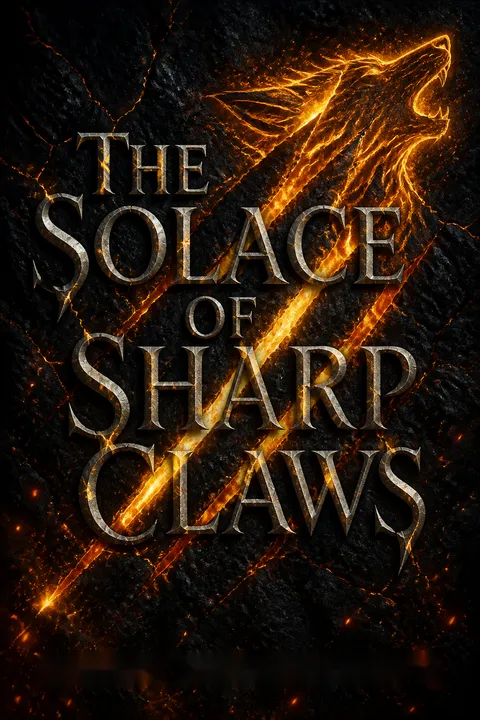
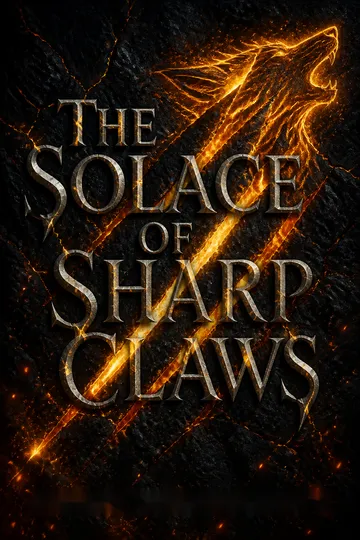
The Solace of Sharp Claws receives generally positive reviews, with readers praising the world-building, character development, and addictive storyline. Many enjoy the fated mates trope and the grumpy/sunshine dynamic between Thorne and Laurel. Some criticize Laurel's character as annoying or self-absorbed, while others find Thorne's anger frustrating. The book's pacing and steamy scenes are well-received. Overall, readers appreciate the continuation of the series' overarching plot and look forward to the next installment, despite mixed feelings about the main characters.
People Also Read

Characters
Thorne
Wounded wolf GuardianThorne is a wolf-shifter and member of the Order’s elite Guardians, trained to protect the Well and hunt magical threats. He is fiercely capable, quick to act, and accustomed to measuring trust through bargains rather than vulnerability. His anger toward the Prime and grief over his missing mentor, Jasper, have shaped his belief that he must endure alone. Beneath that hard discipline is a protective instinct that often outruns his judgment. Thorne wants to find Jasper, but he also longs for family while fearing that attachment will expose him to another loss. His central struggle is learning that care is not the same as control, especially when the person he wants to protect has her own power and judgment.
Laurel Baker
Fire-wielding survivorLaurel is a human from the old world, a fitness entrepreneur whose discipline and ambition helped her build a successful business. She has survived the death of her twin, the destruction of her world, and torture that left her fingernails permanently damaged. Her confidence is real, but it has often served as armor against grief and helplessness. In Elphyne, she must learn to use magic while adapting to customs she did not choose. Laurel is practical, socially perceptive, and unwilling to ignore people being harmed in front of her. She values autonomy and expects relationships to respect it. Her defining tension is between the drive to control outcomes and the harder work of sharing responsibility without surrendering agency.
Clarke
Laurel’s farsighted friendClarke is Laurel’s longtime friend, a human Seer whose visions help connect survivors from the old world to the dangers of Elphyne. Her friendship with Laurel is affectionate and candid, grounded in years of shared history rather than their new magical circumstances. Clarke has an instinct for seeing possibilities, but visions do not give her complete control over what happens, and her concern for the future can become fear of making the wrong choice. As Rush’s mate and Willow’s mother, she also carries responsibilities that Laurel does not. Clarke’s role is to guide without possessing certainty, a difficult position for someone whose friends understandably look to her for answers.
Rush
Hidden wolf fatherRush is Thorne’s father, a wolf-shifter and Guardian who shares a deep bond with Clarke. A curse once kept him unseen and isolated, leaving Thorne to grow up without understanding the care Rush tried to give from a distance. Rush is direct, patient, and capable of admitting when fear or grief has shaped his choices. His devotion to Clarke and Willow gives him a settled family life, but his relationship with Thorne requires him to respect decades of hurt rather than demand instant closeness. Rush’s steadiness contrasts with Thorne’s suspicion. He often helps others see that a painful history can be true without being the whole story.
Prime Aleksandra
Order’s calculating leaderAleksandra, known by her office as the Prime, leads the Order of the Well and is an owl-shifter with formidable magical and political authority. She is accustomed to making decisions for the survival of Elphyne, including decisions that impose severe costs on individuals. Her reserve can look like arrogance, and her belief in necessity has made her difficult for Thorne to trust. Yet she is not simply a tyrant: she can recognize when old methods no longer serve the world she is trying to protect. Her challenge is to distinguish responsible leadership from control disguised as duty, especially as human and fae politics become harder to separate.
Jasper
Thorne’s missing mentorJasper is a wolf-shifter Guardian and the mentor who gave Thorne guidance, humor, and a sense of belonging at the Order. He is also connected to the Seelie royal family, a fact that makes his safety politically precarious. Jasper’s absence has become a fixed point in Thorne’s life: Thorne keeps his hair long as a promise to find him. Through memories, Jasper appears irreverent and bold, the sort of person who could make a frightened new Guardian feel less alone. His relationships reveal how mentorship can become a form of chosen family, carrying obligations and regrets across generations.
Ada
Laurel’s absent confidanteAda is Laurel and Clarke’s close friend, a wildlife rehabilitator who met Laurel during survival training. Her practical competence and familiarity with animals connect her to the older world the three women shared. When she is found, she cannot wake, leaving the people who love her to care for her without knowing what she needs. Ada matters to Laurel as more than a missing friend: she represents continuity with the life and loyalties that existed before the apocalypse. Her absence tests Laurel’s patience and reminds her that not every crisis can be solved through willpower.
Willow
Fearless young faeWillow is the young daughter of Clarke and Rush, a spirited child still learning to understand her shifting nature. She is energetic, curious, and comforted by the presence of people she recognizes as kin. Her small acts, such as finding a blanket for someone she thinks is cold, reveal a tenderness beneath her mischievous determination. Willow also gives Thorne an unexpected connection to the family he has long felt excluded from. Through her, the novel makes kinship concrete: it is not only inherited, but expressed through attention, protection, and the rituals of care.
Bones
Human torturer and schemerBones is a human mercenary from Laurel’s past who tortured her and Clarke while seeking information that helped bring about the old world’s destruction. He is calculating, comfortable using pain as leverage, and skilled at presenting himself in a form that earns access to people with power. His presence in Elphyne turns Laurel’s private trauma into part of a political threat. Bones is especially dangerous because he understands that fear and ambition can make others useful to him. He represents the possibility that the old world’s violence has survived its collapse, adapting to a new setting rather than ending with it.
King Mithras
Ambitious Seelie rulerMithras is the High King of the Seelie courts, a ruler whose authority rests on lineage, spectacle, and the loyalty of his court. He is proud of his status and sensitive to challenges that expose his dependence on others. His rule is shaped by a desire to secure his position in a divided fae realm, even when the methods threaten the people he claims to govern. Mithras’s court offers Laurel a glimpse of how easily ceremony can conceal coercion. He is dangerous not only because of his power, but because personal ambition can make political consequences seem acceptable to him.
Cloud
Crow Guardian and investigatorCloud is a crow-shifter Guardian and the Prime’s assassin, marked by extensive power-enhancing tattoos and a sharp, often cruel manner. His hostility toward humans reflects experiences he keeps largely private, making him an unpredictable ally for Laurel. Cloud enjoys testing others and rarely offers warmth, but he takes threats to the Order seriously and is willing to investigate beyond its usual boundaries. His presence reminds Thorne that Guardian loyalty does not require affection, while Laurel’s interactions with him suggest that distrust can be challenged without being erased.
Sparrow
Resourceful prisoner boySparrow is a young satyr trapped beneath the Ring, where he has learned to survive by watching people and moving carefully. He is wary of adults, but he is brave enough to warn Laurel and Thorne when danger lies ahead. Laurel treats him as someone worth protecting rather than as a convenient guide, and Thorne comes to recognize that a Guardian’s duty includes people who have been discarded by the system.
Leaf
Duty-bound Guardian leaderLeaf is an elf, a leader of the Twelve, and a member of the Order’s council. He puts institutional duty ahead of personal loyalties, believing that Guardians must respond to threats facing all of Elphyne rather than pursue one missing friend indefinitely. His clashes with Thorne arise from competing definitions of responsibility, not indifference to Jasper. Leaf represents the limits and usefulness of procedure in a world where danger increasingly arrives through politics.
Plot Devices
The Well-blessed bond
Connects power and emotionThe Well can bind two people through glowing marks that link their emotions and let them share mana. Thorne and Laurel acquire this connection before either understands what it means, and it intensifies their attraction while making each person’s distress difficult to hide. The bond is not a substitute for consent: Thorne’s secret use of Laurel’s power creates a genuine rupture, despite their magical connection. The device therefore serves both as romantic force and as a test of whether intimacy will become mutual trust or another form of control.
Mana and forbidden materials
Defines magic’s physical rulesMagic in Elphyne draws on the cosmic Well and the living world. Metal and plastic obstruct that flow, while metal used against fae can weaken their magic and prevent shifting. These rules help explain the transformed planet, the Order’s restrictions, and the danger posed by humans who harvest mana. The rules are not merely scenery: Thorne’s metal ax gives him an advantage against magical creatures, while iron embedded in a body can turn that same advantage into a means of control.
The ceremonial lake
Makes initiation a trialThe ceremonial lake is a powerful site connected to the Well. Guardian candidates are forced beneath its surface, where inkeels confront them with fear and strip away their sense of control. Those who survive receive greater power and a lifelong duty to protect the Well. Thorne’s childhood initiation makes the lake an important source of trauma, while Laurel encounters it as a place of wonder and dangerous attraction. Its dual meaning keeps the story from treating sacred power as automatically benevolent.
The Ring’s binding rune
Turns prisoners into spectacleThe Ring brands prisoners with magical runes that bind them to the arena and prevent their magic from escaping its limits. The rune can also transport a prisoner into battle, which is how Sparrow’s summons pulls Laurel and Thorne into the fighting ground. Laurel’s power can break the binding, but Thorne draws on her mana to break his own, leaving her depleted. The device drives the arena’s action and makes the prison’s control concrete: a prisoner’s body can be summoned, restrained, or returned without consent.
The concealed royal signet
Links court to staged attacksBones carries a royal signet ring that conceals a transference rune, a magical means of returning him to Mithras if he is captured. The ring later becomes a clue connecting the king to the attacks meant to inflame conflict between the Seelie and Unseelie. It is both practical evidence and a symbol of the court’s double dealing: an ordinary mark of royal authority hides a mechanism for secret escape. The Guardians use it alongside witness testimony and letters to pressure Mithras, though the political case remains precarious rather than conclusive.
Fae Guardians Series

About the Author

Download PDF
Download EPUB
.epub digital book format is ideal for reading ebooks on phones, tablets, and e-readers.








