

Plot Summary
A World After Her Bomb
Nuclear physicist Vivienne Masters wakes beneath a full moon in a rocky wasteland, coughing up black sludge and pursued by winged vampires. Their leader, Gastnor, has trapped two women in a cage, and the women urge Vivienne to resist. When the vampires feed, her blood intoxicates them and weakens their grip.
A burst of light blinds the attackers, letting Vivienne seize a bone dagger and kill them before Gastnor escapes. She frees Anika and Suzy, the two surviving prisoners, and learns that they were frozen for two thousand years. Anika believes both human factions and the fae want to exploit their knowledge of nuclear weapons, so she proposes that the three women hide separately.
The story begins by making Vivienne face the consequences of a world she helped arm, before she has enough information to know what those consequences were. Her resistance is first awakened not by self-preservation alone but by the other captives’ insistence that she fight. The rescue establishes a pattern that will recur: survival requires action, yet her capacity to act is inseparable from the destruction she associates with her own expertise. The unexplained light offers power before she has language for it, making her first victory both liberating and frightening.
Three Names, Three Roads
In a nearby inn, Anika gives herself the name Silver, Suzy becomes Peaches, and Vivienne takes the name Violet. They plan to part after one night, hoping separate lives will keep their knowledge from the Unseelie queen and the human city. That plan becomes urgent when a vampire breaks into their room and attacks them. Violet kills him, but the intruder has already learned that the women’s scent is strongest together.
The three burn scraps of their old clothes, exchange small keepsakes, and leave separately. Six years later, Violet is an impoverished miner in Obscendia, hiding her human identity behind scarred ears and living by a strict routine of work and vampire hunting. When three hungry vampires track her home, she kills them too.
The new names are practical disguises, but they also let the women claim a future that is not defined solely by their old professions. The keepsakes preserve a bond that strategy forces them to break. Violet’s life six years later shows how survival can harden into ritual: work, isolation, and violence give her control, but not a sense of repair. Her secret hunting punishes vampires who prey on others while also repeating the logic of unilateral judgment that troubles her about her past.
The Guardian Finds Violet
Indigo, a vampire Guardian of the Order of the Well, has spent months searching for an old-world human whose blood resembles that of Ada, a human already bound to the Seelie king. While visiting his family’s home in Obscendia, he finds Violet spying on a vampire gathering. He recognizes her blood when she is wounded, but she flees before he can explain why he sought her.
Indigo follows her trail to the blood-soaked room where she killed the three intruders. In the forest, he catches her and discovers that she carries outlawed metal. Before he can take her to the Order, they witness Gastnor, the vampire who attacked Violet years earlier, disposing of grotesquely altered bodies with a human prisoner.
Indigo’s search makes Violet valuable before he knows her as a person, echoing the competing factions that want to turn her expertise into an instrument. Yet the first evidence he finds is not a weapon but a room full of bodies that forces him to confront the violence done to her. Violet’s flight is rational: every powerful stranger has, so far, meant danger. The scene establishes the book’s central relational tension, since protection and possession initially arrive in the same form.
Light Against the Tachi
Gastnor attacks Violet, and Indigo shields her before flying them out of reach. His sword wound leaves them bound by his shadow magic, so his pain now reaches her. Injured and nearly out of power, he leads her through a blizzard while a tachi, a cannibal creature accompanied by a hunting wind, stalks them.
In the fight, Violet realizes that the metal she has carried for years may be blocking her access to mana. She buries her last metal shard and calls on the power she glimpsed during her first attack. Light bursts from her, stunning both the tachi and Indigo. Indigo uses the opening to kill the creature, then collapses. Violet drags him into shelter and keeps him alive through the storm.
The danger outside gives physical form to Violet’s inner conflict: she has treated power as something that inevitably becomes a weapon, so she has kept herself cut off from it. The tachi cannot be defeated by the revenge routine that served her against vampires. She must take a risk without knowing what her gift will do. Her choice to save Indigo afterward matters as much as the light itself. She begins to act from care, not only from guilt or self-punishment.
A Bond Neither Chose
At the Guardians’ northern outpost, Indigo brings Violet to safety and introduces her to Shade, his closest ally. When Indigo reacts violently to finding Shade feeding from a willing Mage, Violet touches him to calm him. Her light flares, and matching blue markings appear on her and Indigo: the Well has joined them as mates.
The new bond shares their emotions and mana, distinct from the painful shadow tether still connecting them. Violet distrusts the attachment, but Indigo explains that her metal had blocked both her own magic and his ability to draw power from the Well. At the hot spring, she admits that she built nuclear weapons to win her family’s respect, and that a man, not she, set off the bomb that ended her world.
The bond arrives through Violet’s attempt to soothe rather than control Indigo, turning compassion into a literal channel of power. But the involuntary union complicates any easy romance: the bond does not erase Violet’s right to question what has happened. Her admission about the bomb sharpens the distinction between responsibility and total self-condemnation. Indigo sees that she understands the cost of destruction precisely because she feels implicated in it. Their connection begins to offer a counterweight to shame, not a magic absolution.
Learning to Hold the Light
Indigo asks Skye, an owl-shifter Mage, to assess Violet while he investigates the altered corpses and the missing Guardian Haze. Skye’s stones reveal strong affinities for spirit and fire, with some air, giving Violet a way to study her gift rather than fear it.
Violet chooses to remain at the outpost instead of going to the Order, and begins experimenting with light while Laurel and Ada later help her train. Indigo’s lighthearted attention cannot settle her guilt, and she still resists food, warmth, and the idea that she deserves care. His concern is heightened by vampire mating instincts, while Violet is wary of surrendering any more control over her life.
Testing the stones gives Violet a form of agency that neither mystical revelation nor romance alone can provide. She can observe, compare, and learn, bringing the habits of a physicist into a world whose laws seem strange but not wholly unknowable. Her resistance to basic care shows how guilt has become self-denial rather than ethical accountability. The people around her begin to challenge that pattern, though their care can still feel like another attempt to decide for her.
Gastnor Finds Her Trail
While Violet remains at the outpost, Indigo returns to Obscendia with the elf Forrest. They find Queen Maebh’s guards searching Violet’s burned-out home, so they destroy the remaining evidence before it can be used to claim her. Indigo also visits his estranged vampire family. His sister Florence reports that their brother Demeter has become distant since joining Maebh’s guard, and that Haze failed to appear for a meeting with him.
Meanwhile, Violet’s former coworker Mitzie arrives with her pixie partners, worried that Gastnor has been asking after Violet at the mines. When Indigo returns, he tells Violet that Gastnor is actively hunting her and that the Queen’s forces may have discovered her vampire killings.
The domestic visit and the political investigation converge around the same question: whom can Indigo trust? His family’s old fractures make the Order’s chosen family feel less secure, while Demeter’s absence turns a personal worry into a possible breach in the Guard. Violet’s ordinary ties to Mitzie also matter; her hidden life has not been entirely solitary. Gastnor’s pursuit makes the past physically present again, but this time Violet has allies and evidence that the threat reaches beyond one vampire.
A Bargain for Peaches
Reports from the Order confirm that Haze is missing, while Violet fears Maebh may also have captured Peaches. When the Guardians prepare to seek help from the Seelie king and queen, Violet insists on joining them and argues that she cannot abandon her friend again. Indigo refuses to risk her, so they make a binding bargain: after their visit, she must defeat him in a fight to earn the right to join a rescue.
At Jasper and Ada’s court, Violet meets Laurel, another old-world woman, and learns that the humans’ skills and mana make them important to the conflict. She asks Laurel and Ada to train her. Their welcome gives her a community, and a concrete purpose beyond punishing herself.
Violet’s insistence reframes rescue as an ethical obligation rather than an impulsive bid for danger. She knows the cost of separation because she and Peaches once chose it to keep their knowledge from being weaponized. The bargain with Indigo is imperfect, but it gives her a measurable way to contest his protectionism. Meeting Ada and Laurel also loosens her belief that she is uniquely irredeemable. Their shared past does not make their choices identical, but it makes judgment less isolating.
The Queen Sets the Table
For a week, Violet trains with Laurel and Ada, building endurance and learning to shape light into small mirages and a cloaking spell. The Guardians investigate Haze’s disappearance and learn that Maebh has invited Jasper, Ada, and two Guardians to a formal dinner, supposedly to discuss the neutral Ring at Cornucopia.
The invitation looks like a trap, but it offers their only route into the Winter Palace. Violet also identifies the larger danger: Maebh has access to the three old-world women whose combined skills could help her reproduce nuclear technology.
The Queen is experimenting with mana-warped bodies and may be trying to create Guardians she can command. Violet’s developing light and scientific reasoning become crucial to the planned infiltration.
The training montage is meaningful because Violet’s progress is not simply a stronger weapon in the team’s hands. She uses scientific reasoning to imagine possibilities the experienced fighters have not considered, turning intellectual curiosity into a form of tactical agency. Maebh’s dinner invitation repeats the book’s recurring bargain between access and danger. The Queen presents herself as a host while using the language of hospitality to manage surveillance, power, and threat.
A Duel Ends in Trust
Violet overhears Indigo telling Shade and Forrest that he challenged her partly to force her to train and accept her gift. She confronts him in the palace kitchen, attacking with her new mirages and dagger. Indigo admits he was afraid she could not protect herself, especially from the hunger he struggles to control, and that he kept their waking hours apart because he feared hurting her.
Violet objects to his deciding what is good for her, but she recognizes that his fear came from care rather than contempt. She has earned the right to take part in the rescue. They choose to deepen their physical relationship, with Violet keeping her dagger close so their intimacy does not erase her sense of agency.
The conflict exposes a genuine flaw in Indigo’s care: his protective impulse has reproduced the very paternal control Violet spent her life resisting. His motives explain his deception but do not make it harmless. Violet’s victory depends on both physical skill and her insistence that her choices remain hers. Their intimacy matters because it follows confrontation and a negotiated sense of safety, rather than serving as a substitute for accountability.
Blood for a Memory
The Order’s Prime, Aleksandra, brings Legion, one of the Sluagh, to help prepare for the Winter Palace. Legion explains that Indigo and Shade must drink his blood to become difficult for other Sluagh to detect or control. He asks for a memory in return. Violet agrees to the risk because it may help save Peaches and Haze, and Indigo accepts Legion’s blood.
The price is worse than he expects: the Sluagh’s collective suffering floods his mind, and Indigo falls into a coma, with Shade incapacitated too. Violet waits beside them for five days, fearful that the power meant to protect the mission has instead endangered the men she loves and left the rescue plan uncertain.
The exchange transforms a tactical advantage into an encounter with the cost of treating another being as a resource. Legion’s blood carries the Sluagh’s accumulated pain, so the protection cannot be separated from the lives and memories behind it. Violet’s consent is motivated by loyalty, but the price is not fully understood by any of them. The episode also complicates the Sluagh’s reputation: what appears as a weapon may contain an injured collective seeking something more than power.
The Prison Below the Palace
Once Indigo and Shade recover, the team accepts Maebh’s invitation and enters the Winter Palace. Violet arrives cloaked, carrying the scrap of Peaches’ blouse and Haze’s ring, which the Order has enchanted to guide her. During the dinner, the Queen seats her guests among enslaved humans painted and posed as furniture.
Indigo senses that Demeter is thinking about Haze and an unfinished experiment, but the telepathic link weakens. Violet leaves the courtyard and follows the ring’s glow through the palace’s hidden tunnels to a metal-doored mine. There she finds Peaches and a shackled, battered Haze. Peaches shows her a second exit, and the three escape through abandoned mine passages while soldiers close in behind them.
The banquet makes Maebh’s power visible in the bodies forced to support it. Violet’s decision to leave the guests’ table is not a lapse in discipline but the moment the rescue becomes more important than appearances. The enchanted keepsakes turn friendship into practical knowledge: cloth and ring guide her where maps and official permission cannot. Peaches’ familiarity with the tunnels, gained through repeated captivity, becomes the expertise that makes escape possible.
Violet Burns the Sluagh Free
Violet is struck down by a guard and wakes in Maebh’s laboratory, where the Queen reveals that she wants to create Guardians who can wield both mana and metal, not merely build a nuclear weapon. Indigo and Shade stand under Sluagh control, and Gastnor is free to torment Violet after Maebh has used her knowledge.
When Gastnor stabs her with metal, it blocks her magic; she tricks him into drinking her blood, which restores her connection to the Well. Violet amplifies her light until it burns the Sluagh influence from Indigo and Shade. Indigo regains control and kills Gastnor. Shade then shadow-walks the survivors away as the palace begins to shake and collapse.
Maebh’s revelation distinguishes domination from destruction: she wants a controllable force capable of keeping the world intact under her rule. Violet’s response uses the knowledge she once associated with catastrophe in a different way, targeting the Sluagh influence rather than a population. The power is still dangerous, and the radiation-like harm to Indigo and Shade prevents the victory from becoming clean or costless. Her light saves them, but it also leaves them injured and exposes the limits of rescue.
An Earthquake, No Answer
In another passage through the mines, Peaches helps Haze struggle toward an exit. He breaks the metal chain joining the bolts through his ankles, and Peaches removes a plastic implant she had carried since the old world. Once the forbidden material is gone, the Well-blessed marks appear on them both, revealing their bond. Peaches’ power manifests as an earthquake.
Haze holds up a collapsing tunnel and orders her to run; she escapes, but the passage caves in behind him. At the Order, Violet learns that Peaches is alive and pregnant. Peaches can still sense Haze through their bond, but he remains trapped and unaccounted for. Legion later admits that his faction arranged Indigo’s altered state to make the rescue possible.
The ending gives Peaches a parallel transformation: like Violet, she discovers that an old-world remnant has been suppressing her power. But the earthquake turns liberation into a new danger, and Haze’s choice to hold the tunnel forces Peaches to survive without knowing whether he will follow. Their bond offers evidence of life, not certainty. Violet’s encounter with Legion adds a final moral complication: the rescue was aided by manipulation, leaving the characters alive but still negotiating what trust can mean.
Analysis
The novel’s central problem is not simply whether Violet can master magic, but whether she can distinguish responsibility from self-erasure. She helped design the technology that destroyed her old world, yet another man set it off. Violet initially treats the difference as morally meaningless, then punishes herself by refusing comfort, power, and companionship. Her long campaign against predatory vampires is understandable as protection, but it also lets guilt masquerade as justice. The story’s turning point comes when she begins to act for specific people, especially Peaches, rather than trying to settle an impossible account with the past. Magic gives that ethical conflict physical form. Forbidden metal blocks Violet from the Well; its absence lets her access power, but power remains dangerous and consequential. Her scientific habits do not disappear. Instead, they become useful when she tests her affinities, develops mirages, and reasons about the light that can free Indigo and Shade. The novel does not present science and magic as opposites. It asks whether knowledge is shaped by the aims and restraints of the person using it.
The romance makes the question of power intimate. Indigo’s fear of harming Violet is real, but he initially acts on that fear by withholding information and manipulating her into training. Violet’s anger forces him to see that care without respect can reproduce the domination she already knows. Their bond becomes meaningful not because it removes conflict, but because each must learn to protect the other without claiming ownership of the other’s choices.
Maebh is the dark political mirror of this struggle. Grief has convinced her that control will repair loss, so she treats bodies, magic, and knowledge as materials for a design. Against that logic, the story places chosen family: the old-world women, the Guardians, and the partnerships built through mutual risk. The conclusion remains deliberately unsettled. Maebh’s project persists, Haze is still missing, and Peaches is pregnant, but Violet no longer equates strength with destruction. Her power now serves connection and rescue, even when those choices cannot guarantee a painless ending.
Review Summary
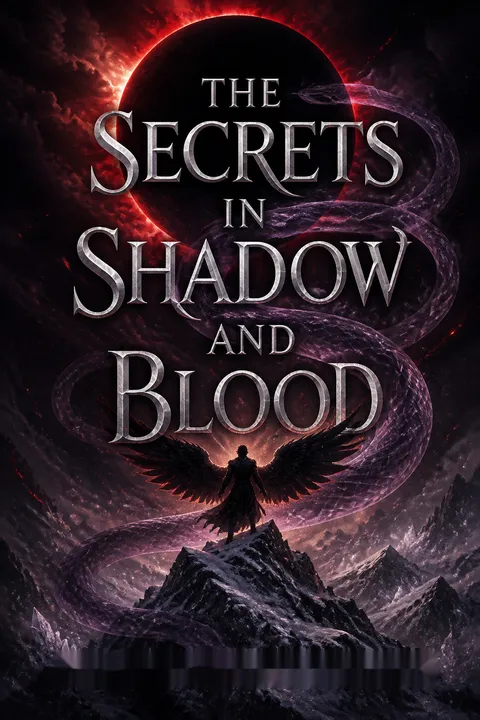
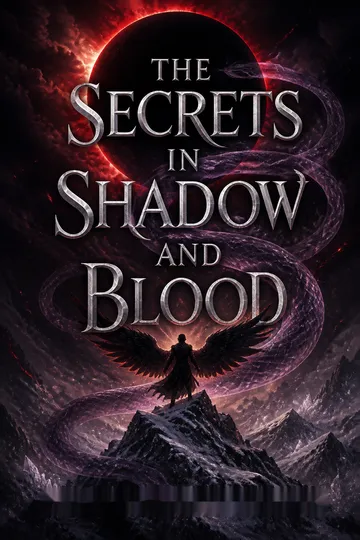
The Secrets in Shadow and Blood receives mostly positive reviews, with readers praising the unique world-building, engaging characters, and steamy romance. Many enjoy the vampire storyline and Indigo's character. Some criticize Violet's self-loathing and repetitive inner dialogue. The book is part of a larger series, with readers recommending starting from the beginning. Overall, fans of paranormal romance and dystopian settings find it captivating, while a few readers struggle with pacing and character development.
People Also Read
Characters
Violet Masters
Displaced weapon physicistOnce known as Vivienne, Violet is a nuclear physicist from the old world who wakes in a fae society thousands of years after its collapse. She is intelligent, disciplined, and quick to study a threat, but years of guilt have turned her sense of responsibility into self-punishment. Her habit of resisting care is as much a defense as her skill with a dagger. She distrusts authority because powerful people have repeatedly tried to use her, yet she is drawn to people in danger and cannot easily abandon them. Violet’s scientific training remains central to how she understands magic: she observes, tests, and revises. She is trying to become accountable for the past without letting it dictate every choice she makes.
Indigo
Shadow-wielding vampire GuardianIndigo is a vampire warrior in the Order of the Well, a playful and daring Guardian who hides serious fears beneath teasing confidence. He is driven by a desire to find purpose beyond his family’s expectations, and by the belief that the Well chose him for a reason. His hunger and a past loss of control make him cautious about intimacy, especially with Violet, whose blood affects him unusually strongly. He protects the people he loves fiercely, but that instinct can become controlling when fear overtakes trust. Violet challenges him to explain his choices rather than treating devotion as permission to decide for her.
Peaches, born Suzy
Violet’s old-world friendPeaches is the name Suzy adopts after waking in the fae world. Petite, observant, and easily frightened by violence, she is often mistaken for fragile. Her time with Violet and Silver gives her a rare sense of kinship after the shock of displacement. Peaches is less inclined to fight than Violet, but she watches closely and learns how to navigate people and places that others underestimate. Her gentleness does not mean passivity; she values survival, loyalty, and the chance to make choices for herself. Her connection with Haze grows in a world where captivity and power can distort ordinary trust.
Silver, born Anika
Practical survivor and allyAnika, who takes the name Silver, is a former military welder and one of the first people Violet meets after waking. Practical and sharp-minded, she recognizes that the women’s technical knowledge could make them targets. In the cage, she gathers information and thinks ahead to the possibility of escape. Silver cares deeply for Peaches and Violet but understands that staying together may endanger them all. Her realism gives the group a plan when panic threatens to overwhelm them.
Haze
Indigo’s formidable allyHaze is a large, heavily tattooed vampire Guardian whose physical presence suggests strength and whose reserved manner conceals a deep capacity for loyalty. He works closely with Indigo and Shade, forming a chosen family within the Order. Haze is not naturally given to explaining himself, and his pride can make it difficult for him to admit pain or weakness. His commitment to protecting others is practical rather than showy, expressed through endurance and action.
Queen Maebh
Unseelie ruler and strategistMaebh is the ancient High Queen of the Unseelie, a ruler whose authority rests on power, fear, and carefully staged displays of control. She is perceptive enough to exploit the weaknesses of opponents, but her private grief feeds a relentless appetite for possession and rule. Maebh treats people as components in a design, whether they are prisoners, guards, or political rivals. Her polished composure can break into frightening volatility when events escape her control. She is more calculating than merely cruel, which makes her ambitions especially dangerous.
Gastnor
Maebh’s relentless captainGastnor is a vampire captain in the Queen’s Guard and the commander of the attack that shaped Violet’s first years in Elphyne. He is proud of his standing and bitter when failure costs him power or status. His fixation on reasserting authority makes him dangerous even when he is weakened. Gastnor embodies a predatory culture in which feeding and violence are treated as privileges of rank.
Shade
Indigo’s controlled allyShade is a vampire Guardian, a skilled shadow-walker, and one of Indigo’s closest allies. He is composed where Indigo is impulsive, with a clear code governing his feeding and personal relationships. Shade often sees the emotional or tactical problem before others do, and his steadiness helps keep the Guardians from acting on anger alone. His dry humor does not soften his loyalty; he is prepared to take serious risks for the people he considers family.
Ada
Seelie queen and healerAda is the human Queen of the Seelie court and a healer whose gift can ease pain and restore others. Warm, perceptive, and direct, she offers Violet welcome without pretending that their histories are identical. Her friendship with Laurel is full of teasing and mutual trust. Ada balances her role as ruler with her instinct to help, while navigating the danger that her unusual stores of mana make her a target.
Jasper Darkfoot
Wolf-shifter Seelie kingJasper is a former Guardian and wolf-shifter who becomes the Seelie king. He is blunt, protective, and uncomfortable with courtly ceremony, but takes his responsibilities seriously. His relationship with Ada is affectionate and argumentative, and her counsel often tempers his instinct to meet threats head-on. Jasper must govern a kingdom unsettled by old loyalties, political rivals, and the consequences of a recent transfer of power.
Laurel
Fierce mentor and queenLaurel is an old-world woman who has become queen alongside her mate, Thorne. She is confident, competitive, and physically trained, with a sharp wit and a strong sense of what women can do for themselves. Laurel helps Violet develop endurance and combat skills, while encouraging her to look beyond her own guilt. Her friendship with Ada gives her a source of warmth and humor amid political danger.
Legion
A Sluagh with a nameLegion is a member of the Sluagh, the feared soul-bearing Guardians whose powers unsettle even the Order. He communicates mind-to-mind and carries an unusual degree of self-awareness about the nature of his kind. Others often speak of the Sluagh as a force rather than as individuals; Violet’s willingness to address him directly marks a different approach. His stillness and attentiveness can feel more unnerving than open hostility.
Demeter
Indigo’s guarded brotherDemeter is Indigo’s older brother and a member of Maebh’s royal guard. Their childhood was marked by rivalry and rough teasing, while the years since Indigo joined the Order have widened the distance between them. Demeter is difficult to read and careful about what he reveals, especially when his loyalties may conflict with family ties. His position gives him access to information that could help or endanger the Guardians.
Bones
Human with dangerous knowledgeBones is a human operative connected to the leader of Crystal City and to the struggle over old-world technology. He is valuable because he knows things other factions want to learn, but he is also vulnerable to the methods used to extract them. His presence links the human political conflict with Maebh’s experiments and the history of the world’s destruction.
Skye
Owl-shifter MageSkye is a Mage who assesses Violet’s elemental affinities and helps her begin to understand mana. She is practical and generous with her knowledge, making the unfamiliar system of magic easier to approach.
Mitzie
Violet’s pixie coworkerMitzie is a pink-haired pixie who works alongside Violet in the mines. Nosy, loud, and fiercely loyal to the people she likes, she brings gossip and unexpected concern into Violet’s otherwise isolated life.
Thorne
Warrior and Laurel’s mateThorne is a wolf-shifter Guardian and Laurel’s mate. He is physically formidable and protective, but understands that protection can become a mistake when it overrides a partner’s choices. His experience makes him a useful counterweight to Indigo’s more possessive instincts.
Cloud
Sharp-tongued crow GuardianCloud is a crow-shifter Guardian known for his insolence, combat skill, and work as an assassin. Beneath his provocations lies a private moral code and a history he is reluctant to share. He distrusts easy explanations and presses the group to consider what powerful people may be concealing.
Ash
Quiet crow-shifter scoutAsh is a crow-shifter Guardian who speaks little and notices much. His skill at gathering information makes him valuable to the team, while his reticence leaves even his allies uncertain what he knows. He tends to act before explaining himself.
Leaf
Portal-making GuardianLeaf is an elf Guardian with exceptional portal magic and a strong respect for the Order’s chain of command. His sense of duty sometimes puts him at odds with Shade and the more improvisational members of the group.
Forrest
Animal-speaking elf GuardianForrest is an elf Guardian who can communicate with animals and travels with Indigo during the investigation in Obscendia. He is charming, capable, and notably fond of food.
Varen
Sluagh seerVaren is one of the Sluagh and a seer whose visions inform Legion’s decisions. He speaks with a sharper, more unsettling presence than Legion, and his knowledge of possible futures makes him difficult to trust.
Plot Devices
The Well and its mana
Power with a moral costThe Well is the living source of mana used by fae and gifted humans. Its power enables healing, flight, elemental abilities, and other forms of magic, but it is not an unlimited personal possession. Forbidden metal and plastic can block access to it, while rulers and Guardians may hold unusual reserves. For Violet, learning to use mana requires her to reconsider a belief that power inevitably leads to harm. The Well gives the characters capability, but their choices determine whether that capability protects others or becomes another instrument of control.
The old-world awakening
Knowledge becomes a targetViolet, Peaches, and Silver were frozen in the old world and awakened roughly two thousand years later. Their blood affects vampires differently from that of people born in the new era, and their former professions give them knowledge that can reshape the balance between humans and fae. The historical displacement supplies the novel’s central mismatch: familiar scientific expertise meets a society governed by mana, while the women themselves have to adapt to a world whose history continued without them.
Metal and plastic
Magic’s dangerous blind spotIn Elphyne, metal and plastic interfere with mana, making both substances forbidden and strategically valuable. Violet carries metal as a defense against vampires, not realizing that it blocks her own magic and can affect those near her. Peaches also carries an old plastic implant. Their personal objects therefore become more than relics of another age: they are barriers between the women and the power that might help them survive. Metal also allows the characters to wound fae in ways ordinary weapons cannot.
Two magical bonds
Connection, constraint, and trustIndigo first binds Violet to him with his shadow power after saving her from Gastnor. This tether shares pain and makes separation difficult. A separate bond forms when the Well marks them as mates, linking emotions and mana. The distinction matters: the first connection is imposed in a moment of danger, while the second carries a broader spiritual and emotional force. Together, the bonds create forced proximity and romantic intensity, but also require the characters to negotiate autonomy, consent, and how much closeness either of them can safely bear.
Sluagh blood and light
A risky path through enemy magicThe Sluagh can invade minds and manipulate souls, making them a serious obstacle to entering Maebh’s palace. Legion’s blood offers Indigo and Shade protection from Sluagh influence, but it also exposes them to the collective suffering carried by the Sluagh. Violet’s light, meanwhile, can disrupt shadow-based power, though intensifying it beyond ordinary illumination risks injuring allies as well as enemies. These connected abilities turn the rescue into a problem of knowledge and judgment, not simply strength.
Fae Guardians Series
About the Author

Download PDF
Download EPUB
.epub digital book format is ideal for reading ebooks on phones, tablets, and e-readers.








