

Plot Summary
The Cost of Leaving
During a snowy patrol, Griffin Lazarus tracks a jewelry-store robbery with his brother Evan, measuring every selfish or generous action against the black-and-white tattoo on his wrist. When the tattoo tips toward generosity, Griffin abandons Evan to restore his balance by stealing a necklace.
Evan escapes, but two captured thieves are shot before police arrive, and the Deadly Seven risk being blamed. Their brother Parker rebukes Griffin, warns that his private system cannot replace finding a mate, and transfers him from Lazarus Industries to the Cardinal Copy newsroom.
There he must assess which jobs can be automated and investigate reporter Donald Doppenger, whose articles have damaged the family’s reputation. Griffin’s careful routine has protected him from one danger while making him unreliable to the people beside him.
Blueberry Gum, Bad Timing
Lilo Likeke, a criminal-investigations reporter estranged from her wealthy, criminal family, arrives late and runs straight into Griffin in the break room. Her gum sticks to his sweater, her unfiltered compliments embarrass them both, and his unusual strength crushes the metal mug in his hand.
Lilo has helped secure Griffin’s new job through her friend Grace, but neither knows quite what to make of the other. At the newsroom meeting, Griffin announces that automation may cost staff their jobs, then clashes with Donald Doppenger, Lilo’s controlling former boyfriend and a colleague who repeatedly takes credit and opportunity from her. When a jewel-store robbery is assigned, Lilo must interview her cousin Nathanial, and Griffin volunteers to accompany her.
A Bullet in the Cell
At the police station, Nathanial tells Lilo that her estranged father has been kidnapped and that the jewelers’ robbery was meant to raise ransom money. Before he can explain more, an explosion tears open the holding cell wall.
A masked attacker dressed like Greed shoots Nathanial and wounds Griffin, who discovers he can sense and control nearby metal, including the gun aimed at him. Lilo uses her cattle prod to stun the attacker, but he escapes.
Griffin goes home rather than stay for treatment, while Lilo is left with a dead cousin, a threatened father, and a story she cannot yet prove. Her instinct says the killer was impersonating the Deadly Seven, but publishing that claim without evidence could damage the people she has spent years defending.
An Ear in the Newsroom
Lilo struggles to write about the attack without making an unsupported accusation, while Griffin returns to the newsroom to help her investigate. A box arrives containing her father’s severed ear and a crystal figurine from her childhood. Its note demands the contents of his safe by Wednesday evening.
Donald urges Lilo to obey the kidnappers, then attacks Griffin and reopens his shoulder wound, leaving Griffin with a blood sample missing and a strong suspicion that Donald is the masked killer. Lilo agrees to search her parents’ home, but the two men’s competing attempts to protect or direct her only deepen her mistrust. The threat now reaches beyond her father: someone wants access to Griffin’s family, and Donald may be working for them.
The Safe Behind the Arsenal
At the Liota mansion, Lilo and Griffin find rooms torn apart and her mother Janet packing weapons from a concealed arsenal. Janet admits she may use the kidnapping to collect insurance money, even if that means her husband dies.
Lilo disarms her when Janet grabs her, then searches the den with Griffin. His new magnetic sense locates a biometric safe, which Lilo opens. Inside are surveillance photographs of the Lazarus family, including images that could expose their vigilante identities.
Griffin refuses to let Lilo take them to the exchange and says he will give them to police. She leaves furious, recognizing the same possessive control she escaped in her family and former relationship. Their discovery confirms that the ransom is part of a larger threat.
The Family's Missing Wrath
Griffin brings the photographs to a family dinner and explains that Lilo’s father was ordered to gather evidence against the Deadly Seven. The family suspects the Syndicate, the organization behind their creation, may be involved.
Griffin also warns that his own loss of control during military training left bodies dead, revealing why he fears any imbalance. His siblings agree that his absent brother Wyatt must be found before wrath consumes him; Wyatt has left home and may be attacking criminals alone.
Meanwhile, Griffin’s family learns Lilo plans to meet the kidnappers without police. They prepare to intervene, but she slips away after helping a homeless mother and baby with her coat, scarf, and pistol. The people she helps never learn how close she is to danger herself.
The Exchange Without Griffin
At the ruined warehouse, Lilo finds her injured father surrounded by kidnappers and refuses to leave him. Griffin and Evan arrive as the exchange turns violent. Griffin controls metal to disarm the gunmen, while Evan fights through the crowd; together they secure Lilo’s father and defeat the impostor Greed.
In a smoke-filled stairwell, the real Greed carries Lilo to safety. She believes the masked hero is a stranger, and their attraction turns intimate until she asks him to stop.
Griffin stops, horrified that his restraint and secrecy have frightened her, then flees without helping her home. Lilo eventually reaches her friend Misha’s family, whose restaurant has also been attacked by a gang. Their welcome steadies her, but Griffin’s abandonment reopens wounds left by Donald.
Greed Behind the Glasses
The next morning, Griffin apologizes and invites Lilo to the opening of Hell, the Lazarus family nightclub. She attends with Misha and Grace, still unsure whether she can trust him.
When gang members corner Lilo in an alley and demand the surveillance photographs, Griffin appears and uses magnetic force to wrench away their weapons and pin attackers with a fire escape. Lilo recognizes him as the real Greed, the masked hero who rescued her at the warehouse.
Griffin admits nothing there, but asks her to follow him through a hidden entrance to the family headquarters. She agrees to hear his explanation, despite knowing that the revelation could destroy the story she has pursued for years. The man she has desired and the vigilante she has admired are the same person.
The Hoard in His Home
Griffin tells Lilo that the Lazarus siblings were engineered to sense sin, and that his tattoo and thefts are attempts to counter the deadly pull of greed. He confesses that during military training he once blacked out after killing a fellow soldier, then woke among the dead.
The stolen clutter in his apartment is proof of the harsh bargain he has imposed on himself. Lilo listens without condemning him, forgives his flight from the warehouse, and lets him experience touch on her terms.
They begin a relationship, then sort and donate his hoard instead of keeping it as private atonement. Griffin tells her that her father has surrendered to police. Lilo accepts that she cannot publish the identity story she once wanted, and chooses instead to protect Griffin’s family from Donald’s false reporting.
A Serum With Teeth
Griffin’s family tests his magnetic strength in the alley, where he defeats Tony quickly and lifts a dumpster, but Evan’s electricity overloads him and nearly kills him. The test shows that Griffin’s new power is formidable, not limitless.
Donald, meanwhile, meets the white-haired enforcer Falcon and her superior, Julius Allcott. They reveal that a serum has given him temporary strength, rapid healing, and the ability to sense greed. Donald wants more, and the Syndicate wants Griffin alive.
He takes the serum despite the warning that too much can destroy his organs. The family knows the organization is collecting information and blood samples, but not what it intends to build. Their uncertainty becomes urgent as Donald begins choosing targets beyond the heroes.
The Van Takes Lilo
Donald lures Lilo out of the newsroom, holds her at gunpoint, and reveals that he has been working as a counterfeit Greed for the Syndicate. He blames Griffin for taking the attention he believes he deserves, then forces Lilo toward an armored bank van carrying cash.
Griffin tracks them to the street, but Donald has planted a bomb beneath the monorail. When it explodes, Griffin is thrown aside and the track collapses with a train approaching. He catches the train with his power, but cannot hold it and the van at once.
Lilo escapes Donald’s grip by deliberately crashing the vehicle, scattering the stolen money into the street. As passersby seize the cash, Donald injects himself with several more doses of serum, transforming his envy and greed into a physical threat.
A Monster on the Tracks
Donald grows into a raging, inhuman figure and grabs Lilo as Griffin struggles to keep the train from falling. Evan cannot use electricity without risking Lilo, so Griffin accepts another painful boost from his brother and pushes the train safely back onto the rail.
He then joins Evan and Parker against Donald. Lilo refuses to run far, steadies Griffin with her touch, and urges him to use his full strength. The brothers pin Donald with swords and metal pipes until the serum begins to wear off; Griffin finally stops him with his bo-staff.
Donald dies as the substance burns through his body. Lilo records the rescue for the police. Watching from nearby, Wyatt destroys the family tracker and rides away, still unable to return to the people he believes have moved on without him.
A Small Wedding, Full House
Two weeks later, Griffin accompanies Lilo to prison to visit her father, Haulani. He confirms that a white-haired woman paid him to photograph the Lazarus family, but he hid the evidence after reading Lilo’s article defending the heroes.
He accepts responsibility for his crimes, while Lilo chooses to maintain contact without excusing what he did. She and Griffin have already married in a quiet courthouse ceremony, with no spectacle and only a simple ring.
After the visit, Griffin brings her to Heaven expecting lunch, but the restaurant is filled with friends, colleagues, and both families celebrating them. Lilo’s mother is absent, and her father remains imprisoned, yet Renata, Misha, Bev, Grace, and the Lazaruses surround her. Griffin gives her the belonging her childhood wealth never could.
Analysis
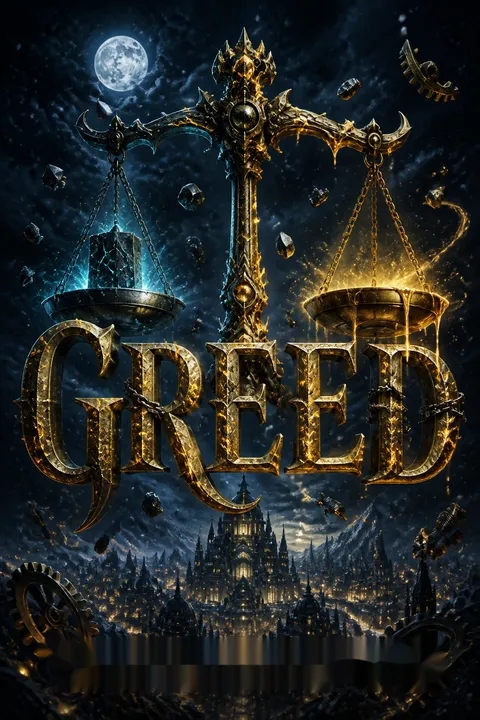
Greed makes its central conflict unusually literal: Griffin tries to govern morality with a tattoo, a timer, and a private accounting system. His method looks disciplined, but the stolen objects piling up in his apartment reveal its cost. He can measure acts without resolving the shame and fear that drive them. Lilo, by contrast, gives freely, yet her history shows that generosity can become a survival strategy when approval has to be earned. Her growth depends not on becoming less caring, but on learning to distinguish care from surrender.
The romance tests that distinction through touch, consent, and disclosure. Griffin’s early instinct is to protect by withholding information and making choices for Lilo. That instinct repeats the control she escaped, even when his motive is fear rather than domination. Their relationship becomes possible only when he stops treating her as a variable in his private calculations and allows her to set terms. Lilo’s decision to forgive him does not erase the harm; it follows his accountability and her own judgment.
The plot’s public conflicts echo the private ones. Donald wants recognition so badly that he accepts power from an organization that treats him as disposable. His transformation shows what happens when grievance is mistaken for entitlement and power is used to enlarge the self. The Deadly Seven, meanwhile, risk becoming instruments of violence when they believe control alone can keep them safe. Griffin’s climactic choice to save the train before pursuing Lilo demonstrates that responsibility cannot be reduced to possession. He protects her best when he respects the lives beyond her, and he survives the fight because she helps him trust his own strength.
Lilo’s journalism provides the book’s ethical counterweight. She learns that truth is not merely exposure: timing, evidence, and the consequences of publication matter. Her final choice to defend the heroes rather than reveal them is not a retreat from reporting, but a more mature use of it. The ending replaces wealth and spectacle with chosen kinship, showing Lilo receiving what her childhood abundance could never buy: honest care without a price.
Review Summary
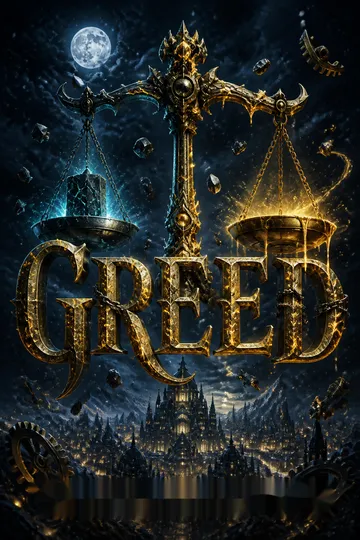
Greed, the second book in The Deadly Seven series, follows Griffin Lazarus who can sense greed and maintains strict control through balanced actions. He meets Lilo Likeke, a generous reporter and Grace's best friend, creating an opposites-attract romance. Readers praised Griffin's analytical mind, touch sensitivity representation, and the chemistry between the leads. Many appreciated the superhero/fantasy blend with Clark Kent/Lois Lane vibes. Some found pacing issues or flat writing, but most enjoyed the unique concept, character development, and action-packed plot. The series explores genetically engineered siblings fighting the Syndicate while finding their fated mates.
People Also Read




Characters
Griffin Lazarus
The rule-bound vigilanteGriffin is the Deadly Seven’s Greed, a disciplined analyst and crime fighter who tries to keep his dangerous impulses under mathematical control. A Yin-yang tattoo serves as his personal gauge, and he compensates for selfless acts by taking things he does not need. His combat training left him with a fear of his own capacity for violence and a deep aversion to uncontrolled touch. He is observant, exacting, and often mistaken in believing that protecting people means deciding for them. His attachment to evidence and routine offers safety, but also isolates him. Beneath his severity is a man who wants connection and struggles to believe he can accept it without becoming dangerous.
Lilo Likeke
The truth-seeking reporterLilo is a criminal-investigations reporter determined to tell the truth about Cardinal City, including the corruption in the family she left behind. Her warmth is practical: she brings food to colleagues, gives away her coat to a mother with a baby, and keeps returning to stories other reporters avoid. She speaks impulsively and gives generously, traits that make her vivid and sometimes vulnerable to people who take more than she offers. A former controlling relationship has made her wary of being directed, even by someone acting from care. Her courage does not erase her fear; she learns to make choices while afraid, and to distinguish love from obedience.
Donald Doppenger
The ambitious exDonald is a veteran reporter, Lilo’s former partner, and a man who measures his worth by recognition. He resents being overshadowed and treats professional success as proof that he matters. His polished confidence masks a possessive streak and a habit of turning other people’s work to his advantage. The newsroom gives him a public platform, while his history with Lilo gives him a private route into her life. He represents the danger of entitlement dressed up as wounded ambition.
Parker Lazarus
The commanding eldest brotherParker is the family’s strategist and a powerful technology executive who expects his siblings to work as a unit. He thinks in plans, surveillance, and consequences, and he often sounds more like a commander than a brother. His confidence can become overbearing, particularly when he believes a crisis leaves no room for discussion. Yet he accepts responsibility for the family’s safety and tries to turn their unusual origins into a means of protecting others.
Evan Lazarus
The quick-reading brotherEvan, known in the field as Envy, is Griffin’s impulsive, teasing brother and a skilled fighter who can generate electricity. His humor needles Griffin’s rigidity, but he is also quick to notice danger and willing to put himself in it. His bond with surgeon Grace gives the family a living example of intimacy that does not diminish their work. Evan’s instinct to act can be reckless, yet his loyalty rarely falters.
Dr. Grace Go
The surgeon and steady friendGrace is a surgeon, Lilo’s close friend, and Evan’s partner. She tends to injuries without losing sight of the frightened person beneath them, and she offers Lilo a reliable source of care when family ties fail. Grace understands the Lazarus siblings’ unusual lives but does not force Lilo into conclusions before she is ready. Her steadiness contrasts with the chaos around her, and her support helps create a bridge between the reporter and Griffin’s family.
Mary Lazarus
The fierce adoptive motherMary raised the Deadly Seven with Flint after their childhoods were shaped by secret organizations and combat training. A former assassin, she understands violence without romanticizing it and teaches through repetition, discipline, and presence. Griffin sometimes resents what his training cost him, but Mary continues to reach for him without excusing his behavior. Her strength is both physical and maternal: she protects her family while insisting they confront the dangers they carry.
Flint Lazarus
The patient family anchorFlint is Mary’s husband and the adoptive father of the Lazarus siblings. A practical inventor, he helps them understand their abilities and offers Griffin a calmer perspective on intimacy, change, and trust. He does not treat Griffin’s control habits as mere stubbornness, but he challenges the isolation they create. His relationship with Mary models affection as a durable partnership rather than a contest for power.
Liza Lazarus
The fearless police sisterLiza, the family’s embodiment of Lust, works as a police officer and moves comfortably between the law and her family’s covert work. She is physically formidable, blunt, and quick to puncture Griffin’s stiffness with teasing. Her humor can be outrageous, but she is attentive to what her siblings need and is particularly skilled at reading people. Liza’s confidence offers Lilo a model of directness without apology.
Tony Lazarus
The restless movie starTony is a famous actor and the sibling who fights Gluttony. He is sociable, theatrical, and prone to excess, using charm to disguise a life that can become difficult to regulate. He needles his brothers, flirts freely, and sometimes mistakes energy for wellbeing. His presence adds levity to family gatherings, while his appetite for stimulation reveals how a seemingly pleasurable sin can also become a form of self-neglect.
Sloan Lazarus
The withdrawn tech siblingSloan, the family’s Sloth, is a gifted technology specialist whose gaming and withdrawal worry her siblings. She resents being managed and answers concern with sarcasm, yet her technical skill is vital to the family’s work. Her distance is not simple laziness; it hints at disappointment and a shrinking sense of possibility. She remains part of the team even when she struggles to participate.
Wyatt Lazarus
The absent brotherWyatt, who carries Wrath, is a gifted chef and fighter who has left the family after a painful betrayal. His absence weighs on the siblings, who fear the violence of his isolation as much as they miss him. He is defined by fierce loyalty and a capacity for anger that once served as protection but now threatens to consume him. His connection to the family remains unresolved and emotionally charged.
Janet Liota
Lilo's volatile motherJanet is Lilo’s mother, accustomed to wealth, weapons, and getting her way. She treats family life as an extension of her material desires and responds to conflict with impulsive, self-serving choices. Her extravagance conceals insecurity and dependence, but it does not excuse the harm she causes. Janet helps explain why Lilo learned to distrust money as a substitute for affection.
Haulani Liota
Lilo's estranged fatherHaulani is Lilo’s father and a powerful figure in the city’s criminal world. His choices helped make the environment Lilo rejected, yet his relationship with her is more complicated than simple cruelty. He is shaped by loyalty, fear, and a willingness to accept responsibility for his own actions. Lilo’s history with him tests whether she can care about someone without denying the harm they have done.
Nathanial Liota
Lilo's troubled cousinNathanial is Lilo’s cousin, caught in crime and drug use. His information about the robbery and ransom draws Lilo into her family’s danger. He tries to use their childhood connection to persuade her, leaving her to judge whether his appeal is concern or self-interest.
Misha Minski
Lilo's loyal friendMisha is Lilo’s friend, a yoga teacher, and a member of a close Polish family that runs a restaurant. She is sociable and adventurous, but her loyalty is serious when someone she loves is hurting. Her family’s troubles give Lilo a place to belong outside her own damaged household. Misha’s warmth is not abstract comfort; she makes room at the table and shares the burdens of daily life.
Beverly Saks
Lilo's candid newsroom allyBeverly is the newsroom’s older advice columnist, a friend to Lilo, and a source of sharp but affectionate perspective. She encourages Lilo to see the difference between Griffin’s concern and Donald’s control. Her active social life and blunt kindness make her a grounded counterpoint to the newsroom’s rivalries.
Fred
The newsroom editorFred edits the Cardinal Copy and manages a newsroom under financial pressure. He can be disorganized, but he understands that responsible reporting requires corroboration, not just a compelling hunch. His advice helps Lilo turn instinct into a story she can defend.
Falcon
The masked operativeFalcon is a white-haired operative who works for a powerful organization and recruits people with promises that answer their private grievances. She is efficient, cold, and comfortable using fear to secure obedience. Her composed manner makes her more unsettling than an openly volatile opponent.
Julius Allcott
The hidden power brokerJulius is a senior figure in a secret organization concerned with the Deadly Seven and the science behind their abilities. He speaks and acts with the confidence of someone accustomed to directing others. His plans treat people as instruments, setting him against the Lazarus family’s attempt to choose what their powers are for.
Plot Devices
The Yin-yang tattoo
A flawed moral gaugeGriffin’s tattoo darkens or lightens in response to his sense of greed and virtue. He uses timed acts of theft and generosity to keep its halves balanced, believing measurable transactions can prevent another loss of control. The system shapes his patrol decisions and fills his home with stolen goods. Its limitation is central: a visible marker can record impulses, but it cannot tell him whether his choices are ethical, safe, or emotionally sustainable.
The mate bond
A counterweight to sinThe Lazarus siblings were engineered to recognize partners who embody the virtue opposite their assigned sin. A bond can alter their equilibrium and unlock abilities hidden in their biology. Griffin distrusts this explanation because he prefers controlled evidence to fate. Lilo’s effect on his senses and tattoo forces him to question whether connection can free him from a system he has spent years trying to manage alone.
Magnetic power
Metal becomes weapon and shieldGriffin’s latent ability lets him sense and manipulate metal. It first surfaces in small disturbances around Lilo, then becomes the means by which he disarms attackers, stops bullets, and protects a train. The power gives him options beyond his trained body, but its reach taxes him, especially when he tries to hold multiple massive objects at once. Its growth parallels his need to accept help rather than rely on force alone.
The Syndicate serum
Borrowed power, paid in damageThe Syndicate’s serum temporarily grants Donald strength, rapid healing, and the ability to sense greed. He receives it in exchange for helping discredit the Deadly Seven, then takes increasingly dangerous doses to feel powerful and recognized. The temporary enhancement appears to offer a shortcut to the Lazarus siblings’ abilities, but it magnifies Donald’s existing entitlement and ultimately transforms his body into a threat even the heroes struggle to contain.
The hidden photographs
A family secret made leverageSurveillance photographs of the Lazarus siblings in and out of costume are hidden in Haulani’s biometric safe. They connect Lilo’s family crisis to the larger danger facing Griffin’s family and explain why the kidnappers demand the safe’s contents. The images tempt Lilo with the career-making exposure she once wanted, while Griffin’s refusal to share them tests whether he trusts her judgment. The photographs turn secrecy into a concrete object that characters can hide, threaten, and choose not to publish.
The Deadly Seven Series




About the Author

Download PDF
Download EPUB
.epub digital book format is ideal for reading ebooks on phones, tablets, and e-readers.








