

Key Takeaways
Treat the pendulum as a prompt for reflection, not an authority over your choices.
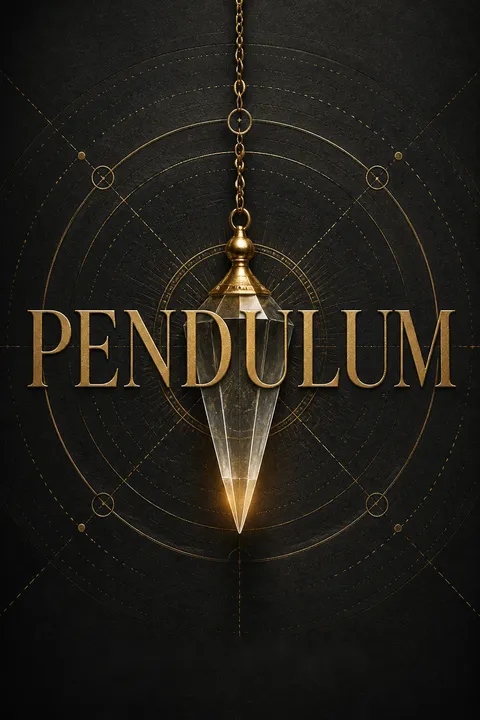
A simple tool, expansive claims. A pendulum is a weight suspended from a thread or chain. The book presents it as a guide for intuition, divination, and finding objects. It distinguishes dowsing, using the pendulum to seek answers or locate something, from pendulum healing, which aims to change energy. It also traces dowsing through historical traditions, though the history of a practice does not establish that its supernatural explanations are true.
Keep responsibility with yourself. The book repeatedly cautions against letting a pendulum make major decisions. Its most grounded use is as a ritual for pausing, focusing attention, and noticing what one already thinks or feels. The motion can invite reflection, but it cannot guarantee access to hidden knowledge or a higher power.
What's useful here is the distinction between a reflective ritual and a reliable source of facts. In psychology, the ideomotor effect describes how expectations can produce small, involuntary muscle movements. Those movements can swing a pendulum without conscious intent, making its answer feel externally generated. This explanation does not make the exercise worthless: the ritual may help someone surface a preference or slow down before acting. But the felt certainty of a response is not evidence that the response is accurate. Treating the pendulum as a prompt preserves its reflective value while limiting the risk of handing over judgment.
Calibrate each pendulum's yes, no, and uncertain signals before asking anything important.
Establish your signals first. The book says a pendulum's movements may differ between users, so beginners should agree on what counts as yes, no, and perhaps before relying on an answer. Hold the thread steadily, let the weight hang freely, and ask it to show each signal. Test the pattern with simple facts you already know, such as whether your eyes are brown. A basic teardrop or triangular pendulum with moderate weight is suggested as a manageable starting point.
Make the session repeatable. The book recommends a calm setting, a supported arm, and time to focus. It also describes cleansing, especially for crystal pendulums, using options such as moonlight, sound, or smoke. Materials matter: water, salt, and direct sun may damage some stones or metals, so check before using them.
Calibration is a small but important form of measurement discipline. Before using an instrument, a person needs to know what its outputs mean and whether its responses are stable. The same logic appears in laboratory work, where a device is tested against known conditions before it is trusted. With a pendulum, however, calibration may also strengthen expectation: once a user assigns a movement to yes, the body can unconsciously help produce it. That makes a consistent method useful for self-reflection, but not equivalent to independent verification. The book's practical emphasis on setup is strongest when consistency is treated as a way to observe one's own responses.
Narrow broad questions, and watch for answers that mirror what you hope to hear.
Ask answerable questions. The book advises turning a vague concern into clear questions that can be answered yes or no. Instead of asking whether a career will make you happy, a user might ask whether a specific course fits a particular goal. It recommends trying known-answer questions first, staying calm, and avoiding questions asked in a highly emotional state. When a question is too complex, divide it into smaller parts or use a chart with options such as yes, no, or rephrase.
Notice your own influence. The author warns that a strong preference can affect the pendulum's motion, especially when asking about love, money, or the future. The book also suggests stating whether answers are meant to come from the user's subconscious or from higher powers. That distinction expresses the author's spiritual worldview, but it cannot establish which source, if any, produced a response.
The advice to make questions specific resembles good decision analysis: a broad anxiety often becomes more manageable when separated into concrete uncertainties. It also exposes a central limitation. A yes-or-no format compresses complex situations, and a confident answer can conceal missing information, changing circumstances, or several competing values. Research on motivated reasoning shows that people often evaluate evidence more favorably when it supports a desired conclusion. A useful safeguard is to write down the question and possible answers before using the pendulum, then seek independent evidence for any consequential claim. Precision improves reflection, not necessarily truth.
Search for lost objects systematically, then confirm every clue with ordinary observation.
Turn a search into steps. For a missing pair of glasses, the book suggests picturing the object clearly, asking whether it is in the home, and then narrowing the search room by room. Once in a likely room, the user can ask which direction to look, move through the space, and check specific places. If searching remotely, the book proposes drawing a rough map and holding the pendulum over it.
Treat movement as a lead. The book says that confusing or circular movement may signal a wrong location, distraction, or an energetic obstruction. Those interpretations are part of its spiritual framework, not demonstrated explanations. In practice, the most defensible value of the method is that it prompts a structured search. Retrace recent actions, check likely surfaces and containers, and use the pendulum's suggestion only as a cue to inspect another spot.
A lost-object ritual can be helpful because it converts an unstructured hunt into a sequence of locations and questions. That resembles a search checklist, which reduces the chance of repeatedly checking the same places while overlooking others. The key is to separate the process benefit from the claim that the pendulum detects an object's energy. Human memory is reconstructive, and expectations can direct attention toward a favored location. A neutral search order, or asking someone else to check without being told the suspected spot, provides a more reliable test. The ritual can organize attention; ordinary inspection still does the finding.
Choose crystals for personal meaning, not for unproven promises of healing.
Use correspondences as symbolism. The book links crystal types with particular purposes: rose quartz with love and emotional comfort, amethyst with calm and spiritual practice, and clear quartz with amplification or broad use. It recommends choosing a pendulum that feels comfortable and meaningful, rather than assuming one material is universally best. It also describes a person's “resonant color,” the color said to align especially well with them, and suggests using a pendulum to select it from colored samples.
Care is practical. Crystals vary in durability. Some can fade in sunlight, crack if dropped, or deteriorate in water. The book recommends storing them separately and cleansing them with methods suited to the material. These steps protect an object and can make its use feel intentional. They do not show that a crystal treats illness, changes energy, or has measurable healing effects.
Crystals can carry aesthetic, cultural, and personal meaning, and objects associated with a ritual may help people focus attention or create a calming routine. Those effects are different from the specific healing properties attributed to particular stones. The book itself acknowledges that scientific evidence for crystal healing is lacking. This distinction lets readers engage respectfully without confusing symbolic usefulness with a medical mechanism. A rose quartz pendulum may remind someone to approach a relationship with care, for example, while the stone itself should not be treated as a treatment. The claim should match the evidence.
Never use a swinging weight to diagnose illness or postpone medical care.
The book's medical boundary matters. It describes scanning the body with a pendulum, interpreting changes in movement as signs of illness or energy blockage, and using the tool in healing rituals. It also states that pendulums cannot replace conventional medicine and advises consulting a doctor when illness is a concern. That warning should take precedence over the diagnostic instructions: a pendulum's movement is not a validated test for tumors, disease, or the state of an organ.
Keep any use supportive. If the ritual helps someone relax or reflect, it can sit alongside appropriate care, provided it does not delay assessment or treatment. Do not infer that a condition is absent because the pendulum indicates no, or present because it moves unusually. Health decisions require evidence from qualified professionals and established diagnostic methods.
This is the point where spiritual practice needs the clearest boundary. A diagnostic tool must be tested for accuracy, including whether it reliably distinguishes people with a condition from those without it. The book supplies no such validation for pendulum readings, and an intuitive impression cannot substitute for medical evaluation. False reassurance can delay care, while a false alarm can intensify distress. Rituals may still support comfort, meaning, or a sense of agency, but those are different outcomes from detecting disease. The safest interpretation follows the book's own disclaimer: complementary practices do not replace professional assessment or treatment.
Use the seven chakras as a spiritual map, not a medical scan.
A model of energy centers. The book describes seven main chakras, traditionally placed from the base of the spine to the crown of the head. It associates them with themes such as security, creativity, confidence, compassion, communication, intuition, and spiritual connection. It proposes using a pendulum over the body, a printed chakra symbol, or a chart to identify imbalance, then repeating the scan after a balancing ritual.
Know what the map can show. These associations belong to a spiritual system, not to a validated way of diagnosing physical or psychological conditions. The book's lists connect chakra blockages with symptoms such as headaches, anxiety, or digestive discomfort, but those symptoms have many possible causes. Used reflectively, the framework can help someone name areas of concern. It should not be used to explain away symptoms or determine what treatment is needed.
A symbolic map can make diffuse experiences easier to discuss. Someone who feels unable to speak up, for instance, may find the throat chakra's communication theme a useful prompt for reflection. But an organizing metaphor is not the same as an anatomical structure or clinical measure. The same symptom can arise from many causes, and assigning it to an energy blockage risks premature closure. The framework is most responsible when used as a language for personal meaning, while physical symptoms are assessed through evidence-based care. This preserves the model's reflective function without granting it diagnostic authority.
Pair pendulum rituals with tarot or meditation to structure reflection, not outsource judgment.
Combine tools with clear roles. The book suggests using a pendulum alongside tarot to choose a deck, select cards, identify which cards deserve attention, or check whether a reader's interpretation feels complete. It also describes boards and charts for answers beyond yes or no. Meditation, breathing, labeling emotions, and grounding are recommended before a session to help the user settle and focus.
Let the tools prompt, not decide. A pendulum can add a pause to a reading, while tarot images can offer themes to consider. The book also presents pendulum questions as a way to explore whether someone believes an affirmation. These practices can reveal what a person is drawn to, but the resulting answer remains open to interpretation. Important choices still call for evidence, conversation, and personal responsibility.
Rituals often work partly by shaping attention. A short breathing practice can lower arousal, and a sequence of cards or questions can help organize thoughts that otherwise remain vague. Multiple tools may enrich reflection, but agreement among them is not necessarily independent confirmation: the same expectation can influence the pendulum, the card selection, and the interpretation. This is a form of correlated evidence, not three separate witnesses. The strongest use is therefore exploratory. Ask what a symbol or movement brings to mind, then compare that reflection with facts, other people's perspectives, and the likely consequences of acting.
Analysis
This guide is best understood as a practical manual for a spiritual ritual, not as evidence that pendulums can detect hidden objects, communicate with external powers, or diagnose the body. Its structure moves from choosing and preparing a tool, through question techniques and applications, into crystal correspondences and healing claims. The most transferable thread is procedural: settle attention, define what a response means, ask a bounded question, and retain responsibility for the answer. Those steps resemble reflective practice and decision hygiene, even when the book explains them through energy and higher powers.
A central tension runs through the work. The book warns readers not to rely on pendulums for major choices and not to replace medicine, yet it also offers detailed methods for locating illness, reading chakras, and interpreting answers as guidance from unseen sources. The cautions are essential, but they do not resolve the evidentiary gap. A pendulum can move through subtle, involuntary muscular action, which makes a response feel surprising without demonstrating that it came from outside the user. Likewise, crystal associations and chakra meanings can carry symbolic or cultural significance without functioning as measurable therapies.
The adaptation's most useful reframing is to preserve the ritual while narrowing its claims. A pendulum may serve as a prompt to articulate preference, slow a search, or make a reflective session feel deliberate. It should not establish facts about health, another person's feelings, or the future. The distinction between meaning and measurement is the key to using the book responsibly: meaningful practices can support attention and self-understanding, while factual claims still require independent evidence. This framing neither dismisses spiritual practice nor confuses personal resonance with verification.
Review Summary
Pendulum by Mari Silva receives mostly positive reviews, with an average rating of 4.14 out of 5. Readers find it informative and helpful for beginners, praising its detailed explanations of pendulum use, crystal properties, and healing applications. Many appreciate the book's coverage of grounding, meditation, and question formulation techniques. Some reviewers note its usefulness in expanding their knowledge and understanding of pendulums. A few critics mention repetitiveness or lack of new information, but overall, readers find the book insightful and well-explained.
People Also Read
Glossary
Dowsing
Seeking answers with a toolIn the book, dowsing is the use of a pendulum or another instrument to seek answers or locate something hidden, such as water, minerals, or a misplaced object. The book distinguishes asking questions or searching for targets from pendulum healing, which it describes as an attempt to alter energy.
Chakra
Spiritual energy centerA chakra is an energy center in a spiritual system described in the book. It focuses on seven major chakras, positioned from the base of the spine to the crown of the head, and associates each with themes such as security, creativity, communication, and spiritual connection. These associations are not medical diagnoses.
Aura
Surrounding energy fieldThe book uses aura to mean an energy field surrounding a person, which it says can be affected by life events and emotional experiences. It presents pendulum and hand movements as ways to notice and cleanse imbalances in this field. The concept is part of the book's spiritual framework, not a clinically established diagnostic structure.
Resonant color
Personally aligned colorThe book defines a resonant color as the color said to align especially well with a person's true self and energy. Its suggested exercise uses a pendulum to select among colored samples. This is presented as a spiritual and personal correspondence, not as a scientifically established property of color or an objective personality measure.
Remote reading
Reading at a distanceA remote reading is a pendulum-based reading performed without the person being physically present. The book describes using a body chart or other proxy to represent the absent person, then interpreting pendulum movements over the chart. The method is presented as a form of spiritual practice and is not established as a reliable way to diagnose or treat someone at a distance.
About the Author

Download PDF
Download EPUB
.epub digital book format is ideal for reading ebooks on phones, tablets, and e-readers.








