

Key Takeaways
Treat Chiron as a map of recurring pain, not a sentence of fate
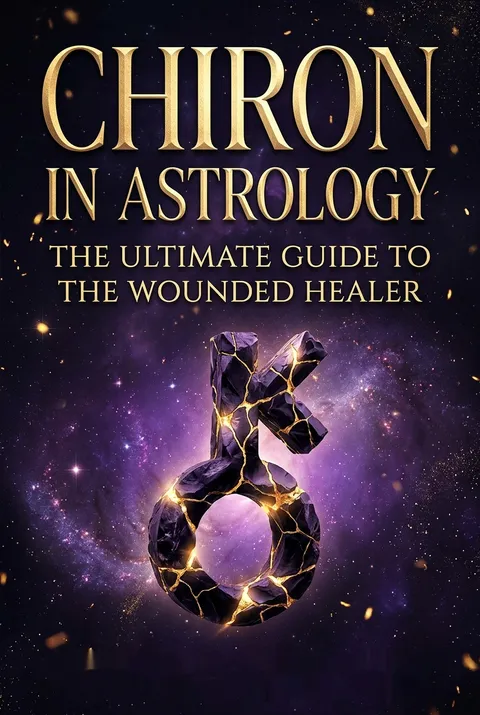
The myth sets the terms. Chiron, an immortal centaur rejected by his parents, becomes a gifted healer under Apollo and Artemis. During a battle, Hercules accidentally wounds him with a poisoned arrow. Chiron cannot heal the injury, and immortality makes the pain inescapable. He finally gives up immortality to free Prometheus, turning his suffering into an act that helps another. The book uses this story to frame Chiron as the wounded healer, an archetype in which facing personal pain can deepen understanding of others.
Read the chart symbolically. Astrology assigns Chiron to recurring vulnerabilities that seem resistant to simple fixes. A birth chart can prompt reflection, but it cannot establish that a wound is karmic, destined, or caused by a planet. Treating the chart as metaphor preserves its usefulness without mistaking it for a diagnosis.
What's striking is how myth gives private pain a shape. Chiron's story offers a way to think about vulnerability without reducing a person to it, much as narrative approaches in psychology help people describe experiences that once felt chaotic. The metaphor is most useful when it opens questions, not when it claims to explain why suffering happened. Calling pain purposeful can comfort some readers, but it can also pressure them to find a lesson in harm before they are ready. A symbolic lens should make room for grief, anger, and uncertainty.
Turn sensitivity to injury into empathy without calling suffering deserved
Pain can sharpen attention. The book links Chiron's two wounds, early abandonment and the later poisoned arrow, to heightened sensitivity toward other people's distress. Its central lesson is that someone who has felt dismissed or hurt may recognize similar suffering in others and offer care they once needed themselves. That transformation is possible, not automatic: pain can also produce fear, withdrawal, or anger.
Keep responsibility precise. The book urges readers to notice how they respond to wounds and how they may pass hurt along. That can restore agency, but it does not mean a person caused the harm done to them. The practical question is not whether suffering was deserved. It is what support, boundaries, or choices might help now.
Psychology distinguishes growth after adversity from the idea that adversity is inherently beneficial. Some people develop deeper empathy; others remain distressed, and both responses deserve respect. This distinction strengthens the wounded-healer idea by making compassion a practiced response rather than a prize trauma is supposed to deliver. It also prevents a common moral mistake: treating a survivor's later insight as evidence that the original injury was necessary. Empathy can emerge from pain, but no one owes the world a serviceable lesson from what happened to them.
Use Chiron’s sign and house as questions, not fixed diagnoses
Signs and houses add context. In the book's reading, a sign suggests the style or theme of a vulnerability, while a house points toward an area of life. Gemini is associated with communication struggles; the fourth house concerns family and home; the fifth concerns creativity and self-expression. These are interpretive prompts, not proof that someone has a particular history or personality.
Test the prompt against life. The book advises reading Chiron alongside the whole natal chart and the person's actual experience, rather than relying on a Sun sign alone. A useful inquiry might be: Where do misunderstandings recur, and what helps someone speak more freely? If a placement does not fit, it need not be forced. The chart is a starting point for reflection, not an authority over a person's story.
The sign-and-house distinction provides a simple organizing tool: one part describes a recurring theme, another locates the life domain where it may be felt. That can make a broad symbolic system easier to use. Its weakness is also its appeal: flexible descriptions can seem accurate because readers select confirming examples and overlook mismatches. A grounded practice is to record concrete situations first, then ask whether the astrological language clarifies them. This keeps the reader's lived evidence in the foreground and reduces the risk of turning a label into an identity.
Review turning points through Chiron’s roughly fifty-year cycle
The cycle offers a timeline. The book describes the Chiron Cycle as an approximately fifty-year orbit interpreted through astrological phases of wounding and healing. It places the first square somewhere between ages five and twenty-three, the opposition between thirteen and thirty-seven, a second square between twenty-seven and forty-four, and the Chiron Return around fifty or fifty-one. Because Chiron's orbit is elliptical, the earlier phases can occur at widely different ages.
Use dates to reflect, not predict. The book suggests looking back at difficult transitions, new interests, mentors, or changes in purpose and asking whether recurring themes appear. It also warns that the full chart and personal history matter. These astrological timings are not established predictors of life events, so they work best as prompts for review rather than a calendar of what must happen.
A life-stage framework can help people revisit experiences that once seemed disconnected and ask what changed in their sense of self. The Chiron timeline gives that review a memorable structure, especially around midlife. But the wide age ranges make clear why a fixed prediction would be misleading. Developmental transitions can prompt reflection without being caused by a planetary return. The most reliable use of the cycle is retrospective: let actual events and choices guide interpretation, rather than reshaping a biography to fit an expected astrological milestone.
Use karma as an ethic of action, not an explanation for victimhood
Karma is the book's spiritual model. Karmic astrology interprets a birth chart as a guide to lessons or debts carried across lives, with Chiron indicating deep wounds. The book names three forms of karma: Prarabdha karma is already in motion, Sanchita karma is accumulated from prior actions, and Agami Karma is created by actions in the present life. It recommends responding consciously and not becoming defined by either success or pain.
Keep the ethical use, reject blame. This framework can encourage care about how actions affect others. But claims that present suffering repays a past-life debt cannot be verified from someone's circumstances, and can unfairly imply that people deserve abuse, illness, or hardship. The safer, practical lesson is to take responsibility for one's own choices without assigning hidden blame to those who suffer.
The karma model gives moral weight to ordinary choices and emphasizes that actions affect other people. That is a compelling ethical function even for readers who do not share its account of reincarnation. The danger appears when an invisible past-life cause is used to explain visible suffering. Such explanations can shift attention away from injustice, material conditions, or an abuser's responsibility. A careful distinction matters: people can work with their response to hardship, while the harm itself remains the responsibility of whoever caused it.
Interrupt painful reactions with breath, body awareness, and a deliberate pause
Notice the body's alarm. The book calls its approach somatic screening skills: noticing physical and emotional signals before reacting. It describes how remembering an old argument can produce shallow breathing, tension, or agitation even when the other person is absent. The proposed first step is simple: pause, close the eyes if appropriate, and breathe slowly while attending to the breath. That creates a moment to distinguish a present event from an old trigger.
Choose a response deliberately. The book also recommends revisiting painful memories with self-compassion and reframing their meaning, rather than trying to suppress every difficult thought. It suggests affirmations and reflection as ways to practice. These exercises are not substitutes for professional care, particularly when trauma or overwhelming distress is involved. A pause can create room for choice; it cannot make an unsafe situation safe.
The practical strength here is the move from interpretation to interruption. Attending to breath and bodily activation can help a person notice escalation before words or actions make a conflict worse. This resembles mindfulness-based self-regulation, where observing an experience is different from obeying it. Still, calming techniques should not be treated as a cure for trauma or as a reason to remain in danger. Sometimes the right response is not to reinterpret a trigger but to seek protection, distance, or skilled support.
Let healing inform your purpose without turning service into self-abandonment
Purpose grows from understanding. The book argues that a wound can reveal what matters deeply and may help someone recognize needs in others. It calls Dharma a person's life lessons and work, and connects purpose with service offered from love rather than obligation. It also insists that people should begin by tending to themselves, since helping others while overwhelmed can deepen exhaustion instead of healing it.
Service has many forms. The book presents Tony Robbins, who shares personal history in seminars, as an example of turning vulnerability toward helping others. It also describes possibilities such as teaching, counseling, creativity, or everyday care. These examples illustrate the author's view, not proof that a chart determines someone's vocation. A meaningful response to pain might include service, but it may also be rest, art, boundary-setting, or simply rebuilding a life.
Purpose can help people organize difficult experience around something beyond self-protection. The book's emphasis on caring for oneself before helping others is an important corrective to the romantic image of the endlessly giving healer. Service need not mean a helping profession, and suffering does not create a duty to disclose personal history. The strongest version of this idea makes contribution a choice that grows from capacity and values. Otherwise, the wounded-healer identity can become another role that asks a person to ignore their own needs.
Practice forgiveness in stages, while keeping boundaries around real harm
Forgiveness takes repetition. The book describes it as a process rather than a single decision: painful memories can return, and self-forgiveness may need to be revisited. Its exercises invite readers to notice recurring wounds, consider how they have treated themselves and others, and respond with compassion instead of reflexive self-condemnation. The book also recommends professional help when someone feels lost or overwhelmed.
Forgiving is not excusing. The author sometimes frames people who hurt us as catalysts for revealing a wound. That interpretation may help some readers loosen resentment, but it does not make the harm acceptable or require renewed contact. Accountability, distance, and protection can coexist with an effort to release corrosive anger. Reframing can change how a memory is carried; it cannot change what happened or erase another person's responsibility.
The gradual account of forgiveness is more humane than demanding instant absolution. It recognizes that emotional responses do not obey a deadline. A further distinction helps: forgiveness, reconciliation, and accountability are separate choices. A person may decide to work toward less resentment without restoring a relationship or abandoning consequences. In trauma-informed practice, the harmed person's safety and agency remain central. Compassion can include compassion for oneself, including the right to say no.
Analysis
The book's most memorable device is its mythic biography of Chiron: an abandoned centaur becomes a healer, then suffers an injury he cannot cure, and finally relinquishes immortality to free another captive. That narrative binds the book's subjects together: vulnerability, repeated patterns, empathy, self-acceptance, and service. The practical appeal lies less in the chart calculations than in the questions the chart invites readers to ask about recurring pain and the ways they respond to it.
Its structure moves from myth to astrological interpretation, then through sign and house descriptions, and finally into exercises on reflection, boundaries, reframing, and forgiveness. This makes an esoteric subject accessible to beginners. The house-by-house prompts and the approximately fifty-year Chiron cycle offer memorable organizing devices, while breathing and self-compassion provide simple ways to slow reactive behavior.
The central limitation is evidentiary. The book treats natal placements, reincarnation, karmic debt, and planetary cycles as explanations for psychological patterns, but these claims are not established by scientific evidence. Its astrological descriptions are better approached as symbolic prompts than as diagnoses or predictions. The text also sometimes suggests that sufferers are responsible for their pain or that their pain was arranged for a lesson. That framing can become victim-blaming, especially when applied to abuse, illness, or structural hardship. Responsibility for how one responds should not be confused with responsibility for what another person did.
The most useful adaptation therefore keeps the reflective practices while loosening the metaphysical certainty. Readers can examine patterns, notice bodily reactions, seek support, set boundaries, and decide whether service gives their experience meaning. They need not believe that suffering was destined, deserved, or necessary. Chiron works best as a story that helps people consider what healing might look like, not as a verdict about why they were hurt.
Review Summary
The reviews for Chiron in Astrology are generally positive, with an overall rating of 4.00 out of 5. Readers appreciate the book's thorough introduction to Chiron, its background, and its influence in astrology. Many find it well-researched and informative, especially for beginners. The book covers Chiron's placement in natal charts, karmic aspects, and self-healing techniques. Some readers particularly value the affirmations and celebrity examples provided. A few criticisms mention minor inaccuracies and confusion in certain explanations, but overall, the book is praised for its depth and usefulness in understanding Chiron's role in astrology.
People Also Read



Glossary
Wounded healer
Pain-informed capacity to healAn archetype represented by Chiron, whose own enduring wound is linked to sensitivity toward the suffering of others. In the book, the idea is that facing personal pain can deepen empathy and help someone support others. It does not mean every wounded person becomes a healer, or that anyone must turn trauma into service.
Chiron Cycle
Astrological cycle of healingThe book's name for the roughly fifty-year orbit of Chiron and the astrological phases interpreted as periods of wounding, reflection, and healing. It includes aspects such as squares and an opposition, whose timing varies across individuals. The cycle is offered as a way to review life experiences, not as an empirically established schedule of psychological events.
Chiron Return
Chiron's return to its birth positionAn astrological transit that occurs when Chiron returns to the position it occupied at a person's birth, usually around age fifty or fifty-one. The book interprets this as a period of reckoning with unresolved wounds, possible crisis, or renewed purpose. It is an astrological interpretation, not a guaranteed event or clinical milestone.
Karmic astrology
Chart reading across lifetimesAn approach to astrology that interprets a natal chart as a source of clues about lessons and unresolved karma from previous lives. In this book, Chiron's placement is used to identify a deep wound and possible route toward healing. The framework depends on spiritual beliefs about reincarnation and karma rather than verifiable evidence.
Prarabdha karma
Karma already in motionOne of the three forms of karma distinguished in the book. Prarabdha karma is described as accumulated action whose consequences are already unfolding in the present life. The book says a person may not be able to avoid the experience, but can choose how to respond to it and avoid making it their entire identity.
Sanchita karma
Accumulated past karmaThe book's term for the total store of karma from previous actions that is not expected to be experienced fully within one lifetime. It is presented within a reincarnation-based spiritual model, in which some consequences may carry into another incarnation. This is a metaphysical account, not an empirically demonstrated process.
Agami Karma
Karma created by present actionThe book's term for karma generated through actions in the current incarnation. It may contribute to consequences experienced in this life or to karma carried forward in the spiritual model. The book recommends acting consciously and releasing attachment to outcomes as a way to avoid accumulating further karma.
Dharma
Life's lessons and workA spiritual term the book uses for what a person is called to learn or do in life. It connects Dharma with purpose, unfamiliar challenges, and service to others. In the book's account, Chiron's placement may suggest themes related to this work, but the chart does not remove a person's freedom to choose their path.
Somatic screening skills
Noticing bodily signals before reactingThe book's phrase for paying attention to bodily and emotional cues that arise during distress, such as shallow breathing, tension, or agitation. The aim is to notice activation before it drives an automatic response, then use breathing and reflection to choose what to do. The term is presented as a self-awareness practice, not a substitute for treatment.
repetition compulsion
Repeating unresolved patternsA psychoanalytic term the book uses for recurring patterns of behavior or relationships that reproduce unresolved conflicts. It connects the idea to Freud and to later discussions of childhood experience and adult relationships. In this account, noticing repeated themes can help a person understand what remains emotionally unresolved and consider a different response.
About the Author
Other books by Mari Silva

Download PDF
Download EPUB
.epub digital book format is ideal for reading ebooks on phones, tablets, and e-readers.








