

Key Takeaways
Treat environmental breakdown as a power problem, not a failure of personal restraint.
Look beyond individual choices. The book argues that climate change is one part of a wider breakdown involving soils, water, species, and ecosystems. The authors accept that personal choices matter, but say they cannot explain why destruction persists while governments approve fossil fuel projects and corporations pursue profit. The forces to examine are the laws, financial systems, ownership patterns, and political influence that shape what gets produced and whose interests prevail.
The transition is political. Existing fossil fuel infrastructure alone could exceed the remaining emissions budget for limiting warming to 1.5°C. The authors argue that reducing emissions therefore requires more than better products or consumer awareness. It means changing the institutions that direct investment, organize production, and distribute both the benefits and the damage.
What's important here is the difference between responsibility and leverage. Individuals can make choices, but institutions determine which choices are affordable, available, and consequential at scale. That distinction prevents personal virtue from becoming a substitute for political action. It also avoids the opposite mistake of treating people as powerless: citizens can organize to alter laws, ownership, and investment. The argument is strongest when structural causes clarify where action has leverage, rather than implying that everyday behavior is irrelevant.
Do not blame Rapa Nui for a collapse Europeans helped cause.
A cautionary tale was oversimplified. The familiar account says the people of Easter Island, or Rapa Nui, cut down their last trees through selfishness and then destroyed their society. The authors note evidence that rats contributed to the loss of native palms, and that Europeans arriving in 1722 described cultivated land and a functioning population. The islanders changed their environment, but that alone does not explain the later collapse.
Colonial violence mattered. European visitors abducted and killed islanders. In 1862, slave raids took more than a thousand people; smallpox brought back by survivors devastated the population. European traders then seized land, displaced residents, and expanded sheep farming. The revised history shifts attention from an imagined universal human flaw to the forces of slavery, disease, and dispossession.
The revised account changes the moral lesson, not the fact that ecological limits matter. A society can alter its environment without being the sole author of every disaster that follows. The familiar story makes collapse seem like a natural consequence of bad collective choices; the fuller history shows how outside power can break a society's capacity to adapt. The useful caution is to ask who benefits from a simple explanation, and whose actions it leaves out.
Prepare for cascading shocks, not isolated climate disasters.
Damage travels through systems. The authors describe environmental breakdown as a sequence: a local shock harms people and infrastructure, its effects spread through connected systems, and those effects intensify existing social stresses. A drought can damage harvests; disruptions in food supply can raise prices elsewhere; hardship then meets institutions already strained by poverty or political conflict.
The warning signs are broad. The book reports that vertebrate populations fell by nearly two-thirds on average between 1970 and 2016, and that nearly 90 percent of wetlands have been lost. Tipping points can accelerate damage when a change in one natural system triggers others. The authors call environmental breakdown a threat multiplier because it worsens risks already present, rather than acting as a single, separate crisis.
This systems view explains why preparedness cannot be measured only by how well a city withstands one storm. A shock becomes a crisis when supply chains, public services, or political trust cannot absorb it. Efficiency can make such systems brittle if it removes spare capacity or concentrates essential production in a few places. The concept is useful for planning, though its breadth can make every social problem appear environmental. Clear causal links help distinguish real climate pathways from general anxiety.
Reject green nationalism that blames migrants for damage caused by elites.
Ecological fear can be weaponized. Eco-ethnonationalism is a politics that accepts environmental crisis but blames migration, racial diversity, or population growth outside the wealthy West. It presents borders and exclusion as environmental protection while ignoring high consumption and the historical responsibility of rich countries. The book identifies it alongside climate denial and market-friendly policies that acknowledge some climate science while refusing deeper economic change.
The danger is not hypothetical. The authors discuss the 2019 El Paso shooter, who invoked resource scarcity and environmental damage while targeting Hispanic people. They warn that worsening shocks can give such politics greater reach: hardship becomes grievance, and grievance is redirected toward outsiders rather than powerful beneficiaries of the existing economy.
The key political insight is that environmental facts do not dictate a just response. The same scarcity narrative can support shared adaptation or exclusion, depending on who is cast as responsible and who is allowed protection. That makes material security part of climate politics, not a competing concern. Yet rejecting scapegoating does not remove the hard questions of migration and displacement. Credible policy needs both humane protection and serious preparation for communities facing unavoidable movement.
Replace extractive growth with democratic institutions organized around human and ecological needs.
Change the economic rules. The authors call their alternative ecosocialism: democratic control over economic and political institutions so they serve social needs and human flourishing within ecological limits. It is not simply a larger state. It involves changing how the state, markets, households, and commons work together, and who has authority over investment and production.
Neoliberalism is a political arrangement. In the book's account, it uses state power to extend markets and protect private economic decisions from democratic control. The authors argue that growth measured by GDP cannot stand in for wellbeing when its gains are unequal and its costs are ecological. They seek to expand social ownership and public services, value care, and make economic decisions answerable to people affected by them.
The proposal's strength is that it treats economic institutions as designed arrangements, not laws of nature. That makes alternatives imaginable without promising a clean break from every existing market or organization. Its central challenge is institutional specificity: democratic control can mean different things at a workplace, a city utility, or a national investment program. The vision becomes more persuasive when participation, accountability, and ecological limits are defined concretely, rather than left as virtues everyone can claim.
Use local spending and public institutions to keep wealth working for communities.
Community wealth building uses the purchasing power, land, employment, and investment of local institutions to retain wealth and meet local needs. In Preston, public bodies reviewed where their £750 million in annual spending went. Initially, only 5 percent was spent with organizations in the city. Revised purchasing rules favored secure jobs and local social value; by 2017, more than £200 million in additional spending had been retained in the local economy.
Public institutions can coordinate at scale. The NHS also shows how a national service can influence suppliers, transport, food, and energy beyond its core mission. Between 2007 and 2017, its emissions fell by nearly a fifth while its clinical activity grew. Local initiative and national coordination are presented as complements: communities can shape priorities, while public bodies provide resources and reach.
These examples make economic democracy tangible: procurement is not merely administration, but a choice about where public money and bargaining power flow. Local control can build trust because benefits become visible in jobs and services. It cannot, by itself, replace national action on energy grids, industrial standards, or supply chains. The model works best when local institutions have real discretion and adequate capacity, while wider government coordinates what no individual town can accomplish alone.
Direct finance away from fossil fuels and toward a planned, fair transition.
Finance allocates the future. Banks and investors decide which activities receive credit and investment. The book reports that 33 global banks provided $1.9 trillion in fossil fuel financing after the 2015 Paris Agreement. Government subsidies to fossil fuels were estimated at $370 billion a year, more than three times those for renewables.
Public action can redirect capital. During the Covid-19 crisis, governments and central banks mobilized extraordinary financial support, demonstrating that finance is politically shaped rather than untouchable. The authors propose green credit guidance, mission-oriented public banks, and a major increase in public investment. They suggest a green stimulus of 4 to 5 percent of GDP in wealthy economies as a possible scale, while arguing that private finance alone cannot ensure a rapid and equitable transition.
The insight is that finance is a form of planning, even when its decisions are made by private institutions and described as neutral market outcomes. Making that planning visible opens it to public debate. But redirecting credit is not automatically democratic or wise: public institutions can misjudge projects, and technical rules can hide political choices. Clear mandates, transparent evaluation, and public accountability are essential if green finance is to serve social needs rather than reproduce old concentrations of power.
Give workers and communities real authority over the companies shaping their lives.
Ownership determines control. The authors argue that modern corporations often prioritize shareholders through dividends and stock buybacks, even when workers' pay and investment lag. They cite US companies in the S&P 500 spending $4.3 trillion on buybacks and $3.3 trillion on dividends between 2009 and 2018. The result, they contend, is an enterprise model that rewards investors while limiting workers' voice.
Rewrite governance, not just corporate promises. Proposals include worker representation on boards, stronger voting rights for employees, social wealth funds, and public ownership of essential services. In carbon-intensive industries, public ownership could help manage a fair reduction in fossil fuel production and protect workers during the shift. The goal is to make companies answer to workers, communities, and environmental needs, not shareholders alone.
This section exposes a gap between who contributes to an enterprise and who controls it. Workers provide knowledge and labor, while surrounding communities bear many consequences, yet formal authority often follows capital ownership. Broadening governance could improve both legitimacy and long-term thinking. Still, representation is not a guarantee of environmental responsibility: workers and communities can reasonably depend on harmful industries for income. Democratic transition therefore needs practical alternatives for livelihoods, not simply a new seat at the decision-making table.
Govern shared resources through clear rules, stewardship, and democratic participation.
Commoning is more than open access. A commons is a shared resource or institution governed for collective use rather than private ownership. Commoning describes the ongoing work of setting rules, sharing responsibility, and caring for that resource. Drawing on research about collective governance, the authors emphasize defined communities of users, boundaries, rights, duties, and stewardship.
The idea reaches beyond forests. The book applies it to land and housing, public transport, food systems, natural habitats, digital infrastructure, data, and intellectual property. A community land trust can hold land for shared benefit; cooperative platforms can give users and workers a say; shared transport can reduce dependence on private cars. The point is to build durable institutions that make shared resources useful and sustainable.
Commoning offers a way to think beyond the assumption that every resource must be either privately managed or centrally administered. Its focus on participation and responsibility is particularly useful when users possess local knowledge that distant authorities lack. The difficult question is who counts as a member and who enforces the rules. Commons can reproduce exclusion if boundaries are drawn unfairly. Democratic governance therefore requires not only shared ownership, but transparent access rules and ways to challenge them.
Make care, secure services, and reclaimed time part of economic prosperity.
Work should sustain life. The Lucas Plan, proposed by workers at British aerospace firm Lucas in the 1970s, showed how employees might redirect production from military goods toward socially useful technologies, including renewable energy. Management rejected the proposal, but it remains an example of workers bringing practical knowledge to decisions about what an economy makes.
Value the work that supports everyone. The authors call for better-paid care work, universal childcare and healthcare, stronger income security, and shorter working hours without lost pay. Universal basic services would provide essentials such as housing, care, education, and transport as shared rights. The aim is to make a good life less dependent on high consumption and on accepting any available job just to survive.
This argument broadens the meaning of productivity: care, maintenance, and useful public services create conditions for people to live and work, even when markets undervalue them. Reclaiming time also treats prosperity as more than income or output. The practical test is distribution. Reduced hours and expanded services must reach insecure workers and caregivers, not become privileges for those already protected. A transition that celebrates care while leaving its burdens unequal would preserve the problem in a gentler vocabulary.
Pair grassroots experiments with state power and international responsibility.
Build power from more than one direction. The Chipko Movement in India stopped commercial logging when local people, especially women, embraced trees to block felling. The Koch brothers, by contrast, built influence through a network of political organizations, think tanks, and media efforts. The authors use these contrasting examples to argue that community action must be matched by organized influence over policy and institutions.
Make cooperation fair. Wealthy countries benefited most from historical extraction and emissions, so the authors argue they owe a larger share of mitigation funding and international support. Their proposed strategy combines a persuasive public story, alliances across social groups, local demonstrations of alternatives, and policy changes at state and global levels. It also treats the needs and leadership of communities already bearing the worst harms as central.
The contrast makes a strategic point: moral urgency alone does not compete with sustained organization, money, and access to policy. Local victories can demonstrate alternatives, while national institutions can scale them and international cooperation can address harms that cross borders. The comparison should not imply equal resources or power between movements and wealthy political networks. It instead highlights the need for durable coalitions, capable institutions, and a credible account of why transition costs and responsibilities should be shared fairly.
Analysis
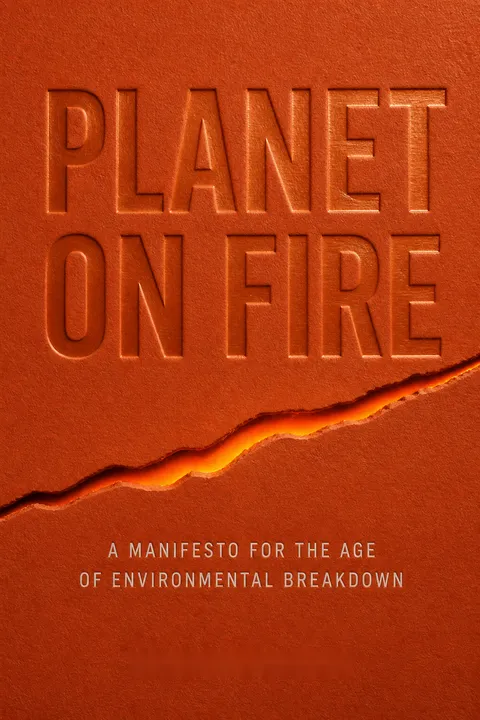
Planet on Fire is both a diagnosis of ecological danger and an argument about how political economy shapes that danger. Its most memorable move is to revisit Easter Island, a story often used to warn that ordinary people inevitably destroy shared resources. By bringing colonial violence back into the history, the authors show how apparently neutral moral lessons can erase power, responsibility, and the capacity of outside forces to destroy a society. The same interpretive method governs the book's account of climate change: individual behavior matters, but the institutions directing investment and ownership set the conditions in which behavior occurs.
The book's alternative is unusually institutional. It does not stop at calls for awareness or technological innovation. It links public investment, financial regulation, workplace democracy, local procurement, common ownership, care, and international justice into one political project. That breadth is a strength because environmental damage crosses boundaries between energy, food, finance, and social reproduction. It is also a difficulty: each institution requires expertise, accountability, and conflict resolution, and democratic control does not guarantee wise decisions by itself.
A useful way to read the proposal is as a test of coordination. Can decisions be made locally where knowledge is situated, and nationally or internationally where scale matters, without recreating centralized domination? The book's answers are promising but programmatic. It identifies instruments and examples, yet leaves substantial questions about transition sequencing, institutional competence, and how coalitions survive disagreement. Those are not reasons to dismiss its vision. They are the work required to turn a political aspiration into governance.
The title's fire is therefore not only a metaphor for emergency. It names a struggle over who gets protection, who bears costs, and who has authority to decide what is produced. The book's deepest claim is that environmental action becomes durable when it improves people's material lives while reducing ecological harm. That standard is more demanding than green branding, but more politically plausible than asking the public to accept sacrifice without changing who holds power.
Review Summary
Planet on Fire - A Manifesto for the Age of Environmental Breakdown receives mixed reviews, with an average rating of 3.69 out of 5. Readers appreciate its ambitious scope and critique of capitalism's role in ecological crisis. However, many find it lacking in specific solutions and concrete examples. Some praise its vision for social and economic reform, while others criticize its vague proposals and dry writing style. The book is seen as thought-provoking but falls short in addressing practical implementation of its ideas. Overall, it's considered a worthy read for those interested in eco-socialism and environmental issues.
People Also Read




Glossary
Environmental breakdown
Wider ecological destabilizationThe authors' term for the interacting damage to climate, biodiversity, soils, water, and other natural systems that support life. It is broader than climate change alone. The phrase emphasizes that these changes can compound, destabilize societies, and create cascading risks, while their effects and causes are unequally distributed.
Ecosocialism
Democratic economy for flourishingThe collective effort to organize economic and political life democratically, with social control rather than private rule directing institutions and production. Its aim is to meet social needs and support human flourishing within a thriving natural environment. In this book, it includes expanded public provision, social ownership, economic democracy, and ecological limits.
Eco-ethnonationalism
Exclusionary environmental politicsA reactionary politics that accepts environmental crisis but attributes it to migration, racial diversity, or population growth among non-Western peoples. It presents border enforcement and exclusion as ecological solutions, while deflecting attention from wealthy countries' consumption, historical emissions, and unequal economic power.
Threat multiplier
Risk that worsens existing stressesA way of describing how environmental breakdown intensifies existing social, economic, and political vulnerabilities. A shock such as drought or extreme weather can spread through food systems, infrastructure, and governance, worsening hardship or conflict that was already present. The term highlights interaction and cascading consequences, rather than a single isolated effect.
Community wealth building
Keeping wealth in local handsA place-based approach that uses local institutions' purchasing, employment, land, and investment to retain wealth and improve community wellbeing. Public bodies can favor organizations that provide secure jobs, reinvest locally, and meet social goals. The book presents Preston's procurement changes as an example of this approach.
Commoning
Democratic stewardship of shared resourcesThe process of governing shared resources through collective rules, participation, and responsibility rather than private ownership alone. Commoning is not unrestricted access. It depends on defining who participates, what rights and duties apply, and how resources are cared for over time. The book applies it to land, services, nature, and digital resources.
Financialisation
Finance's expanding economic influenceThe growing role of financial motives, markets, institutions, and actors in businesses, governments, and everyday life. The authors associate it with increased financial profit without equivalent productive investment, greater household and corporate debt, and stronger influence for asset owners. They argue that finance currently directs too much capital toward extraction and financial assets.
Foundational economy
Everyday goods and essential servicesThe parts of the economy that provide goods and services people rely on in daily life, including care, utilities, transport, food, and health services. These activities are generally rooted in particular places rather than organized primarily for export. The authors argue that public institutions can use their purchasing power to improve wages, security, and environmental standards in these sectors.
Public affluence
Shared access to life essentialsA model of prosperity in which high-quality public services and shared resources allow people to live well without relying entirely on private purchasing power. The book connects this idea to housing, health, education, transport, parks, care, and digital access. Broad provision can improve security while reducing pressure for resource-intensive private consumption.
Download PDF
Download EPUB
.epub digital book format is ideal for reading ebooks on phones, tablets, and e-readers.








