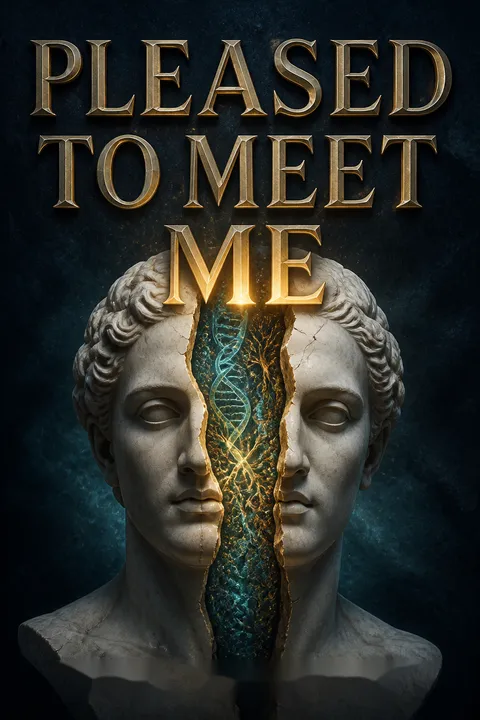


Key Takeaways
Read behavior as biology interacting with experience, not as a verdict on character.
Genes set possibilities. DNA provides instructions for building the body, but many traits, especially personality and behavior, arise from numerous genes interacting with one another. A genetic variant usually changes the odds, not guarantees a particular outcome. The same inherited trait can help in one setting and hinder in another: poor eyesight once made hunting harder, while glasses changed the environment enough to make it manageable.
Experience edits the script. Epigenetics refers to changes in how genes are switched up or down without changing the DNA sequence. Stress, diet, and other exposures can affect gene expression; gut microbes also bring their own genes and chemical signals. The book's central point is that no single force explains a person. Biology shapes the conditions for behavior, while life circumstances influence how those conditions unfold.
What's valuable here is the distinction between predisposition and fate. It helps replace moral labels with better questions: what vulnerabilities, supports, or conditions are shaping this behavior? Yet the metaphor of humans as machines can be overextended. A biological explanation does not make a person predictable from a genetic profile, nor does it settle questions of responsibility. It instead widens the causal picture, making room for both individual variation and the environments that can amplify or soften it.
Treat tastes as biological starting points, not simple tests of willpower.
Taste varies by design. About a quarter of people are described as supertasters, with more taste buds and, often, a TAS2R38 variant that makes some bitter compounds unusually intense. Broccoli can register to them as an aversive warning rather than a neutral vegetable. Other variations affect sweetness, spice, coffee, and lactose digestion. A preference is not always a choice, though familiarity and culture matter too.
Early exposure counts. A mother's diet can flavor amniotic fluid and breast milk. In studies described in the book, babies exposed to carrot flavor before or shortly after birth were more accepting of carrot-flavored cereal. Rat studies also suggest that a mother's high-fat diet during pregnancy can program offspring appetite-related gene activity. These findings do not make a child's tastes permanent, but they show why food preferences can have roots deeper than habit.
The practical value is empathy: family food rules often assume everyone experiences the same meal in the same way. Sensory biology complicates that assumption. The examples also show how exposure can shape preference without making it destiny. A learned taste can broaden through repeated, low-pressure experience, while a strong sensory aversion may need alternatives rather than coercion. The research on prenatal programming deserves particular caution: animal results can reveal mechanisms, but they do not establish that every human preference is fixed before birth.
Make obesity care compassionate, because appetite is not controlled by willpower alone.
Hunger has circuitry. Ghrelin signals hunger, while leptin helps signal that the body has enough stored energy. Rare mutations can disrupt these messages, and other people produce leptin but respond to it poorly. Reward systems matter too: some people need more food to experience the same reward. The book notes that single-gene mutations explain only a small share of the obesity epidemic.
Food environments magnify vulnerability. Modern processed foods make sugar, fat, and salt cheap and easy to obtain, while daily life demands less movement. Gut bacteria can also affect how much energy is extracted from food. In mouse experiments, gut microbes from an obese donor promoted greater fat gain than microbes from a lean donor, especially when diet was poor. The point is not that microbes explain every case, but that weight reflects biology meeting conditions, not a simple character flaw.
The strongest implication is ethical and practical: stigma is not a treatment plan. Weight stigma can worsen distress and make people less likely to seek care, while simplistic advice overlooks appetite physiology, food access, medication, and social circumstances. Microbiome experiments are compelling demonstrations of possible mechanisms, but transferring results from mice to human weight management requires restraint. A useful model is layered causation: biology influences hunger and energy use, while food systems and opportunity shape the choices that are actually available.
Build addiction recovery around biology and better alternatives, not shame or punishment.
Vulnerability is uneven. Genes involved in calming brain activity, processing alcohol, and sensing reward can influence addiction risk. The book cites estimates that roughly 10 to 20 percent of people who try drugs become dependent, while many do not. Repeated substance use can alter reward and self-control systems, making relapse more than a matter of weak resolve.
Environment can compete with the drug. Psychologist Bruce Alexander's Rat Park experiments placed rats in a stimulating social setting with access to morphine water. Most preferred ordinary water, unlike isolated rats in bare cages. Human research also suggests that meaningful alternatives and rewards can support recovery. The book favors a combination of medical care, behavioral support, and community reinforcement over blame. It argues that addiction is a health problem requiring treatment, not a moral defect best handled by punishment.
This account connects neurobiology with the social conditions of recovery. A substance can become a learned route to relief, and a life with few competing sources of reward makes that route harder to abandon. The Rat Park result is memorable, but it should not be treated as proof that social enrichment alone cures addiction. Human dependence varies widely, and treatment needs to address withdrawal, mental health, housing, and individual biology. The central lesson remains sound: reducing shame and expanding credible options are more useful than demanding a simple act of will.
Protect early childhood: stress can tune lifelong responses before children can choose.
The developing brain is sensitive. Depression is influenced by many genes and experiences, not one depression gene. In the book's account, a genetic study of severe depression identified variants, while other research tied life stress to risk in people carrying particular serotonin-related variants. Early adversity can influence stress regulation through epigenetic changes. For example, rat pups receiving little maternal care showed altered activity of NR3C1, a gene involved in processing the stress hormone cortisol.
Support can buffer risk. The book connects abuse, neglect, poverty, and social isolation with lasting health and mood effects, while also emphasizing that outcomes are not inevitable. Robin Williams's Lewy body dementia illustrates how disease in the brain can profoundly affect mood and behavior. A child's early environment is not a chosen one, so protection, stable care, and social support matter not only emotionally but biologically.
This section's most important move is to treat childhood conditions as public health, rather than private family misfortune. That framing can redirect attention toward safety, stable caregiving, and support before problems become entrenched. Epigenetic findings help explain how experience can become biologically embodied, but the marks are not a simple readout of trauma and do not provide a diagnostic verdict on an individual. The science supports prevention and care, not genetic fatalism or the assumption that an early hardship determines a person's future.
Investigate harmful behavior without confusing biological causes with moral permission.
Violence has many routes. Research has linked some variants, including MAOA, with aggression, especially alongside adversity, but the gene does not identify a future criminal. Brain tumors, head injuries, lead exposure, and some infections or autoimmune conditions can also change behavior. The book describes Charles Whitman, whose postmortem examination found a tumor near a brain region involved in fear and anxiety, and Susannah Cahalan, whose apparent psychiatric collapse was traced to an autoimmune brain illness.
Context changes risk. Abuse, malnutrition, prenatal exposures, and toxins can affect brain development and stress response. These factors help explain why a person's actions may emerge from conditions beyond their control. Explanation is not acquittal: victims deserve protection, and harmful behavior still requires a response. But prevention and rehabilitation become more plausible when institutions investigate causes instead of relying on the empty label of an evil nature.
The humane strength of this argument is that it keeps two truths in view: people can cause grave harm, and the pathway to that harm may include illness or deprivation. That dual perspective is more useful than either demonization or blanket exoneration. Genetic associations are particularly easy to misuse in courts and policy because they can sound more predictive than they are. A sound application requires evidence about the individual, attention to victims, and interventions aimed at reducing risks rather than branding whole groups as dangerous.
Let chemistry inform romance, but do not mistake attraction for compatibility.
Attraction uses hidden signals. Smell, immune-system differences, appearance, and cultural expectations can all influence whom people find appealing. In a famous T-shirt experiment described in the book, women tended to prefer the odor of men whose immune-related genes differed from their own. Early romance also involves reward and stress chemistry: dopamine can intensify pursuit, while changes in serotonin may contribute to obsessive focus.
Attachment has its own biology. Prairie voles form lasting pair-bonds, while closely related meadow voles are more promiscuous. Differences in oxytocin and vasopressin signaling help explain the contrast. In humans, these systems may support bonding, but they do not dictate one universal relationship pattern. The book challenges the idea of a single perfect soul mate and notes that long-term affection often depends on attention, empathy, humor, and novelty, not just the first rush of chemistry.
The science makes romance less mysterious without making it trivial. Attraction can begin before conscious judgment, but a first impression is not a reliable measure of kindness, safety, or shared values. The vole research clarifies how hormones can contribute to attachment, yet human partnerships are shaped by culture, communication, and choice in ways animal models cannot fully capture. The useful distinction is between chemistry as a signal and compatibility as an ongoing relationship achievement.
Recognize sexual orientation as biologically shaped, not a deliberate lifestyle choice.
There is no single switch. Same-sex behavior appears across hundreds of animal species, and twin studies suggest a genetic contribution to human sexual orientation. The book discusses candidate regions and genes, but emphasizes that no single gene determines orientation. Prenatal hormones, gene activity, and other developmental influences may also play a role.
Variation is not pathology. Some medical conditions that alter prenatal hormone signaling are associated with differences in later attraction, offering clues about how the developing brain is shaped. The evidence points to a complex biological process that a fetus does not choose. The practical conclusion is straightforward: people deserve respect and equal treatment regardless of orientation. Biology helps explain diversity; it does not supply a justification for stigma or discrimination.
The argument is strongest when it rejects the false choice between a single 'gay gene' and conscious choice. Complex traits can emerge from many small influences during development, and the absence of one decisive marker says little about whether an experience is real or involuntary. Scientific explanations are not prerequisites for dignity, however. They can counter claims that orientation is simply selected, but rights should not depend on whether biology can be mapped with precision.
Question the brain's certainty: it often chooses first, then invents reasons.
Consciousness is not the whole process. Experiments by Benjamin Libet and later researchers found brain activity preceding a person's reported awareness of deciding to move. This does not settle the free-will debate, but it challenges the feeling that conscious thought initiates every action. The book suggests that conscious control may sometimes work more like a veto than a first cause.
The brain also edits its evidence. It uses shortcuts, seeks closure, and can mistake confidence for competence, as illustrated by the Dunning-Kruger effect. Memory is reconstructed when recalled, not replayed like a recording. These limits do not make thought useless; they explain why humility, careful checking, and outside feedback matter. The mind is an active model of the world, not a perfectly objective camera.
The distinction between awareness and the processes that precede it is a valuable corrective to the feeling of being a fully transparent decision-maker. But readiness signals in simple laboratory tasks do not prove that every meaningful choice is predetermined; the scale and interpretation of such experiments remain debated. The broader lesson survives that caveat: introspection alone cannot reveal every cause of action. Better judgment depends on testing beliefs against outcomes, evidence, and perspectives beyond the self.
Treat beliefs as revisable conclusions, not extensions of your identity.
Groups shape conviction. The book recounts Stanley Milgram's obedience experiments, in which many participants continued administering what they believed were painful shocks when an authority figure urged them on. Group identity can also narrow compassion: soccer fans were more likely to help an injured person wearing their own team's shirt than a rival's, unless attention was shifted to a broader shared identity.
Evidence meets emotion. People often accept information that supports existing beliefs and resist information that threatens political identity. Religious and supernatural explanations can also ease uncertainty, but the book argues that scientific inquiry has replaced many such explanations with testable accounts. A practical discipline is to treat beliefs as hypotheses: ask what evidence could change a conclusion, and notice when loyalty or fear is doing the reasoning.
This section links individual bias to institutional behavior. People do not reason in a social vacuum; belonging and authority can alter what feels safe to question. That insight helps explain polarization without reducing every disagreement to stupidity or bad faith. Yet evidence does not always settle moral disputes, where values and trade-offs matter as well as facts. Intellectual humility therefore requires two habits: distinguishing factual claims from value judgments, and remaining willing to revise the factual claims.
Invest in supportive childhood environments before preventable risks harden into adult crises.
Prevention can change trajectories. Iceland reduced teen substance use through supervised activities, life-skills support, and stronger family involvement, offering young people meaningful alternatives to drug-driven reward. A study of home visits to first-time mothers provided nutrition and parenting guidance during pregnancy and early childhood; follow-up found lower rates of abuse, neglect, welfare use, and criminal behavior among participating families.
New tools need safeguards. Gene therapy, CRISPR editing, epigenetic drugs, microbiome treatments, and brain-computer interfaces may help address disease or disability. The book also recounts setbacks, including dangerous immune reactions and unintended genetic effects. These technologies are promising, but modifying embryos or broadly altering gene activity raises risks for individuals and future generations. The most immediate intervention remains improving environments that let children develop safely and well.
The closing argument shifts from individual self-improvement to collective design. If early conditions help shape health and behavior, schools, families, and public services become part of prevention, not merely responses to failure. The Iceland and home-visiting examples make that case concrete, though results from one place or program should not be assumed to transfer unchanged everywhere. Emerging biological tools may add options, but they also concentrate power and risk. Strong evidence, equitable access, and public oversight are essential companions to innovation.
Analysis
The book's unifying claim is not simply that genes influence personality. It is that human behavior emerges from nested systems: inherited DNA, gene regulation, prenatal and childhood conditions, microbes, brain chemistry, and social surroundings. That layered model is valuable because it replaces moral shorthand with causal questions. A taste aversion, addiction, depression, or violent act may have a biological contribution, but rarely a single cause that predicts an individual outcome.
Its most powerful ethical consequence is compassion joined to prevention. If some risks arise before a person can choose, then early care, nutrition, safety, and opportunity are not optional kindnesses. They are ways to alter the conditions under which behavior develops. This also changes the meaning of responsibility: understanding causes need not erase accountability, but it can make responses more effective than shame or punishment alone.
The book's evidence is uneven in maturity. Genetic associations, animal microbiome transfers, and epigenetic mechanisms can suggest pathways, yet they do not always establish the same effects in humans. The leap from a mouse behavior to a human personality, or from correlation to causation, requires restraint. Some claims about complex social behavior and evolutionary mating strategies are especially vulnerable to oversimplified narratives.
The strongest reading therefore avoids both genetic fatalism and the fantasy of unlimited self-creation. People inherit constraints and opportunities they did not select, while environments and institutions still shape what happens next. Scientific understanding matters not because it reveals a complete owner's manual, but because it helps identify leverage points. Better knowledge should produce greater humility about individuals and greater ambition about the conditions society can improve.
Review Summary
Pleased to Meet Me explores how genetics, environment, and microbiota shape human behavior and identity. Readers appreciated Sullivan's accessible writing style, humor, and pop culture references, making complex scientific concepts engaging. Many found the book informative and thought-provoking, praising its insights into topics like food preferences, addiction, and personality. Some criticized the author's bias against religion and conservatism. Overall, reviewers felt the book offered valuable perspectives on human nature, though opinions varied on its depth and scientific rigor.
People Also Read




Glossary
Epigenetics
Gene activity without sequence changeEpigenetics studies chemical and structural changes that affect how genes are expressed without changing the underlying DNA sequence. Marks such as DNA methylation and chemical modifications to histone proteins can make genes more or less active. Environmental influences, including stress and diet, may affect these marks, although the effects vary and are not always permanent or inherited.
microbiome
Microbial genes in the bodyThe microbiome is the collective genetic material of microorganisms living on and inside the body. The related term microbiota refers to the organisms themselves, including bacteria, fungi, viruses, and parasites. These microbes can aid digestion and produce compounds that interact with the body. Their effects on mood and behavior are an active area of research.
nutrigenetics
Genes and food preferencesNutrigenetics studies how genetic differences relate to people's responses to foods and nutrients. In the book, it helps explain why people vary in taste, food preference, and the ability to process ingredients such as caffeine or lactose. These genetic influences are only part of the picture, alongside learning, culture, age, and environment.
fetal programming
Prenatal conditions shape developmentFetal programming is the process by which conditions during pregnancy influence a developing child's biology, including gene activity and later responses to the environment. Maternal nutrition, stress, and exposures may act as signals about the conditions the child is likely to encounter. The concept describes increased risk or altered development, not an inevitable outcome.
gut-brain axis
Communication between gut and brainThe gut-brain axis is the network of biochemical, immune, and neural communication between the digestive system and the brain. Gut microbes can produce compounds that influence these signals, and the vagus nerve provides one route of communication. Research connects gut conditions with mood and behavior, though many proposed effects in humans remain under investigation.
Red Queen hypothesis
Adaptation against evolving parasitesThe Red Queen hypothesis proposes that organisms must continually adapt because parasites and other threats evolve alongside them. Sexual reproduction shuffles genes, creating varied offspring that may be better able to resist changing infections. The book uses this idea to help explain why sex and genetic diversity can benefit a species despite the costs of reproduction.
transgenerational epigenetic inheritance
Epigenetic effects across generationsTransgenerational epigenetic inheritance describes effects of environmental experiences that appear in later generations through changes in gene regulation rather than changes to DNA sequence. The book discusses animal experiments in which conditioned fear was associated with altered gene marks in descendants. Evidence and mechanisms in humans are more complex and should not be assumed from animal findings alone.
Rat Park
Social setting and drug useRat Park was an enriched environment created by psychologist Bruce Alexander for rats, with space, objects, and social contact. Rats there had access to morphine-laced and ordinary water, and most favored ordinary water, unlike isolated rats in bare cages. The experiment highlighted how surroundings may influence drug use, but does not establish that social enrichment alone prevents human addiction.
pair-bonding
Attachment between reproductive partnersPair-bonding is a lasting social attachment between partners, often linked with cooperation in caring for offspring. Research on prairie voles connects the behavior with oxytocin and vasopressin signaling in the brain. These hormones help illuminate attachment, but human relationships are influenced by far more than a single hormone system.
psychobiotics
Microbes intended to affect mental healthPsychobiotics are live microorganisms proposed for use as treatments that may influence mental health through communication between the gut and brain. The idea builds on studies linking gut microbes with stress and mood. The field is still developing, and the book emphasizes that specific microbial strains, effective doses, benefits, and possible side effects require further evidence.
Download PDF
Download EPUB
.epub digital book format is ideal for reading ebooks on phones, tablets, and e-readers.








