
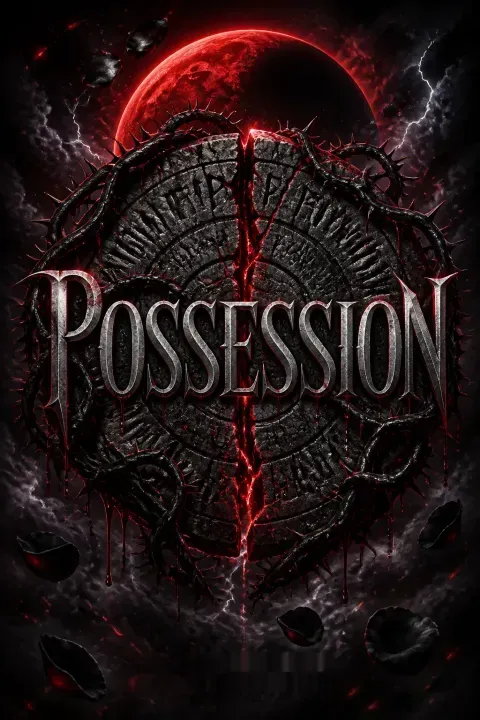


Plot Summary
Prologue
Two months before the main story, Alek Nordson,2 a Novasgardian warrior on an intelligence mission at Ravenscroft Academy, realizes Sunday Fallon1 is his fated mate. He calls his mother Lina through a spelled mirror, seeking guidance. She tells him true mates are rare, their souls recognize each other instantly, and one never walks away from that bond.
Alek,2 who never expected to find a mate, now faces an impossible dilemma: his mission requires him to return to Novasgard after one year, but leaving Sunday1 would destroy him. He resolves that when his time on Earth ends, he will not go willingly.
This opening establishes the central tension between duty and love that drives Alek's arc. His mother's counsel that souls can split into multiple parts foreshadows the reverse-harem structure, giving mythological legitimacy to Sunday having four mates. The spelled mirror conversation also introduces the Novasgardian realm's values: fated bonds are sacred, and defying them courts destruction. Alek's panic at discovering his mate reveals a man whose identity was built on being unattached, now forced to confront an intimacy he never trained for.
Berserker Rips Through
The berserker erupts when Chad, a rival wolf, tries to sacrifice Sunday1 in a ritual to claim Alpha status. Alek2 transforms into something monstrous, crushing Chad into unrecognizable meat with supernatural strength. The rage does not subside with the threat gone. His father Nord8 arrives through a portal, shackles him, and hauls him back to Novasgard despite Alek2's thrashing resistance.
Sunday1 watches helplessly as the portal severs their bond, the physical connection between them snapping like a severed nerve. She feels the break as a hollow chasm in her chest. Alek2's last act before the gateway closes is to attack his own father with a boulder, and Nord8 answers by summoning lightning from a clear sky to strike his son unconscious.
The berserker's emergence reframes Alek's love as something inherently violent, a protective instinct so primal it bypasses reason entirely. His father's intervention, framed as rescue by Novasgardian standards, reads as abduction to Sunday. This cultural clash between realms establishes that what one world calls salvation, another calls theft. The lightning strike is particularly symbolic: Nord, a berserker himself, must use divine force to subdue his son, suggesting Alek's rage has surpassed even his father's ability to contain it through ordinary means.
Abomination
In the clearing where Alek2 vanished, Sunday1 tells her remaining three mates she is pregnant. Kingston3 responds with fierce protectiveness, placing his palm on her belly and silently claiming the child as his own. Noah4 flinches away, his face draining of color as he whispers that hybrid births kill their mothers. The word abomination leaves his lips, and it lands like a physical blow.
Caleb5's reaction is quieter but equally devastating: he stares at Sunday1 with tortured recognition, murmuring he has already ruined her. Kingston3 scoops Sunday1 into his arms and carries her away from both vampires, promising she will never need them. Noah4 calls his uncle Lucas for help saving Sunday1's life, even as he believes he has doomed her.
The pregnancy revelation fractures the fragile unity among Sunday's mates along species lines. The vampires' terror is rooted in centuries of empirical evidence: hybrid pregnancies nearly always end in maternal death. Kingston's immediate acceptance reflects shifter values prioritizing pack and progeny above all. Noah's word choice exposes the Vampire Council's propaganda, which has declared such children abominations worthy of extermination for generations. The scene dramatizes how institutional prejudice becomes personal trauma when the abstract 'monster' turns out to be your own child.
The Memory Weaver's Mercy
Imprisoned in a spelled glass cell in Novasgard, Alek2 rages uncontrollably. His twin Tor6 visits, bringing a mirror that allows Alek2 to see Sunday1 across realms. What he witnesses, Sunday1 laughing in bed with Caleb,5 triggers an explosion of jealous fury so violent he shatters the cell's walls with his bare shoulders. His parents decide only one solution remains.
Quinn Satori,9 the memory weaver and Alek2's aunt, presses her palm to the glass and, with tears streaming down her face, methodically strips away every memory of Sunday.1 Alek2 screams and fights, but she is relentless. When she finishes, he blinks in confusion, asking why he was imprisoned. The berserker is calm. Sunday1 no longer exists in his mind.
Quinn's act embodies the terrifying logic of protective cruelty: she commits a profound violation to save Alek from himself. The memory erasure functions as a kind of psychic lobotomy, removing the pain by removing the person who caused it. Tor's gift of the mirror, intended as kindness, becomes the catalyst for this violation, illustrating how surveillance of a lost love can accelerate destruction rather than provide comfort. The tragedy is that Quinn's 'cure' does not heal Alek but hollows him out, leaving an emptiness he cannot name.
Not My Alek
Five weeks of planning culminate on the observatory rooftop during a lunar eclipse. Moira7 and Ash, drained nearly to collapse, open a portal between realms. A tall, golden-haired Viking steps through, and Sunday1 flings herself into his arms, kissing him desperately.
But something is wrong. His scent carries ozone rather than pine. His hands grip her differently. When she shows him his room, he does not recognize the leather chair she lovingly arranged as a memento of their first time together.
She tells him she is pregnant, and he panics, ranting about being unable to maintain a charade. She tears his shirt open. The Norse runes of her name, tattooed across his ribs, are absent. This is Tor,6 Alek2's identical twin. Alek2 sent him because, without memories, he believed nothing waited for him here.
The impostor reveal weaponizes intimacy itself. Sunday's body knew before her mind did; the wrongness registered physically in how his palm fit against hers. Tor's panic at the pregnancy announcement inadvertently exposes the ethical horror of the switch: Alek would never have agreed to the deception had he known about the child. The scene also exposes the limits of magical solutions. Moira's spell worked perfectly, but it could not account for the human choice Alek made while memoryless, demonstrating that no amount of witchcraft can override free will.
Prisoners of the Jarl
Tor6 activates a blood-activated portal stone, but he trips and is left behind with Moira.7 Sunday,1 Kingston,3 and Noah4 tumble into a Novasgardian snowbank without supplies or a guide. Sprites steal their clothes. A wyvern circles overhead. Hours of wandering end when a scarred warrior named Søren drops from the trees, crossbow leveled. More Vikings melt out of the shadows.
Sunday1 demands to be taken to Jarl Nord,8 and Søren laughs, calling her a whore in the old tongue. They are shackled and marched into a throne room dominated by a wyvern skeleton. Nord8 sits on his throne, Lina at his side. Sunday1 bares her rune-marked arm and announces she carries Alek2's child. Nord8's composure cracks for the first time.
The journey to Novasgard strips away every protection Sunday's mates provided. Clothes stolen by sprites, weapons lost, they arrive as naked supplicants before a foreign power. Sunday's demand to see the jarl is an assertion of status in a realm that does not recognize her. Her body becomes her only credential: the runes on her arm and the child in her womb are the evidence she presents. The shift in Nord's demeanor upon learning of the pregnancy reveals that even a berserker jarl answers to the promise of grandchildren.
A Stranger's Indifference
Summoned from sleep, Alek2 enters the throne room in low-slung sweatpants, Sunday1's name tattooed down his side. He surveys the strangers with mild curiosity. When Lina prompts him to greet Sunday,1 he gives her an appreciative once-over and asks who this exquisite creature is.
Sunday1 shows him the matching runes on her arm. He shrugs, laughing that he must have lost a bet. The memory of their bonding, when he etched those runes into her skin with careful reverence, means nothing to him now.
Sunday1's grief transmutes into fury. Nord8 demands Quinn9 restore the memories, but when she tries in front of everyone, the threads wither and die before taking root. Alek2's memories are permanently destroyed. He will never remember falling in love with Sunday.1
This scene stages identity erasure as the cruelest form of violence. Alek's casual dismissal of the runes as a lost bet cheapens the sacred act of magical bonding into something transactional. Sunday must now confront a mate who inhabits her lover's body but contains none of their shared history. The permanence of the loss, confirmed when Quinn's power fails, forces a reckoning: love cannot simply be restored by magic. Alek and Sunday must either build something entirely new from the ashes of what was destroyed or accept that Quinn's mercy killed what they had.
Kærasta by Instinct
Back at Ravenscroft, Alek2 asks Sunday1 on a first date. He transforms the greenhouse with twinkle lights and sparkling cider, acknowledging her pregnancy. Their kiss is tentative but electric. When he calls her Sunday instead of Sunny, she pulls away, grief flooding back.
He senses the shift and, without knowing why, calls her Sunny, the nickname her true Alek2 always used. Weeks later at the nightclub Iniquity, he pulls her onto his lap in a shadowed corner. As she sinks onto him and climaxes, the word Kærasta is torn from his throat. Beloved. Mate. Destined. Some part of him, untouched by Quinn9's weave, remembers.
The greenhouse date functions as a deliberate reconstruction of intimacy through ritual. Alek cannot access his memories, so he builds scaffolding from new experiences. His instinctive use of her nickname and the Novasgardian endearment during sex suggests that the body retains what the mind has lost. This aligns with the book's broader thesis that mate bonds are somatic, not merely cognitive. Quinn could erase Alek's narrative memory of Sunday, but she could not reach the physical knowing encoded in his cells, his voice, his reflexive responses during moments of heightened connection.
Flames and Iron
Caleb5 bursts into the bedroom as smoke billows through the hallway. The house Noah4 gifted Sunday1 is an inferno. He grabs her and leaps from the second-story window. Outside, shadowy figures emerge from the treeline. Fae warriors. An arrow coated in silver pierces Caleb5's lower back, dropping him. A fae wraps his arms around Sunday1 and presses a cold blade to her pregnant belly, apologizing as he prepares to slash.
Alek2's berserker erupts. He tears the assassin's arm clean off, then manifests an iron broadsword from nothing. The blade cleaves the fae from crown to groin in a single stroke. The remaining attackers retreat into the darkness. One of their brothers is dead, and iron, lethal to fae, did the killing.
The house fire literalizes the destruction of the fragile domestic peace Sunday's mates constructed. The fae's apology before attempting to kill her reveals their attack as ideologically motivated rather than personal: they believe the child must die to prevent some greater catastrophe. Alek's manifested iron sword confirms his berserker gifts are evolving, granting him mythic capabilities beyond mere rage. Killing a fae warrior, however, carries diplomatic consequences far beyond the immediate battle, setting the stage for retribution from the Shadow Court and the supernatural Society that governs interspecies relations.
The Angel's Executioner
The Society convenes to address the fae death. Finbar, the fae ambassador, demands retribution. Gabriel, an archangel and the Society's enforcer, declares a life-for-a-life settlement is insufficient for a fae warrior. He will kill Caleb5 twice, making it hurt.
In front of the assembled members, including Cashel Blackthorne,10 Nord,8 and the headmistress Antoinette, Gabriel grips Caleb5's skull and snaps his neck. Death. Then resurrection. Then death again. And again.
By the time the debt is considered paid, Caleb5 is a broken husk dumped back in the catacombs beneath the church. Sunday1 dreams of him hanged from a gnarled tree, the sun rising to burn him. She races to the catacombs, finds him nearly dead, and presses her bleeding wrist to his mouth to save him.
Caleb's execution positions him as simultaneously victim and complicit participant in a system of supernatural justice that trades bodies like currency. Gabriel's repeated killing and resurrection of an immortal being functions as a grotesque performance of power, demonstrating that even undeath offers no escape from pain. Sunday's rescue via dream-vision confirms the deepening psychic connection between them, a bond that now transcends physical proximity. Her offer of blood reverses the traditional predator-prey dynamic, making her the active savior rather than passive victim.
The Sixth Seal Opens
Weakened and feral, Caleb5 latches onto Sunday1's throat and drinks too deeply, nearly killing her. When he regains control, he slices open his own vein and presses her mouth to the wound, completing the blood exchange that formalizes a vampire mate bond.
Their heartbeats synchronize into a single rhythm. As the bond seals, searing pain erupts across Caleb5's chest in a circular pattern he recognizes with horror. A seal. The sixth of seven apocalyptic seals, each triggered by a milestone in Sunday1's relationships, has just opened.
He does not explain this to her. Instead, he finally surrenders to what he has resisted for months, making love to her with reverent intensity. He is hers, vows be damned, but the cost of that surrender is writ in the new scar on his flesh.
The blood exchange that completes the mate bond is simultaneously Sunday's most intimate moment with Caleb and a cosmic catastrophe. The seal opening on Caleb's chest literalizes the book's central metaphor: love and destruction are not opposites but intertwined consequences of the same act. Caleb's decision not to tell Sunday what the scar means reflects his fundamental character flaw, the belief that he can manage apocalyptic threats through secrecy and self-sacrifice. This paternalistic withholding, framed as protection, will ultimately make him Sunday's betrayer rather than her savior.
Drowning in Sanctuary
Cashel Blackthorne10 summons the group to his ancestral manor, promising it is the safest place for Sunday1 and the baby. The estate is a fortress patrolled by generations of vampires. But safety proves illusory.
While Noah4 is out hunting with his father, Sunday1 takes a bath using lavender salts given to her by Noah4's mother Olivia. A figure in a dark cloak slips into the bathroom, seizes her hair, and shoves her head beneath the water. Sunday1 thrashes, her berserker screaming, but the angle gives her no leverage. Her lungs fill with bathwater.
She thinks of her child, never to be born. Caleb,5 warned by the Seer's voice in his mind, kicks down the door and decapitates the assassin. The killer was sent by the Vampire Council, which has learned of the hybrid pregnancy and wants the child dead.
The attack within Blackthorne Manor subverts the gothic romance convention of the protective ancestral home. The assassin's ability to breach the fortress suggests either staggering incompetence or internal complicity, a question the narrative leaves deliberately unresolved. The bath salts from Olivia implicate even seemingly benevolent characters in potential threat. Sunday's near-death by drowning, water filling the lungs where air should be, mirrors the suffocating nature of her current existence: protected so thoroughly she cannot breathe, surrounded by people whose agendas she cannot fully trust.
Hellfire Paternity Test
Natalie Goode,11 a witch of legendary power, arrives at the manor to perform a supernatural paternity test. She paints a pentacle in blended blood from all four mates and Sunday.1 As each man drops his blood at an assigned point, the witches chant. When Sunday1's turn comes, her blood sizzles, then ignites. Flames crawl along the pentacle's lines, touching every point, refusing to isolate a single father.
A wall of fire erupts. The ground shakes. Hoofbeats thunder in the distance, a horn blast splits the air. Natalie11's face goes white. The child has no single father. All four contributed, making her a being of unprecedented hybrid power. And her birth will trigger the seventh seal, unleashing the apocalypse. The world will end.
The paternity test's refusal to produce a single answer disrupts the biological logic that the Vampire Council, the fae, and even the mates themselves have relied upon. A child with four fathers is not merely genetically impossible; it is theologically catastrophic. The ritual's escalation into full apocalyptic pageantry transforms what was a private family question into a cosmic emergency. Natalie's horror communicates that the prophecy was not abstract mythology but a concrete countdown, and Sunday's womb is ground zero. The scene reframes the entire pregnancy arc from romantic complication to existential threat.
Overheard and Running
Standing outside the library after the ritual, Sunday1 hears Cashel10 outline his strategy. At the moment of birth, before the seventh seal can fully open, someone must kill the baby. Simultaneously, Noah4 will attempt to turn Sunday1 into a vampire, the only way to save her from the hemorrhaging that follows hybrid delivery.
The plan is clinical, rehearsed, a foregone conclusion in Cashel10's mind. Sunday1 presses her hand to her belly where her daughter kicks vigorously. She backs away from the door, retrieves her emergency bag from the closet, and climbs down a rose-covered trellis, thorns shredding her palms.
Moira7 catches her, casts a cloaking spell to mask her scent, and sends her toward the gate. Sunday1 does not look back. She will save her child alone if she must.
Sunday's flight is the culmination of her character arc from passive recipient of protection to active agent of maternal defiance. Cashel's plan, delivered in the rational tones of strategic necessity, represents the ultimate betrayal of the found family she believed she had built. The thorns that tear her palms as she descends the trellis are an echo of fairy tale imagery, a Sleeping Beauty escaping rather than awaiting rescue. Her decision to leave all four mates behind, including Kingston who had been her fiercest defender, demonstrates that when forced to choose between her child and her loves, the child wins.
Needle in the Dark
Moira7's cloaking spell masks Sunday1's scent, but it cannot hide her from sight. She walks as fast as her pregnant body allows down the gravel drive, the gate tantalizingly close. An echo of footsteps behind her makes her freeze, but she sees nothing in the darkness. She presses on. Then a sharp prick stings her neck. Cold liquid floods her vein, a fast-acting sedative.
A black hood is yanked over her head before she can identify her attacker. Her limbs go slack, her thoughts dissolve into fog. The world tilts. The last thing she registers is the sensation of being lifted and carried away from Blackthorne Manor, her escape thwarted by a captor who knew exactly when she would run. She does not see his face.
The abduction is brutal in its efficiency. The hood, the needle, the clinical swiftness all suggest premeditation rather than opportunity. Someone anticipated Sunday's flight, and that someone had access to the manor grounds and enough knowledge of the situation to time the ambush perfectly. The cloaking spell that hid Sunday from her mates' supernatural senses proves useless against an enemy who relied on ordinary sight and predictable behavior. The scene isolates Sunday completely: cut off from her mates, her witch ally's magic circumvented, her body chemically betrayed by the sedative coursing through her bloodstream.
The Confessor Confesses
Sunday1 wakes in a rustic cabin, the scent of incense and old wood surrounding her. Caleb5 sits in the shadows, watching. When she asks if he brought her here to keep her safe, his silence becomes confession. He drugged her. He took her.
This cabin in Ireland was his home before he was turned, and now it is her prison. She demands to know why. Caleb5 explains that he has been working for the Society since the beginning, charged with a single purpose: prevent the apocalypse by any means necessary.
Sunday1 was his assignment. Loving her was never part of the plan, but it does not change his duty. His vow to God predates his vow to her. The baby must not be born, or if born, must not survive, and Sunday1 will be kept here until that end is achieved.
Caleb's reveal recontextualizes every interaction he and Sunday have shared. His initial resistance to their bond was not merely clerical guilt but the conflicted conscience of an operative falling for his target. His hot-and-cold behavior now reads as desperate attempts to maintain professional distance while emotionally entangled. The cabin in Ireland, the site of his own traumatic turning into a vampire, becomes the stage for his final betrayal of Sunday. The tragedy is that Caleb genuinely believes he is saving her, that his love and his duty can coexist through this monstrous compromise. He has become the very thing he warned her about: someone who would harm her for the greater good.
Analysis
Possession interrogates the tension between agency and destiny through the lens of supernatural romance, using its reverse-harem structure to multiply the sites where this conflict plays out. Sunday1's body is the battleground where competing prophecies, institutional powers, and individual desires collide. The pregnancy that should represent romantic fulfillment instead becomes the trigger for an apocalypse, reframing creation as destruction. This inversion challenges the genre's conventional equation of babies with happy endings. The book asks uncomfortable questions: What if your child is prophesied to end the world? What if the people who love you most have already decided they must kill what you carry?
The memory-erasure plotline with Alek2 functions as a philosophical experiment on the nature of love. If every shared moment is deleted, does the bond remain? Alek2's body remembers what his mind cannot, his instinctive use of endearments suggesting that love is somatic knowledge rather than narrative memory. This offers a strangely hopeful counterpoint to the apocalyptic despair: even total psychic obliteration cannot fully destroy a fated bond.
Caleb5's arc exposes the corruption inherent in institutional loyalty. His sacred vows did not prevent his predation; they merely gave him a framework for rationalizing it. His final betrayal, abducting Sunday1 to fulfill his Society oath, is the logical endpoint of placing duty above love. He becomes a monster not despite his principles but because of them, a priest who will kill to save the world and call it mercy. His tragedy is that he genuinely believes he is choosing the lesser evil, when he has simply become comfortable with evil that wears a familiar face.
The book's critique extends to all systems of power. The Vampire Council sends assassins. The fae launch military strikes. The Novasgardians erase memories. The Society trades bodies like currency. Every institution that claims to protect Sunday1 also threatens her. The only safe space is the one she and her mates build themselves, and even that burns down. In the end, Sunday1 is forced to flee alone, a pregnant woman running from everyone who claims to love her. That image, a mother clutching her belly and climbing through thorns in the dark, is the book's thesis statement: when systems fail, the body itself must become sanctuary.
Review Summary
Possession receives mostly positive reviews, with readers praising the steamy romance, character development, and engaging plot. Many enjoy the reverse harem dynamic and the unique paranormal elements. The audiobook narration is highly recommended. Some criticize the pregnancy subplot and amnesia trope. Readers appreciate the humor and banter between characters. The cliffhanger ending leaves fans eager for the next installment. A few reviewers note pacing issues and find the female lead frustrating at times. Overall, the book is considered an entertaining addition to the series.
Characters
Sunday Fallon
Pregnant wolf shifter, four matesRaised in isolation by her pack after being abandoned as an infant, Sunday spent most of her life unable to shift, a shame that made her an outcast. Her arrival at Ravenscroft Academy awakened everything: her wolf, her berserker echoes, and four fated mates. She carries deep abandonment wounds that make her fiercely protective of the family she is building. Pragmatic and resilient, she adapts to each new revelation about her demonic heritage and apocalyptic destiny with a survivor's determination. Pregnancy amplifies her emotional volatility while simultaneously hardening her resolve, especially when her child is threatened by the very people meant to protect them.
Alek Nordson
Novasgardian berserker princeA golden-haired Viking demigod sent to Earth on an intelligence mission, Alek never expected to find his fated mate. His berserker nature, inherited from his father Nord8, manifests as an uncontrollable rage triggered by threats to Sunday1. When his aunt Quinn9 erases his memories of Sunday1 to control the berserker, he becomes a hollowed version of himself, haunted by an absence he cannot name. His arc in this book is about rebuilding love without the foundation of shared history, learning Sunday1 through new experiences rather than recovered memories. His body remembers what his mind lost, and instinctive endearments surface during moments of intimacy.
Kingston Farrell
Alpha wolf, Sunday's fierce protectorThe cocky, pierced, and tattooed Alpha of the Farrell pack, Kingston was the first mate Sunday1 rejected (in a previous book), an act that nearly drove him to suicide by liquid silver. His devotion to Sunday1 is absolute and vocal. Of all the mates, he adapts most readily to the pregnancy, immediately claiming the child as his own regardless of biology. He uses humor and aggressive affection to combat Sunday1's melancholy, and his willingness to share her with the other men surprises even himself. Beneath the bravado, he fears losing Sunday1 more than anything, a fear rooted in having nearly lost himself when she first refused him.
Noah Blackthorne
Vampire prince, burdened heirA British vampire aristocrat with the ability to read thoughts, Noah is the son of Cashel Blackthorne10, a vampire king with his own hidden agenda. His initial reaction to Sunday1's pregnancy, calling the child an abomination, stems from terror rather than rejection: he knows hybrid births kill the mother and that the Vampire Council exterminates such children. He carries the weight of his family's bloody history while trying to carve a different path. His observatory, built for him as a child, remains his sanctuary, and he shares it only with Sunday1. He struggles to balance loyalty to his father10 with loyalty to his mate1.
Caleb Gallagher
Vampire priest, Society operativeTurned into a vampire on his first day as a priest in 1922 Ireland, Caleb has spent decades serving both God and the Society, a secret organization of supernatural beings. His bond with Sunday1 forces him to choose between his sacred vows and his love for her, a conflict that manifests as cruel push-pull behavior. He punishes himself as much as he punishes her. His role as Sunday1's confessor and professor adds layers of forbidden intimacy to their relationship. The completion of their blood bond opens an apocalyptic seal on his chest, marking his surrender to love as a cosmic event with devastating consequences he has been secretly tasked to prevent.
Tor Nordson
Alek's identical twin, impostorThe rule-following twin who was originally assigned to the Ravenscroft mission. Tor envies Alek2's berserker gift and agrees to take his brother2's place on Earth without knowing Alek2 had a pregnant mate waiting. His genuine horror upon discovering the deception he unwittingly participated in drives him to help Sunday1 reach Novasgard. Unlike Alek2, he is clean-shaven (after losing a bet to Moira7) and bears a small scar on his cheekbone from a childhood fight with his brother2. He serves as both antagonist and ally, his presence a constant reminder of what Sunday1 lost.
Moira Belladonna
Witch best friend, fierce allySunday1's roommate and closest confidante, Moira is a petite powerhouse from a powerful witch coven. She is fiercely protective, wickedly funny, and unafraid to call out Sunday1's mates when they falter. Her relationship with Ash provides a parallel queer romance. She performs the eclipse spell that brings Tor6 through the portal, nearly killing herself in the process, and later helps Sunday1 escape Blackthorne Manor with a cloaking spell. Her loyalty to Sunday1 supersedes her fear of the apocalyptic prophecy, making her the one person Sunday1 trusts without reservation.
Nord
Jarl of Novasgard, Alek's fatherA towering berserker who rules Novasgard with absolute authority, Nord dragged Alek2 home to protect him from himself. His first language is violence, but his love for his family is absolute. When Sunday1 arrives pregnant and claiming to be Alek2's mate, he shifts from threatening captor to protective grandfather with startling speed. He advocates for Sunday1 within Novasgard, overruling those who view her as an outsider. His relationship with Lina, his own fated mate, provides the template for what Alek2 and Sunday1 could become.
Quinn Satori
Memory weaver, Alek's auntA powerful Novasgardian with the ability to weave, erase, and (usually) restore memories. She erased Alek2's memories of Sunday1 to save him from the berserker's destructive spiral, an act of protective cruelty that she genuinely believed was mercy. When her attempt to restore the memories fails permanently, she is devastated. Her power, which she has used before on her own husband Finley, represents the Novasgardian approach to emotional pain: remove the source rather than develop coping mechanisms.
Cashel Blackthorne
Vampire king, calculating patriarchNoah4's father and ruler of the Blackthorne vampire dynasty, Cashel offers sanctuary while secretly working with the Society to manage the apocalyptic threat Sunday1's pregnancy represents. He is cold, pragmatic, and utterly ruthless in protecting his family's interests. His plan to kill the baby at birth and turn Sunday1 into a vampire reflects his utilitarian morality: one life traded for the world. His past includes killing his own brother and dismantling the Vampire Council. He genuinely believes he is doing what must be done.
Natalie Goode
Legendary witch, truth-revealerA rockstar figure in the witch world, Natalie is married to Noah4's cousin Silas. She performs the blood ritual that reveals the child has four fathers and will bring the apocalypse. Her power is immense but even she is shaken by the ritual's outcome, her face going pale as the flames and earthquakes confirm the worst. She provides Sunday1 with a protective amulet and represents the magical expertise that even the Blackthornes must defer to.
Ophelia Farrell
Kingston's hostile triplet sisterThe ringleader of Kingston3's three identical sisters, Ophelia despised Sunday1 for rejecting her brother3 and nearly driving him to suicide. The fae attack on Farrell land forces an uneasy truce when Sunday1 saves Phe's life with Alek2's dagger. Her hostility masks deep loyalty to her brother3 and pack. She represents the collateral damage of Sunday1's choices, the family members who had to live with Kingston3's devastation.
Plot Devices
Mate Bond Runes
Magical tattoos binding fated pairsWhen a Novasgardian claims a fated mate, runes of the mate's name appear on the warrior's skin. Alek2's runes for Sunday1 manifested down his ribs, and her matching runes run along her inner forearm. The tattoos serve as visible proof of the bond, recognized across realms. Chad's attempt to destroy Sunday1's runes with a dagger during his sacrificial ritual triggered Alek2's berserker transformation. The runes become the key evidence Sunday1 presents in Novasgard to prove her claim, and their absence on Tor6's body is how she uncovers the twin swap.
Memory Weaving
Quinn Satori's psychic powerQuinn Satori9 possesses the ability to weave, erase, and restore memories through eye contact and touch. She uses this power to remove all Alek2's memories of Sunday1, hoping to calm his berserker rage. The process is visually represented as purple mist consuming each memory. Unlike previous uses of her power, the restoration attempt fails permanently: the memory strands wither and die before taking root, leaving Alek2 with a permanent void where Sunday1 once existed. This failure drives the central romantic conflict of the book as Alek2 must relearn his mate from nothing.
The Seven Seals
Apocalyptic countdown mechanismA series of seven magical seals that open progressively, each triggered by a milestone in Sunday1's relationships with her mates. Caleb5's chest bears a seal that opens when he completes his blood bond with Sunday1, the sixth of seven. Each seal brings the apocalypse closer. The seventh and final seal is prophesied to open at the birth of Sunday1's child, who was conceived through the combined essence of all four mates, making her a being of unprecedented hybrid power. The seals tie personal romance to cosmic destruction, making every intimate moment a potential catastrophe.
Protection Bracelet
Moira's danger-sensing charmA birthday gift from Moira7, this leather bracelet with a metallic disc embedded with a warning sigil heats up when someone who means Sunday1 harm is near. The bracelet warns Sunday1 of the fae attack on Farrell land and later of danger within Blackthorne Manor. Its limitations become apparent when it gives sporadic, confusing signals in a house full of vampires whose predatory instincts register as ambient threat. Sunday1 removes it before her bath, leaving herself vulnerable to the Council assassin who nearly drowns her. The bracelet is stolen during the attack, its disappearance signaling that an enemy now possesses a tool designed to protect her.
Portal Stones and Gateways
Inter-realm travel mechanismsMultiple methods of crossing between realms exist in this world. Finley, Quinn9's husband, can open portals between Novasgard and Earth. Tor6 possesses a blood-activated rune stone that creates a one-use portal. The gateway in Norway requires mundane travel after crossing. These devices enable the plot's geographical shifts from Ravenscroft to Novasgard to Blackthorne Manor. The limitations of each method create narrative obstacles: Finley can only open portals to locations he has visited, the blood stone is single-use, and gateways require additional dangerous travel through hostile territory.
The Mate Games: War Series Series
About the Author

Download PDF
Download EPUB
.epub digital book format is ideal for reading ebooks on phones, tablets, and e-readers.








