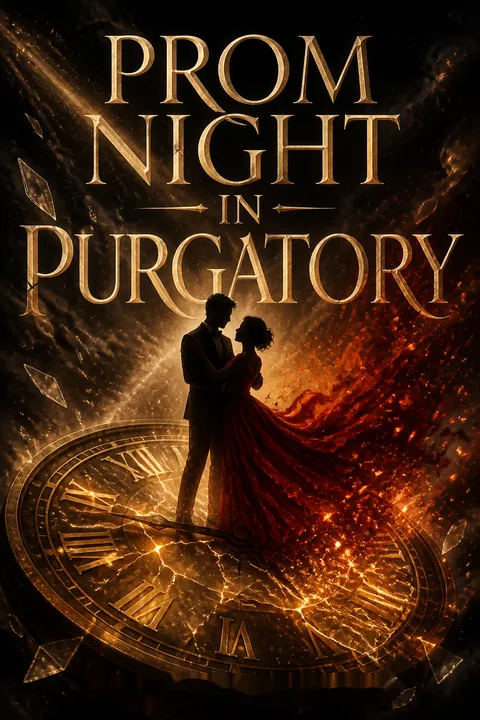


Plot Summary
A Visitor in Two Times
While trapped in a coma, Maggie O’Bannon slips into scenes from 1958. She rides unseen beside Johnny Kinross, then meets her grandmother Lizzie as a child, who can see her and recognizes her as a ghost. An urgent call from Gus pulls Maggie back toward consciousness before she can remain with Lizzie. When Maggie wakes, her first question is about Johnny.
Gus confirms that Johnny has been found alive in the ruins of the burned school, wounded and unconscious. The news turns her recovery into a race toward someone she believed lost. Yet the vision of young Lizzie leaves a second mystery: Maggie has not merely dreamed of the past, and the child seemed to know her.
The opening makes survival feel less like a clean return than a crossing between incompatible worlds. Maggie’s body is weak and dependent, but her attention travels freely, suggesting that her deepest attachment can pull her beyond ordinary perception. Her brief meeting with Lizzie also gives the supernatural a relational texture: the past is not scenery, but a place inhabited by people who can recognize and respond to her. The abrupt return to the hospital creates emotional whiplash. Hope arrives with Johnny’s survival, but the visions imply that being alive will not restore the life either of them lost.
The Brother Who Forgot
Johnny regains consciousness in a modern hospital, certain he has only just fallen during the fight that followed the 1958 rumble. He remembers his mother, younger brother Billy, and the gunshot, but not the decades that have passed. His sister Jillian Bailey and Gus conceal how much they know while doctors treat his wound and his identity becomes a problem no explanation can easily solve.
Maggie sneaks into his room, overwhelmed to find him alive and physically present. Johnny does not recognize her. When she tells him he saved her in the school fire, he erupts in confusion, learns Billy is dead, and pulls at his bandages until hospital staff sedate him. Maggie leaves his room devastated, but resolves not to abandon him.
Johnny’s memory is not simply absent; it has preserved the last intelligible version of his world and made the present feel like an assault. His anger protects him from the more frightening possibility that everyone he loves has vanished while he remained unchanged. Maggie faces a different injury: the person who once knew her most intimately now treats her as a stranger. Her decision to offer companionship without demanding affection marks a shift from romantic certainty toward care that can survive rejection. The hospital brings them together physically, but their incompatible memories keep them emotionally separated.
The House Has Thin Walls
At dinner, Maggie recognizes details from her coma vision: Lizzie’s stuffed bear and an old record player that Irene had stored in the attic. She also recalls seeing Johnny drive Irene’s father’s Buick.
Gus explains that his grandmother experienced similar visions, sometimes entering past events rather than merely observing them. He believes powerful memories, family ties, and familiar locations can thin the boundary between eras. Maggie lives in the same house where her grandmother grew up, making the Honeycutt home a possible passage through time.
Gus warns her that his grandmother once became physically involved in a vision and was injured. Maggie is left with a practical danger as well as a mystery: she may be able to cross into the past without choosing to.
Gus’s account turns Maggie’s gift from private strangeness into a system with risks, though not one she can control. Its mechanics are rooted in inherited connection and place, which makes family history both an archive and a hazard. The grandmother’s story also refuses the comforting idea that a vision is harmless because it belongs to the past. If Maggie can participate, then what she does may matter. The house becomes a charged environment where memory has material force, while Gus’s caution introduces the story’s central ethical tension: the desire to repair old pain may itself alter lives.
A Scrapbook Between Them
When Jillian says Johnny wants to see her, Maggie brings Roger Carlton’s scrapbook to the Bailey garage. Johnny recognizes his restored Bel Air but distrusts Maggie’s detailed knowledge of his past.
She explains that he spent decades trapped in the school after falling from the balcony, unseen by everyone until she could perceive and touch him. In that state, he could redirect energy, heal injuries, and read through the school library to escape boredom. The scrapbook proves the years passed, but a prom photograph of Irene in peach contradicts Johnny’s dream of Maggie in red.
Fear turns into desperation: Johnny grabs Maggie and kisses her, hoping sensation will unlock memory. She kisses him back, then pushes him away when she realizes he is seeking answers, not choosing her.
The garage concentrates the imbalance between knowledge and consent. Maggie possesses the history Johnny needs, while he has the power to pull her close without understanding what the gesture means to her. His kiss is both an attempt at memory retrieval and an act of emotional appropriation, however unintentionally. Maggie’s refusal to accept it as proof of love preserves her agency at a moment when longing could easily overrule judgment. The scrapbook serves as external memory, but its contradictory photograph suggests that records cannot provide a stable account of time. Their intimacy begins again under the strain of uncertainty.
The Gym Replays Prom
After the town relocates students to its old high school, Maggie sees brief apparitions in the gym and keeps dancing there alone. One morning, a 1958 prom appears around her: past dancers fill the room, and Johnny moves toward a girl in red. Maggie watches the scene sharpen when she removes her glasses, then loses her balance as the vision dissolves.
Johnny, who had come to watch her dance, catches her before she falls. He admits he behaved badly in the garage and apologizes, though he hides the fact that dreams of Maggie have been drawing him back toward her. Maggie accepts the apology but leaves for class, unwilling to mistake his renewed interest for restored memory.
The gym turns dance into a medium of recognition before either character can explain what recognition means. Maggie sees the event from outside its original moment, while Johnny approaches her because his body and dreams are responding faster than his conscious memory. Her glasses function as a boundary marker: taking them off clarifies the past, while wearing them helps keep her oriented in the present. The apology is modest but consequential. Johnny takes responsibility without claiming a feeling he cannot yet understand, and Maggie accepts contact without surrendering her caution.
The Names on the Wall
At the teen hangout Shimmies, Maggie sits with Shad, the boy Johnny carried from the burning school, when Johnny arrives and joins them. Shad thanks Johnny and awkwardly claims Maggie as his own, making Johnny laugh despite himself.
Later, Johnny studies photographs along the restaurant hallway and recognizes his mother and Chief Bailey, then his old friends Carter and Peggy, whose long marriage is marked by anniversary pictures. A framed memorial article lists classmates killed in Vietnam, including Jimbo.
The scale of the years he missed finally becomes personal: familiar names belong to people he can never see again. He drives Maggie home but asks her to leave, admitting that only physical comfort could reach him. Maggie walks back for her car alone.
The photographs make historical time intimate by giving it faces Johnny can name. A national war becomes a wound in his own social circle, and the restaurant’s ordinary wall turns into a ledger of lives completed without him. His rejection of Maggie is not evidence that he feels nothing; it is an attempt to limit emotional exposure when every attachment seems destined to become loss. Maggie’s lonely walk repeats the old pattern of being left to manage pain by herself, yet she continues to care about Johnny. The scene makes grief a conflict between wanting company and fearing what company will cost.
A Swing in the Dark
Two days later, Johnny waits for Maggie outside school and offers to take her home. She resists until he admits he needs to talk, and they eat at Shimmies before going to a familiar park. Maggie tells him her parents died when she was ten and that she learned to avoid risks because life had offered so few dependable homes.
Johnny pushes her on the swings, then describes how strange it is to see his old town altered and Irene aged. He confesses that he cannot fight the fear of not knowing who he is. Maggie holds him, and he admits that watching her dance helped him understand how he might have loved her. He still wishes he could return to the simpler world he remembers, leaving their renewed closeness unresolved.
The swings give the conversation a physical rhythm: Maggie can move forward and back without pretending she has reached a solution. Both characters describe a different form of dispossession. Johnny has lost the years he expected to inhabit, while Maggie has learned not to expect permanence at all. Their honesty creates intimacy, but not yet security. Johnny’s ability to imagine loving Maggie is meaningful precisely because it falls short of memory or commitment. The scene lets tenderness coexist with refusal, resisting the romance convention that one vulnerable confession should immediately settle the relationship.
Irene’s Red Dress
That night, Maggie hears Irene moving through the attic and finds her dressed in the peach gown she wore to the 1958 prom. Irene has mistaken grief for a search for old belongings; seeing Johnny earlier made her confront the youth she feels she has lost. She explains that she once wanted fashion and travel but married Roger Carlton after mistaking his coldness for courtship.
They dress Maggie in Irene’s unused red prom gown, and the two women dance together until Irene falls asleep. Maggie wakes in a younger version of Irene’s room, surrounded by 1950s furnishings. A little girl enters and calls her by name: Lizzie, Maggie’s own grandmother, alive decades earlier. Maggie realizes the coma visions were real.
Irene’s nostalgia gives the time crossing an emotional trigger before it becomes a supernatural event. Her regret is not abstract aging; it concerns choices made under the mistaken belief that love must be earned from someone withholding it. Dressing Maggie in the red gown allows the older woman to lend her younger self an experience she once avoided. Yet the gesture also blurs generations and eras, making inheritance visible as more than resemblance. Maggie’s arrival in Lizzie’s room literalizes the way family memory can become a place one enters, while turning Irene’s private regret into a force with consequences.
Lizzie Knows Her Name
Ten-year-old Lizzie remembers Maggie from the earlier vision and helps hide her from Irene and Irene’s friends. She lends Maggie clothes and takes her to the 1958 Malt, where Maggie sees Billy Kinross and their mother, Dolly, working as a waitress. Roger Carlton corners Dolly with unwanted attention, while Billy watches helplessly.
Maggie also notices that Lizzie fears Roger and describes a dark presence that seems to follow him. She understands that the past contains dangers she already knows the outcome of, but she cannot explain the future without feeling time pull her away. Lizzie’s trust gives Maggie a place to stay and a reason to continue, while Roger’s behavior makes clear that her family’s history is not safely finished.
Lizzie is not merely a guide to the past; she is a child whose perceptiveness has been dismissed by adults, making her quick recognition of Maggie both startling and plausible. Maggie’s knowledge creates a moral burden: she can see vulnerability without knowing which intervention will help. The dark presence around Roger introduces evil as something Lizzie senses before she can articulate it, though the story grounds that fear in Roger’s observable cruelty. Maggie’s restraint about the future is a survival strategy, but it also exposes the limit of knowledge. Knowing what happened does not automatically reveal how to prevent it.
The Borrowed Edsel
Lizzie helps Maggie borrow the housekeeper’s Edsel so she can reach the prom, where Maggie finds Johnny in his white jacket. They dance with an ease that feels like a memory to Maggie and an unexplained recognition to him. Police interrupt the dance to investigate the stolen car, but Johnny protects her by claiming she has been with him all evening.
After leaving, Maggie spots Irene with Roger and warns her that the relationship will bring regret. The warning triggers the force that will pull Maggie back to her own time. Before it takes hold, she spends the night with Johnny at the reservoir, where they trade jokes, dance under the stars, and kiss. At dawn, Maggie disappears from his car, leaving Johnny with her shoes and no explanation.
The prom is a romantic reunion for Maggie but a first meeting for Johnny, and the asymmetry gives every familiar gesture an edge of loss. Her arrival appears to complete the image he had dreamed, while her knowledge of his future makes the encounter feel almost unbearably temporary. The stolen Edsel supplies comic danger, but its exposure also binds Johnny to Maggie through an act of protection. Her warning to Irene is an attempt to use knowledge compassionately, yet it activates the same temporal force that has already taken her away. The night offers mutual feeling without a shared future, at least for now.
Johnny Searches the Years
After Maggie vanishes, Johnny searches the reservoir and asks Lizzie for answers. He reports her missing to Chief Bailey, who finds no matching cases and cannot identify the girl Maggie claimed to be. Johnny tries to return to ordinary life: he refuses to charm his English teacher into passing him, reads A Tale of Two Cities, and graduates.
At the reservoir, a new radio song Maggie had named as an old favorite makes him suspect she came from another time. Meanwhile, Dolly returns home bruised after Roger attacks her, and Johnny wants to retaliate but holds back when Billy begs him to stay. The unresolved disappearance, Roger’s violence, and Billy’s fear converge toward the coming rumble.
Johnny’s response to Maggie’s disappearance is to gather evidence, but the evidence only deepens the mystery. His search produces a formal report without a usable identity, exposing the limits of institutions when a person has crossed outside their categories. His choice to read rather than exploit his teacher shows a quieter moral change: Maggie remains present in his conscience even when she is absent from his life. The song turns romance into a temporal clue, while Dolly’s injuries bring the family’s vulnerability back into view. Johnny’s restraint is fragile, setting up the danger of a conflict he cannot simply charm or outfight.
The Scrapbook Changes
Back in 2011, Maggie wakes in Irene’s room after her first journey and finds Johnny waiting downstairs with the scrapbook. A newly visible photograph shows them together at the 1958 prom, and the missing-person report now records her disappearance. Johnny remembers their dance, the Edsel, and the night at the reservoir, though he still cannot recall the decades spent in Purgatory.
He and Maggie visit Gus, who recognizes that her actions altered the record of the past. Gus recounts how his grandmother once prevented an assault and, by changing the event, changed the identity of a later generation. He warns Maggie that good intentions can reshape people’s lives. Johnny and Maggie agree to begin again, and he kisses her gently.
The altered scrapbook makes time’s instability legible without making it controllable. The photograph and report are not proof of a single fixed past; they are evidence that the present keeps revising its account as events change. Gus’s family story gives this revision an ethical cost: preventing one harm can erase a different person’s existence. Maggie must confront the seductive assumption that foreknowledge grants authority to intervene. Johnny’s recovered memory, meanwhile, restores a shared experience without restoring all of himself. Their decision to start again is therefore not a return to the old relationship, but a consent to build one under changed conditions.
A Warning Comes Due
As Maggie and Johnny grow close, Irene recognizes the red-dressed girl from a memory she had mistaken for a dream. She reveals that Maggie’s warning made her cling harder to Roger, and that she became pregnant before his cruelty and Billy’s death convinced her the relationship was dangerous.
The baby was stillborn, and Irene stayed with Roger, believing her life had become a sentence. Maggie feels responsible for consequences she never intended.
Soon afterward, another time slip carries her into a younger Roger’s room, where he mistakes her for the girl who has haunted his memories and chokes her. Maggie grips the Saint Christopher pendant Johnny gave her and calls for him; the pendant helps anchor her return. She hides the bruises and keeps preparing for their prom.
Irene’s disclosure complicates the moral arithmetic of intervention. Maggie’s warning was accurate, but it did not produce the freedom she hoped to create; instead, it intensified Irene’s fear of losing Roger. The resulting pregnancy and stillbirth reveal how easily a protective gesture can become part of another person’s painful history. Maggie’s guilt is understandable but not absolute, since Roger remains responsible for his violence. Her attack in the past turns temporal travel from an emotionally dangerous gift into direct bodily danger. The pendant, a symbol of safe passage, offers an anchor, but not immunity.
Prom Beneath the Stars
For the 2011 prom, Maggie and Johnny return to the burned school grounds, where the town has built a dance floor beneath lights strung through silk trees. Johnny dances with Maggie, drawing attention from other students and provoking jealousy. At the end of the night, they find the tires of Irene’s pink Cadillac slashed. Johnny rides with the band to fetch his car, leaving Maggie alone inside the Cadillac.
As she listens to an old song, the parking lot fills with 1958 cars and voices. The shift strands her in the earlier prom-night setting, just as the old rumble gathers outside the school. She hears Irene trying to keep Johnny away from Roger’s trap and recognizes that the past is approaching the moment that created Purgatory.
The contemporary prom deliberately echoes the earlier dance, but the resemblance is no longer a romantic coincidence. It becomes the channel through which Maggie is pulled back toward the violence that shaped Johnny’s limbo. The slashed tires turn adolescent jealousy into practical abandonment: Johnny can leave only because he trusts Maggie’s brief wait will be safe. Instead, the empty car becomes a threshold. The scene also binds community memory to physical space. The school’s ruins host a new celebration while retaining the old conflict beneath it, making the past less like a finished chapter than a pressure still working through the present.
The Choice Beyond Death
In 1958, Maggie tries to stop the rumble from drawing Johnny and Billy into Roger’s attack. Roger finds her, takes her into the school at gunpoint, and turns on Billy when he follows. Johnny rushes inside; Maggie runs to warn him, then steps between him and Roger’s shot. Wounded, she falls into Johnny’s arms as he tackles Roger over the balcony.
Roger dies, and Johnny is shot during the fall. In 2011, Maggie returns to the Cadillac bleeding. Johnny, now carrying the memories of Purgatory and his choice to leave it, finds her and uses the energy he once wielded there to heal her. They survive with matching scars and memories of both timelines.
The climax fuses the novel’s two versions of sacrifice. In the earlier event, Johnny chose life after refusing death; now he faces the same choice with Maggie’s life as its immediate consequence. Maggie’s movement between eras is not a strategy but a reflex of protection, repeating the pattern of choosing another person even when she cannot control the result. Johnny’s return makes Purgatory more than a prison: it has cultivated patience, power, and a capacity for deliberate love. Healing does not erase the violence. Their scars preserve the cost of choosing one another across time.
Epilogue
The altered past leaves a different Honeyville behind. Billy survives, Roger dies, and Irene eventually marries Billy, though she still loses a child. Dolly’s suffering and Chief Bailey’s long search remain part of the town’s history. Johnny is nevertheless trapped in Purgatory until Maggie finds him, so the events of their first story still unfold.
Orphaned at ten, Maggie later comes to live with Irene and Billy; when she returns to Honeyville as a high school senior, she finds Johnny again. The two remember the alternate history as well as the life they now share, and the book closes with time folded into a circle rather than repaired into a straight line.
The epilogue refuses a simple victory in which one changed event cleans every wound from the past. Billy lives and Roger’s violence ends with him, but Irene still experiences loss, and Johnny still undergoes the long imprisonment that began the story. The altered timeline preserves the emotional architecture of the original while changing the people who inhabit it. Maggie’s childhood arrival at Irene and Billy’s home also closes the family circuit: the granddaughter who once entered their past eventually grows up inside the history she altered. The ending treats memory as a burden and a bond, allowing two versions of the world to remain true to those who remember them.
Analysis
Prom Night in Purgatory treats time travel less as a puzzle to solve than as a pressure placed on responsibility. Maggie’s knowledge of the past seems to offer power, but the novel repeatedly separates accurate knowledge from ethical authority. Her warning to Irene is correct about Roger and still contributes to a chain of choices that brings Irene pain. Gus’s grandmother’s story makes the problem sharper: preventing violence can alter not only an event but the identity of a later generation. The past is therefore neither sacredly fixed nor freely available for repair.
The romance develops under a parallel problem of consent and memory. Maggie remembers a relationship Johnny cannot access, so she must decide whether his gestures belong to the man she knew or the young stranger before her. Johnny’s recovery does not arrive through a single revelation that restores a complete self. Instead, bodily recognition, dreams, photographs, and deliberate choices help him build a new relation to Maggie. His eventual use of the power associated with Purgatory transforms a state he once experienced as imprisonment into a capacity for care, without pretending that suffering was necessary or fair.
The family plot gives these temporal questions their emotional scale. Irene’s regret, Dolly’s vulnerability, and Billy’s dependence make history legible through domestic choices rather than dates alone. The story resists a clean reset: even after Roger’s fate changes and Billy survives, some grief remains, and Johnny’s long separation still matters. The matching scars in the ending preserve that cost. Love does not erase the past or prove that every intervention was right; it gives Maggie and Johnny a way to remember multiple versions of their lives without denying the damage each one contains.
Review Summary
Prom Night in Purgatory received mostly positive reviews, with readers praising its unique blend of romance, time travel, and paranormal elements. Many found it captivating and emotionally engaging, appreciating the development of Maggie and Johnny's relationship. Some readers felt the time travel aspect was confusing, and a few were disappointed with the ending. Overall, the book was seen as a strong sequel that expanded on the first installment's themes and characters, though opinions varied on whether it surpassed the original.
People Also Read


Characters
Maggie O’Bannon
The time-crossing dancerMaggie is a high school dancer who has lost her parents and spent years learning not to expect a stable home. Her ability to see ghosts develops into a more dangerous sensitivity to the past, especially in places connected to her family. She approaches Johnny with a devotion shaped by their earlier bond, but his memory loss forces her to distinguish love from possession: she wants him near, yet refuses to treat his confusion as consent. Her humor and stubbornness help her cross social and temporal boundaries, while her compassion makes her vulnerable to guilt when her interventions have consequences. Maggie’s central drive is to keep people from being abandoned as she was, even when she cannot control what saving them may change.
Johnny Kinross
The stranded 1958 mechanicJohnny is a gifted mechanic and dancer whose loyalty to his mother and younger brother gives him a strong instinct to protect. He has the confidence and swagger of a young man accustomed to handling trouble with charm or force, but his attachment to family carries fear and guilt beneath that bravado. His sudden arrival in a future he cannot understand leaves him without the people and social rules that once defined him. Maggie’s presence unsettles him because she knows a version of him he cannot remember. Johnny’s struggle is not simply to recover the past; it is to decide what kind of person he can become when the life he expected has disappeared.
Irene Honeycutt
The keeper of old regretsIrene is Maggie’s great-aunt and Lizzie’s older sister, a careful, cultured woman who has arranged her home around memories of youth and marriage. As a girl, she is beautiful and socially privileged, but unsure of her worth when someone withholds affection. Her relationship with Roger grows from a desire to win his approval, while the love and attention of her father have left her unprepared for a partner who does not cherish her. In old age, Irene can see how narrow her choices became, though regret does not make those choices easy to undo. Her bond with Maggie offers an unusual intimacy between generations, grounded in shared vulnerability rather than simple advice.
Gus
The cautious witnessGus is the school janitor and a steady adult presence for Maggie and Shad. His grandmother’s experiences with the past give him a framework for understanding Maggie’s visions, but not a way to control them. He speaks from affection and lived grief, drawing on his marriage to Mona when Maggie needs to understand love without idealizing it. Gus values caution because he has seen how a well-meant intervention can change a family’s history. His role is neither to solve the mystery nor to forbid Maggie’s choices, but to make their risks impossible to ignore.
Lizzie Honeycutt
The child who sees ghostsLizzie is Irene’s sharp-witted younger sister, a child with a limp who can see ghosts and is tired of adults dismissing what she reports. She is imaginative, mischievous, and brave in the practical way of a child who has learned to make her own arrangements. When Maggie appears in her room, Lizzie responds with curiosity rather than panic and becomes her ally. Their connection gives Maggie access to the 1958 Honeycutt household, while Lizzie’s openness exposes how family gifts can pass through generations long before anyone understands them.
Jillian Bailey
Johnny’s steadfast sisterJillian is Johnny’s sister, a school principal who becomes his advocate after he is found in the burned school. She is practical, emotionally perceptive, and accustomed to translating between people who cannot easily speak to one another. Her years of uncertainty about Johnny have shaped a quiet loyalty to their mother’s hope, though she does not make that hope a demand on him. Jillian also recognizes Maggie’s attachment and helps create room for a relationship to develop at Johnny’s pace. She is a bridge between the brother who has returned and the family history he cannot yet recognize.
Shad
The rescued classmateShad is Maggie’s classmate and Gus’s grandson, a restless teenager whose survival in the school fire gives him sudden social attention. He uses humor and performance to enjoy that attention, but his bravado conceals uncertainty about the strange circumstances of his rescue. Shad is grateful to Johnny, even as he feels protective of Maggie and awkwardly tries to claim her as his girlfriend. His behavior adds comic friction to the adults’ and teens’ more painful struggles, while his survival ties Johnny’s return to an immediate act of protection.
Billy Kinross
Johnny’s watchful younger brotherBilly is Johnny’s younger brother, thoughtful and bookish where Johnny is bold and physical. He admires Johnny but also worries about the risks his brother takes, especially when conflict threatens their family. Billy’s intelligence and sensitivity are often obscured by his glasses and shy manner, yet he is capable of acting under pressure when someone is in danger. His relationship with Johnny is affectionate but not passive: he tries to keep his brother from letting anger make every decision. Billy represents the future Johnny believes he must protect.
Dolly Kinross
A mother seeking securityDolly is Johnny and Billy’s mother, a beautiful waitress whose confidence depends too heavily on being desired. She wants a secure life for her sons but repeatedly looks for that security through men who cannot offer it. Dolly’s history leaves Johnny protective and angry, while her warmth toward Billy and her sons’ loyalty reveal a capacity for care that is stronger than her self-image. She is not simply reckless or vain; she is a woman trying to make limited options feel like choices, often at a cost to herself.
Roger Carlton
The town’s polished threatRoger is a wealthy, popular young man whose charm and family standing help him evade scrutiny. He treats affection as leverage and reacts to resistance with intimidation, particularly when he feels his control slipping. His public confidence conceals cruelty, and even Lizzie senses something frightening in his attention to people around him. Roger’s influence connects the Honeycutt and Kinross families, making him more than a personal antagonist: his actions shape the choices and fears of several households. He represents how respectable status can disguise danger rather than contain it.
Clark Bailey
The decent police chiefClark Bailey is Honeyville’s police chief, Johnny’s future father, and a man who tries to treat young people with dignity even when their reputations invite suspicion. He is observant and fair-minded, willing to listen before deciding what happened. His quiet affection for Dolly is complicated by her patterns of choosing less dependable men, and his concern for Johnny grows from seeing the loyalty beneath the boy’s defiance. Clark offers a model of authority that does not need to humiliate people in order to command respect.
Carter
Johnny’s loyal friendCarter is Johnny’s easygoing friend, whose crush on Peggy brings Johnny to the 1958 prom with her. He is playful and loyal, often using humor to soften the tension around Johnny’s rougher reputation. Carter’s eventual partnership with Peggy is one of the ordinary futures that Johnny sees continuing without him.
Peggy Wilkey
Carter’s slow-blooming lovePeggy is Johnny’s prom date and a popular young woman whose father works in law enforcement. She is initially the object of Carter’s longing, but her connection with him gradually becomes more important than her evening with Johnny. Peggy’s presence helps expose Johnny’s generosity: he is willing to step aside when he sees that his friend’s affection is genuine.
Gene
Johnny’s mechanic mentorGene owns the automotive shop where Johnny works and provides him with a place to use his skill and independence. His business connects Johnny to the town’s cars and people, and it anchors the life Johnny remembers before time tears him away from it.
Plot Devices
The Honeycutt home
Family passage through timeThe house links Maggie to Lizzie and Irene across generations. Its familiar rooms retain earlier furnishings and memories, making it a place where Maggie’s unusual sensitivity can carry her into the past. The effect is not a deliberate portal with predictable rules. Family connection, emotional intensity, and the objects preserved in the house combine to make the boundary between eras unstable. The house also turns inherited history into something bodily and immediate: Maggie does not merely learn what Irene experienced, she encounters the setting in which those choices were made.
The scrapbook
A record that revises itselfRoger Carlton’s scrapbook collects photographs and documents about Johnny’s disappearance, giving Maggie and Johnny evidence about the decades Johnny cannot remember. As Maggie travels into 1958, new details appear in the book, including a photograph of the pair at the prom and a report of Maggie’s disappearance. The scrapbook makes temporal change observable, but it cannot explain why events shift or guarantee that a change is harmless. Its value lies in showing that the past is not fixed in the same way for everyone.
Maggie’s glasses
A boundary to the presentMaggie’s glasses help distinguish ordinary perception from her encounters with the past. In visions, removing them can sharpen the apparitions, while wearing them during a vulnerable moment can pull her back toward the present. They are an ordinary object made consequential by her unusual experience, a reminder that temporal crossings depend partly on her attention and circumstances rather than on a machine or a spell.
Saint Christopher pendant
An anchor during crossingsJohnny gives Maggie a pendant after learning about Gus’s grandmother and her fear of being swept into another time. The medal represents protection for a traveler, but it is not a guarantee against danger. When Roger attacks Maggie during a temporal episode, she clutches the pendant and calls for Johnny, using it as a point of focus that helps her return. Its meaning grows from inherited family lore into a personal sign of trust between Maggie and Johnny.
Purgatory Series

About the Author
Other books by Amy Harmon








Download PDF
Download EPUB
.epub digital book format is ideal for reading ebooks on phones, tablets, and e-readers.








