

Plot Summary
Prologue
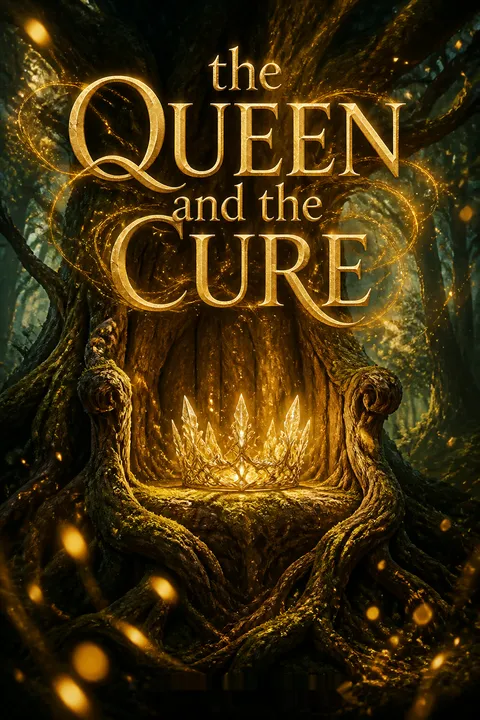
A deserted castle sits inside an immense ring of trees. Its banquet table is laid but abandoned, its rooms webbed with dust, and the trees surrounding it bear faces, as if people sleep beneath their bark.
The forest and castle seem suspended after a catastrophe, waiting for someone to wake them. The image foreshadows the hidden kingdom of Caarn, where survival has meant vanishing into the woods, and where a return will require more than finding the way home.
The prologue presents absence as an active condition. The untouched feast suggests a community interrupted in the middle of ordinary life, while the trees make hiding look both protective and perilous: their inhabitants survive by surrendering movement, speech, and the passage of time. The castle’s stillness is not peace but an unfinished response to terror. This image prepares the novel’s central question about what survival costs. A people can escape immediate violence and still remain trapped inside its aftermath, waiting for someone to recognize that the danger has passed.
The Cliff at Solemn
In Solemn, Sasha has spent years serving Mina, an elderly woman who taught her stories and urged her to discover where she came from. When Mina dies, Sasha’s warnings about contaminated water go unheeded, and the village blames her for the sickness. Maeve urges her to flee, but villagers drive Sasha over a cliff before she can escape.
Captain Kjell, the king’s Healer, finds her broken body while searching for reported birdmen. His gift has failed him with strangers before, so he summons the compassion he usually reserves for his brother and sings Sasha back to life. She recognizes him from visions she cannot explain. He has saved her body, but neither knows why she has been waiting for him.
The opening binds rescue to a problem of recognition. Kjell’s gift works through attachment, yet he has to imagine caring for a stranger before he can save her; the healing therefore exposes a capacity he has built his identity around denying. Sasha, meanwhile, is punished not for causing catastrophe but for perceiving it early. Her visions make her socially inconvenient, so the village turns warning into evidence of guilt. The cliff literalizes that reversal: the person trying to protect the community is cast out by it. Their first encounter joins two forms of vulnerability, his emotional resistance and her enforced dispossession.
Solemn’s Bitter Water
Sasha explains that sickness comes from Solemn’s eastern water and asks Kjell to help the villagers who rejected her. When elders arrive offering gifts to keep the King’s Guard away, Kjell brings Sasha forward and confronts them with the law protecting the Gifted.
The crowd stones her anyway. Sasha insists that even her persecutors deserve healing, and Kjell reluctantly sets up treatment in Mina’s home. She introduces each patient by what matters to them, then holds Kjell’s hand so he can find the distinct healing rhythm in each person.
He saves many, though some have already died or cannot be reached. Afterward, he secures Sasha’s freedom, money, and home, then rides away. Sasha follows on foot, so Kjell turns back and carries her with his company.
The village’s recovery is deliberately incomplete: bodies can be healed, but the habits that made the villagers cruel remain. Kjell’s refusal to heal the elders is a boundary against turning mercy into compulsory absolution, while Sasha’s insistence separates care from forgiveness. Her practical knowledge of patients lets Kjell’s gift become relational rather than heroic; he heals by attending to particular lives, not by exercising power over a crowd. The scene also alters the meaning of freedom. Kjell can arrange Sasha’s legal independence, but she must decide where to go. Her choice to follow is the first act of attachment that cannot be explained as ownership or debt.
Stories Through the Storm
Kjell intends to return to hunting the Volgar, but Sasha stays with the King’s Guard as they cross the desert. She tells stories at night, including one about a kingdom of people who hide as trees, while the soldiers gradually begin to treat her as their own. When she foresees a sandstorm, Kjell follows her instinct to a cave and shelters the company as the storm swallows the landscape.
In the darkness, he holds her close instead of keeping his usual distance. The next day, he heals the sunburn on her neck, and she worries that every use of his gift costs him part of his life. Her fear makes him confront how little either of them understands about what healing takes.
Sasha’s stories do more than entertain the soldiers: they give an unsettled group a shared language for fear, memory, and place. Her influence is quiet but consequential, as the men begin to orient themselves around her voice rather than only around Kjell’s commands. The storm compresses that growing intimacy into physical closeness, but the next day’s concern about healing costs complicates the comfort. Care is not free, and Sasha recognizes that Kjell’s generosity may consume him. Her attention to his limits counters his habit of treating self-sacrifice as an ordinary military resource.
A Kiss in Enoch
In Enoch, Kjell leaves Sasha safely at an inn, then discovers that the pleasures he once sought among the city’s washwomen leave him empty. Sasha knows what he did through a vision and, believing she must offer herself to secure a place beside him, undresses before him. Kjell refuses to take advantage, but their argument strips away his defenses, and they kiss.
He tells her about Ariel of Firi, the beautiful Changer who once used his loyalty while scheming for power. Sasha’s visions suggest Ariel remains a danger. Kjell tries to keep their relationship undefined, while Sasha asks him questions during the journey onward. Her affection draws out his history, including the loneliness he has hidden beneath his soldier’s certainty.
The Enoch encounter places consent beside survival rather than treating desire as a simple reward. Sasha’s offer is shaped by a life in which intimacy has been arranged by others, and Kjell’s refusal matters because he recognizes that her apparent compliance is not the same as free choice. Their kiss follows conflict and mutual exposure, not his authority over her. Ariel’s history also gives Kjell’s mistrust a specific source: he has confused manipulation with love before and fears repeating the mistake. Sasha’s questions challenge that defensive certainty, asking him to become knowable without demanding that he perform tenderness on command.
The Jandarian Cliffs
As the company crosses Janda, Kjell admits more of his past, including his mother’s name and his guilt over loving the wrong people. Sasha tells him his kisses bring her joy, and he stops to kiss her again. Their pause ends when her mare bolts straight toward the cliffs. Kjell pulls Sasha onto Lucian just before the mare plunges over the edge, and the fall disturbs a nest of weakened Volgar.
The birdmen attack the Guard’s formation and seize Sasha. Kjell’s lance brings down her captor, but she is badly cut while shielding him. He struggles for hours to heal her, leaving deep scars across her back. Worn out, he still heals a sick soldier, discovering that affection for his men can guide his gift.
The cliff attack transforms romance into an ethical test: Sasha’s love appears as action, not merely feeling, when she places herself between Kjell and danger. His response is protective but also fearful, because he experiences her willingness to die for him as a threat to her own life. The lasting scars refuse the fantasy that healing can erase every consequence. They become evidence of Sasha’s agency and sacrifice, not a flaw to be corrected. Kjell’s subsequent healing of a soldier also widens his capacity for care beyond the intimate bond that first awakened his gift.
The Name Saoirse
When Kjell brings Sasha to Jeru City, a cloaked stranger calls her Saoirse, then disappears into the crowd. At court, Kjell introduces her to King Tiras and Queen Lark, who recognize that her red hair may connect her to ruined Kilmorda.
The stranger returns during their engagement celebration as Padrig, the storyteller who once helped Sasha flee her home. He reveals that he is a Spinner who can store memories in stars and that he removed hers to protect her from Ariel.
His demonstration shows Sasha’s childhood and her connection to distant Dendar. She chooses to receive the memories back, then collapses beneath the returning past. Tiras explains that Sasha is Queen Saoirse of Dendar, wife of King Aren, not simply a displaced Kilmordan noblewoman.
The revelation recasts Sasha’s apparent lack of history as the result of deliberate intervention. Padrig’s act began as protection, but it also deprived her of the knowledge needed to understand her own obligations and desires. The memory-star makes that ethical cost visible: preserving a person by removing painful knowledge can preserve her life while narrowing her freedom. Sasha chooses to remember despite the risk, asserting ownership over a past others have managed for her. Her identity does not cancel the girl who survived Solemn; instead, the sudden collision of queen and servant exposes how much her selfhood has been shaped by what she endured.
Sasha Leaves for Dendar
The recovered memories restore Sasha’s childhood in Kilmorda and her years as Queen of Dendar, where King Aren sheltered her from the Volgar. She confirms that she will return to him and rebuild the kingdom, though she still loves Kjell. He asks her to become his wife before learning the full truth, then withdraws when he understands she already has a husband.
Sasha mourns the loss of the life she built with him, while Kjell tries to bury his feelings in drink and work. When she prepares to sail, he decides to join the expedition despite knowing he cannot claim her. Their choice to travel together is not a reunion: Kjell goes to protect her and help restore Dendar, while accepting that she may never belong to him.
Sasha’s restored memory creates no clean return to an original self. She now carries the servant’s endurance and the queen’s duty, and neither identity can simply replace the other. Her decision to go back is an act of responsibility, but it also costs her the intimate future she had begun to imagine with Kjell. His decision to follow is similarly divided: devotion does not entitle him to her, yet he refuses to make distance a substitute for care. The section makes love less a claim than a discipline of accepting another person’s commitments, even when those commitments are painful.
The Ship Without Kjell
At Brisson Bay, Sasha fears that Kjell’s presence will bring the danger she has foreseen to Dendar. She persuades Jerick and other guards to drug him, then boards without him. Padrig revives Kjell and explains that Dendar needs a Healer, not only a warrior. Kjell reaches the ship and orders Padrig to restore Jerick’s stolen memories, then joins the voyage.
On the overland approach, Sasha foresees a rockslide and her warning gets the caravan clear, though horses and equipment are lost. Soon after, a wolf leads Kjell to Lucian’s dead body and reveals itself as Ariel. At sea, a giant squid attacks the other ship. Kjell and Isak help defeat it, and Kjell heals the mortally wounded Jerick, but five travelers drown.
The attempted separation is a betrayal born of care, which makes it harder to resolve than simple hostility. Sasha’s choice denies Kjell the right to decide his own risk, echoing the protective control Padrig once exercised over her memories. Kjell’s return does not prove that he should always follow her; rather, it forces them to confront that neither can make another person safe by making the choice alone. The deaths at sea sharpen the costs of their mission, while the need to heal Jerick tests Kjell’s loyalty beyond romance. Each act of protection now carries consequences for a community, not just a couple.
The Forest Wakes
Dendar’s harbor is deserted, and the road to Caarn has been swallowed by trees. When Padrig cannot persuade the living forest to part, Kjell touches a trunk and the trees open a path for him. In the valley, the castle stands empty. Padrig explains that the people hid as trees when the Volgar attacked, but none can change back.
Sasha tells Kjell that her mother once named him as the Healer’s son, and Padrig identifies his mother, Koorah, as a Caarn royal. Kjell begins awakening the hidden Spinners, learning to hear their fear beneath the bark. He restores families and children one by one, then revives King Aren, who confirms Kjell’s connection to Caarn and welcomes him as the man who has saved its people.
The forest’s silence initially resembles the safety of successful concealment, but the people have become prisoners of the strategy that saved them. Kjell’s healing answers a collective trauma, requiring him to absorb the terror of people who have been unable to return to ordinary life. The discovery of Koorah’s identity also shifts his sense of belonging: the kingdom he has entered as an outsider may be part of his inheritance. Yet the revelation does not immediately make him a ruler. His legitimacy is first demonstrated through service, and the people of Caarn awaken through care rather than conquest.
A Kingdom Rebuilt
With the Spinners awake, Caarn begins to grow food and rebuild its homes. Kjell learns that his mother Koorah was the sister of King Aren and the former heir, making him a possible successor. He resists the claim and focuses instead on finding another Healer and training a defense force. Sasha’s vision predicts the Volgar will return when the leaves brighten.
Tiras arrives from Jeru after learning of the danger and joins the preparation, while Kjell uses Caarn’s unusual gifts to design traps around the castle. Their first defensive net catches many birdmen, but the next vision warns that the survivors will wait on the ramparts. Kjell relocates the archers and plans to draw the Volgar back into the vines with the smell of blood.
Rebuilding in Caarn is not a return to innocence. The people can grow food in a day, but they must still learn defense, cooperation, and how to use gifts that have been hidden or dismissed. Kjell’s possible inheritance tempts him with a new identity, yet he keeps choosing practical responsibility over the prestige of a crown. Sasha’s visions likewise do not provide effortless certainty; they supply fragments that must be interpreted and turned into plans. The strategy depends on varied abilities and shared labor, making security a collective practice rather than the achievement of a single powerful ruler.
Blood Beneath the Vines
The Volgar return in force, first battering the vine canopy above Caarn’s fighters. The villagers hold formation while archers and spearmen kill the trapped birdmen. When the swarm changes tactics, the defenders move the archers into the forest and use blood on the ramparts to lure the creatures down. Boom amplifies commands across the battlefield, Isak sets the vines alight, and Tess calls rain to contain the flames.
The attack is beaten back, though people are wounded and one archer is carried away. Kjell heals the injured he can reach. Afterward, he finds King Aren bleeding from a mortal wound. Aren chooses to become a tree in the ancestral grove and places his crown on Kjell, who becomes Caarn’s king as the people mourn.
The battle turns the gifts that once marked people for persecution into coordinated public work. The victory is not achieved by raw force alone: sound, weather, fire, archery, and disciplined formation each solve a different tactical problem. Yet the cost remains real. Aren’s death prevents the battle from becoming a simple triumph, and Kjell’s healing cannot override the king’s choice about how to die. The crown therefore arrives not as a prize but as an obligation inherited in the same moment as grief. Kjell accepts a community that needs him, even though he has not learned how to imagine himself as its king.
The Changer’s Last Hunt
During the mourning after Aren’s death, Kjell gives Sasha space, but Ariel uses the confusion to enter Caarn. She approaches Kjell in the garden and boasts that she has followed him in many forms, including the mare, wolf, and sea creature that endangered his company. When Sasha slips out through the castle tunnels to face Ariel, Kjell follows the trees’ directions to find her in the grove.
Ariel attacks as a panther. Sasha has taken Kjell’s knife and drives it into the Changer’s heart before he can reach her. Once Ariel is dead, Sasha asks the trees to return her body to the earth. She then reveals she is carrying Kjell’s child. Kjell asks to marry her, and two days later Caarn celebrates their union publicly.
Ariel’s final attack brings the novel’s competing ideas of love into direct conflict. She treats fear as a means of possession, while Sasha’s courage refuses to let protection become another form of captivity. By using Kjell’s knife herself, Sasha acts rather than waiting to be rescued, and the act completes the movement from a woman pushed over a cliff to a queen who chooses her own defense. The marriage follows only after she names the terms of public commitment, not as a reward for being saved. Her pregnancy makes their future concrete, but it does not erase the losses that shaped it.
Epilogue
Caarn flourishes, the Volgar do not return, and the forests again shelter Spinners who choose to become trees at the end of life. Kjell and Saoirse welcome a daughter named Koorah, followed by four sons.
Their children grow among a restored kingdom of farms, animals, and living forests. Kjell remains a Healer, walking among the trees with gratitude, while his family gives him a place he once believed he could never claim.
The epilogue answers the prologue’s frozen image with ordinary abundance: a child’s cry, animals in the fields, and a castle no longer holding its breath. The kingdom’s recovery is measured less by royal ceremony than by renewed care, visible in the return of livestock and the living relationship between people and trees. Naming the daughter Koorah folds an earlier absence into a future without pretending that history can be undone. Kjell’s final role joins lineage to practice: he inherits Caarn, but belonging is sustained by the repeated work of tending, healing, and remembering.
Analysis
The novel makes healing an ethical practice rather than a display of mastery. Kjell can repair bodies, but he cannot restore the dead, erase betrayal, or make another person choose the life he wants for her. His gift works through attention to distinct people, and his growth follows the same pattern: he becomes capable of tenderness not by abandoning his warrior identity but by allowing it to serve more than violence. Sasha’s visions create a parallel discipline. She sees danger without owning the future, so her responsibility lies in warning, interpreting, and acting despite uncertainty.
Memory and identity complicate any simple idea of returning home. Sasha’s past has been taken from her in the name of safety, and restoring it does not return her to an untouched self. She must hold the servant who survived Solemn and the queen who belonged to Dendar at once. Caarn’s hidden Spinners enact a related problem on a collective scale. Their tree forms protected them, yet safety became an extended suspension of life. Kjell’s healing wakes them, but the kingdom can recover only when its people choose to come back and rebuild together.
The romance tests whether devotion can exist without possession. Kjell repeatedly assumes that protecting Sasha means controlling distance, while Sasha sometimes makes dangerous choices on his behalf. Both have to learn that love cannot make decisions for the other person, even when fear supplies convincing reasons. Their eventual union matters because it follows truth, grief, and freely chosen commitment, not because it cancels those costs. The ending’s restored animals, growing fields, and noisy children answer the opening’s stillness with care made visible. Caarn survives not through invulnerability, but through people accepting limits, sharing gifts, and remaining present to one another.
Review Summary
The Queen and the Cure received mostly positive reviews, with readers praising Amy Harmon's beautiful writing and world-building. Many found the romance between Kjell and Sasha captivating, though some felt it developed too quickly. The fantasy elements and character development were generally well-received. Some readers noted it wasn't as strong as the first book in the series, while others thought it surpassed it. A few critics found the plot predictable or the heroine lacking. Overall, most reviewers recommended the book, especially for fans of fantasy romance.
People Also Read




Characters
Sasha
The seeing servantSasha is a red-haired Seer raised in Quondoon, where her visions make her an object of suspicion rather than a trusted adviser. She is compassionate without being passive: she warns people of danger, presses Kjell to heal the sick, and makes choices even when they bring her pain. Stories help her give shape to experiences she cannot fully explain, and her habit of noticing what others overlook makes her an attentive guide to both people and risk. Years of servitude have taught her to equate safety with obedience, but beneath that conditioning lies a fierce sense of responsibility. She wants her gifts to serve others, while struggling to distinguish care from self-erasure.
Kjell
The reluctant HealerKjell is Captain of the King’s Guard, an experienced warrior and the illegitimate older brother of King Tiras. His healing gift depends on emotional connection, a condition at odds with the hard, guarded identity he has built through years of combat. He is suspicious of sentiment because he once trusted the wrong woman and helped endanger his brother’s throne. Beneath his bluntness, Kjell is intensely loyal and quick to shoulder burdens that should be shared. Sasha unsettles him because she sees tenderness where he sees only violence and failure. His central struggle is learning that strength can mean accepting dependence, grief, and responsibility rather than simply enduring them.
Tiras
The Changer kingTiras is Kjell’s younger half-brother and the king of Jeru. A Changer who can take the form of a bird, he leads with composure and understands the political consequences of decisions that Kjell would rather make by instinct. Their bond is close, shaped by years in which Kjell protected him and managed the burdens of rule. Tiras is affectionate without being indulgent; he can challenge Kjell while still respecting his judgment. His presence offers Kjell a model of authority grounded in steadiness, though Tiras knows his brother’s path may not remain in Jeru.
Lark
The word-bearing queenLark is Tiras’s queen, a gifted woman whose words can command and whose thoughts can reach others. She speaks carefully because she knows language can alter events, and her discipline makes her an unusually perceptive adviser. Lark recognizes Kjell’s emotional conflict without forcing him to confess more than he can bear. Her care combines humor, political intelligence, and a strong sense of responsibility for people vulnerable to power. She has survived a court shaped by danger and manipulation, and she uses her abilities with restraint rather than treating them as license to control.
Padrig
The keeper of starsPadrig is an elderly Spinner whose unusual gift lets him draw memories into stars. He serves as a storyteller and guide, especially to the young woman he once helped escape danger. His instinct to protect can become secrecy: he decides which truths others should know and when they should know them. Padrig is not cruel, but his choices have consequences that he cannot undo simply by explaining his good intentions. His devotion to Caarn and its people is sincere, as is his fear of what may happen when buried histories return.
Ariel
The shifting noblewomanAriel is a noblewoman from Firi with the Changer’s ability to assume different animal forms. Once closely involved with Kjell, she is intelligent, ambitious, and highly skilled at reading what others want from her. She has never been content to accept the limits placed on her by birth or by the political order around her. That drive makes her compelling and dangerous in equal measure. Ariel understands that appearance can be a tool of survival and influence, and she adapts quickly to the people and situations she encounters.
Aren
The thoughtful Dendar kingAren is the king of Dendar, a patient ruler whose people are closely tied to the land and its trees. He values cooperation over military display and sees leadership as a duty to preserve both community and culture. His history with Saoirse gives him a deep understanding of her gifts and the danger she has faced. Aren is compassionate, but not naïve; he knows that kindness alone cannot protect a kingdom from every threat. He offers a contrasting model of kingship to the warrior culture Kjell knows.
Jerick
The outspoken lieutenantJerick is Kjell’s lieutenant, a capable soldier whose irreverence often tests his captain’s patience. He is loyal enough to challenge Kjell when he thinks pride or fear is leading him astray. His humor makes him a social bridge between the guarded captain and the rest of the Guard, but it never means he takes danger lightly. Jerick understands that protecting a leader sometimes requires disagreeing with him, even when the disagreement carries personal risk.
Isak
The fire-starting soldierIsak is a soldier in Kjell’s company with the ability to create fire. His gift is powerful but difficult to use safely, especially in enclosed spaces or around dry materials. He follows orders, watches carefully, and reports what he sees, making him an important observer when the company faces uncertain dangers. Isak’s practical resourcefulness helps the Guard survive conditions where strength alone is not enough.
Gwyn
The old Gift divinerGwyn is an elderly Teller who can sense the nature and limits of other people’s gifts. She speaks plainly about powers that others romanticize and understands that ability carries vulnerability as well as usefulness. Her advice helps Kjell see healing as an exchange of life and connection, not a limitless cure. Gwyn is perceptive without claiming omniscience, and her humility makes her counsel trustworthy.
Shenna
The Nivea HealerShenna is a Healer who lives among the Gifted near Nivea. She offers Kjell practical knowledge about healing and its limits, while treating those limits as part of being human rather than a failure of skill. Her calm insight helps him understand that caring for someone does not mean being able to cure every wound.
Mina
Sasha’s dying mistressMina is the elderly woman Sasha serves in Solemn. She teaches Sasha stories and urges her to search for her origins, even when Sasha doubts that her gift is a blessing. Their relationship is shaped by care but also by the unequal power of master and servant.
Maeve
The warning village girlMaeve is a young villager who warns Sasha that Solemn is turning against her. She acts despite the danger of opposing the elders, giving Sasha the chance to flee before the village closes in.
Byron
Mina’s fearful brotherByron is Mina’s brother and one of Solemn’s respected elders. He knows more about Sasha’s circumstances than most villagers, but fear and self-preservation keep him from defending her openly. His silence helps reveal how respectability can coexist with moral failure.
Syed
Solemn’s cautious elderSyed leads the elders who try to persuade Kjell’s soldiers to stay away from Solemn. He is concerned with keeping the village’s authority intact and treats the sick woman as a threat to that order.
Koorah
The remembered Caarn princessKoorah is a former member of Caarn’s royal family, remembered through portraits and stories of a life beyond the valley. Her absence leaves questions about duty, love, and the choices people make when inheritance feels like a cage.
Tess
The hidden water callerTess is a maid from Jeru who can draw water from the ground. She has long dismissed her ability as embarrassing and useless, but she is willing to demonstrate it when Caarn needs every available gift.
Jedah
The earth-moving workerJedah is a gifted traveler who can move soil and, with practice, influence stones. His practical ability helps the expedition repair a damaged road and later contributes to the work of rebuilding Caarn.
Boom
The thunder-voiced crierBoom has an extraordinarily powerful voice that can carry across great distances. He usually communicates through writing or gestures because his speech can overwhelm listeners, but Caarn finds a public use for his unusual ability.
King Zoltev
The feared former kingZoltev is Kjell and Tiras’s late father, a ruler remembered for cruelty and the persecution of Gifted people. His legacy shapes Kjell’s shame about his parentage and his suspicion of power.
Lucian
Kjell’s faithful warhorseLucian is Kjell’s large, dependable warhorse, accustomed to carrying him through long journeys and battle. Kjell trusts him as a familiar companion in a life where people and loyalties have often proved harder to read.
Plot Devices
The Gifted
Power with limitsIn Jeru, inherited gifts can transform, heal, foresee danger, shape matter, command words, or alter the natural world. The gifts are not interchangeable, and each has constraints. Kjell’s healing requires a connection to the person he treats and can leave him depleted. Sasha’s visions arrive in fragments and rarely allow her to prevent what she sees. Caarn’s Spinners can grow food or hide as trees, but hiding too long makes it difficult to return. These limits keep the magic tied to choices, dependence, and risk rather than allowing characters to solve every crisis by force.
Sasha’s visions
Warnings without certaintySasha sees brief images of future events, often as sensory fragments rather than complete explanations. A vision of poisoned water helps identify Solemn’s sickness, and later warnings let the Guard avoid a sandstorm and a rockslide. Other visions frighten her without revealing how to prevent what is coming. The visions shape her choices and provide the clues around which Kjell builds plans, but they never eliminate uncertainty. Their narrative function is to make foresight a responsibility: Sasha must decide when to speak, and others must decide whether to trust a warning that cannot yet be proved.
Healing songs
Connection becomes cureKjell senses a person’s inner rhythm and matches it with his voice and touch, guiding the body toward healing. Each patient has a distinct sound, so he cannot treat people as identical cases. Sasha often helps by holding his hand and telling him what matters to the person he is trying to heal. Severe healing costs Kjell strength and cannot simply be repeated without consequence. The device links emotional attention to physical care: his gift becomes most effective when he recognizes the life in front of him, while his inability to heal every person forces him to accept grief and limits.
Memory stars
The past made visiblePadrig can draw memories out of a person and preserve them as points of light in the sky. He can retrieve a memory as a visible image, but showing it removes that memory from the star. The power makes memory tangible, allowing hidden history to be seen and restored, while also raising a moral question about who has the right to withhold another person’s past. In Sasha’s case, the device changes her understanding of herself and forces her to reconcile her life as a servant with her earlier identity and obligations.
The tree refuge
Safety becomes a prisonThe people of Caarn can spin themselves into trees and other plants. When the Volgar invade, they use this ability to hide from predators, but remain in that form for years. Their refuge preserves their lives at the cost of their ability to return to themselves. Kjell must heal the fear that keeps them rooted, and their awakening turns the abandoned castle and valley into a living community again. The device gives physical form to a central tension in the story: protection can be necessary, but prolonged retreat can make survival indistinguishable from captivity.
About the Author
Other books by Amy Harmon









Download PDF
Download EPUB
.epub digital book format is ideal for reading ebooks on phones, tablets, and e-readers.








