

Key Takeaways
Cars and fast roads made bank robbers more mobile than local law.
Technology changed the odds. The great crime wave did not begin with the Depression. Bank robbery had flourished through the 1920s, as powerful cars and automatic weapons let criminals outpace local police. A Travelers Insurance tally showed property crimes reported through its Dallas office rising from 17 to 965 a year between 1920 and 1929. Bank robbery was not yet a federal crime, and sheriffs could rarely pursue suspects across state lines.
Mobility outstripped jurisdiction. The story is not simply that criminals gained better tools. Their cars exposed a mismatch between a national economy and a patchwork of local policing. The same problem appears whenever technology allows activity to cross boundaries faster than institutions can coordinate. The book also resists a tempting shortcut: economic hardship shaped the era, but the crime wave had roots well before the Depression reached its worst.
The Kansas City Massacre made federal crime control politically possible.
A failed transfer became a crisis. In June 1933, federal agents were transporting captured bank robber Frank Nash through Kansas City when gunmen attacked their car at Union Station. Nash, an FBI agent, a police chief, and two Kansas City detectives died. The FBI had little experience with armed criminals, and local police were compromised by the city’s political machine.
The event created an opening. Attorney General Homer Cummings, not Hoover, used the massacre to announce special investigative squads and propose new federal powers. The distinction matters: institutions often grow through moments that make previously contested authority seem necessary. Yet a political opening is not proof that every new power is justified. Public shock can accelerate reform before the public has time to ask what safeguards should accompany it.
An agency without guns learned law enforcement under lethal pressure.
The Bureau was unready. Hoover had reorganized the Bureau of Investigation into a disciplined office, but agents initially lacked arrest powers, firearms, and practical policing experience. Police mocked the young, law-trained recruits as College Boys. Hoover relied on a smaller group of experienced Southwestern investigators, known inside the book as Cowboys, to guide them. After the massacre, the Bureau bought guns and rushed agents through uneven training. Some offices taught shooting with local police; others simply handed agents weapons.
Professionalism is built in practice. Standardized paperwork, merit hiring, and strict supervision gave Hoover a capable administrative core, but administrative order could not substitute for field judgment. That gap became visible when agents faced armed suspects and civilians in crowded places. Institutions need both procedure and tacit expertise, the knowledge gained by doing difficult work alongside experienced practitioners. The danger is that crisis training can normalize force before competence and accountability have matured.
Local knowledge solved cases the FBI nearly lost.
Useful leads came from the ground. Fort Worth detective Ed Weatherford repeatedly pointed FBI agents toward Machine Gun Kelly after the Urschel kidnapping, but senior investigator Gus Jones initially pursued other theories. In Texas, former Ranger Frank Hamer and Dallas deputies Bob Alcorn and Ted Hinton used local contacts and knowledge of Clyde Barrow’s habits to track Bonnie and Clyde. Their pursuit ended in Louisiana, where a deal involving Henry Methvin’s family helped set the ambush.
Scale is not the same as insight. Federal reach can connect evidence across states, but local officers often know the people, roads, and informal networks that make a lead meaningful. The book’s cases show that successful investigations depend on translating between those forms of knowledge. There is a cost, too: the Bonnie and Clyde ambush killed the couple without a surrender attempt, and the Methvin bargain raises questions about how law enforcement traded immunity for results.
Press coverage turned dangerous criminals into characters the public could cheer.
Stories reshaped reputations. Newspapers helped make Pretty Boy Floyd a folk hero by repeating claims that he had killed officers in a massacre he did not commit. John Dillinger learned to perform for reporters as a courteous, joking bank robber supposedly striking back at wealthy institutions. Bonnie and Clyde received less attention in life, then became romantic rebels through the 1967 film. Hoover helped create another durable fiction, presenting Ma Barker as a criminal mastermind despite no evidence she planned robberies or fired a gun.
Publicity does not merely describe crime. It supplies motives, villains, and heroes, often replacing messy evidence with a story audiences already want. Dillinger’s polished manners and the couple’s staged photographs gave reporters vivid material, while their victims and less cinematic crimes drew less attention. The book’s archival approach is valuable because it separates what people did from what later culture made them mean. But even a careful correction cannot fully control a legend once it becomes entertainment.
The famous gangsters were not one species of outlaw.
Their differences matter. Dillinger cultivated charm and public admiration, while Baby Face Nelson was so violent that other criminals feared working with him. Bonnie and Clyde robbed gas stations and stores more often than banks, and their record included the murder of innocent people. Machine Gun Kelly was a nervous, inept robber whose wife Kathryn was an accomplice, not the all-powerful Svengali described by Hoover. Alvin Karpis was more calculating, helping organize the Barker-Karpis gang’s kidnappings and bank jobs.
A shared label can hide distinct motives. The public-enemy category joined people whose skills, relationships, and patterns of violence were sharply different. That matters for historical judgment: a charming manner is not evidence of harmlessness, and a notorious nickname does not prove exceptional criminal ability. The book also complicates poverty-based explanations. Hard times narrowed options for many people, but these individuals made different choices, and their victims experienced the consequences directly.
Treat investigative clues as evidence, not proof of a preferred theory.
The file trail was messy. After the Kansas City Massacre, agents focused on Harvey Bailey and his fellow prison escapees, although the witnesses and evidence were weak. A latent fingerprint from a beer bottle in Verne Miller’s house was not sent to the FBI’s national fingerprint files for months. When it finally matched Adam Richetti, investigators redirected their attention to Floyd and Richetti. Separately, Charles Urschel’s memories of sounds, weather, water, and travel helped agents locate the Texas farm where he had been held.
Good inquiry combines skepticism with imagination. Urschel’s sensory memories mattered because investigators treated ordinary details as clues and tested them against geography and records. The massacre investigation shows the opposite risk: once agents settled on Bailey, contradictory evidence did not immediately dislodge the theory. Evidence is not self-interpreting, and a compelling hypothesis can make weak testimony seem stronger than it is. The discipline is to keep rival explanations alive until facts distinguish between them.
Federal power grew alongside wrongful arrests, coercion, and erased local credit.
The campaign had a human cost. FBI official Melvin Purvis accepted a weak case against Chicago gangster Roger Touhy in the Hamm kidnapping; a federal judge later concluded Touhy had been framed. Agents held Verne Miller’s girlfriend Vi Mathias incommunicado, and they used threats and beatings to extract statements from Dick Galatas. Local police and investigators also supplied important leads, but the Bureau’s public story increasingly centered Hoover and its own agents.
Effectiveness and legitimacy are separate tests. A government agency can solve serious crimes while violating rights or exaggerating its role. The Bureau’s rapid expansion rested partly on public trust created by the War on Crime, making internal restraint especially important. The cases invite a practical question: who verifies the investigators when evidence is gathered under pressure? Historical scrutiny is not an argument against federal policing. It is a reminder that success should not exempt institutions from review.
Hoover's FBI won the legend before it solved every crime.
The final pursuit changed the institution. Alvin Karpis, the last major public enemy at large, evaded capture until 1936. Postal inspectors developed key leads from the Garrettsville train robbery, but the FBI often dismissed their progress and later took the spotlight at Karpis’s arrest. The Bureau’s public image had already been transformed by the deaths of Dillinger, Floyd, Nelson, and the Barkers, then amplified by newspapers and Hollywood. Some mysteries remained contested, and the story of the FBI’s rise was cleaner than its record.
Institutional memory is a contest over credit. The FBI became a national symbol not only through investigative work but through control of the story told about that work. Hollywood’s G-Men image made the Bureau’s authority feel natural, even as the campaign contained failed raids, wrongful arrests, and coercive interrogations. The book’s strongest contribution is to hold those facts together. Public safety can justify coordinated institutions, but democratic legitimacy depends on remembering both their achievements and the people left out of their official legends.
Analysis
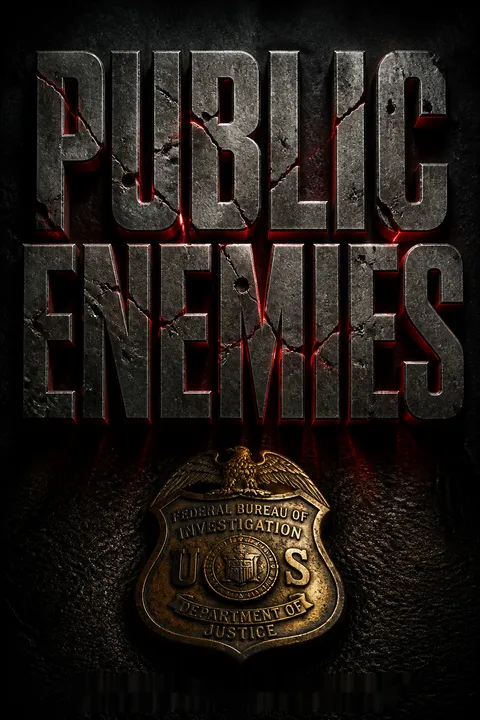
Public Enemies is a narrative history about institutional formation as much as criminal biography. Its central argument emerges through a collision: mobile, heavily armed offenders crossed jurisdictions faster than local police could coordinate, while a reformed but inexperienced federal bureau was waiting for a reason to matter. The Kansas City Massacre supplied that reason. It gave Attorney General Homer Cummings a public case for federal expansion and gave Hoover an opportunity to place his bureau at the center of national law enforcement.
The narrative’s most important correction is that the FBI did not begin as the polished force later remembered. Agents lost suspects, pursued false leads, mishandled evidence, and sometimes endangered the innocent. Local investigators supplied crucial knowledge, from Ed Weatherford’s suspicions about Kelly to Hamer’s pursuit of Bonnie and Clyde. Yet federal resources and publicity ultimately shaped the public account. The result is a productive tension between operational development and institutional mythmaking: the Bureau did become more capable, but its capacity grew alongside aggressive tactics, questionable arrests, and efforts to monopolize credit.
The criminals also resist a single explanatory story. Depression-era hardship provides context, not absolution. Dillinger’s performance of courtesy, Nelson’s volatility, Karpis’s planning, and Bonnie and Clyde’s small-scale, violent crimes reveal different personalities and incentives. Their press images often concealed more than they explained. By restoring the victims, failed cases, and ordinary details, the book makes the era less romantic and more historically legible.
The ending is deliberately double-edged. Federal crime control helped close safe havens and made interstate investigations more plausible, but the resulting public trust outlasted close scrutiny of the methods used to obtain it. The book therefore asks readers to distinguish three things often fused in popular memory: the real criminal threat, the state’s expanding power to confront it, and the stories that made that power appear inevitable. Its archival detail supports an essential conclusion: institutions can earn legitimacy through real achievement, then spend that legitimacy on conduct that deserves renewed examination.
Review Summary
Public Enemies is praised for its thorough research and engaging narrative, offering a comprehensive look at 1930s crime and the birth of the FBI. Readers appreciate Burrough's demythologizing of famous gangsters and law enforcement figures, providing a more accurate historical account. The book's chronological structure, while sometimes confusing, effectively captures the era's atmosphere. Critics note its length and occasional repetitiveness but commend its detailed portrayal of characters and events. Overall, it's considered a definitive work on the subject, offering both entertainment and historical insight.
People Also Read
Glossary
yeggmen
professional bank robbersA term used for professional or organized bank robbers, especially those active in the Midwest during the early twentieth century. The book describes a criminal subculture that shared methods, contacts, and expertise. These robbers were not all equally skilled: some relied on planning and getaway routes, while others were inexperienced recruits.
jug marker
bank casing specialistA criminal who studies a bank before a robbery. The work could include observing guards, alarms, tellers, entrances, and nearby roads. In the book, veteran robber Herman Lamm helped systematize this preparation, turning a bank job from an improvised hold-up into a planned operation with assigned roles and an escape route.
gits
timed getaway mapsYegg slang for detailed getaway maps. A git recorded back roads, landmarks, distances, and travel times so a crew could escape without choosing a route on the fly. The book credits Herman Lamm with developing this practice. Its importance reflects a central advantage of the bank robbers: they planned for the escape, not just entry and theft.
College Boys
inexperienced law-trained agentsA nickname for the young, often law-school-trained agents Hoover recruited to modernize the Bureau of Investigation. They were disciplined and educated but generally lacked police experience and firearms training. The term captures the gap between the Bureau’s professional appearance and its early field performance during armed investigations.
Cowboys
veteran Southwestern investigatorsThe book’s label for experienced Southwestern lawmen employed by Hoover to handle difficult investigations and mentor newer agents. They brought practical knowledge of surveillance, suspects, and armed confrontations that many of the College Boys lacked. The contrast shows how the Bureau depended on expertise that did not fit its preferred image of a uniform, law-trained workforce.
G-men
federal law officersA popular name for federal agents, commonly expanded as government men. The book traces the phrase’s early fame to the 1933 capture of Machine Gun Kelly, though it disputes Hoover’s later claim that Kelly himself coined it during the arrest. The nickname became part of the FBI’s public identity as newspapers and films turned agents into crime-fighting heroes.
War on Crime
federal crime campaignThe federal campaign launched after the 1933 Kansas City Massacre and expanded through high-profile kidnapping and fugitive cases. Attorney General Homer Cummings promoted new federal powers, prosecutors, and specialized investigative squads. The campaign helped establish the FBI as a national law-enforcement institution, while its methods and publicity also raised concerns about due process and centralized authority.
About the Author
Download PDF
Download EPUB
.epub digital book format is ideal for reading ebooks on phones, tablets, and e-readers.








