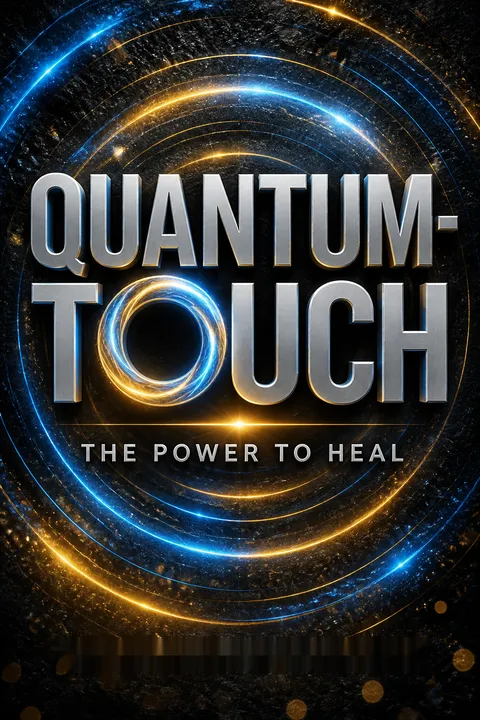


Key Takeaways
Treat Quantum-Touch as a compelling claim, not established medical fact
A dramatic promise. Richard Gordon presents Quantum-Touch as a hands-on method that anyone can learn through breathing, focused attention, and light touch. His stories make the promise vivid: a woman with severe back pain reportedly felt better after a brief bookstore session, while another woman’s markedly curved spine appeared straighter after more than an hour of work. Gordon says beginners can learn the basics quickly, sometimes in a day.
Anecdotes are not trials. These accounts explain why the method feels persuasive, but they cannot establish what caused a change, how often it occurs, or whether it lasts. The book is best read as a manual for a spiritual healing practice and a record of its author’s experiences, not as proof that it can treat disease or repair bones.
The stories are effective because they begin with visible suffering and end with apparent relief. That is emotionally powerful, and it can motivate readers to explore gentle forms of care. But vividness is not the same as reliability: memories, expectations, natural recovery, measurement error, and concurrent treatment can all shape an outcome. A useful reading stance preserves curiosity while asking what was measured, by whom, against what comparison, and for how long. That stance neither mocks the experience nor mistakes it for established efficacy.
Let the recipient's body, not the practitioner, define healing
Facilitation, not mastery. Gordon’s central idea is that the practitioner does not heal another person directly. Instead, the practitioner offers attention, touch, and what the book calls a high-energy field, while the recipient’s body is understood to do the healing. He calls this internal capacity “body intelligence,” the body’s supposed ability to direct a healing response where it is needed.
A modest role can help. This view discourages the healer from claiming credit or imposing a diagnosis. In practice, Gordon advises asking where the person hurts and listening to changes in sensation. The claim that an invisible life-force guides recovery is not demonstrated by these examples, but the emphasis on humility, listening, and the recipient’s agency can still improve the quality of supportive care.
The facilitator model has an ethical strength: it limits the practitioner’s authority and places the recipient’s experience at the center. It also resembles patient-centered care, where people are treated as participants rather than passive objects. The limitation is that “the body knows what to do” can become an unfalsifiable explanation for success, failure, or worsening symptoms. Respect for agency works best alongside clear communication about uncertainty, consent, and when symptoms require clinical assessment.
Train attention and breathing before attempting a healing session
Start with sensation. The basic practice asks the learner to focus attention on parts of the body and notice ordinary sensations such as warmth, tingling, buzzing, or pressure. A “full body sweep” is a mental exercise in which attention moves from the feet upward through the body, then down the arms into the hands. Gordon calls the combination of this body awareness and breathing “running energy.”
Link breath to focus. The book describes several counted breathing patterns, including a two-count inhale followed by a six-count exhale. The practitioner is asked to keep attention in the hands while breathing, and to use relaxed hands rather than muscular effort. Some faster breathing exercises can cause dizziness or faintness, a risk the author acknowledges. These exercises should not be pushed through discomfort.
The accessible core of this routine is attentional training: noticing the body more closely and coordinating attention with breath. Slow, deliberate breathing can support relaxation, while focused attention can change how sensations are noticed and interpreted. Those effects may matter to a person in pain without requiring an invisible energy explanation. The book’s faster breathing drills deserve more caution than its relaxed exercises, since lightheadedness is a sign to stop, not evidence that a session is becoming more powerful.
Use light contact, precise questions, and feedback instead of force
Ask before acting. Gordon recommends asking the recipient to point to the exact place that hurts rather than guessing. He generally places both hands on or around that area, a positioning he calls “sandwiching,” and advises keeping the hands relaxed with little or no pressure. During a session, the practitioner asks whether the sensation has shifted and, if so, follows it. This practice is called “chasing the pain.”
Let feedback guide the session. Gordon describes five patterns of sensation in the practitioner’s hands, from a gradual increase to a peak, to sensations that fade or disappear. He uses these patterns as informal clues about when to stay, move, or pause. He often recommends sessions lasting 20 to 30 minutes or longer. These are the author’s procedural suggestions, not validated measures of healing; pain that worsens or persists warrants appropriate medical attention.
The most defensible feature here is not the proposed energy field but the interpersonal method. Asking permission, locating discomfort precisely, and checking in repeatedly are good habits in many forms of care. They reduce the risk of acting on assumptions and help the recipient remain involved. The danger lies in interpreting pain or unusual sensations as proof that healing is underway. Feedback should guide comfort and consent, not be overridden by a theory that every unpleasant response is beneficial.
Treat resonance as a metaphor until evidence supports the mechanism
A familiar physical model. Gordon uses resonance to explain why he thinks a practitioner’s hands can influence another person’s body. In ordinary examples, a guitar string may vibrate when a nearby piano plays the same note, and pendulum clocks can gradually synchronize through shared vibrations. “Entrainment” is the process of two systems becoming more aligned in rhythm or frequency.
A leap from analogy to biology. Gordon proposes that a practitioner raises their own vibration and that the recipient’s body matches it, allowing healing. The book presents this as an explanation, but the musical and clock examples do not demonstrate that human tissues synchronize in this way or that such synchronization treats illness. Resonance is a real physical phenomenon; its presence in one setting does not prove the proposed mechanism in another.
Analogies are useful when they make an unfamiliar idea imaginable, but they can quietly smuggle in a conclusion. A vibrating string and a living body differ in structure, scale, and the forces acting on them. In addition, quantum entanglement, which the book invokes in discussing distant connection, does not by itself establish a channel for healing or communication. A strong scientific account would identify the measurable signal, show how it reaches tissue, and produce repeatable effects beyond expectation and ordinary care.
Make emotional support safe, consensual, and distinct from psychotherapy
Feelings may surface. Gordon describes a group session with Helen, a patient with long-standing chronic pain. She became distressed as grief arose about not having a child. With reassurance from the group, she allowed herself to cry, then reported that much of her pain had eased and that she felt more hopeful. The book presents the episode as an example of emotional release occurring alongside hands-on work.
Support is not treatment. Gordon says the practitioner’s role is not to resolve a person’s emotional history, but to help them feel supported while they process their own feelings. He recommends gentle reassurance, breathing, and asking permission before touching emotionally sensitive areas. Helen’s experience is meaningful as a personal account, but it does not show that suppressed emotions caused her pain or that energy work treats psychological conditions.
The episode highlights a real feature of care: pain, grief, fear, and social support can interact, and feeling safe enough to express emotion may matter to a person’s experience. That does not mean illness is caused by emotional blockage, a claim that can unfairly burden patients. The practical lesson is to respond without forcing disclosure or assigning meaning to someone else’s tears. Emotional distress may call for a trained mental health professional, particularly when it is severe, persistent, or destabilizing.
Use stories from athletes and animals as leads, not proof
Many uses, many claims. Gordon extends the method to self-care, animals, exercise, and sports injuries. He reports giving 97 sessions to college athletes in 1998; the athletes’ own ratings showed an average pain reduction of about 50 percent after sessions averaging ten minutes. He also recounts a cat named Julius becoming active after a group session, and describes using energy work during workouts to reduce soreness and increase repetitions.
Promising reports need controls. These stories help show the range of situations in which practitioners tried the method. The athletic figures are notable, but the passage does not describe a comparison group or blinded assessment. Changes in pain, activity, and soreness can have many causes. Gordon himself cautions that an injury may feel better before it is ready for full use, an important reason not to treat reduced pain as proof of recovery.
Self-reported pain is worth taking seriously because pain is inherently experienced by the person reporting it. It is not, by itself, enough to identify the cause of improvement or establish that tissue has healed. The same distinction matters in animals, which cannot describe symptoms and may simply relax when handled gently. These accounts can generate useful research questions, but injury decisions should rely on function, appropriate clinical evaluation, and gradual return to activity, not a dramatic session alone.
Remote healing demands stronger tests than compelling personal experience
A striking demonstration. Gordon recounts a distant session in which a man’s brain activity was monitored. After a resting baseline, Gordon began working from about twelve feet away without telling the subject. The book reports shifts in measured brain-wave readings during the session and says that a physician overseeing the demonstration found the final pattern unusually quiet. Gordon interprets the changes as evidence that intention can affect another person without touch.
One case leaves open questions. The episode does not establish whether the changes exceeded normal variation, whether the interpretation was independent, or whether the result would repeat with other subjects. Gordon also tells of people who felt energy at a distance, but such accounts cannot distinguish a remote effect from coincidence, expectation, or other influences. The book’s own procedure suggests a testable question, not a settled answer.
Remote healing is a particularly clear case for rigorous testing because the proposed effect is specific and measurable. A convincing study would pre-register its outcomes, randomize when the practitioner begins, blind the subject and analysts where possible, and repeat the protocol across independent teams. The EEG story is intriguing as a hypothesis-generating observation, but a single changing signal cannot establish causation. Careful skepticism here is not hostility to spirituality; it is a way to determine what, if anything, the practice reliably changes.
Keep complementary practices complementary, never substitutes for medical care
The scientific ambition. Gordon imagines a future field he calls “Life-Force Science,” with research across medicine, biology, physics, and other disciplines. He points to reports involving water and DNA, and proposes controlled comparisons to separate a possible physical effect from expectation or placebo. The aspiration is to make claims about healing measurable rather than relying only on testimonials.
Protect health decisions now. The book’s opening disclaimer says the method is not a substitute for professional healthcare. That boundary matters, especially because the text also describes pain relief, structural changes, and improvement in serious conditions. Readers can regard gentle touch or focused breathing as complementary practices if they choose, but should not delay diagnosis, stop prescribed treatment, or infer that a symptom has resolved because it feels better.
The strongest version of Gordon’s scientific vision is not that unconventional claims deserve automatic acceptance, but that they should be stated precisely enough to test. Independent replication, comparison groups, transparent methods, and clinically meaningful outcomes would distinguish a genuine effect from a compelling experience. The same discipline protects patients: uncertain methods should not carry the burden of treating urgent illness. A practice can offer comfort or ritual value while its proposed mechanism remains unproven, provided those categories are kept clear.
Analysis
Quantum-Touch is part memoir, part instructional manual, and part proposal for a new science. Its narrative engine is astonishment: the author encounters apparent changes in pain and posture, doubts his own interpretation, then builds a teachable practice around breath, attention, and touch. The most useful material for a general reader is often the least extraordinary: ask where it hurts, use gentle contact, maintain consent, pay attention to the recipient, and avoid claiming personal credit for another person’s recovery.
The book’s explanatory framework is less secure than its practical instructions. Resonance, entrainment, and quantum physics lend scientific vocabulary to a theory of life-force, but examples from strings, clocks, and entangled particles do not establish that practitioners transmit a therapeutic force to human tissue. The reported cases also lack the comparison conditions needed to separate the proposed effect from expectation, attention, spontaneous fluctuation, concurrent care, and measurement bias. The author’s reports of athlete pain ratings and EEG changes are interesting observations, not demonstrations of mechanism or broad clinical effectiveness.
A fair assessment therefore keeps three questions separate: whether participants feel better, whether an objective health outcome changes, and why any change occurs. Focused attention, slow breathing, reassuring contact, and supportive interaction could plausibly influence stress and perceived pain even if the life-force theory is unsupported. That possibility should not be confused with evidence that bones realign or disease is cured. The book itself says the method is not a substitute for professional healthcare, a limitation that should govern how its techniques are used. Its enduring value is as a record of a healing tradition and a set of testable claims, not as a replacement for clinical evidence.
Review Summary
Quantum-Touch receives mostly positive reviews, with an average rating of 4.16 out of 5. Readers appreciate its practical approach to energy healing, describing it as life-changing and easy to understand. Many report successful experiences applying the techniques. Some skeptics acknowledge the book's interesting content but question the more extraordinary claims. Readers value the breathing exercises, stress relief techniques, and the potential for personal and others' healing. Several reviewers mention attending workshops or courses to further their practice.
People Also Read





Glossary
Quantum-Touch
Breath-led hands-on practiceA healing method described by Richard Gordon that combines focused body awareness, breathing, intention, and light touch. Practitioners place their hands on or near a person and aim to support the recipient’s own healing. The book attributes this effect to life-force energy and resonance, but the proposed mechanism is not established by the anecdotes presented.
running energy
Breath-linked body awarenessThe book’s term for combining attention to bodily sensations with breathing, then directing that attention toward the hands or a chosen area. Practitioners are encouraged to notice sensations such as tingling or warmth. The term describes an exercise within Quantum-Touch, rather than a scientifically demonstrated transfer of energy.
full body sweep
A mental attention sequenceA Quantum-Touch exercise in which the practitioner imagines and feels attention moving from the feet up through the body, over the head, and down the arms into the hands. The book uses this sequence to train body awareness and coordinate sensation with breath before and during a session.
chasing the pain
Following shifting sensationsA session practice in which the practitioner asks the recipient to report changes in pain or sensation, then moves hand placement to follow the reported location. Gordon presents this as a way to respond to the recipient rather than assume where attention is needed. It is a technique for guiding a session, not a diagnostic method.
resonance factors
Practices to intensify focusGordon’s label for actions he believes increase the practitioner’s effectiveness in Quantum-Touch. These include coordinating breath and bodily sensation, setting an intention to help, focusing attention, cultivating love or gratitude, maintaining a positive but honest expectation, and releasing attachment to the outcome. The book presents them as ways to raise a healing vibration.
Amplified Resonance Technique
Touch plus focused visualizationA Quantum-Touch method in which the practitioner maintains ordinary hand contact while also holding attention mentally on the tissue being treated. Gordon instructs practitioners to continue breathing and sustaining this internal focus at the same time. He presents the combination as more powerful than touch alone, though the book does not provide controlled evidence for that claim.
Life-Force Science
Proposed study of life-forceGordon’s proposed field for investigating the life-force he believes animates living things and influences healing. He envisions research spanning physics, biology, medicine, psychology, and other disciplines. In the book, this is a future scientific program rather than an established academic field or a confirmed explanation of health.
FAQ
What's "Quantum-Touch: The Power to Heal" about?
- Overview of the book: "Quantum-Touch: The Power to Heal" by Richard Gordon is a guide to a hands-on healing technique that uses the body's life-force energy to promote healing. It emphasizes the power of love and intention in healing.
- Healing method: The book introduces Quantum-Touch, a method that involves light touch and specific breathing techniques to accelerate the body's healing response.
- Practical applications: It covers various applications, including pain relief, structural realignment, and emotional healing, making it accessible for both laypeople and professionals.
Why should I read "Quantum-Touch: The Power to Heal"?
- Empowerment through healing: The book empowers readers by teaching them a simple yet effective healing technique that can be learned quickly and applied to themselves and others.
- Holistic approach: It offers a holistic view of healing, integrating mind, body, and spirit, which can complement other medical or therapeutic practices.
- Personal growth: Readers can experience personal growth and a deeper understanding of the body's innate healing abilities through the practice of Quantum-Touch.
What are the key takeaways of "Quantum-Touch: The Power to Heal"?
- Healing is accessible: Healing is a natural ability that everyone possesses, and Quantum-Touch provides a method to harness this ability effectively.
- Importance of love and intention: The book emphasizes that love and intention are crucial components in the healing process, enhancing the effectiveness of the technique.
- Versatility of Quantum-Touch: The method can be applied to a wide range of conditions, from physical pain to emotional imbalances, and can be used in conjunction with other healing modalities.
How does Quantum-Touch work according to Richard Gordon?
- Life-force energy: Quantum-Touch works by using the body's life-force energy, which is amplified through specific breathing techniques and focused intention.
- Resonance and entrainment: The practitioner raises their energy vibration, and the client's body entrains to this higher frequency, facilitating healing.
- Non-invasive technique: It involves a light touch, making it a gentle and non-invasive method suitable for various conditions.
What are the basic techniques of Quantum-Touch?
- Breathing techniques: The book outlines several breathing techniques, such as the 4-4 breath and the 1-4 breath, which are essential for amplifying life-force energy.
- Body awareness exercises: Exercises to increase awareness of body sensations are crucial for effectively running energy through the hands.
- Hand positions: Proper hand placement, such as sandwiching the area of pain, is important for directing energy effectively.
What are the intermediate techniques in Quantum-Touch?
- Resonance factors: These include running energy, using breathing techniques, and connecting breath with energy to enhance healing sessions.
- Vortex of energy: Practitioners can create a spinning vortex of energy to increase the power and penetration of the healing energy.
- Chakra work: Focusing on the body's chakras can help in directing specific energy frequencies to areas in need of healing.
What are the advanced techniques in Quantum-Touch?
- "What You Love Most" technique: This involves connecting to deep feelings of love or gratitude to enhance the healing energy.
- Harmonic toning: Using sound, either mentally or out loud, to amplify the energy during a session.
- Amplified resonance technique: Combining local and distant healing techniques to create a powerful synergy of vibrations.
How can Quantum-Touch be applied to emotional healing?
- Emotional release: The book discusses how Quantum-Touch can help release suppressed emotions, which can be a barrier to physical healing.
- Balancing emotions: Running energy into specific chakras or areas of emotional tension can help balance emotions and promote well-being.
- Trust the process: Practitioners are encouraged to trust the healing process and continue running energy even when intense emotions arise.
What are the best quotes from "Quantum-Touch: The Power to Heal" and what do they mean?
- "Healing is real. Everyone can do it." This quote emphasizes the book's core message that healing is an innate ability accessible to everyone.
- "Love is a universal vibration." It highlights the importance of love as a fundamental component of the healing process.
- "Trusting the process is essential." This encourages practitioners to have faith in the body's natural healing abilities and the effectiveness of Quantum-Touch.
How does Quantum-Touch integrate with other healing modalities?
- Enhancing other practices: Quantum-Touch can be used alongside other healing techniques, such as Reiki, massage, and chiropractic, to enhance their effectiveness.
- Transparent therapy: It is described as a transparent therapy that can seamlessly integrate with various modalities without interference.
- Versatile application: The method's versatility allows it to be applied in diverse settings, from medical facilities to personal wellness practices.
Can Quantum-Touch be used for self-healing?
- Self-application: The book provides guidelines for applying Quantum-Touch to oneself, although it notes that receiving energy from others can be more effective.
- Regular practice: Regular self-healing sessions can help maintain well-being and address minor ailments or injuries.
- Combining techniques: Practitioners are encouraged to combine different Quantum-Touch techniques for more effective self-healing.
What is the future vision for Quantum-Touch and energy healing?
- Universal acceptance: The author envisions a future where life-force energy is universally accepted and integrated into mainstream science and medicine.
- Educational integration: Quantum-Touch could become a standard part of education, teaching children to use healing energy from a young age.
- Global impact: The widespread adoption of Quantum-Touch could significantly reduce pain and suffering worldwide, transforming healthcare and personal wellness.
Download PDF
Download EPUB
.epub digital book format is ideal for reading ebooks on phones, tablets, and e-readers.








