

Key Takeaways
Read racism through the animal category it uses to make bodies disposable
The category does political work. Aph Ko argues that racial oppression and animal oppression are not separate problems that happen to resemble each other. Both are organized through animality, a social idea that marks some beings as lesser, exploitable, and outside the circle of valued humanity. Zoological racism names the way racial hierarchy relies on the human-animal divide, casting whiteness as fully human while associating Black people and nonhuman animals with disposability.
The hierarchy has a history. Ko points to nineteenth-century racial classifications that placed humans and animals within a single ladder of supposed superiority. In her account, the category animal is not a neutral label for other species. It is a flexible boundary used to make domination seem natural. Understanding racism therefore requires examining how that boundary is made and enforced.
The argument’s strength is relational: it asks readers to study how categories gain meaning from one another, rather than treating race and species as sealed subjects. That move is useful well beyond animal ethics because political labels often define an ideal citizen by also defining who falls outside it. The challenge is to preserve differences while tracing shared structures. Black people and nonhuman animals do not experience the same histories or forms of violence, and the book’s strongest claim is not sameness, but mutual implication within a hierarchy.
Stop asking Black activists to carry animal liberation as extra baggage
The burden is badly framed. Ko describes a familiar objection: Black communities face urgent racism, so concern for animals seems like one more cause competing for scarce attention. She adapts the knapsack metaphor to describe the weight of multiple oppressions, and argues that telling people of color to join mainstream animal activism can feel like adding another load rather than understanding the one they already carry.
Change the starting point. Ko is not asking Black people to prove compassion by adopting a diet or joining a particular organization. She argues that experiences of being animalized can reveal how animality works within racism itself. That approach avoids treating racial liberation and animal concern as rival claims for one microphone, while making clear that food access and survival are not reasons to shame people.
This reframing improves coalition-building because it begins with the listener’s existing political knowledge rather than demanding conversion to a movement identity. It also resists the familiar tactic of using comparisons between Black suffering and animal suffering, which can flatten both. The practical tension remains: structural analysis cannot replace immediate support for people facing hunger, discrimination, or violence. The insight is most persuasive when it expands what anti-racist work can notice without suggesting that every activist must take on every cause at once.
Challenge the filing cabinets that assign each harm to one movement
Categories shape attention. Ko calls attention to the conceptual filing cabinets that route animal abuse to animal rights, racism to anti-racism, and gender violence to feminism. These divisions can make a problem easier to name, but they can also predetermine what counts as evidence and which solutions seem relevant. A harm is filed according to the body involved, even when the forces producing it cross those boundaries.
Media reinforce the filing system. Ko describes Black vegan thinkers being presented as food or lifestyle figures even when their work is racial theory. She also examines The Bachelor, where women of color were often eliminated early and the show’s racial patterns could be framed as ordinary romantic preference. Popular media do not merely reflect public values; they help teach audiences which interpretations feel natural.
This is a sharp account of classification as both a tool and a constraint. Institutions need categories to organize work, budgets, and expertise, yet those same categories can hide relationships that do not fit their forms. Ko’s media examples make the mechanism visible: a person’s work is not only discussed, it is sorted into a frame that changes what audiences hear. The caution is that categories are not always oppressive by definition. The useful question is whether a category clarifies a problem or quietly limits the questions people are allowed to ask.
Treat consumption as white supremacy's grammar, not merely its appetite
Consumption means more than eating. Ko uses zoological witchcraft to describe white supremacy as a force that takes bodies and remakes their meaning for the benefit of the dominant group. The term draws together James Perkinson’s metaphor of colonial power as witchcraft and scholarship on the racialized human-animal order. It describes both physical exploitation and the imposition of identities that reduce people to usable bodies.
The archive is brutal. Ko recounts historical accounts of enslaved people whose bodies were mutilated, displayed, or repurposed after death, including the posthumous treatment of Nat Turner’s body. Such accounts show how violence could turn a person into an object and a public symbol of domination. In Ko’s reading, literal consumption is preceded by the idea that a life is available to be consumed.
The metaphor makes a difficult claim memorable: domination is not only the taking of labor or territory, but also the power to define what the taken body means. This connects to broader questions of extraction, where institutions can profit from people while erasing their agency and interpretation of their own lives. The metaphor should remain a lens, not a substitute for historical specificity. Witchcraft has many meanings, and Ko explicitly uses it as a political metaphor, not as a claim about all spiritual practices.
Read Get Out's animals and objects as part of its racial plot
The setting tells the story. Ko reads Jordan Peele’s Get Out as a film in which animal imagery is not decorative. Rose’s car hits a deer, her father speaks of deer as invaders, and a taxidermied buck hangs in the family home. The Armitages’ plan to take over Black people’s bodies turns the animal trophy into a warning about what may happen to Chris.
Objects carry the violence. Chris is restrained in a leather chair, then uses cotton stuffing from its lining to block the hypnosis that would immobilize him. He also turns the buck’s head into a weapon against his captor. Ko reads these details as a way the film connects racial domination, animal bodies, and resistance. The camera flash, meanwhile, interrupts the control imposed on another Black character and makes Chris’s own perception newly trustworthy.
Close reading works here like a form of political attention: familiar props become evidence of the story’s underlying logic. The film makes a difficult theory legible without turning it into a lecture, and Ko’s reading encourages audiences to ask what a setting normalizes. Such interpretation is strongest when it distinguishes deliberate motifs from possible meanings. A symbol can support an argument without proving that every viewer, or even every creator, experiences it in the same way.
Map oppressions as mutually made dimensions, not separate roads crossing
Adding categories may not change the map. Ko critiques what she sees as a common use of intersectionality: listing several forms of oppression while leaving their underlying categories intact. She calls this social layerism, the stacking of labels without explaining how the systems shape one another. Her alternative is a multidimensional view, in which systems of power are composed through shared histories and meanings, rather than merely meeting at an individual’s identity.
The image changes the strategy. Ko compares separate oppressions to rooms whose occupants can see one another after a curtain is removed, even though their lessons have not changed. A multidimensional model instead treats power as a structure with multiple entrances. The distinction matters because a movement focused only on its obvious entry point may miss how racial hierarchy is also reproduced through ideas about gender, species, and nature.
Ko’s critique is most compelling as a warning against checklist politics, where naming many harms substitutes for explaining their relations. Her distinction also invites a useful test: does a framework show how power is produced, or only where it lands? Still, intersectionality originated as a way to expose specific legal and political exclusions, and its uses vary. Critiquing a flattened popular version should not erase its more precise applications. The productive debate is about which model best explains a given problem, not about choosing one vocabulary for every context.
Reclaim animality and ancestral knowledge as resources for racial resistance
Nature holds two histories. Ko challenges the idea that Black people are detached from the environment. In her account, forests and wilderness have been sites of racial danger, but also places of refuge and knowledge. She points to Harriet Tubman and enslaved people’s understanding of natural signs as examples of how knowledge of the land could support escape and survival.
Resistance changes the relationship. In Get Out, Chris uses cotton from the chair to resist hypnosis and the buck’s head to fight back. Ko reads these acts not as a call to violence, but as a symbolic refusal to reject everything associated with animality or nature simply because white supremacy has used those associations to degrade Black people. Afro-Zoological Resistance names anti-racist work that directly interrogates animality and its role in racial power.
This reading treats inherited knowledge as an active resource, rather than only a record of trauma. It also suggests that resistance may require revising the meaning of a stigmatized category instead of seeking safety through distance from it. The important limit is that reclaiming animality must not turn nonhuman animals into props for human liberation. Ko’s framework is strongest when it holds both aims together: challenging the hierarchy that devalues Black people and taking animal lives seriously in their own right.
Free animals by changing movement ideas, not only consumer choices
Diet is not the whole politics. Ko argues that veganism is often reduced to food, products, and lifestyle branding, while its deeper questions about power and animality are sidelined. She compares this reduction to treating the natural hair movement as merely a change in hairstyle. In her own story, understanding how beauty standards shaped her relationship to her hair opened a wider critique of the ideas behind that practice.
No movement owns the subject. Ko questions whether a standalone animal rights movement can succeed if it excludes racial analysis and treats speciesism as the only available framework. She does not dismiss activists or the practical value of dietary change. Instead, she argues that animal liberation also depends on ideas developed outside established animal advocacy, including Black scholarship that analyzes how human and animal categories are built together.
The distinction between a behavior and the system that gives it meaning is valuable: changing a purchase can matter while leaving the surrounding politics untouched. Ko’s critique also asks movements to treat theory as infrastructure, not academic decoration. A fair counterweight is that institutions, campaigns, and individual choices can reduce harm even when their frameworks are incomplete. The challenge is not to abandon concrete action, but to connect it to a broader account of power so that a new product or label is not mistaken for liberation itself.
Analysis
Aph Ko’s book is a theory-driven guide built around an interpretive wager: to understand racism fully, readers must examine the animal category that has helped define who counts as human. Rather than asking anti-racist and animal rights movements to merge, Ko asks what their separation conceals. Her central image is not a bridge between two independent causes, but a shared structure whose racial and species dimensions have been artificially separated.
The book’s storytelling engine is Get Out. Ko reads the deer, taxidermy, leather, cotton, and camera not as incidental props but as a visual vocabulary for racial domination and escape. This popular-culture method makes abstract claims vivid and gives readers a practice: look at familiar media for the assumptions embedded in its settings and objects. Historical accounts of enslavement and racial violence deepen that reading, showing how the reduction of people to consumable bodies has material consequences.
Ko’s critique of intersectionality is provocative because it targets a real weakness in some activism: naming multiple oppressions without explaining their causal relationships. Her alternative, multidimensional thinking, asks how categories are constituted together. But the argument is most precise when directed at shallow or bureaucratic uses of intersectionality. The concept also has a more specific legal and political history, and its capacity to reveal exclusion should not be dismissed along with its popular dilution.
The book’s most lasting contribution may be its demand that movements examine their own habits of thought. Animal advocacy can become a consumer identity; anti-racism can be narrowed to visible interpersonal or institutional violence; and media can sort complex work into familiar lifestyle categories. Ko does not supply a step-by-step program. She offers a different diagnostic: examine who is made disposable, how that judgment is normalized, and which inherited frameworks prevent activists from seeing the whole structure. The result is less a finished blueprint than an invitation to rethink the premises on which liberation work is built.
Review Summary
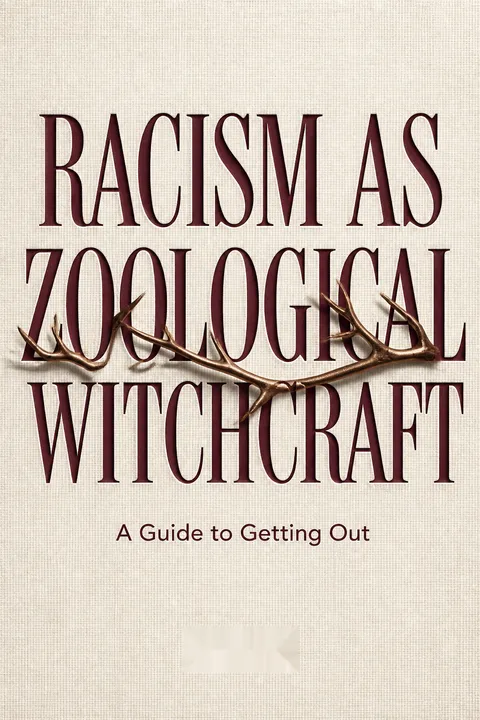
Racism as Zoological Witchcraft explores the connections between racism and animal exploitation, using pop culture references like "Get Out" to illustrate its points. Reviewers praised Ko's accessible writing style and thought-provoking ideas, particularly her critique of intersectionality and proposal for a multidimensional approach to liberation. Some found certain concepts confusing or underdeveloped, but most appreciated the book's unique perspective on dismantling white supremacy. Many readers felt challenged to reconsider their understanding of oppression and activism.
People Also Read
Glossary
Animality
Social construction of animal statusAnimality refers to social meanings and conditions assigned to nonhuman animals, while also naming a construction applied across race, gender, and class. In Ko’s account, it helps reveal how power defines an ideal human by placing other beings outside that standard and making their exploitation seem acceptable.
Zoological Racism
Racism built through animalityZoological racism describes the way racism depends on the human-animal divide. Ko uses the term to emphasize that white supremacy is not only anti-Black but also organized through ideas about animals, nature, and who may be treated as disposable. The concept links racial hierarchy to the social construction of animal status.
Zoological Witchcraft
Racial power that consumes and remakesZoological witchcraft is Ko’s term for white supremacy understood as a consumptive force that acts on both bodies and meanings. Drawing on scholarship that describes colonial power through witchcraft metaphors, she uses it to explain how dominant groups exploit those they mark as animal and impose definitions that obscure their agency and identity.
Social Layerism
Stacked oppressions without explanationSocial layerism is Ko’s term for listing or piling forms of oppression together without showing how they relate. It names a shallow use of intersectional language in which multiple categories appear in the same discussion, but remain conceptually separate. Ko argues that this can create the appearance of a complete analysis without explaining how power operates.
Afro-Zoological Resistance
Anti-racism that interrogates animalityAfro-Zoological Resistance is Ko’s concept for anti-racist activism that explicitly examines animality and its role in white supremacy. It asks activists to consider how racial hierarchy and the devaluation of animals are produced together, and how resistance can challenge the human-animal boundary rather than treating animal concerns as separate from racial liberation.
Multidimensional Liberation Theory
Power understood as mutually constitutedMultidimensional Liberation Theory describes Ko’s approach to oppression as a structure composed through interacting dimensions, rather than separate systems that merely intersect. It asks readers to examine how categories such as race, gender, and species shape one another, and how liberation strategies must address the structure’s less visible dimensions as well as its obvious forms.
Zoological Ventriloquism
Animal bodies used as racial propsZoological ventriloquism is Ko’s description of using nonhuman bodies or animal corpses as props through which human fantasies of power are performed. Her example is a reality dating show scene in which taxidermied rats are dressed as a wedding couple. The animals’ bodies become instruments in a human story about romance and white normalcy.
Double consciousness
Seeing oneself through two viewpointsDouble consciousness is W. E. B. Du Bois’s term for the divided experience of seeing oneself through one’s own perspective and through the judgments of a society that devalues one’s identity. Ko connects the idea to Get Out’s sunken place, where Chris is conscious but unable to control his body, as an image of alienation and imposed perception.
Download PDF
Download EPUB
.epub digital book format is ideal for reading ebooks on phones, tablets, and e-readers.








