

Key Takeaways
When the obvious fix fails, reframe the problem before doubling down
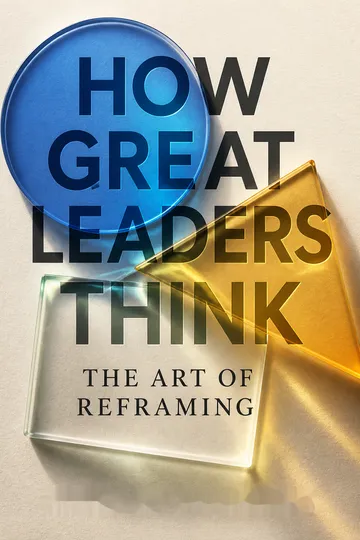
Start with diagnosis. Reframing means examining a situation through different mental models instead of treating the first explanation as fact. Volkswagen engineers cheated after leaders set targets they could not meet and created a culture where bad news was dangerous. At Wells Fargo, sales pressure persisted despite warnings, while employees opened millions of accounts customers had not requested. Blaming individual workers alone misses the conditions that made misconduct seem necessary or safe to ignore.
Experience can widen the view. Steve Jobs returned to Apple after being fired and, through work at Pixar and NeXT, developed a sharper appreciation for organizational design and teamwork. His core talents remained, but he saw the organization differently. When familiar fixes keep failing, the useful question is not simply who made the mistake, but what features of the system shaped the choices available.
What's useful here is the distinction between an explanation that assigns fault and one that guides prevention. Blame can be warranted, but it rarely identifies the full mechanism behind repeated failure. Reframing also has a danger: multiplying interpretations can become an excuse to postpone a decision. The practical test is whether a new lens changes what evidence is gathered or what action is taken. If every interpretation leads back to the same favorite solution, the exercise has become intellectual decoration.
Diagnose design, people, power, and meaning before choosing a remedy
Use more than one lens. The book's Four Frames are distinct ways to interpret organizations. The structural lens examines goals, roles, and coordination. The human resource lens asks whether people and organizational demands fit. The political lens tracks competing interests and power. The symbolic lens looks at culture, stories, and shared meaning. Each reveals something the others may miss.
One event can have four causes. Before 9/11, the FBI and CIA held different pieces of intelligence, but disconnected systems, longstanding rivalry, competition for territory, and contrasting agency cultures impeded cooperation. Better procedures address the structural problem, stronger relationships the human one, negotiated authority the political one, and a shared mission the symbolic one. A sound diagnosis can require all four at once.
The model's strength is not that four categories explain everything, but that they interrupt premature certainty. It asks a leader to look for interacting mechanisms: a confusing reporting line can intensify a personal conflict, while a status struggle can distort information. The lenses are best used as prompts, not as sealed compartments. Organizations also face forces the model does not name directly, including law, technology, and historical inequality. Those realities still need to be examined through the questions each lens makes possible.
Align responsibilities and coordination with the work, not the org chart
Structure shapes performance. Differentiation divides work among roles or units; integration coordinates their efforts. Stable, routine tasks can benefit from clear rules and central direction. Complex or changing work often needs lateral communication, such as cross-functional teams or informal contact. No single design works everywhere.
Coordination can be the missing link. During the World Trade Center rescue on September 11, 2001, police and fire crews acted heroically, but their radios were incompatible and their commanders were separated. Warnings did not reach everyone who needed them. By contrast, Amazon built a tightly measured operation around fast, consistent customer service. The lesson is not that hierarchy is good or bad. The structure must match the task, and responsibilities must connect where the work depends on more than one unit.
Structure is often treated as a chart, when it is really a pattern of dependencies, decision rights, and information flow. That shift matters: a team can have talented members and still fail because no one owns the handoff. At the same time, more coordination is not automatically better. Meetings, committees, and matrix reporting consume attention and can blur accountability. The design question is precise: where does interdependence require communication, and where would extra linkage merely slow competent people down?
Treat people as co-producers, not costs to be squeezed
Fit benefits both sides. Organizations depend on people's effort, skill, and judgment; people depend on organizations for income, opportunity, and meaningful work. When work is tightly controlled and offers little dignity or discretion, workers may withdraw, resist, or leave. Cutting jobs can save money quickly while also removing experience and weakening commitment.
Investment can unlock initiative. At Nucor, electricians traveled across states and worked long shifts to restore power at a steel mill. They volunteered because employees shared in company success and had room to act. Their base pay was below industry levels, but bonuses and a sense of ownership helped motivate exceptional effort. The contrast is not simply generosity versus discipline. It is whether management builds conditions in which people can contribute more than the minimum their job description demands.
The human resource lens treats motivation as a property of the relationship between worker and workplace, not a fixed trait employees bring through the door. That is a useful corrective to management habits that interpret silence as laziness or resistance as poor attitude. It does not mean every job can be made fulfilling or that autonomy suits every person and task. A credible people strategy needs fair pay, capacity, and support, not just inspirational language or perks.
Map interests and power before selling a technically correct plan
Organizations are coalitions. People and groups depend on one another while differing over priorities, resources, and what counts as success. The political lens treats conflict as normal, not proof that an organization has gone wrong. Before advancing a proposal, identify who matters, what each party wants, who can block progress, and what support is available.
The Challenger launch shows the stakes. Engineers warned that cold could compromise the shuttle's booster seals, but schedule pressure, funding concerns, and the contractor's business interests shaped the decision. Technical evidence alone did not overcome those pressures. Constructive political skill includes setting an agenda, mapping stakeholders, building relationships, and negotiating. Aruna Roy used those skills to build a broad coalition for India's right-to-information law, turning local grievances into a national campaign.
Political awareness is not the same as cynicism. It can help a responsible leader understand why a sound proposal threatens someone's authority, resources, or identity, then create a route to agreement. The challenge is ethical: influence can serve a shared purpose, or disguise private advantage. A useful safeguard is to make assumptions and trade-offs discussable. When the only route to success depends on secrecy, intimidation, or excluding affected people, political skill has become manipulation.
Give culture visible form through stories, rituals, and credible conduct
Meaning is part of the work. The symbolic lens examines how stories, heroes, rituals, and ceremonies help people understand what an organization values. Culture is the shared sense of how things are done and what matters. It can unite people, but it can also preserve harmful habits or silence unwelcome truths.
Symbols carry more than function. Coca-Cola's executives changed the drink's formula after taste tests favored the new version, yet customers rallied to the original as a familiar piece of American life. At Zappos, playful traditions and unusual workplace rituals helped express a culture centered on service and fun. Symbols work when people recognize their experience in them. A slogan cannot repair a workplace where incentives and leaders contradict the message.
A symbolic act can make an abstract value memorable because it gives people something to see, repeat, and share. This makes culture a practical resource, not a decorative layer. But symbolism is unusually easy to counterfeit. A ceremony staged to project unity may deepen distrust if employees see it as theater meant to cover a broken promise. The credibility test is whether ordinary decisions reinforce the meaning a ritual claims to celebrate.
Treat change as a transition in skills, authority, interests, and identity
Change disrupts several systems at once. People may feel anxious or unprepared, roles can become unclear, winners and losers emerge, and familiar sources of meaning disappear. Training and participation address capability and voice. Structural redesign clarifies responsibilities. Negotiation gives conflict a forum. Rituals can help people acknowledge losses and mark a new beginning.
The cases show why partial fixes disappoint. At 3M, Six Sigma improved control but risked squeezing out experimentation. At J.C. Penney, Ron Johnson removed familiar sales and coupons without testing how customers experienced shopping, and the company struggled. Alan Mulally's turnaround at Ford combined structural redesign, employee communication, labor negotiation, and a renewed story about the company's purpose. At Kennedy High, new principal David King began repairing conflict by listening and building relationships before forcing a solution.
The key insight is that change is not a message sent from leadership to employees. It is a renegotiation of work, authority, relationships, and identity. A technically excellent plan can fail if people lack training or see the process as rigged. Yet participation alone cannot settle every issue, especially when goals conflict or safety is urgent. Effective change combines engagement with clear decisions, and gives people enough time and evidence to distinguish a difficult transition from a bad idea.
Match team structure to whether work is solo, sequential, or reciprocal
The task determines the team's connections. Baseball offers a model of mostly independent roles with occasional coordination. Football relies on planned sequences in which each player's move sets up the next. Basketball requires continuous, reciprocal adjustment among players. These patterns clarify why the same structure cannot serve every team or project.
Teams need deliberate design. SEAL Team Six operators trained until each person knew their role, how to coordinate, and what to do if communication failed. High-performing teams also need a clear purpose, specific goals, complementary expertise, manageable size, and shared accountability. The book's account of a pharmaceutical project illustrates that even one organization may shift from independent research, to sequential development, to close collaboration during final approval.
The sports comparison makes interdependence visible: when one person's work changes what others can do, coordination must be designed rather than wished into existence. It also cautions against copying a celebrated team's rituals or structure without understanding its task. A team built for rapid mutual adjustment can bog down a routine assignment; a rigid chain of command can cripple exploratory work. Team design should change when the work changes, not merely when a new manager arrives.
Build ethics into incentives and decisions before crisis exposes the gap
Values need consequences. Siemens hid bribery through elaborate accounting practices, while Walmart's Mexican subsidiary used payments to secure approvals that normal processes would not allow. Formal statements of integrity did not prevent misconduct when people saw unethical behavior as useful to the business.
Ethics has several organizational dimensions. The book connects excellence with doing work well, care with attending to human needs, justice with fair treatment and voice, and faith with a credible sense of purpose. Medtronic made its patient-first mission tangible through ceremonies for new employees and by removing an executive who maintained a secret account for payments to doctors. Ethical leadership is therefore more than personal virtue. It requires incentives, accountability, and visible decisions that show which values prevail when profit and principle collide.
The strongest ethical commitments are tested by ordinary systems: targets, promotion rules, reporting channels, and the treatment of people who raise concerns. That makes ethics an organizational design problem as well as a matter of character. Purpose can orient difficult choices, but it cannot substitute for oversight or fair procedures. A mission becomes credible when leaders accept real costs for honoring it, and when employees can challenge questionable conduct without having to gamble their livelihood.
Analysis
The book's central contribution is a practical theory of organizational attention. Leaders do not merely choose among solutions; their assumptions determine which facts register as relevant, which actors count, and which interventions seem imaginable. The four frames make this selection process visible. They connect formal design, human needs, power, and meaning without reducing one to another. The result is less a recipe than a disciplined way to resist premature closure.
The narrative examples make the argument unusually concrete. Challenger shows technical judgment subordinated to schedule and organizational politics. The FBI and CIA illustrate how structural separation, rivalry, and institutional identity can compound. Coca-Cola shows that consumer choice is also cultural attachment. The Kennedy High School case demonstrates reframing as a leadership practice: the principal moves from private listening to diagnosis, relationship repair, negotiation, and renewed purpose. Across these cases, the same failure rarely has one cause.
The model also has limits. Four lenses are memorable, but real problems may involve legal constraints, technology, class, race, or external economic forces that do not fit neatly into one category. The framework can also encourage endless diagnosis if leaders treat every perspective as equally decisive. Judgment remains necessary, especially where power is asymmetric or delay itself causes harm. Finally, symbolic leadership can inspire, but it can also manufacture consent; attention to meaning should not replace evidence or accountability.
Its strongest practical use is therefore comparative. A leader can ask what each frame explains, what it overlooks, and what action would test the diagnosis. Reframing is successful not when it produces a more elegant story, but when it expands choices, improves the quality of decisions, and makes organizational consequences harder to hide.
Review Summary
Reframing Organizations is highly regarded for its accessible presentation of organizational theory through four frames: structural, human resource, political, and symbolic. Readers appreciate its real-world examples, comprehensive coverage of leadership concepts, and practical applications. Many find it valuable for both academic and professional contexts. The book is praised for its clear writing style and ability to broaden perspectives on organizational dynamics. While some critique its length and corporate focus, most reviewers consider it an essential resource for understanding and improving leadership practices.
People Also Read




Glossary
Reframing
Changing the diagnostic lensThe practice of interpreting the same organizational situation through more than one set of assumptions. Reframing helps leaders generate alternative explanations and courses of action instead of repeating a familiar response. In this book, it means shifting among structural, human resource, political, and symbolic perspectives, then judging which combination best fits the circumstances.
Structural Frame
Designing work and coordinationA perspective that views organizations as arrangements of goals, roles, units, rules, and coordinating systems. It asks how work should be divided and how separate efforts should be integrated. The frame treats effectiveness as dependent on fit among structure, strategy, technology, workforce, and environment, and considers redesign when that fit breaks down.
Human Resource Frame
Fitting people and organizationsA perspective that focuses on the relationship between human needs and organizational demands. Organizations need people's talent and effort, while people need income, opportunity, support, and meaningful work. A good fit benefits both; a poor fit can produce alienation, withdrawal, conflict, or underperformance.
Political Frame
Understanding interests and powerA perspective that sees organizations as coalitions of people and groups with differing interests and unequal influence. Because resources are limited, conflict, negotiation, alliance-building, and bargaining shape important decisions. The frame treats politics as an ordinary feature of interdependence, while distinguishing constructive influence from destructive manipulation.
Symbolic Frame
Creating shared meaningA perspective that examines how stories, myths, rituals, ceremonies, heroes, and other symbols help people interpret organizational life. It emphasizes that actions and structures may matter for what they express as well as for their practical results. Shared meaning can build identity and commitment, though symbols can also conceal problems or reinforce damaging traditions.
Model I
Self-protective behavior patternA theory-in-use described by Chris Argyris and Donald Schön. People pursue their own goals, control situations, suppress negative feelings, and protect themselves and others from embarrassment or threat. These habits often make assumptions difficult to discuss, encourage defensiveness, and prevent people from learning why their actions are failing.
Model II
Open, testable collaborationAn alternative theory-in-use that emphasizes shared goals, direct communication, and testing assumptions publicly. People state what they think while actively seeking other perspectives. The aim is not to eliminate disagreement, but to make it discussable and use it to improve decisions and relationships.
Organizational isomorphism
Organizations becoming more alikeThe process by which organizations in the same field adopt similar structures and practices. Similarity can result from regulation, imitation of successful or prestigious peers, or shared professional training. The practice may improve legitimacy and help organizations secure support, even when it does not directly improve their technical performance.
Organizational ecosystem
Interdependent organizations and stakeholdersA network of organizations and other actors that depend on one another while competing or cooperating for resources, influence, customers, or legitimacy. A firm's choices are shaped by suppliers, regulators, rivals, partners, and communities. Powerful organizations can influence an ecosystem, but they remain constrained by other actors and changing conditions.
FAQ
What's Reframing Organizations: Artistry, Choice, and Leadership about?
- Understanding Organizations: The book explores how organizations function and the complexities involved in managing them. It introduces a four-frame model—structural, human resource, political, and symbolic—to help leaders and managers make sense of organizational dynamics.
- Reframing Perspective: The authors emphasize the importance of reframing situations to gain new insights and develop effective strategies. This approach allows managers to view challenges from multiple angles, enhancing their decision-making capabilities.
- Practical Application: Designed for both scholars and practitioners, the book provides theoretical insights alongside real-world examples, equipping readers with tools to navigate the complexities of organizational life.
Why should I read Reframing Organizations: Artistry, Choice, and Leadership?
- Comprehensive Framework: The book offers a robust framework for understanding organizations, making it valuable for anyone involved in management or leadership. The four frames provide a versatile lens for analyzing various organizational issues.
- Real-World Examples: It includes numerous case studies and examples from diverse sectors, illustrating how the concepts apply in practice. This makes the theoretical content relatable and actionable.
- Enhancing Leadership Skills: By learning to reframe situations, readers can improve their leadership effectiveness and adaptability. The book encourages a deeper understanding of the interplay between structure, people, and culture in organizations.
What are the key takeaways of Reframing Organizations: Artistry, Choice, and Leadership?
- Four Frames Model: The book introduces the four frames—structural, human resource, political, and symbolic—as essential tools for understanding and managing organizations. Each frame offers unique insights into different aspects of organizational life.
- Importance of Reframing: Effective leaders must be able to reframe situations to uncover new possibilities and solutions. This skill is crucial for navigating complex challenges and fostering innovation.
- Balancing Structure and Flexibility: Successful organizations find a balance between formal structure and the flexibility needed to adapt to changing environments. The book emphasizes that structure should align with strategy, technology, and workforce characteristics.
What are the best quotes from Reframing Organizations: Artistry, Choice, and Leadership and what do they mean?
- “Managers do things right. Leaders do the right thing.”: This quote highlights the distinction between management and leadership, emphasizing that effective leadership involves moral and ethical considerations beyond mere efficiency.
- “Culture eats strategy for breakfast.”: Attributed to Peter Drucker, this quote underscores the power of organizational culture in shaping outcomes, suggesting that culture can undermine even the best strategies if not aligned.
- “The world we perceive is, for the most part, the image we construct in our minds.”: This quote underscores the importance of mental models and perceptions in shaping our understanding of reality, reinforcing the need for reframing.
What is the four-frame model in Reframing Organizations: Artistry, Choice, and Leadership?
- Structural Frame: Views organizations as machines or factories, focusing on roles, goals, and the formal structure necessary for efficiency. It emphasizes the importance of clear hierarchies and defined responsibilities.
- Human Resource Frame: Sees organizations as families, highlighting the need to align organizational goals with individual needs. It stresses the importance of motivation, relationships, and employee engagement.
- Political Frame: Organizations are viewed as arenas where power dynamics, conflict, and competition play out. This frame emphasizes the need for political skills and the ability to navigate complex interpersonal relationships.
- Symbolic Frame: Focuses on culture, meaning, and the symbolic aspects of organizations. It highlights the importance of rituals, stories, and shared values in shaping organizational identity and cohesion.
How does the structural frame in Reframing Organizations: Artistry, Choice, and Leadership impact organizational design?
- Focus on Organization Design: Emphasizes the importance of organizational design, roles, and responsibilities in achieving goals. It looks at how tasks are divided and coordinated within an organization.
- Rational Approach: Advocates for a rational approach to management, where clarity in structure leads to efficiency and effectiveness. Well-defined roles and procedures can minimize confusion and conflict.
- Implementation Challenges: While essential, the structural frame can overlook human and political dynamics, which are also critical for organizational success.
How does the human resource frame in Reframing Organizations: Artistry, Choice, and Leadership influence organizational effectiveness?
- Emphasis on People: Focuses on the needs, skills, and motivations of individuals within the organization. Organizations are most effective when they align their goals with the needs of their employees.
- Fit Between Individuals and Organizations: A key concept is the "fit" between individuals and the organization, affecting job satisfaction and performance. Valued and engaged employees contribute positively.
- Development and Empowerment: Encourages investment in employee development and empowerment. A supportive environment enhances employee motivation and productivity.
What role does the political frame play in Reframing Organizations: Artistry, Choice, and Leadership?
- Conflict and Power: Highlights the role of conflict and power dynamics within organizations. Recognizes that organizations are coalitions of individuals and groups with differing interests.
- Negotiation and Bargaining: Important decisions often emerge from negotiation and bargaining among stakeholders. Understanding the political landscape is crucial for leaders to navigate conflicts and build coalitions.
- Power as a Resource: Views power as a key resource in organizations. Leaders must understand how to wield power effectively to influence decisions and drive organizational change.
How does the symbolic frame contribute to organizational culture in Reframing Organizations: Artistry, Choice, and Leadership?
- Meaning and Identity: Emphasizes how symbols, myths, and rituals shape organizational culture and identity. Meaning is created through shared experiences and narratives.
- Role of Leaders: Leaders craft and communicate the organization's vision and values. They use symbols to inspire and motivate employees, fostering a sense of belonging and purpose.
- Coping with Ambiguity: Symbols help individuals navigate uncertainty and ambiguity in the workplace. They provide a framework for understanding complex situations and reinforce shared beliefs and values.
How does Reframing Organizations: Artistry, Choice, and Leadership address the issue of organizational complexity?
- Complexity Acknowledgment: Recognizes that organizations are complex systems with many interdependent parts, making them difficult to manage. Understanding this complexity is crucial for effective leadership.
- Coping Strategies: Discusses various strategies for coping with complexity, including the use of multiple frames to analyze situations. This approach allows leaders to develop a more nuanced understanding of organizational dynamics.
- Systemic Causes of Failure: Illustrates that many organizational failures stem from systemic issues rather than individual mistakes. By addressing these underlying causes, leaders can implement more effective solutions.
How can leaders apply the concepts from Reframing Organizations: Artistry, Choice, and Leadership in practice?
- Adopt a Reframing Approach: Practice shifting between the four frames to gain a comprehensive understanding of organizational challenges. This flexibility allows for more effective problem-solving and decision-making.
- Foster Open Communication: Encourage open dialogue and feedback among team members to address conflicts and build trust. Create an environment where employees feel safe to express their concerns and ideas.
- Align Goals and Values: Work to align organizational goals with the values and needs of employees. This alignment fosters engagement and commitment, ultimately driving organizational success.
Download PDF
Download EPUB
.epub digital book format is ideal for reading ebooks on phones, tablets, and e-readers.








