

Key Takeaways
Ask who profits when racial harm survives every apparent reform
Reform kept getting reversed. Jim Freeman begins with a puzzle from his work as a civil rights lawyer: communities won campaigns against harmful policies, yet new policies often recreated the same damage. In Chicago, parent Anna Jones joined a 34-day hunger strike to stop the closure of Dyett High School after earlier closures crowded classrooms and disrupted students’ lives. The fight showed Freeman that injustice was not simply fading as old prejudices faded.
A deliberate pattern. He calls the strategy behind this pattern strategic racism: the purposeful use of policies and institutions that preserve racial harm because influential people gain from it. The term does not require proving that every supporter is personally racist. Freeman argues that some wealthy actors knowingly back policies whose damaging effects are profitable or politically useful.
The book’s central move is from asking whether a policy is biased in intent to asking who benefits from its predictable effects. That is a useful political-economy lens: incentives can preserve harmful arrangements even when participants describe their motives as neutral or benevolent. The Dyett story makes the stakes tangible, since policy abstractions become crowded classrooms, lost relationships, and exhausted parents. A distinction still matters: evidence that a policy causes unequal harm is not, by itself, evidence that every supporter intended that harm. Freeman’s argument is strongest when it connects repeated outcomes to organized funding and policy activity.
Trace policy networks and funding, not only individual prejudice
A shared policy pipeline. Freeman identifies the American Legislative Exchange Council, or ALEC, as a key meeting point for corporate interests and legislators. The book reports more than 300 corporate members and about 2,000 legislative members. ALEC circulates model bills across states, with more than 1,000 introduced in a typical year and roughly one in five becoming law, according to the figures cited.
An ecosystem, not a lone donor. In education, ten wealthy sources invested nearly $3.2 billion in 50 organizations, including advocacy groups, charter networks, research bodies, and media outlets. Freeman’s point is that influence comes from building a whole supportive environment, not merely writing one campaign check. Similar networks, he argues, backed criminal justice and immigration policies that served corporate interests.
The organizational lens helps explain why similar proposals appear across jurisdictions and why public debate can feel tilted before voters encounter it. Funding advocacy, research, communications, and implementation at once can create durable capacity that community groups rarely possess. The useful question is not simply whether a donation bought a specific vote, but how repeated funding changes which ideas are available, amplified, and treated as realistic. Still, overlap among donors and organizations does not prove identical motives or uniform effects. Network analysis clarifies influence, but careful claims about intent require evidence at each link.
Judge school reform by every child and neighborhood, not headline scores
A lottery is not a guarantee. After Hurricane Katrina, New Orleans replaced its public school system with an all-charter system. Parent Tatanisha Jackson expected to enroll her daughter at a nearby school, but a lottery sent the child across town. The young student faced a long daily commute, little sleep, and worsening sickle cell crises. The family’s supposed choice became a difficult tradeoff between health and the district’s school ratings.
Look beyond test results. Freeman argues that closures can break community ties, overcrowd remaining schools, displace experienced educators, and leave students with disabilities or other high support needs without a suitable placement. He notes that research comparing charter and public school outcomes was inconclusive in the evidence he reviewed. The book does not deny that individual charter schools can help some students. It questions whether market-style expansion reliably improves education for a whole community.
The case usefully shifts evaluation from a single school’s score to the wider system that determines who gets served, who is pushed out, and what happens to institutions left behind. In education policy, a school’s performance cannot be separated from enrollment rules, student needs, staffing, and funding. A lottery may offer a real option to one family while imposing long-distance travel or instability on another. Conversely, public systems can also fail families badly, so defending public provision is not enough. The stronger standard is whether every child has access to a safe, well-resourced school that can meet their needs.
Measure public safety by fewer harms, not more arrests
The system expanded dramatically. Freeman compares 325,618 people in US prisons and jails in 1971 with 2,173,800 in 2015. In 2016, there were 10.7 million arrests, and fewer than five percent were for offenses the FBI classified as violent. He calls the choices that make ordinary behavior easier to criminalize, especially in communities of color, the Criminalization Trap.
Punishment is not the only response. The book argues that police are routinely assigned problems better addressed by health workers, counselors, housing support, or violence prevention specialists. Freeman cites $5.3 trillion in additional criminal justice spending from 1972 to 2016 compared with keeping spending at the 1971 level. He proposes limiting force, reducing incarceration, reinvesting in community supports, and giving residents more control over public safety decisions.
The public health framing changes the central question from how much punishment an offense deserves to what could prevent harm and reduce its recurrence. It also exposes a measurement problem: arrest totals describe government activity, not whether residents feel safe or whether violence has declined. A multidisciplinary response can match expertise to need rather than treating every crisis as a policing problem. Yet any alternative must also take seriously people facing immediate danger and survivors’ needs. The challenge is to build prevention and accountability systems that are credible, accessible, and capable of responding quickly when serious harm is imminent.
Separate immigration enforcement from the exploitation that depends on undocumented labor
Fear became part of daily life. Freeman describes Arizona’s anti-immigrant laws, including measures restricting public benefits and a 2010 law that expanded immigration checks by police. Families he interviewed limited trips outside the home and feared separation. One mother’s husband was deported, and their daughter left college to help support the family. The book estimates that about 11 million undocumented immigrants lived in the United States at the time.
The labor contradiction. Freeman argues that employers benefit from workers who can be paid poorly and are vulnerable to retaliation, even as political rhetoric demonizes them. He connects migration pressures to US economic and foreign policies, citing job losses in Mexican agriculture following NAFTA. He calls the combined system of discrimination based on national origin, race, and immigration status Juan Crow, and advocates legalization, humane treatment, and less exploitative employment practices.
This section exposes how a labor market can depend on workers while denying them security and public belonging. Vulnerability suppresses bargaining power, so a policy that appears focused on border enforcement can also shape wages and workplace conditions far inside the country. The family stories show that enforcement has consequences beyond the person detained, disrupting education, health, and caregiving. Immigration policy still involves real questions about admission and legal status. But those questions need not be answered through family separation, detention, or unsafe work. Distinguishing border governance from punishment of people already embedded in communities clarifies the available choices.
Reject racial scapegoating without pretending the harms are equal
Division protects concentrated power. Freeman describes a divide-and-conquer pattern: when white, Black, and Latinx communities are encouraged to blame one another for scarce jobs, services, or safety, they are less likely to challenge the wealthy actors shaping those conditions. He also asks white readers to examine material benefits that can accrue through unequal school funding, low wages, depressed home values, and reduced public services.
Shared interests do not erase unequal burdens. The book argues that racial injustice harms people of color most directly, while also weakening public institutions and economic security for many white families. Its proposed alliance is not a request for white people to take over racial justice work. It is a call to listen to affected communities, support their priorities, and recognize that solidarity is both a moral responsibility and a practical source of political power.
The distinction between unequal exposure and shared structural interests is crucial. A coalition built on the claim that everyone suffers equally would erase the specific injury the book documents. A coalition built on the recognition that institutions can distribute harm unevenly while weakening common goods is more honest and more durable. The analysis also invites scrutiny of benefits that are indirect or inherited, rather than limiting privilege to personal wealth. At the same time, individual responsibility should be made actionable, not reduced to inherited guilt. Listening, changing political choices, and supporting community-led demands turn recognition into accountable participation.
Follow affected communities’ leadership, then bring durable resources
Change is organized, not spontaneous. Freeman argues that major social reforms have generally followed years of grassroots organizing, public pressure, and coalition building. Charismatic leaders matter, but their influence depends on the people and organizations around them. His theory of change starts with those most affected by oppression taking collective action and building power with others who share an interest in changing the conditions that produce it.
Turn concern into infrastructure. The book urges readers to support existing racial justice organizations with time, skills, and money, and to create local community equity assemblies where residents can learn, deliberate, and act together. Such groups can shape local priorities, influence budgets, and hold officials accountable. The practical instruction is modest but demanding: find a group, contribute usefully, and keep showing up rather than treating a rally or a donation as the whole job.
The emphasis on organization addresses a familiar weakness of public attention: intense moments of visibility can dissipate without groups able to maintain relationships, preserve knowledge, and press for implementation. Local assemblies also create a bridge between lived experience and formal policy, which can improve both legitimacy and problem definition. Participation alone, however, does not guarantee inclusion. Durable groups need transparent decision-making, room for disagreement, and accountability to the communities they claim to represent. The book’s insistence on affected leadership is therefore more than a moral preference. It is a design principle for producing policies responsive to actual conditions.
Shift public money from punishment and privatization toward developmental needs
Budgets reveal priorities. Freeman argues that communities are shaped by where public resources go. Schools, health care, housing, living-wage work, and youth support can meet needs and reduce the conditions that drive harm. He describes these conditions and supports as developmental inputs. Schools, for example, should respond to the whole child through engaging instruction, manageable class sizes, health services, and stable relationships, rather than relying on narrow testing and exclusionary discipline.
Invest in what helps people thrive. The book proposes moving money away from school privatization, excessive criminal justice spending, and immigration enforcement, then investing in community needs. It suggests that reducing criminal justice spending to earlier levels could free about $238 billion annually, and that rolling back immigration enforcement spending could free nearly $28 billion. These are presented as possible resources for public services, not as guaranteed savings without transition costs.
This framework treats a budget as a theory of society made concrete: it reveals which needs are funded upstream and which harms are managed downstream. The developmental lens is especially useful because it connects education, health, housing, and safety rather than treating them as separate policy silos. It also guards against assuming that a nominally universal program will automatically close racial gaps. The proposed figures are substantial, but reallocating funds requires careful sequencing, workforce planning, and protections for people who rely on existing services. A sound investment case must show not only what to cut, but how the replacement system will deliver.
Organize local power before concentrated wealth reshapes democratic rules
The contest reaches constitutional scale. Freeman warns that wealthy networks supported efforts to convene an Article V constitutional convention, including a balanced-budget amendment campaign. In the book’s April 2020 snapshot, that effort had resolutions from 28 states, six short of the 34 required to call a convention. Supporters described limits on federal power and spending; Freeman feared a convention could expand beyond its stated purpose and weaken public protections.
Democracy must be continuous. The response he advocates is not just voting every few years, but sustained participation through grassroots organizations, cross-racial coalitions, and community control over decisions. His conclusion frames people’s lives as interdependent: education, safety, health, and family stability are linked across communities. He also entertains a grassroots-led constitutional reform process that could state social rights more clearly, rather than leaving political power concentrated in the hands of wealthy donors.
The constitutional debate raises a deeper question about who gets to define the rules of political change. Rules about spending, rights, and representation can shape future policy long after a particular election ends. The book makes a case for counter-mobilization, not faith in benevolent elites or a single party. Its proposal for constitutional reform is ambitious, and the danger of opening a high-stakes process is real, especially when power is unequal. The durable lesson is to build broad, informed public participation before formal rules are changed, so that procedural reform reflects the people governed by it.
Analysis
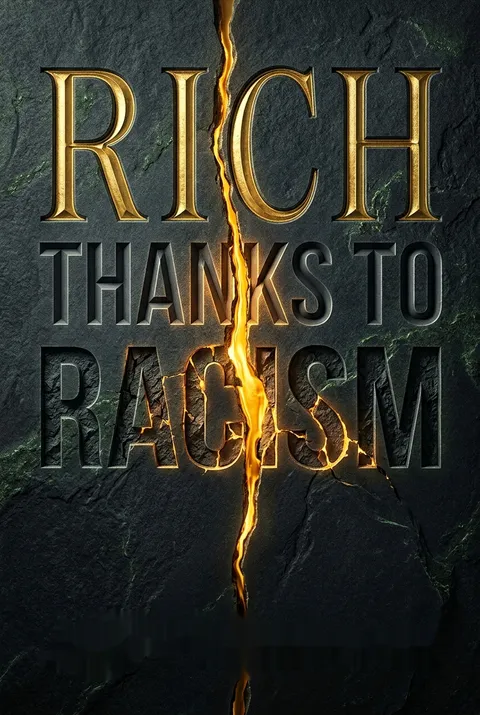
Rich Thanks to Racism is an activist political-economy argument, organized around a personal change in understanding. Freeman begins by assuming that racial inequality persists largely through ignorance and inherited prejudice. His work with communities and investigation of funders lead him to a harder thesis: some influential actors support policy systems whose racial harms are foreseeable and whose effects advance wealth and political power. The book’s strongest contribution is to connect everyday experience, such as an overcrowded classroom or a deported parent, to the less visible institutions financing policy campaigns.
Its analytical method is cumulative. Education privatization, mass criminalization, and immigration enforcement are treated not as isolated policy failures, but as examples of a wider pattern involving privatization, low-wage labor, weakened public services, and limited democratic control. The repeated questions, who benefits and who is harmed, give readers a portable way to examine institutions. Stories of parents, students, and immigrant families keep that analysis grounded in consequences rather than abstractions.
The argument also makes claims that deserve careful evaluation. Funding overlap, coordinated model legislation, and persistent unequal outcomes are important evidence of organized influence, but they do not automatically establish a single motive shared by every donor, official, or organization. The book sometimes moves quickly from evidence of material benefit to a claim of purposeful design. Separating documented coordination, foreseeable effects, and provable intent would sharpen the distinction between strategic racism and structural outcomes sustained without a unified plan.
Its proposed remedies are expansive: reduce harmful spending, build community-led alternatives, strengthen public services, and deepen democratic participation. These recommendations follow from the diagnosis, but implementation requires detailed safeguards, funding transitions, and measurable accountability. The book’s lasting challenge is therefore both moral and institutional: stop treating racial inequality as an unfortunate residue, and investigate the organizations, incentives, and public choices that keep reproducing it.
People Also Read





Glossary
strategic racism
intentional policy-driven racial harmFreeman’s term for the purposeful use or preservation of policies and institutions that produce racial harm while serving powerful economic or political interests. It differs from an account focused only on individual prejudice or unintended side effects. The term does not require that every person supporting a harmful policy personally hold racist beliefs.
American Legislative Exchange Council (ALEC)
corporate-legislator policy networkA membership organization that brings corporations and state legislators together and circulates model legislation. Freeman presents ALEC as an important vehicle through which wealthy and corporate interests promote policy across states, including measures concerning education, criminal justice, and immigration. The book cites its corporate membership, legislative membership, bill introductions, and enactment rates as signs of its reach.
Criminalization Trap
policy choices expanding punishmentFreeman’s framework for explaining how broad criminal laws, intensive enforcement, and punitive consequences combine to pull large numbers of people into the criminal justice system. He argues that this system is not an accidental byproduct: policy choices make ordinary behavior easier to criminalize and focus enforcement especially heavily on communities of color.
Doctrine of Corporate Greed
corporate wealth-first policy agendaFreeman’s label for a policy agenda that prioritizes the economic interests of large corporations and wealthy investors. Its recurring aims include lower taxes and regulation, weaker labor protections, reduced public services, and privatization that opens public functions to private profit. The book uses the term to connect school privatization with broader political and economic priorities.
developmental inputs
conditions shaping child developmentFreeman’s term for the experiences and resources that influence children’s learning and growth. Positive inputs include stable housing, health care, supportive relationships, engaging curricula, and enrichment opportunities. Negative inputs include trauma, overcrowding, unmet health needs, punitive discipline, and instability. The distribution of these inputs, he argues, can either reduce or deepen educational inequity.
authentic accountability
repair, responsibility, and healingA response to wrongdoing centered on taking responsibility, repairing harm, supporting healing, and reducing the chance of future harm. Freeman contrasts it with punishment, which can impose suffering without meeting survivors’ needs, addressing the causes of an offense, or helping the person responsible change. Restorative and transformative justice efforts are examples he associates with this approach.
Juan Crow
immigration-status racial discriminationFreeman’s term for policies and practices that subject undocumented immigrants, especially people of color, to unequal treatment and exclusion. The analogy is to Jim Crow: discrimination is justified through a legal category presented as distinct from race, while racial and national-origin distinctions remain central to who is targeted and how they are treated.
Liberatory Communities
communities organized around shared flourishingFreeman’s name for communities whose public decisions are shaped by residents and directed toward everyone’s health, safety, happiness, and ability to thrive. They value equal human worth, participatory democracy, and reducing harm. The concept emphasizes aligning public resources with community needs rather than using them to deepen inequality or concentrate wealth.
community equity assemblies
local groups for shared actionProposed local gatherings where residents learn about systemic racism and other forms of oppression, identify shared priorities, and organize to influence policy. Freeman imagines these assemblies as accessible structures that can grow from small groups into a wider community presence, helping residents shape budgets, hold officials accountable, and support existing grassroots organizations.
Download PDF
Download EPUB
.epub digital book format is ideal for reading ebooks on phones, tablets, and e-readers.








