

Key Takeaways
Count the deaths fear causes, not only the danger it fears
Fear changed the route. After the September 11 attacks, many Americans avoided flying and drove instead. Psychologist Gerd Gigerenzer compared travel patterns and road deaths before and after the attacks, estimating that the shift contributed to 1,595 additional traffic fatalities in the following year. The book contrasts the annual risk of dying in a car crash, about 1 in 6,000, with the much smaller risk of dying on a passenger flight.
Fear has consequences. The attacks were real and horrifying, but the response transferred risk from a dramatic, visible threat to a familiar one. The book’s central warning is that fear can itself become dangerous when it distorts personal choices and public priorities.
The episode captures a basic problem in behavioral policy: people optimize against the danger they can picture, not necessarily the danger that is largest. The shift to driving is a vivid example of risk substitution, where protection from one hazard increases exposure to another. Still, the estimate is specific to that period and population, not a universal argument for flying. The broader lesson is procedural: compare alternatives using the same time frame, outcome, and denominator before treating avoidance as safety.
Make instinct answer to reason before acting on fear
Two modes of thought. The book calls fast, unconscious, emotional judgment System One, or Gut. It calls slow, conscious analysis System Two, or Head. Gut reacts quickly to danger, a useful inheritance from environments where a delayed response to a predator could be fatal. Head can calculate probabilities and revise an intuition, but it is effortful and easily distracted.
Modern mismatch. In Lagos, the author spent hours in a dangerous neighborhood searching for a stolen wallet because it held a photograph of his children. He knew the picture was replaceable, yet his feelings treated it as if his children were at risk. Exhaustion, stress, and alcohol made rational review less likely. The point is not to suppress intuition, but to recognize when it may be using ancient rules in a changed world.
This model resembles a division of labor: rapid pattern recognition handles urgent action, while deliberation checks whether the pattern fits the present situation. Expertise can make that rapid judgment more reliable, as practiced skills become intuitive. The difficulty is that confidence does not reveal whether an intuition is expert pattern recognition or an old shortcut misfiring. A useful distinction is whether the setting provides repeated, trustworthy feedback. Risk judgments about rare events rarely do.
Interrogate anchors, plausible stories, and vivid examples before trusting risk estimates
Three mental shortcuts. The Anchoring Rule means that an initial number pulls a later estimate toward it, even when irrelevant. The Rule of Typical Things judges likelihood by how well a description fits a familiar type. The Example Rule treats easily recalled events as more common than they may be.
Shortcuts distort. In one experiment, people who heard the number nine before guessing Gandhi’s age at death gave an average estimate of 50; those who heard 140 guessed 67. In another, people judged a bank teller who was also a feminist more likely than a bank teller alone, despite the basic logic that the combined description cannot be more probable. A vivid event can also make a rare danger feel frequent simply because examples come readily to mind.
The three shortcuts explain why a persuasive estimate can feel self-generated even when it has been shaped by an arbitrary prompt, a stereotype, or recent news. Forecasting practice offers a useful corrective: begin with the broad class of comparable cases, then ask what makes this case different. That approach disciplines narrative intuition without dismissing it. A caveat matters, though: base rates can be poor guides when the current event truly differs from past cases, so comparison should inform judgment, not end it.
When risk feels vivid, translate emotion back into probability
Feeling changes estimates. The Good-Bad Rule describes how an immediate positive or negative feeling colors later judgments about an activity’s risk and benefit. People often treat a liked thing as safer and a disliked thing as more dangerous, even when the evidence about risk has not changed. Strong emotion can also make people nearly blind to probability.
Words make risks feel real. In an experiment with forensic psychiatrists, 21 percent said they would refuse to release a patient described as having a 20 percent chance of violence. When the same risk was phrased as 20 out of every 100 similar patients committing violence, 41 percent refused release. The numbers meant the same thing. The concrete phrasing made potential victims easier to imagine, and that image changed the decision.
Emotion is not simply noise. It can alert people to injustice, unfamiliar hazards, or consequences that a sterile calculation omits. The danger is treating emotional intensity as a measurement of likelihood. This distinction matters in risk communication: concrete examples can make abstract stakes understandable, but they can also exaggerate a danger unless paired with a clear probability. Good communication should neither strip away human consequences nor let vividness quietly replace evidence.
Ask for denominators, comparisons, and representative evidence
Stories raise questions, not conclusions. The silicone breast implant panic grew through reports of women who developed illnesses after receiving implants. Those cases mattered and warranted investigation, but they could not show that implants caused the illnesses. Since about 1 percent of American women had implants and about 1 percent had connective-tissue disease, roughly 10,000 women could have had both by coincidence alone. At the time of the 1992 ban, epidemiological studies had not established a link.
Measure the comparison. Later large studies found no evidence that implants caused connective-tissue disease. The crucial test was whether illness occurred more often among women with implants than among comparable women without them. A story can reveal a possible problem; representative data and careful comparison are needed to estimate its scale and assess causation.
This is a distinction between signal detection and causal inference. Individual reports can be valuable early warnings, especially when a harm is rare or newly emerging. But selecting only affected people creates a biased sample, while co-occurrence alone cannot identify cause. The best response is neither to dismiss testimony nor to treat it as proof: use it to formulate a test, then make the comparison public and scrutinize how participants were selected.
Treat consensus as evidence to inspect, not proof to obey
Groups shape judgment. In Solomon Asch’s line-length experiments, participants agreed with an obviously wrong group answer about one-third of the time. When people already share a view, discussion can push the group toward more extreme positions, a process called group polarization. Confirmation bias, the tendency to favor evidence that supports an existing belief and discount evidence against it, helps those views persist.
Identity shapes danger. Research by Dan Kahan and colleagues found that Americans’ cultural worldviews predicted their judgments about risks including guns, climate change, and marijuana. People often interpret evidence in ways that protect their values and group identity. This does not mean every disagreement is irrational or that experts are useless. It means that difficult, high-stakes questions can make people more dependent on trusted groups, precisely when independent scrutiny is most valuable.
The account points toward social epistemology: knowledge is often distributed across people, so reliance on others is unavoidable, not a personal failing. The practical challenge is choosing networks that can correct themselves. Groups become more reliable when disagreement is safe, evidence is shared across perspectives, and claims can be checked against common standards. Cultural analysis should not become a shortcut for dismissing opponents, however. Explaining a belief’s social roots does not establish whether the belief is true.
Follow the incentives behind every warning that sells protection
Fear opens markets. Security companies sell alarms by depicting frightening break-ins, even when the scenarios shown are unlikely. Pharmaceutical marketing can enlarge markets by making ordinary variation look like illness. The book describes proposals to broaden diagnostic thresholds for several conditions; researchers estimated that, if adopted, 87.5 million otherwise healthy Americans could newly qualify as having at least one chronic condition.
Good intentions can still distort. Activists, officials, and companies may all have reasons to amplify a danger, whether to attract customers, funding, votes, or attention. That does not prove deliberate deceit. People can sincerely believe the warnings they promote, especially when those warnings support their goals. The useful question is not simply whether a messenger is good or bad, but what the message emphasizes, what it leaves out, and who benefits if the audience becomes afraid.
Incentive analysis is strongest when it examines systems rather than searching for villains. A company can profit from expanded diagnosis while a clinician sincerely wants patients to receive care; both motives can operate at once. That makes disclosure and independent review more useful than speculation about intent. The same scrutiny should apply to reformers and public agencies as to firms, while recognizing that conflicts of interest do not automatically invalidate evidence.
Remember that news selects for drama, not a representative sample
Coverage is not a census. News outlets favor unusual, emotional, and visually dramatic events. Cancer stories, for example, often profiled young women even though most cases and deaths occurred among older women. The resulting examples could leave readers with a distorted sense of who faced the greatest risk. Crime coverage has a similar tilt: rare murders receive attention, while ordinary property crimes and the broader trend in crime receive much less.
A feedback loop follows. A frightening incident draws coverage; more coverage supplies more memorable examples; public concern rises; and editors respond with additional stories. During the road-rage panic of the 1990s, incidents became part of a growing national narrative despite no statistical evidence that aggressive driving was increasing. When the story lost attention, the supposed epidemic faded from view.
The key distinction is between journalism as a record of notable events and journalism as a guide to prevalence. A dramatic story can be accurate while still producing a misleading overall picture. This is not only a matter of bad reporting: selection is built into the demand for novelty and human interest. Audiences can compensate by asking what routine cases are missing, whether the trend is measured consistently, and how the event compares with everyday causes of harm.
Compare every safety measure with the dangers and costs it creates
Protection involves trade-offs. The precautionary principle calls for preventive action when serious harm is possible, even before science is conclusive. But risks exist on both sides of a decision. Chlorine treatment can create by-products associated with health risks, while removing chlorine can expose people to waterborne diseases such as cholera. A rule to avoid any uncertain hazard offers no simple answer when inaction also carries danger.
Compare costs and consequences. The book describes a proposal to spend $300 million to $400 million on locating more potentially destructive asteroids, a modest cost relative to the possible catastrophe. Whether such spending makes sense depends on the probability, consequences, and cost of prevention. Risk decisions also involve fairness: who receives protection, who bears the danger, and what other uses of the money are displaced?
Cost-benefit analysis can reveal opportunity costs that emotional debate hides, but it cannot settle every moral question. Aggregating lives saved may obscure whether the burdens fall repeatedly on the same communities. Conversely, refusing comparison does not avoid trade-offs; it merely leaves them implicit. A defensible process makes assumptions visible, includes distributional effects, and distinguishes uncertainty about the size of a risk from evidence that the risk is impossible.
Keep terrorism in proportion, or fear does the terrorists’ work
Terror aims beyond casualties. The book argues that terrorists seek revenge, renown, and a reaction from the societies they attack. After September 11, political leaders described terrorism as a global war and an existential threat. That language magnified the attackers’ power and helped justify enormous spending, even though the book’s historical data showed that international terrorism killed far fewer people than routine hazards such as traffic crashes and disease.
Avoid the intended overreaction. The Japanese cult Aum Shinrikyo had money, laboratories, and trained scientists, yet its repeated biological attacks killed no one, and its sarin attacks killed far fewer people than the Oklahoma City bombing. Such cases do not make terrorism harmless. They do show that catastrophic weapons are difficult to acquire and use. Calm public language, proportionate security, and comparisons with other risks can limit the fear that serves terrorist aims.
The strategic insight is that communication can become part of the conflict: a state can deny terrorists success by protecting people without granting them the stature of a peer army. That is not an argument for complacency. A low-probability, high-consequence attack may justify targeted prevention, especially where costs are modest. The harder question is whether broad, expensive responses reduce the threat enough to justify their economic, civic, and political costs.
Compare today’s alarms with the childhood deaths earlier generations endured
The past was not safe. In the winter of 1902, diphtheria killed six children in the Morden family within days. Vaccination later made the disease rare in developed countries. In the United States, about one child in five died before age five in 1900; by 2002, the share was 0.8 percent. Average life expectancy rose from about 48 years in 1900 to 78 by the end of the century.
Memory distorts the comparison. Hindsight bias makes known outcomes seem more predictable than they felt at the time. The Cold War and fears of mass famine once seemed capable of ending civilization, yet their feared outcomes did not arrive as forecast. The book’s historical argument is not that current dangers are imaginary, but that the present can look uniquely perilous when past uncertainty and past suffering have faded from view.
Historical perspective corrects the tendency to treat current headlines as the whole story, and the Morden family makes progress concrete rather than abstract. Yet aggregate improvement does not erase present suffering or prove every new risk is minor. A balanced reading holds both scales at once: long-term gains can be real, while particular groups remain exposed to serious hazards. Historical optimism is most useful when it supports clear-eyed action, not complacency.
Analysis
The book’s strongest contribution is to connect three scales that are often discussed separately: cognitive shortcuts inside an individual, social forces that shape shared beliefs, and institutions that gain from public attention. Its most memorable examples show how these scales reinforce one another. A vivid event is recalled easily, a group treats that feeling as confirmation, and interested organizations repeat the alarm. The result is not necessarily a conspiracy or a lie. It can emerge from ordinary people and institutions following incentives while sincerely believing their own explanations.
The argument also exposes a weakness in the popular idea that better facts alone will correct fear. Information competes with emotion, identity, and selective attention. Effective risk communication therefore requires more than releasing statistics. It requires comparisons people can understand, transparent denominators, clear separation of relative and absolute risk, and institutions trusted enough for evidence to be heard. The book’s emphasis on numeracy is important, but the deeper remedy is institutional: make misleading frames easier to challenge and accurate comparisons easier to find.
The caution is that proportionality can itself be misused. A rare risk may still merit action if consequences are severe and prevention is inexpensive, while aggregate gains can conceal unfairly concentrated harms. Numbers do not decide which outcomes matter or who should bear the burden. The best reading of the book is therefore not that fear is foolish or experts are always right. It is that emotional intensity should trigger investigation rather than serve as a substitute for it.
Because the book was published in 2008, its specific terrorism, health, crime, and safety figures describe that period and should not be treated as current estimates. Its durable value lies in the questions it teaches readers to ask: What is the denominator? Compared with what? How representative is this story? What would happen if the proposed protection changed behavior or diverted resources? Those questions turn fear from a verdict into a prompt for disciplined judgment.
Review Summary
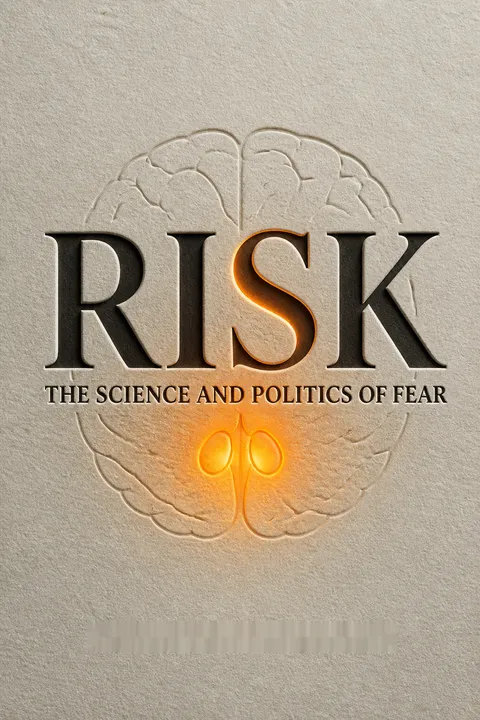
Risk by Dan Gardner explores how humans perceive and react to fear, often irrationally. Gardner argues that despite living in the safest era of human history, we are increasingly afraid due to media sensationalism, political manipulation, and our own evolutionary biases. He examines various fears like terrorism, crime, and disease, demonstrating how our gut instincts often override logical thinking. The book provides insights into cognitive biases and decision-making processes, encouraging readers to critically evaluate risks and resist fear-mongering. Many reviewers found the book enlightening and highly recommend it for understanding modern anxieties.
People Also Read







Glossary
System One
fast intuitive thoughtThe book’s name for the rapid, mostly unconscious system of thought that produces intuitions, emotions, and snap judgments. It relies on learned or evolved rules of thumb to respond quickly. This speed is useful in immediate danger, but can misjudge modern risks when vivid examples, feelings, or misleading cues stand in for evidence.
System Two
slow deliberate thoughtThe book’s name for conscious, effortful reasoning. It can examine evidence, calculate probabilities, and correct an intuitive judgment, but it works slowly and demands attention. Fatigue, stress, distraction, and lack of statistical knowledge can weaken its ability to check fast impressions.
Example Rule
recall guides likelihoodThe book’s label for the availability heuristic: people tend to judge an event as more common or likely when examples come to mind easily. Recent, vivid, emotional, or repeatedly discussed events are especially memorable, so this shortcut can exaggerate dramatic dangers and obscure routine ones.
Anchoring Rule
initial numbers pull estimatesThe book’s name for the tendency to begin an uncertain estimate with a number encountered earlier, then adjust insufficiently from it. The anchor may be irrelevant or unreliable, but it still influences the final judgment. The effect can shape guesses, shopping choices, legal decisions, and survey responses.
Rule of Typical Things
similarity substitutes for probabilityThe book’s label for judging how likely something is by how closely it resembles a familiar type or plausible story. The shortcut can produce intuitive, coherent judgments, but it can violate basic probability. A detailed description may feel more likely than a broader category even though the detailed event cannot be more probable than the category containing it.
Good-Bad Rule
feelings color risk judgmentsThe book’s name for the way an immediate positive or negative feeling influences judgments about an activity’s risks and benefits. If something feels good, people may see it as less risky and more beneficial; if it feels bad, they may see it as more dangerous and less beneficial, even without new evidence.
confirmation bias
beliefs filter new evidenceThe tendency to favor information that supports an existing belief while discounting, rejecting, or scrutinizing information that challenges it. The book describes this as one reason shared opinions can persist even when evidence is mixed. It operates across personal beliefs, political commitments, and group discussions.
group polarization
discussion pushes views outwardA tendency for discussion among people who already share a position to move the group toward a more extreme version of that position. The book explains that members compare their views with others and exchange supporting arguments, while opposing information is often discounted. The effect can occur in face-to-face groups and online communities.
intuitive toxicology
instinctive aversion to contaminationThe book’s term for the intuitive belief that contact with a contaminant is dangerous regardless of dose. This response reflects the survival value of avoiding threats such as contaminated food or water. It can conflict with toxicology, which evaluates harm by considering how much of a substance reaches the body.
de minimis
risk too small for concernA risk so small that it can be treated as negligible for practical purposes. The book notes that the threshold varies by context, but describes a one-in-a-million risk as clearly within this category. The concept helps distinguish a technically possible danger from one that warrants substantial public attention or resources.
hindsight bias
past outcomes seem predictableThe tendency to remember an outcome as more foreseeable after it has happened than it seemed beforehand. The book describes experiments in which people who learned how a historical event ended later judged that outcome more likely than people who did not know it. This can make the past seem settled and the future unusually uncertain.
FAQ
What's Risk: The Science and Politics of Fear by Daniel Gardner about?
- Exploration of Fear and Risk: The book examines how fear influences our perception of risk, often leading us to overestimate dangers based on emotions rather than facts.
- Cultural and Psychological Insights: It delves into psychological mechanisms like the Example Rule and Good-Bad Rule, showing how media and corporations manipulate these to shape our understanding of risks.
- Historical Context: Gardner uses historical examples, such as post-9/11 reactions, to illustrate how societal fears can lead to irrational decisions.
Why should I read Risk: The Science and Politics of Fear by Daniel Gardner?
- Understanding Modern Fears: The book provides insights into why we fear certain risks more than others, helping readers navigate today's information landscape.
- Critical Thinking Skills: It encourages questioning emotional reactions and seeking evidence-based conclusions, enhancing critical thinking about risk assessment.
- Relevance to Current Events: Gardner's analysis is pertinent to contemporary issues like public health and security, making it a timely read for understanding societal dynamics.
What are the key takeaways of Risk: The Science and Politics of Fear by Daniel Gardner?
- Fear vs. Reality: The book highlights the disparity between perceived and actual risks, showing how media can skew public perception.
- Psychological Mechanisms: Gardner discusses cognitive biases, such as confirmation bias and the availability heuristic, affecting our risk processing.
- Cultural Influence: It illustrates how cultural backgrounds shape risk perceptions, leading to differing views across communities.
How does Risk: The Science and Politics of Fear by Daniel Gardner define the "Example Rule"?
- Definition of the Example Rule: It states that the easier it is to recall examples of something happening, the more likely we believe it will happen.
- Impact on Risk Perception: This bias leads to overestimating the likelihood of dramatic events based on vivid media portrayals.
- Real-World Implications: Gardner uses examples like post-9/11 fear of flying to show how this rule affects decision-making.
What is the "Good-Bad Rule" in Risk: The Science and Politics of Fear by Daniel Gardner?
- Definition of the Good-Bad Rule: It posits that emotional reactions to something significantly influence our judgments about its risks.
- Emotional Influence on Decisions: This explains why people downplay risks of enjoyable activities while exaggerating those linked to unpleasant ones.
- Cultural Context: Gardner emphasizes that cultural narratives shape these emotional responses, leading to varying risk perceptions.
How does Risk: The Science and Politics of Fear by Daniel Gardner address the concept of "confirmation bias"?
- Definition of Confirmation Bias: It's the tendency to seek information that supports existing beliefs while ignoring contradictory evidence.
- Impact on Risk Assessment: This bias reinforces fears or misconceptions, making it hard to change views even with new information.
- Examples in Society: Gardner discusses its effect on public opinion on issues like climate change, illustrating challenges in achieving scientific consensus.
What role does media play in shaping our perceptions of risk according to Risk: The Science and Politics of Fear by Daniel Gardner?
- Media's Influence on Fear: Gardner argues that media coverage often emphasizes dramatic events, skewing public perception and heightening fear.
- Sensationalism and Ratings: Sensational stories attract more viewers, prompting media to prioritize fear-inducing narratives over balanced reporting.
- Consequences for Public Policy: This media-driven fear can lead to misguided policies and personal decisions, as seen in health scares and security threats.
How does Risk: The Science and Politics of Fear by Daniel Gardner explain the "white male effect"?
- Definition of the White Male Effect: It refers to white males perceiving risks as lower compared to women and racial minorities.
- Cultural and Social Factors: Influenced by cultural worldviews, individualists and hierarchists often downplay risks threatening their beliefs.
- Implications for Risk Communication: Understanding this effect is crucial for effectively communicating risks to diverse populations.
What examples does Risk: The Science and Politics of Fear by Daniel Gardner provide regarding low-probability/high-consequence events?
- Asteroid Impacts: Gardner discusses asteroid strikes as classic low-probability/high-consequence events, highlighting public concern challenges.
- Tsunami Warnings: The 2004 Indian Ocean tsunami is used to show how low-probability events can have devastating consequences.
- Public Health Risks: He examines diseases like West Nile virus, noting public overestimation of rare disease risks.
How does Risk: The Science and Politics of Fear by Daniel Gardner suggest we can improve our understanding of risk?
- Critical Thinking and Education: Gardner advocates for enhancing critical thinking skills and scientific literacy for better risk assessment.
- Awareness of Cognitive Biases: Recognizing biases like the Example Rule and confirmation bias can mitigate their influence on judgments.
- Engagement with Diverse Perspectives: Encouraging dialogue across cultural perspectives can lead to nuanced risk views and better policies.
What does Daniel Gardner say about the relationship between fear and politics in Risk: The Science and Politics of Fear?
- Fear as a Political Tool: Gardner argues that fear is used by politicians to rally support for policies, often amplifying fears unnecessarily.
- Moral Panics: Certain fears can lead to moral panics, resulting in hasty legislation or social changes not addressing root causes.
- Public Health Policies: Fear can shape policies, leading to responses prioritizing emotional reactions over evidence-based approaches.
What are the best quotes from Risk: The Science and Politics of Fear by Daniel Gardner and what do they mean?
- "The only thing we have to fear is fear itself.": This quote highlights the theme that irrational fear can be more damaging than actual risks.
- "Fear is a fantastic marketing tool.": Gardner points out that fear is exploited by corporations and politicians, emphasizing awareness of these tactics.
- "Anecdotes aren't data.": This serves as a reminder that personal stories don't constitute scientific evidence and shouldn't base public policy or decisions.
About the Author
Other books by Daniel Gardner
Download PDF
Download EPUB
.epub digital book format is ideal for reading ebooks on phones, tablets, and e-readers.








