


Key Takeaways
Approach death as a companion who protects, not only a catastrophe
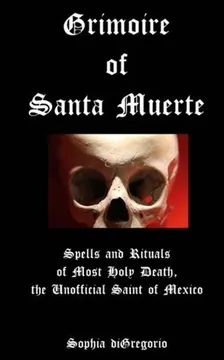
A familiar spiritual figure. Santa Muerte, or Holy Death, is a Mexican folk saint portrayed as a woman with a skeleton's face. Devotees ask her for protection, healing, prosperity, justice, love, and safe passage after death. The book's author first encountered her through Catholic practices learned in childhood: saints could carry requests to God, and rosaries and candles gave those requests a form. As an adult, she noticed Santa Muerte candles in a grocery store, asked the saint to reveal herself, and soon received a small statue from a friend.
Death as an ally. The story introduces the book's central idea: death is universal, so it need not be treated as evil or distant. Devotees instead approach Santa Muerte as a powerful, intimate presence in everyday life.
What's striking is how an inherited religious habit becomes a bridge to a new spiritual relationship. Candles, beads, prayers, and statues make an abstract force tangible, giving devotion a routine and a place in daily life. The author's encounter also shows how people often interpret coincidence through the framework they have just adopted. That interpretation can be meaningful without proving supernatural causation. The distinction matters: the book offers a guide to a living devotional practice, not a test of whether its miracles can be independently verified.
Treat Santa Muerte's origins as a meeting point, not a settled lineage
Several histories compete. Some devotees connect Santa Muerte to Mictecacihuatl, the Aztec queen of the underworld, who was associated with death and the rebirth of humanity. Others emphasize La Parca, a feminine figure of death known in Spain, or suggest influences from African-diaspora traditions. The book also describes other origin stories, including one in which Santa Muerte is a woman whose soul was assigned to gather the dead.
A blended tradition. The Day of the Dead, celebrated on November 2, grew from indigenous observances of the dead that Spanish priests aligned with All Souls' Day. The author presents this history as a context for cultural blending, not proof of one direct ancestry. Destruction of Aztec records makes firm conclusions difficult.
The unresolved origins are part of the story, not a flaw that needs to be hidden. Religious traditions often change through contact, translation, suppression, and adaptation. Here, competing accounts also let devotees connect the saint to different cultural inheritances. That flexibility deserves respect, but it calls for careful language: resemblance between figures does not establish direct descent. The book is strongest when it treats Aztec, European, and African connections as interpretive possibilities and acknowledges how much historical evidence has been lost.
Look at whom institutions reject to understand Santa Muerte's appeal
A saint outside official approval. A folk saint is a figure venerated by popular devotion without formal Catholic canonization. Santa Muerte is rejected by the Catholic Church and has no central authority or standardized ritual system. Yet her followers include people who face violence, poverty, social exclusion, or dangerous night work, as well as police, military personnel, and others seeking protection.
A complicated reputation. Authorities and sensational media accounts often connect her to drug trafficking and violence. The book notes that some cartel members seek her protection, but emphasizes that her devotees are far more varied than that image suggests. It cites estimates of 10 to 12 million followers worldwide, presenting her as a rapidly expanding religious movement despite official condemnation.
What's striking is the contrast between institutional suspicion and the practical comfort of a saint believed to welcome everyone. For people denied respect or safety elsewhere, a nonjudgmental protector can represent recognition as much as supernatural aid. This resembles the role that mutual-aid networks and community rituals can play: belonging itself can be sustaining. The criminal associations still deserve scrutiny. They should neither define all devotees nor be dismissed as mere prejudice, especially when spiritual protection is invoked to excuse real harm.
Read death as the force that makes renewal possible
Destruction and creation meet. The book presents death as more than an ending. Decay returns matter to the earth, and endings clear space for new life, new habits, or new relationships. In Aztec accounts discussed here, the dead journey through Mictlan, the underworld, and await rebirth in a new age. Mictecacihuatl is therefore both a death figure and a maternal guardian of future humanity.
A feminine death figure. Santa Muerte is described through maiden, mother, and crone qualities: she can be vibrant and passionate, nurturing and protective, or wise and associated with endings. This wide range helps explain why devotees appeal to her for both transformation and protection, rather than only for matters of dying.
This framing makes mortality a source of agency: if endings are part of change, then loss can prompt a reorganization of priorities rather than only despair. The image also echoes ecological cycles, in which decomposition supports new growth. The book's use of feminine symbolism adds emotional range to death, but its broad claims about feminine nature can sound universal when they are culturally specific. The useful insight does not depend on gender essentialism: a single symbol can hold care, danger, judgment, and renewal at once.
Choose Santa Muerte's color by the problem's mechanism, not its appearance
Seven colors, distinct roles. The book uses a seven-aspect color model, a practical way to match different facets of Santa Muerte to a request. White represents purification and protection; purple, magic and insight; blue, learning and social ties; gold, money, luck, and vitality; red, passion and force; green, law and justice; black, endings, protection from harmful forces, and communication with the dead.
Diagnose before choosing. The author's example of a divorcing couple shows why the distinction matters. A person seeking to repair social relationships might turn to blue, seek legal fairness through green, and ask white for protection while beginning a new life. The traditional three-color system and other local variations also exist, so these associations are a guide, not a universal rule.
The colors function like a diagnostic map: they encourage a practitioner to separate a tangled crisis into social, legal, emotional, and practical parts. That resembles problem decomposition in decision-making, where a vague goal becomes more manageable once its components are named. The map is useful precisely because it is not treated as rigid doctrine. Since Santa Muerte practice has no central authority, color meanings vary. A clear account of one's own associations can prevent a symbol from becoming a substitute for thinking through the actual problem.
Build ritual around attention, repetition, and a clearly named intention
A small altar is enough. The book's basic setup uses an image of Santa Muerte, a candle, and water. Cleaning the space, lighting the candle, and speaking a request create a repeatable devotional routine. The rosary, a string of beads used to count prayers, helps sustain focus through repetition. A novena is a series of prayers repeated across several days; the book adapts the practice to a seven-day cycle, with each day associated with one color.
Ritual can be adapted. The author encourages practitioners to use familiar forms of magic and to adjust the prayers, altar, or schedule to fit their beliefs. The point is to give attention a structure, not to require Catholic belief or a single authorized method.
Ritual's practical strength is that it turns an intention into an action with a time, place, and sequence. Repeated phrases and tactile beads can also reduce distraction, much as other contemplative practices use breath or movement to steady attention. These mechanisms can support reflection even for someone who does not share the book's spiritual beliefs. They do not establish that a prayer changes external events. A useful distinction is between ritual as a way to focus and ritual as a guarantee of results.
Make offerings as relationship, not payment for guaranteed results
Reciprocity gives devotion texture. The book describes offerings such as water, flowers, candles, tobacco, incense, sweets, alcohol, and small gifts. They may be left at an altar, offered in thanks, or chosen to match the aspect of Santa Muerte being honored. A gift need not be expensive: water, time spent tending the altar, or a prayer of gratitude can express attention and care.
Honesty matters. The author advises against making promises to donate winnings or help others when those promises are only disguises for what the petitioner truly wants. Within her spiritual framework, a direct request is more coherent than a deceptive one. The book also describes gifts as part of a relationship, not a fixed price list for supernatural services.
The practice resembles a gift relationship: the offering communicates attention, gratitude, and a wish to sustain connection. Its value need not depend on whether a spirit literally consumes the gift. A modest, sincere act can make devotion more personal than an expensive display. The book's transactional language can nevertheless invite unrealistic expectations if interpreted as a contract with guaranteed returns. Offerings are best understood as meaningful within the practitioner's beliefs, not as evidence that health, money, or protection can be purchased.
Remember that a nonjudgmental protector can also be asked to harm
The same power can cut both ways. Santa Muerte is portrayed as morally neutral: devotees may ask for healing or protection, but the book also describes requests to curse, dominate, or damage another person. Her destructive reach is linked to her broad authority over death, decay, and change. Some followers seek her help to stop curses or protect themselves; others call on her to impose harm.
Intention has consequences. The book urges clarity about what the petitioner actually wants, rather than disguising a selfish request as charity. Its spiritual framework does not condemn desire, but the described practices can affect real relationships and safety. The saint's perceived power should not be mistaken for permission to threaten, stalk, coerce, or injure anyone.
A nonjudgmental figure can offer refuge to people burdened by stigma, yet moral neutrality does not make every request harmless. In social terms, the power to act without shame can support survival, but it can also rationalize coercion. The crucial distinction is between accepting a person and endorsing every action that person takes. The book's own account makes responsibility especially important because it portrays the saint as capable of harm. Ethical boundaries remain necessary whether the practitioner understands the ritual literally, symbolically, or psychologically.
Keep a journal that separates spiritual meaning from observable results
Practice without a central rulebook. Because Santa Muerte has no official cult authority, devotees vary in their rituals, beliefs, and interpretations. The author recommends keeping a magical journal to record the purpose of a working, the actions taken, the feelings involved, and what followed. Such a record can help a practitioner notice patterns, revise a ritual, or remember what worked in a similar situation.
Test the story against events. If a candle is followed by a job offer, the journal can preserve both the timing and the context: applications, interviews, and other practical efforts matter too. The book encourages personal experimentation, but its examples are based largely on devotional experience. Recording outcomes can make that experience more thoughtful without treating coincidence as proof.
A journal is valuable because memory tends to preserve striking successes more vividly than ordinary failures. Recording intentions before outcomes are known can reduce hindsight bias, the tendency to reshape what was expected after learning what happened. This does not settle spiritual questions, but it makes personal experimentation more disciplined. The practice also fits a decentralized tradition: instead of claiming one ritual is universally correct, practitioners can build a transparent account of their own meanings, choices, and results.
Analysis
This book is best understood as a devotional manual framed by a selective history, not as a definitive account of Santa Muerte's origins or a neutral ethnography. Its structure moves from cultural context to practical ritual, then uses seven color-coded aspects to make a flexible practice feel navigable. The author writes from personal experience and openly favors results-oriented magic over strict historical or religious orthodoxy. That stance gives the book warmth and accessibility, while also requiring readers to distinguish the author's spiritual interpretations from verifiable historical claims. Its most consequential argument is that death need not be treated as an enemy or a moral verdict. Santa Muerte's appeal comes from the combination of universal mortality and particular social welcome: anyone may die, but many people are also made to feel unwelcome while alive. A saint who does not demand social respectability can therefore represent both protection and recognition. The historical ambiguity reinforces this openness. Aztec, Spanish, and African-diaspora influences appear as possible strands in a changing tradition, not as a single origin that every devotee must accept.
The ritual instructions work on two levels. For believers, offerings, prayer, and repeated attention cultivate a relationship with a spiritual presence. For readers outside that worldview, these practices can still organize intention, prompt reflection, and create habits of remembrance. Those possibilities should not be confused with evidence that ritual reliably causes medical, financial, or legal outcomes. The book sometimes describes sweeping powers and rapid responses without a standard for independent verification. Its strongest practical lesson is therefore not that every request will be granted, but that symbols and rituals can help people articulate needs they might otherwise conceal.
The book's nonjudgmental portrait is compassionate, particularly toward people condemned by institutions. Yet its account of harmful magic also shows why compassion cannot erase responsibility. A useful reading holds both ideas together: accept the person seeking help, while evaluating the consequences of actions taken in that person's name. That tension makes Santa Muerte more than a comforting image. It makes her a lens for examining who receives care, who controls moral authority, and how people seek power when ordinary systems fail them.
Review Summary
Santa Muerte by Tracey Rollin receives mixed reviews. Some praise its comprehensive history and rituals, finding it informative for beginners and practitioners alike. Others criticize the author's incorporation of pagan elements and non-traditional practices, viewing it as cultural appropriation. The book's strengths lie in its detailed prayers, spells, and symbolic explanations. However, some readers find it repetitive and lacking in personal experiences. While some appreciate its accessibility, others argue it oversimplifies Santa Muerte's complex nature. Overall, the book serves as an introduction but may not satisfy those seeking a more authentic or scholarly approach.
People Also Read



Glossary
Santa Muerte
Mexican folk saint of deathA feminine personification of death venerated as a Mexican folk saint. Devotees commonly portray her as a skeleton in robes and seek her help with protection, health, money, relationships, justice, and contact with the dead. She is not formally recognized as a Catholic saint, and practices around her have no single central authority.
Folk saint
Popularly venerated, not canonizedA spiritual figure honored by popular devotion but not formally declared a saint by the Catholic Church. Folk saints may be associated with miracles, local histories, or particular communities. Their practices and stories can vary because no official church process or central authority standardizes their status and worship.
Mictecacihuatl
Aztec queen of the underworldA goddess in Aztec tradition associated with Mictlan, the underworld, and with the dead. In the book's account, she also has a maternal role connected to the rebirth of humanity in a future age. Some devotees regard her as a possible precursor or cultural source for Santa Muerte, though the historical connection is uncertain.
Mictlan
Aztec underworld of the deadThe underworld in Aztec cosmology, described as a dangerous realm that the dead had to cross. In the account presented here, those who reached its deepest region waited for a future rebirth. Mictlan is important to interpretations that connect Santa Muerte with Aztec death traditions.
Novena
Repeated prayer over several daysA devotional sequence of prayers traditionally recited over nine days, often to seek help or prepare for a religious occasion. The book adapts the practice to Santa Muerte in a seven-day form, matching the seven color aspects it uses. In broader usage, novena can refer to repeated prayer over a different number of days.
Seven-Aspect Color Model
Seven colors for distinct petitionsA way of organizing Santa Muerte devotion by assigning different powers to seven colors. White is linked to purification, purple to magic, blue to learning and relationships, gold to money and vitality, red to passion, green to justice, and black to endings and communication with the dead. The book presents it as a useful model, not a universal standard.
Danse macabre
Artistic dance with deathA European artistic theme that became prominent after the Black Death. It depicts death interacting with people across social ranks, emphasizing that mortality reaches both the powerful and the poor. The book discusses this tradition as part of the cultural background for European feminine and masculine figures of death.
Download PDF
Download EPUB
.epub digital book format is ideal for reading ebooks on phones, tablets, and e-readers.








