

Key Takeaways
A near-death experience redirected a violent life toward compassion
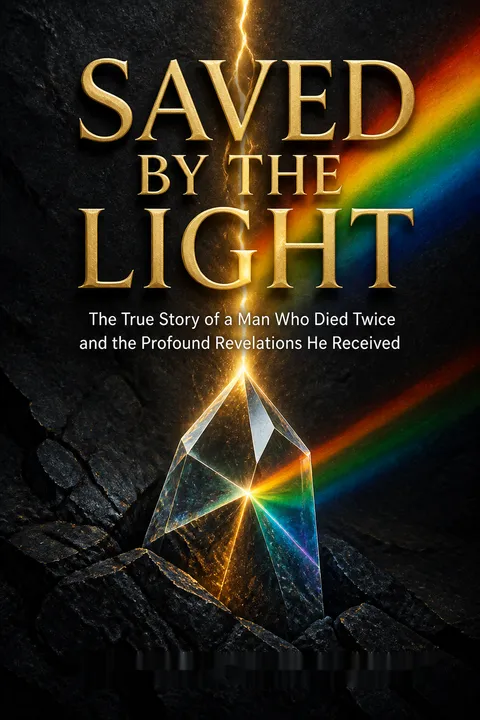
A life interrupted. In 1975, Dannion Brinkley, a 25-year-old government contractor, was struck by lightning while talking on the telephone. He says his heart stopped, his spirit left his body, and he encountered luminous beings who showed him his life from a radically different perspective. Before the accident, he describes himself as aggressive and involved in violent work. Afterward, he felt compelled to become someone who helped rather than harmed others.
Change was not instant. Brinkley’s return was physically brutal and psychologically disorienting. He struggled to move, lost much of his independence, and found that his old identity did not simply disappear. His story is not a neat conversion tale. It is about a man trying to live up to a moral demand that felt larger than he was, while coping with pain, doubt, and a damaged body.
The narrative’s force comes from the distance between Brinkley’s former conduct and the person he believes he must become. That tension makes transformation feel less like a sudden personality upgrade and more like an ongoing negotiation with one’s past. In psychological terms, a crisis can reorganize a person’s sense of identity, but a changed self-image is only a beginning. The practical test is whether new commitments survive ordinary frustrations. Brinkley’s account is most compelling when it shows that the experience did not erase his history or make change effortless.
Measure harm by the pain others carry, not your own justification
A changed point of view. Brinkley calls the experience of reliving his life a life review: a return to past events in which he felt both his own emotions and the feelings of people affected by his actions. He recalls bullying children, mistreating animals, and killing people during military operations. The review made him feel the fear, grief, or humiliation experienced by others, including consequences that reached their families.
Intent matters, but does not erase impact. Brinkley says that actions he believed justified, such as violence in the name of duty, felt less painful to revisit than cruelty for its own sake. Yet he still encountered the human cost of those acts. The review changed morality from a private story about what he meant to do into an encounter with what others endured.
The life review functions as an imaginative exercise in moral perspective-taking. It asks a difficult question: what if the consequences that remain invisible to the person acting became emotionally vivid? That question is useful even without accepting Brinkley’s account of an afterlife. His distinction between motive and impact also deserves care. Motives can explain choices, but a noble rationale does not cancel another person’s suffering. The account’s ethical strength lies in making consequences harder to ignore, not in offering a simple formula for judging every action.
Build a moral life through ordinary kindness, not heroic gestures
Small acts carry weight. After the life review, Brinkley says the lesson was not to pursue grand gestures, but to notice the everyday chances to ease another person’s burden. He describes his earlier self as rarely offering help or kindness. In his new understanding, a brief act of generosity could reveal more about a person than a public display of virtue, precisely because it was spontaneous and unannounced.
A different measure of success. This principle helped redirect his attention from status and money toward service. In his second life review, he remembers practical acts such as helping people in nursing homes with personal care and sharing a meal with women living on the street. The episodes matter in the book not because they are spectacular, but because they make care concrete: time, attention, and dignity offered when someone needs them.
The book gives kindness a deliberately modest scale. That is a useful corrective to the tendency to treat goodness as a dramatic identity, something demonstrated through exceptional sacrifice rather than repeated attention. Small acts are also easier to observe and sustain than abstract claims about being compassionate. Still, private kindness cannot substitute for fair institutions or broader responsibility. The strongest reading is that personal generosity is a foundation for ethical life, not a reason to leave structural problems untouched.
Take unusual experiences seriously without treating them as proof
A name for the experience. A near-death experience, or NDE, is an account from someone who approaches death or is revived after a life-threatening crisis. Brinkley describes leaving his body, moving through a tunnel, encountering a being of light, reviewing his life, and resisting the return to ordinary life. Raymond Moody, a psychiatrist who studied such accounts, helped him recognize that other people reported similar features.
Listening changes the conversation. Before meeting Moody, Brinkley says that people often dismissed his story or treated him as unstable. Moody’s book, Life After Life, brought together reports from people who had survived near-death crises and gave the experience a public vocabulary. Brinkley’s meeting with Moody helped him feel less isolated and more able to discuss what had happened without trying to persuade every listener.
There is an important distinction between taking a person’s experience seriously and treating its interpretation as established fact. A clinician can listen carefully, ask what the experience means to the person, and avoid ridicule without concluding that it proves an afterlife. That distinction protects both humane care and intellectual honesty. Brinkley’s account also shows how naming a phenomenon can reduce isolation: shared language makes private experiences discussable, even when people disagree about what caused them.
Rebuild through small physical gains and useful responsibilities
Recovery began tiny. After the lightning strike, Brinkley says he was paralyzed for days. When he discovered that he could move one hand, he used a medical anatomy book to focus on individual muscles and tried to regain control one movement at a time. He later described crawling out of bed and struggling back into it as a hard-won milestone. These efforts did not make him fully well, but they gave him a way to participate in his recovery.
Purpose did not cure the damage. Brinkley’s injuries continued to affect his heart, stamina, and independence. He also lost businesses and property while paying medical bills. He eventually returned to work, including electronics projects, and began volunteering with people near death. His progress came through adaptation and practical responsibility, not a clean return to the life he had before the lightning strike.
The recovery story resists the familiar fiction that determination alone restores health. Brinkley’s effort matters, but so do medical care, family support, and the limits imposed by lasting injury. His focus on a single muscle or manageable task offers a useful model for rebuilding agency when a whole life feels unmanageable. It is most helpful when understood as participation in recovery, not as a demand that sick or disabled people overcome conditions through willpower.
Treat psychic perception as a question, not a credential
Claims after the crisis. Brinkley reports that after his NDE he could anticipate questions, sense thoughts, and see scenes from other people’s lives. He describes using these impressions in conversations, business dealings, and hospice visits. Some people found the experience startling or comforting; others felt exposed or threatened. The book also cites research by Melvin Morse on psychic experiences among people who had NDEs, but it does not provide enough methodological detail here to assess the findings.
The account contains uncertainty. The introduction and the main narrative give different estimates of how much more often such experiences appeared among NDE survivors, describing them as roughly threefold and fourfold. Brinkley himself says he does not know why these abilities seemed to emerge or how they worked. The stories are presented as testimony and personal experience, not as a settled explanation.
The material is strongest when it preserves Brinkley’s uncertainty. Extraordinary impressions can matter deeply to the people involved, yet confidence and accuracy are not the same thing. In claims about mind-reading, independent checks and clear records would help distinguish specific information from inference, memory, or feedback. That standard does not require dismissing the experiencer. It gives readers a way to remain open to unusual reports while asking what the evidence can actually support.
A vivid prediction is not a reliable map of the future
The boxes of knowledge. Brinkley says that during his first NDE, thirteen spiritual beings showed him scenes of future events in a series he called the Boxes of Knowledge. The images included nuclear accidents, conflict in the Middle East, economic upheaval, and technological control. He later recorded 117 events and said that 95 had occurred. He points to Chernobyl in 1986 and the 1990 Gulf War as examples he believes matched what he saw.
Success needs a clear test. The book does not provide an item-by-item record showing when each prediction was written, how each event was defined, or which forecasts failed. It also includes sweeping predictions of war and social collapse that are not reconciled with the book’s later publication date. The visions are central to Brinkley’s story, but the account alone cannot establish their predictive accuracy.
Prediction is especially vulnerable to hindsight. Once an event occurs, an image or phrase can seem more precise than it was beforehand, particularly when the original record is not available for comparison. A stronger test would preserve dated predictions, define success in advance, and count misses as carefully as matches. This does not settle what Brinkley experienced. It separates the sincerity and importance of his testimony from the narrower question of whether the visions reliably forecasted events.
Turn spiritual conviction into practical designs that can be tested
A mission with rooms. Brinkley says the Beings of Light instructed him to create centers intended to reduce stress and help people explore spiritual experience. His vision included spaces for conversation, massage, sensory relaxation, biofeedback, readings, and reflection, as well as a special bed designed to support deep relaxation. The centers were not presented as conventional hospitals, but as places where people could feel more in control of their lives.
An idea became equipment. Brinkley says he completed the bed in 1991 and placed it at Moody’s clinic. Moody used it to help people relax before attempting facilitated apparitions, meaning visionary encounters with deceased loved ones. Patients reportedly described vivid colors, profound relaxation, and sometimes out-of-body sensations. These reports show that the device was tried in a clinical setting, though they do not establish that the full center concept achieved its promised effects.
This part of the memoir translates a private spiritual mandate into something other people can encounter and evaluate. That move is valuable: a conviction becomes more useful when it produces a concrete practice rather than remaining a claim about personal revelation. The relaxation bed also illustrates the need to distinguish a reported experience from its explanation. Relaxation and vivid imagery may be meaningful without proving that a person has left the body or contacted the dead.
Let forgiveness loosen the grip of old grievances
A second review. In 1989, a serious heart infection led Brinkley to undergo valve surgery. During the crisis, he says he again left his body and reviewed his life. This time the memories emphasized service: helping older people, visiting patients, and supporting people facing illness. The contrast with his first review reinforced his sense that his conduct had changed.
Release, not approval. Brinkley says the spiritual being he encountered pressed him to forgive people who had hurt him in business and in his personal life. He did not initially want to let go of his anger. He came to understand forgiveness as a condition for moving beyond the spiritual level where he felt he was stuck. In his telling, forgiveness did not make the past harmless; it stopped old injuries from defining his next step.
Forgiveness here is not presented as a verdict that the other person behaved well. It is a shift in what the injured person carries forward. That distinction can make the idea less sentimental and more practical. At the same time, forgiveness cannot be demanded on a schedule, and it should not replace protection, accountability, or distance from someone who remains harmful. Brinkley’s account is most persuasive as a description of release he chose, not a universal instruction for every wounded person.
Sit with dying people; presence can steady entire families
Care at the bedside. Brinkley says he began volunteering in hospices and nursing homes because his visions called him to learn from people facing death. He often supported family caregivers as well as patients, giving an exhausted relative a chance to step away. He describes helping families speak about guilt, anger, and fear instead of letting conflict dominate a loved one’s final days.
The work became organized. The book’s 2008 foreword reports that Brinkley founded the Twilight Brigade, a volunteer hospice group, in 1984. By the time of that foreword, it says he had spent 26,000 hours at the bedsides of dying people, including 367 veterans, and organized more than 13,000 volunteers. These figures are reported by the foreword, but the central practice is simple: remain present, listen, and help families care for one another.
Hospice care gives the book’s spiritual claims a practical home. A reader need not share Brinkley’s beliefs about the afterlife to see the value of easing a caregiver’s exhaustion or helping relatives speak honestly with someone who is dying. His account also challenges the idea that support is only medical intervention. Presence, attention, and relief for family members are forms of care, though they work alongside professional symptom management rather than replacing it.
Analysis
This memoir has two interlocking claims. Brinkley says that he encountered a spiritual world during near-death crises, and that the encounters changed how he understood responsibility. The first claim is metaphysical. The second is ethical. The book’s most transferable insight does not depend on settling the first: imagining the consequences of one’s actions from the standpoint of those affected can make morality less self-protective. The life-review scenes give that idea narrative force because they connect conduct to other people’s fear, grief, and humiliation.
The book also shows that a profound experience can be socially difficult. Brinkley describes being dismissed, misunderstood, and unsure whether he was losing his sanity. Moody’s attention matters not only as endorsement of the account, but as a form of recognition that lets Brinkley speak without having to perform certainty for every listener. That distinction has broad value in medicine and counseling: listening can be compassionate without declaring an unverifiable interpretation true.
The memoir is less reliable as evidence for prophecy. Brinkley reports that 95 of 117 recorded visions came true, but the narrative does not supply a complete dated record, explicit success criteria, or a systematic accounting of misses. Retrospective matching is a familiar problem whenever forecasts are broad, symbolic, or interpreted after events occur. The book’s vivid predictions therefore belong to the story of Brinkley’s belief, not to a demonstrated forecasting method.
Its strongest resolution is practical rather than supernatural. Brinkley’s proposed centers, his work with people nearing death, and his changing habits all translate revelation into activity. The spiritual explanation remains personal and contested. The moral test is more observable: whether a person becomes more attentive to the harms he causes, more willing to help, and more present when others suffer.
Review Summary
Saved by the Light received mixed reviews, with an average rating of 4.10 out of 5. Some readers found Brinkley's near-death experience account inspiring and thought-provoking, praising its detailed descriptions and life-changing message. Others were skeptical, citing inaccuracies and failed predictions. Critics questioned Brinkley's credibility, pointing to alleged inconsistencies in his military service claims. While some appreciated the book's spiritual insights, others dismissed it as fiction or fraud. The book's impact on readers varied greatly, from profound belief to outright rejection.
People Also Read
Glossary
near-death experience
reported experience near deathA near-death experience, often shortened to NDE, is a reported experience associated with a life-threatening crisis or revival after apparent clinical death. Brinkley describes leaving his body, moving through a tunnel, encountering luminous beings, reviewing his life, and returning reluctantly. The memoir presents such accounts as spiritually significant, while their cause and interpretation remain matters of debate.
life review
re-experiencing one’s lifeA life review is an experience Brinkley describes in which past events return with unusual vividness. He says he not only saw his own actions, but felt the emotions of people affected by them and sometimes the wider consequences for their families. In the memoir, the review acts as a moral reckoning that changes how he evaluates his conduct.
The Boxes of Knowledge
visions of future eventsThe Boxes of Knowledge is Brinkley’s name for a sequence of visions he says he received from spiritual beings during his first near-death experience. The visions depicted future political, economic, environmental, and technological events. Brinkley later recorded 117 events and said that 95 had occurred, though the book does not provide a complete dated record or systematic verification.
Beings of Light
luminous spiritual guidesBeings of Light are the luminous entities Brinkley says he encountered during his near-death experiences. He describes them as powerful, compassionate, and able to communicate without ordinary speech. In his account, they guide him through a life review, show him visions, and give him a mission. The term reflects Brinkley’s interpretation of the encounter, not an independently established identity.
the centers
spaces for stress reductionThe centers are facilities Brinkley says he was instructed to create after his first near-death experience. His proposed design included areas for conversation, massage, sensory relaxation, biofeedback, readings, reflection, and use of a specially designed relaxation bed. He intended the centers to reduce stress and help people explore spiritual experience, including people facing terminal illness.
facilitated apparitions
guided visions of deceased peopleFacilitated apparitions is the term used in the memoir for a process Moody was studying in which bereaved people, after deep relaxation, may experience visionary encounters with deceased loved ones. Brinkley’s bed was used to help participants relax before the process. The term describes the reported experience and procedure; it does not establish that the visions are literal contact with the dead.
spiritualistic capitalism
spiritual self-reliance and freedomSpiritualistic capitalism is Brinkley’s phrase for an idea he says came from the Beings of Light: people should draw on their spiritual capacities rather than depend entirely on governments or religious institutions. In the memoir, this idea is linked to freedom of worship and the belief that people can treat one another with care without being controlled by a single institution.
Twilight Brigade
volunteer hospice organizationThe Twilight Brigade is a volunteer hospice group Brinkley founded in 1984, according to the book’s 2008 foreword. It organized volunteers to support dying people, particularly veterans, and their caregivers. The foreword reports the group’s scale in volunteer numbers and bedside hours, while describing its basic work as offering companionship and help at the end of life.
FAQ
1. What is "Saved by the Light" by Dannion Brinkley about?
- True story of near-death: The book recounts Dannion Brinkley’s real-life experiences of dying twice and returning to life, detailing what he saw and learned during his near-death experiences (NDEs).
- Encounters with the afterlife: Brinkley describes traveling through a tunnel, meeting Beings of Light, and visiting a “Crystal City” where he received profound spiritual revelations.
- Visions of the future: During his NDEs, Brinkley claims to have been shown a series of “boxes of knowledge” that revealed future world events and personal missions.
- Personal transformation: The narrative follows Brinkley’s journey from a violent, self-centered man to someone dedicated to service, healing, and spiritual growth after his experiences.
2. Why should I read "Saved by the Light" by Dannion Brinkley?
- Unique perspective on death: The book offers a firsthand account of what it feels like to die and return, providing comfort and insight for those curious or fearful about death.
- Spiritual and practical lessons: Brinkley shares not only mystical visions but also actionable advice on living a more loving, compassionate life.
- Prophetic visions: The book’s detailed predictions and their subsequent fulfillment add intrigue and credibility to Brinkley’s story.
- Inspiration for change: Readers witness Brinkley’s dramatic transformation and are encouraged to reflect on their own lives and potential for growth.
3. What are the key takeaways from "Saved by the Light" by Dannion Brinkley?
- Life review and empathy: Brinkley’s NDE included a life review where he felt the impact of his actions on others, emphasizing the importance of kindness and empathy.
- The power of love: The Beings of Light communicated that love and small acts of kindness are the most significant contributions we can make.
- Spiritual mission: Brinkley was given a mission to help others reduce stress and fear, leading to his work in hospice care and the creation of “centers” for healing.
- Psychic abilities: After his NDEs, Brinkley developed psychic and intuitive abilities, which he attributes to his experiences on the “other side.”
4. How does Dannion Brinkley describe his near-death experiences in "Saved by the Light"?
- Struck by lightning: Brinkley’s first NDE occurred after being struck by lightning, leading to an out-of-body experience and journey through a tunnel of light.
- Meeting Beings of Light: He encountered loving, nonjudgmental spiritual beings who guided him through a review of his life and imparted knowledge.
- Crystal City and boxes of knowledge: Brinkley visited a luminous city and was shown “boxes” containing visions of future world events and personal guidance.
- Second NDE during surgery: Years later, after heart failure and surgery, Brinkley had a second NDE with similar themes of love, forgiveness, and spiritual purpose.
5. What are the "boxes of knowledge" in "Saved by the Light" by Dannion Brinkley?
- Visions of the future: During his NDE, Brinkley was shown thirteen “boxes,” each containing vivid scenes of future world events, including political, environmental, and technological changes.
- Prophetic accuracy: Many of the events Brinkley saw—such as the fall of the Soviet Union, Middle East conflicts, and environmental crises—later came to pass, according to his account.
- Spiritual warnings: The boxes also contained warnings about humanity’s spiritual decline and the consequences of fear, hatred, and environmental neglect.
- Call to action: The final box emphasized that the future is not set in stone and can be changed through collective spiritual growth and love.
6. How did Dannion Brinkley’s near-death experiences change his life, according to "Saved by the Light"?
- Shift from violence to service: Brinkley transformed from a violent, self-centered individual to someone devoted to helping others, especially the dying.
- Founding The Twilight Brigade: He established a volunteer hospice organization to support terminally ill patients, particularly veterans, fulfilling a mission given by the Beings of Light.
- Emphasis on kindness: Brinkley became focused on small acts of kindness and the importance of love in daily life.
- Ongoing spiritual development: He continued to experience visions, psychic phenomena, and a sense of purpose rooted in his NDEs.
7. What spiritual or philosophical messages are central in "Saved by the Light" by Dannion Brinkley?
- We are spiritual beings: The book echoes the idea that “we are spiritual beings having a human experience,” emphasizing the primacy of the soul.
- Life’s purpose is love: The Beings of Light stress that the purpose of life is to create good through love, compassion, and service to others.
- Nonjudgmental forgiveness: Brinkley’s encounters highlight the importance of forgiveness, both for oneself and others, as a path to spiritual advancement.
- The interconnectedness of actions: The life review process demonstrates how every action, positive or negative, affects others and ripples through humanity.
8. What are the "centers" that Dannion Brinkley is instructed to build in "Saved by the Light"?
- Stress-reduction and healing: The centers are envisioned as places where people can reduce stress, heal emotionally, and connect with their spiritual selves.
- Multi-faceted approach: The centers include therapy rooms, massage clinics, sensory-deprivation chambers, biofeedback, psychic readings, and special beds for deep relaxation.
- Inspired by ancient oracles: Brinkley relates the centers’ components to ancient Greek temples and oracles, blending modern technology with spiritual wisdom.
- Mission from the Beings of Light: Building these centers is presented as Brinkley’s divinely inspired mission to help humanity evolve spiritually.
9. How does "Saved by the Light" by Dannion Brinkley address psychic abilities and intuition?
- Psychic awakening post-NDE: After his NDEs, Brinkley reports developing strong psychic abilities, such as mind-reading, precognition, and psychometry (reading objects’ histories).
- Scientific studies: The book references research by Dr. Melvin Morse and others, suggesting that NDEs often lead to increased psychic phenomena.
- Practical examples: Brinkley shares numerous anecdotes of accurately reading people’s thoughts, predicting events, and helping others through intuitive insights.
- Not unique to him: He notes that many NDE survivors report similar enhancements in intuition and psychic sensitivity.
10. What are some of the most memorable quotes from "Saved by the Light" by Dannion Brinkley, and what do they mean?
- “We are spiritual beings having a human experience.” – Emphasizes the primacy of the soul and the temporary nature of earthly life.
- “The amount of love and good feelings you have at the end of your life is equal to the love and good feelings you put out during your life.” – Highlights the importance of kindness and love as the true measure of a life well-lived.
- “Humans are powerful spiritual beings meant to create good on the earth.” – Encourages readers to recognize their spiritual potential and responsibility.
- “If you don’t want it in the book, don’t tell me.” – Reflects the book’s commitment to honesty and transparency in sharing personal stories.
11. How does "Saved by the Light" by Dannion Brinkley compare to other near-death experience (NDE) accounts?
- Detailed and prophetic: Brinkley’s account is notable for its vivid detail, prophetic visions, and the specificity of future events described.
- Life review emphasis: Like many NDE accounts, the book features a comprehensive life review, but Brinkley’s is particularly intense and transformative.
- Focus on mission: The book stands out for the clear spiritual mission Brinkley receives and his subsequent dedication to service and hospice work.
- Supported by experts: The involvement of Dr. Raymond Moody, a pioneer in NDE research, lends credibility and context to Brinkley’s story.
12. What criticisms or controversies surround "Saved by the Light" by Dannion Brinkley?
- Skepticism about predictions: Some readers and critics question the accuracy and interpretation of Brinkley’s prophetic visions, noting that not all predictions are verifiable or unique.
- Extraordinary claims: The book’s accounts of psychic abilities and detailed afterlife experiences are met with skepticism by some in the scientific and medical communities.
- Personal transformation: While many find Brinkley’s transformation inspiring, others may question the extent to which his story is embellished or influenced by prior NDE literature.
- Impact on NDE research: Despite controversies, "Saved by the Light" remains influential in the field of near-death studies and continues to inspire discussion about life, death, and the afterlife.
Download PDF
Download EPUB
.epub digital book format is ideal for reading ebooks on phones, tablets, and e-readers.








