


Plot Summary
Ari Comes Back
Max leads five other winged children toward Washington, hoping to use stolen Institute files to find their parents. They have barely escaped the School, and Max is still shaken by killing Ari, a boy she knew there. Then a new squad of flying Erasers attacks. The flock’s smaller wings make them more agile, but during the fight Ari appears alive and tears into Fang’s side.
The Erasers retreat, leaving Fang bleeding so heavily that he loses consciousness over the shoreline. A passerby calls an ambulance. Max, who has spent years keeping the children away from strangers, lets the paramedics take Fang because refusing help could cost her closest ally his life.
The opening makes leadership a practical, bodily burden: Max must choose between the flock’s secrecy and Fang’s survival. The sight of Ari also unsettles her confidence in what she has seen and done. His return turns a supposedly finished killing into a continuing threat, while Fang’s wound forces the children into contact with ordinary institutions they associate with the laboratory. Max’s decision to accept help is not trust. It is triage, the first sign that protecting the flock sometimes means risking exposure rather than simply fleeing.
Fang's Blood Price
At the hospital, Max gives Fang her blood after explaining that the flock’s biology differs from ordinary humans. His condition stabilizes, but the FBI arrives, already aware of rumors about genetically engineered children.
Agent Dean Mickelson offers assistance; Max refuses to trust him until Anne Walker, a sharper and more candid agent, offers Fang medical care and the flock a place to stay. With few alternatives, Max accepts. Fang recovers unusually fast, and the flock moves to Anne’s Virginia farmhouse.
That night, Max’s fever returns. In the bathroom mirror she sees herself with an Eraser’s muzzle and claws, though her face feels human. The frightening image vanishes, leaving her unsure whether her body, her mind, or both are changing.
The hospital converts the children’s hidden biology into a negotiation: Max must reveal enough to save Fang, then decide how much authority to grant the FBI. Her blood donation makes care reciprocal, not merely something she commands others to accept. The mirror vision adds a private threat to the public one. Max has built her identity around resisting Erasers, so seeing their features on herself attacks the moral certainty that helps her lead. The episode does not prove that she is transforming. It shows how fear can make identity feel as unstable as appearance.
Anne's Country Shelter
Anne gives each child a bedroom, meals, and room to fly, and the flock begins to enjoy the farmhouse despite Max’s suspicion. Max resents Anne’s ease with the younger children, especially when Anne takes over bedtime routines that Max considers her responsibility.
Fang helps decode the Institute’s damaged records by treating their numbers as Washington map coordinates. The addresses lead to dead ends, including a pizza shop, a barbershop, and a neglected apartment building where Max and Fang find a photograph of a baby resembling Gazzy.
Meanwhile, Max’s heat spells return, and her reflection again appears Eraser-like. Anne’s offer of shelter therefore solves immediate needs but does not quiet the questions that brought the children to Washington.
Anne’s farmhouse offers the flock something they have lacked: predictable care without immediate pursuit. For Max, that kindness is difficult precisely because it works. If the children feel safe with Anne, Max must face the possibility that her leadership is not the only form of protection they need. The failed addresses keep parentage from becoming a simple rescue plot. A photograph suggests one possible link, but does not provide a family or a home. Comfort and uncertainty coexist, making the farmhouse feel both restorative and provisional.
The School Has Teeth
Anne enrolls the flock in a nearby private school, where Max tries to hide their wings and their lack of ordinary experience. Angel’s knowledge of drug routes alarms a teacher, while Gazzy misunderstands a playground dare and later joins Iggy in setting off a stink bomb after classmates mock them.
Headmaster William Pruitt blames the boys and threatens the group. Max also makes a human friend, J.J., and begins a tentative connection with Sam, while Fang attracts attention from Lissa.
During study hall, Max searches one of the coded terms and finds the name Roland ter Borcht, a disgraced geneticist imprisoned for illegal human experiments. The school’s lessons offer a glimpse of normal adolescence, but its adults and buried history make that normality hard to trust.
School tests the flock in a way combat does not: survival depends on reading social cues, tolerating humiliation, and withholding the reflex to retaliate. The stink bomb is a small act of revenge with disproportionate risk because the children are already being watched. Max’s new friendships complicate her habit of sorting people into threats and allies, though she remains alert to danger. The search result about ter Borcht links her present surroundings to the genetic crimes that shaped her life. Ordinary institutions can teach, shelter, and conceal, sometimes all at once.
Ari Strikes at School
Ari attacks the flock on its walk home from school, bringing more winged Erasers and a blond girl who looks unsettlingly like Max. The children fight back and escape, but Max notices the double before she can understand what she saw. At home, she hides her recurring Eraser visions from Fang until he reassures her that he would recognize her even if her appearance changed.
Max also watches Fang kiss Lissa and is startled by her jealousy. On a first date with Sam, she manages to enjoy a film and ice cream, even though Ari appears outside the shop to taunt her. The double’s presence and Max’s new feelings arrive together, pressing her to question which parts of herself belong to duty and which to desire.
Max’s ordinary wants emerge in the narrow spaces between attacks: she feels jealousy, accepts a date, and experiences a moment of pleasure without wings or weapons defining it. These feelings do not replace her vigilance; Ari’s appearance during the date makes sure danger remains present. Fang’s response to Max’s fear offers a steadier measure of identity than the mirror does. He trusts continuity of character over appearance. The blond double makes that distinction urgent, suggesting that resemblance can be engineered while loyalty, attachment, and self-knowledge remain harder to copy.
Iggy Finds a Door
After a school fire alarm and another confrontation with Pruitt, Max hears a television report about the Griffithses, whose infant son vanished fourteen years earlier. Mrs. Griffiths looks strikingly like Iggy. Max and Fang locate the family’s house, and Iggy decides to meet them despite fearing they may reject his blindness and altered body.
A birthmark convinces the couple that he may be their son, and they welcome him inside. Iggy chooses to stay. The flock leaves him with the people he has long hoped to find, and Max struggles to accept that one of her closest companions may finally belong somewhere beyond their group. The reunion opens a door for Iggy, but for the flock it feels like a fresh loss.
Iggy’s reunion makes belonging more complicated than discovering biological origins. He has to approach parents who remember an infant, while presenting them with the person he is now: blind, winged, and shaped by years of experimentation. Max supports his choice even as she fears losing him, exposing the cost of her protective role. Keeping the flock together has become her definition of safety, but Iggy’s decision asks whether love can also mean letting someone leave. The birthmark provides evidence; the emotional risk comes from trusting that evidence enough to enter the house.
The School Turns Trap
Iggy’s new parents arrange to sell exclusive rights to his story, turning his hoped-for homecoming into a public spectacle. He returns to the flock, while Max’s friends at school help her navigate his unexplained disappearance. Soon the school reveals a darker purpose: Pruitt and several teachers try to capture Max, and she escapes through the halls as the flock follows.
They return to Anne’s farm for Total, now surrounded by Erasers. Anne confronts Ari, and Jeb arrives, revealing that he and Anne are connected to the operation shaping the children’s lives. Max rejects Jeb’s claim that he is helping and flees with the flock. At the bat cave, Iggy rejoins them, unwilling to be turned into a sideshow.
Iggy’s return shows that biological kinship can fail in the present even when it appears to answer the past. His parents’ interest in publicity makes his body a commodity again, echoing the experiments that took him from them. The school’s attempted capture confirms that the children’s unease was not simple paranoia. Anne’s care and the hunters’ plans now occupy the same landscape, forcing Max to reconsider every apparent refuge. Iggy comes back by choice, not because Max can keep the flock intact through command. The group’s solidarity survives, but it is no longer innocent of betrayal.
Ari Loses the Chase
As the flock escapes the farmhouse, Max confronts Anne and Jeb, then refuses to remain part of their experiment. New Erasers pursue the children through the woods, forcing them to use their speed and practiced aerial maneuvers. Ari singles out Max, but Fang intercepts him and wins their fight in the air.
The flock regroups at the cave, relieved to have Iggy back and to have survived another attack. Max abandons the immediate search for parents and agrees to head toward Florida, following Angel’s strong feeling that they should go there. For once, the decision is not based on a code or a pursuer’s location. It is a direction chosen together, although none of them knows what waits at the end of it.
The fight shifts the balance between Max and Ari without resolving the deeper conflict between them. Fang’s victory gives the flock room to escape, while Max’s decision to travel south marks a change from reacting to clues toward choosing a shared destination. Angel’s intuition matters because Max allows the youngest child’s desire to influence the plan. That choice is neither a surrender of leadership nor proof that Angel is right. It is a small redistribution of trust within a family accustomed to making every decision under threat.
The Beach Names Itex
On the way south, Max reaches the beach ahead of the flock, overwhelmed by the Voice’s demands that she save the world. She tries to cut the tracking chip from her arm, but Fang stops her before she can cause greater harm. Max breaks down and admits she does not know what the mission means. Angel then reveals what she overheard at the School: a powerful company may trigger a catastrophe, while the flock has been designed to survive it.
Angel demonstrates a new ability by communicating with sharks. Later, two starving children approach the flock’s camp in Florida. Max discovers their transmitter and learns their whitecoat captors sent them to locate the flock. Before the children can be retrieved, one gives Max the company’s name: Itex.
This section turns the vague burden of destiny into a concrete but frightening possibility: the flock may have been engineered for a world catastrophe. Max’s attempt to remove the chip is an effort to regain control over the Voice, but Fang’s intervention and the children’s presence draw her back into relationship. Angel’s ability with sharks expands the sense of what the flock can do, while the informants’ story shows how vulnerable children can be used as instruments. Itex gives the threat a name, not yet an explanation. Knowledge narrows the search while enlarging the danger.
Disney Before the Storm
Max’s research shows that Itex is a sprawling corporation whose logo appears on products and equipment from the children’s past. On the way to its headquarters, Nudge persuades Max to stop at Disney World. The flock explores the park, rides Pirates of the Caribbean and Splash Mountain, and enjoys a rare day shaped by choice rather than escape.
Ari waits near Splash Mountain, but a child mistakes him for a famous superhero and asks for an autograph. The encounter briefly gives Ari the admiration he has been denied, and he misses the flock as they leave the ride. Max sees him and leads the others out through a service corridor. They escape the park, then travel in a rebuilt, crowded car toward Itex.
Disney World offers the children an ordinary pleasure they have rarely been allowed, yet the visit is always shadowed by surveillance. Max agrees because the flock’s needs include more than staying alive; the children want experiences that belong to them. Ari’s brief encounter with the admiring boy exposes the hunger beneath his violence. For a moment, he receives recognition without fighting for it, and that moment costs him his chance to capture Max. The scene does not absolve him. It makes his pursuit more legible as the behavior of a neglected child with frightening power.
A Second Max
Near Itex, the flock stops at a motel, where Max wakes bound and gagged as figures carry her away. Before losing consciousness, she sees the blond-haired girl who resembles her in the room. When Max wakes inside an isolation tank, she cannot see, feel, or move, and the Voice becomes her only companion.
Meanwhile, the other girl takes Max’s place with the flock and leads them toward Itex, performing the routines Max normally handles so no one immediately suspects the switch. The abduction strips Max of the speed and strength she relies on, while the imitation threatens the relationships that have kept the flock alive. Both Maxes are now inside the same trap, though only one knows she has been replaced.
The abduction attacks Max through two forms of helplessness. The isolation tank removes sensation and movement; the double removes her place among the people who define her life. The flock’s vulnerability is not simply that they can be deceived, but that their routines and trust make substitution plausible. Meanwhile, the lookalike has been trained to imitate behavior, suggesting that institutions can reproduce outward competence without reproducing the history beneath it. Max’s physical powers cannot solve either problem. Her survival will depend on attention, memory, and a selfhood that persists when no one can see her.
The Tank and the Files
Jeb visits Max in the tank and warns that Itex considers her expendable unless she helps with its plans. When the captors return her to sensory deprivation, Max follows the Voice’s suggestion and slows her body until they believe she is dead. They pull her out, and she breaks through a window, barely managing to fly.
At the same time, the double guides the flock into Itex through an air vent. Nudge reaches restricted files and finds a baby photograph identifying her as Monique, along with genetic designs bearing Jeb’s signature and a record of her parents’ anguish. Before the group can make sense of it, Ari attacks. Max tracks the flock back to the computer room, where her double is still among them.
Max escapes by refusing the role her captors designed for her: rather than perform distress for their observation, she makes herself unreadable. This is a form of agency built from surrendering visible signs of life, a bleak inversion of her usual speed and force. The files give Nudge an individual history inside the machinery of Itex, making the corporation’s crimes personal rather than abstract. Yet the discovery arrives through the double’s infiltration, so truth and deception occupy the same room. Max’s return brings her face to face with the system’s most intimate counterfeit.
Two Maxes, One Choice
The real Max drops into the computer room as a virtual-reality system makes the flock see its worst fears: spiders, rats, and other horrors. When the hallucinations vanish, Max’s double insists that the original is the impostor. Angel recognizes the truth through mind-reading, and Jeb’s concern for the original confirms which girl he values.
The two Maxes fight, each matching the other’s strength and training. When the rival is nearly strangled, the original releases her rather than carry out the whitecoats’ demand that only one survive. Gazzy detonates explosives, blasting a hole through the basement wall. The flock finds one another in the dust and escapes through the opening before Itex can recapture them.
The final test is not which Max is physically superior, since both have been made to fight on equal terms. It is whether Max accepts the scientists’ premise that survival requires eliminating a rival. Her refusal protects the other girl and rejects the logic that has treated children as replaceable experiments. Angel’s mind-reading and Jeb’s response expose the false identity, but neither is enough to decide what the two Maxes deserve. Gazzy’s blast turns the argument into an escape. The flock survives by acting together, not by producing a single perfect victor.
Epilogue
The flock flies south and sleeps in the Everglades, bruised, exhausted, and together again. Max cannot stop thinking about the isolation tank, and she does not know whether the other Max escaped. Fang tells her he recognized the impostor immediately because she offered to cook breakfast, a small mistake the real Max would never make.
Their laughter gives the group a brief, human pause after Itex’s experiments and pursuit. The immediate escape is complete, but the Voice, the chip, and the question of how to save the world remain unresolved.
The quiet ending measures survival through reunion rather than victory over Itex. Max is still frightened by what was done to her, and the flock has no settled explanation for its mission. Fang’s joke works because it rests on intimate knowledge accumulated through ordinary care: Max is identifiable not by a scar or a power, but by what she does for the others. That small recognition counters the scientists’ belief that a person can be copied as a set of traits. The group reaches safety for the moment, not certainty.
Analysis
The novel places children inside systems that repeatedly describe them as products, experiments, weapons, or solutions. The flock’s altered bodies are visible evidence of that treatment, but the more intimate damage appears in their uncertainty about family, memory, and personal choice. Max’s leadership is protective and costly: she keeps the group moving, yet often assumes that carrying every decision alone is the same as keeping everyone safe. Anne’s farmhouse, the school, and the Griffiths’ home each offer an image of ordinary belonging, then reveal that care can coexist with secrecy, institutional control, or exploitation.
The search for biological parents tests whether origin can repair the damage of being taken. Iggy’s reunion initially seems to answer that hope, but publicity turns his body into a story others can sell. His return does not prove that family is meaningless. It shows that love must be judged through respect for the person who exists now, not longing for the child someone remembers. The flock’s chosen kinship is imperfect, often noisy and frightened, but it rests on reciprocal attention rather than ownership.
Max’s double sharpens the book’s argument about engineered identity. The scientists assume that resemblance, training, and strength can create a replacement. Max’s refusal to kill the other girl rejects that design logic at the moment when it would be easiest to obey it. Her mercy is not softness detached from survival; it is a decision about what kind of person survival should preserve. The escape leaves the mission unresolved, but it gives Max a clearer distinction between being shaped by others and choosing what to do with the power they gave her.
Review Summary
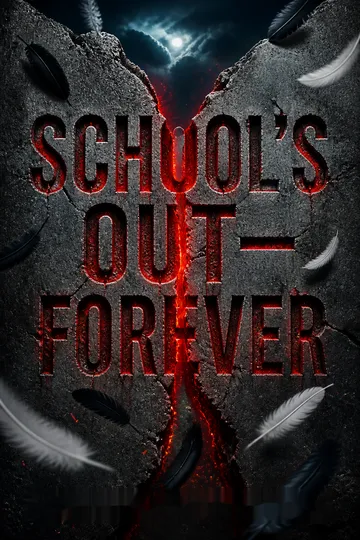
School's Out—Forever receives mostly positive reviews, with readers praising its action-packed plot, character development, and humor. Many enjoy the exploration of the characters' normal lives and relationships. Some criticize the writing style as simplistic and the plot as confusing at times. Readers appreciate the fast-paced nature of the story but note that it can lack depth. Overall, fans of the series find it entertaining and eagerly anticipate the next installment, while others find it lacking in coherence and substance.
People Also Read

Characters
Max
Reluctant flock commanderMax is a fourteen-year-old winged girl who leads five younger companions while carrying the weight of their safety and an unexplained mission to save the world. She is quick to act, suspicious of authority, and more practiced at fighting than at accepting care. Her jokes and sharp orders help her control fear, but her loyalty to the flock makes every decision personal. Max wants answers about her origins without surrendering the people who have become her family. Her tension between command and childhood shapes her relationships: she often behaves like a parent, even as she longs for room to be a fourteen-year-old herself.
Fang
Silent aerial strategistFang is Max’s fourteen-year-old second-in-command, recognizable by his quiet manner and dark wings. He observes before acting and often sees through Max’s bravado, offering support without demanding that she explain herself. His bond with Max mixes trust, teasing, and feelings neither of them knows how to name. Fang is also capable of independent judgment, using patience and attention to solve the coded map problem. He values the flock’s unity but does not confuse loyalty with obedience. His reserve gives him room to notice what others miss, and his steady presence helps Max confront fears she would otherwise hide.
Iggy
Blind explosive tacticianIggy is a fourteen-year-old member of the flock who is blind and relies on hearing, touch, and spatial memory to navigate. He is an accomplished cook, a skilled maker of explosives, and a frequent source of dry humor. His blindness is not a simple limitation: he has developed precise ways of reading people and places, while still grieving the sight he remembers. Iggy needs the flock’s help, but he also resists being reduced to his disability. His wish to understand where he came from reflects a deep need for belonging, complicated by the knowledge that his body and history may not match what others expect.
Nudge
Searching, social scoutNudge is an eleven-year-old winged girl whose curiosity and appetite for conversation help her approach people the others distrust. She wants friends, school experiences, and a clear account of her origins, but she is not merely the flock’s chatterbox. She notices patterns in information, perseveres with computers, and often senses the emotional cost of a decision before Max acknowledges it. Nudge’s confidence can falter when the adults around her conceal the truth, yet she keeps asking questions. Her openness makes ordinary kindness feel possible, while her resourcefulness helps turn scraps of data into clues about the experiments that shaped the flock.
Gazzy
Mimic with a conscienceGazzy, also called the Gasman, is an eight-year-old winged boy and Angel’s older brother. He can imitate voices and has a mischievous streak, especially when he and Iggy devise pranks or explosives. His humor is often a way to test whether a frightening situation can still be made manageable. Gazzy is physically bold, but he is also sensitive to rejection and to the possibility of losing the people he loves. He looks to Max for direction while gradually showing that he can contribute more than comic relief. His loyalty is fierce, and his technical ingenuity becomes most valuable when the flock has no safe conventional exit.
Angel
Mind-reading childAngel is six, the youngest of the flock, and the younger sister of Gazzy. Her white wings and small stature make her seem fragile, but she can read minds and influence other people, abilities that unsettle even Max. Angel is affectionate and eager to enjoy childhood pleasures, from school games to her dog, Total. At the same time, she carries knowledge the others do not always expect from a six-year-old. Her innocence is genuine, but it does not make her harmless or simple. The flock’s challenge is to protect her while helping her understand the responsibility that comes with power over other minds.
Total
Talking, opinionated companionTotal is a small black dog who can speak, fly only when carried, and deliver opinions with more confidence than his size suggests. Angel is especially attached to him, and the flock gradually treats him as a member rather than a pet. Total uses humor to deflect fear and often asks for comforts the children cannot easily provide. His presence complicates Max’s decisions because protecting him means taking risks the flock might otherwise avoid. Though he can be vain and demanding, he is also loyal and brave in his own fashion. Total gives the children a source of affection that is not defined by the laboratory or their powers.
Anne Walker
FBI shelter with secretsAnne is an FBI agent who offers the flock medical care, a safe house, and the chance to experience school and family routines. She is candid enough to acknowledge that the children have few choices, and she works hard to make her farmhouse welcoming despite her inexperience with children. Max distrusts her even as the younger flock members respond to her warmth. Anne’s professional composure exists beside an unexpected capacity for domestic attachment. She represents the difficult overlap between genuine care and institutional power: her kindness matters, but Max cannot assume that kindness makes her motives transparent.
Jeb Batchelder
Absent father, hidden architectJeb is the adult who once helped the flock escape the School and who remains tied to the experiments that made them. Max remembers him as a protector, but his manipulation has left her furious and uncertain about what he ever told her truthfully. Jeb speaks in terms of plans, training, and the larger picture, treating affection and authority as if they can coexist without contradiction. His relationship with Max is emotionally charged because he has occupied the place of a father while repeatedly withholding crucial information. He embodies the flock’s hardest question about adults: whether someone can care for a child and still use that child for a purpose.
Ari
Wounded engineered pursuerAri is a seven-year-old boy altered into a powerful Eraser, a human-wolf hybrid, and fitted with wings that make flight painful and awkward. He is Jeb’s son and has grown resentful of the attention he believes Max and the flock receive from his father. His hatred of Max is tangled with a desire to be noticed and accepted, though he expresses that need through threats and violence. Ari is both dangerous and deeply young: he craves approval, resents his altered body, and struggles to distinguish affection from possession. His existence shows the damage caused when adults turn children into competing designs.
The Voice
Unwanted inner tacticianThe Voice speaks inside Max’s mind, offering tactical instructions, warnings, and cryptic reminders about her purpose. Max does not know who or what it is, and its connection to a tracking chip in her arm remains uncertain. Its guidance sometimes helps her act under pressure, but it also intensifies the burden of a mission she barely understands. Max’s relationship with the Voice is defined by resistance: she wants useful answers without surrendering control. It functions as both a possible source of knowledge and an intimate reminder that her thoughts and body may have been shaped by someone else.
Sam
Gentle human first dateSam is a student at the school who treats Max with easy curiosity and invites her on a date. His kindness gives her a chance to experience a human connection that is not based on danger, authority, or the flock’s unusual biology. He talks about ordinary family frustrations and responds warmly to Max’s directness. Sam does not know the full truth about her life, which makes the relationship both appealing and precarious. For Max, he represents the possibility of being liked as a girl rather than feared or studied as an experiment.
J.J.
First ordinary friendJ.J. is Max’s first friendly connection at school. She is comfortable with conversation and helps Max navigate lunchroom politics without demanding that she explain her guardedness. When Iggy disappears, J.J. gives Max room to grieve rather than pressing for details. Her gestures are small but important to a girl who has spent most of her life among fugitives and laboratory subjects. J.J. offers Max a glimpse of friendship built on attention and ordinary kindness, not shared danger.
William Pruitt
Cruel school gatekeeperPruitt is the school’s headmaster, a rigid disciplinarian who treats students as unruly problems to be controlled. He blames the flock for misconduct and speaks to them with open contempt. His school authority initially seems merely unpleasant, but his hostility contributes to the children’s growing suspicion that the institution is not what it claims to be. Pruitt’s need to dominate contrasts with the flock’s hard-won independence, making even routine school discipline feel like a threat.
Mr. and Mrs. Griffiths
Grieving missing-child parentsThe Griffithses are a couple whose infant son disappeared, leaving them with years of unanswered grief. Their account appears in a television report that draws Max’s attention because Mrs. Griffiths resembles Iggy. They have built a life around the absence of a child they never stopped hoping to find. Their presence gives the flock’s search for family a human face beyond the laboratory files: parents can grieve, remember, and long for a child without knowing what has happened to him.
Lissa
Classmate drawn to FangLissa is a red-haired classmate who openly shows interest in Fang. Her confidence and directness make Max confront feelings she has not yet learned to name. Lissa is not part of the flock’s dangerous history; she belongs to the school world the children are trying, awkwardly, to enter.
Tess
Tall classmate of IggyTess is a tall student in Iggy’s class who helps him find his group during a school outing. She understands the discomfort of standing out physically and approaches him without pity. Her matter-of-fact kindness offers Iggy a brief connection beyond the flock.
Michael Lazzara
Kind school librarianMr. Lazzara is the school librarian, a well-liked teacher who treats students more gently than Pruitt does. Max finds his library useful for research, and his presence suggests that not every adult in the school shares the headmaster’s hostility.
Roland ter Borcht
Disgraced genetic scientistTer Borcht is a geneticist whose criminal experiments on humans led to his imprisonment. Max finds his name while searching a coded clue from the Institute. His record links the flock’s history to a wider world of scientific abuse, though the children do not yet know the full extent of his connection to their lives.
Plot Devices
The Voice and the chip
Intrusive guide and trackerA voice in Max’s mind supplies tactical advice, warnings, and fragments of a larger mission. Max suspects it may be connected to a tracking chip in her arm, but she cannot confirm the link or identify the speaker. The Voice sometimes helps her survive combat and respond to emergencies, yet its insistence that she save the world intensifies her sense of being controlled. The uncertainty is essential: Max must decide when to use its advice without knowing whether the source is protective, manipulative, or both.
The Institute records
A map toward lost originsThe flock steals pages of coded information from the Institute, hoping to find details about their biological parents. Fang interprets some number strings as Washington map coordinates, which lead to addresses and a photograph resembling baby Gazzy, but the early searches mostly disappoint. Later, the files help connect the children’s history to genetic experiments and Itex. The records turn a personal search into a puzzle whose partial answers create new questions rather than resolving the children’s past.
Anne's farmhouse and school
Shelter with hidden machineryAnne’s farmhouse lets the flock experience bedrooms, meals, animals, and school for the first time. That safety gives them space to recover and form human connections, but it also makes Max less alert to the people and institutions around them. The school’s hidden files, unexplained tunnel, hostile headmaster, and planted adults reveal that ordinary surroundings can conceal the same systems of control the flock fled. The farmhouse and school therefore function as both refuge and trap, forcing Max to judge care by actions while remaining alert to power.
Itex and the catastrophe
Corporate threat behind destinyItex is a multinational company whose products and logo appear throughout the children’s lives, including in the equipment used at the School. Angel’s recollection suggests that the company may be connected to a future catastrophe and that the flock was engineered to survive it. The frightened children sent to track the flock provide the name, and the visit to Itex begins to expose its records. The device gives Max’s vague world-saving mission a possible target, but the evidence remains incomplete and the threat is not fully explained.
The second Max
Identity turned into a weaponA girl who looks exactly like Max appears with Ari, then later takes Max’s place while the real Max is captured. Her resemblance forces the flock to distinguish identity from appearance and exposes the scientists’ interest in producing a supposedly improved version of a person. The double has Max’s skills and memories of learned routines, making the deception credible until Angel detects the truth. The device culminates in a fight designed to make the two girls compete for survival, but Max’s refusal to kill her challenges the premise that one must replace the other.
Maximum Ride Series Series



About the Author
Other books by James Patterson







Download PDF
Download EPUB
.epub digital book format is ideal for reading ebooks on phones, tablets, and e-readers.








