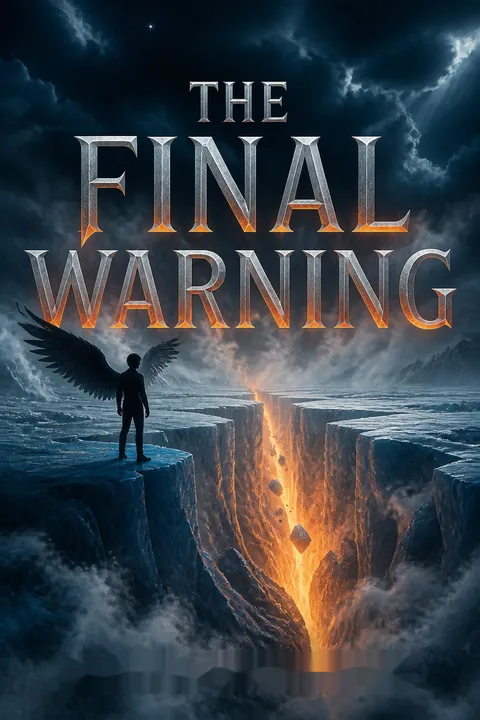


Plot Summary
Prologue
An armed team surrounds a forest cabin and fires nets over it, believing they have trapped six children and their dog. Their leader has been given images of each target, but only notices too late that one photograph shows a wing. The children can fly.
The Uber-Director, a grotesquely engineered man directing the operation from afar, recognizes the mistake and vaporizes the team. The failed capture establishes both the flock’s unusual vulnerability to organized force and the ruthless intelligence of the enemy pursuing them.
The opening makes capture feel almost routine, then overturns the operation with one overlooked detail: wings. The soldiers trust equipment and procedure, while the flock’s defining advantage lies outside their plan. Yet escape does not mean safety. The Uber-Director’s remote execution of his own team shows that the threat is not merely a hunt for the children, but a system willing to discard anyone who fails it. The prologue therefore gives flight a double meaning: it is freedom, but also the reason the flock is relentlessly pursued.
A Brother Beneath the Earth
At Ari’s funeral, Max mourns the half brother she once knew as a child, then fought as a genetically altered enemy. His final act had saved her, leaving her with grief tangled in guilt and relief. Jeb, the flock’s former guardian at the School, urges the six winged children to attend a government meeting, and Max agrees largely because her mother, Dr. Martinez, trusts him.
On the private jet, Nudge discovers she can draw metal objects toward her hand. Jeb suspects the children are developing abilities that their creators never programmed. The flock reaches Washington carrying fresh grief, a new mutation, and no confidence that the adults inviting them have told the whole story.
Ari’s funeral forces Max to hold contradictory truths at once: he was dangerous, victimized, related to her, and capable of saving her. The flock’s collective mourning makes kinship an action rather than a biological certainty. Max’s decision to travel with Jeb is similarly qualified. She does not forgive him or trust the government; she accepts the trip because her mother’s judgment matters to her. Nudge’s new magnetic ability interrupts this emotional passage with another reminder that the children’s bodies remain unpredictable, even to the people who made them.
A Bomb in the Pizza
At the Capitol, officials praise the flock’s abilities and propose a protected school where scientists can study them. Max hears a bargain disguised as care: the government wants access to the children and expects them to accept adult control. That night, Iggy begins identifying colors by touch, another unplanned change.
Then Gazzy spots a wire beneath a pizza crust just before the delivery explodes. The flock escapes with only minor injuries and reunites with Max’s mother at a motel. She believes the officials were sincere, but agrees that Max must stay alert. Her promise that Max always has a home offers comfort, while Max’s fear that anyone helping the flock will be hurt keeps her from accepting it easily.
The government’s offer repeats the School’s central injury in gentler language: adults define the children’s needs, then treat their bodies as public property. Max’s refusal is grounded in experience, not adolescent contrariness. The bomb makes that suspicion materially reasonable, although no one can identify who planted it. Iggy’s tactile color sense complicates the idea that mutation is only damage; it may also create capacities the children can claim as their own. At the motel, maternal affection becomes a genuine refuge, but Max still interprets closeness through the danger it may bring to others.
Flight From the Capitol
During a moonlit flight, Fang kisses Max. She loves the moment, then panics and flies away rather than answer what it means. The next day, a congressional committee presents the flock with plans for a school and guardianship. Max objects that the adults are deciding their future without listening to them, then leads the children out through an open window.
They take to the sky above Washington, where Gazzy dives near the Pentagon and brings two military jets after them. The flock escapes by dropping into a small forest and weaving between trees until the aircraft give up. Max chooses flight over another imposed shelter, though she still has no destination beyond keeping her family together.
Max can command a formation in the air more easily than she can name her feelings on the ground. Her flight from Fang’s kiss and from the committee echoes one another, but the motives differ: intimacy frightens her because it asks for vulnerability, while the school threatens to remove her agency. The Pentagon chase turns that political conflict into a physical one. The flock survives because its members act together, yet Max’s leadership still depends on improvisation. Freedom here is not a secure condition; it is the ability to choose the next direction before someone else chooses it for them.
Powers Without a Plan
In the woods, Fang discovers that stillness makes him almost disappear against his surroundings. Max tries to impose rules on their life on the run, including moving often and trusting no humans, then softens the rules by asking the flock to notice what remains good. Angel soon learns to change her appearance, including into a blue-feathered bird form.
These powers leave the children wondering what their bodies will become and what they are meant to do now that finding their parents is no longer the only goal. Far underground, the Uber-Director prepares to auction the flock to powerful bidders, presenting their abilities as tools for domination. He also develops controllable soldiers to capture them.
The new powers offer strategic advantages, but they arrive without consent or explanation. Fang’s near-invisibility suits his guarded temperament, while Angel’s transformation makes visible how unsettled the children’s relationship to identity remains. Max answers uncertainty with a small ethical practice, naming good things rather than letting survival harden into permanent suspicion. Against that, the Uber-Director treats the flock as a saleable resource and his soldiers as obedient instruments. The contrast is not simply between children and adults. It is between adaptation that preserves relationships and engineering that values control above the lives being altered.
A Mission South
The Voice in Max’s head gives her coordinates, and she finds her mother beside a private jet with Dr. Brigid Dwyer, a young environmental scientist. Brigid explains that the flock is being asked to help a research team in a remote region, but Max insists on hearing the purpose before boarding. The team’s leader, Dr. Michael Papa, identifies the destination as Antarctica and the work as studying global warming.
The children fly to Argentina, then board the aging research vessel Wendy K. for the voyage south. The scientists need the flock’s ability to reach dangerous places and draw public attention to their findings. Max remains wary of being used, but the mission offers food, shelter, and work she can judge for herself.
The mission succeeds where the government’s school failed because it gives the flock a task without pretending that their consent is irrelevant. Max still questions the arrangement, but Brigid and Michael answer with a concrete purpose rather than a promise to reform the children. The contrast matters psychologically: Max does not reject adults as a category; she tests whether their authority can tolerate negotiation. The climate project also introduces a threat that cannot be defeated by escaping a laboratory or outrunning a jet. It asks the flock to connect immediate survival with damage unfolding across the shared world.
The White Continent
On the Wendy K., the scientists explain how rising temperatures disrupt habitats and threaten coastlines, while the flock questions whether a warmer planet could really be so disastrous. Angel interprets the thoughts of nearby humpback whales, convincing the crew that her ability reaches beyond human minds.
After the ship reaches Lucir station, Iggy discovers that he can see the white Antarctic landscape, though his vision disappears when he turns toward other colors.
The flock begins helping with observations of wildlife and ice, but the terrain’s sameness and the cold make their new home unsettling. Max watches her companions find purpose in the work and worries that, if they grow attached to the station, they may not want to leave with her.
Antarctica changes the meaning of the flock’s abilities. Flight is no longer just an escape route; it can help researchers reach a dangerous environment, while Angel’s communication gives nonhuman life a voice in the human discussion. Iggy’s limited sight is both a gain and a fresh deprivation, since the landscape grants him vision only in a narrow visual register. The scientists’ evidence also meets the children’s skepticism with observable consequences rather than abstract warnings. Max’s concern about the flock settling reflects her deepest leadership problem: keeping people safe can become indistinguishable from keeping them dependent on her.
A Mole in the Ice
During a penguin survey, a leopard seal drags ice specialist Sue-Ann Wong underwater. Max and Fang dive low over the water, strike the seal, and pull Sue-Ann clear, but the medical team finds no pulse. Her torn leg reveals wires and fiber-optic cables beneath the flesh, exposing her as something more than an ordinary researcher and suggesting the flock’s location has been compromised.
The crew searches for hidden surveillance. Later, on Deception Island, the children explore steaming pools and watch albatrosses circle above the volcanic terrain. Total, the flock’s talking Scottie, grows small wings of his own while bathing. The discovery astonishes everyone and gives him a new bond with the flock’s strange bodily changes.
The rescue initially appears to confirm the trust forming between the flock and the researchers, then the wires beneath Sue-Ann’s skin make that trust newly precarious. Max’s instinct to save someone remains intact even when danger is present, but compassion does not guarantee that the person rescued is what she seemed. The Antarctic landscape provides a counterpoint to covert surveillance: its wildlife is dangerous, yet its dangers are legible and ecological rather than deceptive. Total’s wings extend the motif of unplanned change beyond the children, making the flock’s shared identity less a fixed genetic category than a relationship continually altered by events.
The Crevasse and the Net
Angel follows penguin tracks hoping to approach a chick, but the snow gives way beneath her. She, Total, and Akila, the station’s Malamute, become wedged in a deep crevasse as a blizzard intensifies. Max and Fang search through the storm, find them, and haul the two dogs out before freeing Angel’s trapped foot.
Unable to fly safely in the worsening wind, the group digs into a snowbank to wait it out. Gozen, a huge engineered fighter, arrives with robotic soldiers, breaks Angel’s arm, and traps the group in a metal net. At the station, the remaining flock and scientists are captured as well. The attackers load everyone onto a troop plane, bound for an unknown destination.
Angel’s fall grows from a child’s desire to touch a penguin, not from recklessness for its own sake. Her effort to save the dogs before herself reveals how thoroughly the flock has taught her to treat attachment as responsibility. Max and Fang’s rescue depends on accepting physical limits: they can fly, but the storm makes flight useless, so they shelter and wait. Gozen exploits that moment of vulnerability. His capture demonstrates the difference between the flock’s adaptive strength and his engineered force, while Angel’s broken arm makes the cost of that force immediate and personal.
The Auction in Miami
The plane carries the captives to Miami, where the Uber-Director plans to sell the flock to wealthy and political bidders. Locked in a tower room, the children discover the door locks are electrified. At the auction, Gazzy’s new ability fills the room with a foul cloud, disrupting the buyers just as a powerful hurricane shatters the supposedly stormproof windows.
Max directs the flock through the building and into the storm, then uses the calm eye to reach broken ground. Fang and Iggy lose hold of Akila in the violent wind. Max confronts Gozen and the Uber-Director; she knocks Gozen away and releases the Director from her grip, refusing his offer of safety and wealth. Akila falls from the sky alive, and Total is reunited with her.
The auction reduces the children to commodities, but the flock sabotages its own presentation through irreducible bodily disorder: Gazzy’s power cannot be made respectable or saleable. The hurricane then overwhelms the architecture of control, turning the captors’ secure tower into a trap. Max’s final choices are morally sharper than simple escape. She refuses the Uber-Director’s bargain and lets him fall, while her earlier attack on Gozen answers his deliberate violence against Angel. Akila’s return interrupts the apparent loss without erasing the danger Total has endured, allowing relief to coexist with grief.
A Voice in Congress
After the storm, the flock flies over devastated ground, and Max accepts that climate change is not merely a scientific argument but a danger they have witnessed. The group contacts Dr. Martinez and returns to Washington. Investigators identify Brian Carey, one of the Antarctic researchers, as another mole, and he is jailed.
With Brigid and the other scientists helping her prepare, Max testifies before Congress. She abandons much of her prepared speech and describes the damaged landscapes, extreme weather, and threatened wildlife she has seen, then urges lawmakers to act. Her testimony cannot repair the storm or guarantee a political response, but it changes the flock’s mission from private survival to public witness.
Max’s testimony marks a change in what she believes leadership can do. Earlier, institutions appeared mainly as places that studied, restrained, or tried to own the flock. Now she uses one of those institutions as a platform, not because she trusts it, but because its decisions affect people and environments beyond her immediate circle. Her argument draws force from experience rather than authority: the children have flown over threatened landscapes and survived a storm intensified by the crisis under discussion. The speech does not promise victory. It makes responsibility harder to deny.
Epilogue
After Congress, the flock is asked to try the Lerner School for Gifted Children. Max arrives with her mother, Ella, Jeb, and the scientists, but the ceremony is interrupted by the Voice in her head, which assigns her another mission.
The children leave before classes begin, taking Total and Akila with them. Max hugs her mother and sister, then leads the flock into the sky. The school may offer a chance at ordinary life, but the Voice’s call and the flock’s instinct to move keep that possibility unresolved.
The school is both a genuine offer of stability and a reminder that ordinary institutions were built without the flock in mind. Max does not reject it after careful reflection; she leaves because the Voice presents another urgent task and because movement has become the group’s practiced form of agency. Her farewell to her mother and Ella shows that choosing the mission no longer means pretending she has no home. The ending preserves the series’ open horizon while sharpening the book’s emotional change: Max can accept attachment without believing it will make danger disappear.
Analysis
The novel binds two kinds of threat that initially seem unrelated: adults trying to control the flock and a planet undergoing changes beyond any one person’s control. Both are made visible through bodies. The children’s wings and mutations expose the consequences of genetic engineering, while the researchers’ ice samples and wildlife observations register environmental disruption. Max learns to distinguish between people who ask for cooperation and people who disguise ownership as protection. That distinction lets her accept the Antarctic mission without surrendering her judgment.
The flock’s changing abilities deepen the book’s question of identity. Max and the others were designed as instruments, yet their bodies keep producing capacities no designer planned. The resulting powers are neither simple liberation nor uncomplicated gifts. They bring practical advantages, but also uncertainty and isolation. Iggy’s partial vision, Angel’s transformations, and Total’s wings make change tangible as both possibility and cost. What holds the flock together is not a stable definition of what they are, but the acts of care they repeatedly choose: rescuing one another, making room for fear, and refusing to leave a companion behind.
Climate change becomes persuasive through experience rather than proclamation. Max begins skeptical of the researchers’ warnings, but the evidence accumulates: disrupted habitats, exposed scientific deception, and finally a hurricane that destroys the auction’s supposedly secure tower. The storm does not prove every claim by itself, but it makes the danger emotionally legible to someone who has seen the consequences at close range. Max’s testimony is therefore a shift in responsibility, not a conversion into a conventional hero. She uses her unusual visibility to insist that powerful adults answer for choices whose costs fall on everyone. The ending refuses a neat victory: the school is available, another mission interrupts, and the world remains unsaved. What has changed is Max’s sense that protecting her flock and defending the larger world need not be competing duties.
Review Summary
The Final Warning received mixed reviews, with many readers disappointed by its focus on global warming and lack of action compared to previous books. Critics felt the environmental message was heavy-handed and detracted from character development and plot. Some enjoyed the humor and continuing relationships but found the story thin and disconnected from earlier installments. Many expressed frustration with new powers and characters, inconsistencies, and a perceived decline in the series' quality. Overall, readers hoped for a return to the original premise and more engaging storylines in future books.
People Also Read
Characters
Max
Reluctant flock commanderMax is a fourteen-year-old winged girl raised in a laboratory and accustomed to making decisions before danger can make them for her. Her sarcasm protects a more tender nature, especially when the flock is frightened or grieving. She distrusts adult promises because she has repeatedly seen care used to disguise control, yet she is capable of changing her mind when people earn her confidence. Her leadership is practical and improvisational: she reads risks, keeps the group moving, and accepts responsibility when plans fail. Her complicated attachment to Fang tests the emotional armor she relies on, while her growing interest in protecting the wider world asks her to lead beyond the flock.
Fang
Silent second-in-commandFang is a fourteen-year-old member of the flock, a gifted flyer whose stillness and reserve make him difficult to read. He watches before acting and often understands Max’s intentions without needing an explanation. His loyalty is expressed through presence, practical help, and willingness to take risks beside her. The attraction between him and Max is real but complicated by their history, her fear of emotional exposure, and the demands of leading their found family. Fang’s quiet manner should not be mistaken for indifference; he feels deeply, but rarely offers those feelings without guarding them.
Nudge
Curious flock connectorNudge is an eleven-year-old member of the flock, socially curious and quick to notice clothes, music, and the details of ordinary life. Her enthusiasm helps ease tense situations, though she can also become anxious when the group’s future feels uncertain. She longs for belonging beyond the flock but has learned that safety and trust are difficult to separate. Her emerging ability to attract metal gives her a new source of confidence and another reason to question what the School intended her body to be. Nudge’s openness makes her a bridge between Max’s guarded leadership and the wider world.
Iggy
Blind, resourceful flyerIggy is a fourteen-year-old member of the flock who is blind but has developed exceptional ways to navigate by touch, sound, and memory. He can be dryly funny and stubborn, especially when others mistake blindness for helplessness. His independence is both a source of pride and a practical skill the flock relies upon. An unusual sensitivity to color and occasional glimpses of vision complicate his understanding of his own abilities. Iggy values concrete ways to contribute, whether handling a technical problem or helping another flock member, and resists being defined only by what he cannot see.
Gazzy
Mischievous young flyerGazzy, usually called the Gasman, is an eight-year-old member of the flock and Nudge’s younger brother. He is energetic, playful, and prone to acting before Max has finished assessing a risk. His humor can break tension, although his impulsiveness sometimes creates new danger. Beneath the mischief is a child who depends on the flock’s protection and wants to be useful rather than merely looked after. His developing powers reflect the book’s interest in bodies changing beyond anyone’s design. Gazzy’s unembarrassed exuberance gives the group a reminder that childhood persists even in circumstances that have denied it.
Angel
Young mind readerAngel is six, the youngest member of the flock, and already possesses extraordinary abilities, including reading minds and communicating with animals. Her small size can lead others to underestimate the seriousness of her perceptions. She is affectionate and curious, but her confidence can carry her into situations she has not fully assessed. Angel wants closeness with the world around her, from people to penguins, and her empathy makes her especially responsive to fear and suffering. The flock’s protection matters to her, but she is not simply a child to be carried; she often understands emotional realities that older characters have trouble naming.
Total
Talking Scottie companionTotal is a small black Scottie who talks, thinks of himself as more sophisticated than the humans around him, and uses vanity and jokes to claim space in a dangerous world. He is devoted to Angel and the rest of the flock, even while complaining about their food, travel, and prospects. His self-importance is mostly comic, but it also conceals the vulnerability of a companion who knows he is not regarded as an ordinary dog. Total’s attachment to Akila gives him an unexpected romantic seriousness, while his growing physical connection to the flock’s mutations unsettles the boundary between pet and family.
Jeb Batchelder
Compromised former guardianJeb helped raise the flock in the School and remains entangled with the institution that harmed them. He has information and influence the children need, but his past choices make trust difficult, especially for Max. Jeb believes he has acted for a larger purpose, a conviction that does not erase the damage caused by his decisions. His relationship with Max is a strained mixture of parental familiarity, regret, and suspicion. He can offer support, yet the flock cannot afford to accept his explanations without question. Jeb embodies the difficulty of deciding whether good intentions deserve forgiveness when their consequences have been severe.
Dr. Valencia Martinez
Max's protective motherDr. Martinez is Max’s biological mother and a veterinarian who has only recently entered her daughter’s life. She offers affection without demanding that Max become an ordinary, compliant child. Her concern for the flock is genuine, but she knows that wanting to protect them does not automatically make her the best judge of their choices. She trusts some adults while urging Max to remain alert, balancing maternal reassurance with an understanding of the dangers around them. Her bond with Max is tender and still developing, shaped by all the years they were kept apart and by Max’s need to retain her independence.
Ella
Max's younger half sisterElla is Max’s younger half sister and Dr. Martinez’s daughter. Though she spends little time with the flock in this story, her existence gives Max a glimpse of family life not organized around escape or combat. Max’s affection for her is strong, even when distance keeps them apart. Ella represents a possible home life without demanding that Max immediately become part of it.
Ari
Tragic half brotherAri is Max’s half brother through Jeb, first remembered as a child at the School and later encountered as a genetically altered adversary. His early childhood and later violence sit uneasily together in Max’s memory. Ari’s history makes him a reminder that the School’s experiments could turn children into threats without making them responsible for what had been done to them.
Brigid Dwyer
Young climate scientistBrigid is a young scientist specializing in wildlife and environmental research. Exceptionally gifted from childhood, she understands what it means to be treated as a curiosity, which helps her recognize the flock’s need for boundaries. Her scientific hunger can still make her stare or ask questions, but she tries to distinguish inquiry from entitlement. Brigid is committed to the Antarctic research and offers the children a mission grounded in evidence rather than institutional control.
Dr. Michael Papa
Research expedition leaderMichael leads the Wendy K. research team and explains the flock’s role in the Antarctic project. He is approachable and practical, treating the children as potential collaborators rather than specimens. His calm authority helps establish the expedition as a different kind of adult environment, although the team’s safety is never assured.
Melanie Bone
Field communications specialistMelanie records weather and environmental conditions for the Antarctic team. She is observant and curious, but her encounters with the flock challenge her assumptions about what humans and animals can communicate. Her work grounds the climate project in the repeated collection of local evidence.
Brian Carey
Expedition dive specialistBrian is a member of the Wendy K. team and a specialist in diving. He works in a hazardous environment where practical skill and trust among colleagues matter. His role places him close to the expedition’s field work and its risks.
Paul Carey
Captain and wildlife expertPaul is the Wendy K.’s captain, navigator, and an expert on South Polar wildlife. He is Brian’s brother and helps manage the expedition’s safety. His experience makes him a steady presence when the researchers encounter the dangers of Antarctic waters and ice.
Emily Robertson
Antarctic fossil researcherEmily is an eco-paleontologist on the Wendy K. expedition. She helps explain how changes in climate affect species and habitats, contributing the long view of environmental change to the team’s research.
Sue-Ann Wong
Specialist in Antarctic iceSue-Ann studies ice layers and the atmospheric record preserved within them. Her work helps the expedition connect present conditions to changes over long spans of time. She is one of the scientists whose field work places the crew in direct contact with Antarctic hazards.
Akila
Rescue-team MalamuteAkila is the Wendy K. team’s large white Malamute and official rescue dog. Her strength and thick coat suit the Antarctic setting, and her calm, capable manner earns the flock’s respect. Total’s fascination with her adds a comic but sincere thread of affection to the expedition.
Gozen
Engineered enforcerGozen is an enormous engineered fighter created to capture and kill the flock. His body combines human features with machinery and extreme strength, while his emotional life has been narrowed toward violence. He follows the Uber-Director’s orders but also takes personal satisfaction in the power those orders give him. Gozen is a version of engineered purpose stripped of uncertainty, empathy, and restraint.
The Uber-Director
Bioengineered mastermindThe Uber-Director is a calculating leader whose own body has been reduced to a head and organs supported by machinery. He regards genetic engineering as a route to power and treats the flock as valuable property. His intelligence is paired with contempt for ordinary human limits and a conviction that control is more important than the lives under his command. His grotesque physical dependence on technology contrasts with his hunger to dominate others.
Plot Devices
Unplanned mutations
Bodies beyond their designThe flock’s abilities continue to change without explanation or instruction from their creators. Nudge attracts metal, Iggy experiences unusual access to color and sight, Fang can blend into the background, Angel can alter her appearance, and Total begins to grow wings. These changes offer new tools, but they also make the children uncertain about what their bodies may become. The mutations connect the story’s adventure mechanics to its central question of ownership: the School engineered the flock, but it cannot fully dictate what the children are becoming.
The Voice
A hidden hand on the routeA voice inside Max’s head gives warnings, hints that she does not understand the whole story, and eventually supplies coordinates for the Antarctic expedition. Max cannot reliably identify its source, so its guidance is neither fully trusted nor easily dismissed. It moves the plot toward new locations while preserving uncertainty about how much of her life has been planned by someone else. The Voice also tests Max’s leadership: she must decide whether following a direction is an act of judgment or another form of being controlled.
Flight and navigation
Freedom with limitsThe flock’s wings make escape, scouting, and rescue possible, and their shared sense of direction helps them travel without maps or adult supervision. Flight is also physically costly and cannot solve every danger. High winds, enclosed spaces, cold, and the weight of injured companions can make it useless or perilous. The story repeatedly tests the difference between having an extraordinary ability and being invulnerable. Flight gives Max agency, but it never removes the need for cooperation, judgment, or shelter.
Antarctic climate research
Science made immediateThe expedition’s weather logs, ice samples, wildlife observations, and encounters with penguins and whales make climate change a working part of the plot rather than a distant lecture. The scientists explain how rising temperatures affect habitats and weather patterns; the flock initially questions the scale of the danger, then experiences a catastrophic hurricane. The research gives the children a mission they can evaluate through what they see and do. It also turns their visibility into a tool for public persuasion, leading Max from field work to testimony.
The auction
Children treated as commoditiesThe Uber-Director’s plan to sell the flock to wealthy and political bidders gives the pursuit a concrete motive beyond capture. Their flight, healing, intelligence, and unusual bodies are presented as assets that might serve the buyers’ ambitions. The auction reframes earlier offers of study and guardianship as part of a wider pattern in which adults decide what the children are worth. Its disruption during the hurricane exposes the fragility of that system and forces Max to choose between accepting a captor’s bargain and remaining free.
FAQ
Synopsis & Basic Details
What is The Final Warning about?
- Winged Kids Face Global Threat: The fourth book in the Maximum Ride series follows Max and her flock of genetically engineered human-avian hybrids as they navigate dangers from their creators and the world.
- Antarctic Refuge & Mission: Seeking safety, they join environmental scientists in Antarctica studying global warming, becoming involved in a mission to raise awareness about climate change.
- Capture, Auction, and Escape: Their refuge is short-lived as they are captured by new, formidable enemies, leading to an attempted auction in Miami during a devastating hurricane, which they must survive and escape.
- Advocacy and Continued Flight: The experience propels Max to testify before Congress about environmental issues, but their fight for survival and a larger purpose is far from over, ending with them embarking on a new, unknown mission.
Why should I read The Final Warning?
- High-Stakes Action & Adventure: The narrative is packed with intense chase scenes, daring escapes, and confrontations with unique villains, from mechanical soldiers to bioengineered creatures and the forces of nature itself.
- Exploration of Timely Themes: The book tackles significant real-world issues like global warming, environmental destruction, and the ethics of genetic engineering through the lens of a thrilling sci-fi adventure.
- Deepening Character Dynamics: Readers get to see the flock's relationships tested and evolve under pressure, including Max's complex leadership struggles and the burgeoning emotional connection between Max and Fang.
What is the background of The Final Warning?
- Building on Previous Books: The story continues directly from events in earlier Maximum Ride novels, particularly the flock's escape from the School and their ongoing conflict with Itex and its various mutated creations like Erasers and Flyboys.
- Genetic Engineering Context: The flock's existence is rooted in genetic experimentation, making them targets for those who want to control or exploit their abilities, a core conflict established in prior installments.
- Real-World Environmental Crisis: The book grounds its sci-fi elements in the contemporary issue of global warming, using Antarctica and Miami as settings to highlight the tangible impacts of climate change.
What are the most memorable quotes in The Final Warning?
- Max's Defiance to Congress: "We, the people... are all in immediate, catastrophic danger." This quote encapsulates Max's transformation from fugitive to impassioned advocate, using the language of the U.S. Constitution to highlight the urgency of environmental action.
- Fang on Their Purpose: "If we're not out there butting heads with the buttheads that are destroying the world, then what are we doing? What's our point? Why are we here?" This blog entry reveals Fang's evolving perspective, questioning their constant flight and seeking a larger meaning beyond mere survival.
- Total's Lament in the Crevasse: "Life, like that first burst of color at dawn, is fleeting... I always wanted to be an astronaut. Now I'll never even get to try my wings." Total's dramatic, anthropomorphic reflection on mortality in the face of freezing captures the blend of humor and genuine peril the flock faces.
What writing style, narrative choices, and literary techniques does James Patterson use?
- Fast-Paced, Accessible Prose: Patterson employs short chapters, direct language, and a conversational tone, primarily through Max's first-person narration, making the book a quick and engaging read, characteristic of his style.
- Multiple Perspectives & Formats: The narrative is punctuated by Fang's blog entries, offering an alternative viewpoint and breaking the fourth wall, adding depth to his character and providing insights into the flock's public perception.
- Blend of Action, Humor, and Emotion: Despite the serious themes and constant danger, the book incorporates moments of levity through character banter and quirky situations (like the birdseed), balancing the tension with relatable emotional beats and character interactions.
Hidden Details & Subtle Connections
What are some minor details that add significant meaning?
- The Uber-Director's Vulnerabilities: The description of the Uber-Director needing airflow over his vocal cords to sigh or blinking to send thought signals ("The bioengine that controlled the airflow over his vocal cords allowed him to sigh... sending a thought signal to the nanoprocessors implanted in his brain") subtly highlights that despite his mechanical body, he retains some fragile human functions and dependencies.
- Iggy's Color Perception: Iggy's sudden, temporary ability to "see" whiteness in Antarctica ("I can see it.") and later perceive colors by touch ("This cup is blue... Yellow?") is a subtle foreshadowing of the flock's spontaneous mutations and hints at the complex, perhaps sensory, nature of his developing powers beyond just sight.
- The Voice's Ambiguous Nature: The Voice telling Max, "Im not Jeb... You were wrong about that," after Max assumes it's him, is a crucial detail that re-introduces ambiguity about the Voice's true identity and purpose, suggesting a deeper, unknown force guiding or manipulating Max.
What are some subtle foreshadowing and callbacks?
- Early Hints of New Powers: Nudge's magnetism is foreshadowed by the can sliding towards her hand ("the can slid toward her fingers"), Iggy's sight by his heightened senses and connection to his environment, and Total's wings by his constant desire to fly and Angel's ability to talk to animals.
- Callback to the School's Trauma: Max's visceral reaction to the idea of a government "school" ("School was, of course, an unfortunate word choice on their part.") is a direct callback to the horrific experiments and imprisonment they endured at the School, showing the lasting psychological impact of their origins.
- Foreshadowing of Sue-Ann's Betrayal: While seemingly nice, Sue-Ann's "rabid curiosity" and the scientists' initial, slightly detached observation of the flock ("She blinked when Iggy put Total down on the ground, and I got the feeling she really hadnt known what to expect from us") subtly hint that not all the scientists may be purely altruistic or fully aware of the flock's true nature and history.
What are some unexpected character connections?
- Angel's Empathy with Whales: Angel's ability to "hear" the whales' thoughts ("I heard the whales thinking and came up to see them") and understand their curiosity and maternal protectiveness ("Their moms know the boat is unnatural and shouldn't be here") reveals a deeper, almost spiritual connection to the natural world, extending her mind-reading beyond humans and dogs.
- Total's Love for Akila: Total's sudden, profound infatuation with Akila, the Malamute ("Oh, my God, she's magnificent... She's perfection!") is an unexpected and humorous connection that provides comic relief but also highlights Total's desire for belonging and acceptance, even across species lines.
- The Scientists' Admiration: The scientists' reactions to the flock's flying ("You really can fly... It's... very beautiful") and their abilities ("You six are most impressive") show an unexpected connection based on genuine scientific awe and, in some cases, empathy ("I understand what it feels like to stick out"), contrasting with the typical fear or exploitative interest the flock encounters.
Who are the most significant supporting characters?
- Dr. Valencia Martinez (Max's Mom): Her role is crucial as a trusted adult figure who genuinely cares for the flock's well-being, recommending them to the environmental scientists ("Dr. Martinez... has recommended you for a... rescue mission") and providing a sense of family and refuge, even from a distance.
- Jeb Batchelder: Despite his complicated past and role in their creation, Jeb acts as a bridge between the flock and the human world (like the government meeting), and his assertion that he and Max's mom trust Max's instincts ("We feel that you'll do the right thing") is a significant moment of validation for Max's leadership.
- Dr. Brigid Dwyer: As a young, empathetic scientist, Brigid represents the potential for positive human interaction and collaboration, genuinely interested in the flock's abilities and the environmental cause ("You're here to help us save the world"), though her connection with Fang adds a layer of relational tension.
Psychological, Emotional, & Relational Analysis
What are some unspoken motivations of the characters?
- Max's Need for Control: Beneath her tough exterior, Max's constant need to be in charge and her difficulty accepting help or showing vulnerability ("I hated conversations like this, hated talking about my feelings") stems from years of having to protect her family and the trauma of being controlled by others.
- Fang's Protective Instincts: Fang's stoicism and quiet strength are motivated by a deep-seated need to protect the flock, especially Max ("The one thing I really can't stand is when Max and the others are in pain or upset... I hate it. It kills me."), often suppressing his own emotions to maintain a steady presence.
- Total's Desire for Validation: Total's dramatic pronouncements and attempts to act human or heroic ("I always swore I'd face death with dignity and honor") are driven by an unspoken desire to be seen as more than just a dog, seeking validation and acceptance from the flock and others.
What psychological complexities do the characters exhibit?
- Trauma and Trust Issues: The flock collectively exhibits deep-seated trauma from their past, leading to extreme trust issues with adults and institutions ("Because no grown-up has ever been completely straight with us?"), manifesting as hyper-vigilance and a default assumption of betrayal.
- Identity Conflict: Characters like Max and Angel grapple with their hybrid identity ("Do you identify as a human or as a bird?"), feeling like outsiders in both the human and animal worlds, leading to feelings of isolation and a struggle to define their place.
- Leadership Burden: Max experiences the psychological burden of leadership, constantly making life-or-death decisions and feeling responsible for the flock's safety, leading to moments of exhaustion and self-doubt ("Sometimes this leader stuff was a huge pain in the butt").
What are the major emotional turning points?
- Ari's Funeral: The shared grief and vulnerability at Ari's burial ("Today, though, it was like another flood was coming... My throat hurt so much from holding back tears") is a significant emotional turning point, allowing the flock, particularly Fang, to express deep sadness and reinforcing their bond as a family.
- Max and Fang's Kiss: The kiss on the dock ("his mouth touched mine... It was incredible. I loved it. I loved him. It was a total disaster.") is a pivotal emotional moment, forcing Max to confront her complex feelings for Fang and leading to confusion and relational tension between them.
- Witnessing Hurricane Devastation: Experiencing the full force of the hurricane and its aftermath ("As we flew over the devastation, I realized at last the full implications of what global warming could mean") serves as an emotional turning point regarding the environmental theme, shifting Max's perspective from skepticism to conviction.
How do relationship dynamics evolve?
- Max and Fang's Romantic Tension: The long-standing friendship between Max and Fang evolves significantly with moments of romantic tension (the kiss, Max's jealousy of Brigid), complicating their leadership dynamic and forcing them to navigate unspoken feelings alongside their survival efforts.
- Flock's Reliance on Each Other: The constant threat and shared experiences strengthen the flock's bond, highlighting their deep reliance on each other as their primary family unit ("Then everyone was holding me, total flock hug"), especially evident during moments of capture or peril like the crevasse rescue.
- Complex Adult Relationships: Max's relationships with Jeb and her mom evolve as she learns to navigate limited trust with Jeb while embracing the unconditional love and support from her mom, demonstrating the possibility of forming healthy connections despite their traumatic past.
Interpretation & Debate
Which parts of the story remain ambiguous or open-ended?
- The Voice's True Identity: Despite the Voice stating "Im not Jeb," its origin, nature, and ultimate goals remain ambiguous, leaving readers to question who or what is truly guiding Max and whether its intentions are entirely benevolent.
- Nature of New Mutations: The spontaneous development of new powers (magnetism, color perception, gas emission, wings for Total) is presented as a mystery ("maybe you guys are starting to mutate on your own"), leaving it open to interpretation whether this is a natural progression, a delayed effect of their engineering, or influenced by an external force.
- Effectiveness of Max's Testimony: While Max's speech is powerful, the immediate impact on government policy or public action is left open-ended, prompting debate on the story's message about individual advocacy versus systemic change in addressing global issues.
What are some debatable, controversial scenes or moments in The Final Warning?
- The Uber-Director's Appearance: The grotesque depiction of the Uber-Director ("little more than a human head attached by means of an artificial spinal column to a series of Plexiglas boxes") and his casual vaporization of soldiers is a controversial element, pushing the boundaries of body horror and villainous cruelty in a young adult novel.
- Gozen's Programmed Pleasure in Killing: Gozen's chilling statement, "Killing things is not a hobby... It is my life. It is what I was created to do. I am able to kill things in many, many different ways," and Max's observation that "Someone had programmed him to feel pleasure about killing," raises disturbing questions about the ethics of creating beings designed for violence and finding joy in it.
- Max's Decision Regarding the Uber-Director: Max's choice to let go of the Uber-Director during the hurricane ("You need to not be in this world, I told him, and let go") is a morally complex moment, debating whether his monstrous nature and actions justified her direct role in his death, even if he wasn't fully human.
The Final Warning Ending Explained: How It Ends & What It Means
- Escaping One Cage for Another: The ending sees the flock escaping the immediate threat of the auction and hurricane, only to be presented with a seemingly benevolent "school" ("Ye Olde Academy for Mutants and Other Kids"), which Max immediately leaves upon receiving a new mission from the mysterious Voice.
- Meaning of the Cyclical Journey: The ending reinforces the cyclical nature of the flock's existence – constant flight, brief moments of perceived safety (Antarctica, the school), confrontation with enemies, and then back to the unknown. It suggests that their "mission" is not a single goal but an ongoing state of being, always on the move and fighting against unseen forces.
- Uncertain Future and Purpose: The final moments emphasize that despite their growth and impact (Max's testimony), their path remains uncertain. The Voice's immediate call to a new, undefined mission ("The world isn't saved yet... You've got work to do") signifies that their struggle for survival and purpose is far from resolved, leaving their ultimate fate open-ended for future installments.
Maximum Ride Series Series
About the Author
Other books by James Patterson






Download PDF
Download EPUB
.epub digital book format is ideal for reading ebooks on phones, tablets, and e-readers.








