

Key Takeaways
Read science fiction as a test of the present, not a forecast.
A future with fingerprints. Science fiction is often mistaken for failed prophecy: the question becomes whether an author correctly predicted a device or event. Seed argues that this misses the point. Imagined futures are shaped by the anxieties, hopes, and technologies of the moment in which they are written. The field is better understood as a changing mode where adventure, horror, romance, and social criticism overlap, rather than as a neatly bounded genre.
Possibility under pressure. Critic Samuel Delany’s term subjunctivity describes how science fiction places a story between what is possible and what is impossible. A speculative change, such as space travel, becomes a thought experiment: what would it reveal about familiar assumptions if this one condition changed? The book locates modern science fiction’s emergence in the late nineteenth century, amid rapid technological change and imperial rivalry.
The shift from prediction to thought experiment changes how these stories are judged. A novel can be scientifically outdated yet perceptive about the fears that made its imagined technology compelling. This is close to the logic of a controlled experiment: hold much of the familiar world steady, alter one condition, and observe what becomes visible. The method also has limits. A story’s imagined future may expose its era’s assumptions while repeating them, so readers should ask both what the story questions and what it treats as natural.
Treat every space voyage as a mirror of who claims the frontier.
A journey that turns back. Early voyages to the Moon and other worlds often spend little time explaining how the trip works. Their real purpose is to transport a traveller into an unfamiliar society, where human customs can be seen from the outside. In Cyrano de Bergerac’s lunar stories, the visitor’s status is reversed: the Moon’s inhabitants regard him as an inferior creature. The alien setting makes earthly self-importance look less inevitable.
Frontiers carry baggage. By the late nineteenth century, exploration stories were frequently entangled with empire. John Jacob Astor IV’s A Journey in Other Worlds imagines an American-led expedition extending national dominance into space. H. G. Wells’s The War of the Worlds reverses that view: Martian invaders make London experience the vulnerability Britain had inflicted on colonized peoples. Space becomes not empty territory, but a stage for arguments about power.
The frontier works as a narrative machine: it creates distance from familiar rules, then reveals which rules the explorers carry with them. That is why a voyage can be both imaginative liberation and a rehearsal of conquest. The distinction matters for contemporary readers, who may instinctively treat exploration as neutral curiosity. Seed’s examples encourage a more useful question: who gets to name a place, define its inhabitants, and claim its resources? The answer often says more about the travellers’ society than about the world they discover.
Use aliens to ask who gets called human, foreign, or dangerous.
Otherness is relational. Science fiction’s alien can be a creature from another planet, a socially excluded person, or a narrative perspective that makes ordinary reality feel strange. The label shifts with the viewpoint. In Stanley Weinbaum’s A Martian Odyssey, the strange-looking Tweel gradually becomes a companion as the humans discover his intelligence. His difference remains, but it no longer defines him as a monster.
Fear often wears a familiar face. In Invasion of the Body Snatchers, human duplicates replace people in a small town, making a doctor doubt whether he can recognize those closest to him. The threat works through social anxiety as much as extraterrestrial biology. Octavia Butler’s alien stories and the film Alien Nation use encounters to examine slavery, race, assimilation, and unequal power. Earlier alien stories, by contrast, often borrowed the racial hierarchies of their own era.
Alien stories make classification feel unstable. A being can appear monstrous until it speaks, demonstrates care, or becomes familiar; conversely, an almost identical human can become frightening once trust breaks down. This connects the genre’s creatures to the everyday politics of belonging, where labels can determine who receives protection or suspicion. The form is not automatically progressive, however. A story may criticize prejudice while still making its outsiders legible only through human concerns. The sharper question is whether the alien is allowed a perspective of its own.
Judge inventions by the power relations they build into everyday life.
Technology reorganizes society. Seed uses technology broadly, including machines, communications, and systems of information. Hugo Gernsback’s early fiction celebrated inventions as signs of human progress, while later writers asked who controls them and who pays their costs. Fritz Lang’s Metropolis makes this conflict visible in a city divided between an elevated ruling class and workers trapped beneath the machines they operate.
The human boundary moves. Robot stories often express fears of replacement, servitude, or uncertainty about what counts as a person. Philip K. Dick’s Do Androids Dream of Electric Sheep? makes that uncertainty central. Cyborg stories complicate it further by joining human and machine. In RoboCop, a corporation rebuilds a murdered police officer as an instrument of law enforcement, but his memories resist the role imposed on him. Technology is never just a tool in these stories; it redistributes agency.
The book’s strongest technological insight is political: a machine’s meaning depends on the institution that owns, directs, and benefits from it. This prevents two easy mistakes, treating innovation as automatic progress or assuming that every machine is inherently dehumanizing. The same device can support care, surveillance, or coercion. The question of agency is especially useful: when a system acts, who can challenge its decisions, and who is treated as an input rather than a person? Those questions apply to the imagined city as much as to its machines.
Test every utopia for the people it disciplines or leaves outside.
The perfect place has a cost. A utopia is an imagined society offered as an alternative to the reader’s own. Its name carries a double possibility: a good place, or no real place at all. Edward Bellamy’s Looking Backward pictures an orderly society that has replaced private industry with state organization. William Morris’s News from Nowhere imagines a more communal life built around craft and a transformed landscape. Both invite readers to compare social arrangements, not simply admire scenery.
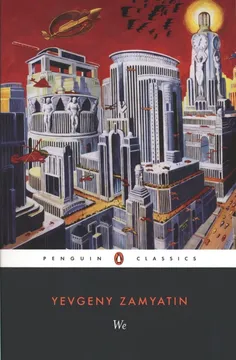
Order can become coercion. H. G. Wells’s ideal societies preserve troubling hierarchies, while Yevgeny Zamyatin’s We and Aldous Huxley’s Brave New World show efficiency and social harmony turning into control. Feminist writers, including Charlotte Perkins Gilman and Ursula Le Guin, make gender and hidden authority central to the test. Le Guin’s The Dispossessed contrasts two societies, yet finds constraints inside the supposedly freer one as well.
Utopian fiction is most valuable when it treats social design as revisable rather than presenting a finished blueprint. A society can eliminate one injustice and quietly reproduce another through its rules, ideals, or distribution of authority. This resembles a stress test: examine the proposed system from the position of those with the least power to refuse it. The genre also warns against dismissing aspiration simply because every ideal contains contradictions. Its productive tension is to imagine better arrangements while refusing to confuse order, equality, and freedom.
Read imagined futures as arguments about the politics of their own moment.
Time is a perspective. H. G. Wells’s The Time Machine turns time into a journey, carrying its traveller from a present shaped by industrial class divisions into a future where humanity has split into the delicate Eloi and the underground Morlocks. The future does not confirm simple progress. It exaggerates inequalities until they become a disturbing evolutionary outcome.
History has alternative routes. Future-war stories, especially those written around the height of empire, warned that rival powers might invade or surpass the reader’s nation. Alternate histories use a different device: change one event, then trace the consequences. Ward Moore’s Bring the Jubilee imagines a world shaped by a Confederate victory in the American Civil War. Philip K. Dick’s The Man in the High Castle imagines an Axis victory in the Second World War. These settings turn history into a question about the present.
Science fiction makes time tangible by turning political abstraction into landscape, institutions, and bodies. Wells’s divided future is not a neutral forecast; it is a way to make class relations harder to ignore. Alternate history offers a complementary tool, showing that what seems inevitable may depend on a contingent decision or event. Yet such stories can also make history look like a puzzle with one decisive turning point, when real change usually has many causes. Their best use is not to replace historical explanation, but to unsettle certainty about its outcome.
Move the frontier inward, where minds, bodies, and networks become strange.
The journey changes direction. In 1962, J. G. Ballard challenged science fiction’s fixation on rockets and distant planets, arguing for attention to the unfamiliar dimensions of life on Earth. That shift had many forms. Ray Cummings imagined a world inside an atom; Fantastic Voyage shrank a crew so they could travel through a human body; and drug-inflected fiction turned perception itself into unstable terrain.
Information becomes a place. William Gibson’s Neuromancer helped make cyberspace a name for networked information imagined as a space that people could enter and navigate. Virtual reality stories extend the metaphor by making immersion feel like a bodily experience. These works blur the line between environment and consciousness: a person can be changed by a network just as a traveller can be changed by a foreign planet. The new frontier is not elsewhere. It is inside systems people already inhabit.
This inward turn is more than a change of scenery. It changes the meaning of exploration from reaching a remote place to questioning how perception, memory, and information shape the world a person experiences. That makes digital settings especially potent: they can feel open and liberating while also being designed, mediated, and controlled. The analogy should not be pushed too far, since a virtual environment is not interchangeable with a physical landscape or body. Still, the genre’s spatial metaphors help readers notice how technology can make abstract systems feel immediate and personal.
Make catastrophe reveal what ordinary society depends on.
After the spectacle comes survival. Disaster stories often begin with a sudden rupture, such as a pandemic, environmental shift, or nuclear attack. Their deeper subject is what remains when familiar systems fail. Nevil Shute’s On the Beach follows people in Australia as radioactive fallout approaches, refusing the comforting rescue ending. Pat Frank’s Alas, Babylon instead focuses on a community trying to preserve civic life after nuclear war, though the story’s survival depends on supplies and services that distant cities once provided.
Collapse is also a political choice. Walter M. Miller Jr.’s A Canticle for Leibowitz presents history as a cycle in which scientific knowledge is rebuilt and destructive conflict returns. Kim Stanley Robinson’s Mars trilogy offers a contrasting scale: colonization becomes a long scientific and social experiment, not an escape from Earth’s problems. Disaster fiction asks what society has neglected; ecological and planetary stories ask whether rebuilding can change those conditions.
Catastrophe strips away the conveniences that make social dependence hard to see. Food, energy, medicine, and civic trust stop being background details and become the plot. This makes disaster fiction a form of systems thinking, because it asks how failures propagate across connected institutions. Its danger is that spectacular destruction can turn complex problems into a simple test of individual toughness. The more revealing stories keep attention on collective choices, unequal exposure, and the infrastructure that makes survival possible. A ruined world is less a blank slate than a record of what failed.
Follow science fiction's arguments, not its unstable genre labels.
The field argues with itself. Science fiction has never settled on one definition. Hugo Gernsback’s Amazing Stories, founded in 1926, promoted fiction as a way to combine scientific information with entertainment. John W. Campbell’s Astounding encouraged more disciplined plotting and technical attention. In Britain, Michael Moorcock’s New Worlds later backed experimentation against what it saw as restrictive conventions.
Stories travel between forms. Science fiction moves through novels, films, magazines, games, and fan communities. A work such as The War of the Worlds can be rewritten for a different nation, medium, or historical anxiety. The film Blade Runner draws on Philip K. Dick’s novel, film noir, and earlier city imagery, then generates its own adaptations and related works. Feminist, postcolonial, and Black writers have also challenged whose stories count as science fiction. The field’s changing boundaries are part of its history.
A genre label is useful as a map, but it can also hide the traffic crossing its borders. Science fiction’s magazines and communities make that traffic unusually visible: writers and readers openly dispute what the field should do, whom it should include, and what counts as innovation. That public argument is not merely marketing. It shapes which predecessors are remembered and which experiments become possible. Still, constant reinvention does not guarantee openness; institutions can widen one boundary while maintaining another. Reading the debate alongside the stories reveals both creative freedom and struggles over recognition.
Analysis
Seed’s central argument is that science fiction is best understood as a historically changing way of thinking, not a shelf of stories that predict inventions. The form makes one altered condition concrete, then uses the resulting world to examine assumptions that ordinary realism can leave invisible. The six thematic journeys in the book, from voyages and aliens to technology, social design, time, and literary community, show how often a supposed story about elsewhere is actually a diagnosis of here.
That method has a double edge. Science fiction can estrange readers from familiar arrangements, as when a Martian invasion reverses the logic of empire or a future city makes class hierarchy visible in its architecture. But its imaginative materials also inherit the prejudices of the societies that produce them. Early narratives frequently cast exploration as entitlement, and their aliens could reproduce racial and gender hierarchies. The later prominence of feminist, Black, and postcolonial writers matters not simply as a correction to representation, but because it changes which questions the genre can ask and who is authorized to imagine alternatives.
The book also resists a clean split between hard science fiction and socially oriented fiction. A technically detailed world still encodes choices about institutions, labor, and power; a social thought experiment still depends on material conditions. Robots, cities, spaceships, and networks are therefore not decorative inventions. They are ways to stage relationships between persons and systems. The most productive reading asks what a story changes, what its imagined society rewards, and what it leaves outside its frame.
Because the field constantly borrows across novels, cinema, criticism, and popular culture, a single definition is likely to become obsolete. That instability is not a flaw to resolve. It is part of the subject: science fiction keeps remaking its tools as historical expectations change. Seed’s Anglophone emphasis gives a coherent path through a vast field, while also reminding readers that no short introduction can represent every tradition or medium. Its lasting value lies in making readers alert to the histories and power relations hidden inside visions of the future.
Review Summary
Science Fiction: A Very Short Introduction receives mixed reviews. Some praise its comprehensive overview of the genre's themes and history, while others find it dry and overly academic. Positive reviewers appreciate the book's exploration of key sci-fi concepts and its extensive references to important works. Critics argue it focuses too heavily on older texts and lacks depth in analyzing modern sci-fi media. The book is generally seen as a solid starting point for those interested in the genre's literary aspects, but may not satisfy readers seeking a more engaging or contemporary perspective.
People Also Read


Glossary
subjunctivity
A mode of conditional possibilityA term used by Samuel Delany to describe how science fiction positions a narrative between possibility and impossibility. Rather than simply presenting a prediction, a story asks readers to consider what follows if an unfamiliar condition is accepted as true. This helps distinguish speculative fiction from both straightforward realism and stories that rely on the supernatural.
cognitive estrangement
Familiarity made newly visibleDarko Suvin’s account of a central effect of science fiction. A story introduces a significant difference from the reader’s familiar world, then makes that difference intelligible enough to examine. The reader recognizes the world being described as related to ordinary life, but sees it from a changed angle. The term connects imaginative invention to social and historical criticism.
novum
A story's defining innovationSuvin’s term for the new element that organizes a science-fiction narrative. It may be a device, a social arrangement, a setting, or another unfamiliar condition. The novum creates a difference between the story’s world and the reader’s, while providing a focus for exploring the consequences of that difference.
hard science fiction
Science-centered speculative fictionA mode of science fiction that gives particular weight to scientific principles and technical plausibility. Its stories often make scientific problem-solving part of the plot and attempt to build internally consistent worlds. The label does not mean that such fiction lacks social or political meaning; technical choices and the societies surrounding them remain open to interpretation.
space opera
Large-scale space adventureA form of science-fiction adventure built around journeys, conflicts, and dramatic action across space. Early examples often featured idealized male heroes, futuristic weapons, and sharply opposed forces. The term was first used dismissively, but came to describe a broader adventure tradition, including later works that revise or parody its conventions.
cyberspace
Networked information imagined spatiallyWilliam Gibson’s term for the virtual environment formed by computer networks and information. In science fiction, data can be pictured as a space that users enter, move through, and experience. The concept gives an abstract system a spatial and sometimes bodily form, while raising questions about identity, access, control, and the boundary between physical and virtual experience.
cyborg
A human-machine hybridA cybernetic organism, combining biological life with mechanical or electronic systems. In science fiction, cyborgs range from people rebuilt with technological components to beings whose identities are inseparable from machines. The figure makes the border between human and technology uncertain and can be used to explore medicine, labor, power, gender, and personal autonomy.
heterotopia
An actual, ambiguous placeA concept used to describe a space that exists materially but has an unstable or layered relationship to other places. Unlike an imagined utopia, it is not simply a perfect society located nowhere. In science-fiction criticism, the term can help describe cities and environments whose boundaries, meanings, or competing realities refuse to settle into one clear map.
psychohistory
Mathematics of mass behaviorIn Isaac Asimov’s Foundation stories, a fictional branch of mathematics intended to predict how large human populations respond to social and economic conditions. It focuses on collective patterns rather than reliably forecasting individual actions. The idea gives future history a scientific framework, while dramatizing the limits and political consequences of trying to manage populations through prediction.
Very Short Introductions Series Series



Download PDF
Download EPUB
.epub digital book format is ideal for reading ebooks on phones, tablets, and e-readers.








